Pengjie Ren is an academic lecturer specializing in information retrieval, recommendation systems, and conversational AI. He holds teaching roles in courses such as Introduction to Big Data Processing Technology, Probability Theory and Mathematical Statistics, Ph.D Professional English, and Statistical Natural Language Processing. As a supervisor, he has guided both PhD and Master's students in research-oriented projects. His research focuses on advancing conversational systems, generative models, and reinforcement learning applications in recommendation systems. He has contributed to top conferences like SIGIR, WWW, AAAI, and ACL, with notable work on knowledge-grounded dialogues, sequential recommenders, and debiasing techniques in AI. Pengjie actively serves the academic community as an organizing committee member (NLPCC 2021, YSSNLP 2021) and workshop co-chair (SIGIR AIIS 2020, WSDM NLP4REC 2020). He is also a program committee member for major conferences and a reviewer for journals like TOIS, TKDE, and IPM. His teaching and research emphasize practical applications of AI in dialogue systems, privacy-aware recommendation, and multi-domain learning, with a focus on bridging theory and real-world implementation.
Anderson Ye Zhang is an Assistant Professor in the Department of Statistics and Data Science at the Wharton School, University of Pennsylvania, with a secondary appointment in the Department of Computer and Information Science. He holds a PhD from Yale University and previously served as a William H. Kruskal Instructor at the University of Chicago. His research focuses on the theoretical and applied aspects of statistics and machine learning, emphasizing spectral methods, synchronization problems, clustering, and network analysis. Education: PhD in Statistics and Data Science, Yale University (2018) Bachelor's degree from Zhejiang University (2012) Research Interests: His work addresses foundational challenges in spectral analysis, group synchronization (e.g., phase synchronization, permutation synchronization), ranking systems, and high-dimensional clustering. He develops algorithms with provable guarantees for problems such as Gaussian mixture models, stochastic block models, and item response theory. Recent Trends in Publications (2021–2025): His articles emphasize spectral methods for synchronization and clustering, with a focus on optimality in high-noise regimes, privacy-preserving learning, and efficient algorithms for complex data structures like human response models and anisotropic covariances. His work bridges statistical theory and computational practice. Awards & Grants: 2025: Sloan Research Fellowship, NSF CAREER Award 2019: New Researcher Award (ICSA) 2018: Francis J. Anscombe Award Grants: NSF DMS-2440180 (CAREER: Statistical Inference in Group Actions) NSF DMS-2112988 (Ranking from Comparisons) Academic Contributions: He has advised multiple collaborative research projects with postdocs and students, particularly on spectral methods and synchronization problems. His teaching spans advanced statistical theory and linear models at Wharton and the University of Chicago.
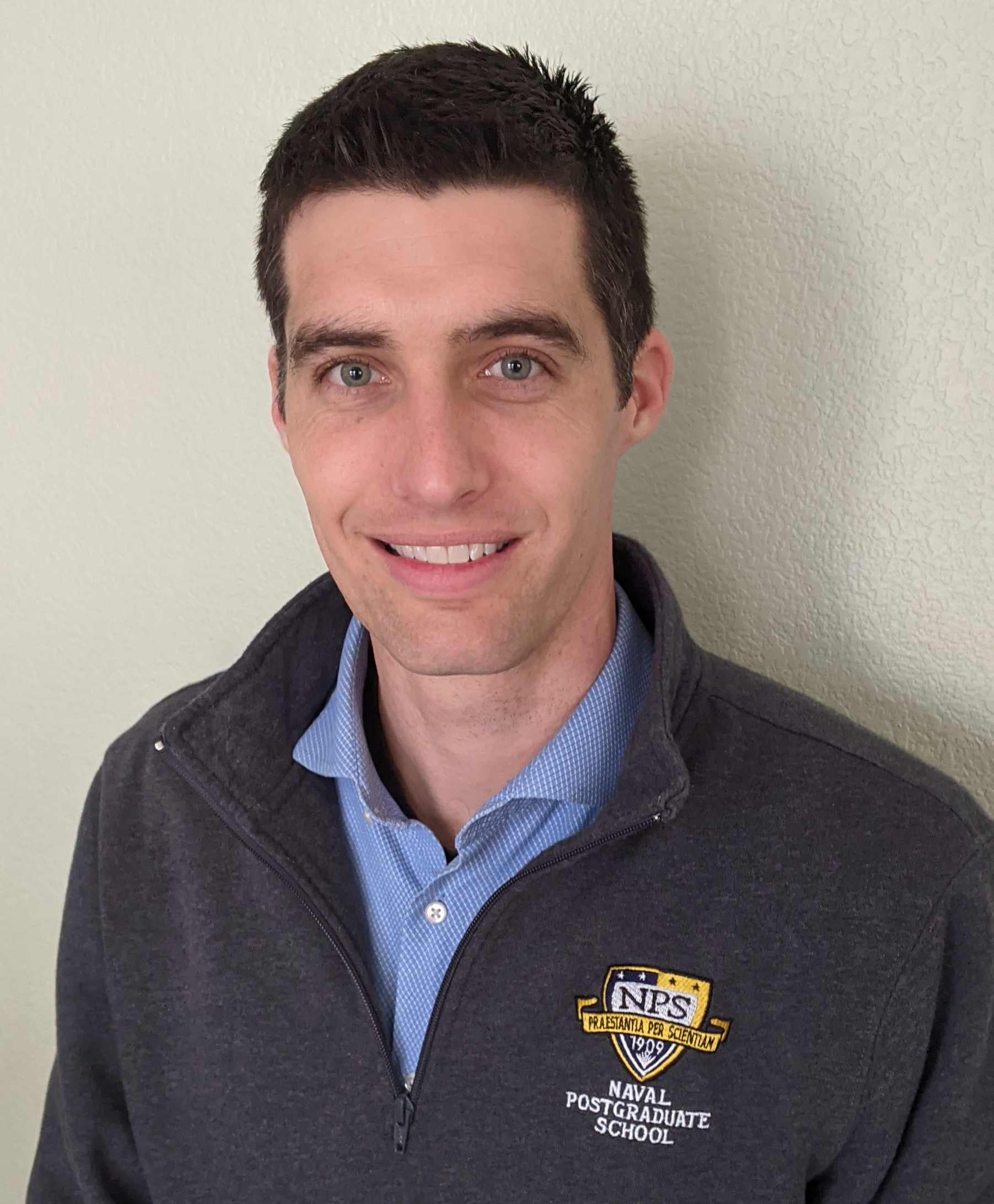
Robert Bassett is an Assistant Professor in the departments of Operations Research and Applied Mathematics at the Naval Postgraduate School (NPS), Monterey, CA. His research focuses on data-driven decision making, optimization, and statistical methods with defense applications. He holds a PhD in Mathematics from UC Davis and previously worked at Sandia National Laboratories and the U.S. Department of Defense. Education PhD in Mathematics, University of California, Davis (Dissertation: Optimization Methods in Statistics) Research Interests His work spans theoretical and computational aspects of decision-making, including optimization algorithms, robust statistical methods, adversarial machine learning, and signal processing. Notable areas include adversarial perturbations of physical signals, robust sensor subspace methods, and fused density estimation. Publications Trends Bassett's recent work emphasizes robust techniques against noise and adversarial attacks, as well as optimization algorithms for distributed systems. His articles often bridge theory and application, with contributions to machine learning security, sensor networks, and acoustic processing. Advising & Collaborations He has advised several students at NPS, including PhD candidate Peter Barkley and MS students Micah Oh and AJ Van Dellen. His collaborations include researchers from academia and defense sectors.
Dr John Williamson is a Lecturer in Music at the University of Glasgow's School of Culture & Creative Arts. His work bridges music technology, human-computer interaction (HCI), and Bayesian methodologies. He focuses on designing interactive systems for virtual environments, cybersecurity, and rehabilitative gaming. His research includes tactile feedback systems, thermal attack analysis on keyboards, and probabilistic models for user comprehension. Williamson has contributed to projects like ThermoSecure and has explored cultural heritage mapping through studies of Glasgow's Sauchiehall Street. He holds an ORCID identifier (0000-0002-1010-6998) and is based at Room 402, 14 University Gardens. Research interests span HCI innovation, Bayesian approaches to design, and the integration of music technology into interactive platforms. Notable trends in his publications include advancing secure human-computer interfaces, optimizing user interaction through probabilistic models, and applying computational methods to cultural studies. His work often emphasizes practical applications, such as improving accessibility in VR and enhancing security in everyday devices. Williamson has secured grants for projects like the MoreGrasp Initiative (2017-2021), focusing on neuroprosthetics for spinal injury patients. He collaborates on interdisciplinary teams involving computer science, engineering, and arts disciplines. His teaching and supervision activities are integral to the School's creative arts and technology programs, though specific student names are not listed here. Current research directions include expanding Bayesian methods for interactive systems and exploring the intersection of music with immersive technologies.
Chris Winstead is an Associate Professor in the Department of Electrical and Computer Engineering at Utah State University. His research focuses on error correction algorithms, probabilistic logic systems, and neuromorphic hardware design. He has mentored over 15 graduate students and received significant recognition including an NSF Career Award. Dr. Winstead's research spans hardware security, stochastic computing, and communication systems. His work integrates theoretical frameworks with practical implementations for low-power and fault-tolerant systems. Recent publications demonstrate applications in autonomous vehicle security, biological circuit modeling, and probabilistic computing architectures. Honors include the 2014 Fulbright Research Scholarship and 2010 NSF Career Award. He leads research on noise-enhanced computing methods and maintains collaborations in stochastic algorithm development. Current projects investigate adversarial resilience in cyber-physical systems and hardware acceleration for probabilistic decoders.
Dr. Thilo Sauter holds a tenured position as Associate Professor for Automation Technology at Vienna University of Technology (VUT) and is affiliated with Danube University Krems, where he leads the Center for Distributed Systems and Sensor Networks. He has been a pivotal figure in industrial automation research for over two decades, with expertise in smart sensors, real-time systems, and cybersecurity in automation networks. His academic credentials include a Dipl.-Ing. and Doctorate in Electrical Engineering from VUT. Education: Dipl.-Ing. in Electrical Engineering (1992), Vienna University of Technology Doctorate in Electrical Engineering (1999), Vienna University of Technology Research Interests: Dr. Sauter focuses on advancing secure and efficient automation systems, including real-time communication, sensor integration, and cybersecurity for industrial environments. His work bridges theoretical frameworks with practical applications in energy systems, IoT security, and industrial IoT (IIoT). Recent projects emphasize energy transition challenges, such as optimizing e-car charging and enhancing HVAC systems with machine learning. Key Projects: Leading the Community Flexibility in Regional and Local Energy Systems project (2019–2023), addressing energy grid optimization. Principal Investigator for Decision Making and Optimization for Distributed Energy Management (2022–2024), focusing on smart energy systems. Co-developed the Attack Resilience for IoT-Based Sensor Devices in Home Automation initiative (2019–2023). Publications and Awards: With over 300 publications, Dr. Sauter has authored influential works on industrial cybersecurity, sensor systems, and automation networks. His 2014 IEEE Fellow distinction recognizes contributions to synchronization and security in automation networks. He serves as Past Editor-in-Chief of the IEEE Industrial Electronics Magazine and holds leadership roles in IEEE and Austrian professional associations. Grants and Collaborations: His research is supported by grants from FFG (Austrian Research Promotion Agency), FWF (Austrian Science Fund), and industry partners. Projects often combine academic rigor with industry collaboration, such as fiber-optic sensor integration in process furnaces and blockchain-based energy community management. Labs and Teams: He oversees interdisciplinary teams at the Center for Distributed Systems and Sensor Networks, focusing on hardware-software co-design, embedded systems security, and smart energy solutions. His lab infrastructure supports advanced prototyping and testing of sensor networks and IoT devices.
Daniel Schmidt is a Senior Lecturer in Data Science at Monash University's Faculty of Information Technology, specializing in Bayesian inference, information theory, and statistical genomics. He holds a PhD in Computer Science (2008) and a Bachelor of Digital Systems (Honours) from Monash University (2003). His research focuses on high-dimensional Bayesian regression, Minimum Message Length (MML) principles, and applying machine learning to medical risk prediction, particularly in breast cancer via mammography analysis. He leads projects on scalable time series forecasting, quantum computing applications, and epileptic seizure prediction. Teaching commitments include developing and lecturing in units like FIT2086 (Modelling for Data Analysis) and FIT3154 (Advanced Data Analysis). He collaborates with institutions like the University of Melbourne (Adjunct Senior Research Fellow) and has contributed to open-source tools like the BayesReg package and GitHub repositories for statistical methods. His work contributes to UN Sustainable Development Goals related to health and innovation. Key research projects include efficient time series classification (MONSTER repository), seizure forecasting using EEG data, and quantum computing applications. He has authored over 119 publications, with recent work addressing adversarial attacks on time series models and Bayesian shrinkage priors for regression. Notable collaborations involve international teams in cancer genomics, statistical epidemiology, and materials science. His GitHub contributions include tools for random correlation matrix generation and fast AR model estimation.
Kaushik Roy is an academic researcher affiliated with multiple institutions including North Carolina State University, Purdue University, and North Carolina A&T State University. His primary focus is on computer science, cybersecurity, and AI-driven solutions for real-world challenges. He has extensive experience in machine learning applications for intrusion detection, deepfake detection, biometrics, and federated learning frameworks. His work often bridges theoretical advancements with practical implementations in domains like IoT security, healthcare analytics, and cyber-physical systems. Affiliations: North Carolina State University, Purdue University, North Carolina A&T State University, and others Research Interests: Cybersecurity, Deep Learning, Biometric Authentication, Federated Learning, and AI Ethics He has co-authored over 105 publications, focusing on topics like anomaly-based intrusion detection, malware traffic classification, and privacy-preserving techniques. His recent work emphasizes federated learning architectures for healthcare and transportation IoT systems. Roy collaborates with industry partners to translate research into deployable solutions, particularly in edge computing and sensor networks.
Jin-Hee Cho is a prominent researcher actively contributing to computer science domains since 2018, with over 35 publications in 2024-2025 alone. She focuses on cybersecurity, machine learning, and interdisciplinary applications across autonomous systems, smart farms, and social media safety. Coauthor network includes: Terrence J. Moore (63), Feng Chen (31), Dong Seong Kim (28), Frederica Nelson (24), Hyuk Lim (24) Publishes in venues: IEEE Transactions, ACM, MILCOM, DSN, KDD, ICWSM Research Trends (2024-2025): Uncertainty quantification in deep learning systems Federated learning for sustainable agriculture monitoring Bayesian network modeling for autonomous vehicle security Combating cybergrooming through dialogue generation Her work bridges technical cybersecurity with social dimensions, as seen in publications about social capital-based defense mechanisms and disinformation resilience frameworks.
Alain Zemkoho is a Professor of Mathematical Optimization at the School of Mathematical Sciences, University of Southampton. He is affiliated with the OR Group and CORMSIS. His research focuses on bilevel optimization, numerical methods, and applications in transportation, healthcare, cybersecurity, and machine learning. He holds prestigious fellowships including the Alexander von Humboldt Experienced Fellowship (2024-2026) and Alan Turing Institute Fellowship (2019-2023). Research Interests: Bilevel and hierarchical optimization Numerical methods for continuous optimization Nonsmooth and nonconvex optimization Stability/sensitivity analysis Variational analysis Recent Research Trends: His work spans algorithm development for pessimistic/optimistic bilevel problems, cybersecurity applications using game theory and honeypots, and healthcare optimization via deep learning for S-ICD patient screening. Over 15 recent articles (2022-2025) address topics like trajectory optimization for UAVs, adversarial machine learning, and hyperparameter tuning for SVMs. Scientific Awards: Alexander von Humboldt Experienced Fellow Fellow of the Alan Turing Institute Institute of Mathematics & Its Applications Fellow Higher Education Academy Fellow Advising & Labs: Currently supervising 4 PhD students in Mathematical Sciences. Active in the OR Group and CORMSIS research teams, collaborating on interdisciplinary projects.
Dr Justin Kennedy is a researcher at Queensland University of Technology (QUT), affiliated with the School of Electrical Engineering and Robotics and the QUT Centre for Robotics. His research focuses on cyber-physical systems, quickest change detection problems, and bushfire simulations. He collaborates with Prof Daniel Quevedo on adaptive wave filtering, Dr Jasmin Martin on detection algorithms, and Dr Troy Bruggemann on bushfire modeling. Kennedy holds a PhD from QUT (2020), with his thesis addressing nonlinear disturbance observers for marine systems in collaboration with Australia's Defence Science and Technology Group. He graduated in 2016 with dual degrees in Electrical Engineering (First Class Honours) and Mathematics (Distinction). His research interests include Bayesian methods for system modeling, uncertainty quantification in dynamical systems, and control strategies for marine engineering challenges. Notable achievements include a Conference Young Author Award for work on wave-induced ship motion prediction using Bayesian techniques. He contributes to interdisciplinary projects such as NICCI (Network-Informed Control) exploring multi-technology networks. Current research explores privacy-preserving state estimation in cyberphysical systems and robust change detection mechanisms. Dr Kennedy’s publications span topics from parametric roll resonance detection to privacy-aware remote control systems, reflecting his expertise in blending engineering principles with advanced mathematical techniques. His work bridges theoretical advancements with real-world applications in maritime safety and autonomous systems.
Mahdi Imani is an Assistant Professor in the Department of Electrical and Computer Engineering at Northeastern University, with a courtesy appointment in the Khoury College of Computer Sciences. He holds a PhD in Electrical Engineering from Texas A&M University (2019), and MSc and BSc degrees in Electrical and Mechanical Engineering from the University of Tehran (2014 and 2012, respectively). His research focuses on machine learning, control theory, Bayesian statistics, and signal processing, with applications in gene regulatory networks, network security, and human-AI collaboration. Dr. Imani has received prestigious awards, including the NIH NIBIB Trailblazer Award (2022), the NSF CISE Career Award (2020), and the Outstanding Associate Editor Award from IEEE Transactions on Neural Networks and Learning Systems (2023 and 2024). He serves as an Associate Editor for IEEE Transactions on Neural Networks and Learning Systems and IEEE Transactions on Vehicular Technology, and is a Senior Member of IEEE. His research projects include DARPA-funded work on verified probabilistic reasoning in mixed reality systems, NSF-funded statistical inference methods, and ONR-funded studies on human-AI team synergy. He leads a lab focused on developing scalable Bayesian methods and reinforcement learning techniques for complex systems.
Kobbi Nissim is McDevitt Chair Professor in Computer Science at Georgetown University, with affiliate appointments at Georgetown Law. His research establishes rigorous frameworks for privacy in computation, intersecting cryptography, machine learning, and law. Research Focus: Differential privacy foundations; data co-op architectures; legal-technical co-design for privacy; formal privacy models for statistical agencies. Leads NSF/Census-funded projects on privacy-preserving data sharing. Awards: Gödel Prize (2017); ACM Kanellakis Award (2021); IACR Fellow (2024); multiple Test-of-Time awards for differential privacy breakthroughs. Education: PhD from Weizmann Institute under Moni Naor. Previously held positions at Ben-Gurion University and Harvard CRCS. Advising: Mentored 15+ PhD students/postdocs. Current advisees work on privacy-legal interfaces and adaptive data analysis.
Esma Uflaz is an Assistant Professor in the Department of Maritime Transportation Operations Engineering at Istanbul Technical University . Her research focuses on enhancing maritime safety through advanced analytical methodologies and human factors engineering. Key research areas include: Human Reliability Analysis (HRA) using Evidential Reasoning and SPAR-H approaches Cybersecurity in maritime systems (GPS spoofing detection, cyber-attack risk quantification) Operational Risk Modeling via Bayesian networks and Dempster-Shafer theory Strategic Decision-Making frameworks for digital transformation and safety strategy selection She leads two active projects: "Evidential Reasoning for Detecting GPS Manipulation in Vessels" (2024-2024) "Nitrogen Gas Usage in Ship Operations: Safe Practices and Risk Analysis" (2024-2025) Her work bridges theoretical models (e.g., fuzzy AHP, TOPSIS) with practical applications in maritime recruitment systems, LNG bunkering safety, and autonomous vessel error prediction. Over 18 peer-reviewed publications since 2022 demonstrate her contributions to improving operational safety and regulatory compliance in global shipping.
Assoc. Prof. Ozan Özdenizci is a faculty member at the Institute of Machine Learning and Neural Computation, TU Graz, Austria. His research focuses on robustness, safety, and efficiency in machine learning, particularly in adversarial robustness, spiking neural networks, and privacy-aware learning. He holds a PhD from Northeastern University (2016), and MSc/BSc degrees from Sabancı University (2010/2008). Previously, he served as a postdoc at TU Graz (2016–2020) and a research group leader at Montanuniversität Leoben (2020–2023). Affiliations: TU Graz (2023–present), Montanuniversität Leoben (2020–2023), TU Graz Postdoc (2016–2020) Education: PhD (Northeastern University, 2016), MSc/BSc (Sabancı University, 2010/2008) Research Interests: Developing ML systems with robustness guarantees, efficient deep learning (e.g., spiking networks), and privacy-aware mechanisms. Key areas include adversarial defense mechanisms, sparse network design, and neuromorphic computing applications. His work bridges theoretical foundations with practical implementations in computer vision and autonomous systems. Recent Contributions: Advances in privacy-aware lifelong learning (ICLR 2025), robust spiking networks (TMLR 2024), and weather-resistant vision models (TPAMI 2023). His research emphasizes trade-offs between model efficiency, robustness, and scalability. Awards: Top Reviewer at NeurIPS 2023, Outstanding Reviewer at ICML 2022/ICLR 2022 Labs/Teams: Member of Graz Center for Machine Learning (GraML) and ELLIS Unit Graz