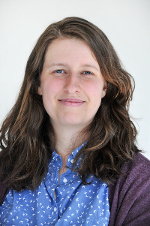
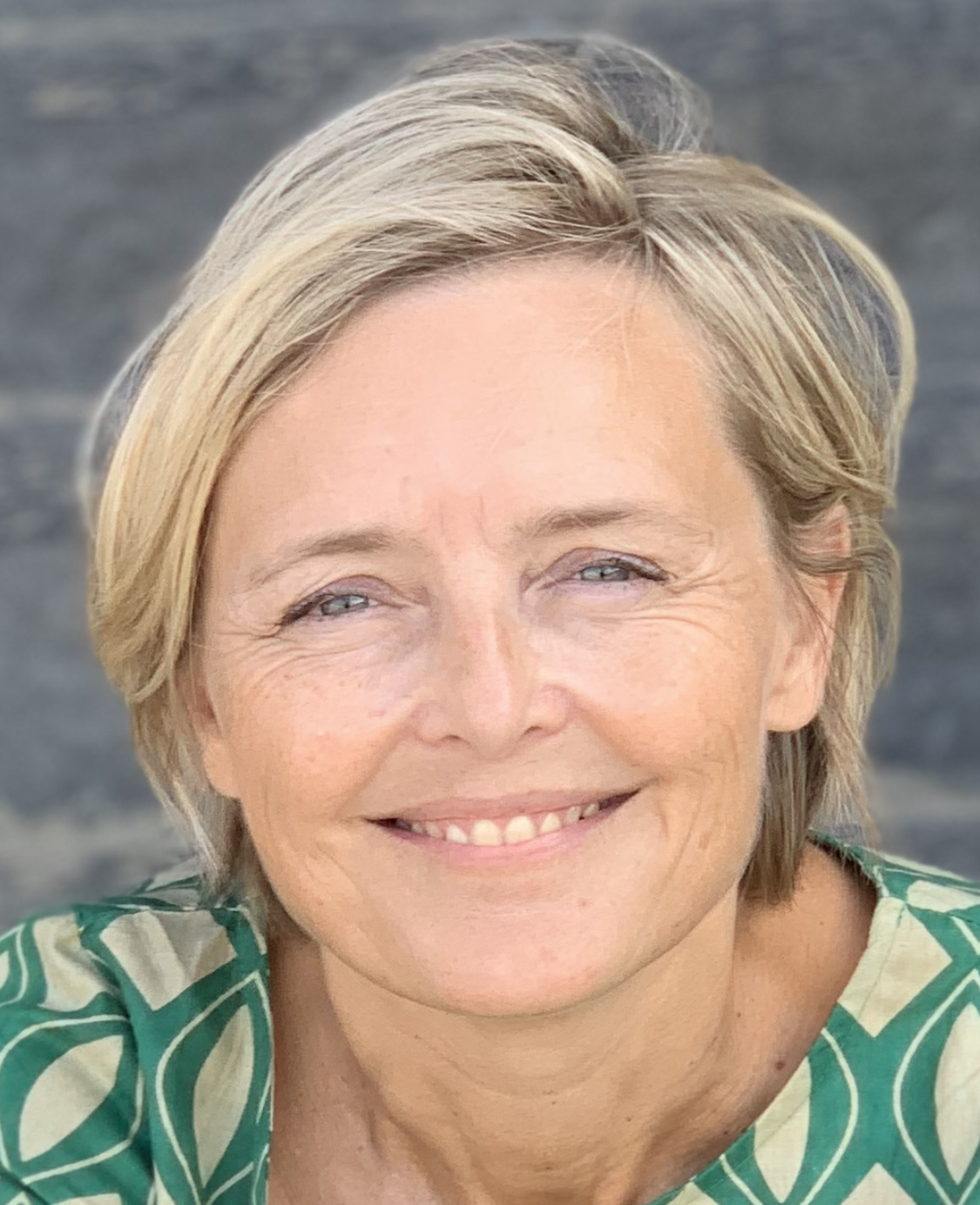
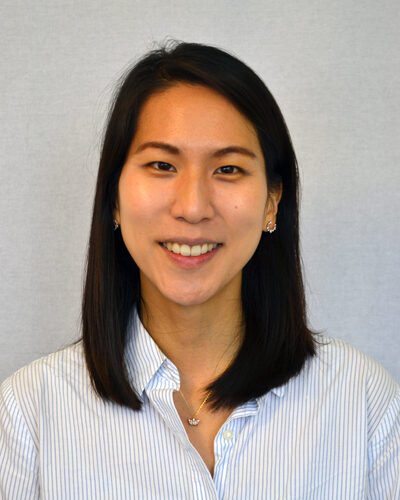
Anish Mukherjee is a Research Fellow at the Faculty of Economics, University of Italian Switzerland (USI) in Lugano, Switzerland, working under Professor Antonietta Mira. His role focuses on developing statistical methodologies for complex biomedical data analysis within an economics faculty context. He earned his PhD in Biostatistics from the University of Louisville under Jeremy Gaskins' supervision. His research integrates advanced statistical techniques with biomedical applications, specializing in Bayesian approaches for high-dimensional dependent data. Key methodological contributions include zero-inflated count data models, heterogeneity detection frameworks for longitudinal outcomes, and nonparametric Bayesian methods using stochastic differential equations. Applied work spans microbiome analysis related to neurological treatments, infectious disease transmission modeling, maternal health disparities, wastewater-based SARS-CoV-2 surveillance, and air pollution-COVID-19 outcome relationships.
Oke Gerke is a Professor in Clinical Biostatistics in Diagnostic Research at the Department of Clinical Research, University of Southern Denmark, and a Biostatistician at the Department of Nuclear Medicine, Odense University Hospital. He is affiliated with the Research Unit of Clinical Physiology and Nuclear Medicine in Odense and holds a DMSc from the Faculty of Health Sciences at SDU. MSc in Mathematics and Economics, University of Hamburg (1998) PhD in Statistics and Econometrics, University of Hamburg (2001) DMSc, Faculty of Health Sciences, University of Southern Denmark (2024) Lecturer Training Programme, University of Southern Denmark (2010) His research centers on the methodological foundations of diagnostic and prognostic trials in molecular imaging. He specializes in adaptive and sequential trial designs, Bland-Altman agreement analysis, ROC curve methodology, and network meta-analysis of diagnostic accuracy studies. His work bridges biostatistics, clinical epidemiology, and nuclear medicine, with applications in oncology, cardiology, and public health. He has contributed extensively to improving reporting standards in diagnostic research and statistical methodology in clinical trials. The recent articles highlight a strong trend toward methodological innovation in diagnostic research, with a focus on adaptive and seamless trial designs, real-time evaluation frameworks during outbreaks, and advanced statistical techniques for agreement and cutpoint analysis. His clinical work integrates nuclear imaging modalities like PET/CT in cancer and cardiovascular disease, supported by rigorous meta-analytic and biostatistical approaches. He is a member of the following scientific societies: International Biometric Society (IBS) International Society for Clinical Biostatistics (ISCB) Danish Society for Theoretical Statistics (DSTS) Oke Gerke has supervised 1 PhD as main supervisor and 22 as co-supervisor, with 10 completed master’s theses under his main supervision and 4 ongoing PhD projects as co-supervisor. He has been involved in research projects such as the Neurobiological effects of work-related adjustment disorder, contributing to both statistical design and analysis. While no specific grants are listed, his extensive publication record and collaborative research indicate active grant-supported work. He frequently participates in workshops, seminars, and conferences, delivering guest lectures on topics such as network meta-analysis and diagnostic test evaluation. He is actively involved in academic and clinical research teams at SDU and OUH, particularly within the Research Unit of Clinical Physiology and Nuclear Medicine. His collaborative network spans multiple disciplines, including cardiology, oncology, and psychiatric research, reflecting a multidisciplinary approach to clinical biostatistics.
Professor Basilis Gidas is a faculty member in the Department of Applied Mathematics at Brown University since 1984. He holds a B.Sc. from the National Technical University of Athens and advanced degrees in Mathematics, Physics, and Mathematical Physics from the University of Michigan. His research focuses on computational molecular biology, Bayesian statistics, and interdisciplinary applications in computer vision and speech recognition. He has contributed to transcriptional regulatory networks analysis, protein folding models, and signal transduction pathways using hierarchical/syntactic models inspired by Chomsky grammars. Key projects include studying MYC regulatory networks via ChIP-chip and microarray data, phosphorylation site motif identification through mass spectrometry, and ab initio protein folding using compositional models. He served on the National Research Council’s Spatial Statistics & Image Processing panel and edits the International Journal of Imaging Science and Technology. Awards include Fellowship in the Institute of Mathematical Statistics. Teaching includes advanced courses in statistical inference (APMA 1660), mathematical statistics (APMA 2670/2680), and modern learning theory (APMA 2812D).
Dr Silvia Liverani is a Reader in Statistics and Head of the Centre for Probability, Statistics and Data Science at Queen Mary University of London's School of Mathematical Sciences. Her research focuses on Bayesian methods, clustering, and spatio-temporal modeling with applications in epidemiology, environmental health, and genetics. She collaborates with institutions like the Royal Botanical Gardens, Kew, and has advised three PhD students. She leads interdisciplinary projects including a £1,000 LMS-funded LGBTQ+ Mathematics Open Day initiative and hosts international seminars. Research interests include Dirichlet process mixtures, causal methods, and health data modeling. Notable publications (2020–2025) address causal adversarial analysis, urban health inequalities, and Bayesian graph structures. Current projects involve biodiversity modeling using spatial statistics and misaligned data techniques. She has been cited in media outlets like phys.org and The Conversation for studies on cerebral palsy health risks and biodiversity loss. Her academic leadership includes roles in Equality, Diversity & Inclusion and collaborations with charities/industry. Recent grants include a Turing Institute Data Study Group project on biodiversity prioritization. Supervised PhD topics include Bayesian epidemiological modeling and biodiversity data analysis.
Ken Siu serves as Professor in the Department of Actuarial Studies and Business Analytics at Macquarie University, with affiliations to the Data Horizons Research Centre and Emerging Risks Research Centre. His research bridges theoretical and applied domains in quantitative risk analysis. Research interests span: Stochastic Processes in Financial Modeling Regime Switching and Markov Chain Applications Actuarial Risk Measurement Continuous-Time Pricing Models Esscher Transform Methodologies High-Frequency Financial Data Analysis Recent publications (2024-2025) demonstrate a strong focus on emerging financial and insurance challenges, including volatility modeling for cryptocurrency markets, pandemic risk quantification, and algorithmic approaches to claims reserving. His work consistently addresses model uncertainty and transaction cost implications across insurance and finance contexts. Professor Siu actively leads research initiatives including the ARC Discovery Project 'Two-Price Quantitative Finance' (2019-2022) and the current 'Climate Litigation Risk: AI-Enhanced Greenwashing Detection' project, demonstrating sustained grant acquisition capability. As a core member of Macquarie's Data Horizons Research Centre, he contributes to interdisciplinary collaborations analyzing complex risk landscapes through advanced computational and statistical frameworks.
Ingrid Kristine Glad is a Professor at the Department of Mathematics, University of Oslo, affiliated with the Faculty of Mathematics and Natural Sciences. She serves as co-director of the Integreat Centre of Excellence and BigInsight Centre for Research-Based Innovation, and chairs the Abel Board (2022–2026). Her research focuses on statistical and machine learning methodologies for high-dimensional data, particularly in genomics, sensor systems, and maritime applications. She has pioneered methods like monotone regression, tailored graphical lasso, and Shapley-value-based explainability frameworks. Research Interests: Glad’s work integrates theoretical statistics with practical applications in anomaly detection, change-point analysis, and predictive modeling. She develops novel algorithms for analyzing large-scale datasets from genomics (e.g., gene networks) and industrial sensor streams (e.g., battery degradation in maritime batteries). Her methods emphasize interpretability and scalability, addressing challenges in both supervised and semi-supervised learning contexts. Publications: Her recent work includes advancements in Shapley-value explanations, maritime battery health monitoring, and biofouling impact analysis. Key themes across her articles are statistical methodology development, machine learning applications in engineering, and computational tools for genomic data integration. Over 50 peer-reviewed papers span journals like Expert Systems with Applications , Journal of Machine Learning Research , and BMC Bioinformatics . Grants & Leadership: Leads interdisciplinary projects funded by the Norwegian Research Council and EU initiatives. Her roles in major centers highlight her influence in shaping statistical research agendas. Supervises active PhD students focused on topics like lifetime analysis models and maritime system analytics. Labs & Collaborations: Central to the Genomic HyperBrowser platform and collaborations with maritime industry partners. Active in both theoretical statistics (e.g., penalized regression) and applied domains (e.g., autonomous ship safety modeling).
Marco Carone is a Professor of Biostatistics and Adjunct Professor of Statistics at the University of Washington, holding the Norman Breslow Endowed Faculty Fellowship. He is an Affiliate Investigator at the Fred Hutchinson Cancer Research Center’s Vaccine and Infectious Disease Division. His research focuses on causal inference, survival analysis, and nonparametric methods, with applications in vaccine science, environmental health, and public health. Carone earned his PhD in Biostatistics from Johns Hopkins University and completed postdoctoral training at UC Berkeley. Education: PhD in Biostatistics, Johns Hopkins University (2011) Hon. B.Sc. in Probability and Statistics, McGill University (2005) Diploma of College Studies in Pure and Applied Sciences, Marianopolis College (2002) Research Interests: Development of robust statistical methods for causal inference and nonparametric estimation Analysis of vaccine efficacy and infectious disease data Integration of machine learning with traditional biostatistical frameworks Applications in environmental epidemiology and aging research His publications span topics including survival analysis, immune correlates of vaccine efficacy, and statistical methodologies for high-dimensional data. Carone has advised over 15 PhD students, many of whom hold academic and industry roles. Awards: Norman Breslow Endowed Faculty Fellowship (2019) UW Teaching Award (2018) Phi Beta Kappa and Delta Omega Honor Societies (2011) Teaching & Service: Teaches courses on survival analysis, statistical inference, and biostatistical consulting Associate Editor for Biometrics and Journal of Causal Inference Peer reviewer for leading journals and grant agencies
Timothy B. Armstrong is a Professor of Economics at the University of Southern California (USC), affiliated with the Department of Economics within the USC Dornsife College of Letters, Arts and Sciences. His research focuses on econometric theory, statistical inference, and applied economics, emphasizing robust estimation, treatment effects analysis, and moment inequality models. Armstrong has contributed extensively to methodologies for confidence intervals, hypothesis testing, and model misspecification adjustments. His work spans econometric topics such as optimal estimation of treatment effects under unconfoundedness, sensitivity analysis in approximate moment condition models, and adaptive testing in nonparametric regression. He has developed software tools (e.g., R and Stata packages) for robust empirical Bayes methods and bandwidth adjustments. Armstrong’s recent research addresses misspecification adaptation, panel data analysis, and false discovery rate adjustments in multiple testing scenarios. Publications in top journals like Econometrica and Quantitative Economics reflect his expertise in econometric theory and applications. His grants and collaborations emphasize methodological advancements in statistical decision theory and empirical practice.
Ciprian Crainiceanu is a Professor in the Department of Biostatistics at the Bloomberg School of Public Health, Johns Hopkins University. His research spans biostatistical methodology and applications in public health, with a focus on high-dimensional data from wearable devices and medical imaging. Education: PhD, Cornell University, 2003 MS, University of Bucharest, 1998 His research interests include functional data analysis, measurement error, longitudinal modeling, Bayesian inference, and nonparametric statistics, with applications in sleep, aging, multiple sclerosis, Alzheimer’s disease, and cancer. He develops statistical tools tailored to complex data from accelerometers, neuroimaging (MRI, CT, SPECT), and surgical monitoring. His recent work involves dynamic prediction models, step-counting algorithms for NHANES and ARIC data, and methods for high-dimensional functional and imaging data. The most recent publications highlight advancements in wearable data analysis, medical imaging platforms like Neuroconductor, and novel resampling methods such as the upstrap. His work integrates statistical theory, software development, and interdisciplinary collaboration. Scientific Awards: Fellow of the American Statistical Association (ASA) Chair, Statistics in Imaging Section of ASA (two terms) Chair, Biostatistics Methods and Research Design (BMRD) NIH review section Crainiceanu is actively involved in mentoring, teaching, and collaborative research. He co-founded the SMART (Statistical Methods and Applications for Research in Technology) research group and Neuroconductor, fostering interdisciplinary innovation. His work emphasizes scalable, software-backed methods and close collaboration with domain scientists. He has led methodological developments in variance components testing, functional regression, population value decomposition, and dynamic prediction, applied to real-world health challenges. Labs and Research Groups: Co-founder, SMART (Statistical Methods and Applications for Research in Technology) Co-founder, Neuroconductor (open-source platform for medical imaging in R) Wearable and Implantable Technology (WIT) group MAGIC (Methods and Applications Group for Imaging in the Clinic)
David Ruppert is the Andrew Schultz Jr. Professor of Engineering at Cornell University's School of Operations Research and Information Engineering, and Professor of Statistics and Data Science. He holds dual appointments and has been a faculty member since 1987. His education includes a B.A. in Mathematics from Cornell University (1970), M.A. in Mathematics from the University of Vermont (1973), and Ph.D. in Statistics and Probability from Michigan State University (1977). Research Interests: His work spans functional data analysis, astrostatistics, neuroimaging (fMRI/ICA), environmental statistics, and semiparametric regression. He has pioneered methods in measurement error models, splines, and Bayesian statistics. His research has been continuously funded by NSF, NIH, and EPA since 1978. Publications: Over 130 refereed articles and 5 books, including foundational texts like Measurement Error in Nonlinear Models and Statistics and Data Analysis for Financial Engineering . Recent work includes astrostatistical modeling of galaxy spectral energy distributions and neuroimaging analysis. Awards/Honors: Wilcoxon Prize (1986), ASA/IMS Fellowships, Highly Cited Researcher (ISI), and Distinguished Alumni Award (2014). Teaching: Courses include Financial Engineering, Bayesian Statistics, and Functional Data Analysis. He co-developed four graduate/undergraduate courses at Cornell. Service: Editor of Journal of the American Statistical Association , Director of the MPS Program in Data Science and Statistics (DSS). Impact: 29 PhD students trained, many now leading researchers in academia and industry.
Jerome Keating is the Peter T. Flawn Professor of Management Science and Statistics at the Carlos Alvarez College of Business, UTSA. He holds a Ph.D. in Mathematical Sciences from the University of Texas at Arlington, alongside M.A. and B.S. degrees in Mathematics from the same institution. His roles include Undergraduate Advisor of Record and former department chair (Management Science and Statistics, Demography). He has extensive experience in academia, industry (Bell Helicopter Textron, Los Alamos National Laboratory), and editorial roles. **Education**: Ph.D. in Mathematical Sciences, University of Texas at Arlington M.A. in Mathematics, University of Texas at Arlington B.S. in Mathematics, University of Texas at Arlington His research focuses on statistical estimation criteria (e.g., Pitman nearness), reliability theory, and environmental science applications. He has published over 50 peer-reviewed articles, two books, and contributed to projects like NASA’s Magnetospheric Multiscale mission and leak detection systems for underground tanks. **Awards**: President’s Distinguished Achievement Award for Teaching Excellence (1989, 2001) Chancellor’s Council Teaching Award (1995, 2001) Fellow of the American Statistical Association (1997) Don B. Owen Award in Statistics (2006) **Consulting & Grants**: Collaborated with NASA, Southwest Research Institute, Valero, and Mobil Research on reliability analysis and statistical applications. He co-advised two doctoral dissertations and served on numerous committees. His work spans editorial roles for journals like *STATS* and *Communications in Statistics*.
Yeonjoo Park is an Assistant Professor in the Department of Management Science and Statistics at the Alvarez College of Business, University of Texas at San Antonio (UTSA), and serves as core faculty in the School of Data Science. Her academic career includes a visiting assistant professorship at the University of Illinois at Urbana-Champaign from 2017-2018. Education: Ph.D. in Statistics, University of Illinois at Urbana-Champaign (2017) M.S. in Statistics, Seoul National University (2011) B.S. in Statistics, Ewha Womans University (2009) Research Focus: Dr. Park specializes in functional data analysis with emphasis on methodological development for irregularly or partially observed functional data. Her work bridges robust statistics and spatial data analysis , featuring innovative approaches to dimension reduction and classification. Key research pillars include: Partially observed functional data structures Functional regression modeling and inference Robust statistical methodologies Data-adaptive dimension reduction techniques Publication Profile: Her 13 recent publications (2014-2025) reveal a consistent focus on advancing functional data analysis frameworks, particularly for incomplete datasets. Notable extensions include spatial applications in agricultural prediction and interdisciplinary collaborations spanning biomedical engineering, primatology, and media studies on geopolitical conflicts. Interdisciplinary Engagement: Dr. Park actively collaborates across biomedical engineering, marketing, and communication fields, demonstrating the real-world applicability of statistical methodologies in diverse scientific and social contexts.
Professor François Caron is a Professor of Statistics at the University of Oxford and a Tutorial Fellow at Keble College. His research focuses on statistical machine learning, computational statistics, Bayesian nonparametrics, and network analysis. He develops models for structured data, particularly Bayesian nonparametric methods and Monte Carlo techniques, with applications to sparse and modular networks with overlapping communities. His work often involves exchangeable random measures and Lévy processes to model complex network structures. Caron's research groups include Computational Statistics and Machine Learning, and Statistical Theory and Methodology. His notable contributions include advancements in graphex processes, sparse dynamic networks, and Bayesian nonparametric factor models. He has authored influential papers on topics like FAB-PPI inference, neural network convergence, and multiGraphex processes. His contact information includes an email (caron@stats.ox.ac.uk) and a website (www.stats.ox.ac.uk/~caron). Key research themes include modeling network sparsity, power-law properties, and overlapping community structures using novel probabilistic frameworks. His recent work explores the theoretical foundations of deep neural networks and their feature learning capabilities. Collaborations span multiple disciplines, reflecting his interdisciplinary approach to statistical modeling.
Prof. Taiji Suzuki is an Associate Professor at the University of Tokyo in the Department of Mathematical Informatics . He also serves as Team Leader of the "Deep Learning Theory" team at AIP-RIKEN , Japan. With a PhD in Information Science and Technology from the University of Tokyo (2009), he has held academic positions at the University of Tokyo (2009-2013) and Tokyo Institute of Technology (2013-2017) before returning to the University of Tokyo in 2017. University of Tokyo (2004: BEng in Mathematical Engineering) University of Tokyo (2006: MSc in Information Science and Technology) University of Tokyo (2009: PhD in Information Science and Technology) His research interests span statistical learning theory , deep learning , kernel methods , sparse estimation , and stochastic optimization . He investigates how neural networks adapt to function smoothness, avoid the curse of dimensionality, and achieve global optimization through mean-field dynamics. His work bridges theoretical guarantees (minimax optimality, convergence analysis) with practical implementations (transformers, graph neural networks, diffusion models). The 15 most recent articles focus on transformers' representation power, graph neural networks' limitations, diffusion models' convergence, and optimization theories for deep learning. Key themes include information-theoretic bounds , feature learning dynamics , and mean-field analysis . He explores applications in AI for medicine, federated learning, and biomedical modeling. Awards & Recognition: Outstanding Paper Award, ICLR 2021 MEXT Young Scientists’ Prize Outstanding Achievement Award, Japan Statistical Society 2017 Outstanding Achievement Award, Japan Society for Industrial and Applied Mathematics 2016 Best Paper Award, IBISML 2012 Best Paper Candidate, ICDM 2019 He has served as Area Chair for NeurIPS, ICML, ICLR, AISTATS, and as Program Chair for ACML. His scientific contributions include convergence theories for stochastic gradient methods, minimax analysis of deep learning vs kernel methods, and novel frameworks for distributional optimization in diffusion models.
Bryon Aragam is an Associate Professor and Topel Faculty Scholar at the Booth School of Business , University of Chicago . His work bridges causality , statistical machine learning , and probabilistic modeling , with applications in AI systems like ChatGPT and DALL-E. Key research themes include: Causal Structure Learning : Extracting latent causal graphs from multimodal data using nonparametric methods. Deep Generative Models : Analyzing overparametrization and variational inference for representation learning. Latent Variable Discovery : Using Markov boundaries and convex subset lattices to uncover hidden dependencies. Algorithm Design : Developing scalable methods like DAGMA for DAG learning and theoretical guarantees for GES/PC algorithms. His paper trends reveal a focus on nonparametric statistics , graphical models , and neural network theory , with recent work on transformer memory dynamics and identifiability in deep latent models . Papers frequently appear in top venues like NeurIPS , JMLR , and AOS , emphasizing theoretical rigor and practical validation.