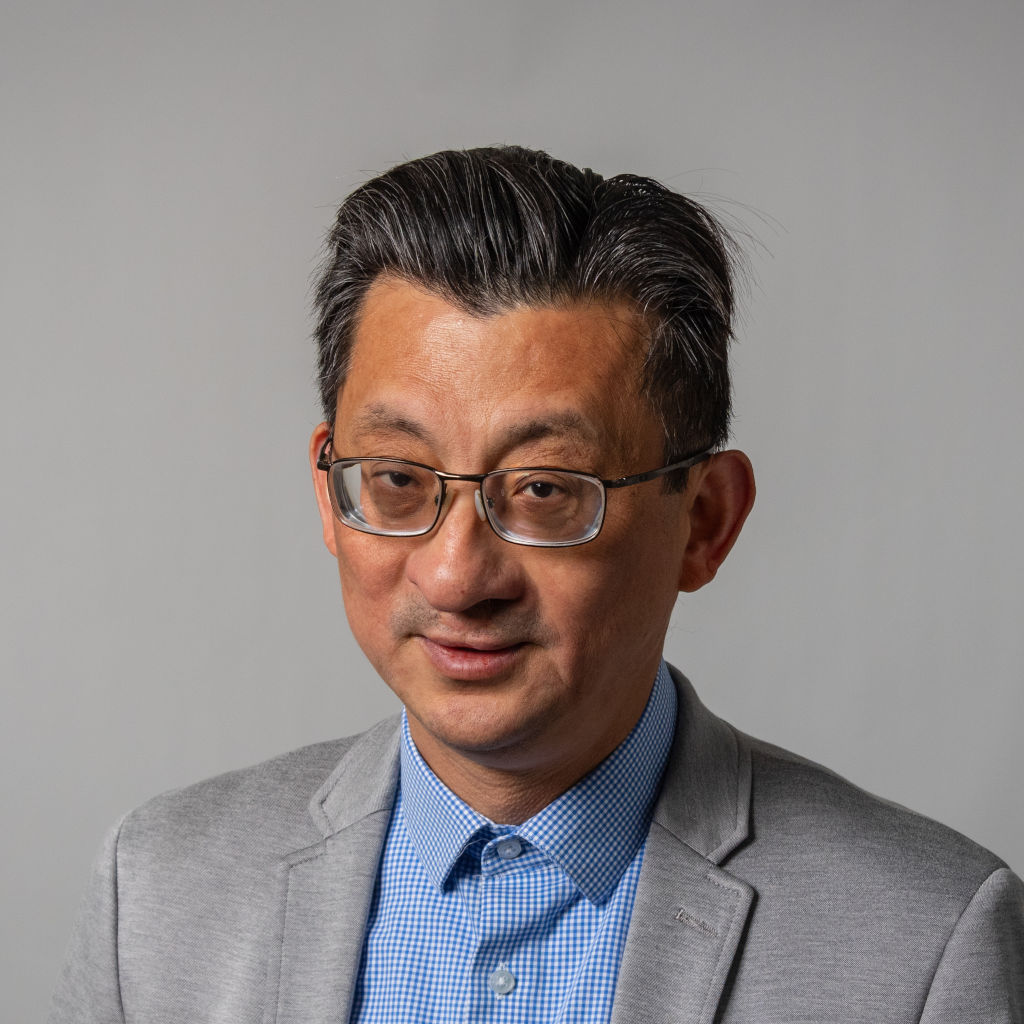
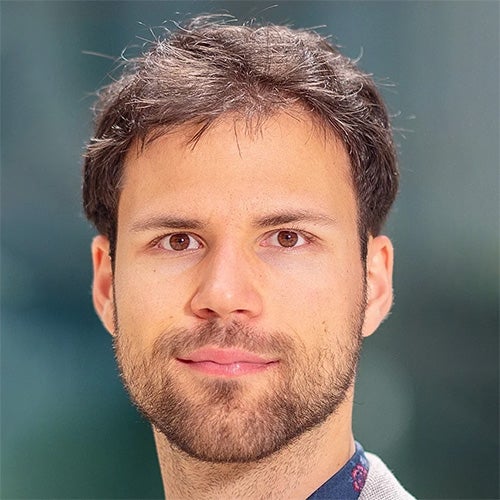
Prof. Dr. Göran Kauermann is a Full Professor of Statistics at the Ludwig-Maximilians-University Munich , holding the Chair of Applied Statistics in Social Sciences, Economics and Business . His research spans nonparametric models, generalized linear models, and network data analysis, with applications in economics, epidemiology, and data science. Education: Diplom in Economic Mathematics (1991, TU Berlin), PhD in Statistics (1994), Habilitation (Venia Legendi) in Statistics (2000) Kauermann’s research interests focus on penalized regression , network analysis , and statistical modeling in economics, social sciences, and public health. Recent work explores label uncertainty in machine learning , spatio-temporal conflict diffusion , and dynamic network models for economic and social data. Scientific trends in his publications include penalized splines for nonlinear modeling, network flow estimation in social and economic contexts, and label variation analysis in machine learning. His collaborations span climate zone classification , Covid-19 mortality modeling , and smart city parking analytics . Scientific Awards: Bruce Russett Award (2020) for political network research Leadership Roles: He served as Dean of the Faculty of Mathematics, Informatics and Statistics (2019–2021), Speaker of the Elite Master Program in Data Science (2016–2026), and Chair of the German Statistical Society (2005–2013). He also held editorial roles in journals like AStA Advances in Statistical Analysis and Statistical Modelling .
Erick Delage is a Professor in the Department of Decision Sciences at HEC Montréal, holding the Canada Research Chair in Decision Making Under Uncertainty. He is a member of the Group for Research in Decision Analysis (GERAD) and an associate academic member of MILA. His research focuses on optimization under uncertainty, robust and stochastic optimization, machine learning, and risk management, with applications in finance, energy systems, and transportation. Delage holds a Ph.D. in Electrical Engineering from Stanford University, where he worked with renowned scholars like Andrew Y. Ng and Yinyu Ye. His teaching includes courses on Quantitative Risk Management, Decision Analysis, and Robust Optimization at institutions like HEC Montréal, Politecnico di Milano, and EPFL. He has supervised numerous PhD and master's students, leading to impactful contributions in areas like distributionally robust optimization and deep reinforcement learning for financial engineering. Delage's work emphasizes bridging theory and practice, with notable contributions to contextual optimization methods, energy transition pathways, and risk-averse decision-making. His research has been recognized with awards such as the Nicholson Award (2008) and membership in the Royal Society of Canada's College of New Scholars (2020). His laboratories and collaborations include the Supply Chains and Mobility research cluster funded by IVADO, focusing on data-driven decision-making for resilient systems. Key grants include leadership in energy transition optimization and robust supply chain frameworks.
Jiong Tang is a Pratt & Whitney Chair Professor in Design and Manufacturing at the University of Connecticut , where he also serves as Co-Director of the Management and Engineering for Manufacturing Program . He received his B.S. and M.S. in Applied Mechanics from Fudan University, China (1989 and 1992), and his Ph.D. in Mechanical Engineering from Pennsylvania State University (2001). Prior to joining UConn, he worked at the GE Research Center as a research engineer. Research Interests : System dynamics, control theory, smart materials, vibration suppression, uncertainty propagation, computational intelligence, and multi-physics system modeling. Current Projects : Digital twin development for aerospace materials, physics-informed machine learning in manufacturing, adaptive metasurface design, and optimization of cooperative robotics. Methodological Focus : Combines Bayesian deep learning , Gaussian process metamodeling , transformer-based architectures , and multi-fidelity data fusion for industrial applications. His work emphasizes smart sensing , electromechanical integration , and uncertainty-robust inverse analysis . Collaboration : Research funded by federal agencies and industrial partners , with particular emphasis on aerospace and manufacturing technologies. His recent publications highlight generative adversarial networks for defect detection , piezoelectric metamaterials , and physics-guided neural network architectures across mechanical, structural, and composite systems.
Erich J Greene is a Research Scientist in the Department of Biostatistics at the Yale School of Public Health , where he contributes to clinical trial methodology and statistical analysis. Yale Center for Analytical Sciences (YCAS) Yale Data Coordinating Center (YDCC) Education: PhD in Psychology (2003), Princeton University MA in Psychology (1997), Princeton University MS in Physics (1995), Cornell University AB in Physics (1991), Princeton University Research Interests span Biostatistics , Clinical Trial Design , Survival Analysis , and Public Health Data Science . His work focuses on: Competing risks and clustering in time-to-event data Electronic health record data validation Sex/gender disparities in cardiovascular outcomes Pragmatic trial methodologies Bayesian approaches for complex biomedical data Publication Trends reveal expertise in: Cluster-randomized trial statistical methods Fall injury prevention modeling Dementia care comparative effectiveness ICD-10 coding algorithms Non-proportional hazard scenarios Zero-inflated recurrent event modeling Collaborations include frequent partnerships with: James Dziura (9 co-publications) Can Meng (8 co-publications) David Ganz and Denise Esserman (6 each) Additional Activities: Served on the Board of Directors for the New Haven Theater Company (2011-2022).
Sotirios Bersimis is an Associate Professor at the University of Piraeus, Department of Business Administration. He holds additional roles as an elected member of the board of directors of the National Statistical Institute (Greece) and representative for FenSTATs and ECAS. Previously, he served as President of the Hellenic Organization for Health Care Services (EOPYY) and as President of the European Healthcare Fraud & Corruption Network (EHFCN). His education includes a PhD in Statistics from the University of Piraeus, an MSc in Statistics from Athens University of Economics and Business, and a BSc in Statistics and Insurance Science from the University of Piraeus. His research focuses on stochastic models for process monitoring, statistical process control, and health analytics. He has published over 60 peer-reviewed articles in journals like Journal of Quality Technology , Statistics in Medicine , and Annals of the Institute of Statistical Mathematics . His work emphasizes applications in healthcare surveillance, quality management, and fraud detection. Notable contributions include the development of the Process Monitoring Group and the 'Multivariate Statistical Process Control Charts: An Overview' paper, which remains highly cited in the field. Bersimis has received awards such as the 2018 ENBIS Best Manager Award and a public honor from the Greek Prime Minister. He actively collaborates with healthcare institutions, pharmaceutical companies, and international organizations, contributing to projects on health expenditure modeling and anti-fraud initiatives. His teaching spans undergraduate and postgraduate programs in statistics, biostatistics, and data science.
Joshua Speagle is an Assistant Professor jointly appointed in the Department of Statistical Sciences and the David A. Dunlap Department of Astronomy & Astrophysics at the University of Toronto. He is also an Associate Member of the Dunlap Institute for Astronomy & Astrophysics and a Member of the Data Sciences Institute. His research lies at the intersection of statistics, astronomy, and computer science, focusing on astrostatistics and data-intensive astrophysics. His research interests include astrostatistics, data science, machine learning, statistical inference, and Bayesian methods. He develops novel statistical learning techniques to extract insights from large, complex datasets, particularly from astronomical surveys. His work emphasizes interpretability, robust inference, and computational efficiency, with applications to galaxy formation, stellar photometry, and 3D dust mapping. The trends in his recent publications reflect a strong focus on interdisciplinary methodologies, particularly in Bayesian inference, nested sampling, and machine learning applied to astrophysical problems. His work consistently bridges theoretical statistics with practical applications in astronomy, emphasizing open-source software and reproducible research. Banting Postdoctoral Fellowship Dunlap Fellowship Joshua Speagle is deeply committed to mentorship and collaboration. He co-leads the Astrostatistics Research Team (ART) with Gwen Eadie, mentoring students and postdocs across disciplines. He is involved in graduate and undergraduate research programs, including the Astronomy & Astrophysics Summer Undergraduate Research Program (SURP). He teaches courses in statistics and astronomy and serves on committees within the University of Toronto and professional societies such as the AAS, ASA-AIG, and SSC-DSA. He co-leads the interdisciplinary Astrostatistics Research Team (ART), which fosters a collaborative, inclusive environment focused on cutting-edge research at the intersection of statistics and AI. The team emphasizes open and accessible science, releasing open-source tools like dynesty and brutus , and mentoring the next generation of data scientists.
Anna Simoni is a Senior Researcher at CNRS/CREST and Professor of Econometrics and Statistics at ENSAE and École Polytechnique. She is a CNRS Research Fellow and Fellow of Hi! Paris and Institut Louis Bachelier. Her research spans econometrics, machine learning, and AI, focusing on high-dimensional models and Bayesian inference. Education: PhD in Economics, Toulouse School of Economics (2009) Habilitation à Diriger de Recherche (HDR), Toulouse School of Economics (2017) Research Interests: Her work integrates econometrics with machine learning to develop statistical methods for big data, including Google search data for macroeconomic forecasting and causal inference with minimal assumptions. Grants and Awards: She received the CNRS Bronze Medal in 2019 and leads the ANR-funded project "Moment Conditions Models and Bayesian Inference for Policy Evaluation" (2021-2026).
Max Goplerud is an Assistant Professor in the Department of Government at the University of Texas at Austin, where he teaches courses in political methodology and Bayesian statistics. He received his Ph.D. from Harvard University in 2020, where he was an affiliate of the Institute for Quantitative Social Science and the Minda de Gunzberg Center for European Studies. His educational background includes: Ph.D. in Government, Harvard University (2020) Goplerud's research spans two primary areas. First, he develops new statistical methods at the intersection of Bayesian statistics and machine learning to address limitations in existing approaches for political science research. His methodological work focuses on solving problems related to heterogeneous effects, hierarchical models, and ideal point estimation. Second, he applies text-as-data methods to study legislative behavior across different political contexts, including Europe, the United States, and Japan. His research combines advanced statistical techniques with substantive political questions, creating tools that enhance empirical analysis in political science. His publications reveal a strong focus on methodological innovation in political methodology. Goplerud frequently publishes in top political science and statistics journals, with recent work appearing in the American Political Science Review, American Journal of Political Science, Journal of Politics, Biometrika, Political Analysis, and Bayesian Analysis. His research bridges the gap between statistical methodology and political science applications, with particular emphasis on Bayesian approaches, variational inference, and machine learning techniques adapted for political science research questions. Goplerud has developed several R packages that implement his methodological contributions: vglmer - for estimating hierarchical models using variational inference FactorHet - for estimating heterogeneous effects in factorial and conjoint experiments gKRLS - for kernel regularized least squares estimation He teaches graduate courses including Bayesian Statistics and Statistical Analysis in Political Science, as well as undergraduate research methods courses. His teaching spans institutions including the University of Texas at Austin and the University of Pittsburgh, where he previously taught courses on measurement, Bayesian statistics, and social data visualization.
Cristian R. Rojas is a Professor at the Division of Decision and Control Systems within the School of Electrical Engineering and Computer Science at Kungliga Tekniska Högskolan (KTH Royal Institute of Technology) in Stockholm, Sweden. He has been affiliated with KTH since October 2008, advancing from his initial position to his current professorship. His academic career focuses on control theory, system identification, and related fields. Dr. Rojas received his M.S. degree in electronics engineering from the Universidad Técnica Federico Santa María in Valparaíso, Chile, in 2004, followed by his Ph.D. in electrical engineering from The University of Newcastle, NSW, Australia, in 2008. Professor Rojas's research spans system identification, signal processing, and machine learning, with particular emphasis on developing methods for optimal input design, sparse system identification, and continuous-time system modeling. His work bridges theoretical foundations with practical applications in control systems engineering, focusing on creating efficient algorithms for system identification that balance computational complexity with estimation accuracy. He has made significant contributions to understanding coherence properties in system identification and developing methods for unstable system identification in closed-loop configurations. An analysis of Professor Rojas's recent publications reveals a strong focus on sparse system identification techniques, continuous-time system modeling, and application-oriented input design. His work consistently addresses the challenge of balancing theoretical rigor with practical implementation constraints, particularly in the areas of coherence minimization, computational efficiency, and closed-loop system identification. The research demonstrates a clear evolution toward increasingly sophisticated methods for handling nonlinear systems and unstable dynamics while maintaining statistical consistency. Associate Editor for IFAC journal Automatica Associate Editor for IEEE Control Systems Letters (L-CSS) Member of IEEE Technical Committee on System Identification and Adaptive Processing (since 2013) Member of IFAC Technical Committee TC1.1. on Modelling, Identification, and Signal Processing (since 2013) As an educator, Professor Rojas supervises numerous degree projects across various specializations including Machine Learning, Systems Control and Robotics, and ICT Innovation. He teaches core courses such as Machine Learning Theory (EL2810) and Modelling of Dynamical Systems (EL2820), demonstrating his commitment to both theoretical foundations and practical applications in control systems education. His academic leadership extends to course development and examination responsibilities across multiple engineering programs. Professor Rojas is embedded within the Division of Decision and Control Systems at KTH, a research environment dedicated to advancing the theoretical and practical aspects of control theory, system identification, and decision-making systems. His collaborative work with researchers like Håkan Hjalmarsson, James S. Welsh, and others has established him as a key contributor to the international control systems community.
Angelos Kanas is a Professor of Finance at the Department of Economics within the School of Economics, Business and International Studies at the University of Piraeus. His academic career spans over two decades with significant contributions to finance, banking, and econometric modeling, supported by continuous research funding from entities including NATO and the European Union. His educational background includes undergraduate studies funded by the Hellenic National Scholarships Foundation (I.K.Y.), an M.Sc. supported by the Bodosakis Foundation, and a Ph.D. financed by the National Scholarships Foundation (I.K.Y.). Kanas specializes in Finance, International Finance, Financial Markets, Financial Risks and Protection, and Banking. His research integrates advanced quantitative methods to analyze systemic risk, market efficiency, and policy impacts, with particular focus on regime-switching models and DEA efficiency measurements. Recent work explores intersections between climate finance, banking stability, and corporate governance. Analysis of his 15 most recent publications reveals an evolving research trajectory: early work (2005-2013) established expertise in exchange rate dynamics and asset pricing, while post-2015 research increasingly addresses banking regulation, systemic risk prediction, and methodological innovations in efficiency analysis. Current work (2022-2025) demonstrates strong engagement with climate-related financial risks and AI applications in finance. Hellenic National Scholarships Foundation (I.K.Y) studentship (undergraduate, three annual) Bodosakis Foundation scholarship (M.Sc.) National Scholarships Foundation (I.K.Y.) scholarship (Ph.D.) Kanas has secured research funding from NATO and EU bodies, reflecting recognition of his work's policy relevance. His extensive refereeing activities across 30+ journals including Journal of International Economics and Journal of Banking and Finance demonstrate scholarly leadership. He teaches core finance courses including International Finance and Special Topics in Finance, and has authored two academic books: Principles of Investment Analysis and Financial Markets (2021) and FinTech and Machine Learning: Basic Principles and Applications (2023).
Yuexi Wang is an Assistant Professor in the Department of Statistics at the University of Illinois. Their research focuses on Bayesian methodology, approximate Bayesian computation, and deep learning applications in statistical inference. Key areas include uncertainty quantification, sparse deep learning, and statistical modeling for count data. Education: Not explicitly stated in text. Research interests span Bayesian analysis, with emphasis on developing scalable methods for posterior approximation, adversarial simulation, and generative models. They have contributed to variable selection via Bayesian forests and uncertainty quantification in sparse neural networks. Recent work explores optimal transport-based methods for posterior sampling and Pochhammer priors in count models. Publications emphasize methodological advances in Bayesian deep learning, including data augmentation techniques and adversarial approaches. Articles often bridge theory and application in machine learning and computational statistics. No scientific awards explicitly mentioned. Advising and grants information unavailable in provided text.
Dr. Tom James Stindl is a Lecturer and statistician at the School of Mathematics and Statistics, UNSW Sydney. His work centers on point process models, particularly renewal Hawkes processes, with applications across finance, seismology, crime analysis, and bushfire modeling. He earned his Ph.D. in statistical inference for self-exciting point processes under Dr. Feng Chen at UNSW Sydney. Supervises PhD, MRes, and Honours students (e.g., Jason Lambe, Zhe Han) Research focuses on computational statistics, Hawkes processes, and Bayesian/non-parametric methods Key grant: "Inference for Hawkes processes with challenging data" (Australian Research Council, 2024-2026) His recent publications analyze statistical inference techniques for point process models, though specific titles aren't listed here. Teaching includes courses like Statistical Inference and Statistical Modelling and Computing . Contact: t.stindl@unsw.edu.au
Zexun Chen is a Lecturer in Predictive Analytics at the University of Edinburgh Business School , specializing in probabilistic machine modeling and non-parametric Bayesian predictive methods. He is affiliated with the Edinburgh Centre for Financial Innovations and holds memberships in the Royal Statistical Society (Fellow), Institute of Mathematics and its Applications (MIMA), London Mathematical Society (LMS), and International Statistical Institute.
Stefan Radev is an Assistant Professor in the Cognitive Science department at Rensselaer Polytechnic Institute . His work focuses on developing Bayesian methods with generative neural networks and computational models for complex systems like cognition and disease outbreaks. He is the core developer of the BayesFlow framework, which enables amortized Bayesian inference using deep learning. Radev's research addresses computational challenges in Bayesian workflows, such as rapid parameter estimation and model validation through neural networks. His primary research interests include Deep Learning , Probabilistic Modeling , and their applications in computational neuroscience and biomedical engineering. He collaborates with the Center for Modeling, Simulation and Imaging in Medicine (CEMSIM) and contributes to open-source projects like BayesFlow, which supports multi-backend frameworks (PyTorch/TensorFlow/JAX). Recent publications highlight advancements in amortized inference, simulation-based calibration, and robust Bayesian workflows. His work spans domains from cognitive modeling to biomedical imaging, emphasizing interdisciplinary applications of Bayesian methods. No scientific awards are explicitly listed, though his contributions to open-source tools and impactful research indicate significant academic recognition.
Juan Restrepo is a Professor of Mathematics with courtesy appointments in Statistics, EECS, and Physical Oceanography at Oregon State University, where he holds a Courtesy Faculty position in the Department of Mathematics within the College of Science. He is also affiliated with the University of Tennessee and Oak Ridge National Laboratory, where he holds appointments in the Computer Science and Mathematics Division. He serves as Co-Director of the Dynamics and Data Science Institute (D2SI), a leading interdisciplinary research center. Ph.D. in Physics, Pennsylvania State University, 1992 M.S. in Engineering (Acoustics), Pennsylvania State University, 1987 B.S. in Music, New York University, 1983 Restrepo's research lies at the intersection of data science and dynamics, with two primary tracts: (1) applying statistical physics and data science to complex non-equilibrium systems such as climate and financial markets; and (2) studying ocean dynamics and transport in climate and nearshore processes. His work emphasizes uncertainty quantification, adaptive time series analysis, extreme events, and data assimilation. His recent publications reflect a strong focus on modeling geophysical systems under uncertainty, using advanced computational and statistical techniques. Themes include climate sensitivity, oil spill dispersion, sediment transport, wave breaking, and high-performance computing for large-scale simulations. His work integrates machine learning, stochastic modeling, and dynamical systems theory. SIAM Fellow SIAM Geosciences Career Award ORISE Distinguished Post-doctoral Fellow DOE Young Investigator Award Ruth Homeyer Graduate Student Award Restrepo has secured over $30 million in research funding from NSF, DOE, NASA, and GoMRI. He has advised numerous students in applied mathematics and computational sciences, and has held leadership roles in professional societies, including President of the Nonlinear Geophysics Section at the American Geophysical Union. He is actively involved in promoting diversity in science and mentoring underrepresented groups. He leads interdisciplinary research teams at D2SI and collaborates with national labs such as Argonne and Los Alamos. His work bridges applied mathematics, climate science, oceanography, and computational engineering, making significant contributions to both theory and real-world applications.