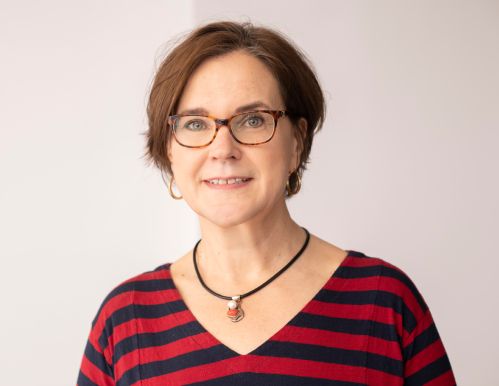
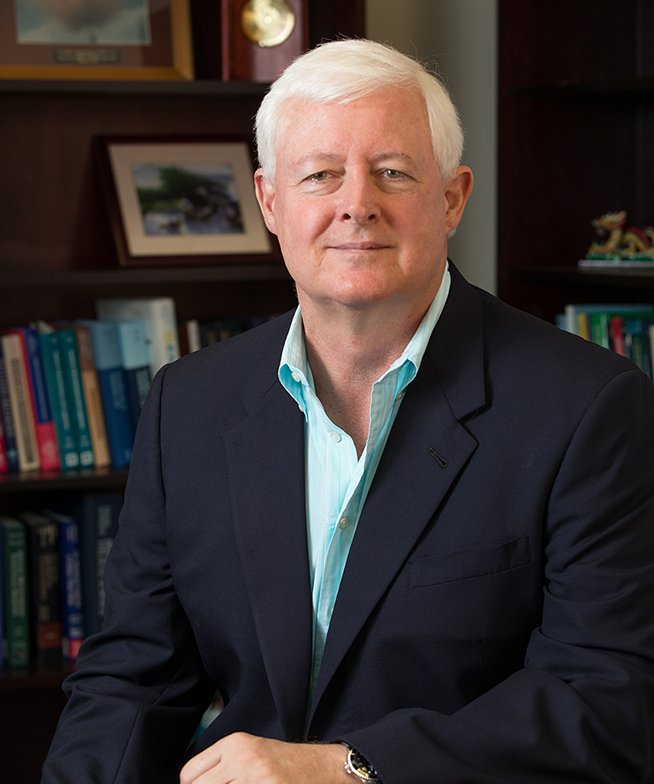
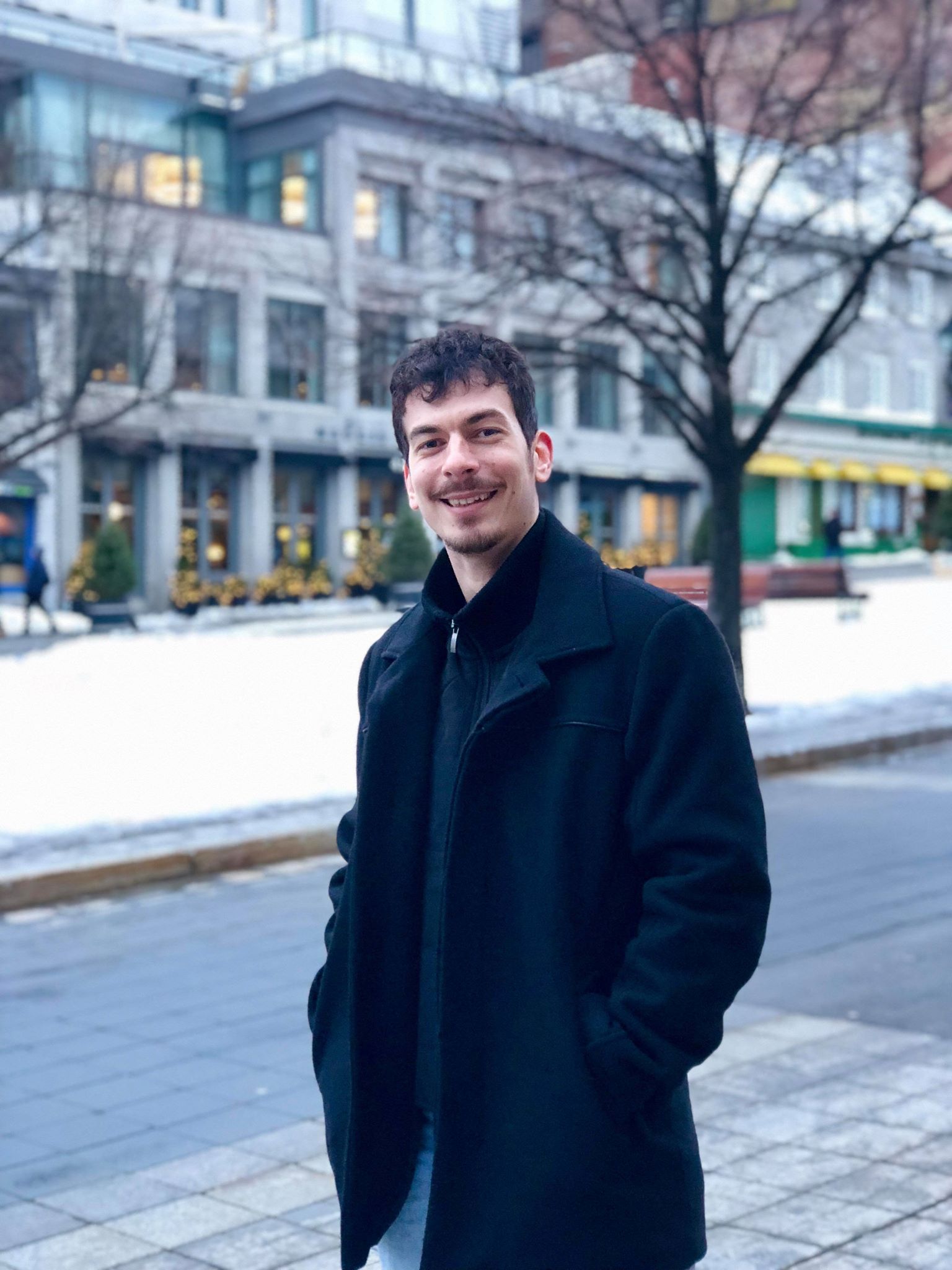
Bärbel Finkenstädt Rand is a Senior Tutor at the Warwick Medical School , University of Warwick, with extensive research contributions at the intersection of statistics, machine learning, and biomedical sciences. Her work focuses on developing advanced methodologies for analyzing temporal and spatio-temporal data, particularly in circadian rhythms and disease dynamics. Research Themes : Bayesian inference, Hidden Markov Models, circadian rhythm stability, transcriptional bursting, and wearable sensor data analysis. Collaborations : Chronotherapy Group at Warwick, Université Paris-Saclay, and interdisciplinary teams across medicine, genetics, and computational biology. Publications reveal a strong emphasis on circadian health monitoring, gene expression dynamics, and epidemic modeling using stochastic frameworks. Her recent work prioritizes personalized medicine applications through telemonitored biomarkers and IoT platforms . Methodological Innovations include spline-based HMMs, distributed delay systems, and harmonic modeling for nonstationary time series. Applications span oncology, sleep medicine, and population ecology.
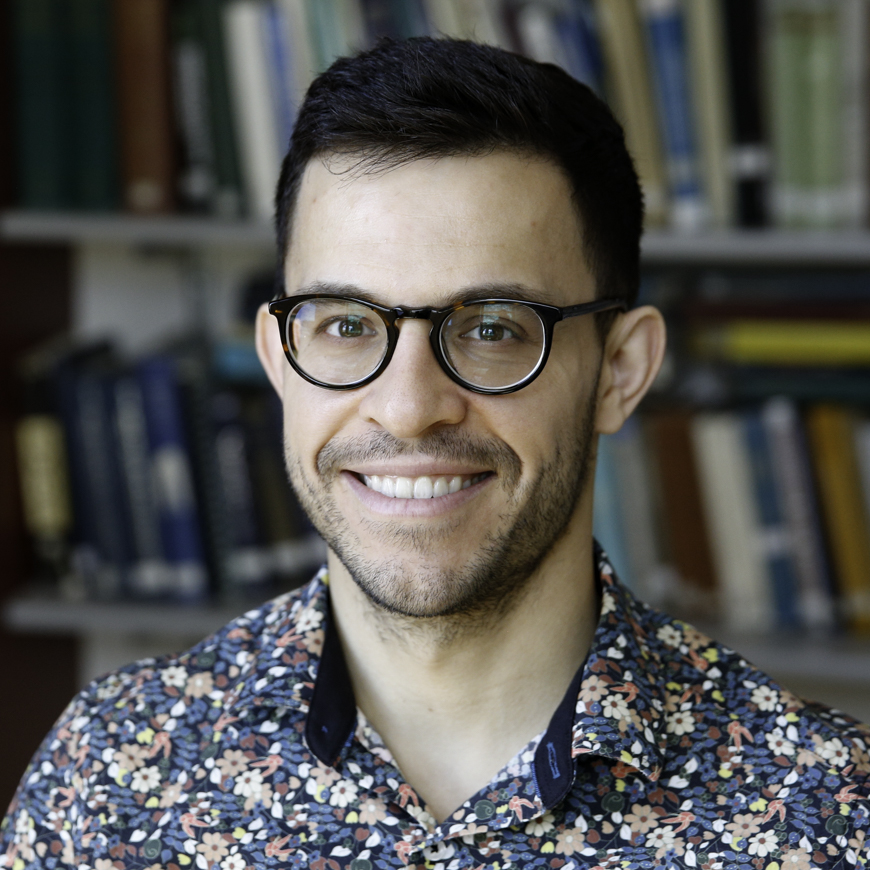
Dr. Yongchao Huang is a Lecturer (Assistant Professor) in the School of Natural and Computing Sciences at the University of Aberdeen, where he has been employed since August 2023. He also holds affiliations with the University of Oxford and the University of Cambridge through past postdoctoral and collaborative roles. He is actively involved in research, teaching, and academic service, and is currently accepting PhD students. His educational background includes: DPhil in Engineering Science, University of Oxford (2013–2017) Additional training in Machine Learning at Oxford (2015–2019) Dr. Huang's research focuses on fundamental and physics-informed machine learning, with core interests in Bayesian inference, variational methods, generative modeling (especially score-based), reinforcement learning, and interdisciplinary AI applications in mechanics, biology, energy, climate, and finance. A central theme of his work is the inference and sampling of probability densities, particularly through innovative particle-based and physics-inspired computational frameworks. He founded the Computational and Physical Learning (CPL) lab at Aberdeen in 2023. His recent publications (2020–2025) reflect a strong trend in probabilistic machine learning, with increasing focus on physics-based inference methods such as electrostatics, fluid dynamics, and material point methods. These works bridge machine learning with applied mathematics and physical simulation, demonstrating a unique interdisciplinary approach. Topics span Bayesian neural networks, acoustic wave propagation, mortality modeling, and adversarial cybersecurity. Dr. Huang has received academic recognition through invitations to serve on program committees and editorial roles: Program Committee Member, ECAI 2024 Organizing Committee, Bioinference 2024 Guest Editor, Journal of Theoretical Biology Senior Scientific Advisor to a UK firm He has supervised 57 MSc theses independently and currently supervises one PhD student. He has secured research engagement through collaborations with institutions including Oxford, Cambridge, and industry partners. His teaching includes courses such as Introduction to Software Engineering , Software Process and Management , and Computational Intelligence at Aberdeen, as well as practicals in inference at Cambridge. Dr. Huang leads the Computational and Physical Learning (CPL) lab at the University of Aberdeen, a curiosity-driven research group focused on foundational advances in machine intelligence. Though currently a solo researcher due to limited resources, the lab emphasizes end-to-end research and open collaboration. He encourages student mobility and interdisciplinary exploration.
Aryeh Kontorovich is a Professor in the Computer Science Department at Ben-Gurion University. His research primarily focuses on theoretical machine learning, with expertise in probability, statistics, Markov chains, and metric spaces. His research interests span theoretical machine learning, with particular emphasis on: Probability theory and concentration inequalities Statistical learning theory Markov chains and mixing time estimation Metric space learning Kernel methods Sample compression schemes Professor Kontorovich's recent publications (2021-2025) demonstrate a continued focus on theoretical foundations of machine learning. His work shows strong trends in statistical estimation for Markov processes, distribution learning, metric space analysis, and sample compression. Many papers explore the intersection of probability theory and machine learning, particularly examining concentration inequalities, minimax optimality, and theoretical guarantees for learning algorithms. His research consistently bridges abstract mathematical theory with practical machine learning applications. Scientific awards and recognitions: Distinguished contribution award at MLG 2007 for "A Universal Kernel for Learning Regular Languages" Professor Kontorovich has advised numerous students and collaborated extensively with researchers in theoretical machine learning. His work spans both theoretical foundations and practical applications, with significant contributions to understanding the mathematical limits of learning algorithms. While specific grant information isn't provided in the source material, his extensive publication record in top venues suggests successful funding for his research programs. He maintains active collaborations with researchers worldwide, including prominent names like L. Gottlieb, D. Berend, and S. Hanneke.
Charles Doss is an Associate Professor in the School of Statistics at the University of Minnesota. He earned his PhD from the University of Washington in 2013 under Jon Wellner and holds a B.S. in Mathematics from the University of Chicago. His research focuses on empirical process theory, nonparametric estimation/inference for functions with shape constraints (e.g., concavity, log-concavity), and applications to causal inference, birth-death processes, and unlinked regression. His recent publications address problems such as doubly robust estimation for continuous treatments, heteroscedasticity detection, and convex stochastic optimization. He has received significant funding, including NSF grants DMS-2210312 and DMS-1712664, as well as institutional awards. Warwick Mid-Career Faculty Research Award (2022–2023) NSF DMS-2210312 Grant NSF DMS-1712664 Grant He has served as an Associate Editor for The Electronic Journal of Statistics (2022–present) and The American Statistician (2020–2024). He mentors students such as Guangwei Weng, Daeyoung Ham, and Oliver VandenBerg and contributes to outreach programs like Run the World, a Machine Learning summer camp for high school students.
Dr. Chong Liu is an Assistant Professor of Computer Science at the State University of New York at Albany (SUNY Albany) in the College of Nanotechnology, Science, and Engineering. He received his PhD in Computer Science from UC Santa Barbara in 2023 and completed a postdoctoral fellowship at the University of Chicago's Data Science Institute (2023-2024). His research focuses on Machine Learning and AI for Science, particularly Bayesian optimization, bandit algorithms, generative models, and AI applications in drug discovery. He has received the SUNY IITG/OER Impact Grant and serves as Associate Editor for IEEE-TNNLS, Area Chair for ICML/AISTATS, and editorial board reviewer for JMLR. PhD: UC Santa Barbara (2023), advised by Yu-Xiang Wang Postdoc: University of Chicago Data Science Institute (2023) Research Interests : Broad: Machine Learning, Optimization, AI for Science Specific: Bayesian optimization, Bandit algorithms, Active learning, Experimental design, Generative models, AI for drug discovery Applications: Binding affinity prediction, Drug screening, Policy optimization Recent Article Trends : His 2024-2025 publications focus on extending Bayesian optimization theory under practical constraints, quantum-accelerated bandit methods, and multi-objective optimization for drug discovery. Earlier works include private learning frameworks and human-in-the-loop systems. Scientific Awards : 2025: SUNY IITG/OER Impact Grant Professional Activities : Organized NeurIPS workshops on AI for Drug Discovery (2023, 2025), co-organizing INFORMS sessions, and serving on program committees for ICML, NeurIPS, ICLR, and AAAI. He has given invited talks at institutions including University of Chicago, UC Santa Barbara, and Genentech. Teaching : Teaching courses like Numerical Methods (CSI 401) and Machine Learning (CSI 436/536) with syllabi spanning 2024-2025 semesters.
Edriss S. Titi is a University Distinguished Professor and Arthur Owen Professor of Mathematics at Texas A&M University within the College of Arts & Sciences. His research focuses on nonlinear partial differential equations, applied mathematics, and geophysical fluid dynamics. He leads studies on fluid mechanics, atmospheric and oceanic dynamics, data assimilation, and control theory. His work often addresses mathematical rigor in modeling complex systems like climate dynamics and turbulent flows. Research Interests: Nonlinear PDEs and their applications Fluid dynamics and turbulence Data assimilation algorithms Climate and ocean modeling Infinite-dimensional dynamical systems Recent publications emphasize Navier-Stokes equations , primitive equations , and data assimilation in chaotic systems . His methodologies bridge theoretical analysis and computational modeling, with applications to weather prediction and geophysical flows. Collaborations include the Institute for Applied Mathematics and Computational Science (IAMCS) at Texas A&M. Notable contributions include rigorous analysis of global well-posedness for oceanic models and development of CDAnet, a physics-informed deep learning framework for fluid flow downscaling.
Valen E. Johnson is a University Distinguished Professor and Dean Emeritus of the College of Science at Texas A&M University, where he has been a faculty member since 2012. He previously held professorships at the University of Texas M. D. Anderson Cancer Center (2004–2012), the University of Michigan (2002–2004), and Duke University (1989–2001). He also served as a Technical Staff Member at Los Alamos National Laboratory (2001–2002). Johnson earned his Ph.D. in Statistics from the University of Chicago (1989), M.A. in Applied Mathematics from the University of Texas at Austin (1985), and B.S. in Mathematics from Rensselaer Polytechnic Institute (1981). His research focuses on Bayesian methodology, including hypothesis testing, variable selection in high-dimensional spaces, latent variable models, and applications in medical imaging, clinical trials, and educational assessment. He has contributed to the development of non-local prior densities and Bayesian diagnostics for MCMC convergence. His work bridges Bayesian and classical statistical approaches, emphasizing reproducibility and rigorous evidence assessment in scientific research. Johnson has held editorial roles, including Co-Editor of Bayesian Analysis (2010–2014) and Associate Editor of the Journal of the American Statistical Association (2011–present). He is a Fellow of the American Statistical Association and the Royal Statistical Society and has served on the Board of Directors of the International Society for Bayesian Analysis. His advocacy for revised statistical significance standards has sparked major debates in scientific methodology. Johnson has supervised numerous doctoral students, including those whose theses won prestigious awards like the Savage Award. He has collaborated on grants addressing medical imaging, system reliability, and cancer symptom management, reflecting his interdisciplinary impact in biostatistics and public health.
Rodrigo González is an Assistant Professor at the Department of Mechanical Engineering, Eindhoven University of Technology, since 2022. His research focuses on data-driven modeling, estimation, and control methods for high-tech precision systems, with applications in motion control and continuous-time system identification. Education: Ph.D. in Electrical Engineering (KTH Royal Institute of Technology, 2022) M.Sc. in Electronic Engineering (Universidad Técnica Federico Santa María, 2016) His work emphasizes continuous-time system identification, state-space modeling, and Bayesian estimation techniques. Key research themes include motion control tuning, multivariable systems, and noise/disturbance modeling in precision engineering applications. Rodrigo has received the Best Electronic Engineering Student Award (2016) and Best Thesis Award from Universidad Técnica Federico Santa María. He has active collaborations with institutions like Universidad Técnica Federico Santa María through visiting researcher appointments. Scientific awards include: Best Electronic Engineering Student Award (2016) Best Thesis Award (Universidad Técnica Federico Santa María)
Alexandros Kontogiannis is a research fellow at the University of Cambridge, Department of Engineering, specializing in fluid dynamics and applied mathematics. His work combines Bayesian inference, machine learning, and physics-informed algorithms to solve inverse problems in magnetic resonance velocimetry (MRV) and fluid-structure interaction. EPSRC National Fellow in Fluid Dynamics Member of Energy, Fluids and Turbomachinery Division Research Focus: Development of digital twin frameworks that integrate MRV data with Navier-Stokes equations to reconstruct flowfields, infer rheological parameters in non-Newtonian fluids, and estimate hidden quantities like pressure and wall shear stress. Key innovations include: Physics-informed compressed sensing for sparse MRV data Simultaneous boundary shape and flowfield estimation Bayesian turbulence model parameter learning Scientific Awards: ASME Fluids Engineering Division Graduate Student Scholar (2021) Technical Chamber of Greece (TEE) Award (2018) Limmat Foundation Academic Excellence (2017) Mentzelopoulos Scholarship for international studies (2017) Greek State Scholarships Foundation Award (2012) Key Contributions: Algorithms for 3D flow reconstruction with adaptive discretization, viscous signed distance field regularization, and multi-objective aerodynamic shape optimization. His methodologies enable 27x reductions in MRI scanning time while maintaining diagnostic accuracy.
Soumik Purkayastha is an Assistant Professor in the Department of Biostatistics and Health Data Science at the University of Pittsburgh School of Public Health. He also serves as a Research Biostatistician at the Center for Healthcare Evaluation, Research, and Promotion (CHERP) within the Department of Veterans Affairs, focusing on improving healthcare outcomes for veterans. B.Sc. (Hons.), St. Xavier's College, Kolkata, 2014-17 M.Stat. (Biostatistics), Indian Statistical Institute, 2017-19 M.S. in Biostatistics, University of Michigan, 2019-21 Ph.D. in Biostatistics, University of Michigan, 2019-24 His research develops scalable statistical and machine learning methods for biomedical studies, emphasizing information-theoretic frameworks for association and causality without traditional causal inference assumptions. Applications include mediation analysis , instrumental variables , and spatiotemporal forecasting of infectious diseases like SARS-CoV-2. He integrates Bayesian and semi/non-parametric approaches with computational challenges in statistical modeling. His publications focus on asymmetric association methods, infectious disease compartmental models (e.g., SEIR-fansy), and data-driven pandemic resilience strategies. Key themes include causal discovery , collider detection , and patient-reported outcome correlation analysis in clinical studies. Prior to joining Pitt, he worked with the Abecasis Group and Diabetic Foot Consortium at the University of Michigan. He has developed open-source software tools like SEIRfansy , fastMI , and comet , contributing to epidemiological and statistical methodology.
Jingbo Liu is an Assistant Professor in the Department of Statistics at the University of Illinois, Urbana-Champaign, with an affiliate appointment in Electrical and Computer Engineering. He received his B.E. (2012) from Tsinghua University, M.A. (2014) and Ph.D. (2018) from Princeton University, all in Electrical Engineering, followed by a postdoc at MIT IDSS. Education Ph.D. in Electrical Engineering, Princeton University (2018) M.A. in Electrical Engineering, Princeton University (2014) B.E. in Electronic Engineering, Tsinghua University (2012) His research focuses on statistical inference under systems constraints, information-theoretic inequalities, graphical models, and applications of high-dimensional probability to information sciences. Key areas include mutual covering bounds, hypercontractivity, Brascamp-Lieb inequalities, and their connections to machine learning and communication systems. Recent work applies information theory to generative AI, analyzing diffusion models' utility, privacy enhancements, and computational efficiency. He also investigates statistical physics techniques for high-dimensional problems like Lasso distributional limits and tensor model free energy, with applications in variable selection and PCA. Scientific awards include the Thomas M. Cover Dissertation Award (2018) and Princeton's Wallace Memorial Fellowship (2016). Courses taught include STAT 578 (High-Dimensional Statistics), STAT 430 (Nonparametric Statistics), and STAT 542 (Statistical Learning).
Professor Ian Marschner is a leading academic in biostatistics, currently holding the position of Professor of Biostatistics and Co-Director of Biostatistics at the NHMRC Clinical Trials Centre, University of Sydney. He has extensive experience spanning over 30 years, including roles as Professor and Head of the Department of Statistics at Macquarie University, Director of Biometrics at Pfizer, and Associate Professor at Harvard University. His research focuses on biostatistical applications in clinical trials, epidemiology, and public health, with a particular emphasis on adaptive trial designs, meta-analysis, and disease surveillance. Professor Marschner has contributed to major clinical trials in cardiovascular medicine, oncology, HIV/AIDS, neonatal/perinatal care, and COVID-19. He co-authored the book Inference Principles for Biostatisticians and is involved with the Biostatistics Collaboration of Australia (BCA) in developing and teaching the Masters of Biostatistics program. His grants include the NHMRC Centre of Research Excellence (AusTriM) and a National Critical Research Infrastructure Initiative grant totaling over $20 million. Research students under his supervision include Aydin HIBBERT, focusing on generalized joint regression models for longitudinal data. His work addresses methodological challenges such as bias in early-stopped trials, surrogate endpoints, and statistical frameworks for adaptive experiments. Recent contributions include risk modeling for diabetes, cardiovascular mortality prediction, and biomarker analysis in cancer therapies.
Nathan Judd is a Research Fellow in Statistics at the School of Mathematics, University of Birmingham. His research focuses on Bayesian non-parametric methods applied to modern slavery data and stochastic process modeling. He earned his PhD in Statistics from the University of Warwick (2024), MSc in Statistics from Lancaster University (2019), and BSc in Mathematics from the University of Kent (2018). Education: PhD in Statistics, University of Warwick (2024) MSc in Statistics, Lancaster University (2019) BSc in Mathematics, University of Kent (2018) Research themes include: Construction of non-diffusive Wright-Fisher processes Bayesian non-parametric models for crime-linkage analysis Testing methodologies for jumps in discretely observed stochastic processes Application of statistical models to socio-political challenges Recent publications demonstrate expertise in predictive modeling during disruptions, including the 2025 paper on zero-inflated mixed effects models for foodservice sales forecasting. Contact: n.a.judd@bham.ac.uk
Maeva Dhaynaut is an Instructor in the Department of Radiology & Biomedical Imaging at Yale School of Medicine. Her academic appointment is within the Division of Bioimaging Sciences, focusing on positron emission tomography (PET) research and applications. Dr. Dhaynaut's research spans multiple areas of molecular and neuroimaging, with particular emphasis on: Development and application of PET radiotracers for neurological disorders Tau imaging in Alzheimer's disease and related neurodegenerative conditions Opioid receptor imaging and neuropsychiatric applications Quantitative imaging methods and kinetic modeling Novel radiopharmaceutical development for CNS targets Her recent publications demonstrate strong expertise in tau PET imaging with tracers like [18F]MK6240, with applications ranging from Alzheimer's disease to sports-related neurodegeneration in former football players. She has also made significant contributions to opioid receptor imaging and potassium channel imaging. Dr. Dhaynaut frequently employs advanced computational methods including diffusion models and Bayesian approaches for kinetic parameter estimation in dynamic PET imaging. Dr. Dhaynaut's collaborative research network includes prominent scientists such as Georges El Fakhri, Marc David Normandin, and Nicolas Guehl. Her work spans from basic radiopharmaceutical chemistry through preclinical validation to clinical applications, demonstrating a comprehensive translational research approach.
Lu Cheng is a Visiting Professor in the Department of Computer Science at the University of Helsinki, affiliated with the Vehtari Aki Professorship. He holds a Doctor of Philosophy in Natural Sciences from the University of Helsinki (2013). His research focuses on computational genomics, bioinformatics, and microbial genetics, with emphasis on DNA sequence analysis, nanopore sequencing technologies, and systems biology. He leads projects on alternative splicing in cancer and the impact of microbiota on human health. Notable contributions include the NanoBaseLib benchmark dataset and methods for RNA modification analysis. His work addresses UN Sustainable Development Goals related to good health and innovations in data science. Education: Doctor of Philosophy in Natural Sciences (2013), University of Helsinki; Doctoral degree in Natural Sciences (2013), University of Helsinki. Research Interests: Genomics, computational biology, microbial ecology, RNA sequencing technologies, and bioinformatics tool development. His projects explore bacterial population dynamics, host-pathogen interactions, and applications of machine learning in genomics. Advising: Supervises doctoral researchers including Guangzhao Cheng and Chengbo Fu. Active in grants such as the Academy of Finland Research Fellowship (2023-2025). Labs/Teams: Leads research groups focused on single-cell genomics and computational methods for biological systems.