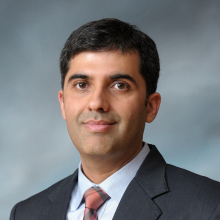
Yuexi Wang is an Assistant Professor in the Department of Statistics at the University of Illinois. Their research focuses on Bayesian methodology, approximate Bayesian computation, and deep learning applications in statistical inference. Key areas include uncertainty quantification, sparse deep learning, and statistical modeling for count data. Education: Not explicitly stated in text. Research interests span Bayesian analysis, with emphasis on developing scalable methods for posterior approximation, adversarial simulation, and generative models. They have contributed to variable selection via Bayesian forests and uncertainty quantification in sparse neural networks. Recent work explores optimal transport-based methods for posterior sampling and Pochhammer priors in count models. Publications emphasize methodological advances in Bayesian deep learning, including data augmentation techniques and adversarial approaches. Articles often bridge theory and application in machine learning and computational statistics. No scientific awards explicitly mentioned. Advising and grants information unavailable in provided text.
Abhranil Das is a Postdoctoral Fellow at the University of Texas at Austin with interdisciplinary expertise in computational neuroscience, vision science, and the intersection of psychedelics with psychology. He holds a PhD in Physics and Neuroscience from UT Austin and explores topics ranging from human perception to transpersonal psychology through both academic research and personal reflection. Education: PhD in Physics/Neuroscience from University of Texas at Austin Current Role: Postdoctoral Fellow at UT Austin His research interests span computational modeling of human vision , camouflage detection mechanisms , and psychedelic-assisted therapy , with a focus on interdisciplinary connections between physics, neuroscience, and cognitive science. He also maintains a blog ( One Life ) where he discusses transpersonal psychology, climate anxiety, and personal philosophical reflections. Recent publications highlight his work on Bayesian models of visual perception , self-supervised learning in texture discrimination , and statistical methods for signal classification . Das is affiliated with the Center for Psychedelic Research and Therapy at UT Austin and explores the energetic and transpersonal aspects of consciousness in both scientific and anecdotal contexts.
Prof. Florian Wellmann is a University Professor at RWTH Aachen University's Chair of Numerical Geosciences, Geothermal Energy and Reservoir Geophysics within the Faculty of Georesources and Materials Engineering. His research focuses on integrating machine learning with geoscience applications, particularly in geothermal energy, structural modeling, and uncertainty quantification. He leads the CG³ research group, developing open-source tools like GemPy and GemGIS for 3D geological modeling. Notably, he received a KI-Campus fellowship for advancing AI in geoscience education. His work includes projects such as the Horizon Europe GeoHEAT initiative, exploring geothermal systems and repurposing idle wells for energy. Education details are not explicitly provided, but his academic roles indicate expertise in numerical geosciences and geothermal engineering. Research interests span physics-based machine learning, subsurface characterization, and probabilistic modeling. His fellowship highlights contributions to digital education, blending AI with geological curricula. Recent publications emphasize sensitivity analysis, fault modeling, and geothermal reservoir optimization. Prof. Wellmann's awards include the KI-Campus fellowship (2021). His grants and advising efforts are reflected in collaborative projects like GeoHEAT and software development. Labs/teams include the CG³ group at RWTH Aachen, equipped with advanced geophysical instruments for field and lab analysis.
Bas Rokers is Professor of Psychology and Global Network Professor at New York University Abu Dhabi (NYUAD), where he also serves as Director of the Center for Brain and Health. He leads the Rokers Vision Laboratory, which investigates the neural basis of visual perception, particularly motion and depth processing. His interdisciplinary work integrates behavioral experiments, neuroimaging (e.g., fMRI, dMRI), and computational modeling. BA, Utrecht University MA, Rutgers University PhD, University of California, Los Angeles Dr. Rokers’ research centers on how the brain constructs 3D visual experience from 2D retinal inputs. His lab explores motion perception , depth perception , and binocular integration , with applications in understanding amblyopia , cybersickness , and virtual reality . His team uses neuroimaging , behavioral testing , and AI-driven data analysis to decode visual processing mechanisms. His recent publications reveal trends in 3D motion perception , sensory cue integration , and neural correlates of visual disorders . Studies often employ Bayesian models , fMRI , and psychophysics to explain perceptual biases and clinical conditions. His work bridges basic science with technological innovation in VR/AR systems. Dr. Rokers has contributed to science outreach through the Wisconsin Virtual Brain Project and the National Geographic series Brain Games . He has held visiting positions at MIT, Utrecht University, and NYU. Research Scientist, Max Planck Institute (collaborator) Contributor, National Geographic’s Brain Games Visiting positions at MIT, Utrecht University He mentors students through capstone projects in Psychology, Biology, and Computer Science at NYUAD. His lab includes postdoctoral associates, graduate students, and research scientists working on MRI data pipelines and AI applications in neuroimaging. The Rokers Vision Laboratory is a hub for interdisciplinary research in visual neuroscience, combining experimental and computational approaches to understand perception in health and disease.
Gavin Cawley is a Professor in the School of Computing Sciences at the University of East Anglia (UEA), with additional affiliations to the Data Science and AI group, the Centre for Ocean and Atmospheric Sciences, and the Statistics group. His research spans machine learning, bioinformatics, climate modeling, and environmental data analysis. His primary research interests include Machine Learning , Kernel Methods , Model Selection , Bayesian Regularization , Bioinformatics , and Climate Modeling . He has made significant contributions to understanding overfitting in model selection, sparse logistic regression for gene and cancer classification, and time series classification using ensemble methods. His work bridges theoretical machine learning with practical applications in biology, archaeology, and environmental science. The recent trend in his publications shows a strong interdisciplinary focus, combining machine learning with climate science (e.g., Arctic sea ice prediction) and molecular biology (e.g., protein domain movements). His work often involves developing and evaluating statistical models for complex real-world problems, emphasizing robustness, interpretability, and predictive accuracy. While no specific awards are listed in the provided text, his extensive publication record in top journals such as Journal of Machine Learning Research , Bioinformatics , and Neural Networks , along with high citation counts (e.g., over 1,800 citations for his 2010 paper on overfitting), indicates significant recognition in the academic community. He has also contributed to organizing major machine learning challenges, such as the ChaLearn AutoML and Active Learning challenges. He has supervised or collaborated with numerous researchers across disciplines, though specific student names are not listed. His work involves methodological development in model selection, kernel learning, and survival analysis, often applied to biological and environmental datasets. He has been involved in projects related to predictive uncertainty, ozone forecasting, and microbial growth modeling. While no specific lab or team name is mentioned, his affiliations with the Data Science and AI group and the Centre for Ocean and Atmospheric Sciences suggest active participation in interdisciplinary research teams focused on data-driven environmental and biological modeling.
David M. Howcroft is an Advanced Research Fellow in Natural Language Generation at the School of Natural and Computing Sciences, University of Aberdeen . He previously held research fellowships at Edinburgh Napier University, Heriot-Watt University, and Saarland University, contributing to major NLP projects including ASICA, NLG for Low-Resource Domains, and Madrigal. His work bridges computational linguistics, psycholinguistics, and statistical modeling. His research focuses on natural language generation , particularly in low-resource settings . He develops machine learning methods for data-to-text generation, creates novel corpora (e.g., for Scottish Gaelic), and improves human evaluation practices via crowdsourcing and rigorous statistical analysis. A key interest is the application of Bayesian nonparametrics and ordinal mixed-effects models to better understand and evaluate generated text. He also explores readability, referring expressions, and AI planning for rule-based NLG systems. His recent publications reveal a strong trend toward methodological rigor and inclusivity in NLP. He advocates for better evaluation standards, transparency in metric usage, and participatory design in NLP research. His work spans corpus development , evaluation methodology , low-resource language support , and human-centered NLP . He has led efforts to create datasets for under-resourced languages and to standardize best practices in human assessment. He has received small grant funding for projects such as Scottish Gaelic Generation for Exhibits and has contributed to software tools for data collection and evaluation. He mentors and collaborates widely, though no formal advisees are listed. He has developed backend systems and Android apps for healthcare applications, notably in melanoma patient support via the ASICA project. He is actively involved in research labs and teams including: ASICA Project Team (University of Aberdeen) NLG for Low-Resource Domains (Edinburgh Napier University) Madrigal Project (Heriot-Watt University) SFB 1102 Project A4 (Saarland University) Language Science and Technology (LSV, Saarland University) His scientific contributions are widely disseminated through top-tier venues such as ACL, EMNLP, and INLG. He maintains an active online presence with tutorials and technical blog posts on tools like OpenCCG and Treex.
Angelos Alexopoulos is an Assistant Professor at the Department of Economics , Athens University of Economics and Business . He has held Research Associate positions at the University of Cambridge, University College London, and University of Exeter in the UK. PhD: Athens University of Economics and Business Research Focus: Computational Statistics, Econometrics, Bayesian Analysis, Network Modelling Publications span Bayesian inference, epidemic forecasting, machine learning for fraud detection, and econometric methodology. Key journals include Journal of the Royal Statistical Society , Journal of Computational and Graphical Statistics , and Statistics and Computing . 2024: Gaussian invariance in MCMC 2024: Epidemic nowcasting models 2023: VAT fraud detection with ML Awards include certifications in Deep Learning (Coursera), Blockchain (edX), and Object-Oriented R Programming (DataCamp).
Dr. Will Harrison is an Honorary Research Fellow at the School of Psychology , The University of Queensland , Australia. His research focuses on understanding the neural and computational mechanisms underlying visual perception, attention, and working memory. Academic Rank: Research Fellow Email: w.harrison@psy.uq.edu.au Research Interests: Dr. Harrison investigates how the human visual system integrates information across eye movements, the role of natural image statistics in perception, and the neural coding of orientation and spatial uncertainty. His work bridges experimental psychology, computational neuroscience, and psychophysics. Publications (2019–2025): Recent studies examine transsaccadic attention allocation , prior expectations in visual neural tuning , confidence judgments in multisensory decisions , and visual crowding mechanisms . His computational models often incorporate gain fields, Bayesian inference, and feature binding dynamics.
Jill O'Reilly is a Professor of Psychology at the University of Oxford and an MRC Career Development Fellow. She leads a research group focused on computational models linking behavior, thought, and brain function. Her work investigates how psychological processes can be redefined in terms of computational mechanisms and localized to specific neural circuits. She is affiliated with the Wellcome Centre for Integrative Neuroimaging and serves as a Psychology Tutor at Lady Margaret Hall (LMH), Oxford. Her research explores the neural basis of decision-making under threat, curiosity-driven learning, and the representation of cognitive processes in brain structures like the parietal cortex and prefrontal regions. Key themes include understanding how emotions and individual differences influence foraging strategies, memory consolidation during rest, and the neurocomputational dynamics of social interactions. Affiliations : Department of Psychology, University of Oxford; Wellcome Centre for Integrative Neuroimaging; LMH Tutor Education : Not explicitly listed in available texts, but her academic role implies advanced training in cognitive neuroscience. Her awards include the prestigious MRC Career Development Fellowship, reflecting her impactful contributions to computational and systems neuroscience. Recent work bridges behavioral studies with neuroimaging to decode how neural circuits underpin adaptive behaviors in complex environments. Labs/Teams : O'Reilly Lab (see website ), collaborating on projects at the intersection of computation and neurobiology.
Richard J. Furnstahl is a Professor in the Department of Physics at The Ohio State University. His research focuses on effective field theory (EFT), renormalization group methods, computational nuclear physics, and low-energy nuclear theory. He holds prestigious fellowships from the American Physical Society (2001) and the American Association for the Advancement of Science (2007), and was recognized as an APS Outstanding Referee (2009). He also received the OSU Alumni Award for Distinguished Teaching (1997). Education: B.S. in Physics from MIT (1981), Ph.D. in Physics from Stanford University (1986). Research emphasizes applying EFT and Bayesian methods to nuclear systems, including neutron star equations of state, nucleon-nucleon scattering, and uncertainty quantification. His work bridges computational techniques like eigenvector continuation and reduced-order emulators with foundational theories such as chiral EFT. Recent efforts focus on interpolating between small- and large-coupling regimes and quantifying correlated truncation errors in dense nuclear matter models. Key contributions include developing the Density Matrix Expansion approach for energy density functionals and advancing the FRIB Theory Alliance for nuclear dynamics studies. His emulators reduce computational costs while maintaining accuracy in scattering problems. He also explores the intersection of machine learning and nuclear theory through Bayesian additive regression trees and neural network applications. He leads projects on nuclear symmetry energy, proton Compton scattering experiments, and the NUCLEI initiative for ab initio nuclear structure calculations. His work emphasizes rigorous uncertainty analysis and theoretical consistency across scales.
Caleb Kemere is an Associate Professor in the Departments of Electrical and Computer Engineering and Bioengineering at Rice University. His work bridges neuroscience, engineering, and computer science, focusing on neuroengineering, neural decoding, and real-time brain-computer interfaces. He holds a B.S. in Electrical Engineering (with Honors) and a B.A. in Economics from the University of Maryland, College Park, and a Ph.D. in Electrical Engineering from Stanford University. Before joining Rice in 2011, he was a postdoctoral fellow at the Keck Center for Integrative Neurosciences at UCSF. His research explores hippocampal function in spatial navigation and memory, signal processing for neural interfaces, and developing technologies like miniature microscopes and low-power sensors. He has pioneered frameworks such as Spyglass for reproducible neuroscience research and RealtimeDecoder for online neural decoding. Kemere has received prestigious awards including the NSF CAREER Award (2013), HFSP Young Investigator Award (2014), and BRAIN: EAGER Award (2015). His grants include a five-year NSF grant to study Deep Brain Stimulation (DBS) and a neural engineering IGERT grant. His lab, the Realtime Neural Engineering Lab (RNEL), develops tools for understanding and modulating neural activity. Ongoing work addresses closed-loop brain stimulation, environmental uncertainty modeling in foraging behavior, and sleep-based memory consolidation.
Abhinav Bhatele is an Associate Professor in the Department of Computer Science at the University of Maryland, College Park, and directs the Parallel Software and Systems Group. He holds affiliate roles in the AIM Institute and AMSC Program. His research focuses on high-performance computing, systems, networking, and AI, particularly in parallel computing, distributed AI, and machine learning applications. He has contributed to frameworks like AxoNN and Hatchet, and his work spans performance modeling, network simulation, and scalable deep learning. Education: Ph.D. (2010), M.S. (2007), and B.Tech. (2005) in Computer Science from the University of Illinois at Urbana-Champaign and IIT Kanpur, respectively. Prior to UMD, he was at Lawrence Livermore National Laboratory (2011–2019). Research interests include parallel systems, network design, performance analysis tools, and applying machine learning to optimize HPC workflows. He has received notable awards, including the IEEE TCSC Award (2023), NSF CAREER (2021), and UIUC Early Career Alumni Award (2024). Key achievements include developing open-source tools like Hatchet and AxoNN, optimizing large-scale LLM training, and advancing GPU-based supercomputing. He advises over 10 students and has secured grants totaling millions, focusing on HPC software ecosystems and AI integration. Professional service includes roles at SC, ISC conferences, and editorial work for IEEE TPDS. His lab collaborates on projects like the Exascale Computing Project and DOE INCITE allocations.
Mike Domaratzki is an Associate Professor and Chair of the Department of Computer Science at Western University. His research focuses on bioinformatics, genomics, and theoretical computer science, with recent emphasis on machine learning tools for genomic prediction in crops. He has held academic roles at Western University and previously at the University of Manitoba and Acadia University. Education: (No explicit details provided in texts) Research Interests: Domaratzki’s work bridges computational methods and biological systems, including algorithm design for genomic analysis, machine learning applications in agriculture, and theoretical foundations of computing. His recent projects address challenges in imbalanced data classification and crop yield prediction using advanced neural networks. Teaching: He has taught a wide range of courses, including introductory programming, data structures, algorithms, bioinformatics, and automata theory across multiple institutions. Notable courses include COMPSCI 1026/1027 at Western, and COMP courses at the University of Manitoba/Acadia covering foundational CS topics and specialized areas like bionformatics algorithms. Publications: His work spans machine learning, genomics, and theoretical computer science, with recent trends emphasizing agricultural genomic applications and data-driven health analytics. Key themes include imbalanced data solutions, neural network architectures for genomics, and computational tools for biological data interpretation. Grants/Advising: No specific grants or student advising details are listed, though his teaching and research imply active involvement in mentoring. His lab focuses on interdisciplinary projects combining computational methods with biological datasets.
Kwok-Kun Kwong is a UOW CERL Fellow at the University of Wollongong, specializing in differential geometry, Riemannian and Lorentzian geometries, and mathematical relativity. His research focuses on integral formulas, curvature flows, isoperimetric inequalities, and quasi-local mass problems. He holds a PhD (2011) and M.Phil. (2008) from The Chinese University of Hong Kong, supervised by Prof. Luen-Fai Tam, along with a B.Sc. (2006). Research interests include geometric inequalities involving scalar curvature, eigenvalue estimates on manifolds, and rigidity theorems in warped product manifolds. Recent work explores Alexandrov-Fenchel inequalities, optimal transport applications, and geometric flows in spacetime contexts. He secured grants such as the Innovative Applications of Optimal Transport (2024) and Early Mid-Career Researcher Enabling Grant (2024). Current supervisions involve PhD topics like derivative pricing for geological risks and nonlinear PDE applications. Active in publishing high-impact geometric analysis papers, he contributes to foundational theories in geometric analysis and mathematical physics.
Prof. Dr. Nicole Mücke is a Professor in the Institute for Mathematical Stochastics at the Carl-Friedrich-Gauss Faculty of Technische Universität Braunschweig. Her research focuses on mathematical statistics, machine learning, kernel methods, and statistical inference. She explores topics such as neural network theory, inverse problems, optimization, and regularization techniques. Her work bridges theoretical foundations with practical applications in areas like distributed computing and uncertainty quantification. Prof. Mücke’s research portfolio includes contributions to empirical risk minimization, neural operator learning, and gradient-based optimization. She investigates the interplay between overparameterization and generalization in machine learning models, as well as the design of efficient algorithms for large-scale problems. Her publications span topics ranging from distributed stochastic gradient descent to localized kernel regression techniques. Her recent work emphasizes theoretical guarantees for learning algorithms, including convergence rates, statistical performance in high-dimensional settings, and the role of regularization in inverse problems. She also explores methodological advancements in spectral methods, algorithm unfolding, and data-splitting strategies to enhance statistical efficiency. Prof. Mücke’s research is characterized by a strong emphasis on rigorously analyzing machine learning algorithms through the lens of statistical theory and functional analysis. Her contributions address challenges in both classical and modern machine learning paradigms, with a focus on bridging the gap between abstract mathematical frameworks and practical implementation.