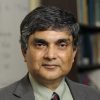
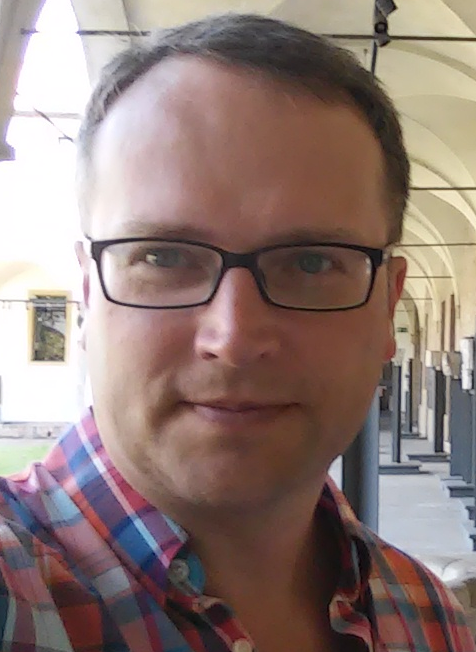
Somnath Ghosh is the Michael G. Callas Chair Professor at Johns Hopkins University, holding joint appointments in the Departments of Civil & Systems Engineering, Mechanical Engineering, and Materials Science & Engineering. He directs the Computational Mechanics Research Laboratory (CMRL) and founded the Center for Integrated Structure-Materials Modeling and Simulations (CISMMS). His research focuses on multiscale computational mechanics, materials science, and integrated computational materials engineering (ICME). Key areas include additive manufacturing, fatigue and fracture mechanics, machine learning, and uncertainty quantification. Education includes a B.Tech. from IIT Kharagpur, M.S. from Cornell University, and Ph.D. from the University of Michigan. Ghosh has led major initiatives like NASA’s Space Technology Research Institute for Additive Manufacturing (IMQCAM) and the Air Force-funded Center of Excellence in Integrated Materials Modeling (CEIMM). He has authored over 300 peer-reviewed publications, three books, and is a Fellow of multiple societies, including the AAAS, ASME, and TMS. Award highlights include the Theodore von Karman Medal (2025), J.N. Reddy Medal (2024), and Nathan M. Newmark Medal (2013). His work bridges theory and industry applications in aerospace, automotive, and defense sectors. Labs under his leadership (CMRL and CISMMS) develop digital twins and advanced modeling tools for materials qualification and design.
Katarzyna Rycerz is a Lecturer at the Institute of Computer Science within the Faculty of Computer Science at AGH University of Science and Technology in Kraków, Poland. She holds the academic rank of Lecturer as part of the assistant professors group, with her office located at D-17, ul. Kawiory 21, room II, 3.54. Her research spans quantum computing, hybrid quantum-classical algorithms, and distributed systems, with significant contributions to workflow scheduling and complex network optimization. Dr. Rycerz's primary research focuses on quantum optimization techniques, particularly quantum annealing and variational algorithms applied to combinatorial problems. Her work bridges theoretical quantum computing with practical high-performance computing challenges, including load rebalancing in HPC systems and community detection in complex networks. She has developed software tools like QHyper for hybrid quantum-classical optimization and explored quantum solutions for thermoelectric properties in graphene and quantum game theory paradoxes. Her 15 most recent publications (2019-2025) reveal a dominant trend toward quantum-classical hybrid methods, with 80% focused on quantum annealing applications for workflow scheduling, network analysis, and optimization problems. Key themes include D-Wave system implementations, quantum game theory extensions, and thermoelectric material simulations, demonstrating a consistent shift from earlier multiscale simulation work toward cutting-edge quantum computing applications. No scientific awards are documented in the available information. Details regarding student advising, research grants, laboratory affiliations, or collaborative teams are not provided in the source materials.
Institute of Dendrology, Polish Academy of SciencesPoland
Kamel K. Mohammed is a researcher affiliated with Al-Azhar University in Egypt, the Scientific Research Group in Egypt (SRGE), and Biomid Company. His work bridges biomedical engineering and artificial intelligence, with publications spanning medical image analysis, IoT security, and drone identification systems since 2021. His research focuses on applying deep learning to healthcare diagnostics, particularly in cancer detection (oral squamous cell carcinoma and lung cancer) and ear disease classification. He develops innovative solutions using transfer learning, CNN-LSTM architectures, and 3D segmentation techniques while addressing cybersecurity challenges in IoT networks through image-based malware detection and RF fingerprinting for drone identification. Publications from 2021-2023 demonstrate consistent output with an average impact factor of 5.2. His single-authored works (100% single authorship) have received institutional sponsorship from the Japan Society for the Promotion of Science, Princess Nourah Bint Abdulrahman University, and Universidad Carlos III de Madrid, each funding one 2023 publication. He operates within the Scientific Research Group in Egypt (SRGE) ecosystem, which appears to be a collaborative hub for biomedical and engineering research, and maintains industry ties through Biomid Company for applied technology development.
Dr. Marta Skiba is a Professor at the University of Zielona Góra, serving as the Head of the Department of Theory, History of Architecture and Urban Planning and Monument Protection within the Institute of Architecture and Urban Planning. Her work focuses on urban development, energy policy, environmental sustainability, and spatial planning. Specializing in architecture and urban planning, she actively engages in research addressing climate resilience and sustainable city design. Her research integrates artificial intelligence tools like fuzzy logic and Bayesian networks for decision support in urban decarbonization and energy efficiency. Key research interests include renewable energy integration, urban green spaces utilization, and policy analysis for emissions reduction. She has contributed extensively to understanding the socio-economic dimensions of energy consumption and spatial equity in urban planning. Notably, her studies explore the fate of nitrogen in urban ecosystems and innovative strategies for post-mining land development. She holds an ORCID ID: 0000-0002-4248-0378 . Her publications span over two decades, with recent work emphasizing EU energy policy impacts on urban air quality and multi-criteria decision frameworks for hybrid energy systems. She is affiliated with the University's teaching facilities at A-8 Building (rooms 307, 308, 401), and her contact details include professional email addresses and phone numbers listed in institutional records.
Wrocław University of Science and TechnologyPoland
Joanna Komorniczak is an Assistant Professor in the Department of Computer Systems and Networks at the Faculty of Computer Science and Telecommunications, Wrocław University of Science and Technology. She is actively engaged in research and teaching, with a focus on machine learning and data stream analysis. Research Interests: Data stream processing and concept drift detection Dataset and problem complexity in supervised learning Open set recognition and imbalanced data classification Development of machine learning software tools and libraries Her recent work centers on challenges in dynamic and evolving data environments, particularly in the context of real-world data stream applications. She contributes to both algorithmic development and practical implementations, as evidenced by her open-source library problexity . Publication Trends: Her publications from 2021–2023 focus on detecting and adapting to concept drift, managing imbalanced data streams, and assessing learning problem complexity. These works appear in reputable venues such as Knowledge-Based Systems , Neurocomputing , and IJCNN, indicating strong engagement with the machine learning research community. Scientific Awards: Winner of the 5th Secundus Competition She is involved in significant research projects including IDSTREAM and MOO , and is a member of the Machine Learning Team and Advanced Data Analysis Methods Team. She supervises student theses and teaches courses such as Databases and Methods of Artificial Intelligence. Her work combines theoretical rigor with practical implementation, particularly in Python-based environments using tools like scikit-learn and stream-learn.
Bogusz Aksak-Wąs is an Assistant Professor at the Department of Infectious, Tropical Diseases and Acquired Immunodeficiency within the Faculty of Medicine at Pomeranian Medical University in Szczecin. His research focuses on HIV/AIDS pathogenesis, treatment optimization, and comorbidities, with extensive work in virology, immunology, and molecular epidemiology. He contributes to national HIV care guidelines as co-editor of Poland's official recommendations. His primary research interests include: HIV immunology and immune reconstitution Cardiovascular comorbidities in HIV patients Molecular epidemiology of HIV subtypes Antiretroviral therapy efficacy and resistance Diagnostic challenges in tropical/infectious diseases COVID-19 outcomes in immunocompromised hosts Recent publications demonstrate strong focus on: HIV-related immune exhaustion biomarkers (PD-1/PD-L1) Geographical variations in HIV subtype dissemination Cardiac pathology in controlled viremia AI applications for predicting COVID-19 severity Clinical implications of genetic variants in HIV progression
Wrocław University of Science and TechnologyPoland
Dr. David Ramsey is a professor at the Faculty of Information and Communication Technology, Wrocław University of Science and Technology, specializing in decision theory, game theory, and stochastic optimization. His work bridges mathematics, computer science, and behavioral economics. University: Wrocław University of Science and Technology School: Faculty of Information and Communication Technology Department: Department of Computer Science and Systems Engineering Email: david.ramsey@pwr.edu.pl Research Interests: Ramsey’s research integrates decision theory and game theory with stochastic optimization to model complex systems in behavioural economics and biological systems . Recent work explores multi-criteria decision making and urban sustainability . Publication Trends: His 2024–2020 articles span game theory applications in partnership formation, urban development analysis, and computational decision support tools. Collaborative works include interdisciplinary studies on genetic epidemiology and moral cognition in schizophrenia. Teaching & Contact: He holds regular office hours on Tuesdays and Thursdays. No scientific awards are listed in the provided data.
Dr inż. Piotr Szwed is a Lecturer in the Department of Applied Computer Science at AGH University of Science and Technology, Kraków. He is affiliated with the Faculty of Electrical Engineering, Automatics, Computer Science and Biomedical Engineering (EAIiIB), where he teaches courses ranging from imperative and object-oriented programming to data exploration and computational intelligence. Research Interests: Data mining and knowledge discovery Fuzzy cognitive maps and their applications in transportation, risk assessment, and security Software engineering methodologies, including agile and ontology-driven development Intelligent transportation systems (ITS) and real-time traffic management Natural language processing for Polish texts, stylometry, and authorship attribution Ontology engineering, enterprise architecture verification, and model checking His work often bridges theoretical computer science with practical applications in urban mobility, safety systems, and enterprise software. Scientific Contributions: Pioneered the integration of fuzzy cognitive maps with evolutionary algorithms to predict traffic flows. Developed rule-based and machine-learning approaches to determine speed limits from geospatial data. Contributed to the INSIGMA intelligent transportation system aimed at enhancing urban mobility in Polish cities. Created formal verification techniques for ArchiMate business processes using NuSMV model checking. Advanced stylometric analysis for Polish texts, introducing part-of-speech features for authorship attribution. Teaching & Academic Service: Regularly teaches Programming (C, C++, Java), Software Engineering, Data Exploration, and Computational Intelligence. Supervises engineering and master theses in applied computer science. Maintains a public wiki with course materials, lab exercises, and consultation schedules for students. Utilizes Git-based repositories to streamline code submission and continuous assessment in laboratory classes. Laboratory & Facilities: He is located in building C-2, room 403, at AGH’s main campus, al. Mickiewicza 30, 30-059 Kraków. The lab supports courses that emphasize practical software development, version control, and collaborative project work.
University of Economics and Innovation in LublinPoland
Dr. Krzysztof Żuk is a Professor at the Faculty of Administration and Social Sciences of the Lublin Academy of Economics and Management. Concurrently serving as Mayor of Lublin since 2010, he brings extensive practical governance experience to his academic role. His career includes positions as Undersecretary of State at the Ministry of the State Treasury (2007-2009) and Director of the Delegation of the Minister of State Treasury in Lublin (1996-2005), where he coordinated EU aid programs and municipal restructuring projects. His research focuses on interdisciplinary areas bridging public policy and quantitative methods: Public finance optimization and local governance frameworks Economic forecasting using machine learning and Bayesian statistics Tax law harmonization in transnational contexts Strategic management models for regional development Recent publications demonstrate strong emphasis on computational economics, with applications of LSTM networks and Metropolis-Hastings algorithms to supply chain management and demand forecasting, alongside ongoing work in international tax policy. Awards and honors: Medal of the Commission of National Education (2020) for transformative contributions to academia With over thirty years of teaching experience, he integrates real-world governance insights into coursework covering microeconomics, project management, and New Public Management frameworks.
Institute of Dendrology, Polish Academy of SciencesPoland
Alexandre Dolgui is Distinguished Professor and Head of the Department of Automation, Production and Computer Sciences at IMT Atlantique in Nantes, France. He serves as Editor-in-Chief of the International Journal of Production Research and has established himself as a leading researcher in production and supply chain optimization. His academic career spans multiple institutions including Jean Monnet University and University of Lorraine Mines Nancy, with a visiting professorship at the Chinese Academy of Sciences. PhD in Industrial Engineering, University of Technology of Compiègne (2000) Doctorate in Computer Science and Control, National Academy of Sciences of Belarus (1990) Bachelor in Automated Data Processing and Management Systems, Belarusian State University of Informatics and Radioelectronics (1986) Dolgui's research primarily focuses on manufacturing line design, production planning and scheduling, and supply chain optimization. His work bridges theoretical operations research with practical industrial applications, particularly in the context of Industry 4.0 and sustainable manufacturing. He has pioneered approaches to address challenges in assembly line balancing, reconfigurable manufacturing systems, and resilient supply chain design under uncertainty. His research integrates mathematical programming, optimization techniques, and increasingly, artificial intelligence methodologies to solve complex production and logistics problems. An analysis of his recent publications reveals a strong emphasis on supply chain resilience, particularly regarding the ripple effect of disruptions, digital supply chain twins, and sustainable manufacturing practices. His work increasingly incorporates AI and machine learning techniques while maintaining strong theoretical foundations in operations research. The interdisciplinary nature of his research connects industrial engineering with computer science, economics, and environmental sustainability. Highly Cited Researcher 2022, 2023, and 2024 by Clarivate Best Paper Award for 2023 by Omega Fellow of IISE (Institute of Industrial and Systems Engineers) As Editor-in-Chief of the International Journal of Production Research, Dolgui has significantly influenced the field's research direction and quality standards. His leadership extends to organizing major conferences including the IFAC Symposium on Information Control Problems in Manufacturing (INCOM). His research group maintains strong international collaborations, particularly with researchers from China, Russia, and other European institutions, securing funding for projects addressing contemporary manufacturing and supply chain challenges. Dolgui leads the Alexandre Dolgui Lab at IMT Atlantique, which focuses on production systems engineering and supply chain management. The lab maintains strong industry partnerships and participates in European research networks addressing advanced manufacturing challenges. Current research directions include Industry 5.0 applications, human-robot collaborative systems, and sustainable supply chain design, reflecting the lab's commitment to addressing both theoretical and practical challenges in modern production environments.
Alessandro Crimi is a Visiting Lecturer at the African Institute for Mathematical Sciences (Ghana & South Africa) and founder of Yawlab (Zurich). He holds a Ph.D. in Medical Imaging from the University of Copenhagen and an MBA in International Health Management from the Swiss Tropical and Public Health Institute (University of Basel). His research focuses on neuroimaging, machine learning applications in healthcare, and global health initiatives. Crimi has extensive experience in postdoctoral research across Italy, France, and Switzerland, specializing in clinical neuroimaging for multiple sclerosis, Alzheimer’s, Parkinson’s, and glioma. He is editor of the MICCAI BrainLesion Workshop and has led healthcare projects in low-resource settings in Africa, including diabetes screening and prenatal care initiatives. Research interests include diffusion MRI, functional MRI, EEG/fNIRS connectivity analysis, quantum computing for brain network analysis, and neurotech device development. Crimi’s work emphasizes translating research into clinical solutions and addressing global health challenges through education and technology. Notable contributions include biomarker discovery for neurodegenerative diseases, green AI for fetal brain segmentation, and explainable AI for epilepsy diagnosis. He has organized workshops on brain lesion analysis and authored over 50 peer-reviewed publications.
Professor Tomasz Zientarski is a faculty member at Lublin University of Technology's Faculty of Electrical Engineering and Computer Science, Department of Computer Science. His research spans interdisciplinary areas including IoT applications, environmental monitoring systems, autonomous vehicle design, molecular dynamics simulations, and computer science education challenges. He actively contributes to scientific expeditions such as the 10th Central Asia expedition using 3D digital technology and participates in events like LubGame Conference 2025. His academic projects include the Integrated Development Programme of the university, Universal Design initiatives, and the T1D Coach project. He advises students on thesis topics involving IoT systems, environmental data visualization, and autonomous vehicle monitoring. He has been honored with the Medal of Merit for the city of Lublin as part of the Department's recognition. His work integrates computational physics (e.g., Lennard-Jones potential modeling) with practical applications like diabetes patient simulation and noise-resistant audio detection. Tools he uses include Moodle, Microsoft Azure, and Visual Paradigm. Research trends in his publications show dual focus: applied CS innovations (IoT, OCR, medical simulations) and fundamental material science studies (thin film stress, molecular dynamics). His 2024 articles highlight advancements in deepfake detection and NLP, while earlier work addresses barriers in educating international students and optimizing wireless communication models. His lab activities include maintaining a traffic acquisition station and preserving cultural heritage through 3D technology.
Katarzyna Idzikowska is an Assistant Professor at the Department of Economic Psychology, Koźmiński Academy. Her research focuses on decision-making psychology, risk perception, and behavioral economics, with significant contributions to replication studies and scientific methodology. Affiliation: Koźmiński Academy Department: Department of Economic Psychology Her research interests span experimental psychology, cognitive biases, and probabilistic reasoning. She actively participates in international collaborative projects like Many Labs 5, emphasizing replicability and transparency in scientific research. Katarzyna has published extensively on topics such as probability weighting, emotional regulation during crises, and interventions to improve research practices. Her work often intersects psychology with economics, particularly in risk assessment and decision theory. She has contributed to projects funded by the Ministry of Science and Higher Education (MNiSW) and the National Science Centre (NCN), including studies for the National Bank of Poland and Warsaw City Office.
Jerzy Samochowiec is a Professor at the Department of Psychiatry, Faculty of Health Sciences, Pomeranian Medical University in Szczecin. His research focuses on psychiatric genetics, neuropharmacology, and innovative treatments for mental disorders such as schizophrenia, alcohol dependence, and depression. Key areas include neurotransmitter systems (dopaminergic, serotonergic), gut microbiota’s role in mental health, and virtual reality applications in addiction therapy. He holds leadership roles in academic and clinical psychiatry, with career milestones including becoming a Professor in 2004, Assistant Professor in 1999, and completing his doctorate in 1993. Research interests span schizophrenia biomarkers (e.g., stem cells, DTI), cognitive rehabilitation, and the impact of diet/physical activity on mental health. He has authored over 550 publications, supervised 20 promoted theses, and contributed to national guidelines on addiction and psychiatric care. His work bridges clinical practice and neuroscience, emphasizing translational research to improve patient outcomes. Scientific contributions include studies on inflammatory markers in schizophrenia, microbiota alterations linked to psychosis, and the role of childhood trauma in psychopathology. He collaborates internationally on projects like the COH-FIT study analyzing pandemic mental health impacts. His lab focuses on neuropsychological assessments, immune-inflammatory pathways, and digital mental health solutions.
Prof. Paweł Kawalec serves as Director of the Institute of Theoretical Philosophy at the John Paul II Catholic University of Lublin. He holds a Master's (1995), Ph.D. (2000), and habilitation (2006). His research focuses on philosophy of science, methodology, and epistemology, with notable work in causality and R&D governance. He has held visiting scholar positions at the Center for Philosophy of Science in Pittsburgh (2004-2005) and contributed to EU Green Growth policy frameworks. Active in academic leadership roles, he chairs the Polish Academy of Sciences Committee on Science and edits Zagadnienia Naukoznawstwa . His work bridges analytical philosophy with applied methodologies in science and policy. Education: M.A. (1995), Ph.D. (2000), Habilitation (2006) – all from Catholic University of Lublin Research Themes: Causal modeling, scientific knowledge dynamics, structural reliabilism, ethics of innovation Key Roles: Horizon 2020 Expert Group member, Polish Academy of Sciences Committee Chair, editor of leading philosophy journal His recent work emphasizes interdisciplinary approaches to solving complex societal challenges through rigorous scientific methodology.