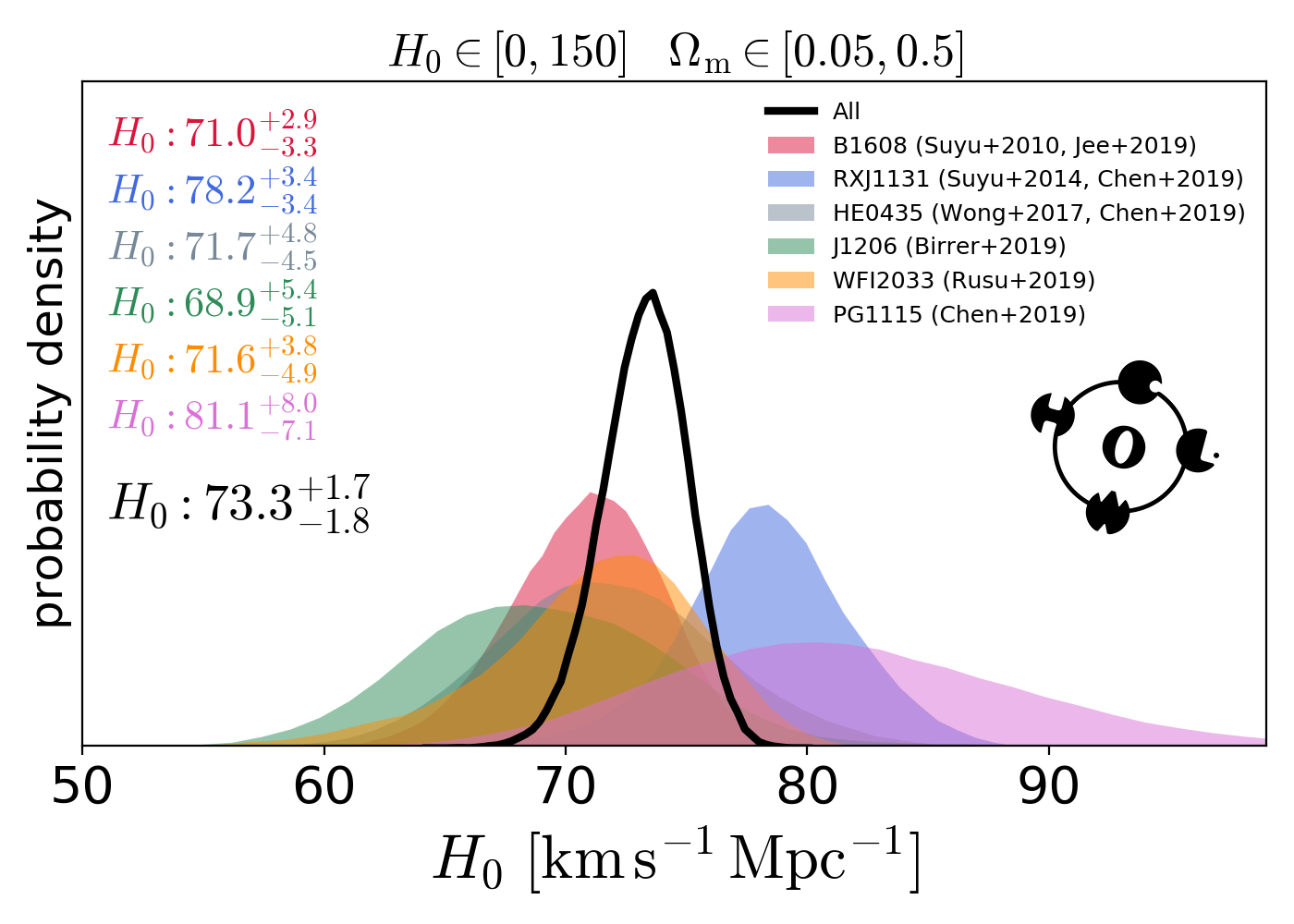
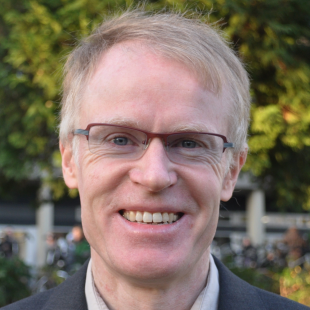
Prof. Sherry Suyu is an Associate Professor of Observational Cosmology at the Department of Physics, Technical University of Munich (TUM), School of Natural Sciences . She leads the H0LiCOW and HOLISMOKES programs, focusing on measuring the Hubble constant (H₀) through gravitational lensing and studying dark energy, galaxy evolution, and supernovae via lensed systems. Research Focus : Observational cosmology, gravitational lensing, dark energy, supernova progenitors, galaxy dark matter halos Key Projects : H0LiCOW (H₀ measurement), HOLISMOKES (supernova studies) Her recent publications (2010–2020) analyze time-delay distances in lensed quasars to constrain cosmological parameters like H₀ (73.3 ± 1.7–1.8 km/s/Mpc in flat ΛCDM) and probe tensions between early- and late-Universe observations. She employs tools such as Hubble Space Telescope , Keck adaptive optics , and lenstronomy/GLEE lensing software. She teaches courses including Gravitational Lensing , Experimental Physics , and Supernova Seminars , with mentoring in TUM's Bachelor’s Physics Program . Her work involves collaborations with institutions in Germany, the U.S., Switzerland, Japan, and other countries.
Rhenish Friedrich Wilhelm University of BonnGermany
Christoph Breunig is a Professor at the Department of Economics, University of Bonn, with research focused on Econometrics. He is affiliated with the Institute for Financial Economics & Statistics at the university. His primary research interests include Econometrics, Statistics, Nonparametric Methods, Instrumental Variables, Treatment Effects, and Missing Data Analysis. Professor Breunig's work demonstrates a strong focus on methodological developments in econometric theory with applications to economic questions. His publication record shows a consistent output of high-quality research in top econometrics journals including Econometrica, Journal of Econometrics, and Quantitative Economics. His research trajectory demonstrates progression from foundational work on nonparametric methods and instrumental variables toward more complex problems involving treatment effects, missing data, and high-dimensional settings. Professor Breunig has established himself as a contributor to the field of econometric theory with particular expertise in nonparametric and semiparametric methods. His work often addresses identification and estimation challenges in complex economic models.
Rhenish Friedrich Wilhelm University of BonnGermany
Prof. Dr. Stephan Lauermann is a faculty member in the Department of Economics at the University of Bonn , affiliated with the Institute of Microeconomics , ECONtribute , Hausdorff Center for Mathematics , and CRC TR 224 . His research focuses on Bargaining, Auctions, Search Theory, and Matching Theory , with applications to market design and information aggregation. Research Trends: Recent articles (2022-2025) emphasize information aggregation in elections and frictions in matching and auction models . Older works (2012-2017) address adverse selection in auctions, price discovery in search markets, and foundational matching theory. Subfields span dynamic matching , strategic voting , common-value auctions , and equilibrium analysis . Contact: Email: s.lauermann@uni-bonn.de , Phone: +49 228 73-6327, Room 3.004, Adenauerallee 24-42, Bonn.
Rhenish Friedrich Wilhelm University of BonnGermany
Sven Rady is a Professor of Economics at the University of Bonn, holding the Hausdorff Chair for Mathematical Economics since 2011. He is affiliated with both the Department of Economics and the Hausdorff Center for Mathematics, where he serves as an Associate Director. His research primarily focuses on game theory, strategic experimentation, and real estate economics, with significant contributions to the understanding of bandit games and information dynamics in economic settings. Rady received his Ph.D. in Economics from the London School of Economics in 1995, following studies in mathematics and physics at the universities of Konstanz, Bonn, and Paris VII. Prior to his position at Bonn, he was a Professor of Economics at the University of Munich (1999-2011) and an Assistant Professor at Stanford University's Graduate School of Business (1996-2001). His research explores dynamic decision problems, equilibrium models and games, optimal learning, and strategic experimentation. A significant portion of his work examines how agents learn in strategic environments, particularly through bandit game frameworks where players face trade-offs between exploration and exploitation. His research also extends to real estate markets, analyzing how contracts and market structures affect aggregate economic fluctuations. Rady's publications reveal a consistent focus on strategic experimentation across different contexts, from pure game-theoretic settings to applied economic problems. His work often bridges theoretical game theory with practical economic applications, particularly in housing markets and financial economics. The evolution of his research shows increasing sophistication in modeling information dynamics and strategic behavior in complex economic environments. Fellow of the Econometric Society (2023) Teaching award, Department of Economics, University of Bonn (2021 & 2022) Teaching award of the State of Bavaria (2005) As an academic leader, Rady has served in numerous editorial roles, including as Co-Editor of the Journal of Mathematical Economics and the B.E. Journals in Theoretical Economics. He is currently Secretary of the European Standing Committee of the Econometric Society and serves as Deputy Spokesperson for the Collaborative Research Centre SFB/TR 224. His research team includes postdocs Gregorio Curello, Lucas Pahl, Miguel Risco, and Shaofei Jiang, with whom he collaborates on various projects related to game theory and economic dynamics.
Rhenish Friedrich Wilhelm University of BonnGermany
Prof. Dr. Dezső Szalay is a Full Professor of Economics at the University of Bonn , holding a W3 professorship since 2009. His research spans Contract Theory , Information Economics , Game Theory , and Industrial Organization , with applications to Financial Contracting and Microeconomic Policy . Education: Ph.D. (summa cum laude) from University of Mannheim (2001), MSc from University of Basel (1995). His research focuses on strategic communication, information design, and optimal contracting. Key themes include delegation mechanisms , organizational incentives , and regulatory design under uncertainty. Recent work examines communication dynamics under catastrophic risks. His publications appear in top journals like American Economic Review , Journal of Economic Theory , and Review of Economic Studies , with trends showing increasing emphasis on information aggregation , multidimensional screening , and strategic risk management . Scientific Awards: Fellow of CEPR (Industrial Organization Program) Excellence in Refereeing Award, American Economic Review (2009) FAME Publication Award (2005) Swiss Science National Foundation Scholarship (1998) Deutsche Forschungsgemeinschaft Scholarship (1996) He has served on organizing committees for major conferences like ESSET and SET , and his teaching includes Microeconomics (Master) and Research Module in Microeconomic Theory .
Helmholtz Centre for Environmental ResearchGermany
Dr. Julia S. Joswig is a PostDoc researcher at Leipzig University's Faculty of Physics and Earth System Sciences, where she works in the RSC4Earth Lab. She is actively involved in the Breathing Nature initiative, FlexFund project, and serves as a member of the sPectra working group. Her research focuses on Functional Ecology, particularly examining plant function-environment relationships in a changing world through the lens of plant traits. Dr. Joswig's educational background includes a PhD in Biology from the University of Zürich, a Master of Science in Resource Analysis and Management from Georg-August-Universität Göttingen (2013), and a Bachelor of Science in Biology from the same institution (2010). Her research career spans multiple institutions including the Max-Planck-Institute for Biogeochemistry, Jena, and University of Zürich. Her research interests encompass: Understanding how plant function can be captured by traits across different data streams Describing trait variation with environmental factors across spatial scales Linking trait variation to ecosystem functioning Developing advanced gap-filling methods for plant trait data Integrating in-situ and remotely sensed data for intraspecific diversity analysis Dr. Joswig's recent publications demonstrate a strong methodological focus, particularly on statistical approaches for handling incomplete ecological datasets. Her work bridges theoretical ecology with practical data science applications, contributing to both conceptual understanding and analytical tools in functional ecology. She is an active participant in science communication through: Teaching at University of Zürich Public outreach events (Scientifica, Long Night of Science) Art-science collaborations with Ilya Fedotov-Fedorov Podcast contributions (BAM, Berlin) Science storytelling (three-minute thesis contest) Animation projects (Global Science Film Festival Zürich) Dr. Joswig is expanding her technical expertise in Python and remote sensing data analysis, and actively seeks collaboration opportunities in biodiversity research, citizen science, and innovative science communication approaches.
Quy Le Xuan is a Research Associate at the Institut für Informationsverarbeitung (Institute for Information Processing) of Leibniz Universität Hannover, where he has been pursuing his PhD since March 2021 under the supervision of Professor Jörn Ostermann. His research focuses on advanced machine learning methodologies applied to industrial predictive maintenance and autonomous systems. Education: M.Sc. in Electrical Engineering and Information Technology (Communications Engineering), Leibniz Universität Hannover, 2020 (Graduated with distinction) B.Sc. in Electrical Engineering and Information Technology (Communications Engineering), Leibniz Universität Hannover, 2017 (Graduated with distinction) Research Focus: Mr. Le Xuan's work bridges theoretical machine learning and practical industrial applications. Core areas include deep learning architectures (representation learning, uncertainty-aware networks), learning paradigms (transfer, self-supervised, and lifelong learning), and specialized applications in predictive maintenance (RUL prediction, PHM, anomaly detection) for manufacturing ecosystems. Publications Overview: His recent publications demonstrate a strong focus on Bayesian neural networks for fault prognostics, domain adaptation techniques for machinery lifetime prediction, and uncertainty quantification in industrial deep learning models, primarily within predictive maintenance contexts. Awards and Honors: Distinction (Auszeichnung) in both Bachelor’s and Master’s degrees Student Advising and Projects: Mr. Le Xuan actively mentors students for theses and HiWi positions, contributing to institutional projects including IIP Ecosphere and Predictive Maintenance initiatives. He collaborates within Professor Ostermann's research group on industrial AI solutions.
Andreas Herten is a Researcher at the Jülich Supercomputing Centre (JSC) within Research Center Jülich GmbH. He serves as Co-Lead of the Novel System Architecture Design division and heads the ATML Accelerating Devices group, focusing on GPU programming, parallel computing, and high-performance computing (HPC) optimizations. Key Expertise: GPU programming, parallel algorithms, HPC systems, benchmarking, Python, LaTeX Research Focus: Accelerating scientific applications on GPUs, European exascale initiatives, AI workload evaluation, and heterogeneous computing architectures His recent publications highlight advancements in GPU-accelerated materials science, AI training on HPC systems, and exascale benchmarking. Herten contributes to projects like OpenGPT-X, JUPITER, and CARAML, with work spanning computational physics, environmental science, and machine learning applications.
Daniel Schulze is a researcher at the Institute of Biometry and Clinical Epidemiology (Charité - University Medicine Berlin), specializing in observational studies and registry data in medical biometrics and psychometrics. His methodological expertise includes latent variable models, structural equation models, Bayesian statistics, and mixed models, with clinical applications in psychiatry, psychotherapy, and neurology. His recent work spans neurological disorders (chronic cluster headache, stroke outcomes) hepatology (liver cancer treatments, cryoablation safety) public health (long-term post-COVID symptoms, racialized mental health disparities) He has contributed to 36 publications between 2003-2025, including 10 recent articles on topics ranging from immunological ophthalmology to organizational psychology. His research integrates advanced statistical methods with real-world clinical challenges.
Max Planck Institute for Human Cognitive and Brain SciencesGermany
Dr. Alejandro Tabas serves as a Researcher in the Department of Psychology at the Basque Center on Cognition, Brain and Language (BCCN) in Donostia-San Sebastián, Spain. His institutional affiliation includes prior connections to German academic networks as indicated by his +49 Leipzig-based contact number, though current work centers on BCCN's interdisciplinary neuroscience initiatives. His research specializes in computational models of perceptual processing, with core expertise in Perceptual Inference and Neural Computation . As an active member of BCCN's Perceptual Inference Group and Neural Computation Research Group, he investigates how the brain integrates sensory information through Bayesian frameworks and neural network modeling. This work bridges theoretical cognitive science with empirical brain research, particularly examining language acquisition mechanisms and sensory prediction errors. Dr. Tabas contributes to BCCN's mission of advancing cognitive neuroscience through collaborative projects at the intersection of psychology, linguistics, and artificial intelligence. His departmental role within Psychology emphasizes quantitative approaches to understanding neural substrates of perception, with applications spanning clinical neurology and machine learning.
Reinhold Häb-Umbach is a distinguished Professor in the Communications Engineering Department at the University of Paderborn, leading the Heinz Nixdorf Institute's Speech and Communications group. His work spans statistical signal processing and machine learning for speech and audio applications , with a focus on robustness and real-world deployment. His research integrates probabilistic models with deep learning , addressing challenges in speech separation , noise suppression , and acoustic distance estimation . Recent projects include WestAI , SAIL , and TRR 318 , emphasizing AI-driven solutions for sociotechnical systems. 2020: IEEE Fellow 2015: ISCA Fellow 2021-2023: ISCA Distinguished Lecturer Over 300 peer-reviewed publications He has received multiple best student paper awards at venues like IWAENC , Interspeech , and ASRU , and has contributed to 15 competitive DFG grants . His leadership roles include Technical Program Committee Chair for Interspeech 2024 and editorial roles in IEEE journals.
Prof. Dr. Roman Inderst holds the Chair of Finance and Economics at Goethe University Frankfurt's Department of Business and Economics. His research bridges competition economics, antitrust frameworks, and sustainable finance, with emphasis on consumer behavior, industrial organization, and policy design. Recent work critically examines the intersection of environmental goals and market regulation. Inderst's research explores: Antitrust law adaptations for sustainability agreements Empirical analysis of consumer behavior during economic shocks Strategic implications of CSR in competitive markets Pricing mechanisms and brand equity dynamics His publications demonstrate consistent focus on integrating sustainability into competition policy and quantifying consumer welfare effects. No awards, grants, or supervised students are mentioned in available materials. Institutional affiliations center on Goethe University without reference to labs or external teams.
Dr. Imma Valentina Curato is a researcher specializing in probability theory, financial econometrics, and stochastic processes. She holds a DFG-funded research grant focused on PAC Bayesian bounds for light cone and trajectory data, with a particular emphasis on high-frequency financial modeling and statistical inference for complex random fields. Education: PhD in Mathematics, University of Pisa (2013) MSc in Mathematics, University of Florence (2009) BSc in Mathematics, University of Florence (2006) Research Focus: Weak dependence in stochastic processes Limit theorems for spatio-temporal models Fourier and Laplace transform methods for volatility estimation Bayesian learning in ambit field models Notable Contributions: Developed Fourier-based analysis for stochastic leverage effects Advanced central limit theorems for mixed moving averages Created nonparametric volatility estimation techniques Scientific Recognition: DFG Research Grant recipient Published in top-tier journals like Annals of Applied Probability and Quantitative Finance Academic Engagement: Regular participant in international conferences (SPA, European Meeting of Statisticians, AMASES) Invited speaker at institutions like University of Florence, Imperial College London, and Aarhus University Educational Leadership: Teaches courses on statistical learning, financial engineering, and stochastic processes Organizes seminars on Gaussian processes and high-frequency econometrics
Dr. Mikko Lauri is a Postdoctoral Researcher at the Department of Informatics, University of Hamburg, working in the Computer Vision Research Group. His research focuses on decision-making under uncertainty, active perception, and computer vision, with particular emphasis on multi-agent systems for cooperative tasks in robotics applications. His research interests include: Multi-agent decision-making under uncertainty Active perception and information gathering Computer vision for mobile robots Partially Observable Markov Decision Processes (POMDPs) Object pose estimation and visual object search Deep learning applications in robotics Lauri's recent work has focused on advancing theoretical frameworks for teams of agents to act cooperatively. His survey paper on POMDPs in robotics provides a comprehensive overview of decision-making under uncertainty in robotic systems. His research has practical applications in autonomous robots, including exploration, object pose estimation, and visual object search, with techniques that balance theoretical rigor with real-world implementation. Scientific contributions: Developed novel approaches for multi-agent active perception with prediction rewards Created methods for multi-sensor next-best-view planning using submodular optimization Advanced techniques for 6D object pose estimation using point clouds and deep learning Contributed to audio-visual signal processing for sound source separation Lauri collaborates extensively with researchers in the Computer Vision Research Group at the University of Hamburg and has worked with international collaborators from institutions including Aalto University (Finland) and the National University of Singapore. His work bridges theoretical foundations in decision-making under uncertainty with practical robotics applications.
Max Planck Institute for Empirical AestheticsGermany
Dr. Kai Zhou is a Research Fellow at the Frankfurt Institute for Advanced Studies (FIAS) in the Theoretical Sciences division, where he leads the 'Deepthinkers' research group. Born in China in 1987, he completed his B.Sc. in Physics from Xi'an Jiaotong University in 2009 and earned his PhD with 'Wu You Xun' Honors from Tsinghua University in 2014. After postdoctoral research at Goethe University Frankfurt's Institute for Theoretical Physics, he joined FIAS in August 2017 as a Research Fellow focusing on Deep Learning applications in physics. Frankfurt Institute for Advanced Studies (FIAS), Theoretical Sciences (2017-present) Goethe University Frankfurt, Institute for Theoretical Physics (Postdoc) Tsinghua University, Physics (PhD, 2014) Xi'an Jiaotong University, Physics (B.Sc., 2009) Dr. Zhou's research bridges artificial intelligence and theoretical physics, with a focus on applying machine learning techniques to complex physical systems. His work spans heavy-ion collisions, lattice quantum field theory, seismology, and renewable energy systems. He has developed innovative deep learning approaches to extract physical insights from complex data, including constructing an Equation-Of-State meter for heavy ion collisions. His research demonstrates how physics can inform AI development while AI enhances our understanding of physical phenomena. Analysis of Dr. Zhou's recent publications reveals a strong trend toward integrating physics principles with machine learning architectures. His work increasingly focuses on Bayesian inference methods applied to QCD phase transitions, physics-informed neural networks for solving inverse problems in nuclear physics, and developing specialized architectures that preserve physical symmetries. The interdisciplinary nature of his research is evident in applications spanning from heavy-ion collisions to neutron star physics and industrial process optimization. Wu You Xun Honors (PhD) Third party funding through Samson AG: AI for science BMBF funding within ErUM data program: Deep Learning for CBM computing DAAD exchange program Xidian-FIAS International Joint Research Center: AI for science BMWI: AI for energy Nvidia: GPU Grant Dr. Zhou actively mentors doctoral and master's students, currently advising seven graduate students across multiple institutions. His research group 'Deepthinkers' has secured significant third-party funding from diverse sources including industrial partners (Samson AG), government agencies (BMBF, BMWI), and international collaborations (DAAD, Xidian University). His approach combines theoretical physics with cutting-edge AI techniques to address complex problems in both fundamental science and industrial applications. The 'Deepthinkers' research group operates at the intersection of AI and physics, developing novel methodologies that leverage physical principles to enhance machine learning and vice versa. Their work on applying deep learning to heavy-ion collisions represents a significant advancement in extracting meaningful physical insights from complex collision data. The group maintains strong international collaborations, particularly with Chinese institutions through the Xidian-FIAS International Joint Research Center.