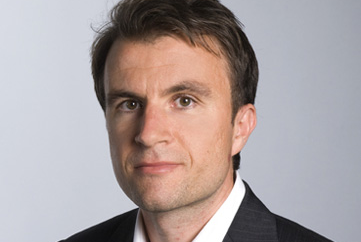
Marco Panesi is a Professor in the Department of Aerospace Engineering at the University of Illinois at Urbana-Champaign and Director of the Center for Hypersonics and Entry Systems Studies (CHESS). His research focuses on non-equilibrium phenomena in high-enthalpy flows, plasma dynamics, and uncertainty quantification. He holds a Ph.D. from the von Kármán Institute for Fluid Dynamics (2009) and M.S. degrees from Università di Pisa (2003) and VKI (2005). Roles: Faculty Member, Research Director, Principal Investigator Key Affiliations: CHESS, University of Illinois, VKI Research Interests: Hypersonic flow modeling, non-equilibrium plasmas, radiation effects, machine learning applications in aerothermodynamics, ablation processes, and state-to-state chemistry. His work bridges computational fluid dynamics with experimental validation in facilities like the Plasmatron X wind tunnel. Publications: Over 100 peer-reviewed articles on topics ranging from plasma kinetics to thermal protection systems. Recent work emphasizes adaptive neural operator models and Bayesian uncertainty quantification. Awards: Includes the Vannevar Bush Faculty Fellowship (2021), NASA Groundbreaker Award (2021), and multiple early-career recognitions from AFOSR, NASA, and ESA. Grants & Leadership: Secured funding from NSF, NASA, and DOD. Leads multidisciplinary teams on projects like the CHyPS material response solver and hypersonic entry modeling. Labs & Facilities: Principal investigator for the UIUC Plasmatron X facility, a key resource for studying high-enthalpy plasma flows.
Pavel P. Kuksa is a Research Assistant Professor in the Department of Pathology and Laboratory Medicine, specializing in bioinformatics, computer science, and functional genomics. His work focuses on high-throughput sequencing analysis, chromatin interaction data, and developing scalable software platforms for genomics research.
Holger Dette is a Professor and Chair Holder of Stochastics (specializing in Statistics) at the Faculty of Mathematics, Ruhr University Bochum. He leads the prominent Group Dette within the Institute of Statistics, overseeing a team of researchers, doctoral students, and administrative staff including Birgit Tormöhlen as team assistant. His research group is deeply integrated within the university's mathematical ecosystem, collaborating with other research groups across algebra, analysis, numerics, and topology. Dette's research spans mathematical statistics with strong applications in real-world problems. His primary interests include optimal experimental design, time series analysis, functional data, change point problems, nonparametric regression, biostatistics, special functions, goodness-of-fit tests, and random matrices . His work bridges theoretical statistics with practical applications, particularly evident in his collaborations with pharmaceutical giants Novartis and Bayer AG in biostatistics, as well as Quasol, a spin-off company from his statistics institute. His recent publications (2024-2025) reveal a research program increasingly focused on high-dimensional and functional data analysis, privacy-preserving statistics, and novel methodological approaches to longstanding statistical problems. Dette's work shows strong interdisciplinary connections, particularly with biomechanics (analyzing joint angles during fatigue phases) and data science (addressing challenges in the era of big data). His research group is actively involved in multiple DFG-funded projects including the newly established 'Small Data' collaborative research center (Sonderforschungsbereich 1597) and the Spatio-temporal Statistics for the Transition of Energy and Transport (Transregio 391). Dette has received significant recognition including the prestigious Humboldt Research Award . His paper 'With Great Power Come Great Side Channels: Statistical Timing Side-Channel Analyses with Bounded Type-1 Errors' achieved second place at the CSAW'24 Applied Research Competition MENA. His research group has also secured multiple significant funding awards from the German Research Foundation (DFG). As an advisor, Dette supervises numerous doctoral and master's students including Pascal Quanz, Marius Kroll, and Carina Graw. His group offers statistical consulting services for scientists and students across bachelor's, master's, and doctoral phases. The group maintains strong industrial partnerships, particularly in biostatistics applications, demonstrating Dette's commitment to translating theoretical statistics into practical solutions for real-world challenges.
Juho Lee is an Associate Professor at the Kim Jaechul Graduate School of AI, Korea Advanced Institute of Science and Technology (KAIST). Previously, he worked as a research scientist at AITRICS and completed his PhD in Computer Science & Engineering at Pohang University of Science and Technology (POSTECH) under Professor Seungjin Choi, followed by postdoctoral research at University of Oxford with Professor François Caron. His research focuses on: Bayesian deep learning Bayesian inference Meta learning Generative models Uncertainty quantification Graph representation learning Professor Lee's work bridges theoretical Bayesian methods with practical deep learning applications. His recent publications demonstrate significant contributions to neural processes, Bayesian optimization, and scalable inference methods. He has developed novel architectures like Set Transformer for permutation-invariant modeling and advanced techniques for uncertainty quantification in deep networks. His research shows a clear trajectory toward making Bayesian principles applicable to large-scale, real-world machine learning problems. Notable contributions include: Set Transformer: A framework for attention-based permutation-invariant neural networks (ICML 2019) Bootstrapping neural processes (NeurIPS 2020) Deep amortized clustering (NeurIPS 2019 workshop) Learning to pool in graph neural networks for extrapolation Professor Lee actively mentors graduate students and has advised numerous PhD candidates who co-author papers with him across NeurIPS, ICML, and ICLR. His research group SIML@KAIST develops scalable and interpretable machine learning methods with strong theoretical foundations.
Martin Wells is the Charles A. Alexander Professor of Statistical Sciences at Cornell University, with joint appointments in Social Statistics, Clinical Epidemiology, and Industrial Labor Relations. Since joining Cornell in 1987, he has developed methodologies spanning Bayesian inference, tensor analysis, and machine learning applications in biomedicine and finance. His research integrates statistical theory with computational innovations, particularly in high-dimensional modeling and quantum-inspired algorithms. Recent work focuses on geometric approaches to tensor decomposition, misclassification correction methods, and phylodynamic models incorporating dormancy effects. Professor Wells teaches statistical methodology across disciplines including law, medicine, and biology, adapting analytical frameworks to diverse research contexts. His interdisciplinary collaborations extend to Weill Medical College and the School of Industrial and Labor Relations.
Peng Li is a Professor in the Department of Electrical and Computer Engineering at the University of California, Santa Barbara. His research focuses on integrated circuits, brain-inspired computing, electronic design automation, and hardware machine learning systems. He holds Fellow status in the Institute of Electrical and Electronics Engineers (IEEE). His work emphasizes neuromorphic engineering, spiking neural networks, and the intersection of machine learning with analog circuit design. Education includes a PhD in Electrical and Computer Engineering from Carnegie Mellon University, an MS in Systems Engineering from Xi'an Jiaotang University, and a BS in Information Science and Engineering from the same institution. His research has been recognized with prestigious awards including the ICCAD Ten-Year Retrospective Most Influential Paper Award and multiple Design Automation Conference Best Paper Awards. Key research trends in his articles include advancements in spiking neural networks (SNNs), hardware accelerators for neuromorphic computing, Bayesian optimization for analog circuit design, and robustness in machine learning systems. He explores topics like adversarial robustness, energy-efficient architectures, and data-efficient prediction techniques. His work bridges theoretical machine learning models with practical hardware implementations, particularly in 3D integration and systolic array acceleration. Notable contributions include pioneering hybrid approaches combining formal verification with machine learning for analog circuits (HFMV framework), and innovations in neuromorphic processors such as the 3D Liquid State Machine architecture. His research also addresses challenges in semiconductor manufacturing, including wafer map pattern recognition and failure detection through semi-supervised learning and contrastive methods. Awards highlight his impactful contributions to both design automation and neural computing. His grants and collaborations likely span industry partnerships in semiconductor technology and neuromorphic computing. He leads a lab focused on next-generation hardware-software co-design for intelligent systems, emphasizing energy efficiency and scalability.
Dr Olatunji Johnson is a Lecturer in Statistics at The University of Manchester's Department of Mathematics. His research focuses on spatial and spatio-temporal statistics applied to global public health challenges, including tropical diseases like malaria and neglected tropical diseases (NTDs). He holds a PhD in Statistics and Epidemiology and has developed influential geostatistical methods and R packages (SDALGCP and MBGapp) for disease mapping and surveillance. Education: PhD in Statistics and Epidemiology (supervised by Prof. Peter Diggle). Research interests include model-based geostatistics, real-time health surveillance, and hybrid machine learning approaches for spatial data analysis. He is actively seeking PhD students interested in spatial statistics applications. Key Collaborations: Worked on projects in Kenya, Cameroon, Uganda, and Ethiopia, focusing on helminth control, air pollution impacts, and disease burden analyses. Part of the Statistical Advisory Unit and contributes to the UN Sustainable Development Goals through his work on health equity and disease elimination. Notable Projects: Developed methodologies for efficient survey design in NTD programs, air quality studies in African cities, and spatiotemporal modelling of pandemic risks. His work bridges statistical innovation with actionable public health policy.
Florent Krzakala is a Full Professor at École polytechnique fédérale de Lausanne (EPFL) in Switzerland, holding positions across multiple departments including the School of Basic Sciences (SB), School of Engineering (STI), and specifically within the Department of Physics (IPHYS) and Department of Electrical Engineering (IEM). He leads the Information, Learning and Physics Laboratory (IdePHICS) and maintains an office at ELD 239, Station 11, 1015 Lausanne. His research bridges statistical physics and computational disciplines, with significant contributions to understanding the theoretical foundations of machine learning and optimization problems. Dr. Krzakala received his MSc in Physics from Orsay, France in 1999, followed by a PhD in Statistical Physics from Orsay, Paris XI, France in 2002, and completed a postdoctoral position at Roma La Sapienza in 2004. This strong foundation in physics has informed his interdisciplinary approach to computational problems. His research interests span Statistical Physics, Machine Learning, Probability and Statistics, Computer Science, Information Theory, Inference on Graphs, Random Constraint Optimization, and Computational Optics. Krzakala's work focuses on applying methods from statistical physics to problems in theoretical computer science, probability, and machine learning. He investigates how concepts from disordered systems and phase transitions can illuminate computational barriers in optimization and inference tasks. His research has particular relevance for understanding the behavior of neural networks, compressed sensing, and high-dimensional statistical models. Analysis of his recent publications reveals a strong trend toward understanding the fundamental limits of learning in high-dimensional settings, with particular emphasis on phase transitions, statistical-to-computational gaps, and the theoretical properties of deep learning architectures. His work frequently bridges rigorous mathematical analysis with practical machine learning applications, demonstrating how insights from statistical physics can inform algorithm design and theoretical understanding in AI. Krzakala actively mentors the next generation of researchers, supervising numerous PhD students whose work continues to advance these interdisciplinary fields. His laboratory serves as a hub for researchers exploring the intersection of physics and computation, fostering collaborations across traditional disciplinary boundaries. He teaches advanced courses including Fundamentals of Inference and Learning, Statistical Physics, and Statistical Physics for Optimization & Learning, which examine the connections between physical principles and computational methods. His educational materials, including lecture notes on statistical physics methods in optimization and machine learning, have become valuable resources for students and researchers worldwide. As founder and scientific advisor of the startup Lighton, Krzakala has also demonstrated a commitment to translating theoretical insights into practical applications, particularly in the realm of optical computing for machine learning tasks.
Torsten Schwede is a Professor for Structural Bioinformatics at the Biozentrum, University of Basel, and serves as Vice President for Research at the same institution. He leads the SPHN Data Coordination Center at SIB Swiss Institute of Bioinformatics. His research focuses on computational structural biology, protein structure prediction, and structural bioinformatics, with contributions to tools like SWISS-MODEL. He has been honored as a Highly Cited Researcher in Biology and Biochemistry (2019–2021). Education: PhD in Protein X-ray Crystallography from Albert-Ludwigs-Universität Freiburg (Germany). Positions include leadership roles in academia and industry (e.g., GlaxoSmithKline). His work emphasizes protein modeling, data management, and integrative structural methods. Collaborations span computational drug design, benchmarking initiatives (CASP), and open-source software development. Scientific contributions include advancements in protein-ligand interactions, homology modeling, and the development of ModelCIF and QMEANDisCo frameworks. He actively participates in global initiatives like the Swiss Personalized Health Network (SPHN) and precision medicine.
Stefano CAMPOSTRINI is a Full Professor in the Department of Economics at Ca' Foscari University of Venice, specializing in Social Statistics (STAT-03/B). He serves as a Member of the technical-scientific Committee of the Ca' Foscari Challenge School and the Department of Economics' Committee. His research activities are supported by affiliations with the Research Institute for Social Innovation and the Research Institute for Innovation Management. Professor CAMPOSTRINI's research spans the intersection of statistical methodology, public health, and social policy. His work demonstrates expertise in advanced statistical techniques including Bayesian modeling, spatial analysis, and complex survey methodology. His primary focus areas include healthcare systems analysis, social innovation, public administration, and the economic aspects of health policy. He frequently addresses issues related to comorbidity patterns, healthcare service accessibility, and the application of artificial intelligence in healthcare settings. His publication record from 2021-2025 reveals significant trends in healthcare innovation, with particular emphasis on virtual hospital systems, AI applications in medicine, sustainable healthcare practices, and the statistical analysis of social services like early childhood education. His methodological contributions include novel approaches to analyzing regional health disparities and developing web-based tools for disease prevalence estimation. His research often employs expert consensus methods like Delphi techniques to address complex healthcare organizational challenges. Professor CAMPOSTRINI maintains active involvement in research initiatives through the Research Institute for Social Innovation and the Research Institute for Innovation Management. His work bridges advanced statistical methodology with practical applications in healthcare policy and social service delivery, making significant contributions to evidence-based decision making in public health and social policy domains across Italy and European contexts.
Brian Kulis is an Associate Professor at Boston University with appointments in the Department of Electrical and Computer Engineering, Computer Science, Systems Engineering, and the Faculty of Computing and Data Sciences. He holds the Peter J. Levine Career Development Professorship and has previously been an Amazon Scholar at Alexa AI (2019–2023) and an assistant professor at Ohio State University (2012–2015). His research focuses on machine learning, including large-scale optimization, metric learning, deep learning, Bayesian methods, and applications in audio and visual data analysis. He earned his PhD in Computer Science from the University of Texas at Austin (2008) and a BS in Computer Science and Mathematics from Cornell University. Key awards include the NSF CAREER Award (2015), CVPR Best Student Paper (2008), and ICML Best Student Paper (2007, 2005). His work spans publications in top venues like CVPR, NeurIPS, ICML, and ECCV, emphasizing scalable algorithms and domain adaptation. Current research explores metric learning, adversarial audio augmentation, and HPC anomaly detection. He advises multiple PhD students and collaborates on grants such as the NSF Traineeship for Sustainable Energy Solutions (2024). He teaches advanced courses in machine learning, deep learning, and data structures. His lab focuses on foundational and applied ML challenges, with affiliations in the Intelligent, Autonomous & Secure Systems group. Recent service includes senior area chair roles at AAAI, NeurIPS, and ICML.
Ingo Jahn is a Professor at The University of Queensland's School of Engineering. His academic career spans roles including R&D at Rolls-Royce (2007–2012) and academic positions at The University of Queensland (2012–2022). He holds an MEng (Oxford, 2005) and PhD (Oxford, 2011). Education: MEng in Engineering, University of Oxford (2005) PhD in Aerospace Engineering, University of Oxford (2011) Research Interests: Hypersonics: vehicle design, glide trajectory optimization, and aerothermodynamics Fluid Dynamics: computational methods, turbulence, and flow control Control Systems: model predictive control and co-design frameworks Thermodynamics: heat transfer in supercritical CO2 cycles and thermal protection systems His work bridges theoretical and experimental approaches, with a focus on hypersonic vehicle integration and propulsion systems. Publications: Recent articles emphasize hypersonic vehicle co-design, fluid-structure interaction, and experimental methods. Key themes include trajectory optimization, thermal management, and advanced simulation techniques. Grants & Awards: No awards explicitly listed, but extensive industry collaboration (e.g., Rolls-Royce) and leadership in high-impact projects indicate significant recognition. Supervision: Currently supervising 8 doctoral students on topics like hypersonic co-design, unstart prevention in ramjets, and scramjet trajectory optimization. Affiliations: Institute for Advanced Engineering and Space Sciences, AIAA, ASME. Active in conferences like AIAA SciTech and Global Power and Propulsion Society events.
Professor Garg Vikas holds the position of Assistant Professor in the Department of Computer Science at the School of Science. His research spans quantum computing, artificial intelligence, and machine learning with applications in computational biology, healthcare, and drug design. He leads the HEALED/Garg project focused on human-steered machine learning for drug discovery and collaborates with institutions like MIT and industry partners. He co-founded YaiYai Oy, providing AI/ML solutions to global sectors. Education: PhD from MIT CSAIL under Tommi Jaakkola, with postdoctoral and industry experience at Amazon, Microsoft, and IBM. His work aligns with UN SDGs, particularly in healthcare and sustainable energy. Research interests include graph neural networks, generative models, and quantum AI. Recent projects involve climate modeling via physics-informed neural ODEs and optimizing quantum circuits using graph autoencoders. Key collaborations include MIT’s MLPDS Consortium and the Finnish Center for Artificial Intelligence. He supervises doctoral researchers like Yogesh Verma and postdocs such as Kogkalidis.
Sanmi Koyejo is an Assistant Professor of Computer Science at Stanford University and holds an adjunct position as Associate Professor at the University of Illinois at Urbana-Champaign. He leads the Stanford Trustworthy AI Research (STAIR) group, focusing on fairness, robustness, and healthcare applications in machine learning. His work bridges theoretical foundations with practical systems, emphasizing ethical AI and clinical informatics. Affiliations: SAIL, HAI, CRFM, AIMI, AI Safety, and the Machine Learning Group. Research Interests: His expertise spans trustworthy AI, federated learning, and neuroimaging. He actively addresses challenges in algorithmic fairness, particularly in healthcare, where he collaborates with institutions like OSF Healthcare on projects like federated learning for clinical data. Key Contributions: Co-developed frameworks for unlearning in large language models, evaluated AI systems' societal impacts, and advanced benchmarks for medical applications. His work has been featured in venues like NeurIPS, ICML, and AAAI. Awards: NSF CAREER Award, Alfred P. Sloan Fellowship, and Terman Faculty Fellowship. Grants & Teams: Leads NSF-funded projects on domain adaptation and fairness in breast cancer risk scoring. Collaborates with interdisciplinary teams on NIH's MIDRC and NSF's AIFARMS initiative for agricultural sustainability. Labs/Teams: STAIR lab drives interdisciplinary research in ethical AI, with emphasis on real-world deployment and policy implications.
Niklas Linde is a full professor at the University of Lausanne's Faculty of Geosciences and Environment, leading the Department of Earth Sciences. He holds a PhD in Geophysics from Uppsala University (2005) and has held roles including Assistant Professor (2008), Associate Professor (2013), and Full Professor (2019). His research focuses on transforming geophysical signals into realistic hydrogeological models with rigorous uncertainty quantification. Key areas include probabilistic inversion, Bayesian methods, and geostatistical modeling applied to environmental and subsurface processes. Education: PhD in Geophysics (Uppsala University, 2005), postdoctoral positions at Lawrence Berkeley National Lab (USA), CNRS-CEREGE (France), and ETH Zurich (Switzerland). He joined UNIL in 2008 as an Assistant Professor in Environmental Geophysics. Research interests span geophysical inversion techniques, subsurface heterogeneity characterization, and the integration of geophysical and hydrological data. Current projects emphasize Bayesian approaches for model selection and rare event estimation, supported by grants from the European Commission and Swiss National Science Foundation. Collaborations involve international teams addressing challenges in hydrogeology, rock fracture dynamics, and 4D hydrogeology. Publications reflect advancements in inverse problem solving, stochastic simulation, and machine learning applications. His work bridges theory and practice, with field studies in alpine environments, fractured media, and environmental monitoring. Students under his supervision have explored topics like deep generative networks and Bayesian hydrogeological inversion. Advising: Supervised over a dozen PhD students, including recent works on variational Bayesian methods and geophysical data fusion. Grants include projects on uncertainty quantification and experimental design. Active in scientific societies and editorial roles, contributing to methodological advancements in Earth sciences.