Professor Francis Butler is a Full Professor at University College Dublin's School of Biosystems and Food Engineering, where he has been since 1990. His academic roles include research leadership in food safety, food chain integrity, and microbial risk assessment. He leads the UCD Institute for Food and Health and the UCD Centre for Food Safety as a Principal Investigator. Education: BE, Grad Dip University Teaching & Learning, MBA, and PhD from University College Dublin. Research Focus: His work centers on food safety hazards, quantitative risk assessment, and next-generation sequencing for pathogen identification. Recent projects include Listeria monocytogenes growth modeling, norovirus in oysters, and hepatitis E in pork products. He has secured over €6 million in research grants, including EU-funded projects like FOODINTEGRITY and SIGMACHAIN. Awards & Recognition: European Food Safety Authority Fellowship, Marie Sklodowska-Curie Fellowship, and UCD Teaching Grant. He coordinates international educational programs, including the UCD MSC Food Safety and Risk Analysis. Professional Activities: Member of EFSA advisory committees, editorial boards (e.g., Microbial Risk Analysis ), and international conference chairs. His work bridges academia, industry, and policy to enhance food safety standards globally.
Dr. Galatia Cleanthous is a Lecturer in the Department of Mathematics and Statistics at Maynooth University, Ireland, affiliated with the Faculty of Science & Engineering and the Hamilton Institute. She joined Maynooth in 2020 after postdoctoral positions at Trinity College Dublin, Newcastle University, and University of Cyprus, and holds a PhD in Pure Mathematics from Aristotle University of Thessaloniki (2014). Education PhD in Mathematics, Aristotle University of Thessaloniki, Greece (2014) MSc in Mathematics, Aristotle University of Thessaloniki, Greece Diploma in Mathematics, Aristotle University of Thessaloniki, Greece Research Interests Her research bridges pure and applied mathematics, focusing on Mathematical Analysis , Probability , and Statistics . Specifically, she explores Geometric Analysis , Geometric Function Theory , and Harmonic Analysis on manifolds and metric spaces. In statistics, she works on Nonparametric , Spatial , and Environmental Statistics , developing adaptive estimation techniques and studying Gaussian random fields on spheres and other domains. Publication Trends From 2025 back to 2013, her work has consistently appeared in top journals such as Annals of Statistics , Bernoulli , Journal of Nonparametric Statistics , and Transactions of the American Mathematical Society . A clear trend emerges: early publications concentrate on pure analytic topics like Fourier multipliers and function spaces, while recent outputs integrate these theoretical tools into modern nonparametric statistics, density estimation on manifolds, and stochastic modeling of environmental and seismological data. Scientific Awards Master’s degree ranked first with grade 9.8/10, Aristotle University of Thessaloniki (2011) Diploma ranked first among ~200 students, grade 9.7/10, Aristotle University of Thessaloniki (2009) Undergraduate merit awards for three consecutive academic years (2005-2008), State Scholarship Foundation of Greece National first place in Cypriot high-school mathematics entrance exams (2005), Ministry of Education, Cyprus Advising & Outreach Dr. Cleanthous has supervised BSc and MSc students, including Ultán Doherty (BSc, 1st Class Honors, 2021) and Anush Harish (MSc, 2022). She serves as Chair of the Department PR Committee, Member of the University STEM Promotions Committee, and Member of the departmental Equality, Diversity & Inclusion committee. Beyond campus, she trains young mathematicians at the North Kildare Maths Problem Solving Club and organizes public engagement events for Science Week. Labs & Teams She is associated with the Hamilton Institute at Maynooth University, a multidisciplinary research institute fostering collaboration between mathematics, computer science, and engineering.
Katarina Domijan is an Associate Professor in Statistics at the Department of Mathematics and Statistics, Maynooth University, Ireland. She holds a PhD in Statistics from Trinity College Dublin (2008) and has been affiliated with Maynooth University since 2008, transitioning from Lecturer/Assistant Professor to her current role in 2024. Her academic career includes editorial roles as Associate Editor for The R Journal (2021–present) and the Journal of Computational and Graphical Statistics (2015–2024). Research Interests focus on Bayesian methods for high-dimensional data, particularly in classification problems. She specializes in feature selection and model visualization, with applications spanning agricultural data analysis (e.g., hyperspectral imaging for lactose prediction), medical diagnostics (e.g., sepsis and cancer detection), and space physics (e.g., Saturn Kilometric Radiation classification). Her work bridges theoretical statistics with real-world challenges, including socio-economic studies and forensic science. Key Research Areas Bayesian statistical inference Machine learning for large feature spaces Statistical computing and model interpretability Data visualization and chemometrics Scientific Contributions include leading projects like VistaMilk Phase II (2024–2030, €152,300) and Measuring Carbon Sequestration (2024–2028, €174,788.90). Her 15 most recent publications highlight advancements in ensemble modeling, spatial statistics, and medical diagnostics. Scientific Awards Associate Editor, The R Journal (2021–present) Associate Editor, Journal of Computational and Graphical Statistics (2015–2024) Student Supervision includes PhD and MSc graduates such as Dr. Bruna Wundervald (2024) and Dr. Mark O’Connell (2017). She also collaborates with researchers across disciplines, including Dr. Nadim Akasheh in food hypersensitivity studies.
Dr. Le-Nam Tran is a researcher at the UCD School of Electrical & Electronic Engineering , University College Dublin. His work focuses on optimizing the last hop of 5G/6G wireless networks through mathematical programming, with emphasis on energy efficiency, interference management, and security against eavesdropping. Develops low-cost, low-complexity transmission techniques Projects supported by Science Foundation Ireland Career Development Award Author of over 80 peer-reviewed publications Research Keywords: Wireless Communications Network Security Signal Processing Energy-Efficient Systems Beamforming Optimization Interference Mitigation
Fabiano Pallonetto is a Professor at Maynooth University's School of Business, with affiliations to the Hamilton Institute and Innovation Value Institute (IVI). He combines academic research with industry experience in energy, IT, and transport sectors. Role: Professor Location: Room 314, Maynooth University Contact: Fabiano.Pallonetto@mu.ie His research focuses on smart grid integration, energy system optimization, and sustainable development. Key projects include: NexSys (Funded Investigator): Developing net-zero energy pathways FLOW (Principal Investigator): Flexible EV-grid integration RES4CITY (Coordinator): Workforce upskilling for renewables Recent publications analyze energy flexibility software, deep learning optimization models, phase change materials for thermal storage, and blockchain security frameworks. His work spans smart cities , renewable integration , and AI-driven energy systems . Student Supervision: Currently advising MR B. Mohseni-Gharyehsafa (PhD research).
Thomas Daubler is an Assistant Professor at University College Dublin's School of Politics and International Relations, specializing in Comparative Politics, Electoral Systems, and Political Behavior with a focus on European democracies. He holds a PhD from Trinity College Dublin and a Postgraduate Certificate in Higher Education from the London School of Economics. His research integrates applied statistical modeling to analyze parliamentary behavior, candidate selection, and policy representation. University College Dublin: Assistant Professor (2020–present), Director of Research (2021–2023) University of Mannheim: Postdoctoral Researcher (2012–2019) London School of Economics: Fellow in European Politics (2011–2012) His work spans electoral systems' impact on political accountability, gender equality in candidate selection, and voter behavior in preferential-list systems. Articles highlight trends in Electoral Reform , Party Politics , and Policy Representation across Belgium, Czech Republic, Germany, Ireland, Sweden, and Switzerland. Grants include the Ad Astra Start-Up and DFG-funded research on personalized vote dynamics. Professional roles involve extensive journal reviewing and grant assessment .
Catherine Hurley is a Professor of Statistics at Maynooth University's Faculty of Science & Engineering, where she serves as Subject Head of Statistics in the Department of Mathematics and Statistics. She maintains strong affiliations with both the MU Hamilton Institute and the National Centre for Geocomputation, positioning her work at the intersection of statistics, data science, and computational methods. Dr. Hurley is a leading expert in data visualization with primary research interests in visualization techniques for data science and machine learning problems. Over her distinguished career, she has authored and contributed to numerous software packages, beginning with Data Viewer (1987), a predecessor to GGobi, Quail (1987-2000), and many R packages including condvis2, vivid (2021), and Bartvis (2022). Her work has significantly advanced the field of statistical graphics and model visualization. Her recent research has focused on conditional visualization for statistical models, with several publications on the condvis package and related tools that enable researchers to explore complex machine learning models through interactive visual interfaces. She has also made substantial contributions to dendrogram seriation, pairwise comparison visualization, and variable importance displays, creating numerous R packages that have become essential tools for statisticians and data scientists. Her 2023 publications include significant contributions to Bayesian additive regression trees and variable importance visualization for machine learning models. Dr. Hurley has held significant leadership roles in the statistical community, serving as Vice-President (2017-2019) and President (2019-2021) of the Irish Statistical Association. She also served as Editor-in-Chief and Editor of the R Journal from 2019 to 2023, playing a crucial role in advancing open-source statistical software development and dissemination. Her work demonstrates a consistent pattern of developing practical visualization tools that address real-world challenges in statistical analysis and machine learning interpretation. The progression from early work on statistical graphics infrastructure to recent innovations in model exploration reflects her sustained commitment to making complex statistical concepts accessible through visualization.
Szymon Urbas is a Lecturer in Statistics at the Department of Mathematics and Statistics, Faculty of Science & Engineering, Maynooth University (2024–present). He previously worked as a Postdoctoral Researcher at University College Dublin (2022–2024). His academic background includes a PhD (2018–2022) and MRes (2017–2018) in Statistics from Lancaster University, and a BSc in Mathematical Science from the University of Galway (2013–2017). Research Interests Bayesian modeling with latent variables Computationally intensive methods (Hamiltonian Monte Carlo, particle filters) Applications in agri-food sector and clinical trial operations Variational inference in machine learning High-dimensional data with hierarchical correlations Recent publications focus on Bayesian regression for agricultural spectral data, path sampling algorithms, clinical trial recruitment prediction, and neuro-mimetic learning strategies. His work integrates probabilistic methods with real-world challenges in agriculture and healthcare. Contact: Szymon.Urbas@mu.ie
Dr. Simon Kelly is an Associate Professor in the UCD School of Electrical & Electronic Engineering, part of the UCD College of Engineering and Architecture. With a background in Electrical and Electronic Engineering (B.E. and Ph.D. from UCD), he has established himself as a leading researcher at the intersection of engineering and cognitive neuroscience, focusing on how the brain makes perceptual decisions. Dr. Kelly's research program centers on understanding the neural mechanisms underlying perceptual decision making. Using human electroencephalography (EEG), he investigates how the brain accumulates sensory evidence to reach decisions about what we see, hear, and experience. His pioneering work around 2012 identified the Central Parietal Positivity (CPP) signal that reflects the accumulation of evidence during decision processes, building to a threshold before decisions are executed. This discovery has fundamentally advanced our understanding of how the brain transforms sensory input into decisions. His recent publications reveal continued innovation in understanding the dynamics of evidence accumulation, the neural representation of confidence in decisions, and how prior knowledge shapes perceptual processing. His work spans theoretical advances in decision mechanisms and practical applications for diagnosing and treating cognitive impairments associated with neurological disorders like Parkinson's disease. Wellcome Trust Investigator Award in Science (2020) for 'What dictates the extent of evidence accumulation in human decision making?' SFI US-Ireland Research Partnership Programme award (2020) for 'Uncovering the neural architecture underlying decisions abstracted from movements' As an interdisciplinary researcher, Dr. Kelly bridges engineering, neuroscience, and psychology through his leadership of the UCD Cognitive Neural Systems Lab. His work has significant implications for both fundamental cognitive science and potential clinical applications, reflecting his commitment to basic research as a foundation for future practical advances.
Lars Pforte is a Lecturer in the Faculty of Science & Engineering at Maynooth University, affiliated with the Mathematics and Statistics department. He holds a PhD in Mathematics and a Masters Degree in Geocomputation. PhD in Mathematics Masters in Geocomputation His research spans both pure mathematics and applied geospatial analysis. Key areas include: Representation theory of finite groups Urban airspace traffic management (UTM) Road safety analysis Data imputation in space-time series While his recent publications focus on algebraic structures like symplectic modules for the Klein-four group and permutation module vertices, he also applies Bayesian statistical methods to urban analytics and transportation safety. No scientific awards are explicitly mentioned in the available information.
Brendan Murphy is a Full Professor in the School of Mathematical Sciences at University College Dublin since 2015, previously holding a Professor role at the same institution (2007-2015) and a Lecturer position at Trinity College Dublin (1999-2007). He is a Principal Investigator at the Insight Centre for Data Analytics and actively works in Machine Learning & Statistics. Research Focus: His work centers on Model-based clustering Mixture models Applications in sports analytics, food science, microbiome studies, and public health Bayesian statistical methods High-dimensional data analysis Article Trends: Murphy's recent publications (2024-2025) emphasize soft clustering techniques, Bayesian mixture models, and their applications across diverse domains including metabolomics, political science, and oceanography. His work addresses challenges in variable selection, robust classification, and multi-omics integration.
Christopher Brunsdon is Professor of Geocomputation and Director of the National Centre for Geocomputation at Maynooth University's Faculty of Social Sciences. Previously, he held positions at the University of Liverpool, Leicester, Glamorgan, and Newcastle. His academic credentials include a BSc in Mathematics from Durham University and an MSc in Medical Statistics and PhD in Geography from Newcastle University. Research interests focus on spatial statistics, data science, and spatial analysis, with emphasis on open-source software (especially R) and reproducible methods. Applied domains include crime pattern analysis, health geography, and environmental applications. Current projects include 'Mapping Lineages: Quantifying the Evolution of Maps of the British Isles' and 'Building city dashboards'. Brunsdon's recent publications (2018-2020) demonstrate strong methodological contributions to geocomputation, spatial regression, and geodemographics. Trends include reproducibility in spatial science, multiscale modeling, and applications in health geography and urban analytics. He leads the National Centre for Geocomputation, fostering innovation in spatial data science. Grant leadership includes an ERC Advanced Grant (RIGAR) and industry collaborations like consultancy for SiteZeus.
Ehsan Namjoo serves as a Research Fellow in the Department of Electronics & Computer Engineering at the University of Limerick, with a primary affiliation at Lero – the Irish Software Research Centre. His multidisciplinary work bridges theoretical signal processing, machine learning applications, and hardware implementation for real-world systems. His research spans signal processing (DOA estimation under non-ideal noise conditions, EEG source imaging), machine learning (explainable AI for medical diagnostics, feature selection in cancer detection), and computer engineering (polar code decoders, visible light communication systems). Notable biomedical applications include breast cancer diagnosis and epileptic source analysis, while cybersecurity work focuses on intrusion detection in cloud environments. Recent publications (2021-2025) reveal a consistent trajectory toward developing lightweight, interpretable models for tabular medical data alongside robust signal processing frameworks for communication systems. His work increasingly integrates hardware-aware algorithms, particularly in polar coding implementations, and emphasizes practical validation through experimental demonstrations in visible light networks. As an active Lero researcher, Namjoo participates in Ireland's national software research ecosystem, contributing to interdisciplinary projects that connect theoretical innovations with healthcare, communications, and security applications through collaborative frameworks.
Professor Kenneth Brown is affiliated with the Department of Computer Science at University College Cork (UCC) , Ireland. He holds the academic rank of Professor and is a Principal Investigator at the Insight Centre for Data Analytics and the CTVR (Telecommunications Research Centre) . BSc (Hons) Mathematics, University of Glasgow, 1986 MSc Mathematical Logic and the Foundations of Computation, University of Manchester, 1987 PhD Artificial Intelligence in Engineering, University of Bristol, 1991 His research focuses on Artificial Intelligence, constraint programming, optimisation, and distributed reasoning , with applications in wireless networking, sensor networks, and dynamic resource management . He also works on smart energy systems, data analytics, and human-centric applications. His recent work includes projects under the SFI-funded Insight Centre and Horizon Europe initiatives like GLACIATION and SEISMEC. His publications span topics from wireless sensor network optimization and cognitive radio to constraint-based decision support and AI in emergency management. He has led and contributed to over 15 recent publications in top-tier journals and conferences, showing a strong trend in AI-driven solutions for networked and intelligent systems. IEEE SECON 2015 Best Demonstration 2014 TAOS Best Paper Award in Access Networks and Systems Best paper, SMARTGREENS 2013 Enterprise Ireland Lifescience and Food Commercialisation Award Best Application Paper, AI2008 Best Application Paper, AI2006 Best paper nomination, ECAI 2004 Best Paper, Intl Conf AI in Design Professor Brown has supervised numerous PhD and MSc students in areas including constraint programming, sensor networks, evacuation modeling, and smart buildings. He has secured significant research funding from SFI, Enterprise Ireland, and IRCSET. He is actively involved in research leadership, serving as Deputy Director of Insight@UCC and PI in multiple national and international projects. He is a member of research groups involved in GLACIATION (green, responsible data operations), SEISMEC (human-centric industry), and SMARTeBuses . His lab supports a team of doctoral students and research staff working on AI, networking, and data analytics for real-world applications.
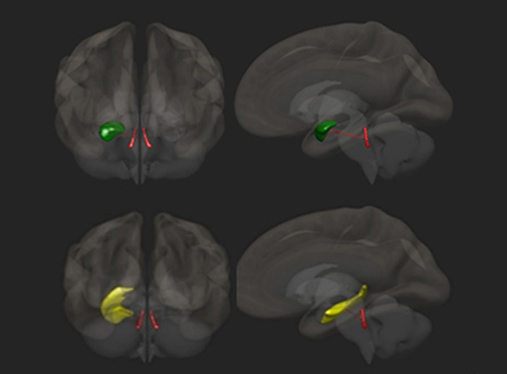
CLINT leads the Lab for Clinical & Integrative Neuroscience (Lab CLINT) at Trinity College Dublin , focusing on brain disorders through multimodal imaging and neuromodulation. The lab investigates predictive coding theory in phantom perceptions like tinnitus, Parkinson's, and chronic pain, while developing treatments through peripheral nerve stimulation. Research Pillars : Predictive coding, thalamocortical dysrhythmia, locus coeruleus noradrenergic pathways Key Disorders : Tinnitus, Alzheimer's, chronic pain, depression Scientific Contributions include: Developing TIDE consortium for tinnitus biomarkers Implementing BRAI3N clinic for neuromodulation therapies Creating Tinnitus Éire community for peer support Recent publications analyze: Deep learning applications for tinnitus prognosis HD-tACS effects on attention networks Bayesian models of chronic pain comorbidities CLINT's work bridges laboratory research with clinical translation, emphasizing patient-centered approaches and interdisciplinary collaborations across Europe and North America.