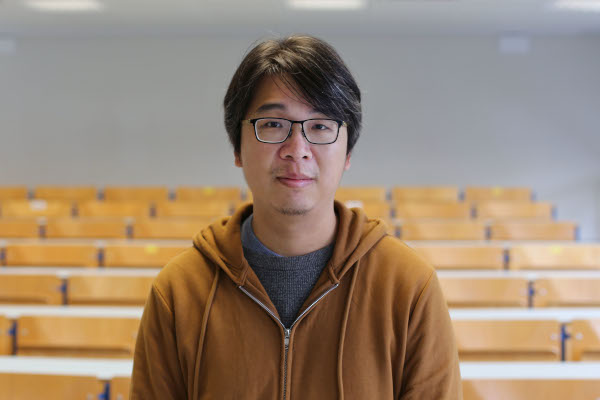
Keying Ye is a Professor of Statistics in the Department of Management Science and Statistics at The University of Texas at San Antonio (UTSA), part of the Alvarez College of Business. Previously, he held positions at Virginia Tech (1990–2005) and Shanghai Jiaotong University (1985). He earned his Ph.D. in Statistics from Purdue University, an M.S. in Mathematics from the Institute of Applied Mathematics at Academia Sinica (China), and a B.S. in Mathematics from Fudan University (China). Research Interests : Bayesian inference and methods, objective Bayesian analysis, normalized power Bayesian analysis, clinical trial design (e.g., Continual Reassessment Method), variable selection, Bayesian model averaging, and applications in biostatistics, cyber security, environmental science, and experimental design. He currently serves as an Associate Editor for Bayesian Analysis . His teaching spans courses such as Bayesian statistics, regression analysis, statistical learning, and advanced inference methods. His publications focus on methodological advancements and applied statistical solutions in diverse fields.
Pravin Trivedi is an Honorary Professor at the University of Queensland's School of Economics, specializing in Econometrics , Panel Data Analysis , and Health Economics . His work bridges theoretical and applied econometric methods with practical policy analysis. Research Focus : Applied economics, statistical modeling, and econometric analysis of count data, health insurance markets, and socioeconomic inequality. Notable Contributions : Development of copula-based models, finite mixture models, and Bayesian techniques to analyze healthcare utilization and insurance dynamics. His publications span influential books like Regression Analysis of Count Data (2013) and empirical studies on topics such as Medicare supplemental insurance and Olympic success determinants. Despite the absence of explicit awards or student advising records in the text, his methodological innovations and interdisciplinary applications highlight his academic impact.
Pekka Parviainen is an Associate Professor in the Department of Informatics at the University of Bergen, within the Faculty of Mathematics and Natural Sciences. His research spans machine learning, probabilistic modeling, and AI theory, with a focus on Bayesian and Markov networks, adversarial robustness, fairness, and energy forecasting. He is affiliated with the Center for Data Science (CEDAS), an active research center at the university. His research interests include: Structure learning in graphical models Probabilistic forecasting using graph neural networks Adversarial robustness and defense mechanisms Fairness in clustering and machine learning Optimization and approximation in learning algorithms Applications in renewable energy and quantum sensing His recent publications (2020–2025) reflect a strong theoretical grounding combined with real-world applications, particularly in energy systems and AI safety. The works trend toward scalable and interpretable models, with increasing focus on fairness and robustness. Key themes include Bayesian network learning, metric learning, and causal graph modeling. Scientific contributions include: Development of novel adversaries (e.g., Voronoi-epsilon) for measuring robustness Scalable algorithms for learning large DAGs and Bayesian networks Integration of continuous optimization with combinatorial heuristics Applications in electricity demand forecasting and gas sensing Parviainen advises PhD students, including Hyeongji Kim (2023 thesis on distance in machine learning), and collaborates extensively with researchers in Norway and internationally. He has received computational support via Sigma2 (NN9884K) and is part of the CEDAS project, which fosters interdisciplinary data science research. While no specific grants are detailed, his involvement in funded projects and high-impact publications indicates active grant engagement. He is associated with the Center for Data Science (CEDAS), where he contributes to advancing data-driven methodologies across domains. The team emphasizes scalable, robust, and fair AI systems, aligning with national and international research priorities in trustworthy machine learning.
Saptarshi Chakraborty is an Assistant Professor in the Department of Biostatistics at the School of Public Health and Health Professions, State University of New York at Buffalo. He serves as Director of the Statistical Consulting Lab at the Biostatistics, Epidemiology and Research Design (BERD) Core of CTSI. His research focuses on statistical computing, Bayesian modeling, cancer genomics, and high-dimensional data analysis. Chakraborty holds a PhD from the University of Florida (2018), an MS from the Indian Statistical Institute (2013), and a BSc from Presidency College, Kolkata (2011). He completed a postdoctoral fellowship in statistical genomics at Memorial Sloan Kettering Cancer Center (2018–2020). His work bridges theoretical statistics and applied biomedical research, with contributions to machine learning, computational biology, and drug safety assessment. Notable areas include developing Bayesian frameworks for envelope models, analyzing somatic mutations in cancer, and optimizing nanoparticle drug delivery systems. He is also involved in mentoring through his roles and serves as IBS Biometric Bulletin Correspondent for ENAR. Publications highlight interdisciplinary collaboration, with recent work on photoacoustic imaging, nuclear morphology in cancer, and prenatal exposure effects. Chakraborty is affiliated with the American Statistical Association and International Indian Statistical Association, emphasizing his commitment to advancing statistical methodologies in health sciences.
Dr. Mi-Ok Kim is a Professor in the Department of Epidemiology and Biostatistics at the University of California San Francisco (UCSF) and serves as the Director of the Biostatistics Core at the Helen Diller Family Comprehensive Cancer Center (HDFCCC). She joined UCSF from Cincinnati Children’s Hospital Medical Center, where she led the Biostatistics Unit for the Cancer and Blood Diseases Institute. Her role involves leading strategic development of shared biostatistical resources and providing expert statistical support across basic, clinical, and population sciences research. Dr. Kim earned her MS (2000) and PhD (2003) in Statistics from the University of Illinois at Urbana-Champaign. Her research program centers on methodological advancements in biostatistics, including non- and semi-parametric inference, longitudinal and survival data analysis, and causal inference using structured data from registries, network databases, and electronic health records. She has a strong focus on comparative effectiveness research (CER) and patient-centered outcomes research (PCOR), particularly in the context of hierarchical data structures. Her recent publications reflect a broad interdisciplinary reach, spanning oncology, pediatrics, public health, and machine learning applications in healthcare. Themes include health disparities, clinical trial design, biomarker analysis, and statistical methods for integrating aggregate and individual-level data. She has published in high-impact journals such as JAMA Dermatology , Annals of Applied Statistics , and Pediatrics . Dr. Kim has received multiple honors and awards, including: Fellowship, University of Illinois at Urbana-Champaign (1997) First Prize, Capital One Financial Data Challenge Competition (2001) Norton Prize, Robert Bohrer Workshop for Student Papers in Statistics (2002) Junior Faculty Travel Award, International Conference on Robust Statistics (2004) Travel Award, AACR Cancer Biostatistics Workshop (2008) She has served as Principal Investigator on numerous grants from NIH, NSF, and PCORI, supporting research in areas such as pediatric Crohn’s disease, kidney transplantation, and meta-analysis methods. Her work emphasizes rigorous statistical methodology to reduce bias and improve efficiency in real-world data analysis. She collaborates extensively with multidisciplinary teams across UCSF and beyond, contributing to clinical studies, protocol development, and outcomes research. Dr. Kim leads a research team focused on optimal handling of complex data structures in treatment selection and outcome analysis, with applications in chronic disease management and cancer care. She is also engaged in developing frameworks for post-market monitoring of machine learning-based medical devices, reflecting her forward-looking approach to biostatistical innovation.
Rianne de Heide is a Researcher in the Machine Learning department at Centrum Wiskunde & Informatica (CWI) in Amsterdam, The Netherlands. Her work focuses on theoretical aspects of statistical learning, particularly in the areas of Bayesian inference and hypothesis testing. Dr. de Heide's research interests span several interconnected domains in statistical theory and machine learning: Bayesian statistics and inference Hypothesis testing and statistical validity E-values and anytime-valid testing Group invariance in statistical models Safe Bayesian learning under misspecification Multi-armed bandit problems Her recent publications demonstrate a strong focus on developing theoretically sound statistical methods that maintain validity under flexible conditions. A significant portion of her work explores 'safe testing' frameworks that remain valid regardless of when testing is stopped, addressing a long-standing challenge in statistical practice. Her research bridges theoretical statistics with practical applications in machine learning, with publications in top journals including the Annals of Statistics and the Journal of the Royal Statistical Society Series B. Dr. de Heide has received recognition for her work, including: Willem R. van Zwet Award (2022) Her research is supported by the project 'Safe Bayesian Inference: A Theory of Misspecification based on Statistical Learning,' funded by The Netherlands Organisation for Scientific Research (NWO). She collaborates extensively with Peter Grünwald, Wouter Koolen-Wijkstra, and other researchers in the Machine Learning group at CWI.
Wesley Tansey serves as Assistant Professor in the Computational Oncology group within the Department of Epidemiology and Biostatistics at Memorial Sloan Kettering Cancer Center (MSKCC). His research bridges statistical machine learning with cancer biology, focusing on developing novel computational frameworks for oncology applications. Dr. Tansey's research program centers on Bayesian statistical methods for biological data analysis, with particular emphasis on spatial transcriptomics (evidenced by his BayesTME framework), drug response modeling , and multi-omics integration . His lab develops scalable algorithms for high-dimensional biological data, including UnitedMet for metabolite imputation and MultiTME for spatial profiling analysis. Current projects address combinatorial drug screening optimization, tumor microenvironment characterization, and predictive oncology platforms for rare cancers. His recent publications (2023-2025) demonstrate strong focus areas: Bayesian active learning for drug screening (6+ publications) Spatial biology methods (BayesTME, MultiTME) Metabolomics-transcriptomics integration (UnitedMet) Causal inference in biological systems Scientific recognition includes serving as Area Chair for AISTATS 2022 and frequent invited talks at major conferences including SIAM's Mathematics of Data Science meeting. Dr. Tansey actively mentors lab members including Sophie Jaro (Spotlight presenter at ICML Workshop), Haoran Zhang (contributed talk presenter), Christopher Tosh (Associate Research Scientist), and Jeff Quinn (Bioinformatics Software Engineer). His lab receives research funding supporting development of computational oncology platforms with clinical translation potential. The VIVO Lab maintains active GitHub repositories for core methodologies including BayesTME, reflecting strong software engineering practices in computational biology.
Dr. Saonli Basu is a Professor in the Division of Biostatistics & Health Data Science at the University of Minnesota School of Public Health. She serves as Founding Director of the Genomic Data Commons and Co-Director of the Analytics Core at the Masonic Institute for the Developing Brain. Education: PhD in Statistics (University of Washington), MStat (Indian Statistical Institute), BS in Statistics (Presidency College) Her research focuses on developing statistical methodologies for genetic mapping of complex traits, particularly rare variant association and gene-environment interaction modeling. She specializes in computational statistics, nonparametric inference, and statistical genetics applications for diseases like Alzheimer's, type 2 diabetes, and substance abuse. Recent publications show trends in SNP heritability analysis , admixed population genetics , longitudinal pregnancy studies , and multi-variant association tests . Key collaborative projects include cerebral small vessel disease genomics and B. pertussis vaccination outcome prediction models. Scientific honors include: Chair, ASA Genomics and Genetics Section (2020) Fellow, American Statistical Association (2017) NIH BMRD study section member (2017-2021) Young Investigator, International Indian Statistical Association (2016) She has taught graduate-level courses in human genetics statistics and probability models for over 15 years. Current research receives NIH/NIDA R01 and NIDDK R21 grants, with co-investigator roles in epidemiology and psychology-led R01 projects.
Dr. Mingzhou Yin is a postdoctoral researcher at the Institute of Automatic Control within the Faculty of Electrical Engineering and Computer Science at Leibniz University Hannover, where he has been working since August 2024. He received his Doctor of Sciences degree from ETH Zurich in 2024 under the supervision of Prof. Roy S. Smith, with a dissertation titled 'Regularized and Nonparametric Approaches in System Identification and Data-Driven Control.' His research interests span data-based modeling and control, sparse learning theory, system identification using subspace and regularized methods, model predictive control, and periodic system theory. Dr. Yin has developed innovative approaches in low-rank matrix regression, Gaussian process-based control of nonlinear systems, and closed-loop identification frameworks. His work bridges theoretical advances with practical applications in energy-flexible buildings and aerospace systems. Dr. Yin has received significant recognition including the IEEE Control Systems Society Swiss Chapter Young Author Best Journal Paper Award and the Systems Identification and Adaptive Control Technical Committee Outstanding Student Paper Prize in 2023. His publications in IEEE Control Systems Letters, Automatica, and other top journals demonstrate his contributions to data-driven control theory. IEEE Control Systems Society Swiss Chapter Young Author Best Journal Paper Award (2023) Systems Identification and Adaptive Control Technical Committee Outstanding Student Paper Prize (2023) As an educator, Dr. Yin has supervised numerous student projects on data-driven predictive control, sparse learning algorithms, and closed-loop identification of networked systems. His teaching includes 'Data- and Learning-Based Control' exercises and previous TA roles for 'Robust Control and Convex Optimisation' and 'System Identification' courses.
Xi Lu is an Assistant Professor at the University of Houston College of Pharmacy, affiliated with the Department of Pharmaceutical Health Outcomes and Policy. Their research focuses on applying statistical machine learning to high-dimensional and longitudinal data, particularly in the context of cancer genomics and gene-environment interactions. Ph.D. in Statistics, Kansas State University M.A. in Statistics, Columbia University B.S. in Mathematics and Applied Mathematics, East China Normal University Xi Lu's work emphasizes robust Bayesian and regularized variable selection methods in genomics and multi-omics data analysis. Key applications include survival analysis, mixed-effects modeling, and software development for statistical genetics. Recent publications highlight the development of R packages like Bayenet and marble, which address robust variable selection in genetic studies. These works span computational biology, high-dimensional data analysis, and methodological advancements in longitudinal research. Lolafaye Coyne Statistics Graduate Research Scholarship (2024, 2020) Lin Statistics Graduate Research Scholarship (2020) Graduate Student Council Travel Award (2019)
Michael A. Troxel is an Associate Professor of Physics at Duke University's Department of Physics within Trinity College of Arts & Sciences. He earned his Ph.D. and M.S. from the University of Texas, Dallas, and dual B.A./B.S. in Physics from the University of Oklahoma. His research focuses on cosmology, dark matter, and galaxy evolution through advanced surveys like the Dark Energy Survey (DES) and the Nancy Grace Roman Space Telescope missions. Ph.D., University of Texas, Dallas (2014) M.S., University of Texas, Dallas (2011) B.A./B.S., University of Oklahoma (2008) Troxel's work leverages weak gravitational lensing, galaxy clustering, and multiwavelength observations to map cosmic structure and constrain dark energy models. His recent studies simulate next-generation telescopes' capabilities for redshift measurement and cosmic shear analysis, aiming to resolve non-linear matter suppression from baryonic feedback. He contributes to major collaborations like DES, SPT, and ACT, integrating machine learning for galaxy classification and cosmological inference. His publications highlight trends in cosmic structure mapping, Roman Space Telescope simulations, and baryonic feedback modeling. Awards include the Department of Energy's Early Career Award (2020). Troxel leads grants from Jet Propulsion Lab and DOE for cosmological software development (2020-2027) and Roman Survey optimization (2024-2026). He co-chairs the DES Science Committee and serves as Associate Chair of Duke's Physics Department (2025-present).
Vivekananda Roy is a Professor in the Department of Statistics at Iowa State University . He earned his BS from R.K.M. Residential College (2001), an MS from the Indian Statistical Institute (2003), and a PhD from the University of Florida (2008). Education BS, R.K.M. Residential College (2001) MS, Indian Statistical Institute (2003) PhD, University of Florida (2008) Roy's research focuses on Bayesian statistics , Markov Chain Monte Carlo (MCMC) algorithms , and high-dimensional data analysis . His work includes theoretical analysis of MCMC convergence properties, Bayesian variable selection methods, and applications to spatial and generalized linear mixed models. Recent projects address computational challenges in ultra-high dimensional settings and geometric approaches to sampling algorithms. Key trends in his publications include advancements in MCMC diagnostics , Bayesian hierarchical modeling , and statistical computing tools for efficient posterior estimation. He has also contributed to practical implementations through software packages like geoBayes for geostatistical analysis. Contact: vroy@iastate.edu
María José Madero Ayora is a Professor at the Department of Signal Theory and Communications , Universidad de Sevilla , specializing in nonlinear system modeling and digital predistortion for wireless communication systems. Her research focuses on Volterra series applications in power amplifier linearization, microwave measurements , and machine learning techniques for signal processing. Principal Investigator for projects like Statistical Signal Modeling for Brain-Computer Interfaces (PID2021-123090NB-I00) Recipient of the Arftg Roger Pollard Student Fellowship in microwave measurement Her work spans 5G waveform linearization , I/Q modulator impairments , and thermal memory effects in RF amplifiers. Recent publications combine sparse Bayesian methods with Volterra models to address nonlinear distortion in OFDM and visible light communication systems. She has supervised doctoral theses and participated in international conferences across the U.S., Europe, and Asia.
Sigrunn Holbek Sørbye is a Professor at the Department of Mathematics and Statistics, UiT The Arctic University of Norway. Her research focuses on Bayesian statistics, time series analysis, and spatial data modeling with applications in climatology, ecological statistics, and computational statistics. Institution: UiT The Arctic University of Norway Department: Department of Mathematics and Statistics Research Interests: Dr. Sørbye specializes in Bayesian computation using integrated nested Laplace approximation (INLA), statistical modeling of long-range dependent processes, and applications to climate systems. Her work includes modeling cosmic dust detection rates, analyzing metabolic risk factors, and studying population dynamics through capture-recapture data. Selected Publications Trends: Recent research spans dietary pattern analysis, solar dust modeling, climate sensitivity studies, and ecological monitoring. Key methodologies involve Bayesian hierarchical modeling (2025, 2023), INLA applications (2022, 2020), and long-memory stochastic processes (2020-2019). Collaborative Networks: Dr. Sørbye collaborates on interdisciplinary projects including "Modellering av komplekse systemer" (Complex Systems Modeling) and "Intermittent fluctuations in physical systems." She also contributes to "Transforming ocean surveying by the power of DL and statistical methods." Contact: Tromsø, Norway. sigrunn.sorbye@uit.no | +47 77 64 55 04
Pedro Galeano San Miguel is an Associate Professor at the Department of Statistics, Universidad Carlos III de Madrid. He is affiliated with the Nonparametric Inference for Complex Data and its Applications (NICDA) research group and contributes to the Flores de Lemus Institute and UC3M-Santander Big Data Institute. His work bridges statistics, computer science, and economics with a focus on financial and high-dimensional data. Research Interests: Functional data analysis and outlier detection Bayesian nonparametric methods and stochastic volatility models Copula models for systemic risk and portfolio selection High-dimensional statistical inference and dynamic correlation Big data applications in economics and finance Publication Trends: His recent work (2024–2016) emphasizes copula models for financial risk, functional regression techniques with missing data, and Bayesian inference for high-dimensional time series. He explores systemic banking risks, volatility prediction, and correlation structure changes across economic and financial domains. Grants & Projects: He leads or contributes to projects on computational statistics for complex dependencies, big data customer network analysis, and multivariate asymmetric GARCH modeling, funded by institutions like the State Research Agency (AEI) and Banco Santander.