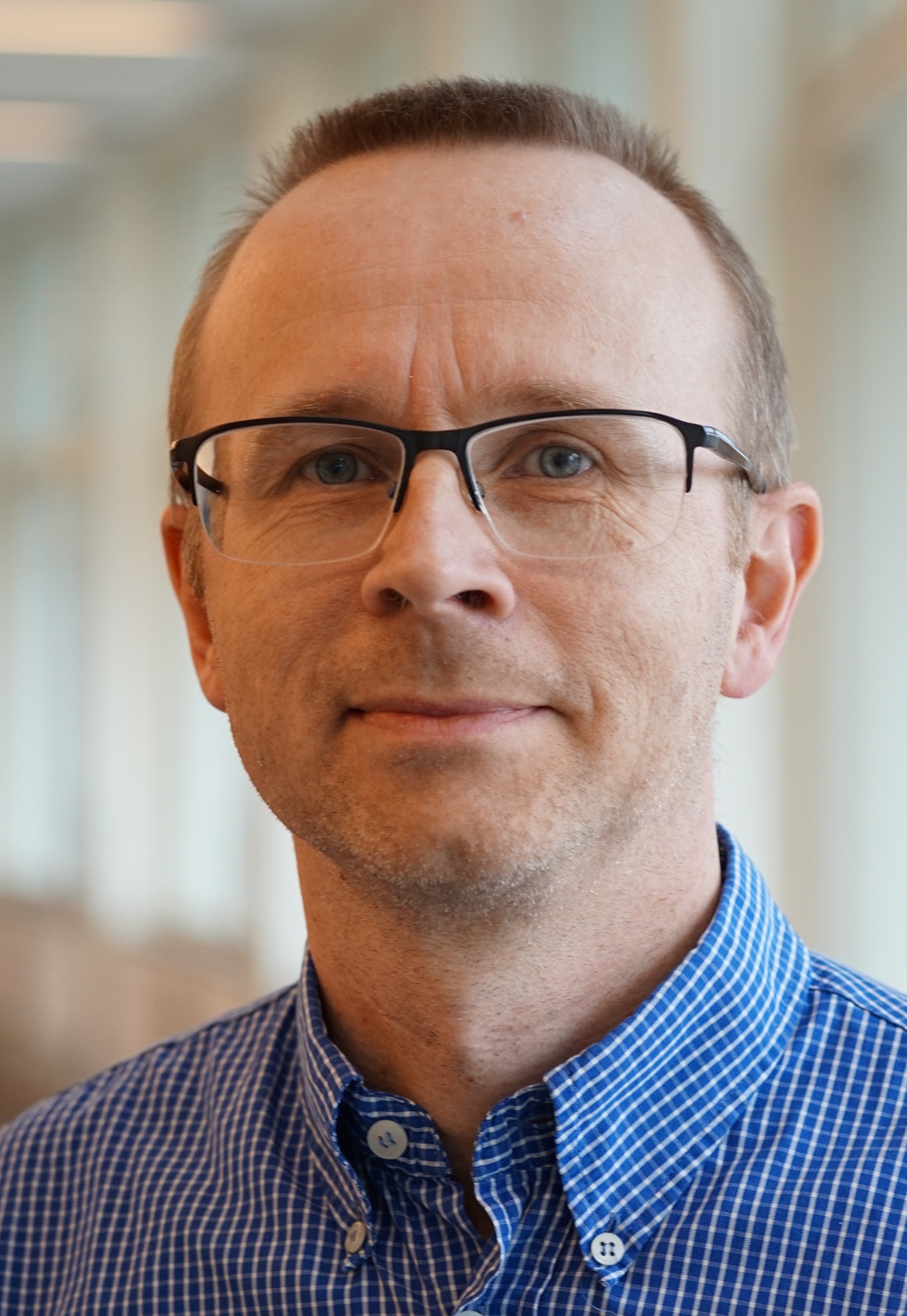
Mattias Villani is Professor of Statistics at Stockholm University, specializing in Bayesian statistics and machine learning. He obtained his PhD in Statistics from Stockholm University in 2000 and has held positions at Sveriges Riksbank and Linköping University. Villani develops computationally efficient Bayesian methods for inference, prediction and decision-making with flexible probabilistic models. Research Interests: His work spans Bayesian computation (MCMC, HMC, variational inference), machine learning (Gaussian processes, mixture models), and applications in neuroimaging, transportation, and econometrics. Research focuses on scalable Bayesian methods for large datasets and complex models. Publication Focus: Recent articles concentrate on Bayesian neuroimaging analysis, transportation network modeling, and efficient MCMC algorithms. Methodological innovations in subsampling techniques for large-scale Bayesian computation represent a significant research trend. Student Advising: Supervises PhD students in statistical methodology development and applications. Current research groups focus on spatiotemporal modeling, locally stationary processes, and neuroimaging statistics.
Tobias Andermann serves as an Assistant Professor at Uppsala University's Department of Organismal Biology, specializing in Systematic Biology. He leads the Biodiversity Data Lab, an interdisciplinary research group combining ecology, molecular biology, geomatics, and machine learning to address the biodiversity crisis through innovative computational approaches. His research focuses on quantifying biodiversity loss using AI-driven analysis of environmental DNA, remote sensing data, and fossil records. Key interests include modeling extinction rates across geological timescales, developing standardized biodiversity assessment methods, and predicting species distribution changes under anthropogenic pressures. His work demonstrates current extinction rates are 2000-10,000 times higher than natural background levels, comparable to historical mass extinction events. Methodologically, Andermann integrates machine learning with large-scale environmental DNA datasets and high-resolution remote sensing to develop predictive models of biodiversity distribution. His lab pioneers field sampling protocols for environmental DNA collection and AI frameworks that translate remote sensing data into biodiversity metrics for unsurveyed sites. The Biodiversity Data Lab maintains a dynamic, non-hierarchical research environment focused on high-impact solutions to the biodiversity crisis. Current projects include developing environmental DNA protocols for fungi and insects, analyzing land-use impacts on species communities, and creating neural network models for cross-scale biodiversity forecasting. The lab emphasizes practical applications for conservation policy, notably supporting the UN's 30% protected area target established at COP15.
Lennart Svensson is a Professor at Chalmers University of Technology in the Signal Processing research group. His work focuses on nonlinear filtering, multi-object tracking, Bayesian statistics, and deep machine learning with applications in autonomous systems and sensor fusion. Research Interests Nonlinear Filtering and Bayesian Inference Multi-Object Tracking and Sensor Fusion Deep Learning for Autonomous Systems Performance Metrics (GOSPA, T-GOSPA) Lidar-Camera Fusion and Radiance Fields 5G SLAM and mmWave Sensing Publications Trends Recent work emphasizes uncertainty-aware multi-object tracking metrics, trajectory estimation using Poisson Multi-Bernoulli Mixtures, and sensor fusion techniques for autonomous driving. His research integrates Bayesian methods with deep learning for applications in automotive radar, lidar, and 5G positioning systems. Contact Email: lennart.svensson@chalmers.se
Christian Müller is a Professor at Chalmers University of Technology since 2017, following roles as Assistant and Associate Professor there from 2012. He holds a Dr.Sc. in Materials Science from ETH Zurich (2008) and degrees from Cambridge University. His research focuses on physical chemistry of organic semiconductors, polymer blends, and composites, with applications in wearable electronics and energy technologies like organic solar cells and thermoelectrics. He leads a group developing novel materials for high-voltage insulation, plasmonic sensors, and sustainable energy solutions. Notable achievements include ERC Consolidator (2022) and Starting Grants (2014), SSF Future Research Leader (2016), and Wallenberg Scholar status (2021). Müller has authored over 180 papers and 3 book chapters, with 20+ patents. His work bridges fundamental material science and applied technologies, emphasizing conductivity, thermal stability, and functionalization. Recent articles highlight advances in organic solar cell stability, thermoelectric textiles, and high-voltage insulation materials. His research integrates computational methods (e.g., Bayesian modeling for glass formation) with experimental techniques (e.g., nanoindentation for elastic modulus analysis). Awards: ERC Grants, Wallenberg Scholar, SSF Leadership Patents: Over 20 inventions in polymer composites and energy materials Grants: Focus on sustainable energy systems and material innovation Labs/Teams: Active in Chalmers’ materials science groups, collaborating globally on organic electronics and thermoelectric textiles.
Jonas Sjöberg is a Full Professor of Mechatronics at Chalmers University of Technology, where he leads the Mechatronic research group in the College of Engineering. His research spans multiple aspects of mechatronic systems with a strong focus on automotive applications. Sjöberg holds leadership roles in numerous research projects related to autonomous vehicles, vehicle control systems, and transportation safety. His research interests encompass a broad spectrum of mechatronics applications, with particular emphasis on model-based methods, signal processing, control systems, system identification, and optimization for design and product development of mechatronic systems. Sjöberg's work bridges theoretical control engineering with practical automotive applications, especially in the domains of Automotive Active Safety and Hybrid Electric Vehicles. Analysis of Sjöberg's recent publications reveals a strong research trajectory focused on autonomous vehicle technologies, with particular attention to vehicle dynamics control, intersection safety, road surface condition estimation, and optimization of vehicle maneuvers. His work demonstrates a consistent approach of applying advanced control theory to solve real-world transportation challenges, with increasing emphasis on machine learning techniques integrated with traditional control systems. Sjöberg actively supervises research and education at both undergraduate and graduate levels while leading multiple research projects funded by VINNOVA, the European Commission, and other organizations. His research group collaborates extensively with both academic institutions and industry partners in the automotive sector. His laboratory work focuses on mechatronic systems development, particularly for automotive applications including autonomous bicycles, bus docking systems, and vehicle control algorithms. The research group maintains strong connections with the automotive industry, particularly in Sweden's robust vehicle technology ecosystem.
Taras Bodnar is a Professor at the Department of Management and Engineering, Linköping University. His research focuses on high-dimensional statistical methodologies with applications in finance, portfolio optimization, and econometrics. He specializes in developing and analyzing advanced statistical models for asset allocation, risk management, and multivariate meta-analysis. Bodnar's work often involves Bayesian methods, shrinkage estimation techniques, and copula modeling to address challenges in financial data analysis. His recent contributions include the HDShOP package for portfolio selection and advancements in nonlinear shrinkage tests for large-dimensional covariance matrices. His research bridges theoretical statistics with practical financial applications, addressing issues such as dark uncertainty and efficient frontier estimation in high-dimensional settings. Key research interests include: High-Dimensional Portfolio Optimization Bayesian Analysis in Financial Contexts Covariance Matrix Estimation and Testing Uncertainty Quantification in Multivariate Analyses Statistical Software Development for Finance Recent publications (2024-2025) emphasize methodological innovations in portfolio selection, copula modeling, and robust statistical inference. His work has implications for both academic theory and practical investment strategies, particularly in managing large and complex financial datasets.
Leif Nilsson is an Associate Professor at the Department of Mathematics and Mathematical Statistics, Umeå University. His research focuses on statistical learning methods for industrial quality control and occupational health risk assessment. Statistical learning for defect detection Exposure modeling for occupational hazards Biostatistical analysis of health outcomes Recent work applies probabilistic classifiers and spline smoothers to automate surface finish inspection. He also investigates exposure variability in hand-arm vibration and its health impacts through epidemiological studies. Nilsson collaborates with clinical teams on stress recovery interventions and contributes to methodological developments in biological monitoring. His statistical expertise spans Bayesian modeling, resampling techniques, and spatio-temporal data analysis.
Cristian Rojas is a Professor of Automatic Control at KTH Royal Institute of Technology, specializing in system identification. His research bridges control theory, statistics, and machine learning to develop data-driven methods for analyzing and controlling dynamical systems. He holds an MS in Electronics Engineering from Universidad Técnica Federico Santa María (Chile) and a PhD in Electrical Engineering from the University of Newcastle (Australia). Research focuses on efficient utilization of data for self-learning systems, including topics like continuous-time system identification, robust control, and statistical estimation. Notable contributions include work on subspace identification, input design for sparse systems, and algorithms for H-infinity norm estimation. His methodologies emphasize practical applications in industrial automation, smart infrastructure, and autonomous systems. Recent publications highlight advancements in inverse filtering, decentralized learning systems, and the theoretical underpinnings of data-driven control. He collaborates widely on projects involving Bayesian methods, adversarial systems, and privacy-protected decision-making frameworks. Rojas' work often addresses challenges such as undersampling effects, model consistency, and computational efficiency in real-world control scenarios. His academic contributions include organizing academic ceremonies at KTH and mentoring researchers in the Department of Automatic Control. Current research explores intersections between machine learning interpretability and control theory, with applications to explainable AI in engineering systems.
Jan Swenson is a researcher at Chalmers University of Technology, where she earned her PhD in Physics in 1996. Her research focuses on soft materials, particularly the role of water in biological systems and supercooled water dynamics. She employs neutron scattering and molecular dynamics simulations to study protein aggregation (e.g., Alzheimer's and Huntington's diseases), lipid nanoparticles for RNA delivery, and sugar-protein interactions. Her work bridges physics, chemistry, and biomedicine, aiming to develop novel materials for medical applications and energy storage. Education: PhD in Physics, Chalmers University of Technology (1996) Postdoctoral Research, University College London, UK (structure/stability of clay gels) Research Interests: Soft materials, biological materials' hydration, neutron scattering analysis, supercooled water properties, and protein stabilization via sugars. Her recent projects include modeling material dynamics using computer simulations and optimizing lipid nanoparticles for therapeutic RNA delivery. Grants & Collaborations: Works with colleagues to develop new data analysis methods for neutron scattering. Active in interdisciplinary projects involving drug delivery systems and materials science. Labs/Teams: Part of Chalmers' research groups focused on biomaterials and energy materials, contributing to structural battery electrolyte development.
Viktor Gredin is a Senior Lecturer at Halmstad University's School of Health and Welfare. His research focuses on cognitive processes in sports anticipation, contextual priors, and psychosocial factors affecting athlete performance. University: Halmstad University School: School of Health and Welfare Academic Rank: Senior Lecturer Email: viktor.gredin@hh.se Research Interests His work spans Sports Psychology , Cognitive Psychology , and Motor Learning , examining how athletes integrate contextual information with kinematic cues during anticipation. Key themes include task load effects, anxiety modulation, and psychosocial risk factors in sports. Publication Trends Recent publications emphasize Bayesian integration frameworks , expert anticipation mechanisms , and gender-specific sports psychology . Studies analyze opponent exposure, action tendencies, and contextual dependency in performance environments. Contact Email: viktor.gredin@hh.se
Pierre Nyquist is an Associate Professor and docent in the Department of Mathematical Sciences at Chalmers University of Technology and Gothenburg University. His research is sponsored by the Swedish Research Council, the Swedish e-science Research Center (SeRC), and the Wallenberg Artificial Intelligence, Autonomous Systems and Software Program (WASP). He is also an elected member of the Young Academy of Sweden for the period 2024-2029 and has served as a scientific ambassador for EURANDOM since November 2021. Dr. Nyquist's research interests lie at the intersection of probability theory, mathematical statistics, and applied mathematics. His main expertise is in probability theory, with a focus on large deviations theory and stochastic numerical methods. He has a general interest in all aspects of probability theory and much of what is categorized as applied mathematics, particularly questions related to partial differential equations, optimization, and stochastic optimal control. Recently, he has become increasingly interested in the mathematical foundations of complex data analysis and modeling, and the interplay with ideas from physics. His current research interests include large deviations, gradient flows and their generalizations, stochastic numerical methods, statistical learning theory, stochastic processes, and random dynamical systems. Pierre Nyquist has received research funding from several prestigious sources including the Swedish Research Council, the Swedish e-science Research Center (SeRC), and the Wallenberg Artificial Intelligence, Autonomous Systems and Software Program (WASP). His publications demonstrate a consistent focus on theoretical aspects of probability with applications to computational methods and data analysis, showing increasing integration with machine learning techniques in recent years. elected member of the Young Academy of Sweden (2024-2029) scientific ambassador for EURANDOM (since November 2021) Dr. Nyquist is actively involved in mentoring the next generation of researchers. He currently supervises several PhD students including Cinja Arndt (starting Aug. 2025), Niki Wilhemlson (started Aug. 2024), and Viktor Nilsson (started Aug. 2020). He has previously supervised successful PhD students such as Federica Milinanni (Aug. 2020-May 2025) and Carl Ringqvist (Aug 2015-June 2021). He regularly teaches graduate-level courses including "Modern methods of statistical learning" and has supervised numerous MSc theses on topics ranging from deep learning for time-series radar signals to neural network embedding in insurance pricing. His research group is active in both theoretical developments and practical applications, with current projects spanning from mathematical foundations of probability to applications in machine learning and data science. Dr. Nyquist maintains strong international collaborations, as evidenced by his frequent travel for conferences and research visits to institutions such as Brown University and TU Delft.
Yudi Pawitan is Professor at the Department of Medical Epidemiology and Biostatistics at Karolinska Institutet, where he leads the research group on Statistical and Bioinformatics Analyses of High-Throughput Molecular Data. His work focuses on developing statistical methods for genomic studies including SNP/RNA arrays and next-generation sequencing. Education includes BSc in Statistics (Bogor Agriculture Institute, 1982), MSc in Statistics (UC Davis, 1984), and PhD in Statistics (UC Davis, 1987). Research interests span bioinformatics, cancer genomics, and statistical genetics with emphasis on high-dimensional data analysis, genetic correlations, and neural cell biology. His group addresses fundamental questions in genomic data interpretation and neurodegenerative processes. Publications demonstrate strong focus on genetic epidemiology, single-cell analytics, and statistical methodologies. Recent works explore machine learning applications in longitudinal data visualization, neural cell characterization, and cancer biomarker discovery. Awards: Not documented in provided texts. Supervises doctoral candidates including Linda Lindström and Ralf Kuja-Halkola. Manages the Live Imaging Facility at St. Vincent's Centre for Applied Medical Research. Research funded by Swedish Research Council and Swedish Cancer Society grants. Leads interdisciplinary collaborations through the Statistical and Bioinformatics research group, integrating computational biology with experimental neuroscience.
Christian Dahlman is a Professor in the Department of Law at Lund University, serving as Research Coordinator for the Law, Evidence and Cognition (LEVIC) research group. His work focuses on legal evidence, cognitive biases in legal decision-making, and Bayesian models of evidence evaluation. He contributes to UN Sustainable Development Goals related to justice and governance. Dahlman is actively involved in interdisciplinary research at the intersection of law, psychology, and artificial intelligence. Research interests include probabilistic reasoning in legal contexts, cognitive biases affecting judicial fact-finding, and the application of Bayesian networks to forensic evidence analysis. His work critiques common legal fallacies and proposes methods to debias legal decision-making processes. Recent activities include organizing the NORTH SEA GROUP legal evidence seminars and delivering invited lectures on topics like 'Against Plausibility' (2024). He supervises doctoral research in areas such as decisional privacy and legal cognition. Dahlman's projects address preventing miscarriages of justice and improving evidence evaluation frameworks. He leads the long-running Law, Evidence and Cognition research initiative (2010–present) and has coordinated international collaborations across Europe. Dahlman's contributions span legal education, historical legal case analyses, and policy recommendations for judicial reform.
Tom Lindström is a Senior Associate Professor and Head of the Biology Division at the Department of Physics, Chemistry and Biology (IFM), Linköping University. His interdisciplinary research integrates theoretical biology with applied modeling in ecology and epidemiology, supported by collaborations with U.S. agencies such as the USDA and DHS. His research focuses on developing advanced statistical and computational models to address complex biological challenges. Key areas include livestock epidemiology , where he simulates disease outbreaks and evaluates control strategies; movement ecology , particularly reptile movement and invasion dynamics in tropical Australia; and wildlife monitoring , where he develops Bayesian methods to estimate hunting harvests in Sweden using incomplete data. His work emphasizes handling imperfect datasets through structured modeling. Recent publications reveal a strong trend in using Bayesian inference , network modeling , and large-scale simulations to study animal movement and disease spread, particularly in U.S. livestock systems. These studies contribute to policy-making by offering predictive tools for transboundary animal diseases and food security threats. Scientific contributions include: Development of efficient algorithms for nationwide livestock movement simulation Pioneering ensemble modeling approaches in epidemiology Statistical methods for estimating wildlife harvests from area-based reporting Identification of climatic drivers in reptile movement and invasion success Tom Lindström actively mentors research projects and leads collaborative teams across international institutions. He has secured significant research funding from U.S. federal agencies, underscoring the societal impact of his work. His lab focuses on bridging data gaps in animal movement and improving predictive accuracy for disease control policies. Future work continues to advance computational tools for ecological and epidemiological forecasting.
Lars Arvestad is a Senior Lecturer at Stockholm University's Department of Mathematics, Faculty of Science. His research focuses on computational biology problems in evolution and comparative genomics, with significant contributions to bioinformatics tool development for genome assembly and phylogenetic analysis. He teaches courses in programming techniques for mathematicians, database technology, and software engineering. Academic Appointments: Senior Lecturer in Mathematics (2013-present) Research Focus: Computational modeling of biological systems, particularly in evolutionary genomics and genome assembly challenges His work includes creating BESST for efficient genome scaffolding, VMCMC for Bayesian phylogeny analysis, and Fastphylo for accelerated phylogenetic tree construction. Key technical innovations involve handling PE-contamination in mate-pair libraries and developing automated burn-in estimation for MCMC methods. Recent publications demonstrate expertise in integrating mathematical modeling with biological data analysis, particularly in solving practical challenges in next-generation sequencing data processing. The research group Computational Mathematics at Stockholm University develops methods applicable across molecular to planetary scale systems.