Robert Brijderمشاهده پروفایل
استادیار
- Database Systems
- Data Mining
- Bayesian Filtering
- +۵ مورد دیگر
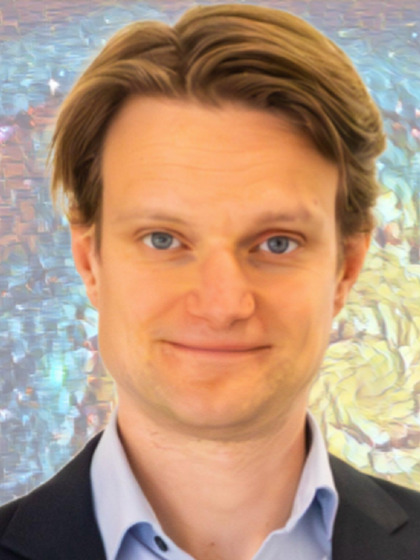
Robert Brijder is an Assistant Professor in the Faculty of Mathematics and Computer Science at Eindhoven University of Technology (TU/e), where he is a member of the Database Group led by Prof. George Fletcher. His office is located in MetaForum 7.091, and he can be contacted at r.brijder@tue.nl. Dr. Brijder obtained his MSc and PhD degrees in Computer Science at Leiden University. His academic journey continued with postdoctoral positions first in the Data Mining group at Leiden University, followed by a postdoc in the Databases and Theoretical Computer Science group at Hasselt University in Belgium. Prior to joining TU/e, he spent three years working at Flanders Make, a research and technology organization. His research focuses on applying database systems expertise to engineering challenges, particularly in structural health monitoring for offshore infrastructure. Dr. Brijder specializes in Bayesian filtering approaches, including various Kalman filtering techniques, to develop algorithms for corrosion detection and prognosis. His work aims to replace costly manual inspections with remote monitoring solutions that can predict maintenance needs and extend infrastructure lifespan through data-driven decision making. Dr. Brijder's recent publication in Wind journal (2023) demonstrates his innovative approach to engineering challenges through computer science methodologies. The research compared various corrosion prognosis algorithms and found that a method based on the Pourbaix corrosion model using unscented Kalman filtering outperformed alternatives based on linear and bimodal corrosion models. Funded by European Union's Horizon 2020 program (WATEREYE project, grant agreement No 851207) Addresses Sustainable Development Goals related to industry, innovation, and infrastructure Uses CC BY licensed research outputs for maximum accessibility At TU/e, Dr. Brijder contributes to academic education by teaching courses in Knowledge Engineering and Datamodeling and Databases. His position within the Database Group places him at the intersection of theoretical computer science and practical engineering applications, providing students with opportunities to work on real-world problems using cutting-edge database technologies.