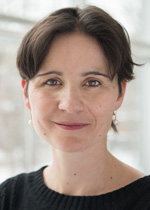
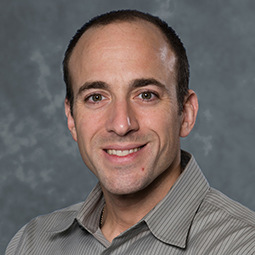
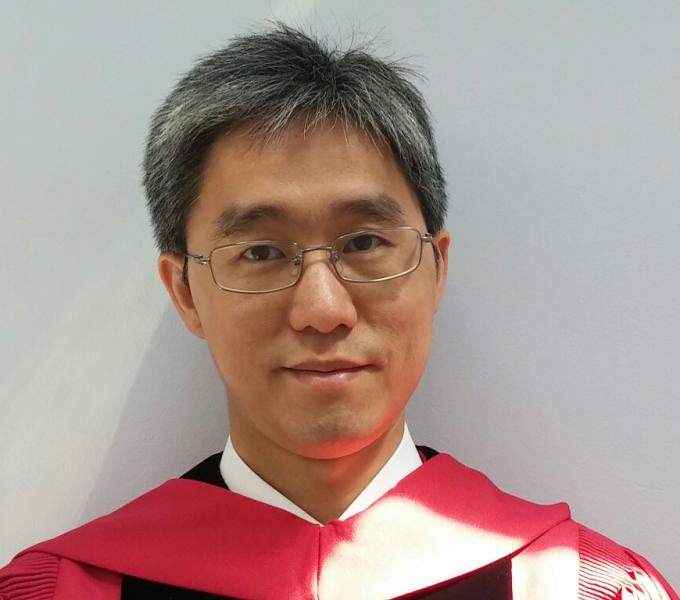
Jacob Gardner is an Assistant Professor in the Department of Computer & Information Science at the School of Engineering and Applied Science, University of Pennsylvania. His research bridges machine learning and scientific discovery with emphasis on computational biology and molecular design. His primary research interests include: Machine Learning Bayesian Optimization Computational Biology Molecular Design Artificial Intelligence Gaussian Processes Analysis of his 2024-2025 publications reveals a dominant focus on Bayesian optimization techniques integrated with large language models for biological applications. Key trends include therapeutic design using knowledge distillation from scientific literature, RNA splicing prediction, antibiotic development, and scalable Gaussian process methods. His work consistently addresses dimensionality challenges in molecular modeling while improving computational efficiency for high-dimensional biological data. No scientific awards were mentioned in the provided text. No information regarding student advising or research grants was provided in the source material. His research appears supported by institutional initiatives including Penn AI, Innovation in Data Engineering and Science (IDEAS), and the Data Driven Discovery Initiative (DDDI).
Ina Fiterau Brostean is an Assistant Professor in the College of Information and Computer Sciences at the University of Massachusetts Amherst, where she leads the Information Fusion Lab. Previously, she was a Postdoctoral Fellow at Stanford University's Mobilize Center (2015–2018) and earned her PhD in Machine Learning from Carnegie Mellon University (2015). Her research focuses on hybrid systems for multimodal data integration, particularly in healthcare, aiming to develop predictive models for clinical outcomes using time series, text, and images. Key areas include disease trajectory modeling, weakly-supervised transfer learning, and adaptive representation learning. Education: PhD in Machine Learning (Carnegie Mellon, 2015), MSc in Machine Learning (Carnegie Mellon, 2012), BEng in Computer Engineering (Politehnica Timisoara, Romania, 2009). Professional roles include teaching COMPSCI 651 (Optimization in Computer Science) and organizing NeurIPS workshops on Machine Learning in Healthcare. Research interests span machine learning methodologies for healthcare applications, including interpretable models, time series analysis, and dimensionality reduction. Notable achievements include the Marr Prize (ICCV 2015) and Star Research Award (SCCM 2016). Her lab collaborates on projects like predicting Alzheimer's disease progression and surgical outcomes using Bayesian networks and deep learning. Awards and recognitions include Rising Stars Workshop (2016), Manning IALS Research Award (2019), and GE Foundation Scholar Leader Award (2007). She actively contributes to the ML4Health community through leadership roles and workshop organization.
Ryan Giordano is an Assistant Professor in the Department of Statistics at the University of California, Berkeley. He holds a PhD in Statistics from UC Berkeley (2019), advised by Michael Jordan, Tamara Broderick, and Jon McAuliffe, an MSc in Econometrics and Mathematical Economics from the London School of Economics (2009), and undergraduate degrees in Mathematics and Theoretical/Applied Mechanics from the University of Illinois at Urbana-Champaign. Prior to academia, he worked as an engineer at Google and HP and served as a Peace Corps volunteer in Kazakhstan. His research focuses on variational methods , Bayesian robustness , sensitivity analysis , and statistical computing , with applications in machine learning, environmental science, and astronomy. He is particularly known for developing scalable Bayesian inference techniques and quantifying the robustness of statistical models to data perturbations. Giordano’s recent work includes studies on Laplace approximation accuracy, MCMC sensitivity to data removal, and robustness metrics for differential expression analysis. He has contributed to open-source statistical software and collaborates with Tamara Broderick’s group at MIT on postdoctoral work (pre-2019 position). His academic trajectory combines theoretical innovation with practical applications, emphasizing reproducibility and computational efficiency in statistical methodology.
Hugues Aschard is a Principal Investigator and Structure Manager at the Pasteur Institute in Paris, where he leads research in statistical genetics, microbiome analysis, and computational genomics. He is the principal investigator of the MicMat project, the EpiGenCOV Consortium, and several bioinformatics software initiatives including JASS, RAISS, and MGMM. Research Interests: Statistical and computational methods in genetics Genome-wide association studies (GWAS) Gene-environment interactions Microbiome and host genetics in inflammatory bowel disease Genetic epidemiology of infectious diseases like COVID-19 Development of open-source tools for multi-trait and summary-statistic analysis Recent Research Trends: His recent publications and projects emphasize integrative genetic modeling, multi-trait analysis across diverse populations, and the development of novel computational methods to handle missing data and improve SNP discovery. His work bridges statistical innovation with biological and clinical applications in complex diseases. Scientific Contributions: Development of JASS, RAISS, and MGMM software tools Leadership in large-scale consortia like EpiGenCOV Advancing methods for cross-ancestry genetic studies Advising and Collaboration: He supervises multiple PhD students and postdoctoral fellows, including Christophe Boetto, Antoine Auvergne, and Lucas Chataigner. He collaborates with major institutions such as APHP and CNRGH. His team includes research engineers and administrative staff, indicating an active and well-supported research group. Laboratories and Teams: He is a key member of the Biomaterials and Microfluidics team at the Pasteur Institute, where he contributes to interdisciplinary research involving Bayesian decision processes and genetic modeling.
Xiaoning Qian is a Professor in the Department of Electrical and Computer Engineering at Texas A&M University, where he also serves on the Faculty Advisory Committee for the Texas A&M Institute of Data Science (TAMIDS) and the Executive Committee for the Texas A&M TRIPODS Research Institute for Foundations of Interdisciplinary Data Science (FIDS). He holds a joint appointment in the Applied Math group within the Computational Science Initiative at Brookhaven National Laboratory (BNL). Previously, he was an Associate Professor (2018-2022) and Assistant Professor (2013-2018) at Texas A&M, and an Assistant Professor in the Department of Computer Science and Engineering at the University of South Florida (2009-2013). Dr. Qian received his B.S.E. and M.S.E. degrees from Shanghai Jiaotong University, China, and his M.Ph. and Ph.D. degrees in Electrical Engineering from Yale University. Dr. Qian's research focuses on developing mathematical models and computational algorithms in signal processing, machine learning, and Bayesian methods, particularly in learning, uncertainty quantification, and experimental design. His work spans multiple disciplines, with applications in life sciences and materials science. His research group, the Biomedical Imaging, Sensing, and Genomic Signal Processing Group, actively applies probabilistic models and optimization algorithms to solve complex problems in interdisciplinary domains. His research has evolved from foundational work in bioinformatics and biomedical image processing to more recent applications in materials science and broader AI for science initiatives. Dr. Qian has received numerous scientific awards and recognitions including: National Science Foundation (NSF) CAREER Award Segers Family Dean's Excellence Professorship II in the College of Engineering TEES (Texas A&M Engineering Experiment Station) Senior Faculty Fellow Montague-Center for Teaching Excellence Scholar J. T. Oden Faculty Fellow at the University of Texas, Austin Finalist of the 2023 INFORMS QSR Best Paper Faculty Impact Fellow from the Department of Electrical & Computer Engineering As an advisor , Dr. Qian has mentored numerous graduate students through their PhD and MS programs, with many of his alumni securing positions at prestigious institutions and companies including NIH/NCBI, Microsoft, Baidu Research Lab, and Qualcomm. His research has been supported by multiple grants, including an NSF CAREER award and collaborative research funding from the Information Integration and Informatics program. He is actively recruiting postdoc and graduate student research assistants for projects in machine learning and optimization methods with applications in bioinformatics and materials science. Dr. Qian is involved with several research initiatives including the Objective-Based Uncertainty Quantification (ObjectiveUQ) project, which provides a mathematical framework for integrating prior knowledge and data while enabling effective operational and experimental design under uncertainty. He also co-organizes the Bio-Seminar series for the Biomedical Imaging, Sensing & Genomic Signal Processing group at Texas A&M.
David A. Stephens is a Professor in the Department of Mathematics and Statistics at McGill University, Montreal. He served as Chair of the Department from 2015 to 2019 and as Vice-Dean in the Faculty of Science from 2019 to 2025. His research focuses on Bayesian inference, biostatistics, causal inference, bioinformatics, and statistical genetics. He holds prestigious fellowships: International Statistical Institute (2015), American Statistical Association (2019), and Royal Society of Canada (2024). His work addresses challenges in epidemiology, HIV transmission dynamics, and clinical trial design. Key research themes include: Bayesian hierarchical modeling for infectious diseases (e.g., SARS-CoV-2, HIV) Causal inference in dynamic treatment regimes Survival analysis and censored data methods Statistical genomics and epigenetics His publications analyze public health trends, such as HIV transmission clusters in Quebec and SARS-CoV-2 seroprevalence in Canada. Methodologically, he develops novel techniques for time-series analysis, recruitment forecasting in clinical trials, and computational statistics. Notable contributions include: Advancing phylogenetic cluster inference in HIV studies Optimizing warfarin dosing strategies via SMART trials Modeling gut microbiota impacts on growth faltering in infants His academic leadership includes roles at McGill and prior experience at Imperial College London. His work bridges statistical theory and practical healthcare applications, emphasizing interdisciplinary collaboration.
Qi Long is a Professor at the University of Pennsylvania, holding joint appointments in the Department of Biostatistics, Epidemiology and Informatics (Perelman School of Medicine), Department of Computer and Information Science (School of Engineering and Applied Science), and Department of Statistics and Data Science (The Wharton School). He serves as Founding Director of the Center for Cancer Data Science, Associate Director of the Penn Institute for Biomedical Informatics, and Associate Director for Quantitative Data Science at the Abramson Cancer Center. His research bridges statistical and machine learning (ML/AI) method development with biomedical applications, focusing on precision medicine and population health. Education : Ph.D. (2005) and M.S. (2003) in Biostatistics from University of Michigan; B.S. (1998) in Computer Science from University of Science and Technology of China. Research interests include: Robust statistical and ML/AI methods for big health data (-omics, EHRs, imaging, mHealth) Multimodal data integration and subgroup heterogeneity analysis Missing data, causal inference, Bayesian methods, and clinical trials Data privacy, algorithmic fairness, and responsible AI in healthcare Foundation models and agentic AI for biomedicine His publications focus on privacy-preserving AI, fairness-aware ML, and integrative models for multi-omics and EHRs. Recent work explores LLMs and watermark detection in hybrid human-AI settings. Scientific Awards : Elected fellow: AAAS, ASA, IMS, ISI, AMIA He leads large NIH- and ARPA-H-funded initiatives, directing statistical coordinating centers for national clinical trials. His lab trains numerous PhD/Master’s students and postdocs, many of whom hold prestigious academic or industry positions.
Aurélie Labbe is a Full Professor in the Department of Decision Sciences at HEC Montréal, holding the prestigious FRQ-IVADO Chair in Data Science. Appointed as Co-Scientific Director – Academic Partnerships at IVADO in October 2023, she plays a key leadership role in establishing connections between IVADO and partner universities. Her academic journey includes a PhD in Statistics from the University of Waterloo, a Master's degree in Statistics from the University of Montreal, and dual Bachelor's degrees in Applied Mathematics and Social Sciences from Paris-Dauphine University and Pure Mathematics from Versailles-St Quentin University. Her research spans multiple interdisciplinary domains with a focus on developing advanced statistical and machine learning methodologies for big data analysis. Labbe's work bridges theoretical statistics with practical applications across diverse fields including genomics, neuroscience, transportation systems, and health informatics. She has made significant contributions to kernel methods, matrix factorization techniques, random forest applications, and spatiotemporal data analysis, with publications appearing in top journals across multiple disciplines. Analyzing her recent publications reveals a clear trend toward methodological innovation applied to complex real-world problems. Her work demonstrates expertise in handling high-dimensional data from diverse sources including neuroimaging, transportation networks, and genomic studies. The interdisciplinary nature of her research connects statistical theory with applications in healthcare, transportation safety, and biological sciences, reflecting her ability to develop methods that address domain-specific challenges while advancing statistical methodology. Holder of the FRQ-IVADO Chair in Data Science Member of the Center for Mathematical Research Training Professor Labbe actively mentors the next generation of data scientists, supervising numerous doctoral and master's students. Her supervision portfolio includes 1 doctoral thesis (2023), 4 master's theses (2022-2024), and 32 supervised projects spanning 2019-2025. Her students' work covers diverse applications including transportation safety, healthcare analytics, financial modeling, and environmental analysis. Through her leadership of the FRQ-IVADO Chair in Data Science, she coordinates research activities that integrate mathematical, statistical, and computer science expertise with domain knowledge from various data-generating fields. As Co-Scientific Director at IVADO, Professor Labbe leads efforts to establish connections with faculties and departments across five partner universities, integrating them into IVADO's research and knowledge transfer activities. Her leadership role positions her at the forefront of advancing data science research and applications in Quebec's academic ecosystem.
Marius Gilbert is a Full Professor at Université libre de Bruxelles (ULB) since 2023, with dual administrative roles as Vice-rector of Research and Valorization (since 2020) and Vice-rector of Culture and Scientific Mediation (current mandate). He obtained his PhD in spatial epidemiology from ULB in 2001 after studying Agricultural Sciences (1995) and conducting visiting research at Oxford's Department of Zoology. Key Research Areas: Spatial epidemiology of animal diseases and invasive species Impact of agricultural and ecosystem changes on pathogen emergence Specialization in avian influenza and emerging infectious diseases Development of livestock distribution models and antimicrobial resistance tracking Scientific Contributions: His 15 most recent publications (2025-2021) focus on viral phylogeography , livestock-environment interactions , antimicrobial use forecasting , and pandemic response modeling . Notable work includes COVID-19 spatio-temporal analysis and global antibiotic resistance trends in food animals. Public Engagement: Played a central role in French-speaking media during the pandemic , authored the book "Juste un Passage au JT" , and maintains a Le Soir column on science-society intersections. Co-founded the Spatial Epidemiology Lab (SpELL) in 2016, now led by Simon Dellicour.
Dan Sheldon is a Professor in the Department of Computer Science at the University of Massachusetts Amherst, holding a Five College joint faculty position with Mount Holyoke College. His research focuses on developing algorithms to address environmental challenges using large datasets, emphasizing computational sustainability. Key areas include spatial optimization for endangered species conservation, continent-scale bird migration modeling, and interpreting weather radar data for ecological insights. Methodologically, his work leverages probabilistic inference, network modeling, and machine learning. Sheldon earned a PhD in Computer Science from Cornell University and an AB in Mathematics from Dartmouth College. His postdoctoral training at Oregon State University was supported by an NSF Bioinformatics Fellowship. He co-leads the BirdCast project, an NSF-funded initiative applying novel machine learning to avian migration studies. His research affiliations include the Center for Data Science and the Computational Social Science Institute. Research interests span computational biology, machine learning, and data privacy. Notable contributions include algorithms for ecological decision-making, differentially private synthetic data techniques, and Gaussian process applications in environmental forecasting. Awards include an NSF Fellowship in Bioinformatics. Current projects integrate radar data analysis, biodiversity tracking, and privacy-preserving statistical methods. Grants include the BirdCast NSF grant and collaborations in computational sustainability. His work bridges theoretical computer science with applied ecological challenges, emphasizing interdisciplinary approaches to global-scale environmental problems.
Sara Wade is a Lecturer in Statistics and Machine Learning at the University of Edinburgh , within the School of Mathematics . Her research focuses on Bayesian statistics, machine learning, and their applications in health sciences, particularly in dementia diagnosis and predictive modeling. She holds a PhD from the University of Milan and has held academic positions at the University of Cambridge and University of Warwick before joining Edinburgh. She teaches a popular Machine Learning and Python course for Master’s and final-year undergraduate students, attracting nearly 200 enrollments annually. Her work integrates Bayesian methods with modern machine learning, emphasizing interdisciplinary applications such as scalar-on-image regression and biomarker analysis. Notable contributions include developing hierarchical Dirichlet processes for clustering and uncertainty quantification in RNA velocity studies. She secured a Royal Society of Edinburgh grant for her dementia research project, which aims to improve early diagnosis through statistical modeling. Education: PhD in Statistics, University of Milan Bachelor’s in Mathematics, University of Maryland Wade advocates for diversity in STEM, actively participating in the Women in Machine Learning community. Her research bridges statistical rigor and computational tools, fostering collaborations across academia and healthcare sectors.
Joris M. Mooij is a Professor of Mathematical Statistics at the Korteweg-De Vries Institute of the University of Amsterdam, Netherlands. His research focuses on causality, spanning causal modeling, discovery, and inference with applications in biology, medicine, fairness, and business analytics. He combines mathematical modeling with statistical and algorithmic approaches in his work. Dr. Mooij received his PhD with honors from Radboud University Nijmegen in 2007, focusing on approximate inference in graphical models. After postdoctoral work at the Max Planck Institute for Biological Cybernetics in Tübingen, Germany, he obtained an NWO VENI grant in 2011 for further postdoctoral research at Radboud University. He became Assistant Professor at the University of Amsterdam's Informatics Institute in 2013, was promoted to Associate Professor in 2017, and became a full Professor of Mathematical Statistics in 2020. Dr. Mooij's research centers on causal inference, with particular expertise in structural causal models, cyclic causal systems, and causal discovery algorithms. His work addresses fundamental questions about when causal relationships can be identified from observational data and how to develop robust causal discovery methods that work in complex real-world settings with latent variables, cycles, and selection bias. He has made significant contributions to understanding the limitations of existing causal discovery approaches and developing new methods that overcome these limitations. His research group organizes the Amsterdam Causality Meeting series and develops theoretical frameworks for causal modeling that encompass both acyclic and cyclic systems. Dr. Mooij has collaborated extensively on applications of causal methods in biological systems, including protein signaling networks and gene expression data. The group's recent work explores performative predictions, causal domain adaptation, and robust causal discovery methods that account for selection bias and missing data. Dr. Mooij has received numerous awards for his research, including: Best paper award at UAI for "Establishing Markov equivalence in cyclic directed graphs" IEEE Geoscience and Remote Sensing Society 2011 Letters Prize Paper Award ICML Test of Time Honorable Mention Best student paper award at UAI 2010 He has secured competitive research funding through an NWO VENI grant, NWO VIDI grant, and an ERC Starting Grant, which supported the establishment of his research group consisting of 3 PhD students and 3 postdocs focused entirely on causality. Dr. Mooij has supervised several PhD students, including Tineke Blom, whose work on "Causality and Independence in Perfectly Adapted Dynamical Systems" significantly influenced his thinking about causality in complex systems. He has co-taught the MasterMath course on Causality and published lecture notes titled "A Mathematical Introduction to Causality." His research continues to push the boundaries of causal inference methodology and its applications across diverse scientific domains.
Dr. Jason D. Bakos is a Professor in the Department of Computer Science and Engineering at the University of South Carolina's Molinaroli College of Engineering and Computing. His research focuses on high-performance domain-specific architectures, including reconfigurable computing, embedded systems, and machine learning acceleration. He has held academic positions since 2005, progressing from Assistant to Associate Professor before becoming a full Professor in 2017. Education : Ph.D., Computer Science, University of Pittsburgh (2005) B.S., Computer Science, Youngstown State University (1999) Research Interests : Dr. Bakos specializes in computer architecture at multiple levels (circuit, micro-architectural, and system) with a focus on VLSI design, reconfigurable computing, high-performance computing, and applications in embedded systems. His recent work includes FPGA acceleration of machine learning algorithms, structural health monitoring systems, and real-time signal processing. Awards : 2018 Teaching Award in Computer Science and Engineering 2009 NSF CAREER Award Multiple design competition awards for innovative chip and circuit designs Grants & Funding : He leads and co-leads projects funded by NSF, Savannah River National Laboratory, and industry partners like Texas Instruments. Recent grants focus on edge computing for real-time machine learning, FPGA-based accelerators, and corrosion analysis of nuclear materials. Labs & Teams : His research group collaborates on projects involving embedded systems, FPGA design, and interdisciplinary applications in structural engineering and bioinformatics. He advises a dynamic team of graduate students and post-doctoral researchers.
Dr. George C Tseng serves as Professor and Vice Chair for Research in the Department of Biostatistics at the University of Pittsburgh School of Public Health, with secondary appointments in Human Genetics and Computational and Systems Biology. His educational background includes a BS (1997) and MS (1999) in Mathematics from National Taiwan University and an ScD (2003) in Biostatistics from Harvard School of Public Health. Dr. Tseng's research focuses on developing statistical methodologies for genomic and bioinformatic applications to advance precision medicine. His work spans multiple high-impact areas including multi-omics data integration, machine learning for high-dimensional data, cluster analysis for disease subtyping, and statistical methods for experimental design in omics studies. His approach emphasizes close collaboration with biological and clinical researchers to ensure methodological relevance to real-world problems. His publication record demonstrates consistent contributions to top statistical and bioinformatics journals, with recent work focusing on congruence analysis between animal models and humans, outcome-guided clustering methods, and high-dimensional causal mediation analysis. Elected Fellow, American Statistical Association (2017) Statistician of the Year, ASA Pittsburgh Chapter (2017) Provost's Award for Excellence in PhD Mentoring, University of Pittsburgh (2019) Clinical Research Scholar (K12) Award, NIH (2007-2009) Elected Member, International Statistical Institute (2012) Dr. Tseng has successfully mentored over 25 PhD students who have secured positions in academia, industry, and government agencies. His laboratory has maintained continuous NIH funding as principal investigator since 2012, including current grants R01CA285337 (2025-2030) and R01LM014142 (2023-2026). The Tseng Lab operates as a collaborative research environment focused on translating statistical innovations into practical solutions for biological and medical challenges, with strong connections to multiple research centers and clinical departments at the University of Pittsburgh.
Daniel Rabosky is a Professor in the Department of Ecology and Evolutionary Biology at the University of Michigan, where he also serves as Curator at the Museum of Zoology. His research program spans macroevolution, speciation dynamics, and phylogenetic comparative methods, with particular expertise in Australian reptiles and squamate evolution. Rabosky maintains an active laboratory and is currently seeking new graduate students and postdoctoral fellows to join his research team. Rabosky's research interests focus on macroevolutionary patterns and processes, particularly the connections between microevolutionary dynamics and large-scale biodiversity patterns. His work integrates phylogenetic comparative methods with ecological and morphological data to understand speciation processes, adaptive radiations, and the evolutionary dynamics of reptile communities, especially Australian skinks. He has made significant contributions to methodological developments in evolutionary biology through software tools like BAMM (Bayesian Analysis of Macroevolutionary Mixtures) and BAMMtools for analyzing evolutionary rate heterogeneity across phylogenetic trees. Analysis of Rabosky's recent publication record reveals a strong focus on evolutionary theory, methodological development, and empirical studies of reptile diversification. His work spans theoretical macroevolution, phylogenetic comparative methods, Australian herpetology, and the connections between population-level processes and macroevolutionary patterns. The research demonstrates increasing integration of genomic data with traditional morphological and ecological approaches, reflecting broader trends in evolutionary biology. Rabosky actively mentors graduate students including Matheus Januário and Tristan Schramer, and supervises postdoctoral fellows Michael Harvey, Jonathan Mitchell, Sonal Singhal, and Rudolf von May. His laboratory receives research funding supporting multiple projects in macroevolutionary dynamics, with recent grants likely supporting work on the connections between metapopulation ecology and speciation rates, as evidenced by his 2025 Ecology Letters paper. The Rabosky Lab maintains a strong presence in both theoretical and empirical evolutionary biology, with particular strengths in phylogenetic methods development, squamate reptile evolution, and the interface between micro- and macroevolution. The lab actively collaborates with researchers across institutions and contributes to major initiatives like the openVertebrate project for 3D imaging of museum specimens.