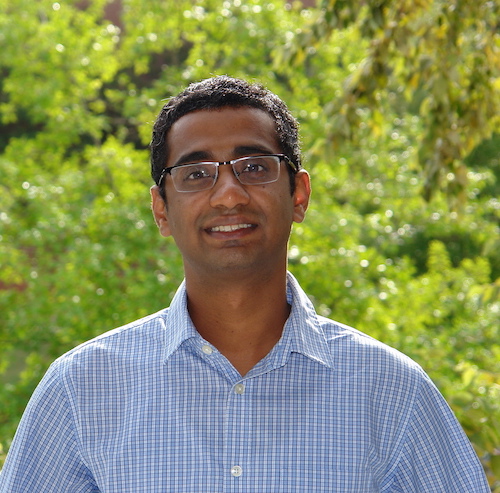
Dr. Jesse Sharp is a Research Fellow and Co-leader of the Environment, Agriculture & Natural Systems Theme in QUT's Centre for Data Science. His research fuses applied mathematics, statistics, and data science to model ecological and agricultural systems, emphasizing sustainability and resilience. Projects involve collaborative industry partnerships to optimize environmental decision-making. Research domains include: Ecological dynamics under environmental change High-performance computational methods for biological systems Uncertainty quantification in complex models Publications demonstrate strong cross-disciplinary integration, with applications spanning coral reef recovery, cancer treatment optimization, and sustainable fisheries. Methodological innovations appear in parameter estimation techniques and optimal control frameworks. No awards are documented.
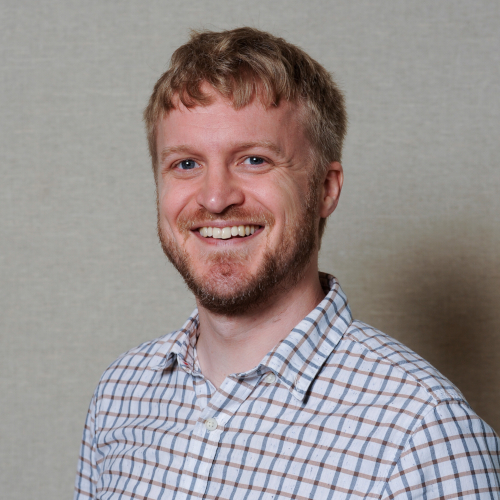
Bryan Nelson is a part-time Lecturer in the Department of Statistics at the University of Pittsburgh, affiliated with the Dietrich School of Arts and Sciences. He has been serving as College in High School Liaison since March 2019, following his role as Assistant Liaison from 2015–2019. He also advises the Sports Analysis Club since 2020. His teaching spans courses like Basic Applied Statistics, Applied Regression, and Sports Analytics. Education : Ed.D. in Instructional Technology, Duquesne University (2019) M.A. in Applied Statistics, University of Pittsburgh (2014) M.S. in Computational Mathematics, Duquesne University (2012) B.S. in Mathematics, Duquesne University (2010) Nelson’s research focuses on educational technology, mathematics education, and statistical pedagogy. His doctoral work analyzed formative assessment techniques in statistics education, while earlier studies explored cross-cultural teacher effectiveness and the impact of technology on student learning. His earlier computational work includes improving optimization algorithms in inverse problems and sports analytics modeling. Publications reflect his interdisciplinary interests, spanning educational research and applied mathematics. Teaching and service activities involve curriculum development, high school outreach, and statistical consulting through Pitt’s Statistics Computing Lab.
Karim Anaya-Izquierdo is a Senior Lecturer in the Department of Mathematical Sciences at the University of Bath, where he specializes in statistical methodology with applications in engineering and computational mathematics. His research integrates information geometry, spatial statistics, and Bayesian inference to solve complex problems across domains including materials science, epidemiology, and environmental studies. His methodological work focuses on parametric modeling, tensor decompositions for high-dimensional data, and geometric approaches to statistical inference. Applied research includes collaborative projects on composite materials certification with aerospace industry partners and spatial analysis of disease intervention trials. Recent publications demonstrate a strong emphasis on computational statistics, with research bridging theoretical mathematics and practical applications in clinical trials, ecological modeling, and reliability engineering. Articles frequently develop novel methods for uncertainty quantification in complex systems. Dr. Anaya-Izquierdo is involved in the EPSRC Centre for Doctoral Training in Statistical Applied Mathematics and co-investigator on multiple research council projects. He teaches advanced statistics courses and supervises doctoral students in mathematical sciences.
Arvind Krishna Saibaba is an Associate Professor in the Department of Mathematics at North Carolina State University, within the College of Sciences. He holds a PhD in Computational and Mathematical Engineering from Stanford University (2013). His research focuses on inverse problems, numerical linear algebra, and their applications in medical imaging and geosciences. He is particularly known for developing efficient algorithms for large-scale Bayesian inverse problems and randomized numerical methods. Dr. Saibaba’s work bridges theoretical advancements with practical applications, including parametric kernel approximations, tensor train decompositions, and hybrid projection methods. His recent publications (2023–2025) address cutting-edge topics such as edge-preserving regularization, Monte Carlo diagonal estimation, and non-Gaussian randomized low-rank approximations. He leads research in computational frameworks for dynamic inverse problems and has contributed to geophysical modeling and medical imaging techniques. Grants: Collaborative Research: Randomized Algorithms For Dynamic and Hierarchical Bayesian Inverse Problems RTG: Randomized Numerical Analysis ATD: Collaborative Research: Computationally Efficient Algorithms for Detecting Anomalous Atmospheric Emissions He is affiliated with the Faculty Research Group in Numerical Analysis and Scientific Computing. While no specific awards are listed here, his prolific publication record and grant activity reflect his impactful contributions to computational mathematics.
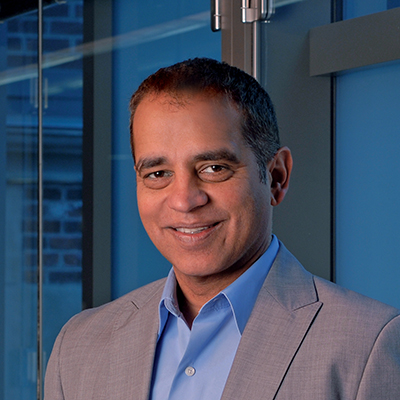
Professor Sampath K. Kannan is the Henry Salvatori Professor in the Department of Computer and Information Science at the School of Engineering and Applied Science, University of Pennsylvania. His research focuses on algorithms, computational biology, program checking, and network security. ACM Fellow (2013) ACM SIGACT Distinguished Service Award (2012) Outstanding Faculty Advising Award (2005) Ford Foundation 'Best Advisor' Award (2004) His research spans algorithms (massive data processing, shortest-path optimization), computational biology (evolutionary tree reconstruction, phylogenetic analysis), and program checking (runtime verification, trust management). Recent work involves data stream algorithms and healthcare scheduling optimization . He has taught advanced courses in algorithms and complexity theory since 1994, including CIS 677 (Complexity Theory) and GCB 537 (Computational Biology). His publications bridge theoretical computer science and applied systems research , with a focus on scalability, correctness, and security.
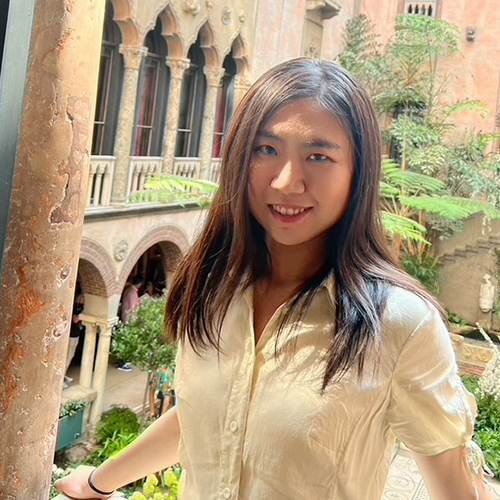
Zhen Qu is an Assistant Professor in the Department of Marine, Earth, and Atmospheric Sciences at North Carolina State University. She holds a PhD in Mechanical Engineering (Air Quality Track) from the University of Colorado Boulder (2019) and a B.S. in Physics from Peking University (2014). Her research focuses on atmospheric chemistry, using satellite observations and advanced modeling techniques to study air pollutants and greenhouse gases. Key areas include methane emissions, tropospheric ozone analysis, and Bayesian statistical methods for emission inversion. Dr. Qu’s work integrates data-driven approaches with atmospheric models to address climate and environmental challenges, such as tracing greenhouse gas emissions and understanding climate interactions. She teaches MEA 425/525 (Introduction to Atmospheric Chemistry) and MEA 412 (Atmospheric Physics). Her research group develops tools like the Integrated Methane Inversion (IMI 1.0) to analyze high-resolution methane emissions from satellite data. Recent publications highlight contributions to methane surge attribution, ozone analysis via chemical reanalyses, and wildfire smoke impacts on health. She collaborates with global networks to improve emission inventories and supports policy through transparent data methodologies. Dr. Qu actively seeks motivated graduate students to join her team, emphasizing interdisciplinary approaches to environmental science.
Dr. Richard Longland is an Associate Professor of Physics at North Carolina State University, affiliated with the Department of Physics within the College of Sciences. He leads the Longland Group, focusing on experimental nuclear astrophysics. His research investigates nuclear reactions critical to element formation in stars, with particular emphasis on nucleosynthesis processes in asymptotic giant branch (AGB) stars, novae, and globular clusters. He utilizes advanced experimental facilities like the Enge Split-pole Spectrograph at TUNL and employs Monte Carlo methods to model reaction uncertainties. Longland earned his MPhys from the University of Surrey and his PhD in Nuclear Astrophysics from the University of North Carolina at Chapel Hill. His postdoctoral work at the Universitat Politècnica de Catalunya expanded his expertise in nuclear astrophysics modeling. His group collaborates with stellar modelers and astronomers to bridge laboratory measurements with astrophysical predictions. Key research areas include determining reaction rates for potassium and sodium production, resolving proton spectroscopic factors in calcium isotopes, and studying fluorine destruction in novae. Experimental techniques employed include proton transfer reactions, particle spectroscopy, and Bayesian analysis of reaction data. His team operates within the Triangle Universities Nuclear Laboratory (TUNL), leveraging high-precision facilities like the LENA laboratory and the FENRIS facility. Longland’s group supports interdisciplinary training through undergraduate and graduate research programs, emphasizing diversity and collaboration. Ongoing projects address nucleosynthesis mysteries in globular clusters and the dynamics of explosive stellar events like novae and white dwarf mergers.
Assoc Prof Viet Ha Hoang is an Associate Professor and Assistant Chair (Academic) in the School of Physical and Mathematical Sciences (SPMS), Division of Mathematical Sciences at Nanyang Technological University (NTU). He holds a PhD in Mathematics from the University of Cambridge and has extensive research experience in multiscale modeling and numerical analysis. His work focuses on stochastic processes, partial differential equations, and applications in computational science. Education: Bachelor of Mathematics, University of Wollongong, 1996 PhD in Mathematics, University of Cambridge, 2000 Research interests include multiscale problems , probabilistic PDEs , and numerical methods , with contributions to homogenization theory, Bayesian inversion, and computational fluid dynamics. Current grants support his work on multiscale systems and stochastic modeling. Key achievements include pioneering finite element methods for multiscale equations and developing Bayesian frameworks for inverse problems. His lab collaborates on interdisciplinary projects in mathematical physics and biomedical engineering.
Tristan Bereau is a Principal Investigator at the Institute for Theoretical Physics (ITP) of Heidelberg University. His research focuses on computational methods for understanding molecular systems, including coarse-grained modeling, machine learning-driven materials discovery, and membrane dynamics. He leads projects on drug-membrane interactions, peptide structures, and data-centric approaches in materials science. His work emphasizes reproducibility and software development, as seen in tools like Martignac for coarse-grained simulations. Key research themes include exploring chemical space through high-throughput screening, optimizing crystal structures with data-driven methods, and analyzing membrane asymmetries using advanced simulations. He advocates for FAIR (Findable, Accessible, Interoperable, Reusable) data principles to enhance scientific collaboration and transparency. His contributions span interdisciplinary areas, such as integrating machine learning with thermodynamic integration for free-energy calculations and designing antimicrobial peptides via computational screening. Collaborations bridge computational physics, chemistry, and biology, addressing challenges in drug delivery, materials design, and viral infectivity mechanisms.
Xiaofei LI is an Assistant Professor at Westlake University, Hangzhou, China, a position he has held since March 2020. Prior to this, he was a post-doctoral researcher and later a starting research scientist at INRIA Grenoble Rhône-Alpes, France, from February 2014 to at least 2019. He is affiliated with the PERCEPTION team and has contributed to major projects such as the ERC VHIA and EARS projects, as well as industry collaboration with Samsung Electronics. Education Bachelor of Electronic Information, Beijing Institute of Machinery, 2007 PhD in Electronics, Peking University, 2007–2013 His research focuses on speech and audio signal processing , particularly in challenging real-world environments. Key areas include multi-microphone speech processing for sound source localization, separation, and dereverberation; single-microphone signal processing for noise estimation, voice activity detection, and speech enhancement; and audio-visual fusion for speaker diarization and tracking. He employs advanced techniques such as LSTM networks , Bayesian inference , convolutive transfer functions , and deep learning in the STFT domain. His recent publications (2017–2019) demonstrate a strong trend toward multichannel speech enhancement , online speaker localization and tracking , and audio-visual integration . His work frequently appears in top-tier IEEE journals such as IEEE/ACM Transactions on Audio, Speech and Language Processing and IEEE Transactions on Pattern Analysis and Machine Intelligence. He has developed and evaluated algorithms using real datasets like LOCATA and AVDIAR, emphasizing robustness in reverberant and multi-speaker environments. Scientific Awards and Recognition No specific awards are mentioned in the provided text. Advising and Grants Currently serves as an Assistant Professor, implying student supervision and research advising, though no specific students are named. Research has been funded by prestigious grants including the European Research Council (ERC) Advanced Grant VHIA #340113 and the EU-FP7 STREP project EARS (#609465). Labs and Research Teams PERCEPTION team, INRIA Grenoble Rhône-Alpes, France Involved in the EARS, ERC VHIA, and Samsung Electronics Lito projects Contributor to the development of the AVDIAR and AVTrack-1 datasets
Enrique Ter Horst is an Associate Professor in the Faculty of Management at Universidad de los Andes, Colombia, affiliated with the Finance department. His research spans quantitative finance, Bayesian statistics, sentiment analysis, and interdisciplinary applications in marketing, psychology, and public policy. He teaches courses such as Derivatives Markets, Multivariate Models, and Computational Methods in Finance at both undergraduate and graduate levels. PhD in Bayesian Statistics, Duke University, 2003 Maitrise de Sciences Economiques, Université Louis Pasteur, 1999 Licence d'Économétrie, Université Louis Pasteur, 1998 Ter Horst's research focuses on developing advanced statistical and machine learning models, particularly using Bayesian frameworks and maximum entropy methods. His work applies to diverse domains including financial risk modeling, art market analysis, climate change news impact, and brand ethics. He has made significant contributions to understanding sentiment-driven portfolio hedging, brand commitment during crises, and topic modeling in academic publishing. His recent publications (2020–2025) reveal a strong trend in applying Bayesian and entropy-based methods to interdisciplinary problems, especially in finance, marketing, and social media analytics. He frequently employs computational techniques such as multinomial inverse regression and deep reinforcement learning to analyze large-scale textual and financial data. Financial Risk Manager (GARP) Secretary, Economics, Finance and Business Section, ISBA (2015–2016) Ter Horst advises doctoral students such as Manuel Andrés Martínez Patiño and has previously mentored Jovelyn Ferrer Garcia. His industry experience includes quantitative research roles at Credit Suisse First Boston and Morgan Stanley, where he co-edited the 'Quant Strategist' research series. He has consulted for the European Central Bank, Eurostat, and the Inter-American Development Bank. He is a member of the Finance and Financial Economics research group at Uniandes, which supports collaborative work in asset pricing, risk management, and behavioral finance.
Navid Ansari is a doctoral researcher at the Max Planck Institute for Informatics (MPI-INF) and Saarland University, affiliated with the Artificial Intelligence Aided Design and Manufacturing group under the Computer Graphics department. His work bridges academia and industry, with internships at Amazon AWS and the Max Planck Institute for Brain Research. PhD in Computer Science (2021–Present), Saarland University & MPI-INF MSc in Visual Computing (2018–2021), Saarland University BSc in Electrical Engineering (2013–2017), Shiraz University Navid's research focuses on deep learning, generative models, and optimization techniques. His work includes mixed-integer optimization for neural networks, Bayesian design optimization, uncertainty quantification in AI systems, and applications in computational manufacturing and molecular design. He has contributed to top-tier venues like AAAI, NeurIPS (Spotlight), and SIGGRAPH. His publications address trends in AI-aided design optimization, uncertainty-aware modeling, sparsity in large language models, and inverse molecular design aligned with molecular dynamics. This work spans applications in manufacturing, computational chemistry, and natural language processing. Navid has collaborated with institutions such as Amazon AWS (LLM sparsification) and the Max Planck Institute for Brain Research (behavioral neuroscience). He is part of the Saarland Informatics Campus, a hub for visual computing and AI research.
Karen Veroy-Grepl is a Full Professor of Computational Science at Eindhoven University of Technology (TU/e), affiliated with the Department of Mathematics and Computer Science and the Institute for Complex Molecular Systems (ICMS). She leads research in numerical methods for PDEs, model order reduction, and uncertainty quantification. Her work focuses on multi-scale simulations and data-driven experimental design. Education: B.S., Ateneo de Manila University (Philippines) S.M. and Ph.D., Massachusetts Institute of Technology (USA) Professional Roles: Editorial Board Member: Journal of Computational Physics, SIAM Journals on Uncertainty Quantification and Scientific Computing Scientific Advisor, International Centre for Numerical Methods in Engineering (CIMNE) Chair, SIAM Activity Group on Uncertainty Quantification Her research bridges computational science and engineering applications, with recent work advancing reduced-order models for complex systems and Bayesian inverse problems. Notable contributions include ERC Consolidator Grant-funded research and collaborations in biomedical modeling for real-time treatment planning.
Jerome Darbon is an Associate Professor of Applied Mathematics at Brown University, specializing in Hamilton-Jacobi equations, imaging sciences, optimal control, and optimization. His research emphasizes developing efficient algorithms for variational estimations, combinatorial optimization, and stochastic sampling, with applications in remote sensing, geomorphology, and medical imaging. He holds a Ph.D. from École Nationale Supérieure des Télécommunications (Paris, 2005) and has been recognized with awards including the CNRS Prime d’Excellence Scientifique (2010-2014) and the UCLA Chancellor’s Award for Postdoctoral Research (2009). His work bridges theoretical mathematics with practical computational methods, addressing high-dimensional problems through innovative approaches like neural network architectures and algorithm-architecture co-design. Research Interests: Hamilton-Jacobi PDEs and their applications in control theory Imaging sciences, including denoising and image restoration Optimization techniques for compressive sensing and inverse problems Algorithm development for parallel architectures Key Contributions: Developed methods to overcome the curse of dimensionality in Hamilton-Jacobi equations Advanced landscape evolution models using PDE-based simulations Contributed to SAR image regularization and InSAR phase reconstruction Awards and Grants: NSF Grant DMS 1820821 (2018-2021) for work on variational decomposition models ONR Grant N00014-11-1-0749 (2011-2014) for combinatorial scientific computing Teaching: Courses include Applied PDEs, Numerical Optimization, and Computational Linear Algebra.
Frédéric Herman is a full professor at the Institute of Earth Surface Dynamics , part of the Faculty of Geosciences and Environment at the University of Lausanne . He holds a PhD in Earth Sciences from the Australian National University and has held academic positions at ETH Zurich and the University of Lausanne since 2007. His research focuses on the interplay between climate, tectonics, and Earth surface processes, with emphasis on glacial erosion, sediment transport, and low-temperature thermochronology. Joined University of Lausanne in 2012 as a scholarship professor Promoted to associate professor in 2013 and full professor in 2019 Key affiliations: Institute of Earth Surface Dynamics (IDYST) His work integrates field observations, numerical modeling, and geochronological techniques to study mountain erosion, glacial dynamics, and tectonic-climate interactions. Recent publications highlight studies on Himalayan tectonics, subglacial sediment transport, and the impact of glaciers on landscape evolution. He has advised multiple PhD students and contributes to advancing methodologies in luminescence dating and inverse modeling.