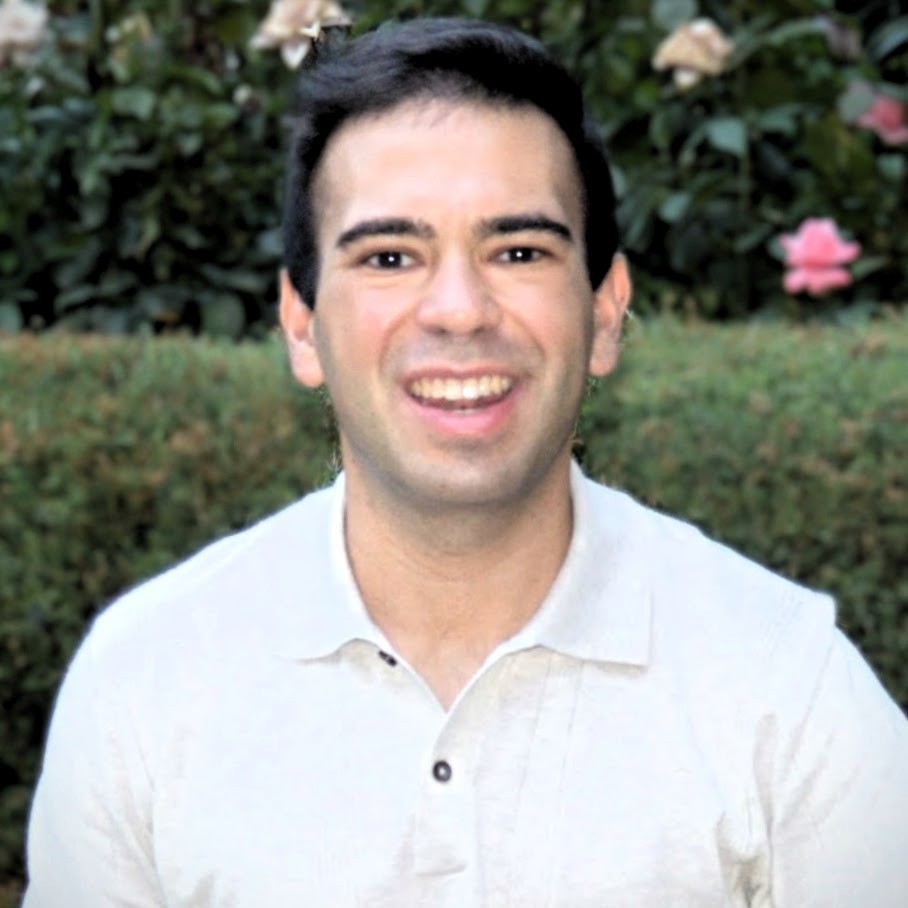
Maximo Cosme Camacho Alonso is a Professor at the University of Murcia's Faculty of Economics and Business, specializing in Quantitative Methods for Economics and Business. He leads the Time Series and Econometrics research group. He earned his PhD from Universitat Autònoma de Barcelona in 2002 with a thesis on non-linear macroeconometrics. His research encompasses econometric modeling, time series analysis, and forecasting techniques applied to business cycles, tourism economics, energy markets, and socioeconomic phenomena. Recent publications develop novel methodologies for recession prediction post-COVID, entrepreneurial ecosystem analysis, and business cycle dating, with applications spanning macroeconomics, environmental economics, and criminology. His work advances dynamic modeling frameworks including Markov-switching and factor models.
Carlos Javier Pérez González serves as an Associate Professor in the Department of Mathematics, Statistics and Operations Research at the University of La Laguna, Spain. He is affiliated with The Institute of Mathematics and Applications and contributes to two PhD programs: Mathematics and Statistics, and Industrial Engineering, Informatics and Environmental Engineering. Education PhD in Mathematics and Statistics from University of La Laguna (2009), thesis: "Avances en el diseño óptimo de planes de muestreo en fiabilidad" (Advances in Optimal Design of Sampling Plans in Reliability), supervised by Dr. Arturo Javier Fernández Rodríguez Research Focus His primary expertise spans Statistics and Operations Research with emphasis on reliability engineering, acceptance sampling methodologies, and censoring techniques. He develops advanced statistical models for multi-component reliability systems, stress-strength analysis, and risk-based quality control frameworks. His work bridges theoretical statistics with industrial applications through Bayesian approaches and optimization algorithms. Publication Trends Recent publications (2020-2025) demonstrate consistent innovation in reliability test planning under censoring constraints, multi-component system analysis, and adaptive sampling schemes. His research increasingly incorporates real-world applications including marine conservation studies in the Canary Islands and emergency management data analysis using R programming. Research Integration As an active member of the Statistics research group at the Institute of Mathematics and Applications, he bridges methodological development with interdisciplinary collaborations across industrial engineering, environmental science, and public safety domains through data-driven approaches.
José E. Chacón is a Professor of Statistics in the Department of Mathematics at the University of Extremadura since 2022. Previously, he held roles at the University of Valladolid and other positions within Extremadura. His research focuses on nonparametric statistics, kernel smoothing methods for density estimation, and their applications in clustering. He is actively involved in initiatives like the NICDA Workshop and Statistics Reading Club. Education history details are not explicitly provided in the text. His research interests emphasize advanced statistical methodologies including density derivative estimation, nonparametric clustering, and applications in epidemiology and ecology. Notable contributions include work on Bayesian taut splines, mode-based symmetry estimation, and statistical modeling for animal home ranges. Recent publications (2020–2024) explore cutting-edge topics such as geodesic normal distributions, cross-validation techniques, and SIR modeling for pandemic data. His work bridges theoretical advancements with practical applications in health, ecology, and machine learning. Awards and grants are not explicitly mentioned. Chacón has advised no listed students but collaborates on interdisciplinary projects, including the special issue on Data Science for COVID-19. His research lab focuses on multivariate kernel smoothing and nonparametric methods.
José Luis Martín Sánchez is an Associate Professor at the University of Alcalá's Department of Electronics. He holds a Doctorate from the same institution with a thesis on EEG-based human-machine interface design (2017). His research focuses on intelligent systems integration in healthcare, robotics, and accessibility technologies. He leads the GEINTRA research group specializing in electronic engineering applications for smart spaces and transport. His work spans biomedical signal processing, assistive technologies, and telemedicine solutions. Education PhD in Electronics, Universidad de Alcalá (2017) Research Interests His primary areas include human-machine interfaces using EEG signals, robotic mobility solutions (e.g., BCI-controlled wheelchairs), and smart infrastructure design. He develops text-based telephony systems for the deaf community and machine learning models for language prediction in Portuguese and Spanish. His work bridges signal processing with practical applications in healthcare and accessibility. Publications Trends His articles emphasize interdisciplinary approaches combining electronics engineering with healthcare applications. Recent work focuses on balance assessment technologies for ADL monitoring (2023), glaucoma diagnostics via ERG analysis (2015), and BCI improvements for robotic navigation (2010-2005). Earlier contributions address text prediction systems, accessibility services, and multi-object tracking algorithms. Labs/Teams He directs the GEINTRA group, which develops smart space technologies and transport solutions. Collaborations include telemedicine systems and assistive robotics projects.
Jesse Read is a Professor at École Polytechnique (Institut Polytechnique de Paris) affiliated with the ORAILIX team within the Data Analytics and Machine Learning pôle of the Computer Science Laboratory (LIX). His work focuses on multi-label and probabilistic inference , explainable and robust methods , and learning from data streams and sequential data with applications in medicine, energy, and transportation. He obtained his PhD from the University of Waikato (2010) and held postdoc positions at INFRES Télécom Paris, Aalto University, and Universidad Carlos III de Madrid before becoming Assistant Professor (2017) and Professor (2019) at École Polytechnique. Research Trends His recent publications emphasize multi-label learning (Classifier Chains, Regressor Chains) and data stream analysis with applications in degradation modeling and medical diagnostics. Key methodological contributions include probabilistic inference in chained models, scalable ensemble learning , and Monte Carlo optimization for sequential tasks. Application domains span healthcare (ECG analysis, insomnia detection), energy systems (wind turbine control), and transportation (route prediction). Scientific Awards Test of Time Award at ECML-PKDD 2019 for foundational work on Classifier Chains Habilitation à Diriger des Recherches (HDR) in Computer Science (2017) Advising & Grants Read has supervised PhD theses from Ekaterina Antonenko (Multi-Target Learning) and Olivier Pallanca (Paradoxical Insomnia Analysis). He secured an ANR grant for Dynamic Graph Signal Processing with Dr. Johannes Lutzeyer and Dr. Luca Martino.
Cameron Freer is a Research Scientist at the Massachusetts Institute of Technology's Probabilistic Computing Project. His academic career spans multiple institutions including Keio University, Harvard University, and University of Hawaii at Manoa, with roles ranging from Postdoctoral Fellow to Project Associate Professor. Current affiliation: MIT Probabilistic Computing Project Past academic roles: Keio University SFC (2021–2024), MIT Brain and Cognitive Sciences (2013–2015), MIT Mathematics (2008–2010) Research interests focus on probabilistic computing , random structures , and their intersections with logic, mathematics, and artificial intelligence. Key contributions include foundational work on Markov categories , graphons , and feedback computability . Recent publications explore probabilistic programming systems , random graph modeling , and computable aspects of measure theory . Collaborators include prominent researchers from Harvard, Oxford, and MIT. Professional engagements include committee memberships in major conferences like POPL (2024), LAFI (2024–2025), and PLDI (2024). Holds PhD in Mathematics from Harvard University (2008).
Dr. Andreas Leitherer is a Postdoctoral Researcher in the Department of Quantum Information Theory at the Institute of Photonic Sciences (ICFO). He holds a PhD in Physics from Humboldt University (Germany). His research focuses on interdisciplinary areas combining quantum systems analysis, materials science, and machine learning applications in crystallography and microscopy. Leitherer's work bridges theoretical quantum physics with computational methods, particularly in open quantum systems and algebraic quantum gravity. He also pioneers AI-driven approaches for automated crystal structure identification and materials characterization using electron microscopy. His publications since 2017 reflect a progression from foundational quantum gravity studies to applied machine learning in materials science. His research interests include quantum dynamics, computational materials science, Bayesian deep learning for crystallography, and data-centric materials discovery. Notably, he has contributed to developing robust machine learning frameworks for feature classification in atomic resolution images and exploring materials dataspaces through hybrid learning models. No scientific awards or formal student advisees are listed. His current research is affiliated with ICFO's Quantum Information Theory group, where he applies advanced computational techniques to solve problems at the intersection of quantum physics and materials innovation.
Jesus Maria Rodriguez Presedo is a Professor in the Department of Electronics and Computing at the University of Santiago de Compostela (USC), affiliated with the Faculty of Physics and the Center for Research in Intelligent Technologies (CITIUS). He leads the GSI Group (Intelligent Systems Group) and focuses on biomedical signal processing, particularly in Heart Rate Variability (HRV) analysis, neural networks, and telemedicine solutions. His work integrates machine learning, stochastic modeling, and clinical applications to improve cardiac monitoring and diagnostic tools. Dr. Rodriguez earned his PhD from USC in 1994 with a thesis on intelligent ischemia monitoring, advised by Dr. Senén Barro and Dr. Ramón Ruiz Merino. His research emphasizes HRV analysis, biosignal interpretation, and software development (e.g., the RHRV package). He has contributed to telemonitoring systems for patients with chronic conditions like sleep apnea and COPD, leveraging multiagent systems and ubiquitous computing. His recent work explores nonlinear dynamics in time series, stochastic embeddings via variational autoencoders, and adaptive neural networks for multichannel signal analysis. Applications span cardiac event detection, ECG segmentation, and abductive frameworks for medical diagnostics.
MARIA CARMEN FERNANDEZ ROSELL is a Professor in the Department of Mathematical Analysis at the Faculty of Mathematics, University of Valencia. She is a member of the ESALDI research group (Spaces and Algebras of Differentiable Functions), focusing on functional analysis, operator theory, and time-frequency analysis, with significant interdisciplinary contributions in Bayesian statistics and econometrics. Her research spans Functional Analysis , Operator Theory , Harmonic Analysis , and Bayesian Modeling . She investigates ultradifferentiable functions, pseudodifferential operators, composition operators on function spaces, and time-frequency localization. Her statistical work includes Bayesian inference for fat tails, skewness, model averaging, and spatial modeling, often in collaboration with prominent statisticians like Mark F. J. Steel and Peter J. Green. The most recent publications highlight her expertise in composition operators on Gelfand-Shilov classes, spectral analysis, and characterizations of function spaces via harmonic oscillators. Her work bridges pure mathematical analysis with applied statistical modeling, particularly in econometrics and biological systems. On Bayesian modeling of fat tails and skewness (1998) Benchmark priors for Bayesian model averaging (2001) Annihilating sets for the short time Fourier transform (2010) Dynamics and spectra of composition operators on the Schwartz space (2018) She has supervised doctoral research, including Dr. Manuel Valdivia Ureña. Her work is supported by extensive collaborations, particularly with Antonio Galbis, José Bonet, and Mark F. J. Steel. She has contributed to major journals such as the Journal of Mathematical Analysis and Applications, Journal of Econometrics, and The Journal of Fourier Analysis and Applications. She is active in the research group ESALDI, which focuses on the theory of spaces and algebras of differentiable functions, exploring structural properties, duality, and applications to partial differential equations and signal analysis.
Manuele Leonelli is an Assistant Professor at the School of Science and Technology , IE University in Madrid, Spain. He holds a PhD in Statistics from the University of Warwick (UK) and has held roles including CAPES Postdoctoral Fellow at the Federal University of Rio de Janeiro (Brazil) and Lecturer at the University of Glasgow (UK). His research bridges Statistics, Machine Learning, and Decision Sciences , with a focus on probabilistic graphical models such as Bayesian networks and staged tree models. Dr. Leonelli’s work emphasizes practical applications in healthcare analytics, sports performance analysis, and environmental risk management . He has authored over 30 peer-reviewed publications and developed open-source tools like the bnmonitor R package for Bayesian network analysis. He currently serves on the editorial board of Bernoulli News and is a member of the ELLIS Society, reflecting his commitment to collaborative research and advancing statistical science. His recent research trends include contextualized causal discovery, robust model learning from incomplete data, and interdisciplinary applications of staged trees in healthcare and transportation systems. Though no formal awards are listed, his contributions to open-source software and methodological advancements highlight his impactful academic trajectory.
Juan Carlos Escanciano holds the position of Research Chair in Economics and Full Professor (Catedrático) at the Economics Department of Universidad Carlos III de Madrid. He obtained his PhD in Economics from the same university in 2004. Prior to his current role, he served as Assistant Professor at Universidad de Navarra (2004-2006), Full Professor at Indiana University (2006-2018), and held visiting positions at Yale University, Cornell, Rochester, and MIT. His research focuses on Econometric Theory, including identification, estimation, specification testing, and applications in Financial Econometrics and Risk Management. Escanciano holds editorial roles at leading journals including Econometric Theory , Econometric Reviews , and Journal of Business and Economic Statistics , and serves as Co-Editor of Advances in Econometrics . He is a Fellow of the Journal of Econometrics and has published extensively in top-tier journals such as the Journal of the American Statistical Association and The Annals of Statistics . His research interests emphasize semiparametric/nonparametric methods, specification testing, and empirical asset pricing. Notable contributions include work on backtesting financial risk measures, conditional moment restrictions, and the development of robust estimation techniques. His recent work explores machine learning applications in econometrics and systemic risk analysis. Scientific Awards: Fellow of the Journal of Econometrics Grants & Advising: Extensive record in grant-funded research; has advised numerous PhD candidates through the university's Economics Doctoral Program. Labs/Teams: Leads the Quantitative Economics Research Group at UC3M, collaborating with global institutions on structural econometric modeling.
Gherardo Varando is an Assistant Professor at the University of Valencia's Department of Statistics and Operational Research, and a researcher in the Image and Signal Processing Group. His work focuses on causal inference, probabilistic graphical models, and their applications in Earth sciences and health data analysis. He holds a PhD and has been a faculty member since 2024. Research interests include uncertainty quantification, staged event trees, and spatio-temporal causal discovery. Varando has published extensively on topics like causal representation learning, staged tree models, and kernel methods for pairwise causal discovery. His contributions span machine learning theory, statistical methodology, and interdisciplinary applications in climate science and biomedicine. Key achievements include the development of the stagedtrees R package for structural learning of graphical models, and open-source tools like leaflet-map-builder for geospatial visualization. His work bridges theoretical advancements with practical implementations, addressing challenges in causal structure learning and interpretable AI.
Miguel-Ángel Fernández-Torres is an Assistant Professor in the Department of Signal Theory and Communications at the Polytechnic School of Universidad Carlos III de Madrid (UC3M). He is also affiliated with the Image and Signal Processing Group at the University of Valencia, where he serves as a Senior Researcher. His academic journey began and concluded at UC3M, where he earned his B.S., M.S., and Ph.D. in Multimedia and Communications. Ph.D. in Multimedia and Communications, UC3M (2019) M.S. in Multimedia and Communications, UC3M (2014) B.S. in Audiovisual System Engineering, UC3M (2013) His research lies at the intersection of machine learning, computer vision, and Earth system sciences. He specializes in explainable deep learning, focusing on anomaly detection, extreme event forecasting, and visual attention modeling. His work applies to domains such as climate science, remote sensing, and biomedical imaging. He has conducted research stays at Purdue University and Technische Universität München, and studied at TU Wien during his bachelor's. The most recent publications reflect a strong trend toward applying deep learning and causal modeling to climate extremes, drought, and wildfire prediction. Themes include explainability, spatio-temporal modeling, and unsupervised learning for Earth observation data. His work increasingly integrates physics-aware models and aims to interpret deep learning outputs in environmental contexts. European Laboratory for Learning and Intelligent Systems (ELLIS) Member Teaching Associate Professor Certification (AVAP, 2023) Teaching Assistant Professor Certification (ANECA, 2019) Spanish Ministry FPU Grant (2013) Excellence Awards from UC3M and Social Council He has supervised numerous B.S., M.S., and Ph.D. students and has served as a reviewer for top journals including IEEE TGRS, Nature npj Climate, and CVPR workshops. He leads and contributes to major projects such as DeepExtremes (ESA), XAIDA (H2020), and USMILE (ERC Synergy). He has taught courses in digital signal processing, machine learning, and multimedia at both UC3M and the University of Valencia. He is actively involved in the research community, having served on the organizing committee for AISTATS 2022 and 2023, and contributed to open-source tools and datasets for climate AI.
Miguel Ángel Fernández Torres is an Assistant Professor in the Department of Signal Theory and Communications at the Polytechnic School of Universidad Carlos III de Madrid, Spain. He also holds a Senior Researcher position at the University of Valencia within the Image and Signal Processing Group, where he contributes to major climate and Earth science projects such as USMILE, XAIDA, and ESA DeepExtremes. His educational background includes a Ph.D. in Multimedia and Communications (2019), a Master's in the same field (2014), and a B.S. in Audiovisual System Engineering (2013), all from Universidad Carlos III de Madrid, where he received several academic excellence awards. He completed research stays at Purdue University and Technische Universität München, broadening his international research experience. His research focuses on Machine Learning for Earth and Climate Sciences, particularly in designing explainable deep generative models and attention mechanisms for anomaly and extreme event detection. His work spans computer vision, biomedical image analysis, and climate modeling, with a strong emphasis on interpretability and real-world impact. His recent publications reflect a clear trend toward applying deep learning to environmental challenges such as drought, wildfire, and climate extremes, often incorporating causal inference and model explainability. His scientific achievements include being an ELLIS member since 2022 and receiving teaching certifications from AVAP and ANECA. He has been awarded the FPU grant from the Spanish Ministry of Education and multiple excellence awards throughout his academic career. He has co-supervised several Ph.D. students at the University of Valencia and supervised numerous B.S. and M.S. theses at Carlos III University, covering topics like autism diagnosis, melanoma detection, and autonomous driving perception. He has secured competitive grants from ESA, H2020, and Climate Change AI, and actively serves as a reviewer for top journals and conferences in his field. He is involved in significant research groups and projects, including the Image and Signal Processing Group at the University of Valencia and the Multimedia Processing Group at Carlos III University, working on funded initiatives like H2020 XAIDA and ESA DeepExtremes, which aim to advance climate services and hazard prediction using AI.
Rubén Izquierdo Gonzalo is an Assistant Professor at the Department of Automation, University of Alcalá, Spain. He is affiliated with the INVETT research group (Intelligent Vehicles and Traffic Technologies), focusing on advancing autonomous driving systems. His doctoral work (2020) centered on predicting vehicle intentions for advanced autonomous driving, supervised by Dr. Miguel Angel Sotelo Vázquez and Dr. David Fernández Llorca. Research interests include autonomous driving, machine learning applications in traffic systems, human-vehicle interaction, and explainable AI for safety-critical systems. His work combines knowledge graphs, Bayesian inference, and deep learning techniques to address challenges like lane change prediction, pedestrian behavior analysis, and sensor failure modeling in real-world scenarios. Key contributions include developing real-world deployable prediction architectures, virtual reality-based human-vehicle interaction studies, and sensor fusion methods for autonomous systems. Notable projects involve the Prevention Dataset benchmark for intention prediction and the CAPformer model for pedestrian crossing action prediction. His publications emphasize predictive systems, safety validation, and human-centric autonomous driving solutions. Current efforts focus on bridging simulation and real-world testing gaps, digital twin technologies, and ethical considerations in autonomous vehicle decision-making.