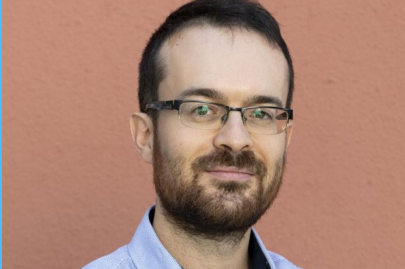
Noemi Anau Montel is a postdoctoral research fellow at the Max Planck Institute for Astrophysics in Garching, Germany. Her work spans astrophysics, cosmology, and particle physics, focusing on developing probabilistic machine learning techniques for analyzing astrophysical datasets. Research interests include: Simulation-based inference for dark matter studies Generative modeling in cosmological simulations Statistical analysis of high-energy astrophysical data Neural ratio estimation techniques Applications to gravitational lensing and dark Universe problems She has published extensively on machine learning applications in astrophysics, with recent works focusing on dark matter mass constraints, cosmological initial condition reconstruction, and model validation techniques.
Dr. Simón Rodríguez Santana is an Assistant Professor at the Higher Technical School of Engineering (ICAI) of Comillas Pontifical University, where he teaches in the Mathematical Engineering and Artificial Intelligence program. He holds a Physics degree from the Autonomous University of Madrid, a Master's in Theoretical Physics, and a PhD in Mathematical Engineering from Complutense University of Madrid. His research focuses on developing probabilistic machine learning and statistical techniques, particularly Bayesian methods applied to drug discovery, adversarial risk analysis, and time series forecasting. Professional experience includes a postdoctoral position at the Institute of Mathematical Sciences (ICMAT-CSIC) and visiting scholar roles at Aalto University (Finland). He has led two industrial research projects and contributed to national/international initiatives. Technical skills include Python (TensorFlow/PyTorch), R, LaTeX, and Slurm. Key research areas span probabilistic ML, Bayesian statistics, approximate inference, and operations research. Recent work emphasizes applications in personalized pricing strategies and AI-driven drug design. He has reviewed for top conferences (ICML, NeurIPS) and presented invited seminars on probabilistic ML applications. Awarded PAD accreditation from ANECA, he actively engages in academic dissemination through media appearances like 'Casting the Future' podcast and external training programs such as Generative AI for Education. His current teaching includes tenure-track positions and thesis supervision at undergraduate and master's levels.
Dr. Andrea Cremaschi is an Assistant Professor at IE University, specializing in Bayesian statistics with applications in biomedical research, public health, and data science. His academic journey includes roles at institutions such as the Singapore Institute for Clinical Sciences (SICS) and the National University of Singapore (NUS), where he contributed to interdisciplinary projects in biostatistics and clinical research. He holds a Ph.D. in Statistics from the University of Kent and degrees in Mathematical Engineering from Politecnico di Milano. His research focuses on developing novel Bayesian statistical methodologies for healthcare challenges, including drug sensitivity analysis in oncology, maternal and child health outcomes, and cost-effectiveness studies. He also explores applications in digital humanities and climate action, aligning with UN Sustainable Development Goals 3 (Good Health), 4 (Quality Education), and 13 (Climate Action). Key contributions include studies on postpartum diabetes screening, pediatric growth modeling, and ex vivo drug response analysis in leukemia. His work bridges computational statistics with real-world health challenges, emphasizing algorithmic innovation and interdisciplinary collaboration. Education: Ph.D. in Statistics (University of Kent), M.Sc./B.Sc. in Mathematical Engineering (Politecnico di Milano) Professional Affiliations: IE University, Singapore Institute for Clinical Sciences (SICS), National University of Singapore
Victor Manuel Martinez Quiroga is a Researcher at the Department of Physics, Universitat Politècnica de Catalunya (UPC), affiliated with the Escola d'Enginyeria de Barcelona Est (EEBE). He holds a Doctorate in Nuclear Engineering and specializes in scaling methodologies, thermal hydraulics, and nuclear safety analysis. His work focuses on validating thermal-hydraulic codes (e.g., RELAP5, LOCUST) through integral experiments like PKL and OECD benchmarks. Key contributions include development of scaling tools (e.g., PVST) and hybrid modeling frameworks for reactor safety analysis. Research interests revolve around: Best Estimate Plus Uncertainty (BEPU) methodologies Loss-of-Coolant Accident (LOCA) analysis Small Modular Reactor (SMR) safety Multi-physics coupling in reactor transients Recent articles highlight advancements in scaling distortion analysis, code validation against experimental data (e.g., PKL-4 benchmark), and application of inverse methods for uncertainty quantification. Active collaborations include the OECD/ETHARINUS and OECD/ATLAS projects. He leads the UPC’s Advanced Nuclear Technologies Research Group (ANT), contributing to national and international nuclear safety initiatives.
Rafael Ballester-Ripoll is an Assistant Professor at IE University's School of Science & Technology, specializing in Data Science and Machine Learning. Before joining IE in 2019, he held postdoctoral positions at ETH Zurich and the University of Zurich (UZH). He earned his PhD in Computer Science from UZH (2017), and BSc/MSc degrees in Mathematics and Computer Science from the Technical University of Catalonia-UPC (2012). His research focuses on low-rank tensor decompositions, explainable AI, sensitivity analysis, and scientific visualization. Key contributions include advancements in large-scale visualization, data compression, and uncertainty quantification. Recent work (2025) explores CSR authenticity in AI-era social media, hexagonal A-Star algorithms for weather routing, and entropy coding for tensor networks. Publications span journals like Journal of Machine Learning Research, IEEE Transactions on Visualization and Computer Graphics, and SIAM/ASA Journal on Uncertainty Quantification. He actively participates in conferences such as IEEE VIS and EuroVis, and co-developed tools like tntorch and VIAN. His research trends emphasize tensor-based methods applied to interdisciplinary domains, including quantum computing, Bayesian networks, and probabilistic graphical models. Collaborative projects highlight applications in ocean engineering, film analysis, and recommender systems. Ballester-Ripoll has contributed to IE's Research Datalab initiatives, though no formal awards or grants are explicitly noted in the provided texts. His work bridges theoretical foundations with practical tools for data-driven decision making.
Lorenzo Cappello is a Tenure Track Professor at Pompeu Fabra University (UPF). His research focuses on Bayesian Statistics, Scalable Inference, Statistical Inference for Stochastic Processes, and Change-point Detection. He holds a PhD from Università Bocconi. His work is accessible via his View Working Papers section. Education: PhD, Università Bocconi Research Interests: His academic contributions center on advanced statistical methodologies, particularly in stochastic processes and scalable Bayesian techniques. He explores applications in change-point detection and inference under complex data structures. Advising & Grants: No specific advisees or grants are listed in the provided information. Labs/Teams: No laboratory or team affiliations are explicitly mentioned.
Nir Lipovetzky is an Associate Professor in Artificial Intelligence at the School of Computing and Information Systems, University of Melbourne. He is affiliated with the Agent Lab and Digital Agriculture, Food and Wine Lab. His research focuses on AI planning, search, and applications in autonomous systems, particularly in agriculture. He holds a PhD from Universitat Pompeu Fabra (2012) and a BSc in Computer Science (2004). Education: PhD in Artificial Intelligence, Universitat Pompeu Fabra (2012) MEng in Artificial Intelligence, Universitat Pompeu Fabra (2007) BSc in Computer Science, Universitat Pompeu Fabra (2004) Graduate Certificate in University Teaching, University of Melbourne (2020) Research interests include AI planning, constraint programming, operations research, and intention recognition. He has developed novel width-based planning algorithms and contributed to planning competitions. Recent work includes adaptive goal recognition and reinforcement learning for decision-making under uncertainty. Publications span topics like count-based novelty exploration, process mining for goal recognition, and human-like goal inference models. Awards include the Best Student Paper Award at AAMAS 2024 and recognition in planning competitions. Advises 10+ PhD and Master’s students on topics like exploration methods, agricultural robotics, and multi-agent systems. Supervises Farm.bot, an open-source platform for AI-driven agriculture. Serves as Conference Chair for ICAPS 2025 and has held roles in AAAI, IJCAI, and ICAPS committees.
Piotr Zwiernik is a Professor Agregat in the Department of Economics and Business at Universitat Pompeu Fabra (UPF), Barcelona, and a member of the BSE Data Science Center. He is currently on leave from the Department of Statistical Sciences and the Department of Mathematics at the University of Toronto. His research bridges statistics, algebraic geometry, and machine learning, focusing on graphical models, covariance estimation, tensors, and algebraic methods in statistics. Research Interests: Graphical Models Covariance Matrix Estimation Convex Analysis Tensors Algebraic and Combinatorial Methods in Statistics Statistical Learning Theory His recent publications span high-impact journals such as the Annals of Statistics , Biometrika , and Journal of the Royal Statistical Society . The work demonstrates a consistent trend in developing mathematically rigorous frameworks for understanding dependence structures, latent variable models, and high-dimensional inference, often leveraging tools from algebraic geometry and convex optimization. Key themes include total positivity, tensor methods, and the geometry of statistical models. Scientific Recognition: Editorial Board Member, Journal of the Royal Statistical Society Series B (JRSS-B) Editorial Board Member, Biometrika Editorial Board Member, Scandinavian Journal of Statistics Editorial Board Member, Algebraic Statistics Zwiernik actively mentors students and is seeking PhD candidates with strong mathematical backgrounds at UPF and the Institute of Mathematics of UPC. He has led the development of several open-source R packages, including golazo , MTP2binary , and StructuralEM , facilitating research in graphical models and latent structures. His work is supported by a network of collaborations with leading statisticians and has significant theoretical and applied implications in data science. Laboratories and Research Groups: Statistics@UPF BSE Data Science Center
Guillermo Ayala Gallego is a Professor in the Department of Statistics and Operations Research at the Faculty of Mathematics, University of Valencia. His research is centered on statistical and probabilistic modeling with applications in image analysis and biological systems. Research Interests: His work spans Statistics , Probability Theory , Stochastic Processes , Image Analysis , Mathematical Morphology , and Spatial Statistics . He applies these to areas such as pattern recognition, biomedical imaging, and content-based image retrieval. Publication Trends: His publications, spanning from 1991 to 2011, show a consistent focus on the intersection of statistical theory and image processing. Key themes include the use of Boolean models , spatial point pattern analysis , mathematical morphology , and Bayesian frameworks for image retrieval and classification. His work often involves the analysis of biological and medical images, particularly the human corneal endothelium. Education: PhD in Statistics, University of Valencia, 1988 Thesis: "Inferencia en modelos booleanos" (Supervised by Dr. Francisco Montes Suay) Collaborations and Affiliations: He is a member of the IARM (Image Analysis, Modelling and Retrieval) research group. He has collaborated extensively with researchers such as Amelia Simó, Esther de Ves, Juan Domingo, and Miguel López-Díaz. Scientific Awards: No specific awards mentioned in the provided text. Advising and Grants: Information on students, advisees, grants, or projects is not available in the provided text.
Francisco Palmí-Perales is an Assistant Professor in the Department of Statistics and Operations Research at the Faculty of Mathematics, University of Valencia. He earned his PhD in 2020 from the Universidad de Castilla-La Mancha with a thesis on Bayesian multivariate spatial models for the joint analysis of several diseases, supervised by Dr. Virgilio Gómez-Rubio. His research focuses on advanced statistical methodologies for spatial and spatio-temporal data, particularly within the Bayesian framework. His primary interests include spatial statistics , Bayesian inference , disease mapping , and multivariate analysis . He specializes in computational techniques such as the Integrated Nested Laplace Approximation (INLA) for efficient posterior inference in complex models. His recent publications center on extending INLA for multivariate spatial models and applying Bayesian methods to the joint analysis of multiple diseases. This work demonstrates a strong trend in developing and applying sophisticated statistical tools to address challenges in public health and epidemiology, with a particular emphasis on computational efficiency and model complexity. He has collaborated with researchers such as Virgilio Gómez-Rubio, Pablo Fernández-Navarro, and Gonzalo López-Abente. There is no public information available regarding scientific awards, grants, or students he has advised.
María Del Rosario Rodríguez Griñolo is a Full Professor in the Department of Economics, Quantitative Methods and Economic History at Pablo de Olavide University in Spain. Her academic work focuses on Statistics and Operations Research within the School of Economics. Dr. Rodríguez Griñolo earned her PhD from the University of Seville in 2010 with a thesis titled "A new approach to multivariate lifetime distributions based on the excess-wealth concept: an application in tumor growth," supervised by Dr. Franco Pellerey and Dr. José María Fernández Ponce. Her research interests span multiple areas of statistical theory and applications, with particular expertise in stochastic ordering, multivariate analysis, reliability theory, and risk assessment. She has developed significant contributions to the understanding of multivariate aging concepts, excess-wealth functions, and orthant convex-type stochastic orders. Her work demonstrates both theoretical depth and practical applications across diverse fields including financial risk management, cultural heritage preservation, and biomedical research. Analysis of her recent publications reveals a strong focus on advancing theoretical statistical concepts while applying them to real-world problems. Her work shows consistent development in multivariate stochastic orders, with increasing applications in risk assessment, biomedical research, and educational methodologies. The interdisciplinary nature of her research is evident through collaborations across statistics, economics, biology, and cultural heritage fields. Dr. Rodríguez Griñolo has contributed to educational innovation in statistics teaching, particularly through developing web-based resources for secondary students and implementing new assessment methodologies for statistics courses in environmental sciences. Her academic activities include significant contributions to statistics education and public outreach, including the design of educational web resources for secondary students and the development of science communication initiatives related to cultural heritage preservation.
Adriano Jose Carmona serves as Full Professor at Universitat Politècnica de Catalunya (UPC-BarcelonaTech) within the Department of Signal Theory and Communications, College of Telecommunications Engineering. He holds dual affiliations with the Remote Sensing Lab (RSLAB) and NanoSat Lab, while also maintaining a visiting professorship at UAE University since 2022. His research spans microwave remote sensing , GNSS-reflectometry , RF interference mitigation , and nanosatellite development . Notable projects include the 3Cat series of CubeSats (3Cat-1 through FSSCAT), with FSSCAT producing the first scientific-quality Arctic soil moisture and sea ice maps using CubeSat technology. His work integrates signal processing innovations with practical Earth observation applications. Analysis of his 15 most recent publications reveals dominant trends in High-resolution soil moisture mapping using neural networks Earthquake precursor detection through multi-sensor thermal anomalies Advanced RFI mitigation techniques for radiometers CubeSat constellation architectures for 6G networks Wildfire burned area prediction using causal models Honors include IEEE Fellow (2011), ICREA Academia Award (2009, 2015), and the IEEE GRSS Education Award (2021), alongside multiple technology transfer prizes like the ESA Sentinel Small Satellite Challenge (2017). As research advisor, he has supervised 29 completed PhD theses (with 9 ongoing), producing professionals now at NASA/JPL, University of Michigan, and founders of startups BALAMIS and MITICS. His leadership extends to directing the CommSensLab Research Center (2016-2020) and serving as past President of the IEEE Geoscience and Remote Sensing Society.
Francisco José Vázquez Polo is a Full Professor at the Department of Quantitative Methods in Economics and Management, University of Las Palmas de Gran Canaria. He leads the TIDES research group focusing on Bayesian and Decision-Making Statistical Techniques in Economics and Business. His work bridges Bayesian statistics with applications in health economics, actuarial science, and environmental economics. His research interests include Bayesian robustness and meta-analysis Cost-effectiveness tools for health technology assessment Actuarial modeling and risk analysis Statistical methods for sparse data Decision theory in healthcare and economics Recent publications highlight his expertise in Bayesian modeling for tourism data, medical treatment evaluation, and statistical distributions. Key collaborations include M.A. Negrín, E. Moreno, M. Martel-Escobar, and the Spanish Sleep Network. He has directed numerous research projects funded by entities like the Spanish Ministry of Science and Innovation, with a focus on Bayesian decision-making in healthcare, economic policy, and insurance risk management. Notable grants include: PID2021-127989OB-I00 (4 years, 2022) ECO2017-85577-P (3 years, 2017) ECO2009-14152 (3 years, 2014) His academic activities include organizing seminars and workshops on Bayesian econometrics, stochastic volatility models, and health economics. He maintains active roles in editorial boards and research networks related to risk management and Bayesian statistics.
Miguel Angel Negrin is an Associate Professor at the Universidad de Las Palmas de Gran Canaria, affiliated with the "Técnicas Estadísticas Bayesianas y de Decisión en Economía y Empresa" research group. His work spans Health Economics , Bayesian Methods , and Cost-Effectiveness Analysis with applications in sleep medicine, healthcare policy, and oral health. Education : Not explicitly stated in text Advising : No student names listed in text Recent research focuses on Bayesian meta-analysis for sparse data, cost-effectiveness of sleep therapies , and equity in healthcare access . Articles from 2023–2006 demonstrate expertise in binary data modeling , heterogeneity quantification , and Bayesian decision frameworks . Scientific contributions include: Pioneering Bayesian methods for survival extrapolation in clinical trials Policy analysis on smoke-free laws and healthcare equity Methodological advancements in cost-effectiveness acceptability planes Key grants include projects from the Ministerio de Ciencia e Innovación (2022–2026) and earlier competitive research funding from Spanish government and regional health agencies.
Juan Calderon Bustillo is a Ramón y Cajal Researcher at the University of Santiago de Compostela (USC), affiliated with the Galician Institute of High Energy Physics (IGFAE) in the Department of Particle Physics. He leads research within the TEOFPACC group, focusing on theoretical physics, gravitational wave astronomy, and astroparticle physics. His work addresses fundamental questions in black hole dynamics, neutron star mergers, and dark matter candidates using advanced numerical relativity techniques. Calderon Bustillo holds a PhD from the Universitat de les Illes Balears (2015), where his thesis on gravitational radiation from compact binaries laid groundwork for hybrid waveform constructions. Supervised by Dr. Sascha Husa and Dr. Alicia Magdalena Sintes Olives, his research bridges theoretical models with observational data from LIGO, Virgo, KAGRA, and GEO600 detectors. His research interests span gravitational wave signatures of mirror symmetry, ultralight boson mergers, and post-merger remnant properties. Key projects include analyzing recoil velocities in black hole mergers, probing dark matter through gravitational waves, and developing surrogate models for exotic compact object collisions. Calderon Bustillo has contributed to multi-messenger campaigns, such as Swift-BAT follow-ups of GW triggers, and searches for continuous gravitational waves from pulsars and magnetars. His recent work emphasizes third-generation detector readiness, exploring thermal effects in neutron star mergers and constraints on vector dark matter. Collaborations with international teams like EuCAPT highlight his role in shaping next-decade astroparticle physics priorities, focusing on cosmological tests and dark sector interactions.