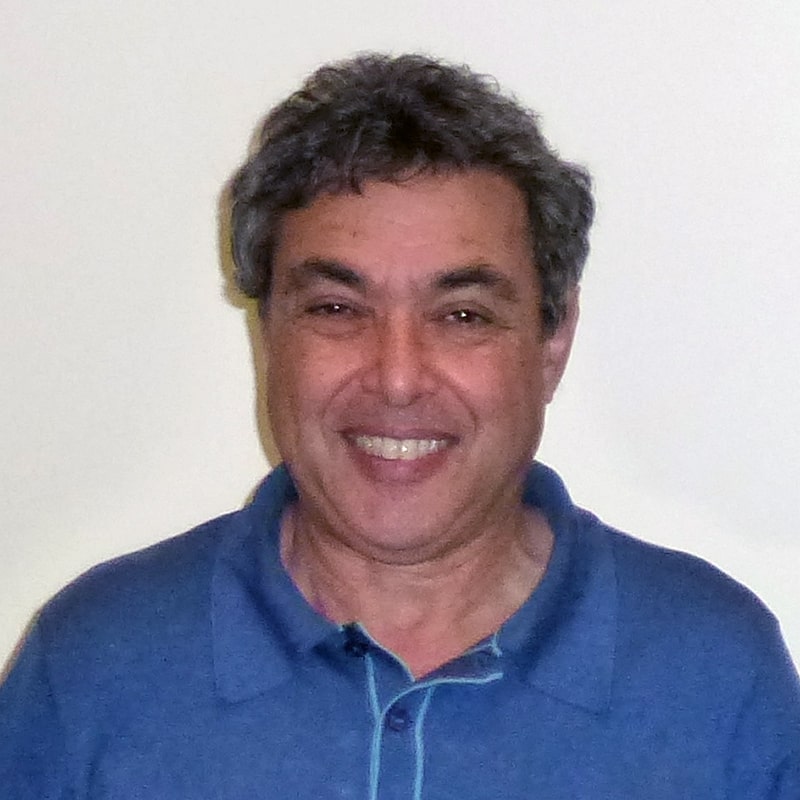
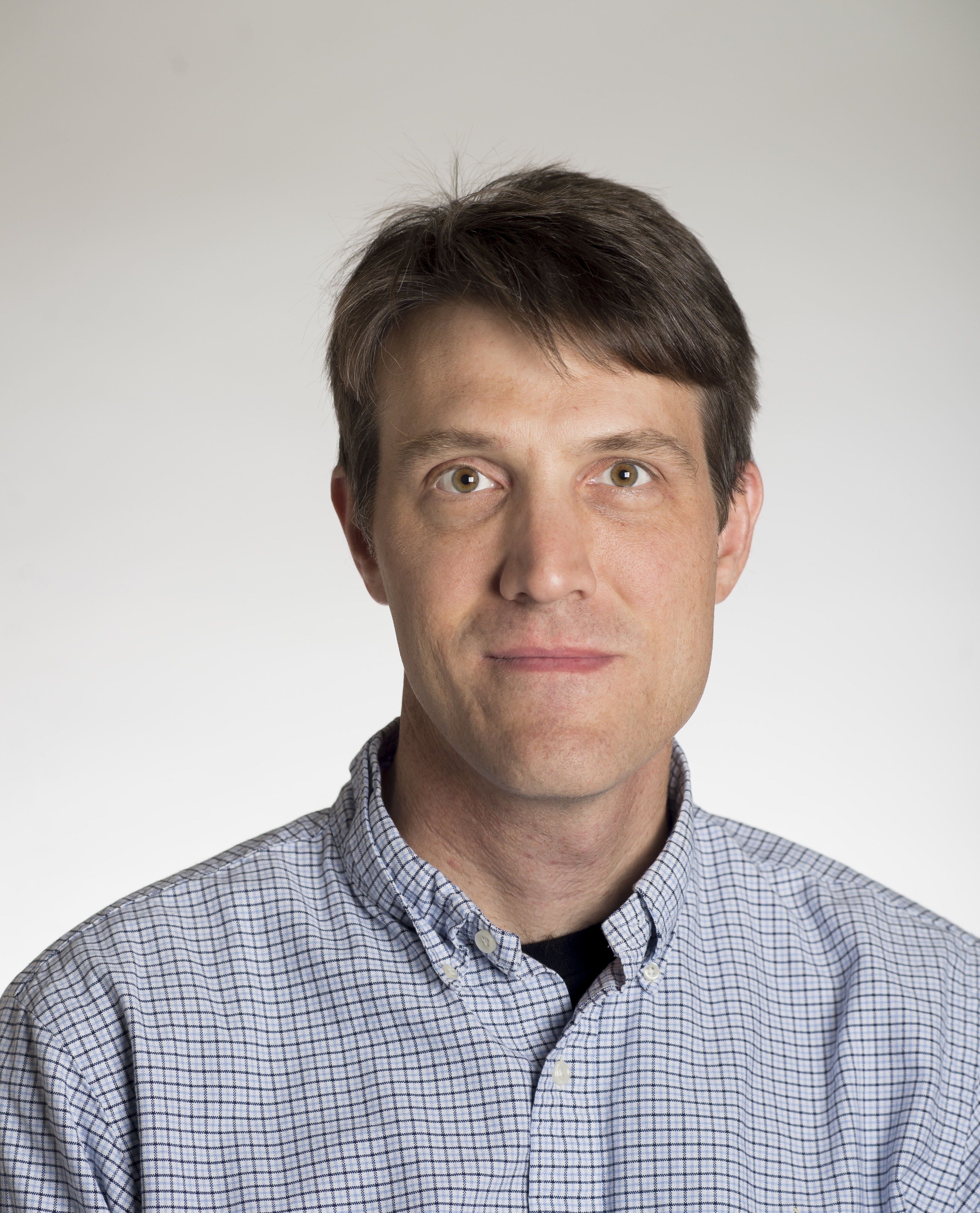
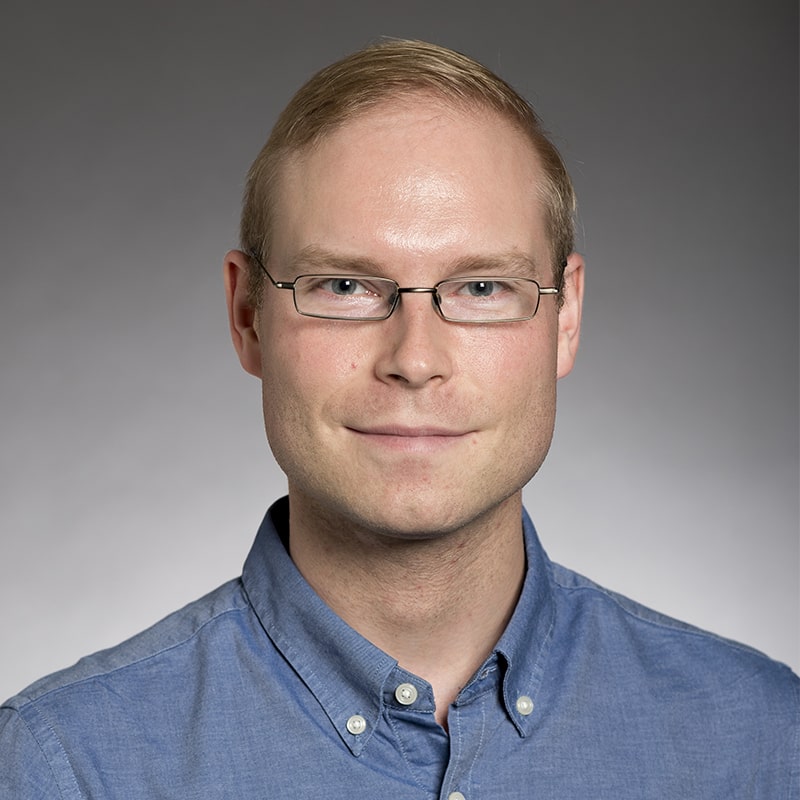
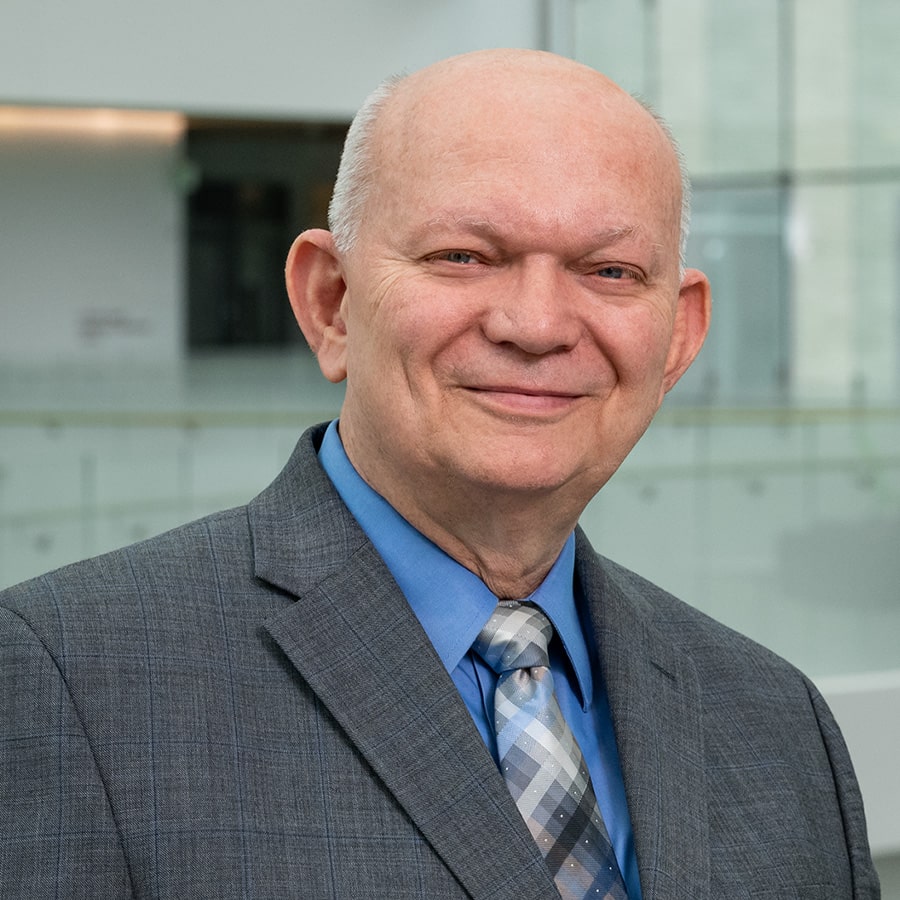
Teddy Seidenfeld is the Herbert A. Simon University Professor of Philosophy and Statistics at Carnegie Mellon University , affiliated with the Dietrich College of Humanities and Social Sciences across its Department of Philosophy and Department of Statistics & Data Science . His work bridges philosophy and statistics, focusing on foundational problems involving multiple decision-makers and non-Bayesian approaches. Research Interests Coherent choice-functions under imprecise probabilities Dilation phenomena in Bayesian updating Finitely additive expectations for unbounded variables Scoring rules and probabilistic forecasts Relaxing Bayesian norms for group decision-making Collaborations with scholars like M.J. Schervish , J.B. Kadane , and Larry Wasserman underpin his contributions to understanding uncertainty, incoherence, and cooperative decision models. His research challenges strict Bayesian frameworks, particularly in collective rationality and short-run updating anomalies.
Chad M. Schafer is an Associate Professor in the Department of Statistics & Data Science at Carnegie Mellon University , specializing in statistical methodology for astronomy and cosmology. He co-chairs the LSST Informatics and Statistics Science Collaboration and is affiliated with the McWilliams Center for Cosmology at CMU. His research focuses on rigorous handling of complex models and high-dimensional data in the sciences, particularly astronomy. Ph.D. in Statistics, University of California, Berkeley (2004) M.S. in Statistics, University of Illinois at Urbana-Champaign B.S. in Statistics, Western Michigan University Former staff at Argonne National Laboratory (Mathematics and Computer Science Division) His research spans topics such as likelihood-free inference, Bayesian computation, photometric redshift estimation, and semi-supervised learning for supernova classification. He has applied statistical methods to cosmological surveys like SDSS and LSST, as well as climate modeling and hurricane track analysis. Recent publications highlight applications of statistical techniques to astrophysics, including Approximate Bayesian Computation for supernovae, SCA-based photometric redshift estimation , and high-dimensional density modeling . His work intersects astronomy, data science, and computational statistics. He has served in multiple educational roles, including: Teaching data science courses for CMU's Master of Science in Computational Finance (MSCF) program Steering Committee member for MSCF Instructor for the Summer School in Statistics for Astronomers at Penn State's Center for Astrostatistics Moderator of the methodology subsection of the arXiv Statistics area (2007-2018) Director of CMU's Summer Undergraduate Research Experience in Statistics program (2015-2018) His departmental affiliations and committee roles underscore his interdisciplinary approach, bridging statistical theory with practical applications in astronomy and finance.
Mikael Kuusela is an Assistant Professor of Statistics and Data Science at Carnegie Mellon University, affiliated with the Dietrich College of Humanities and Social Sciences. He specializes in developing statistical methods for physical sciences, focusing on ill-posed inverse problems, spatio-temporal data, and uncertainty quantification in climate science, oceanography, remote sensing, and particle physics. His work integrates closely with domain scientists, including collaborations with oceanographers on Argo floats, NASA's OCO-2 mission, and CERN's CMS experiment. Education: PhD in Statistics, École Polytechnique Fédérale de Lausanne (EPFL), 2016 MSc and BSc in Engineering Physics and Mathematics, Aalto University, 2012 and 2010 His research interests span statistical methodologies for large-scale datasets, with applications to environmental science and high-energy physics. Key areas include: Statistical methods for physical sciences (STAMPS group coordination) Uncertainty quantification in climate models and ocean heat content Optimal transport and inverse problem solutions in particle physics Spatio-temporal modeling of oceanographic phenomena Recent articles highlight advancements in uncertainty quantification, climate model parameter estimation, and applications of statistical techniques to ocean and atmospheric data. Kuusela is also a core member of the US CLIVAR Ocean Uncertainty Quantification Working Group and coordinates the Statistical Oceanography Working Group. His work emphasizes collaboration with domain experts, leveraging statistical rigor to address real-world challenges in environmental and fundamental physics research.
David Krackhardt is a Professor affiliated with the H. John Heinz III College and the Tepper School of Business at Carnegie Mellon University. His research focuses on organizational behavior, social network analysis, power dynamics, and statistical methodologies. He explores how networks influence conflict resolution, stress propagation, and career trajectories within organizations. Notable contributions include studies on friendship paradox applications, privacy-sensitive network interventions, and the structural basis of gang violence. His work bridges theoretical insights with practical implications for public policy, healthcare efficiency, and organizational design. Education & Background: While specific education details aren’t provided, his expertise spans decades in interdisciplinary research at top institutions. Research Interests: Krackhardt’s work emphasizes the intersection of social structures and human behavior. He investigates how networks mediate stress transmission, career advancement, and innovation adoption. His methodologies often involve advanced statistical models and graph theory, applied to diverse contexts like emergency medical teams, corporate hierarchies, and international conflict patterns. Key Themes in Publications: Recent articles address network-driven contagion control, organizational project dynamics, and privacy-preserving interventions. His 2025 studies on entrepreneurial leadership and newcomer socialization highlight the role of ‘sticky ties’ in rivalrous environments. Earlier work on balance theory (2020) and healthcare networks (2021) underscores his interdisciplinary reach. Awards & Grants: No specific awards are listed, though his frequent collaboration with institutions suggests sustained research funding. Labs/Teams: While not explicitly detailed, his affiliations imply involvement with interdisciplinary teams at the Heinz College and Tepper School.
Francesca Zaffora Blando serves as an Assistant Professor in the Department of Philosophy at Carnegie Mellon University's Dietrich College of Humanities and Social Sciences. Her academic profile bridges rigorous formal methods with foundational questions in epistemology and scientific methodology. Her educational trajectory includes: Ph.D. in Philosophy and Symbolic Systems, Stanford University (2020) M.Sc. in Logic, Institute for Logic, Language and Computation, University of Amsterdam M.A. in Philosophy, University of Edinburgh Zaffora Blando's research centers on algorithmic randomness —a computability-theoretic framework for patternless sequences—and its implications for inductive learning and Bayesian inference . She investigates how algorithmically random data streams constrain the learning performance of computationally bounded agents, revealing deep connections between randomness, convergence to truth, and probabilistic reasoning. Her work spans modal logic applications in dynamic epistemic scenarios and historical analyses of probability theory from von Mises to contemporary formalizations. Her publication record (2015-2025) demonstrates sustained innovation at the intersection of computability and epistemology, with increasing focus on Schnorr randomness, Bayesian consistency, and learning-theoretic characterizations. Key themes include the role of randomness in merging opinions, disintegration of measures, and historical evolution of randomness concepts. She actively contributes to the Center for Formal Epistemology through event organization including the Pittsburgh Formal Epistemology Workshop (PFEW), the September 2024 Workshop on Chance, Credence, Computation, and Progic 2025—the Twelfth Workshop on Combining Probability and Logic with special focus on theoretical learning approaches.
Jiashun Jin is a Professor of Statistics and Affiliated Professor of Machine Learning at Carnegie Mellon University, where he leads research in statistical inference for Big Data with a focus on 'Rare and Weak' signal regimes. He received his Ph.D. in Statistics from Stanford University in 2003. His research interests span: Development of novel methods like Higher Criticism, Graphlet Screening, IF-PCA, and SCORE for high-dimensional data Applications in genomics (cancer classification, SNP analysis), cosmology (non-Gaussian detection in CMB), and network science Theoretical frameworks including phase diagrams to characterize statistical detectability boundaries Recent publications (2021-2023) demonstrate strong emphasis on network community detection, text analysis, genetic association studies, and COVID-19 resource allocation, with consistent focus on statistical optimality in high-dimensional settings. Honors and awards include: NSF CAREER Award (2007) IMS Tweedie Award (2009) IMS Fellow (2011) ASA Fellow (2019) ICCM Distinguished Paper Award (2020) He has developed a significant dataset of 83,381 statistical publications for coauthorship/citation network analysis and has delivered invited lectures including the IMS Medallion Lecture (2015).
Liu Yang is a postdoctoral fellow in the Computer Science Department at Carnegie Mellon University , with a PhD from CMU under Avrim Blum and Jaime Carbonell. His research focuses on Theoretical Machine Learning and Theoretical Computer Science , exploring areas like Statistical Learning Theory , Property Testing , and Algorithmic Economics . He has contributed to active learning , transfer learning , and online pricing problems through mathematical frameworks. Research Interests : Liu's work bridges Computational Learning Theory with Algorithmic Economics , including: Mathematical theories for active property testing of Boolean functions Transfer learning with applications to online allocation and pricing Analysis of convex losses and statistical identifiability in learning Developing Buys-in-Bulk models for active learning efficiency Service and Teaching : He has served on program committees for ICML 2012-2013 , reviewed for top-tier venues, and taught courses like Graduate Algorithms and Modern Computer Algebra at CMU. He also co-developed the DistLearnKit MATLAB toolkit for distance metric learning.
Andrej Risteski is an Associate Professor at the Machine Learning Department of Carnegie Mellon University (CMU) since 2025. He previously held the Norbert Wiener Research Fellow position jointly between the Applied Math Department and IDSS at MIT (2017–2019) after completing his PhD in Computer Science at Princeton University (2012–2017) under Sanjeev Arora . His research focuses on the intersection of machine learning, statistics, and theoretical computer science , emphasizing generative models, representation learning, and out-of-distribution generalization with applications to natural language processing and scientific domains . His recent publications explore edge embeddings in Graph Neural Networks (GNNs) , score matching efficiency , and theoretical foundations of diffusion models . Key contributions include analyzing computational bottlene.com/activities/statistical-and-computational-challenges-in-probabilistic-scientific-machine-learning-sciml/">NSF CAREER Award , DOE Computational Science Graduate Fellowship for Stephen Huan, and co-organizing the COLT workshop on Theory of AI for Scientific Computing . He advises PhD students across Machine Learning, Computer Science, and Mathematics , including Bingbin Liu (Kempner Institute Fellow) and Elan Rosenfeld (Google Research Scientist). Teaching includes Probabilistic Graphical Models and Advanced Deep Learning at CMU, plus Applied Mathematics at MIT. His work is supported by NSF, DoD , and OpenAI Superalignment grants. Education : PhD in Computer Science (Princeton), BSc in Computer Science (Princeton) Current Positions : Associate Professor, CMU Machine Learning Department Former Positions : Norbert Wiener Fellow, MIT IDSS & Applied Mathematics Research Areas : Generative Models (GANs, Diffusion Models) Representation Learning Out-of-Distribution Generalization Neural Language Models AI for Scientific Applications Sampling and Optimization Algorithms Scientific Awards : NSF CAREER Award (2023) Google Research Award (2024) Amazon Research Award (2022) OpenAI Superalignment Grant (2023) Recent Talks (2023–2025): "Architectural Nuances and Benchmark Gaps in Scientific ML" (UC Berkeley, 2025) "The Statistical Cost of Score-Based Losses" (Simons Institute Boot Camp, 2024) "Neural Networks for PDEs" (ETH Zurich, 2024) "Discernible Patterns in Transformers" (Theory of Interpretable AI, 2024) He leads a research group producing work at the interface of computational complexity and graph learning , with empirical validation on topological bottlenecks and hub node dynamics . Current projects include ICML 2025 paper on edge embeddings in GNNs and COLT 2025 workshop on AI for Scientific Computing co-organized with MIT, Duke, and ETH Zurich collaborators.
Matteo Pozzi is a Professor in the Civil and Environmental Engineering Department at Carnegie Mellon University (CMU). His research focuses on probabilistic risk analysis and decision optimization for civil infrastructures, integrating sensor data and engineering models to enhance resilience against extreme events. He holds a Ph.D. in Structural Engineering from the University of Trento (Italy) and completed a post-doctoral fellowship at UC Berkeley. His work emphasizes probabilistic models for seismic vulnerability, maintenance scheduling, and smart infrastructure systems. Education: Ph.D., Structural Engineering, University of Trento (2007) Laurea (M.S. + B.S.), Civil Engineering, University of Trento (2003) Research Interests: His research spans advanced infrastructure systems, climate-resilient technologies, and intelligent engineered systems. Key areas include sensor integration for structural health monitoring, probabilistic modeling for infrastructure resilience, and optimal planning for mitigating extreme events. Awards & Grants: NSF CAREER Award (2017) Siebel Energy Institute Research Grant (2017) PITA Grant for Microreactor Technology (2019) Multiple NSF grants (SES-DRMS, ENG-CMMI-IMEE, GEO-ICER-PREEVENTS) Labs & Affiliations: He is affiliated with the Pennsylvania Smart Infrastructure Incubator and collaborates with the Scott Institute for Energy Innovation. His lab develops computational tools for integrated risk assessment and decision-making in civil systems.
Isabella Verdinelli is a dual-affiliated professor serving as Professor in Residence at Carnegie Mellon University's Department of Statistics (Dietrich College of Humanities and Social Sciences) and as Full Professor at Sapienza University of Rome's Department of Statistical Sciences. She splits her academic year between Pittsburgh (fall) and Rome (spring), maintaining active research collaborations at both institutions. Her education includes a Master's degree from University College London and a PhD from Carnegie Mellon University. Her career spans postdoctoral work, assistant/associate positions, and professorship roles since her student days in Rome. Verdinelli's research focuses on: Nonparametric and high-dimensional methods for uncovering latent structures in complex datasets Bayesian experimental design with applications in medicine and engineering Manifold/filament estimation and minimax convergence theory Monte Carlo Markov Chains and hypothesis testing using Bayes factors Multiple testing procedures (FDR control) Her publications demonstrate sustained focus on Bayesian methodologies, nonparametric inference, and optimization techniques. Recent work (2007-2010) emphasizes high-dimensional data structures and theoretical statistics, while earlier contributions center on experimental design and Bayesian model selection.
Robert E. Kass is the Maurice Falk University Professor of Statistics and Computational Neuroscience at Carnegie Mellon University, with affiliations in the Department of Statistics & Data Science, Machine Learning Department, and Neuroscience Institute. His career spans statistics, machine learning, and neuroscience, focusing on statistical methods for analyzing neural data, particularly spike trains and brain connectivity. Research highlights include: Developing statistical frameworks for neural data analysis Investigating neural oscillations and cross-regional interactions Contributing to neuroscience education through Neuromatch Academy Exploring intersections between statistics, machine learning, and scientific inference Scientific awards and recognitions include: Outstanding Statistical Application Award (ASA) Distinguished Achievement Award (COPSS, 2017) Election to National Academy of Sciences (2023) Fellowships in ASA, IMS, AAAS His recent publications focus on: Neural circuit oscillations and phase-amplitude analysis Latent dynamic modeling of high-dimensional neural recordings Population-level neural interactions and connectivity Educational frameworks for computational neuroscience training Methodological bridges between statistics and machine learning Advanced graphical models for neural synchronization studies
Steven Wu is an Assistant Professor in the School of Computer Science at Carnegie Mellon University, with a primary appointment in the Software and Societal Systems Department and affiliations in the Machine Learning Department, Human-Computer Interaction Institute (HCII), CyLab, and the Theory Group. His research focuses on algorithms and machine learning, particularly in responsible AI, privacy, bias, and uncertainty. He has received funding from NSF CAREER, Okawa Foundation, Amazon, Google, and others. Research Interests: Foundations of responsible AI (privacy, bias, uncertainty) Interactive learning (imitation, reinforcement learning) Causal inference, game theory, econometrics, and language modeling Grants and Awards: NSF CAREER Award Okawa Foundation Award Amazon Research Award Google Faculty Research Award J.P. Morgan Faculty Awards Advising: Supervises PhD, master's, and undergraduate students across multiple programs, with notable alumni now at Amazon, Stanford, Tsinghua, and others. Leads the Tartan Federer team, which won all four tracks of The Vector Institute's MIDST challenge in 2025. Labs and Collaborations: Active in CyLab (CMU's cybersecurity institute) and the Theory Group, focusing on privacy-preserving machine learning and algorithmic fairness.
Abulhair Saparov is an Assistant Professor of Computer Science at Purdue University , where he focuses on statistical machine learning applications in natural language processing (NLP), reasoning, and symbolic/neuro-symbolic systems. Prior to Purdue, he was a postdoctoral researcher at the Center for Data Science at New York University under Professor He He. He holds a Ph.D. and M.S. in Machine Learning from Carnegie Mellon University (advised by Professor Tom Mitchell) and a B.S.E. in Computer Science from Princeton University with certificates in Applied Mathematics and Neuroscience. His research emphasizes improving the generalizability of ML models through reasoning over knowledge and symbolic representations. He has developed algorithms for abductive theory formation, generative probabilistic models of grammar for semantic parsing, and frameworks for neuro-symbolic integration. Techniques used include Bayesian nonparametrics, approximate posterior inference, and combinatorial optimization. Active on GitHub , he maintains repositories like learning_to_search (transformer scaling analysis), prontoqa (synthetic QA dataset for LLM reasoning), and PWL (probabilistic abduction for theory induction). No formal awards or student advisees are listed in available texts.
Michael Celentano is a Research Fellow (Postdoctoral Miller Fellow) at the University of California, Berkeley's Department of Statistics, and a Member of Technical Staff at OpenAI. He holds a PhD in Statistics from Stanford University (2021), advised by Andrea Montanari, alongside master's (2016) and bachelor's (2014) degrees in Mathematics/Physics and Electrical Engineering from Stanford. His research focuses on high-dimensional data algorithms, bias correction in complex models, and first-order methods' statistical analysis. He collaborates with leading researchers like Yun Song and Martin Wainwright, and his work bridges semiparametric theory, causal inference, and biological applications. Celentano has organized the Online Causal Inference Seminar and contributed to the Simons Institute's Computational Complexity of Statistical Inference program. His honors include the Theodore W. Anderson Theory of Statistics Award and an NSF Graduate Research Fellowship. Research Interests: Algorithmic bias mitigation in high-dimensional prediction Average-case analysis of non-convex optimization Variational Bayesian inference High-dimensional causal inference Phylodynamic modeling in evolutionary biology Labs/Teams: Collaborates with the labs of Yun Song (UC Berkeley) and Martin Wainwright, contributing to interdisciplinary projects at the Simons Institute and OpenAI.
Joelle Pineau is a Professor in the School of Computer Science at McGill University and Vice President of AI Research at Meta, where she leads the Fundamental AI Research (FAIR) team. She is also a core member of Mila, the Quebec AI Institute. Her academic training includes a BASc from the University of Waterloo and an MSc and PhD in Robotics from Carnegie Mellon University. Her research focuses on developing models and algorithms for planning and learning in complex domains, with applications in robotics, healthcare, and conversational agents. She is a pioneer in machine learning reproducibility, having initiated the ML Reproducibility Checklist and served as the inaugural Reproducibility Chair for NeurIPS. Her leadership roles include past President of the International Machine Learning Society (IMLS). She has received multiple prestigious awards, including: NSERC E.W.R. Steacie Memorial Fellowship (2018) Governor General's Innovation Award (2019) CIFAR Canada AI Chair Fellow of AAAI Fellow of the Royal Society of Canada She has advised numerous PhD and Master’s students, many of whom now hold prominent research positions in academia and industry. She teaches graduate courses in machine learning and AI at McGill, such as COMP-551 (Applied Machine Learning) and formerly COMP-424 (Artificial Intelligence). Although she is not currently accepting new graduate students due to her dual role at McGill and Meta, she supports undergraduate research through her postdocs. Her lab is involved in cutting-edge research in reinforcement learning, deep learning, and AI for healthcare.