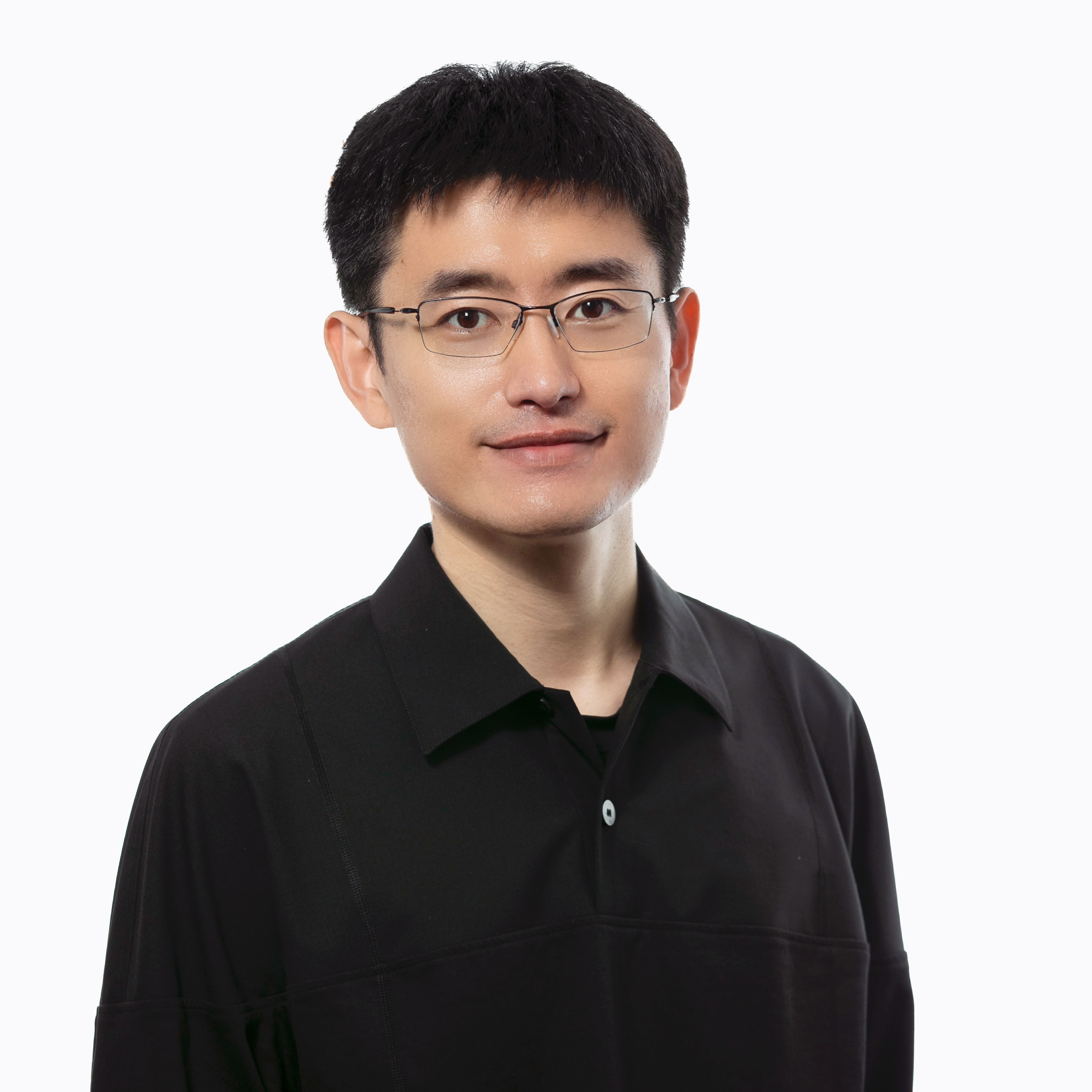
Jian Cao is an Assistant Professor in the Department of Economics at Trinity College Dublin. He holds a Ph.D. in Economics from Florida State University (2018) and has served as a Postdoctoral Scholar at the California Institute of Technology (Caltech) from 2019 to 2021. His research focuses on computational economics, econometric methodologies, and election integrity, with notable contributions to Bayesian analysis of voter registration databases and dynamic social media monitoring. Cao has also led interdisciplinary projects funded by the ERC (€2 million) analyzing conflict emergence patterns using multi-source datasets. His work bridges economics, political science, and data science, producing tools like the dsc R package for enhanced synthetic control methods and spike for Twitter monitoring infrastructure. Education: Ph.D. in Economics, Florida State University, 2018 M.S. in Economics, Florida State University, 2016 M.S. in Financial Engineering, China University of Mining & Technology, 2014 B.A. in Economics, Henan University of Economics & Law, 2010 Research Highlights: Developed probabilistic matching methods for election auditing in California and Florida Deployed large-scale Twitter monitoring systems handling 4.5B+ tweets Advanced methods for multiple imputation in multi-scale datasets Grants & Awards: ERC Grant (€2M) for conflict emergence research
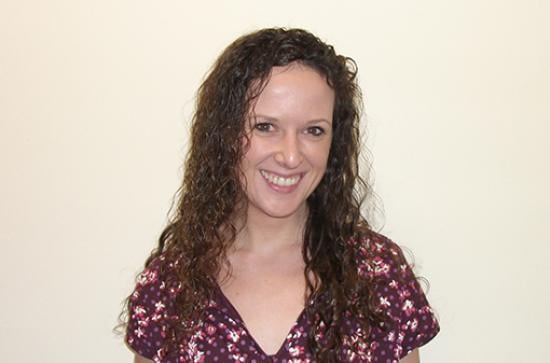
Associate Professor Stephanie Dornschneider-Elkink is affiliated with the School of Politics and International Relations at University College Dublin . Her research bridges conflict studies and political psychology , focusing on the cognitive and emotional foundations of political dissent , particularly in the Arab world and post-conflict societies. She employs computational methods to analyze ethnographic interviews, revealing how individuals reason about resistance under repression. Education: PhD in International Relations and Political Science from the Graduate Institute of International and Development Studies (Geneva), MA in International Relations and Middle East Studies from the American University in Cairo, Magister Artium in American Literature from Universität Hamburg Her work identifies positive emotions (hope, solidarity) and tit-for-tat reasoning as critical drivers of dissent, challenging traditional models that emphasize negative emotions or rational choice. She has conducted fieldwork in Lebanon (2022–2023) and authored computational frameworks for analyzing belief systems and inference chains in protest behavior. Scientific awards include the COFUND Junior Research Fellow at Durham University and pre-/postdoctoral fellowships from the Swiss National Science Foundation and German Academic Exchange Service . Her methodological contributions span agent-based modeling , cognitive mapping , and sentiment analysis of political speech.
Jason Chan is a Professor in the Department of Applied Psychology at University College Cork (UCC), Ireland, where he leads research at the intersection of brain and behavior. His work utilizes advanced neuroimaging techniques including magnetoencephalography (MEG), functional magnetic resonance imaging (fMRI), and electroencephalography (EEG) to investigate multisensory integration and its applications in understanding neurological conditions. Dr. Chan earned his BA from California State University, Los Angeles, followed by a D.Phil in Experimental Psychology from the University of Oxford. Prior to joining UCC, he conducted post-doctoral research at Trinity College Dublin and Goethe University, gaining expertise in diverse research methodologies across international institutions. His primary research focus centers on multisensory integration (MSI), examining how perceptual training affects cortical connectivity and how these processes serve as biomarkers for neurological conditions including autism spectrum disorder and mild cognitive impairment in aging populations. Through seemingly simple behavioral tasks coupled with sophisticated neuroimaging, Chan's work provides critical insights into human perception and disorders. Analysis of his recent publications reveals a consistent trajectory in multisensory research, with increasing focus on aging populations, autism spectrum disorders, and the application of predictive coding frameworks to understand perceptual processing differences. His work spans both theoretical neuroscience and practical applications for cognitive rehabilitation. Dr. Chan has secured multiple research grants, including funding from Enterprise Ireland, HEA COVID Support, and the Health Research Board for projects examining fear of falling detection systems, community walking programs for older women, and the impact of chaotic home environments on emotional perception in autism. He actively contributes to the academic community through committee service on the Applied Psychology Ethics, Research, and Teaching Committees at UCC. His professional affiliations include the Federation of European Neuroscience Societies, American Association for the Advancement of Science, Society for Neuroscience, Neuroscience Ireland, and the Association for Psychological Science. Dr. Chan directs the Acme Lab (www.acmelab.science), which serves as the hub for his research team's investigations into brain-behavior relationships, providing a collaborative environment for advanced neuroimaging studies and perceptual research.
Niamh Cahill is a Professor in the Department of Mathematics and Statistics within the Faculty of Science & Engineering at Maynooth University. Her academic work spans environmental statistics and public health, with a particular focus on developing statistical models to address societal and environmental concerns. She is affiliated with both the Hamilton Institute and ICARUS (the Maynooth University Climate and Environmental Change Research Centre), reflecting the interdisciplinary nature of her research. Dr. Cahill holds a BSc in Chemistry and Statistics from Maynooth University, followed by an MSc and PhD in Statistics from University College Dublin. Prior to joining Maynooth University, she served as a Lecturer/Assistant Professor at University College Dublin (2017-2023) and completed a postdoctoral research associate position at UMASS Amherst (2016-2017). Her research ethos centers on developing statistical models to address societal and environmental concerns. One major research focus involves creating statistical models to assess and interpret indicators of climate change, particularly sea-level change and sea-level extremes. Her work explores and quantifies the spatial non-uniformity and uncertain magnitude of current and future sea-level rise, which aids coastal risk-management decision makers in developing mitigation and adaptation strategies. Another significant research area involves the statistical analysis of population-level health trends, with particular attention to family-planning indicators at national and sub-national levels, especially in the world's poorest countries. This work assesses progress toward meeting Sustainable Development Goals related to health (Goal 3) and gender equality. Dr. Cahill employs a Bayesian approach to statistical modeling, which is particularly suitable for developing complex hierarchical models, accounting for uncertainties related to model parameters, incorporating prior knowledge, and sharing information across data populations. Her recent publications reveal a consistent focus on sea-level reconstruction, climate change indicators, and family planning statistics, demonstrating the dual environmental and public health applications of her statistical methodology. Dr. Cahill has secured significant research funding, including as Principal Investigator for the "Predicting Sea Levels and Sea Level Extremes for Ireland" project (€258,529, 2021-2024) and as Co-PI for several other substantial projects including HydroDare and IHRN. Her research team includes postdoctoral fellows such as Fernando Mayer working on sea-level estimation projects. Within the university community, Dr. Cahill serves on multiple committees including the Academic Council, Faculty of Science and Engineering EDI Committee, and the Department of Mathematics and Statistics PR Committee. She has also held leadership positions such as Outreach Officer for Y-ISA (2021-2022). Dr. Cahill teaches several courses at Maynooth University including DS152 Introduction to Data Science, ST405 Bayesian Data Analysis, ST201 Data Analysis, ST466 Advanced Statistical Modelling, and DS151 Introduction to Data Science, reflecting her expertise in statistical methodology and data science applications.
Claire Gormley is an Associate Professor of Statistics at University College Dublin (UCD) and a Funded Investigator at the Insight Centre for Data Analytics. She joined UCD in 2006 as an Assistant Lecturer, was promoted to Assistant Professor in 2008, and to Associate Professor in 2017. Her research group specializes in Machine Learning & Statistics with applications spanning genetics, agriculture, and medical sciences. Education PhD in Statistics, Trinity College Dublin (2007) Visiting Scholar, Department of Statistics/Centre for Statistics and the Social Sciences, University of Washington Seattle (2006) Research Expertise Professor Gormley develops advanced statistical methodologies including latent variable models, mixture models, and Bayesian approaches for high-dimensional data analysis. Her work addresses dimensionality challenges in diverse fields such as metabolomics, orthopaedics, and social science, with current projects focusing on model-based clustering for mixed-type high-dimensional datasets. Methodological innovations are consistently applied to real-world problems involving large-scale biological and agricultural data. Publication Trends Her recent publications (2023-2025) demonstrate strong interdisciplinary impact across genetics (tuberculosis, dairy cattle), agricultural science (nitrogen utilization), and medical research (neonatal sepsis). Methodologically, she pioneers mixture models and latent variable frameworks for complex data structures, particularly in multi-omics integration and network analysis. A clear trajectory shows increasing focus on computationally intensive solutions for biological big data, with applications directly addressing food security and healthcare challenges. Research Leadership As a Funded Investigator at the Insight Centre, Dr. Gormley leads a dynamic research group securing competitive grants for interdisciplinary projects. Her team collaborates with veterinary scientists, geneticists, and medical researchers on grant-funded initiatives including tuberculosis genomics and metabolomics data analysis. The group maintains strong industry partnerships in agricultural technology and healthcare analytics, with recent projects developing predictive models for dairy cattle health monitoring and clinical diagnostics.
Dr. Adrian O'Hagan is a Lecturer in Statistics and Actuarial Science at University College Dublin (UCD) School of Mathematics and Statistics, with a focus on machine learning and statistical modeling. He completed his PhD in Statistics at UCD in 2012 and holds an MSc in Statistics from UCD (2006). As a funded investigator at the Insight Centre, his work bridges computational statistics with practical applications in insurance, healthcare, and manufacturing. Education: PhD Statistics, UCD (2012) MSc Statistics, UCD (2006) Bachelor of Actuarial and Financial Studies, UCD Research Interests span machine learning, Bayesian inference, network analysis, and actuarial science. His recent work includes: Developing probabilistic models for network analysis and EHR-based phenotyping Advancing clustering algorithms with uncertainty quantification and optimization Applying statistical methods to insurance risk, manufacturing analytics, and data compression Publications highlight his expertise in variational Bayes, Gaussian mixtures, and multivariate claim modeling, with interdisciplinary impacts in healthcare and finance. He collaborates on real-world data analysis and contributes to open-source actuarial tools like mvClaim .
Dr. Sturrock is a Lecturer in Biophysics and Computational Biology in the Department of Physiology. He holds a B.Sc. in Applied Mathematics (2009) and a Ph.D. (2013) from the University of Dundee, focusing on spatio-temporal models of gene regulatory networks. His postdoctoral work includes research at The Ohio State University (macromolecular crowding, cell polarization) and Imperial College London (stochastic gene expression, synthetic Turing patterns). B.Sc., Applied Mathematics, University of Dundee (2009) Ph.D., University of Dundee (2013) His research centers on computational modeling of biological systems, including gene regulation, cell polarization, and cancer dynamics. Publications highlight the role of stochasticity in gene networks, spatial effects in signaling, and applications to glioblastoma and synthetic biology. Topics span mathematical biology, systems biology, and biophysics. Recent articles emphasize machine learning integration for genomic selection, Bayesian network inference, spatio-temporal cancer modeling, and stochastic simulations. Key methodologies include agent-based modeling, synthetic data generation, and compartmentalized systems analysis. He has collaborated with institutions such as the Mathematical Biosciences Institute at Ohio State and synthetic biology groups at Imperial College London, though no current lab affiliations are detailed in the provided text.
Dr. Shirin Moghaddam is an Associate Professor and Lecturer in Statistics and Data Science at the University of Limerick , within the Department of Mathematics and Statistics . She is also an active member of the Limerick Digital Cancer Research Centre and the Mathematics Applications Consortium for Science and Industry (MACSI) . Her work bridges advanced statistical methodologies with real-world medical applications, particularly in oncology and neurodegenerative disease research. Education: BSc in Statistics – University of Tehran MSc in Mathematical Statistics – University of Tehran PhD in Statistics – University of Galway (NUIG) Research Focus: Dr. Moghaddam's research centers on survival analysis , Bayesian modeling , and machine learning , with a strong emphasis on translational cancer research . She develops predictive models for time-to-event outcomes in prostate cancer and other diseases, integrating genomic and clinical data to improve diagnostic and prognostic accuracy. Her work often involves interdisciplinary collaboration, combining statistics with bioinformatics, clinical oncology, and molecular biology. Scientific Contributions & Trends: Her recent publications reflect a consistent trajectory in applying advanced statistical techniques—especially Bayesian imputation and machine learning—to high-dimensional biomedical data. A recurring theme is the use of mRNA and protein biomarkers to enhance prediction of survival outcomes in prostate cancer patients, both pre- and post-operatively. Her 2024 and 2023 papers in PLoS ONE and Cancers highlight this focus, while her 2023 Molecular Neurobiology paper extends similar methodologies to Parkinson’s disease biomarkers. Leadership & Service: Chair, Young Statisticians Section – Irish Statistical Association (2023–present) Member – Cancer Trials Ireland Collaborations & Networks: Dr. Moghaddam collaborates extensively within Ireland and internationally, contributing to national cancer research initiatives and statistical modeling consortia. Her affiliations with MACSI and the Limerick Digital Cancer Research Centre position her at the intersection of applied mathematics, data science, and clinical research.
Rafael de Andrade Moral is a Professor of Statistics at Maynooth University's Faculty of Science & Engineering (since 2025), with prior roles as Associate Professor (2023-2025) and Assistant Professor (2018-2023). He holds a PhD in Statistics (University of São Paulo, 2014-2017) and dual bachelor's degrees in Biology and Education. His work bridges Statistical Ecology , Computational Biology , and Data Science , focusing on modeling ecological systems, agricultural pest dynamics, and biodiversity-ecosystem function relationships. Key research themes include Bayesian modeling , multivariate ecological forecasting , and machine learning applications . He founded the Theoretical and Statistical Ecology Research Group and serves on committees like the Young-ISA Chair . His recent articles span topics like insect abundance forecasting , weed-crop competition under climate change , and neuroinformatics-based learning analysis , reflecting interdisciplinary engagement. Scientific accolades include the Young Statistician Showcase Prize (2018), A-mu-sing Competition First Place (2021), and Maths Week Award (2022). He has advised three PhD students and contributed to over 50 peer-reviewed publications. Active in teaching innovation (e.g., Teaching Statistics through Music ), he also provides statistical consultancy to organizations like NIBIO and Jomakol .