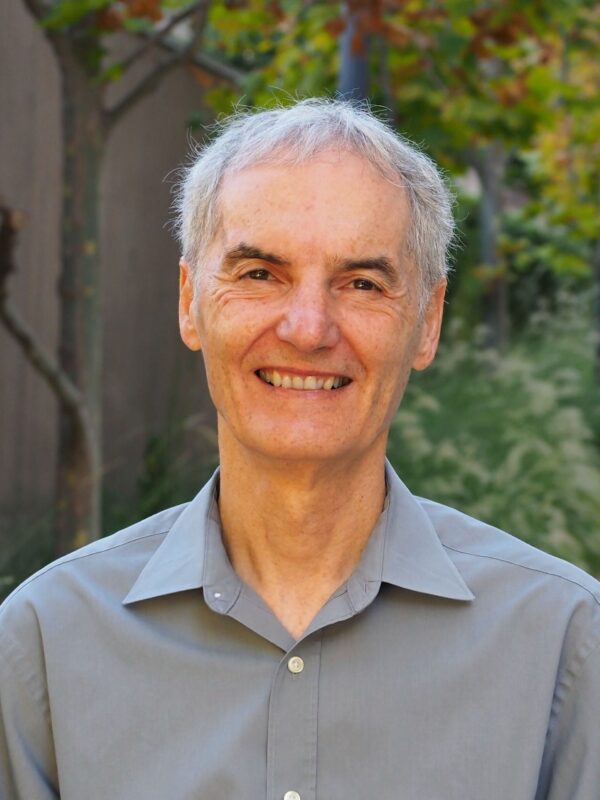
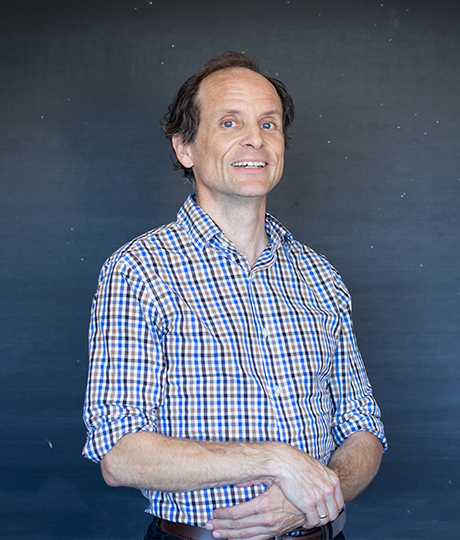
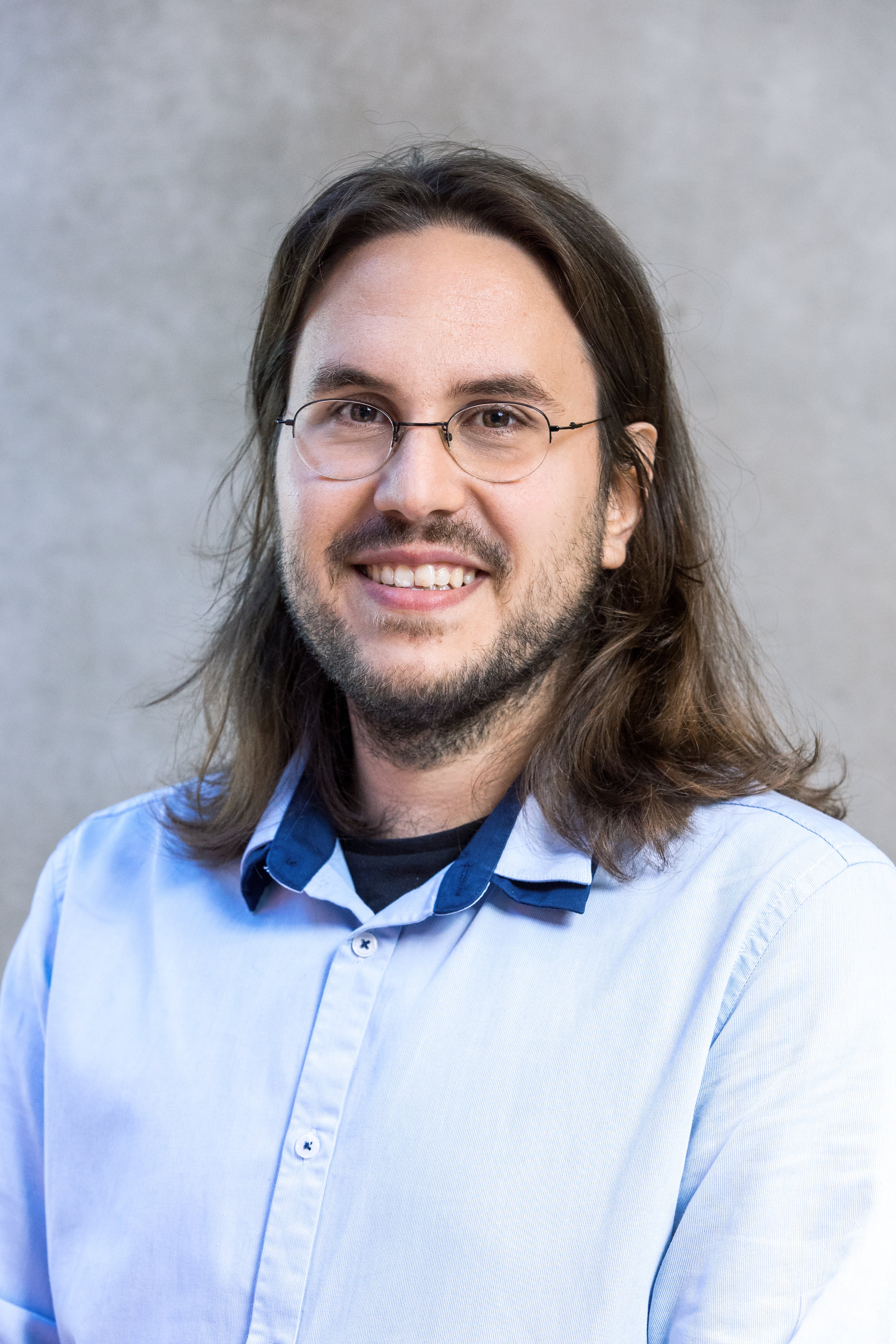
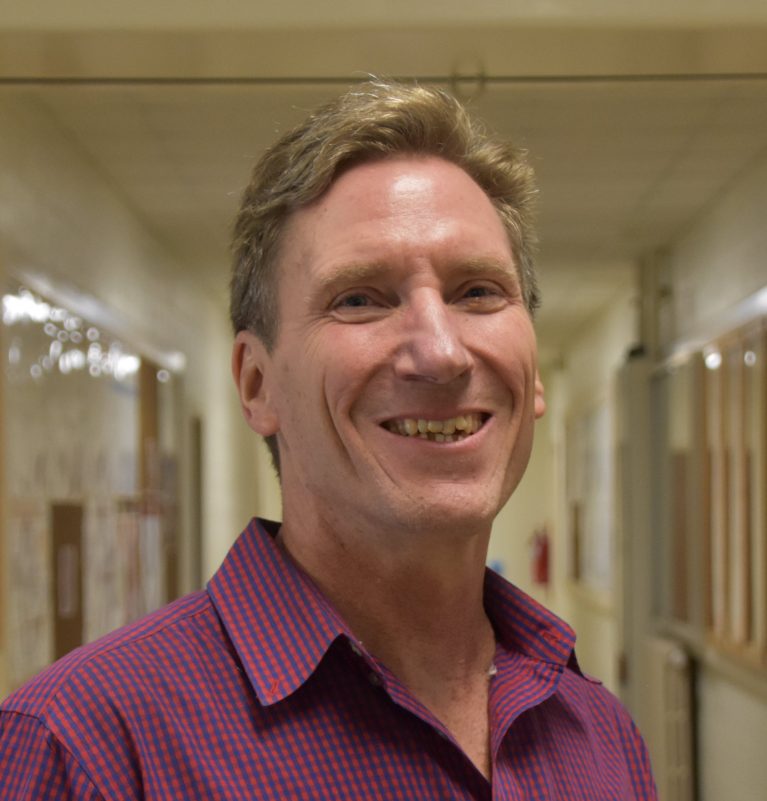
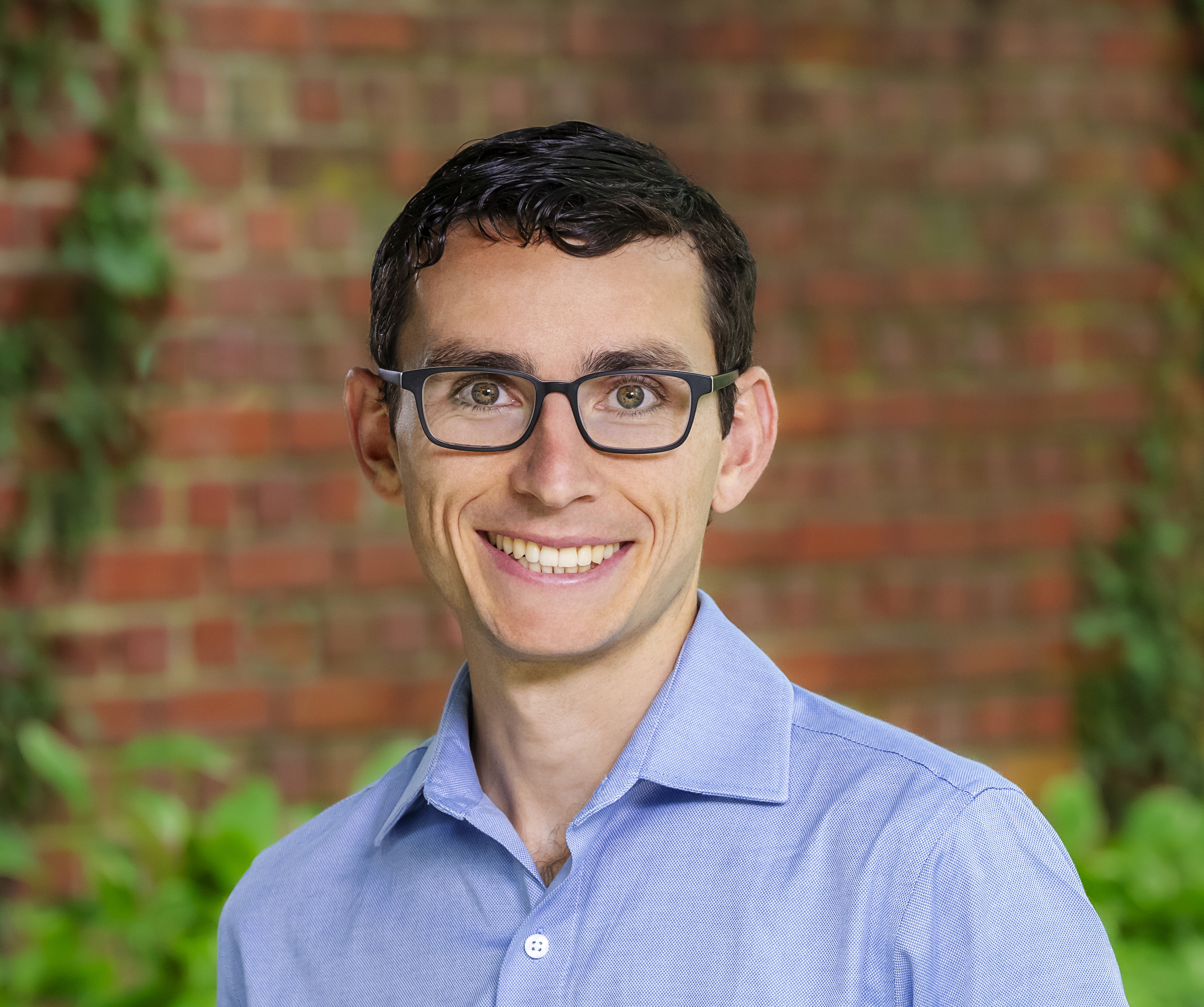
Mark S. Handcock is a Distinguished Professor in the Department of Statistics and Data Science at the University of California, Los Angeles (UCLA), where he leads research at the intersection of statistical methodology and applied problems in social sciences, epidemiology, and environmental science. His work bridges theoretical statistics with real-world challenges through innovative methodological development. His primary research interests encompass statistical models for social networks, network inference, methodology for hard-to-reach population surveys, spatial processes, demography, and environmetrics. Handcock has pioneered advances in exponential-family random graph models (ERGMs) and developed foundational R packages like ergm and tergm within the statnet suite, enabling sophisticated network analysis across disciplines. Analysis of his recent publications (2023-2025) reveals three dominant research thrusts: (1) Antarctic sea ice modeling using Bayesian reconstruction and temporal variability analysis, (2) epidemiological modeling of infectious disease transmission dynamics (particularly COVID-19), and (3) methodological innovations in network inference and causal analysis over stochastic networks. His work consistently integrates advanced computational statistics with domain-specific applications in climate science, public health, and social systems.
Patrick Brown is an Associate Professor at the University of Toronto , affiliated with the Department of Statistical Sciences and cross-appointed to the Centre for Global Health Research and St. Michael's Hospital . His research focuses on spatio-temporal data modeling , Bayesian inference , and non-parametric methods for spatial epidemiology and environmental sciences. Fields of Interest : Spatial Statistics, Cancer Statistics, Statistical Software Education : PhD from University of Lancaster His methodological work encompasses Bayesian inference for non-Gaussian spatial data, Gaussian Markov random fields, and computational techniques like INLA and MRA. Applied research themes include disease mapping, environmental risk assessment, and public health surveillance using real-world data sources such as electronic health records and wastewater monitoring . He has developed key R packages (mapmisc, geostatsp, diseasemapping) supporting spatial statistical applications. Current collaborative projects span diverse fields: Ultra-diffuse galaxy detection with astrophysical applications Multi-pollutant mortality studies in Canadian cities SARS-CoV-2 seropositivity tracking Homelessness population estimation using EHR Geospatial cancer risk tools for Nova Scotia His work bridges statistical innovation with global health challenges , emphasizing computationally efficient solutions for large-scale spatiotemporal datasets.
Keith A. Brown is an Associate Professor in Mechanical Engineering at Boston University's College of Engineering with additional appointments in Materials Science & Engineering and Physics. He serves as Associate Chair for Graduate Programs in ME and leads the interdisciplinary KABLab research group. Education: PhD, Harvard University Dr. Brown's research centers on hierarchical soft matter systems including polymers and smart fluids. His group develops innovative approaches to accelerate materials research through nanocombinatorics , autonomous experimentation , and scanning probe lithography . Key focus areas include connecting nanoparticle properties to bulk smart fluid behavior, designing 3D-printed structures with programmed mechanics, and creating self-driving laboratories for materials discovery. His recent publications (2024-2025) demonstrate a strong emphasis on autonomous experimentation systems integrating machine learning with physical research. This work spans energy-absorbing foam design, nanoscale fluid manipulation, and physics-informed modeling for mechanical systems, establishing new paradigms in accelerated materials development. Scientific Awards: The Early Career Research Excellence Award, College of Engineering, 2021 Professor of the Year, Mechanical Engineering, 2020 Frontiers of Materials Award, The Minerals Metals and Materials Society (TMS), 2020 Dean’s Catalyst Award (2018) Dean’s Catalyst Award (2020) Moorman-Simon Interdisciplinary Career Development Professor, 2016 Dr. Brown teaches undergraduate courses including Fluid Mechanics (ME 303), Introduction to Materials (ME 306), and Nanomanufacturing (ME/MS 576). His research is supported by: Federal Grants : AFOSR MURI, NSF Nanomanufacturing, ACS Petroleum Research Fund Foundations : Gordon and Betty Moore Foundation Industry : Google Faculty Research Award University : BU Dean's Catalyst Award, Nanotechnology Innovation Center The KABLab employs interdisciplinary teams to develop novel instrumentation for hierarchical soft matter research, with particular expertise in autonomous experimentation platforms that combine scanning probe techniques with machine learning for accelerated materials discovery.
Sebastijan Dumancic is an Assistant Professor at Delft University of Technology, focusing on neuro-symbolic AI through program synthesis and probabilistic programming. He leads the RAIL lab and collaborates with institutions like Harvard, MIT, and CNRS. His research bridges symbolic AI and machine learning, applying program synthesis to scientific discovery, transportation, and robotics. He holds an FWO-funded PhD from KU Leuven and has participated in initiatives like ELLIS and the Symbolic Computation and Machine Learning Initiative. Program synthesis Probabilistic programming Neuro-symbolic AI Constraint-based learning His recent articles highlight advancements in program synthesis, neuro-symbolic integration, and constraint satisfaction. Projects like Find2Fix and Intelligent Greenhouse Horticulture (funded by NWO) demonstrate practical applications. ELLIS Membership University Teaching Qualification He supervises numerous MSc and PhD students in projects involving logic programming, program synthesis, and probabilistic modeling. Active in workshops and symposia, he contributes to neuro-symbolic AI and scientific discovery.
Denise Esserman is a Professor of Biostatistics at the Yale School of Public Health, where she joined the faculty in 2014. She is a member of the Yale Center for Analytical Sciences and collaborates with multiple departments at the Yale School of Medicine, including the Clinical and Translational Science Award Program, Patient-Centered Outcomes Research Institute, and the Cancer Center. Her research focuses on methodological aspects of clustered randomized trials and sample size calculations. Education: PhD in Biostatistics from Columbia University (2006) MS in Statistics from University of Georgia (2001) Dr. Esserman's research interests span several critical areas in biostatistics and public health methodology. She specializes in clustered randomized trials, with particular expertise in understanding how intraclass correlation coefficients (ICC) and other factors impact sample size calculations. Her work extends to longitudinal studies methodology, randomized controlled trial design, and sampling techniques. She has contributed significantly to statistical methods for clinical trials, healthcare data analysis, and public health research. Her interdisciplinary approach bridges theoretical statistics with practical applications in healthcare settings. Analysis of Dr. Esserman's recent publications reveals a strong focus on methodological innovations in clinical trial design and analysis, particularly for cluster-randomized trials. Her work spans healthcare applications including fall injury prevention in elderly populations, opioid use disorder treatment in international settings, pain management for hemodialysis patients, and validation of medical coding algorithms. She frequently employs advanced statistical techniques including Bayesian methods, mediation analysis, and methods for handling clustered data. Her research demonstrates a consistent commitment to improving the rigor and applicability of statistical methods in public health and clinical research. Dr. Esserman serves as a reviewer for several prestigious journals including the American Journal of Epidemiology, Arteriosclerosis, Thrombosis and Vascular Biology; Statistics in Biopharmaceutical Research; Clinical Trials; and Obesity. As a member of the Yale Center for Analytical Sciences, Dr. Esserman collaborates with numerous researchers across Yale University. Her current projects include the EQuIP trial (HIC ID 2000033355), where she serves as Sub Investigator with primary completion date of 08/31/2027, focusing on mental health and behavioral research for sexual minority women.
David M. Higdon is a Professor and Department Head of the Department of Statistics at Virginia Tech within the College of Science. He specializes in Bayesian statistical modeling of environmental and physical systems, focusing on integrating physical observations with computer simulations for prediction and inference. Previously, he spent 14 years at Los Alamos National Laboratory as a scientist and group leader in the Statistical Sciences Group. Education: Ph.D. in Statistics, University of Washington, 1994 M.A. in Mathematics, University of California San Diego, 1989 B.A. in Mathematics, University of California San Diego, 1987 Research Interests: Higdon’s work spans space-time modeling , inverse problems in hydrology and imaging , statistical modeling in ecology and environmental science , and multiscale models . He develops methods for parallel processing in posterior exploration , statistical computing , and Monte Carlo simulations . His research addresses critical challenges in uncertainty quantification (UQ), including climate modeling, nuclear density functional theory, and geophysical imaging. Publications Trends: His recent articles emphasize Bayesian methodologies applied to complex systems, such as climate forecasting, materials science, and cosmology. A recurring theme is the development of emulators and surrogate models to handle computationally intensive simulations. Awards: Fellow of the American Statistical Association Advising & Grants: While no specific advisees are listed, Higdon has contributed to interdisciplinary collaborations in UQ and statistical modeling. His work has been supported by grants from agencies such as the National Science Foundation and Department of Energy. Labs/Teams: He leads the Statistics Department’s efforts in UQ and computational statistics, fostering collaborations across engineering, environmental science, and physics.
Elliot J. Crowley is a Senior Lecturer (Associate Professor) at the School of Engineering, University of Edinburgh, where he co-leads the Bayesian and Neural Systems research group. He serves as Programme Manager for Electronics and Electrical Engineering and has developed a comprehensive machine learning course for 4th year electronic engineering students at the University of Edinburgh. Dr. Crowley's research focuses on simplifying machine learning systems with specific expertise in automated machine learning, low-resource deep learning, and engineering applications of machine learning. His work bridges theoretical advances with practical implementations, particularly in neural architecture search and computer vision applications, with emphasis on making complex ML systems more accessible and efficient. His recent publications demonstrate significant contributions to neural architecture search spaces, training-free instance segmentation, and state space models for visual recognition, appearing in top venues including NeurIPS 2024, BMVC 2024, and AutoML 2025. These works show a consistent focus on developing practical ML solutions that can operate effectively in resource-constrained environments. Selected awards and grants: EPSRC New Investigator Award Investigator on the dAIEdge Horizon Network Co-investigator on the EPSRC AI Hub for Causality in Healthcare AI Dr. Crowley currently supervises several researchers including Postdoc Linus Ericsson and PhD students Miguel Espinosa, Shiwen Qin (with Shay Cohen), and Cameron Barker (with Henry Gouk). His former students include Chenhongyi Yang (now a Research Scientist at Meta) and Jack Turner (now a Software Engineer at Qualcomm). He actively seeks new PhD students with strong research proposals and available funding for UK students through CDTs. His research group, the Bayesian and Neural Systems group, focuses on developing practical machine learning solutions that can be deployed in resource-constrained environments, with particular emphasis on making complex ML systems more accessible to engineers and practitioners.
Dr. Robert Lieck is an Assistant Professor in the Department of Computer Science at Durham University. His research focuses on interdisciplinary applications of machine learning (ML) and artificial intelligence (AI), emphasizing interpretability, robustness, and ethical considerations. He explores computational models in music cognition, communication dynamics, and medical image analysis, aiming to bridge theory and practical tools for domain experts. Before Durham, he was a postdoctoral researcher at EPFL's Digital and Cognitive Musicology Lab (2018–2021) and earned his PhD from the Learning and Intelligent Systems Lab in Stuttgart/Berlin (2012–2017). His work combines probabilistic modelling, neuro-symbolic systems, and reinforcement learning to address challenges in music analysis, autonomous decision-making, and medical robotics. Key research themes include: Music structure and perception modelling Symbol emergence in multi-agent communication Ethical AI and autonomous systems governance Medical imaging applications (CT/MRI analysis) Recent projects involve developing patient-agnostic diabetes management systems using deep reinforcement learning and surgical workflow anticipation through graph learning algorithms. He actively contributes to conferences such as NeurIPS, ISMIR, and AAAI, with publications spanning music informatics, robotics, and biomedical engineering. Current supervision includes four postgraduate students focusing on AI applications in healthcare, music technology, and autonomous systems. His work bridges technical innovation with societal impact, addressing challenges in policy, legislation, and interdisciplinary collaboration.
Michael C. Hughes ("Mike") is an Assistant Professor in the Department of Computer Science at Tufts University's School of Engineering, where he develops statistical machine learning methods for healthcare applications. His work focuses on building predictive models that extract actionable insights from complex clinical data, including electronic health records and medical imaging. PhD, Computer Science, Brown University (2016) MS, Computer Science, Brown University (2012) BS, Computer Science, Franklin W. Olin College of Engineering (2010) Research interests center on: Bayesian hierarchical models for documents, sequences, and medical images Optimization algorithms for approximate inference Model fairness and interpretability in clinical contexts Semi-supervised learning for medical diagnostics Recent publications demonstrate these capabilities through applications in cardiovascular disease diagnosis, opioid overdose forecasting, and ICU risk prediction. His lab emphasizes reproducibility through open datasets like TMED-2 and open-source tools like BNPy. Grants include NIH R01 funding for heart valve disease detection, NSF CAREER support for model interpretability, and NSF GCR funding for educational uncertainty research. Scientific awards include: NIH R01 Award (PI) for heart valve disease detection (2025) NSF CAREER Award (2024) NSF GCR Grant (2024) Best Poster Award at Time Series Workshop (ICML 2021) Top 10% Reviewer Awards at AISTATS (2023, 2022) Teaching activities include courses on Bayesian Deep Learning, Introduction to Machine Learning, and Statistical Pattern Recognition. He previously served as postdoctoral fellow at Harvard SEAS.
Christopher G. Brinton is the Elmore Associate Professor of Electrical and Computer Engineering at Purdue University, where he leads the ION research lab. He is affiliated with the Department of Electrical and Computer Engineering in the College of Engineering at Purdue University's West Lafayette campus. Dr. Brinton received his PhD from Princeton University, where he was previously the Associate Director of the EDGE Lab and a Lecturer of Electrical Engineering. His research focuses on the intersection of networking, communications, and machine learning, with particular emphasis on Fog computing systems, the Internet of Things (IoT), NextG Wireless, and social learning networks. His research integrates foundational techniques including convex and non-convex optimization, machine learning, and signal processing to address challenges in networked intelligent systems. The ION lab under his leadership develops both theoretical frameworks and practical implementations for next-generation networking solutions, with strong industry collaborations including Qualcomm, Nokia, Intel, Cisco, Dell, and Ericsson. Recent publications reveal a strong trend toward federated learning, decentralized algorithms, and edge intelligence, with significant contributions to model partitioning, communication-efficient learning, and robust network architectures. His work increasingly bridges traditional communication theory with modern machine learning techniques to solve emerging challenges in distributed networked systems. NSF CAREER Award ONR Young Investigator Program (YIP) Award DARPA Young Faculty Award (YFA) AFOSR Young Investigator Program (YIP) Award Intel Rising Star Faculty Award (RSA) Dr. Brinton teaches several courses including ECE 647: Performance Modeling of Computer Communication Networks, ECE 301: Signals and Systems, and ECE 547: Introduction to Computer Communication Networks. He has co-authored the book 'The Power of Networks: Six Principles That Connect Our Lives' and taught three Massive Open Online Courses (MOOCs) with over 400,000 cumulative students. While not currently actively recruiting students, he remains open to connecting with highly motivated individuals. Dr. Brinton leads the ION (Intelligent Optimization and Networking) research lab, which focuses on creating theoretical foundations and practical implementations for next-generation networked systems. The lab has recently published significant work on 6G taxonomy in collaboration with major industry partners and continues to push boundaries in distributed learning and network optimization.
Qixuan Chen, PhD, is an Associate Professor of Biostatistics at Columbia University Mailman School of Public Health. She obtained her PhD from the University of Michigan in 2009, with dual expertise in biostatistics and survey sampling. Education: BA in Economics (Nankai University), MS in Applied Statistics (Bowling Green State University), PhD in Biostatistics (University of Michigan) Her research focuses on advanced statistical methods for complex surveys, causal inference, and handling missing data. Key contributions include developing Bayesian predictive inference frameworks using machine learning and regularized regression for integrating administrative records with survey samples. Recent publications emphasize environmental health applications, including measurement error correction for immunoassays and variable selection in multiply imputed data. Her work bridges biostatistics with computational methods for data integration. Scientific Awards: NIEHS Career Development Award, Teaching Award, Calderone Research Prize, Bryant Scholarship, Hutzinger Award She actively contributes to public health through dashboards like the New York City Neighborhoods COVID-19 tracker and PRIME radiology diagnostics platform. Grants such as R01ES035784 support her ongoing work in exposure-response analysis.
Benjamin Eysenbach leads the Princeton Reinforcement Learning Lab, where he designs algorithms that enable artificial intelligence systems to learn intelligent behaviors through trial-and-error, specializing in self-supervised methods that eliminate the need for human labels. He joined Princeton after completing his PhD in machine learning at Carnegie Mellon University under Ruslan Salakhutdinov and Sergey Levine, supported by the NSF Graduate Research Fellowship and Hertz Fellowship. His research bridges fundamental machine learning principles with practical applications in robotics and decision-making systems. Eysenbach's research focuses on developing self-supervised reinforcement learning algorithms that enable autonomous skill acquisition without external rewards. His investigations span contrastive learning methods, temporal abstraction techniques, and scalable architectures for goal-conditioned behaviors. These innovations aim to create more efficient and generalizable learning systems that can discover useful behaviors from unlabeled experience. Eysenbach's publications demonstrate consistent advancement in self-supervised RL methodologies, with recent work focusing increasingly on temporal abstraction and representation learning theory. His research shows progression from foundational contrastive RL frameworks toward more sophisticated analyses of generalization properties and uncertainty quantification. The 2025 works indicate expanding investigation into hierarchical control, probabilistic alignment, and hyper-deep network architectures. Eysenbach has been recognized with prestigious awards including the Hertz Fellowship and NSF Graduate Research Fellowship, supporting his doctoral research in self-supervised RL methodologies. His work has been presented at top machine learning conferences including NeurIPS, ICML, and ICLR. As director of the Princeton Reinforcement Learning Lab, Eysenbach oversees research initiatives in self-supervised RL, including projects on intention-conditioned modeling, horizon generalization, and contrastive learning frameworks. He has secured funding from the Princeton AI Lab to study neural correlates of temporal contrast in decision-making. Eysenbach teaches courses in reinforcement learning and has developed new benchmarks like JaxGCRL to accelerate research in goal-conditioned RL.
Ryan Giordano is an Assistant Professor in the Department of Statistics at the University of California, Berkeley. He holds a PhD in Statistics from UC Berkeley (2019), advised by Michael Jordan, Tamara Broderick, and Jon McAuliffe, an MSc in Econometrics and Mathematical Economics from the London School of Economics (2009), and undergraduate degrees in Mathematics and Theoretical/Applied Mechanics from the University of Illinois at Urbana-Champaign. Prior to academia, he worked as an engineer at Google and HP and served as a Peace Corps volunteer in Kazakhstan. His research focuses on variational methods , Bayesian robustness , sensitivity analysis , and statistical computing , with applications in machine learning, environmental science, and astronomy. He is particularly known for developing scalable Bayesian inference techniques and quantifying the robustness of statistical models to data perturbations. Giordano’s recent work includes studies on Laplace approximation accuracy, MCMC sensitivity to data removal, and robustness metrics for differential expression analysis. He has contributed to open-source statistical software and collaborates with Tamara Broderick’s group at MIT on postdoctoral work (pre-2019 position). His academic trajectory combines theoretical innovation with practical applications, emphasizing reproducibility and computational efficiency in statistical methodology.
Volker J Schmid is a Professor of Bayesian Imaging and Spatial Statistics at the Department of Statistics, Ludwig Maximilian University of Munich. He leads the Bayesian Imaging and Spatial Statistics group and contributes to interdisciplinary initiatives like the Munich Center of Machine Learning. His work bridges statistical theory with applications in medical imaging and biology. PhD in Statistics (2004), LMU Munich Diploma in Statistics (2000), LMU Munich Abitur, Joseph-von-Fraunhofer-Gymnasium Cham (1993) His research focuses on Bayesian computational methods for high-dimensional data, particularly in medical imaging (MRI, DCE-MRI) and biological microscopy (e.g., 3D nuclear architecture analysis via super-resolution microscopy). Key applications include disease mapping , image segmentation , and spatio-temporal modeling . His software tools (e.g., nucim , bioimagetools , BAMP ) enable quantitative analysis in nuclear imaging and age-period-cohort modeling. His 15 most recent publications span Bayesian modeling for medical imaging , spatio-temporal epidemiology , and computational biology . Topics include co-localization metrics in fluorescence microscopy, nuclear architecture analysis, and dynamic Bayesian frameworks for MRI data. Collaborations extend to neuroimaging, oncology, and nuclear biology.
Tridas Mukhopadhyay is the Deloitte Consulting Professor of e-Business at Carnegie Mellon University's Tepper School of Business, where he has served on the faculty since 1986. His academic journey at CMU progressed from Instructor of Information Systems (1986-1987) to Assistant Professor (1987-1993), Associate Professor (1993-1997), Professor (1998-present), and Deloitte Consulting Professor of e-Business (2000-present). He also served as Director of the MS in Electronic Commerce program from 1999-2004. Ph.D. in Computer and Information Systems, University of Michigan–Ann Arbor, 1987 M.B.A. in Computer and Information Systems, Indian Institute of Management Calcutta, 1981 B. Tech. in Electrical Engineering, Indian Institute of Technology Kharagpur, 1978 Professor Mukhopadhyay's research spans multiple critical areas in information systems and technology management. His work on strategic IT use examines how organizations derive business value from information technology investments. He has conducted extensive research on business-to-business commerce, particularly focusing on e-procurement systems, web-based marketplaces, and electronic intermediation models. His cybersecurity research investigates the economic aspects of cyber security, including liability mechanisms and patch release strategies. In software engineering, he has studied productivity, quality metrics, and offshore software development contracts. His most recent publications reveal several key trends in his research trajectory. There's a growing focus on digital platform economics, examining advertising models, virtual currency systems in gaming, and sharing economy dynamics. His work increasingly incorporates behavioral aspects, studying how users respond to personalized content and how backers exert control in crowdfunded projects. Methodologically, his research employs sophisticated analytical approaches including hierarchical Bayesian models, structural equation modeling, and natural experiment designs. CART Research Frontier Award, Carnegie Mellon, 2005 Distinguished Ph.D. Alum, Michigan Business School, 2004 Best Paper, International Conference on Information Systems, 2001 Best Paper, MIS Quarterly, 1995 Xerox Research Chair, Tepper School of Business, 1988-1989 Information Systems Society Distinguished Fellow, 2012 Professor Mukhopadhyay has served on numerous editorial boards including Information Systems Research (1994-2003), Management Science (1999-2003), and MIS Quarterly (1997-1999), demonstrating his significant contributions to the field. His consulting work with major organizations including Alcoa, Chrysler, Ford, General Motors, IBM, and governmental agencies like the United States Post Office and Pennsylvania Turnpike has provided practical insights that inform his academic research. He has been actively involved in university governance through committee service including the Business Technology Faculty Search Committee and the CMU Faculty Senate. His research has been supported through various industry partnerships and academic grants, though specific grant details aren't provided in the source material. His teaching focuses on Business Computing and Strategic IT courses, reflecting his expertise in both foundational information systems concepts and strategic applications of technology in business contexts.