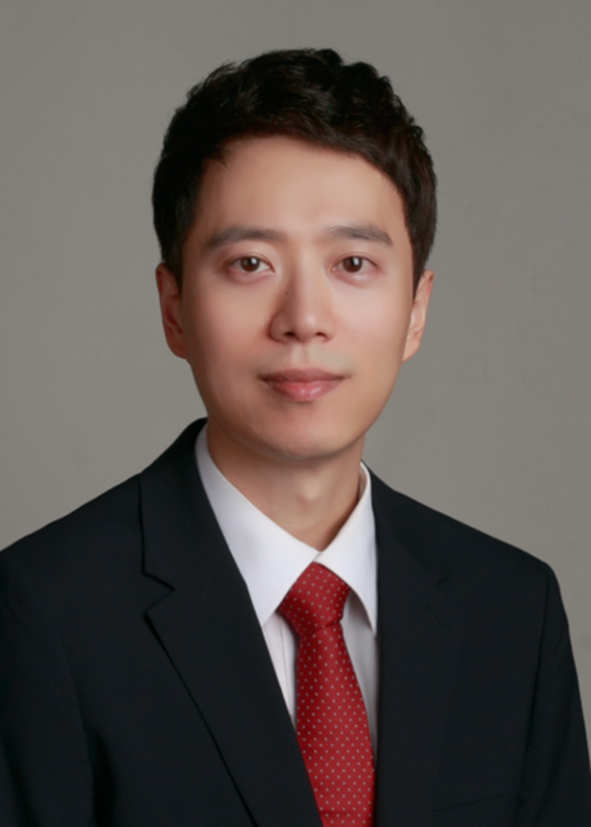
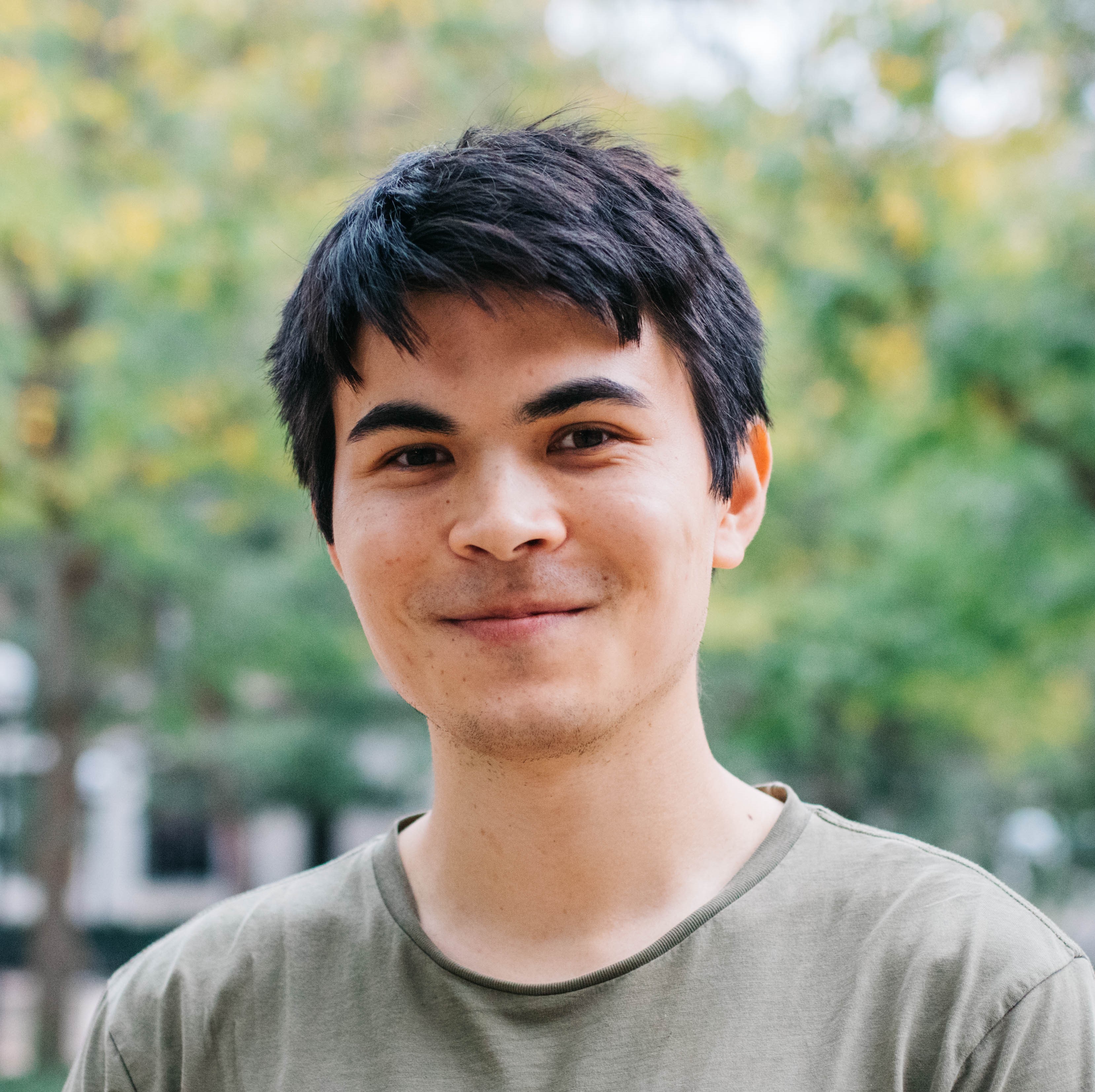
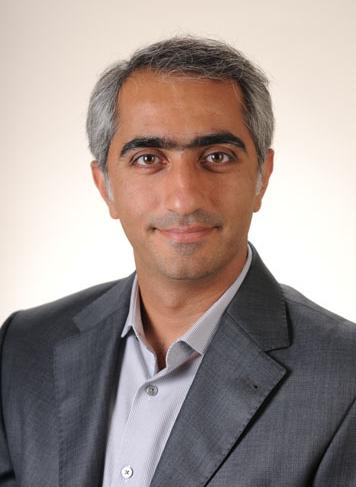
Dan Cooley is a Professor and Graduate Director in the Department of Statistics at Colorado State University. He is affiliated with the College of Natural Sciences and focuses on extreme value analysis, particularly tail dependence modeling and environmental risk assessment. Extreme value theory Multivariate extremes Heavy-tailed phenomena Spatial statistics Meteorological/environmental applications His research has been recognized with awards including ASA Fellow (2023), Distinguished Achievement Award from the ASA Section on Statistics and the Environment (2023), and the College of Natural Sciences Professor Laureate (2017-2019). Collaborations include work with the National Center for Atmospheric Research and Lawrence Berkeley National Labs. cooleyd@rams.colostate.edu Office: Statistics 217, Fort Collins, CO 80523-1877
Dr. James Albert Foster is a Professor of Mathematics and Statistics in the College of Arts and Sciences at Bowling Green State University (BGSU), honored as Distinguished University Professor in 2018 for his lifetime contributions to statistics and the university. Education: Ph.D. in Statistics, Purdue University Research Interests: An internationally renowned expert in Bayesian statistics, Foster pioneered the application of statistical methods to sports analytics—particularly baseball—revolutionizing quantitative literacy in athletics. His work bridges theoretical statistics, computational methods (notably R software development), and innovative pedagogy, with seminal contributions to Bayesian regression and hierarchical modeling that transformed statistical practice beyond academia. Scientific Awards: Distinguished University Professor (BGSU, 2018) ASA Founders Award (2015) Fellow of the American Statistical Association (2000) Grants & Academic Leadership: Secured $800,000 from NSF and Ohio state funds to establish BGSU's undergraduate Data Science major, co-developing courses like Computing with Data and Statistical Programming. As departmental undergraduate coordinator, he authored four foundational textbooks and expanded graduate offerings including Bayesian Statistical Inference. His editorial leadership spans The American Statistician , Journal of Quantitative Analysis of Sports , and ASA committees focused on education and sports statistics. Professional Impact: Foster's 14 books and 104 journal articles (7,000+ citations) catalyzed Bayesian methods' adoption across scientific disciplines. His blog and R-focused publications democratized sports data analysis, while workshops and curriculum reforms elevated statistics education from high school to graduate levels globally.
YU MIN YEN is a Professor at the Department of International Business, College of Commerce, National Chengchi University (NCCU), Taiwan. He has held academic positions at NCCU since 2014, progressing from Assistant Professor to Associate Professor, and since February 2025, to full Professor. His research and teaching focus on Financial Economics and Econometrics. Education: Ph.D. in Finance, London School of Economics and Political Science (2006–2012) M.Sc. in Finance, London School of Economics and Political Science (2005–2006) B.A. in Economics, National Taiwan University (1993–1998) Research Interests: His research spans a wide range of topics in financial econometrics, including forecasting macroeconomic variables, financial risk modeling, portfolio optimization, and the application of machine learning techniques in economic data analysis. He is particularly known for his work on quantile and expectile forecasting, robust estimation under model uncertainty, and the use of derivative-implied information for policy and investment decisions. His recent projects emphasize integrating big data analytics into inflation forecasting and developing robust methods for estimating treatment effects in the presence of endogeneity and heavy-tailed distributions. Scientific Awards: 資深優良教師 (10年) – National Chengchi University (2024) 學術研究優良獎 – National Chengchi University (2024, 2017) 國科會研究獎勵 – Ministry of Science and Technology (2021, 2019, 2018) Research Funding & Leadership: He has served as Principal Investigator on multiple three-year grants from Taiwan’s National Science and Technology Council (MOST), including: 「使用機器學習之分布中介處裡效果的穩健估計」(2023–2026) 「條件尾端平均處裡效果在有內生性之下估計方法之探究」(2021–2023) 「FZ損失函數之應用: 預測風險衡量指標及其他用途」(2019–2021) These projects reflect his commitment to advancing statistical methodologies for real-world economic and financial problems.
Marcus Hamilton is an Associate Professor in the Department of Anthropology at the University of Texas at San Antonio's College of Liberal and Fine Arts. His research explores human-environment interactions across multiple scales, focusing on hunter-gatherer societies and the evolutionary principles underlying human ecological diversification. Employing interdisciplinary approaches combining anthropology, ecology, and mathematical modeling, he investigates energy flows, information processing, and nonlinear dynamics in human systems. Educational Background: Ph.D. in Anthropology, University of New Mexico (2008) M.S. in Anthropology, University of New Mexico (2002) B.Sc. in Archaeology, University College London (1998) Hamilton's work integrates comparative analyses across cultures and species, with particular emphasis on Paleolithic North America and Amazonian indigenous societies. He applies Bayesian theory, information theory, and machine learning to archaeological datasets, developing predictive models for understanding human adaptation and cultural evolution. Recent research trends show increasing focus on network analysis of lithic technologies, scaling laws in sociopolitical complexity, and remote sensing applications for studying isolated populations. His 2024-2025 publications demonstrate a strong emphasis on interdisciplinary methodologies bridging ecological theory and anthropological practice. Scientific Awards: President's Distinguished Research Achievement Award (2020) Hamilton leads field research at the Mockingbird Gap Clovis site in New Mexico, investigating early Paleoindian adaptation to North American landscapes. His work combines empirical data collection with mathematical theory-building to explore fundamental principles of human ecological evolution.
Paul Bürkner is a Full Professor of Computational Statistics at TU Dortmund University , focusing on probabilistic (Bayesian) methods. His research sits at the intersection of statistics and machine learning, with applications across quantitative sciences. Key Roles : Developer of the brms R package, member of the Stan and BayesFlow development teams. Research Pillars : Bayesian inference, uncertainty quantification, amortized workflows, simulation-based inference, and probabilistic programming. His lab advances methods for prior specification, model evaluation, and scalable inference, collaborating on applications from cognitive science to ecology. Recent work emphasizes neural superstatistics and BayesFlow for efficient mixture and multilevel models. Students and researchers are encouraged to reach out for collaboration or thesis opportunities. Key Labs/Teams : BayesFlow Development Team Stan Project ELLIS Network (European Laboratory for Learning and Intelligent Systems)
Pierre Klintefors is a Researcher at the Department of Philosophy, Lund University, affiliated with the Joint Faculties of Humanities and Theology. His work bridges theoretical neuroscience, cognitive science, and robotics. Room: LUX:B476 Visiting Address: Helgonavägen 3, Lund Email: pierre.klintefors@lucs.lu.se Research Focus: Pierre investigates computational aspects of the body schema —an agent’s internal representation of its body. He employs frameworks like predictive processing and active inference , which hypothesize that the brain minimizes sensory prediction errors via hierarchical Bayesian inference. His models are implemented on humanoid platforms to explore embodied robotics and theoretical neuroscience . Publications: His work spans robotics , Bayesian statistics in psychology, and pattern processing in social cognition. Current projects include his dissertation on Action-Oriented Body Perception (2023–2027), and participation in public robotics events like Robotveckan 2024 . Contact: Mobile: +46 70 942 84 58 | Postal Address: Box 192, 221 00 Lund | Internal Post Code: 30
Jan Drugowitsch is an Associate Professor at Harvard Medical School's Department of Neurobiology, focusing on computational neuroscience and neural implementation of reasoning under uncertainty . His lab explores how the nervous system processes ambiguous information through decision-making and navigation studies. Harvard Medical School affiliation Member of academic networks in neurobiology and cognitive science Research interests include neural network dynamics , Bayesian inference , and cognitive modeling of uncertainty. His work combines machine learning , physics , and neuroscience to develop theories of neural information processing. Recent trends in his publications emphasize reinforcement learning , heterogeneous neural tuning , and navigation under uncertainty using closed-loop collaborations with experimentalists. Key sub-fields include hippocampal spatial tuning , distributional reinforcement learning , and neural population dynamics . His lab, located in the Boston Longwood Medical Area, maintains affiliations with both MIT and Harvard Cambridge campus researchers. The theoretical focus is complemented by NIH funding acknowledgments in his social media activity.
Hyun Oh Song is an Associate Professor in the Department of Computer Science and Engineering at Seoul National University , focusing on machine learning, combinatorial optimization, and algorithms. Previously, he was a Research Scientist at Google Research and a Postdoctoral Fellow at Stanford University . Education : Ph.D. in Computer Science (2014) from UC Berkeley , B.S. from Hanyang University Research Interests : Solving combinatorial problems in AI, with applications in neural network compression, adversarial robustness, and reinforcement learning. Teaching : Courses include Deep Learning, Machine Learning, and Probability & Computing at SNU. His startup DeepMetrics raised $2.2M in combined VC and government funding. Scientific Awards : Samsung Lee Kun Hee Scholarship Foundation (5-year Ph.D. fellowship) Publications : 15 recent works span efficient CNN compression (ICML2022), adversarial attack mitigation (ICML2022), neural relation graphs for label noise detection (NeurIPS2023), and Co-Mixup data augmentation (ICLR2021).
Maximilian Jerdee is a Complexity Postdoctoral Fellow transitioning to an Omidyar Postdoctoral Fellow position at the Santa Fe Institute in September 2025. He completed his Ph.D. in Physics at the University of Michigan under Professor Mark Newman and was affiliated with the Center for the Study of Complex Systems. He holds a B.A. in Physics from Princeton University. Dr. Jerdee's research spans the intersection of physics, statistics, and network science, focusing on developing interpretable models to infer patterns in complex systems data. His work particularly emphasizes network structures including social networks and animal dominance hierarchies. He addresses conceptual and computational barriers in understanding complex systems, ensuring methodological tools provide unbiased assessments while developing new models aligned with mechanistic theories. His publication record shows strong expertise in information-theoretic approaches to network analysis, with significant contributions to mutual information applications in community detection. He has also established connections between game theory, social hierarchies, and thermodynamic concepts, while making notable contributions to theoretical physics and astronomical image processing. His research combines theoretical rigor with practical algorithmic implementations inspired by physical Monte Carlo and message-passing methods. At the Santa Fe Institute, Dr. Jerdee plans to advance his research from describing current network states to investigating the dynamic mechanisms behind observed structures, with interest in exploring methodological limitations and fundamental bounds of understanding complex systems.
Nadine KAFA is an Assistant Professor in Operations Management and Information Systems at KEDGE Business School , affiliated with the Supply Chain Center of Excellence . Her expertise spans supply chain sustainability, decision support systems, and business analytics. Education: PhD in Industrial Engineering, University of Paris 8 Her research focuses on multi-criteria decision-making in supply chains, with emphasis on food waste reduction , gender diversity in logistics , and carbon emission-compliance models . Recent work analyzes healthcare inventory pooling strategies and hierarchical forecasting for postal services. Key trends in her publications include integrating fuzzy logic with AHP/PROMETHEE for sustainable sourcing, and exploring how mobile technologies impact food waste behaviors. Her 2025 study on mail flow forecasting highlights interdisciplinary applications of operations research for societal benefit. She contributes to journals such as International Journal of Forecasting and International Journal of Logistics Management , often collaborating with A. JAEGLER and W. KLIBI. Current projects appear to bridge urban logistics and environmental policy compliance .
Dr. Richard Morey is a Reader in Psychology at Cardiff University , specializing in statistical inference, cognitive modeling, and the philosophy of statistics. His research focuses on improving statistical understanding and practice in scientific research, with particular emphasis on Bayesian methods and statistical cognition. Key research areas: Applied Bayesian analysis, Cognitive psychology, Statistical methodology Teaching: Undergraduate and postgraduate statistics, Research methods, Bayesian workshops Research highlights include developing open-source statistical software ( BayesFactor ), creating tools for working memory capacity estimation, and pioneering Bayesian hypothesis testing methods. His work critically examines confidence interval interpretation, p-curve methodology, and meta-analytic practices. Recent publications demonstrate his contributions to Bayesian analysis in mixed models, ANOVA designs, and meta-research. He frequently collaborates with cognitive scientists and statisticians on projects spanning psychological theory, clinical research, and educational technology. Awards : Globally highly-cited scientist (2010-2019) Psychonomic Society Early Career Impact Award (2017) Dr. Morey actively supervises postgraduate research and contributes to open science initiatives. He provides statistical consulting and teaches research methods at both undergraduate and graduate levels.
Kamran Paynabar is the Fouts Family Chair and Professor at the H. Milton Stewart School of Industrial and Systems Engineering at Georgia Institute of Technology . He specializes in Engineering-Driven Statistical Modeling , Statistical Learning Methods for Big Data Analytics , and Quality Engineering , with applications in Manufacturing Systems and Healthcare . B.S. and M.Sc. in Industrial Engineering from Iran University of Science and Technology and Azad University (2002, 2004) M.A. in Statistics and Ph.D. in Operations Engineering from the University of Michigan (2010, 2012) His research focuses on high-dimensional data analysis for system monitoring, diagnostics, and prognostics using semi-parametric and nonparametric approaches . Methodologies he develops address applications in automotive, aerospace, medical device manufacturing , and healthcare , including cardiac and orthopedic surgery analytics. Dr. Paynabar’s publications from 2016–2025 highlight trends in anomaly detection , tensor analysis , Gaussian process modeling , and active learning applied to photovoltaic systems , additive manufacturing , and smart grids . INFORMS Data Mining Best Student Paper Award Best Application Paper Award from IIE Transactions Wilson Prize for Manufacturing Systems Research POMS Best Paper Award Georgia Tech CETL/BP Teaching Excellence Award He has advised students like Xiaolei Fang (University of Florida), Hao Yan (Arizona State University), and Chitta Ranjan , with grants from the National Science Foundation (NSF) . His work emphasizes interdisciplinary collaboration , bridging industrial engineering , machine learning , and system optimization .
Ilan Strauss is an Honorary Senior Research Fellow at the UCL Institute for Innovation and Public Purpose (IIPP) and Visiting Associate Professor at the University of Johannesburg. He directs the AI Disclosures Project at the Social Science Research Council (SSRC) and previously led digital economy research at IIPP under Omidyar Network funding. Education: PhD in Economics, New School for Social Research (New York) MSc in Economics, SOAS University of London (First Class) Research Focus: Dr. Strauss specializes in digital market dynamics with emphasis on Big Tech's platform economics, AI governance, and algorithmic competition. His work integrates Bayesian modeling with firm-level data analysis to investigate innovation patterns, investment stagnation, and new theories of market harm. Current projects examine attention allocation mechanisms, AI disclosure frameworks, and industrial policy implications. Publication Trends: Recent articles (2021-2025) reveal concentrated expertise in algorithmic market power, AI governance gaps, and digital platform regulation. Methodologically, they combine economic theory with empirical case studies and Bayesian statistical approaches, frequently addressing antitrust implications of Big Tech's data practices. Grants & Leadership: Economic Security Project grant recipient for research on Big Tech's AI capability acquisitions Program Director of SSRC's AI Disclosures Project Former head of IIPP's digital economy research team Consulting & Service: Extensive consultancy for UNCTAD, African Development Bank, ILO, UNIDO, and SADC on industrial policy and investment frameworks. Previously taught macroeconomics at New York University and Rice University.
Saad Jbabdi is Professor of Biomedical Engineering at the University of Oxford, holding a Wellcome Trust Senior Research Fellowship. He serves as Head of Diffusion Analysis at FMRIB (Centre for Functional MRI of the Brain) within the Nuffield Department of Clinical Neuroscience and is a Lecturer in Engineering at St Hilda's College. His work pioneers advanced neuroimaging techniques for systems-level brain analysis. Professor Jbabdi's research spans diffusion MRI , brain connectivity modelling , and microstructure analysis . His lab develops mathematical frameworks for diffusion-weighted imaging while comparing in-vivo, ex-vivo, and histological techniques across humans and non-human primates. Key initiatives include human-macaque comparative anatomy, novel MR pulse sequence development, dynamic spectroscopy analysis, and individual variation modelling in brain function. Recent publication trends reveal intense focus on multi-modal integration of MRI, microscopy, and spectroscopy for connectome mapping. His group drives standardization in tractography (XTRACT protocols), cross-species neuroimaging, and computational models of neurodegeneration like tau progression. Work bridges engineering physics, neuroscience, and clinical applications in vision loss and neurodegenerative disorders. Scientific recognition includes: Wellcome Trust Senior Research Fellowship Royal Netherlands Academy of Arts and Sciences (KNAW) membership Funding support comes from: Wellcome Trust : Core fellowship and lab infrastructure Medical Research Council (MRC UK) : Projects on brain connectivity and microstructure He leads the FMRIB Diffusion Analysis group within Oxford's WIN Analysis Group, directing a team including Abivardi, Cottaar, Eichert, Howard, Li, Rafipoor, and Zheng. The lab leverages Oxford's advanced imaging facilities for projects like the BigMac dataset (macaque brain imaging) and Developing Human Connectome initiatives.
Rajesh P.N. Rao is the CJ and Elizabeth Hwang Professor in the Paul G. Allen School of Computer Science & Engineering and Department of Electrical & Computer Engineering at the University of Washington (UW), Seattle. He is also co-Director of the Center for Neurotechnology (CNT), Adjunct Professor in the Bioengineering department, and faculty member in the Neuroscience Graduate Program at UW. University of Washington, Seattle - CJ and Elizabeth Hwang Professor Co-Director - Center for Neurotechnology Adjunct Professor - Bioengineering department Neuroscience Graduate Program - Faculty member Paul G. Allen School of Computer Science & Engineering - Professor His research spans computational neuroscience, brain-computer interfaces, artificial intelligence, and the Indus script. He also studies classical Indian painting and explores the computational principles underlying the brain's remarkable ability to learn, process and store information. Recent publications include: 2024 - Sensory-Motor Theory of the Neocortex in Nature Neurosci 2024 - Dynamic Predictive Coding in PLoS Comp Bio 2024 - Active Predictive Coding in Neural Comp 2023 - Recursive Neural Programs in PNAS Nexus 2019 - BrainNet: A 'Social Network' of Brains in Nature Scientific Reports Dr. Rao has received numerous prestigious awards and fellowships: Guggenheim Fellowship IEEE Fellow award Fulbright Scholar award NSF CAREER award ONR Young Investigator Award Sloan Faculty Fellowship David and Lucile Packard Fellowship for Science and Engineering He is actively involved in advising and research initiatives, directing the Neural Systems Laboratory located in the Paul G. Allen Center for Computer Science and Engineering.