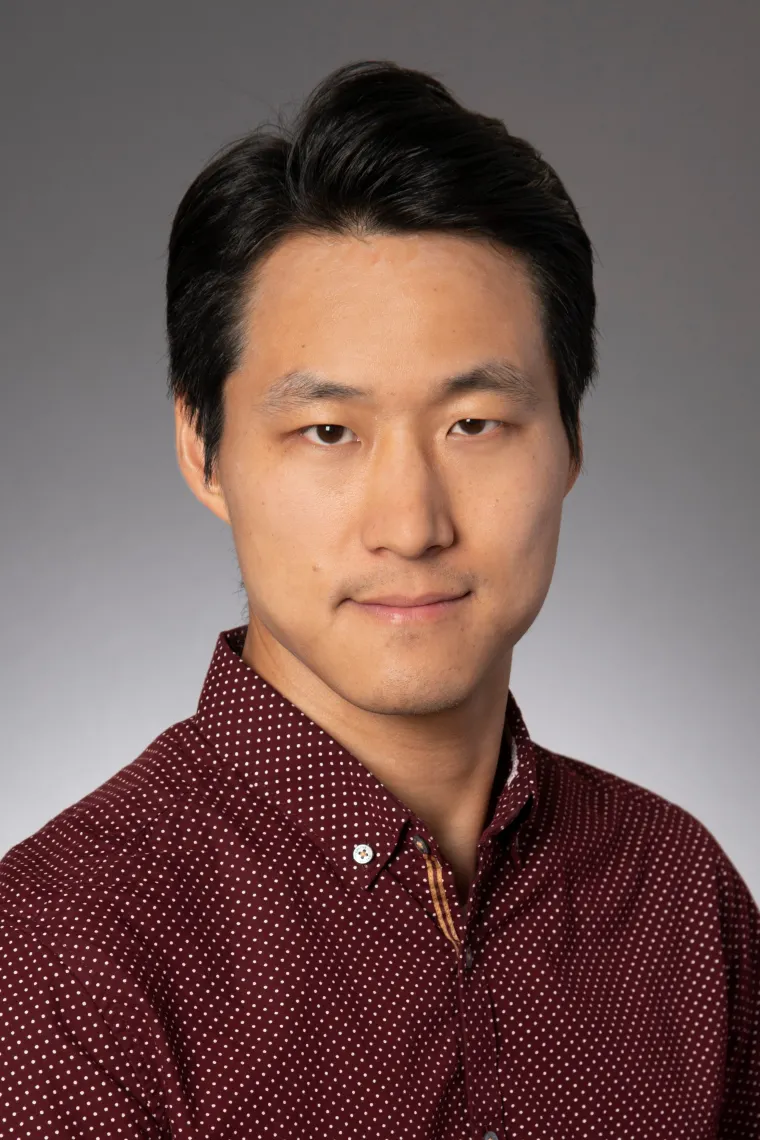
Kwang-Sung Jun is an Assistant Professor at the University of Arizona, Department of Computer Science. His research spans interactive machine learning, reinforcement learning, and learning theory, with a focus on multi-armed bandits, Bayesian optimization, and generalized linear models. Education : Ph.D. in Computer Science from the University of Wisconsin-Madison (2015). Research Trends : Kwang-Sung's recent work (2023-2025) emphasizes bandit algorithms with second-order bounds, adaptive experimentation, and PAC-Bayes frameworks. He explores low-rank structures in regression, explainable reward shaping, and environmental risk modeling via probabilistic assessments of postfire debris-flows. His publications often bridge theoretical guarantees (e.g., regret bounds) with practical applications in machine learning and environmental hazards. Expertise : Interactive machine learning Multi-armed bandits Confidence sequences Reinforcement learning Human-machine hybrid systems
Assoc Prof Ng Teng Yong is an Associate Professor at the School of Mechanical & Aerospace Engineering (NTU), specializing in numerical modeling and simulation. With a background as Research Manager at A*STAR Institute of High Performance Computing, his work spans materials science, nanotechnology, and aerospace engineering. Current focus on graphene-based desalination membranes Expertise in molecular dynamics simulations Investigates nanoscale fluid mechanics and structural dynamics Recent publications highlight advancements in energy-efficient electrodialysis, smart robotics, and nonlinear vibration analysis. His interdisciplinary approach integrates computational methods with experimental validation in additive manufacturing and soft material mechanics.
Ivan C. Christov is an Associate Professor of Mechanical Engineering at Purdue University's School of Mechanical Engineering in West Lafayette, Indiana. His research focuses on fluid dynamics, non-Newtonian fluid mechanics, and multiphase processes, with applications in biomedical engineering, micro/nanotechnology, and advanced materials. He leads the Transport: Modeling, Numerics & Theory laboratory. Education: Ph.D., Northwestern University, 2011 M.S., Northwestern University, 2008 M.S., Texas A&M University, 2007 S.B., Massachusetts Institute of Technology, 2005 Research Interests: Soft hydraulics, computational science, scientific machine learning, nonlinear waves, and fluid-structure interactions. His work spans theoretical modeling, numerical simulation, and experimental validation in complex fluid systems. Publications: Recent work includes studies on flow-rate pressure-drop relations in deformable microchannels, physics-informed neural networks for particle dynamics, and fluid-structure interaction in cerebral aneurysms. Themes include microfluidics, elastohydrodynamics, and rheological characterization of soft materials. Awards: Fulbright U.S. Scholar (2022) Outstanding Engineering Instructor (multiple recognitions) Richard P. Feynman Distinguished Postdoctoral Fellowship (2013) Labs/Teams: Directs the Transport laboratory at Purdue, focusing on interdisciplinary research in fluid mechanics and computational methods. Collaborates on biomedical fluid dynamics and advanced materials characterization.
Professor Nick Chater is a leading figure in the field of Behavioural Science, affiliated with the University of Warwick at Warwick Business School since 2010. He has held previous chairs in psychology at Warwick and UCL. His research spans cognitive and social foundations of rationality, with applications to business and public policy, and he has authored over 200 papers and six books. He is a fellow of the British Academy, Cognitive Science Society, and Association for Psychological Science. His research interests include cognitive science, behavioral economics, decision making, and computational psychology, with a focus on reasoning, language, and mathematical modeling of mental processes. He has been recognized with prestigious awards such as the Spearman Medal, Experimental Psychology Society Prize, and the David E Rumelhart Prize for lifetime achievement in cognitive science. His work extends to practical applications through co-founding Decision Technology and advising the UK government's Climate Change Committee and the Behavioural Insight Team. Recent publications highlight his interdisciplinary approach, bridging economics, cognitive science, computational modeling, and behavioral public policy. Topics include thermal macroeconomic theory, Bayesian sampling, paradoxes in cognition, and language emergence via social interaction. These works emphasize probability judgments, moral cognition, and computational limitations in human inference. British Psychological Society's Spearman Medal (1996) Experimental Psychology Society Prize (1997) David E Rumelhart Prize (2023) PROSE Award (2019) Chater's academic contributions include collaborations with researchers like Adam N. Sanborn, Hossam Zeitoun, and Morten H. Christiansen, focusing on Bayesian inference, behavioral public policy, and cognitive modeling. He has also been a resident scientist on BBC Radio 4's The Human Zoo.
Dr. Vincent Fortuin is a tenure-track Assistant Professor at the Technical University of Munich (TUM) and a research group leader at Helmholtz AI in Munich. He leads the Efficient Learning and Probabilistic Inference for Science (ELPIS) group and holds multiple prestigious fellowships including the Branco Weiss Fellowship. His academic affiliations include the TUM School of Computation, Information and Technology, the Konrad Zuse School of Excellence in Reliable AI, and the Munich Center for Machine Learning. Dr. Fortuin earned his BSc in Molecular Life Sciences from the University of Hamburg (2012-2015), followed by an MSc in Computational Biology and Bioinformatics from ETH Zürich (2015-2017), where he received the ETH Excellence Scholarship and the Willi Studer Prize. He completed his PhD in Machine Learning at ETH Zürich (2017-2021) under the supervision of Gunnar Rätsch and Andreas Krause, supported by a Swiss Data Science Center PhD Fellowship. Prior to joining TUM, he was a Research Fellow at St. John's College, University of Cambridge (2022-2023). His research focuses on the intersection of Bayesian statistics and deep learning, specifically developing methods for more robust, data-efficient AI systems with reliable uncertainty estimates. His work addresses critical limitations in standard deep learning approaches, particularly their tendency to be overconfident in predictions and require large datasets for training. He investigates better priors and more efficient inference techniques for Bayesian deep learning, deep generative modeling, meta-learning, and PAC-Bayesian theory, with applications in scientific and biomedical domains. Dr. Fortuin's recent publications demonstrate a consistent focus on improving uncertainty quantification in deep learning systems, with increasing emphasis on practical applications in scientific contexts. His work spans from theoretical foundations of Bayesian deep learning to practical implementations in protein design, materials science, and medical applications. A notable trend is his exploration of how to make Bayesian methods more scalable and applicable to modern large-scale AI systems while maintaining theoretical guarantees. Branco Weiss Fellowship (2023) St John's College Research Fellowship (2022) Swiss National Science Foundation Postdoc.Mobility Fellowship (2022) Swiss Data Science Center PhD Fellowship (2018) ETH Excellence Scholarship (2015) Willi Studer Award (2018) Dr. Fortuin actively supervises PhD and Master's students through his ELPIS research group at Helmholtz AI. He serves as a regular reviewer and area chair for major machine learning conferences and is an action editor for TMLR. He co-organizes the Symposium on Advances in Approximate Bayesian Inference (AABI) and the ICBINB initiative, demonstrating his commitment to advancing the field through community building. His research group receives funding from multiple sources including Helmholtz AI, the Branco Weiss Fellowship, and collaborations with international institutions. Dr. Fortuin leads the Efficient Learning and Probabilistic Inference for Science (ELPIS) group at Helmholtz AI, which focuses on fundamental machine learning research motivated by real-world scientific problems. The group collaborates extensively with researchers across Helmholtz centers and international institutions, particularly in biomedical applications where reliable uncertainty estimates are crucial.
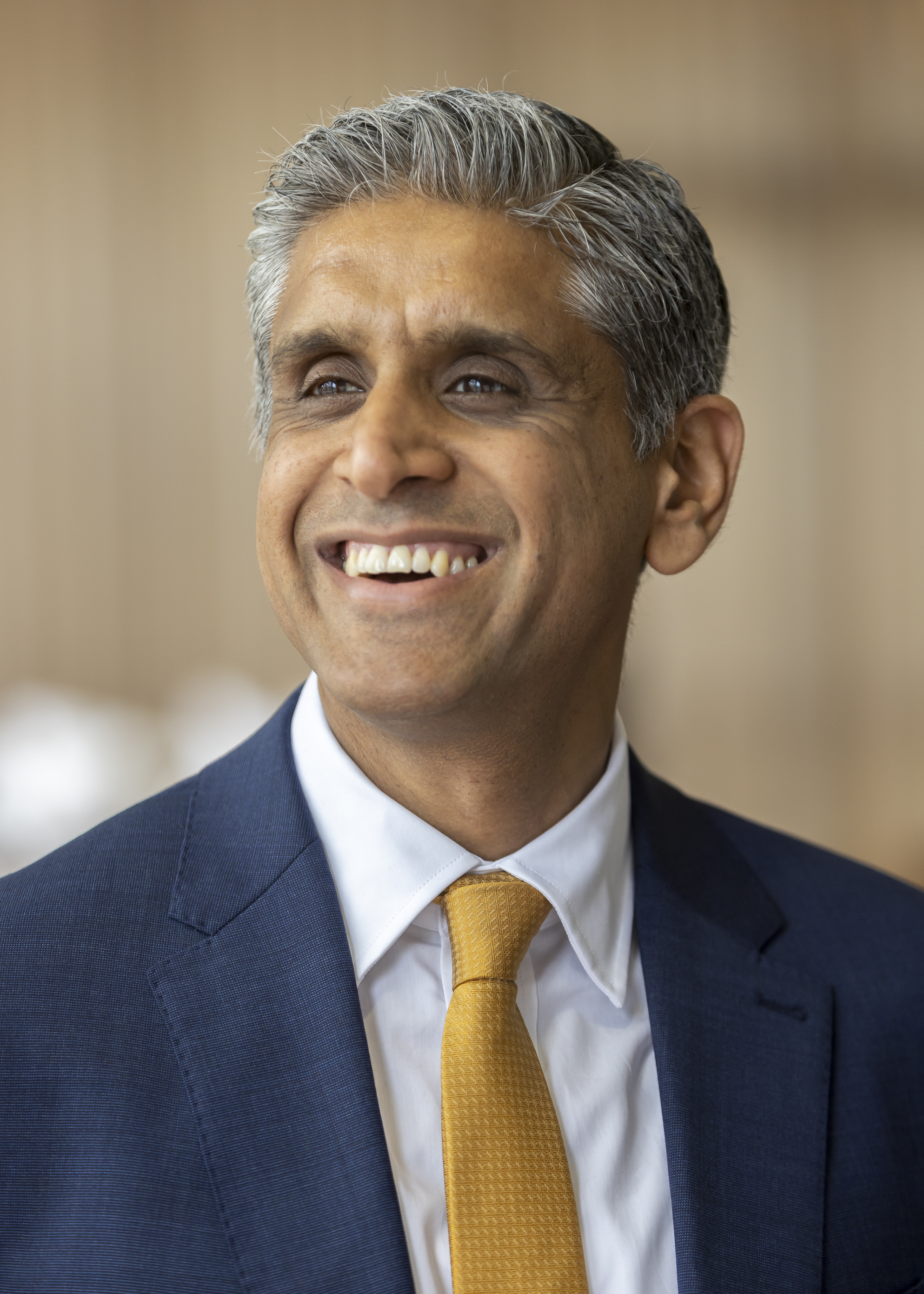
Vishal Ahuja is an Associate Professor and Corrigan Research Professor at Southern Methodist University's Cox School of Business, with adjunct faculty status at University of Texas Southwestern Medical Center. He focuses on decision analytic tools for healthcare improvement through operations management. PhD, University of Chicago Booth School of Business MBA, University of Chicago Booth School of Business His research interests span healthcare operations, service optimization, and AI applications in clinical decision-making. He collaborates with the Department of Veterans Affairs, Parkland Hospital, and pediatric institutions to address care quality and delivery efficiency. Recent publications emphasize predictive modeling for chronic disease management, adaptive clinical trial design, and regulatory healthcare policy. Awards include the Dlin/Fischer Clinical Research Award (2021), INFORMS Pierskalla Award (2012), and 2025 AI75 recognition for Dallas-Fort Worth AI leadership. D CEO Excellence in Healthcare Award - Outstanding Healthcare Innovator (2023) NSF Game Changer Academies for Advancing Research Innovation (2022) C. Jackson Grayson Faculty Innovation Award (2022-23) At SMU, he teaches graduate courses in operations, supply chain, and service management, integrating corporate sector experience from chemical and consumer goods industries. His work has been cited by the FDA in safety labeling changes workshops.
Carlos Cinelli is an Assistant Professor in the Department of Statistics at the University of Washington, where he conducts research at the intersection of causal inference, statistical methodology, machine learning, and artificial intelligence. He is also a data science fellow at the eScience Institute and affiliate faculty of the Center for Statistics and the Social Sciences, demonstrating his interdisciplinary approach to causal methodology. Dr. Cinelli received his Ph.D. in Statistics from the University of California, Los Angeles, advised by Chad Hazlett and Judea Pearl, two prominent figures in causal inference. His research focuses on developing new causal and statistical methods for transparent and robust causal claims in empirical sciences, with particular attention to challenges faced by social and health scientists. His work spans theoretical developments in causal identification, sensitivity analysis frameworks, and practical software implementations that enable researchers to assess the robustness of their causal conclusions. Cinelli's research program addresses fundamental questions about how unobserved confounding affects causal estimates and develops tools to quantify how sensitive findings are to potential violations of causal assumptions. His work on omitted variable bias frameworks has been particularly influential across multiple disciplines. Through his publications, Cinelli has established himself as a leading researcher in causal inference methodology, with papers appearing in top journals across statistics, machine learning, epidemiology, and social sciences. His work demonstrates both theoretical rigor and practical relevance, often accompanied by open-source software implementations that make his methods accessible to applied researchers. Best paper award at SBE 2024 in Econometrics Royalty Research Fund (RRF) Award recipient NSF/MMS research support As an advisor, Cinelli has successfully guided PhD students like Nick Irons to dissertation completion. He actively seeks new students with strong interests in causal inference. His research is supported by multiple funding sources including the National Science Foundation and the University of Washington's Royalty Research Fund. Cinelli contributes to the academic community through editorial work for the Journal of Causal Inference and by developing widely used software packages like sensemakr for sensitivity analysis.
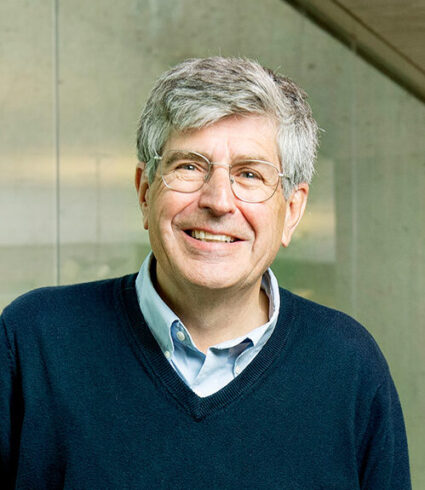
Michael U. Gutmann is a Senior Lecturer in Machine Learning at the School of Informatics, University of Edinburgh, and a member of the Institute for Adaptive and Neural Computation. His research lies at the intersection of machine learning, statistics, and scientific applications, with a focus on developing inference methods for complex and implicit models. Education: PhD in Computational Neuroscience, University of Tokyo MSc in Engineering and Applied Mathematics, Swiss Federal Institute of Technology (ETH) Zurich MSc, Ecole Centrale Paris His primary research interests include Bayesian inference, likelihood-free inference, optimal experimental design, unsupervised learning, and applications in computational biology and neuroscience. He is best known for introducing Noise-Contrastive Estimation (NCE), a foundational technique for training unnormalized statistical models. His recent work spans variational inference, density ratio estimation, flow models for missing data, and AI-driven experimental design in behavioral and biological sciences. His publications, including in NeurIPS , ICML , JMLR , and eLife , demonstrate a strong emphasis on methodological innovation for scientific discovery. He has contributed to open-source tools such as ELFI (Engine for Likelihood-Free Inference) and developed practical implementations of robust inference algorithms. Scientific Awards: No specific awards listed in the provided texts. Michael Gutmann actively supervises students and collaborates with leading researchers in machine learning and computational biology. He has secured research funding from EPSRC and BBSRC for projects in generative modeling and infectious disease epidemiology. He teaches advanced courses such as Probabilistic Modelling and Reasoning and Data Mining, reflecting his deep engagement with both theoretical and applied aspects of machine learning. Labs and Research Groups: Institute for Adaptive and Neural Computation (ANC), University of Edinburgh Former affiliations with Department of Mathematics and Statistics and Department of Computer Science at the University of Helsinki and Aalto University
Scientia Professor Nasser Khalili is the Head of the School of Civil and Environmental Engineering at the University of New South Wales (UNSW). He also serves as the Director of the ARC Research Hub for Resilient and Intelligent Infrastructure Systems (RIIS), President of the Australian Association for Computational Mechanics (AACM), and a core member of the International Technical Committee on Unsaturated Soil (TC106). His research focuses on geotechnical engineering, computational mechanics, porous media behavior, and sustainable infrastructure systems. Key areas of expertise include unsaturated soils, hydraulic fracturing modeling, and advanced material characterization for asphalt mixtures. Professor Khalili's work integrates computational methods with experimental analysis to address challenges in infrastructure resilience and environmental sustainability. He has pioneered studies on pore pressure dynamics, fracture mechanics in porous media, and the application of waste materials in construction. His leadership roles in national and international committees reflect his influence in advancing geotechnical and computational engineering practices. His scientific contributions include over 150 peer-reviewed articles, with recent work emphasizing machine learning applications in civil engineering and innovative solutions for sustainable asphalt mixes. Awards include Fellowship of the Academy, recognizing his significant impact on the field.
Professor Klavs F. Jensen is the Warren K. Lewis Professor of Chemical Engineering and Professor of Materials Science and Engineering at MIT. His research focuses on integrating automation, machine learning, and robotics to accelerate materials discovery and pharmaceutical synthesis. He leads the Jensen Research Group, pioneering automated reaction systems with online analytics and optimization algorithms. Education: MS in Chemical Engineering (Technical University of Denmark, 1976); PhD in Chemical Engineering (University of Wisconsin, 1980). Research Interests: Thermochemistry, electrochemistry, photochemistry, Bayesian optimization, high-throughput experimentation, and AI-driven synthesis planning. He collaborates with MIT’s Machine Learning for Pharmaceutical Discovery Consortium to develop algorithms for drug development and process chemistry. Awards: Member of National Academy of Sciences (2017), Member of National Academy of Engineering (2002), Fellow of the American Association for the Advancement of Science (2007), and Fellow of the National Academy of Inventors (2022). Grants & Labs: Editor-in-Chief of Reaction Chemistry and Engineering ; holds 63 US patents and over 490 journal articles. His lab’s innovations include ASKCOS (open-source synthesis planning software) and automated platforms for closed-loop molecular discovery.
Surya Ganguli is an Associate Professor in the Department of Applied Physics at Stanford University, with courtesy appointments in Neurobiology and Electrical Engineering. He serves as Senior Fellow at the Stanford Institute for Human-Centered AI and is affiliated with the Stanford Neuroscience Institute , Bio-X , and Wu Tsai Neurosciences Institute . His research spans theoretical neuroscience, machine learning, and statistical mechanics. Ph.D. , UC Berkeley, Theoretical Physics (2004) M.A. , UC Berkeley, Physics (2000) M.A. , UC Berkeley, Mathematics (2004) M.Eng. , MIT, Electrical Engineering and Computer Science (1998) B.S. , MIT, Physics (1998) B.S. , MIT, Mathematics (1998) B.S. , MIT, Electrical Engineering and Computer Science (1998) His lab explores how higher-level cognitive phenomena emerge from neural network dynamics, focusing on perception, memory, attention, and decision-making . Research themes include statistical mechanics of learning , neural representational geometry , and biologically plausible learning rules . Current work examines nonlinear interactions in neural networks through the Schmidt Science Polymath Award (2023). Key article trends reveal expertise in neural coding limits (2022 Nature), synaptic plasticity models (2022 Neural Computation), and deep learning theory (2022 NeurIPS publications). His 2019 Annual Review chapter on statistical mechanics of deep learning established foundational insights into network criticality. Scientific Awards : NSF Career Award (2019) Simons Foundation Investigator (2016) McKnight Scholar Award (2015) James S. McDonnell Foundation Scholar (2014) Sloan Research Fellow (2013) As advisor, he mentors 10+ doctoral students across Applied Physics, Neurosciences, and Computer Science, including Vamshi Balanaga and Mason Kamb. His lab collaborates with experimental teams at Stanford and beyond, supported by grants from NSF , Simons Foundation , and Swartz Foundation . The Neural Dynamics & Computation Lab unites physicists, mathematicians, and neuroscientists to decode cognition through interdisciplinary methods.
Mikko Valkama is a Professor at the Department of Communications Engineering , part of the Faculty of Information Technology and Communication Sciences at Tampere University . His research focuses on advanced wireless communication systems, positioning technologies, and integrated sensing and communication (ISAC). He holds an Orcid ID ( 0000-0003-0361-0800 ) and can be reached at mikko.valkama@tuni.fi . Research interests span 5G/6G networks , RF antenna design , deep learning for signal processing , and millimeter-wave systems . He leads projects on positioning algorithms (e.g., mmWave SLAM, NLOS mitigation), ISAC architectures, and hardware-efficient transmitter linearization. Notable contributions include works on DECT-2020 NR standards, phase-based localization, and RIS-assisted systems. In 2025 alone, his group published over 30 articles on topics such as: Antenna array design for Ka-band and wideband applications Machine learning for power amplifier predistortion Bistatic radio SLAM and mmWave mapping Covert transmission and physical-layer security His work bridges theoretical advancements with practical implementations, often validated through experimental setups (e.g., TUJI1 dataset for indoor localization). No scientific awards were explicitly listed in the provided texts.
Gary King is the Albert J. Weatherhead III University Professor at Harvard University and Director of the Institute for Quantitative Social Science. He is based in the Department of Government within Harvard's Faculty of Arts and Sciences. One of only 22 University Professors at Harvard, this represents the institution's most distinguished faculty position. King received his B.A. from SUNY New Paltz in 1980 and his Ph.D. from the University of Wisconsin-Madison in 1984. His academic journey has led him to become one of the most influential scholars in political methodology and quantitative social science. Professor King's research spans numerous areas of methodological innovation in the social sciences. His work focuses on developing and applying empirical methods across various domains. Key research interests include: Ecological Inference - developing methods to infer individual behavior from group-level data Automated Text Analysis - creating techniques for extracting knowledge from massive text collections Causal Inference - methods for detecting and reducing model dependence in causal effect estimation Missing Data and Measurement Error - statistical approaches to handle incomplete or imperfect data Survey Research - developing methods for more accurate cross-cultural survey comparisons Unifying Statistical Analysis - integrating diverse methodological approaches into coherent frameworks King's recent publications demonstrate a continued focus on methodological innovation with practical applications. His work spans political science, public health, and data science, with particular emphasis on privacy-preserving data analysis, maternal health metrics, survey methodology, and media effects. A notable trend is the increasing interdisciplinary nature of his research, bridging political methodology with public health, computer science, and demography. His work on census data privacy, maternal mortality disparities, and media influence represents cutting-edge applications of social science methodology to critical societal issues. His scientific achievements have been recognized with numerous prestigious awards: Fellow of the National Academy of Sciences (2010) Fellow of the American Statistical Association (2009) Fellow of the American Academy of Arts and Sciences (1998) Guggenheim Foundation Fellow (1994-1995) Career Achievement Award (2010) Warren Miller Prize (2008) Multiple awards for research software and methodology King has mentored numerous students and postdocs, many of whom now hold faculty positions at leading universities. His research has been supported by major funding agencies including the National Science Foundation, Centers for Disease Control and Prevention, World Health Organization, and National Institute of Aging. He has collaborated with over seventy scholars on research publications and served on numerous editorial boards and professional organization councils. His work on the Mexican universal health insurance program represents one of the largest randomized health policy experiments to date, demonstrating his commitment to rigorous evaluation of real-world policy interventions. As Director of the Institute for Quantitative Social Science, King leads a vibrant research community focused on methodological innovation. His work has practical applications in diverse areas including legislative redistricting (used by the U.S. Supreme Court), health policy evaluation (including the largest randomized health policy experiment to date in Mexico), Chinese censorship analysis (revealing government fabrication of 450 million social media comments annually), and automated text analysis (through Crimson Hexagon, a company he co-founded).
Joseph Tao-yi Wang is a Distinguished Professor in the Department of Economics at National Taiwan University (NTU). He holds a PhD from UCLA and previously served as a Postdoctoral Scholar and Visiting Associate at Caltech. His research spans experimental economics, neuroeconomics, game theory, and behavioral economics, with a focus on strategic decision-making, market design, and learning in games. Wang directs the Taiwan Social Sciences Experimental Laboratory (TASSEL), which hosts large-scale experimental research and conferences like the 2017 APESA. His work integrates eye-tracking, pupillometry, and machine learning to study cognitive processes in economic decisions. Wang is also active in educational innovation, developing flipped classroom models with experiments for economics courses. His publications consistently explore behavioral deviations from game-theoretic predictions, such as overcommunication in sender-receiver games and learning patterns in auctions. Recent work emphasizes reproducibility in management science and AI applications in education. Wang’s research uses diverse methodologies—from neuroimaging to field experiments—to test economic theories in real-world contexts. Wang mentors through NTU’s Berkeley Economics Student Assistant Program (BESAP) and organizes mini-courses for high school students. He has not received scientific awards per the available data.
Anna Levina is an Assistant Professor for Computational Neuroscience at the University of Tübingen , affiliated with the Department of Computer Science under the Faculty of Science. Her research focuses on the self-organization of neuronal activity, critical dynamics in neural networks, and the excitation/inhibition balance in cortical circuits. Current positions: Assistant Professor (since 2018), Group Leader (2017-2018), Equality Officer (Computer Science) Previous roles: IST Fellow (2015-2017), Associated Researcher (2011-2015), Postdoc/PI (2011-2015), Postdoc (2008-2011) Her research integrates mathematical modeling , statistical physics , and computational neuroscience to study criticality phenomena, neural avalanches, and adaptive network dynamics. Key interests include: Self-organized criticality in neural systems Excitation/Inhibition balance mechanisms Network topology and dynamics Timescale analysis in neural processing Stochastic modeling of neural activity Recent publications reveal trends in understanding critical dynamics across biological and artificial networks, with applications to memory systems, sensorimotor integration, and disease modeling. She has received recognition as an IST Fellow .