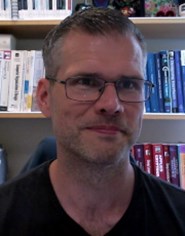
Henrik Sandberg is a Professor at the Division of Decision and Control Systems , KTH Royal Institute of Technology , Stockholm, Sweden. He holds the title of Deputy Head of Division and is affiliated with the School of Electrical Engineering and Computer Science . Education: MSc in Engineering Physics (1999) PhD in Automatic Control (2004) from Lund University Postdoctoral position at Caltech (pre-2007) Research Interests: Focus on cyber-physical systems security , power systems , model reduction , and fundamental limitations of control systems . Key sub-areas include attack detection , networked control , privacy-preserving estimation , and resilient control architectures . Publications: Over 150 papers across IEEE Transactions and Automatica , covering topics like stealthy attacks , distributed control , LQG optimization , and thermodynamic costs in filtering . Recent work includes LWE-based encrypted control and Bayesian deception mechanisms . Scientific Awards: Best Student Paper Award Finalist at IEEE CASE 2014; Best Student-Paper Award at IEEE CDC 2004. Grants & Projects: Leads the DYNACON project (WASP Cybersec cluster) and collaborates on CERCES (critical infrastructure resilience). Serves as examiner for multiple advanced courses in cybersecurity and control systems. Contact: Email: hsan@kth.se Phone: +46 (0)8 790 7294 Room: A:607, Malvinas Väg 10, Stockholm
Leif Eriksson is a Professor at Chalmers University of Technology , specializing in Radar Remote Sensing within the Department of Space, Earth and Environment . His career at Chalmers began in 2004, and he was promoted to Professor in 2022 after serving as Group Leader (2012–2017) and Head of Faculty Assembly (2017–2020). His research focuses on developing advanced methods for environmental monitoring using radar data, particularly synthetic aperture radar (SAR) from satellites and aircraft. Leadership Roles: Group Leader (Radar Remote Sensing), Faculty Assembly Head Key Collaborations: Rymdstyrelsen, EU Horizon, VINNOVA, European Space Agency Research Interests : Dr. Eriksson’s work spans forest biomass estimation , sea ice dynamics , and ocean surface current/wind retrieval . He integrates SAR data with in situ observations and climate models to study: Forest degradation (clear cuts, storm damage) via multi-temporal SAR Sea ice concentration, drift patterns, and thickness in Arctic regions Wind vectors and surface currents using interferometric SAR techniques Applications for maritime navigation safety and polar shipping optimization Article Trends : His recent publications emphasize SAR’s role in transport infrastructure monitoring (e.g., Iron Ore Line degradation), pan-Arctic landfast ice stability , and multi-frequency SAR fusion for enhanced sea ice observations. Collaborative work with teams across Europe and the U.S. highlights interdisciplinary approaches to climate and marine research. Projects & Grants : Dr. Eriksson leads or contributes to projects such as: CAISA (2022–2024): Air-ice-sea data assimilation EONav (2016–2019): Copernicus data for maritime navigation SEDNA (2017–2020): Safe Arctic shipping Forest Biomass Monitoring (2017–2018): Spaceborne SAR applications His work is supported by Rymdstyrelsen, EU Horizon, and industry partners like Trafikverket. Labs & Teams : He is central to the Radar Remote Sensing Group at Chalmers, collaborating with institutions like Lund University and international bodies such as ESA. His research often involves satellite campaigns (e.g., TanDEM-X, Sentinel) and field studies in polar regions.
Martin Solberger is an Associate Professor in the Department of Statistics at Uppsala University, where he received his PhD in statistics in 2013 and was promoted to associate professor in 2022. His office is located at Ekonomikum (3rd floor), Kyrkogårdsgatan 10, with postal address Box 513, 751 20 UPPSALA. Dr. Solberger specializes in time series econometrics with particular expertise in macroeconomic forecasting and estimation of latent time series variables including potential GDP and the neutral interest rate. His research demonstrates sophisticated methodological approaches to dynamic factor models, unit root testing, and interest rate analysis, frequently employing Kalman filtering techniques and Bayesian VAR modeling. His publication record reveals a strong focus on Scandinavian economic analysis, particularly examining the natural rate of interest and neutral interest rate dynamics within Swedish and broader Nordic contexts. Recent work shows increasing attention to international spillover effects on domestic monetary policy variables and methodological refinements in panel data econometrics. Through extensive collaboration with researchers including Spånberg, Armelius, and Österholm, Solberger has established himself as a significant contributor to modern time series econometrics methodology and its application to central banking and fiscal policy questions.
Hedvig Kjellström is a Professor at the Division of Robotics, Perception and Learning within the School of Electrical Engineering and Computer Science at KTH Royal Institute of Technology. She holds significant affiliations with the Swedish e-Science Research Centre and the Max Planck Institute for Intelligent Systems in Germany. Her work spans multiple interdisciplinary domains and she serves as Editor-in-Chief for CVIU and was Program Chair for CVPR 2025. Her research centers on Computer Vision as a sub-field of AI, with three interconnected themes: Computational Aesthetics (exploring aesthetic aspects of human communicative behavior), Communicative Behavior (developing models of how humans and animals perceive and produce non-verbal communication), and Embodied Artificial Intelligence (creating methodologies for robots and autonomous agents to perceive the world through sensors, primarily vision). Her work has significant applications in medical diagnostics, animal welfare, human-robot interaction, and creative arts. Analysis of her recent publications reveals a strong trend toward multimodal AI systems that integrate vision, language, and action understanding. Her research increasingly focuses on animal-centered applications, particularly equine pain detection and behavior analysis, while maintaining strong foundations in human communication modeling, gesture recognition, and 3D reconstruction techniques. The interdisciplinary nature of her work bridges computer science with veterinary medicine, neuroscience, and performing arts. Hedvig Kjellström actively supervises numerous PhD and Master's students across various projects and maintains extensive collaborations with institutions including Karolinska Institutet, Swedish University of Agricultural Sciences, and international partners. Her research is supported by major funding bodies including WASP, VR, and SeRC. She leads or participates in several notable projects including OrchestrAI (communication between conductor and orchestra), ANITA (Animal Translator), MARTHA (3D horse motion analysis), and STING (synthesis and analysis with transducers and invertible neural generators). Her work with ACAI (Animal Centered Artificial Intelligence), which she co-founded and directs, demonstrates her commitment to applying AI for animal welfare.
Lars Nordström is a Professor at the Division of Electric Power and Energy Systems within KTH Royal Institute of Technology, Stockholm, Sweden. His work bridges control systems , communication networks , and power systems , with a focus on future architectures, functionality, and quality aspects of ICT for power grid operations. He has led initiatives such as the Swedish Centre of Electric Power Engineering and served as Thematic Leader for Smartgrids in KIC InnoEnergy. In 2014, he was a Visiting Professor at Washington State University. Education : Ph.D., MSc.EE Nordström's research explores the intersection of smart grids , machine learning , and cybersecurity for power systems. Key areas include: Wide-Area Monitoring and Control (WAMC) systems Decentralized control strategies for DC microgrids Impedance modeling using neural networks Data-driven methods for islanding detection ICT reliability and protocol design for grid operations His recent publications emphasize machine learning applications in power systems, including LSTM networks for EV charging management, graph attention networks for stability monitoring, and digital twin approaches for cyber-attack mitigation. These works span disciplines such as Smart Grids, Power Electronics, and Data Science. Scientific Recognitions : Senior Member, IEEE Senior Member, CIRED Senior Member, Cigre Past Chairman, Swedish IEC TC57 Mirror Committee Nordström actively teaches and examines graduate courses like Communication and Control in Electric Power Systems and Computer Applications and Machine Learning in Electric Power Systems . His work influences industry practices through collaborations on digital substations, energy market analysis, and resilience strategies.
Professor Göran Broström works at the Department of Marine Sciences at the University of Gothenburg . His research focuses on physical oceanography, marine turbulence, tidal energy systems, and biophysical processes in marine ecosystems. Current research themes include methane emissions from ocean infrastructure, turbulence in tidal flows, and wave-current interactions He utilizes advanced numerical modeling (e.g., Large Eddy Simulation, Bayesian inversion) and field observations Recent publications emphasize climate impacts (methane plumes), tidal energy innovations, and marine ecological connectivity His work appears in high-impact journals like Nature , Molecular Ecology , and Frontiers in Marine Science . Collaborative projects span oceanographic modeling, environmental monitoring, and marine renewable energy. No specific student advising information appears in the provided text.
Philipp Schlatter is a Professor in the Department of Mechanics at KTH Royal Institute of Technology. His research focuses on fluid mechanics, turbulence, and computational fluid dynamics (CFD), with expertise in high-performance computing and direct numerical simulations (DNS). He leads projects involving scalable CFD frameworks like Neko and Nek5000, and investigates turbulent boundary layers, flow control, and coherent flow structures. His work includes experimental and numerical studies of wing profiles, rotating systems, and transition dynamics. Schlatter teaches courses on computational fluid dynamics and turbulence, emphasizing both theoretical and practical aspects of fluid mechanics. Key research interests include developing numerical methods for high-fidelity simulations, understanding turbulence mechanisms, and optimizing flow control strategies. His contributions span aerodynamics, heat transfer, and the application of machine learning to fluid dynamics problems. Schlatter collaborates extensively on interdisciplinary projects, leveraging advanced computing resources to address complex fluid flow phenomena. Publications highlight advancements in DNS frameworks, Bayesian optimization for flow control, and analysis of turbulent structures in pipe and boundary layer flows. His research also addresses challenges in measurement techniques and uncertainty quantification in CFD simulations.
Tommy Löfstedt is an Associate Professor at Umeå University , affiliated with the Department of Computing Science and the Department of Mathematics and Mathematical Statistics. His research focuses on machine learning , computer vision , and medical image analysis , with applications in life sciences, radiation therapy, and biomedical imaging. He leads multiple research projects, including AI-driven delineation in radiation therapy, quantitative MRI for radiotherapy, and machine learning for plant nutrient uptake. Current research emphasizes structured regularization methods to improve model interpretability and robustness. Key applications include medical image segmentation , Alzheimer's classification , and uncertainty estimation in MRI . Recent publications highlight his work on morphological regularization , adversarial attack mitigation , and multi-task learning in medical imaging contexts. His projects span 2022–2026 with funding for pediatric oncology automation and gynecological cancer staging. Affiliated with both computing and mathematical departments, he bridges algorithm development with applied mathematical frameworks in medical and life science domains.
Tobias Oechtering is a Professor at the Division of Information Science and Engineering within the School of Electrical Engineering and Computer Science at KTH Royal Institute of Technology. His research focuses on information theory, privacy-preserving technologies, statistical signal processing, machine learning, and smart grid systems. He has held academic positions at KTH since 2008, advancing from Post-Doctoral Researcher to Assistant Professor (2010–2013), Associate Professor (2013–2018), and Professor (2018-present). He has supervised over 20 PhD students and contributed to numerous postdoctoral programs. Research Interests: - Network information theory and physical-layer security - Privacy mechanisms with provable guarantees - Distributed statistical inference and sensor calibration - Reinforcement learning and privacy-aware machine learning - Smart grid privacy and energy management - Wireless communication algorithms and signal processing - Networked control systems and stability analysis He currently supervises 7 PhD students and hosts 3 postdocs. His work has led to over 150 peer-reviewed publications, with recent contributions in privacy-preserving smart grid strategies, adversarial inference control, and information-theoretic security. He has served as editor for IEEE Transactions on Information Forensics and Security and held leadership roles in KTH's Digitalisation Research Platform.
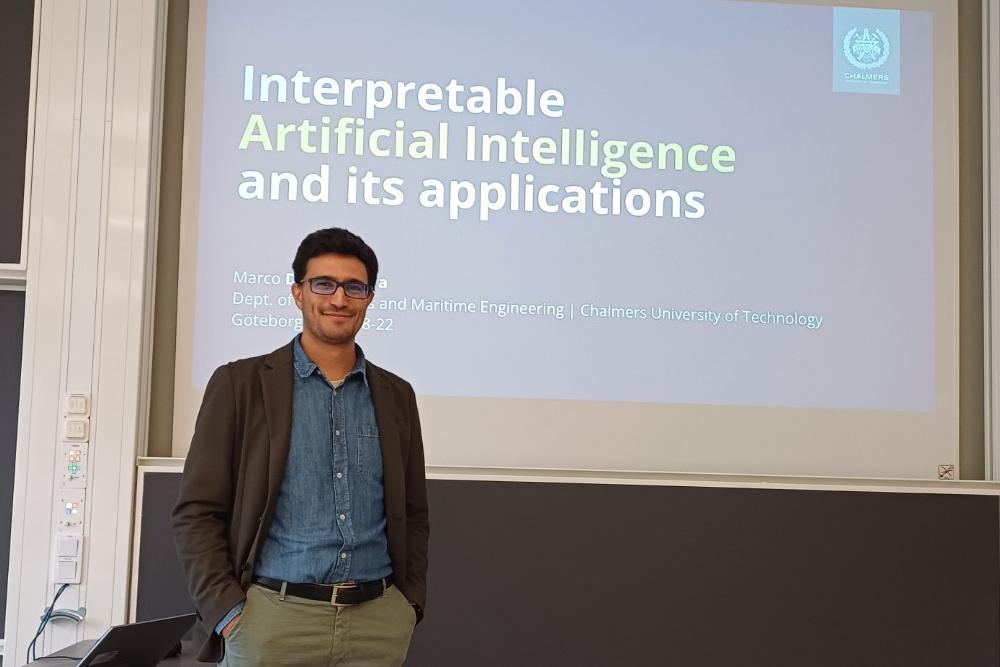
Marco L. Della Vedova is a Senior Lecturer in Applied Artificial Intelligence at Chalmers University of Technology, Sweden. He works in the Vehicle Engineering and Autonomous Systems division within the Department of Mechanics and Maritime Sciences, as part of Prof. Mattias Wahde's research group. Since 2025, he has served as Director of the Data Science and AI master's programme (MPDSC) at Chalmers, where he teaches courses including Introduction to Artificial Intelligence and Digitalization in Sports. Dr. Della Vedova earned his academic foundation at the University of Pavia, Italy, where he completed his BSc (2006), MSc (2009), and PhD (2013) in Computer Engineering. His doctoral research focused on "Real-Time Physical Systems and Electric Load Scheduling" under Prof. Tullio Facchinetti. During his PhD studies, he spent a year at U.C. Berkeley hosted by Prof. Francesco Borrelli at the Model Based Predictive and Distributed Control Lab. His research spans multiple AI domains with a strong emphasis on interpretability. Dr. Della Vedova develops interpretable methods for conversational AI, naturalness evaluation of forests using canopy height models, and geospatial applications. His work bridges theoretical AI with practical societal benefits, particularly in environmental monitoring, transportation systems, and orienteering. He has previously contributed to cloud computing, hate speech detection, and cyber-physical energy systems, demonstrating his interdisciplinary approach to AI research. Dr. Della Vedova's publication record reveals a consistent trajectory of impactful research across multiple domains of artificial intelligence. His recent work shows a strong focus on interpretability in AI systems, with significant contributions to natural language processing, geospatial analysis, and causal inference. The research demonstrates both theoretical depth and practical applications, particularly in environmental monitoring and social media analysis. His methodology often combines traditional machine learning approaches with novel interpretability techniques, creating bridges between complex AI systems and human understanding. Dr. Della Vedova has received several prestigious recognitions for his work: Best PhD thesis award from the Order of the Engineers of Bergamo (2013) Italian champion of Il Cervellone (2012) Top Italian performer in IEEEXtreme 6.0 programming competition (148th overall globally, 2012) Premio Arturo Schena award from Fondazione Credito Valtellinese (2010) With over 50 students supervised through bachelor's and master's theses, Dr. Della Vedova has established himself as a dedicated mentor in the AI community. His current PhD students include Minerva Suvanto working on interpretable NLP and Vivien Lacorre developing AI for railway infrastructure inspection. His supervision spans diverse topics from forest naturalness evaluation to hate speech detection and transportation optimization. Beyond formal supervision, he actively contributes to educational initiatives including serving as Director of Chalmers' Data Science and AI master's program and developing innovative teaching methods that connect theoretical concepts with real-world applications. Dr. Della Vedova is deeply embedded in both academic and professional communities. He leads the Applied Artificial Intelligence research group at Chalmers while maintaining strong connections with European research networks through projects like the ERASMUS+ EUrienteering initiative. His interdisciplinary approach is reflected in collaborations across computer science, environmental science, and social sciences. Notably, he applies his AI expertise to orienteering both as a researcher developing localization methods and as a licensed Event Advisor for the International Orienteering Federation, demonstrating how his professional and personal interests converge in innovative ways.
Mattias Villani is Professor of Statistics at Stockholm University, specializing in Bayesian statistics and machine learning. He obtained his PhD in Statistics from Stockholm University in 2000 and has held positions at Sveriges Riksbank and Linköping University. Villani develops computationally efficient Bayesian methods for inference, prediction and decision-making with flexible probabilistic models. Research Interests: His work spans Bayesian computation (MCMC, HMC, variational inference), machine learning (Gaussian processes, mixture models), and applications in neuroimaging, transportation, and econometrics. Research focuses on scalable Bayesian methods for large datasets and complex models. Publication Focus: Recent articles concentrate on Bayesian neuroimaging analysis, transportation network modeling, and efficient MCMC algorithms. Methodological innovations in subsampling techniques for large-scale Bayesian computation represent a significant research trend. Student Advising: Supervises PhD students in statistical methodology development and applications. Current research groups focus on spatiotemporal modeling, locally stationary processes, and neuroimaging statistics.
Lennart Svensson is a Professor at Chalmers University of Technology in the Signal Processing research group. His work focuses on nonlinear filtering, multi-object tracking, Bayesian statistics, and deep machine learning with applications in autonomous systems and sensor fusion. Research Interests Nonlinear Filtering and Bayesian Inference Multi-Object Tracking and Sensor Fusion Deep Learning for Autonomous Systems Performance Metrics (GOSPA, T-GOSPA) Lidar-Camera Fusion and Radiance Fields 5G SLAM and mmWave Sensing Publications Trends Recent work emphasizes uncertainty-aware multi-object tracking metrics, trajectory estimation using Poisson Multi-Bernoulli Mixtures, and sensor fusion techniques for autonomous driving. His research integrates Bayesian methods with deep learning for applications in automotive radar, lidar, and 5G positioning systems. Contact Email: lennart.svensson@chalmers.se
Jonas Sjöberg is a Full Professor of Mechatronics at Chalmers University of Technology, where he leads the Mechatronic research group in the College of Engineering. His research spans multiple aspects of mechatronic systems with a strong focus on automotive applications. Sjöberg holds leadership roles in numerous research projects related to autonomous vehicles, vehicle control systems, and transportation safety. His research interests encompass a broad spectrum of mechatronics applications, with particular emphasis on model-based methods, signal processing, control systems, system identification, and optimization for design and product development of mechatronic systems. Sjöberg's work bridges theoretical control engineering with practical automotive applications, especially in the domains of Automotive Active Safety and Hybrid Electric Vehicles. Analysis of Sjöberg's recent publications reveals a strong research trajectory focused on autonomous vehicle technologies, with particular attention to vehicle dynamics control, intersection safety, road surface condition estimation, and optimization of vehicle maneuvers. His work demonstrates a consistent approach of applying advanced control theory to solve real-world transportation challenges, with increasing emphasis on machine learning techniques integrated with traditional control systems. Sjöberg actively supervises research and education at both undergraduate and graduate levels while leading multiple research projects funded by VINNOVA, the European Commission, and other organizations. His research group collaborates extensively with both academic institutions and industry partners in the automotive sector. His laboratory work focuses on mechatronic systems development, particularly for automotive applications including autonomous bicycles, bus docking systems, and vehicle control algorithms. The research group maintains strong connections with the automotive industry, particularly in Sweden's robust vehicle technology ecosystem.
Liqin Ding is a Research Fellow at the Department of Electrical Engineering at Chalmers University of Technology . She holds a Marie Skłodowska-Curie Fellowship and is actively involved in EU-funded projects like VoiiComm and Hi-Drive , focusing on vehicular communication systems and cellular positioning integrity. Previously, she was a postdoctoral researcher at Harbin Institute of Technology (Shenzhen) and a visiting researcher at Chalmers before transitioning to her current MSCA-IF position. Research Interests : Her work spans large antenna array-based communication , wireless propagation , vehicular networks , and cellular positioning . Key themes include 5G/6G protocols , channel modeling , and information theory for automated transportation systems. She specializes in Massive MIMO , DFT spreading , and integrity monitoring to enhance network reliability. Scientific Contributions : Recent publications address challenges in PAPR reduction for IoT, 3D antenna array bandwidth , UAV swarm communication , and Bayesian positioning algorithms . Her work bridges theoretical models (e.g., Shannon capacity) with practical applications in automotive connectivity and spaceborne antennas . Awards and Grants : European Union's H2020-MSCA-IF-2019 fellowship for VoiiComm project Funding from the European Commission (EC) for mobility research
Taras Bodnar is a Professor at the Department of Management and Engineering, Linköping University. His research focuses on high-dimensional statistical methodologies with applications in finance, portfolio optimization, and econometrics. He specializes in developing and analyzing advanced statistical models for asset allocation, risk management, and multivariate meta-analysis. Bodnar's work often involves Bayesian methods, shrinkage estimation techniques, and copula modeling to address challenges in financial data analysis. His recent contributions include the HDShOP package for portfolio selection and advancements in nonlinear shrinkage tests for large-dimensional covariance matrices. His research bridges theoretical statistics with practical financial applications, addressing issues such as dark uncertainty and efficient frontier estimation in high-dimensional settings. Key research interests include: High-Dimensional Portfolio Optimization Bayesian Analysis in Financial Contexts Covariance Matrix Estimation and Testing Uncertainty Quantification in Multivariate Analyses Statistical Software Development for Finance Recent publications (2024-2025) emphasize methodological innovations in portfolio selection, copula modeling, and robust statistical inference. His work has implications for both academic theory and practical investment strategies, particularly in managing large and complex financial datasets.