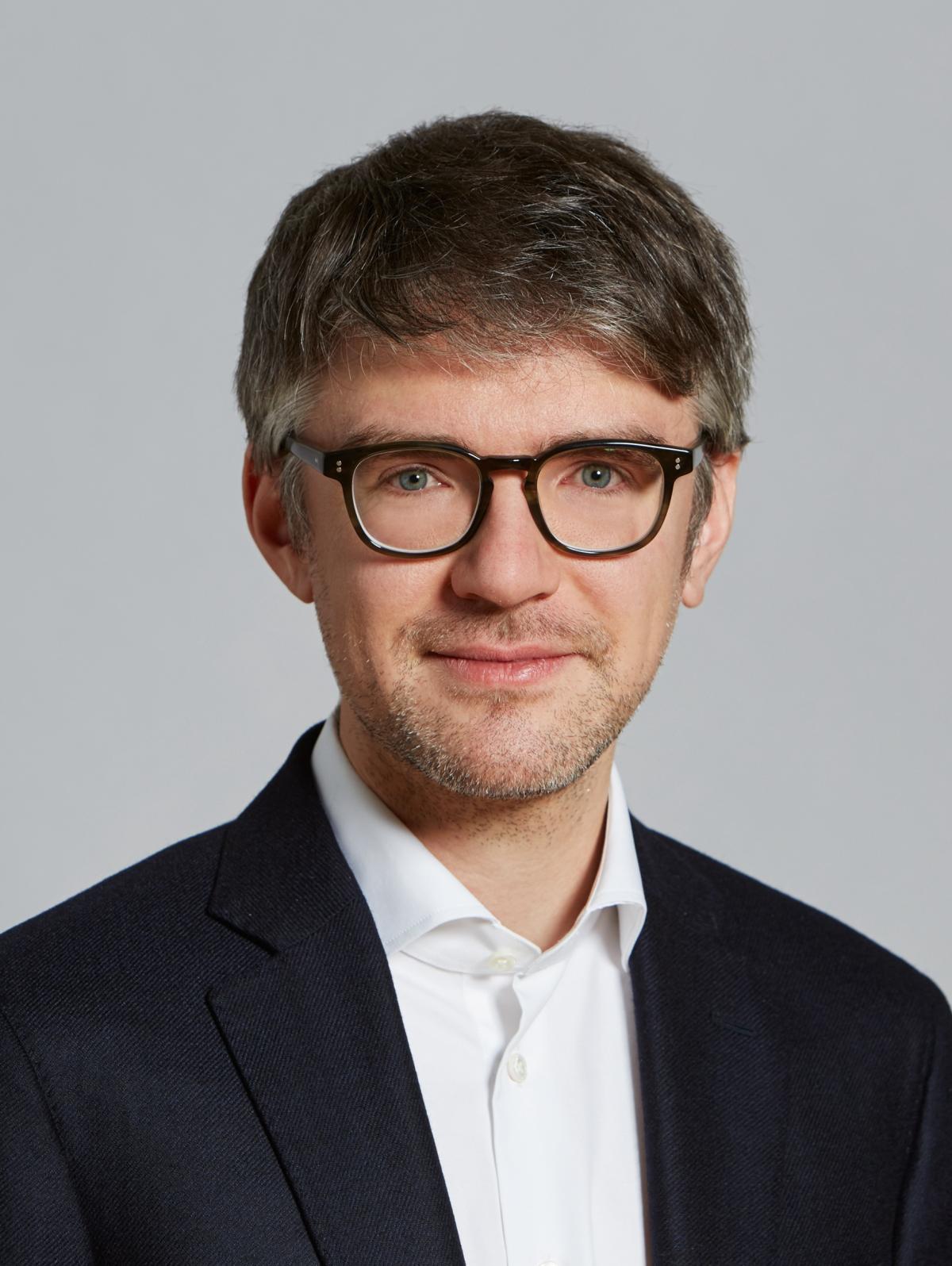
Pascal Frossard is a Full Professor at the Department of Electrical Engineering in the School of Engineering (STI) at EPFL, with a courtesy appointment in the School of Computer and Communication Sciences. He founded and directs the LTS4 laboratory since 2003, co-leads the EPFL AI Center and Swiss Data Science Center, and serves as Associate Dean for Research at STI. Research Focus: Machine Learning, Graph Signal Processing, AI Applications in Healthcare, Computer Vision Academic Leadership: IEEE Fellow, ELLIS Fellow, Conference Chair roles Key Projects: Digital Pathology for Oncology, Cardiac Digital Twins, Robust Machine Learning Research Interests: His work bridges signal processing, machine learning, and applied mathematics, emphasizing biomedical applications. Recent research includes adversarial robustness in classifiers, network representation learning, and 360-degree video analysis. Scientific Awards: IEEE Fellow ELLIS Fellow Leadership in IEEE technical committees Advising & Grants: Supervised 20+ PhD students and postdocs. Secured major grants from PHRT, Hasler Foundation, FNS-Sinergia, Armasuisse, Google, and Cisco.
Colin Jones is an Associate Professor at the École Polytechnique Fédérale de Lausanne (EPFL) in the Automatic Control Laboratory, School of Engineering. He earned his BASc and MASc in Electrical Engineering and Mathematics from the University of British Columbia (1994-2002) and a PhD in Control Theory from the University of Cambridge (2002-2005). Prior to EPFL, he was an assistant professor there and a senior researcher at ETH Zürich. Current role: Director of the Robotics, Control, and Intelligent Systems Doctoral Program at EPFL Research focus: Optimization-based and model predictive control (MPC) for renewable energy systems, green energy management, and data-driven control methods His recent work (2023-2025) spans high-speed predictive control , smart grid optimization , and physically consistent neural networks , with applications to buildings, hovercrafts, and power systems. He has secured an ERC Starting Grant for his research on optimal control of building networks. Publications include over 200 papers in journals like Automatica , IEEE Transactions , and Energy and Buildings . Notable article trends include distributed optimization , data privacy in energy systems , and nonlinear MPC for autonomous vehicles . Scientific Awards : ERC Starting Grant for optimal control of building networks Advising : Supervises 10 current PhD students and has advised 19 past PhD students, including Alessandretti Andrea and Diwale Sanket Sanjay. Grants and projects emphasize smart energy systems , predictive demand response , and nonlinear control .
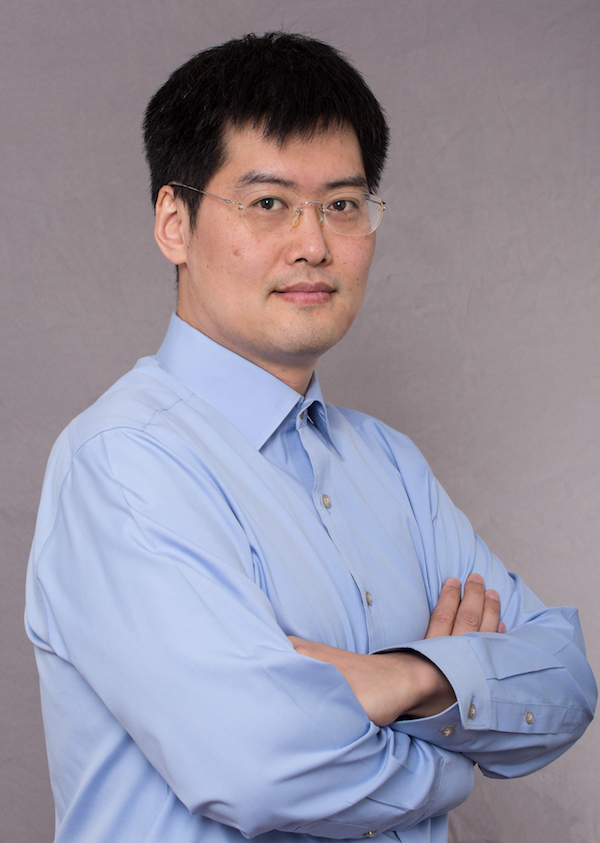
Josie Hughes is a Tenure Track Assistant Professor at the Swiss Federal Institute of Technology Lausanne (EPFL) within the School of Engineering's Institute of Mechanical Engineering. She leads the Computer Robot Design and Fabrication Laboratory (CREATE Lab) and serves on the doctoral program committee for Robotics, Control and Intelligent Systems. Her roles include teaching courses in product development, engineering design, and data-driven manufacturing methods while maintaining active research and student supervision. Her research centers on soft robotics with emphasis on adaptive design, fabrication techniques, and real-world applications. Key areas include agricultural robotics (exemplified by the GraspBerry raspberry harvester), biomimetic materials like self-healing e-skins, and developmental robotics (BabyBot project). She pioneers approaches integrating morphological computation, variable stiffness mechanisms, and machine learning for robotic control, while championing open-source principles and diversity in robotics through accessible educational initiatives like balloon robot kits. Analysis of her recent publications reveals dominant trends in soft robotics adaptability, particularly in variable-stiffness structures, sensor integration, and task-specific optimization. Her work bridges fundamental material science with practical applications in agriculture, food science, and human-robot interaction, frequently employing computational methods like Bayesian optimization and neural networks for design and control. Scientific awards: No specific awards were mentioned in the source materials. Dr. Hughes actively supervises 16 doctoral students across diverse projects including soft grippers for agriculture, biomimetic locomotion, and robotic manipulation systems. Her advising portfolio shows strong alignment with her research themes, with current students working on topics like modular soft arms, agricultural automation, and developmental robotics. While grant details weren't specified, her high publication volume indicates robust research funding. The CREATE Lab under her leadership focuses on holistic co-design of hardware and software for soft robotic systems, with notable projects including the GraspBerry agricultural harvester and BabyBot developmental platform. The lab emphasizes open-source development and educational outreach, maintaining strong industry and academic collaborations while pushing boundaries in reconfigurable robotics and human-centered applications.
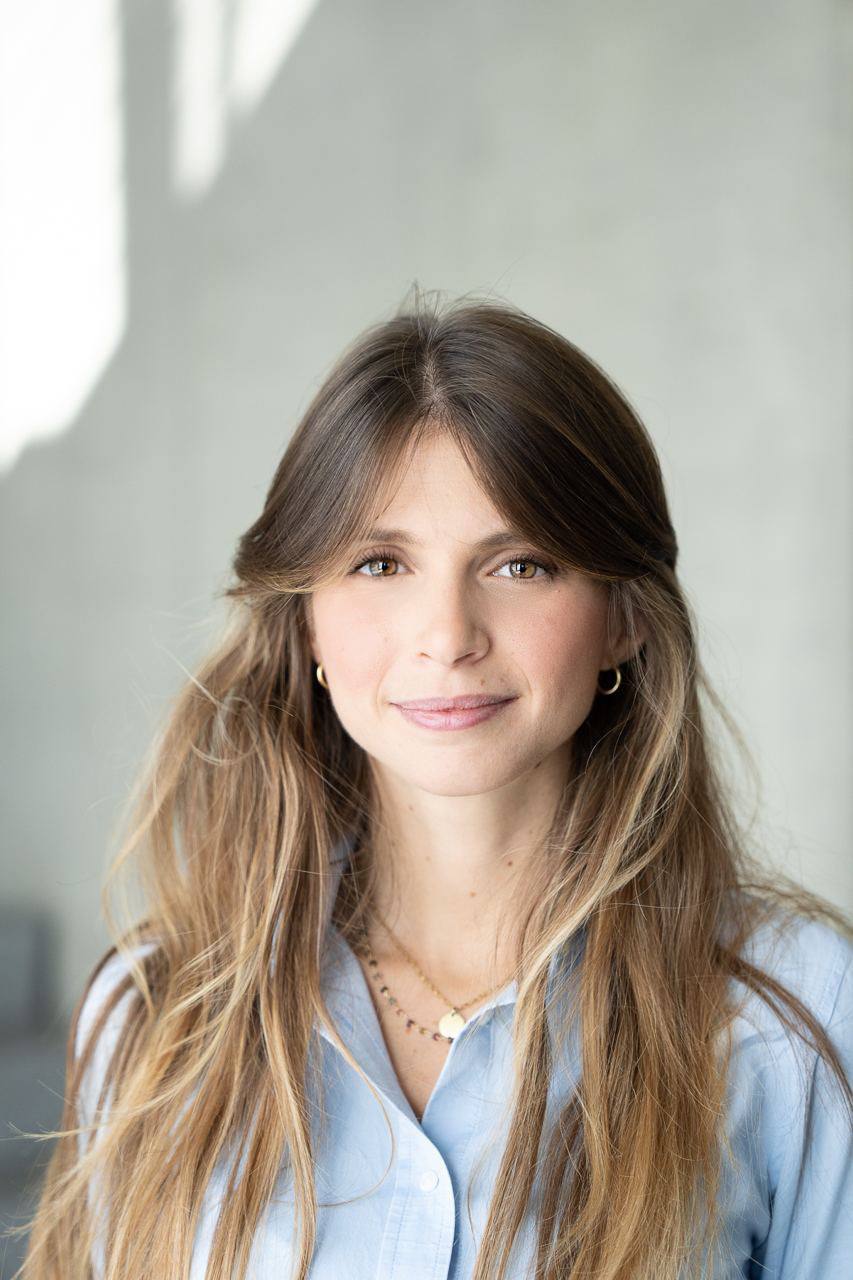
Dr. Igor V. Pivkin is a Full Professor at the Institute of Computing within the Faculty of Informatics at the Università della Svizzera italiana (USI) in Lugano, Switzerland. His academic journey includes degrees from Novosibirsk State University (B.Sc./M.Sc. Mathematics), Brown University (M.Sc. Computer Science and Ph.D. Applied Mathematics), and postdoctoral research at MIT's Department of Materials Science and Engineering. His research focuses on multiscale/multiphysics modeling , numerical methods , and large-scale simulations of biological and physical systems. Key areas include biophysics, cellular/molecular biomechanics, stochastic modeling, and coarse-grained molecular simulations. He leverages high-performance computing (HPC) and particle-based methods to address complex biological phenomena. His work spans diverse applications, from understanding cellular mechanosensitivity and biofilm engineering to modeling cancer cell behavior and red blood cell dynamics in the spleen. His contributions bridge computational science, biotechnology, and biomedical research. He has published extensively in top-tier journals, with recent work advancing automated biofilm analysis, deep learning for microbial classification, and systems biology approaches to metal bioleaching. His lab collaborates on interdisciplinary projects, emphasizing computational innovation for real-world biological challenges.
Michael Gastpar is a full Professor at École Polytechnique Fédérale de Lausanne (EPFL) in the School of Computer and Communication Sciences, where he leads the Laboratory for Information in Networked Systems (LINX). He previously held faculty positions at the University of California, Berkeley (2003-2011, earning tenure in 2008) and Delft University of Technology. His research spans information theory, signal processing, communications, and systems neuroscience. His research interests focus on network information theory and related coding and signal processing techniques, with applications to sensor networks and neuroscience. Recent work demonstrates a strong shift toward exploring the theoretical foundations of modern machine learning, particularly investigating transformer architectures from an information-theoretic perspective. His research group at EPFL explores how information theory principles can provide fundamental limits and novel approaches for contemporary machine learning problems. His recent publications reveal a clear trend toward bridging classical information theory with modern machine learning. The 15 most recent papers show increasing focus on theoretical analysis of transformers, rate-distortion frameworks for language models, universal prediction methods, and applications of information measures to machine learning theory. This represents a strategic evolution from his earlier work on sensor networks and physical-layer network coding toward foundational questions in artificial intelligence. Scientific Awards: IEEE Fellow 2013 Communications Society & Information Theory Society Joint Paper Award Information Theory Society Distinguished Lecturer (2009-2011) ERC Starting Grant (2010) Okawa Foundation Research Grant (2008) NSF CAREER award (2004) 2002 EPFL Best Thesis Award Professor Gastpar has advised over 20 PhD students who have gone on to successful careers in both academia and industry. His research has been generously supported by major grants including an ERC Starting Grant "ComCom" (2011-2016) and ongoing support from the Swiss National Science Foundation. He has served in significant editorial roles, including as Associate Editor for Shannon Theory for the IEEE Transactions on Information Theory (2008-11) and as Technical Program Committee Co-Chair for the IEEE International Symposium on Information Theory in 2010 and 2021. He leads the Laboratory for Information in Networked Systems (LINX) at EPFL, which brings together researchers working at the intersection of information theory, machine learning, and networked systems. The lab maintains strong connections with both theoretical research communities and practical applications in communications and neuroscience.
Giancarlo Ferrari Trecate is an Adjunct Professor at the Swiss Federal Institute of Technology Lausanne (EPFL) , affiliated with the School of Engineering and the SCI-STI-GFT department. He is also involved in teaching and research through the STI-SGM and EDRS-ENS programs. Research Interests : Automatic control, state estimation, system identification, machine learning, distributed control, hybrid systems, microgrids, biochemical networks, voltage and frequency stabilization in AC/DC microgrids. Publications Trends : His recent work focuses on integrating Neural ODEs and Hamiltonian structures for stable control systems, regret minimization in distributed control, and robust state estimation under uncertainty. Applications include autonomous mobility-on-demand , power grid optimization , and secure microgrid control against cyber-attacks. Scientific Awards : No specific awards mentioned in the provided data. Teaching & Advising : He supervises PhD students in mechanical engineering and teaches courses on Multivariable control and Networked control systems . His lab, DECODE , specializes in Dependable Control and Decision systems.
Gianni Franchi is an Assistant Professor at ENSTA Paris, part of Institut Polytechnique de Paris. His research focuses on robust computer vision, uncertainty quantification, and explainable AI (XAI). He has been teaching Deep Learning, Computer Vision, and Machine Learning courses since 2020 at ENSTA Paris and Télécom Paris. PhD in Fusion of Information, Machine Learning, and Image Processing (2016) from Mines de Paris Postdoctoral experience at Paris Saclay University (2018-2020) and Seigen University (2016-2018) Current PhD students: Rémi Kazmierczak, Olivier Laurent, Adrien Lafage, Mouïn Ben Ammar Alumni: Xuanlong Yu (2020-2023) Research interests include robust computer vision, anomaly detection, uncertainty quantification, out-of-distribution detection, certifiable AI, and explainable AI. He leads the development of the PyTorch library Torch Uncertainty for uncertainty quantification in deep learning. Recent publications span uncertainty quantification in foundation models, trajectory forecasting, vision-language adaptation, and explainability benchmarks. Gianni actively collaborates on multimodal autonomous driving datasets and uncertainty-aware systems for human-agent interaction.
Jinjin Gu is a tenure-track Assistant Professor at Sofia University "St. Kliment Ohridski" 's INSAIT (Institute for Computer Science, Artificial Intelligence, and Technology), leading research on visual cognition and intelligence. Her work spans visual perception, processing, generation, and reasoning. Education: Ph.D. in Electrical and Computer Engineering (2024), University of Sydney B.Sc. in Computer Science and Engineering (2020), Chinese University of Hong Kong, Shenzhen Her research focuses on visual cognition , including agentic systems , diffusion models , GAN architectures , model interpretability , super-resolution , and multimodal vision-language systems . She has developed novel paradigms like HYPIR for diffusion-quality restoration at GAN speeds. Recent publications highlight advancements in image/video restoration , generative modeling , and visual reasoning . Her work addresses critical challenges in model generalization , causal interpretation , and real-world application robustness . Scientific Awards: Stanford University's World's Top 2% Scientists (2024) Yunfan Award at World Artificial Intelligence Conference (WAIC) (2023) She has advised students contributing to TPAMI, CVPR, and ICLR publications, and serves as Area Chair for ICLR 2026, NeurIPS 2025, and ICML 2025.
Jian Peng is an Assistant Professor in the Department of Computer Science at the University of Illinois at Urbana-Champaign. His research focuses on computational biology, machine learning, and their applications to protein structure prediction, drug design, and molecular modeling. He has contributed to advancements in antibody engineering, protein-ligand docking, and generative models for biological systems. Key research areas include: Machine Learning for Molecular Modeling Protein Structure Prediction Antibody and Peptide Design Genomics and Single-Cell Analysis Structure-Based Drug Discovery His work emphasizes integrating deep learning techniques with biological datasets to address challenges in precision medicine, drug development, and systems biology. Notable achievements include developing the FastFold system to accelerate AlphaFold training and pioneering flow-based methods for antibody design. Awards include the Overton Prize (2020), recognizing contributions to computational biology. His research has been published in top journals and conferences, spanning topics from protein mutation prediction to geodesic-based immune complex modeling.
Kjell Jorner is an Assistant Professor of Digital Chemistry in the Institute for Chemical and Bioengineering at ETH Zurich's Department of Chemistry and Applied Biosciences. His research group focuses on integrating computational methods and machine learning to address challenges in chemical synthesis, materials design, and reaction prediction. Education: PhD from Uppsala University (Photochemistry of aromatic compounds) Postdoctoral studies at AstraZeneca UK (Reaction prediction using computational chemistry and ML) Postdoctoral studies at University of Toronto (Molecular design of catalysts and organic electronic materials) Research Interests: Professor Jorner's work bridges computational chemistry, machine learning, and experimental design. Key areas include: Development of quantum mechanics-machine learning hybrid approaches for reaction feasibility prediction Inverse molecular design of functional materials (e.g., singlet-fission systems) Computational catalyst optimization and high-throughput screening methods Digital tools for chemical education and cheminformatics Publication Trends (2023-2025): Recent articles demonstrate a strong focus on machine learning applications in chemistry, including reaction prediction algorithms, catalyst design frameworks, and automated molecular generation. A recurring theme is the development of computational tools to accelerate materials discovery and optimize chemical processes. Laboratory & Team: Leads the Digital Chemistry research group at ETH Zurich (HCI E 137) exploring computational approaches to chemical challenges.
Florent Krzakala is a Full Professor at École polytechnique fédérale de Lausanne (EPFL) in Switzerland, holding positions across multiple departments including the School of Basic Sciences (SB), School of Engineering (STI), and specifically within the Department of Physics (IPHYS) and Department of Electrical Engineering (IEM). He leads the Information, Learning and Physics Laboratory (IdePHICS) and maintains an office at ELD 239, Station 11, 1015 Lausanne. His research bridges statistical physics and computational disciplines, with significant contributions to understanding the theoretical foundations of machine learning and optimization problems. Dr. Krzakala received his MSc in Physics from Orsay, France in 1999, followed by a PhD in Statistical Physics from Orsay, Paris XI, France in 2002, and completed a postdoctoral position at Roma La Sapienza in 2004. This strong foundation in physics has informed his interdisciplinary approach to computational problems. His research interests span Statistical Physics, Machine Learning, Probability and Statistics, Computer Science, Information Theory, Inference on Graphs, Random Constraint Optimization, and Computational Optics. Krzakala's work focuses on applying methods from statistical physics to problems in theoretical computer science, probability, and machine learning. He investigates how concepts from disordered systems and phase transitions can illuminate computational barriers in optimization and inference tasks. His research has particular relevance for understanding the behavior of neural networks, compressed sensing, and high-dimensional statistical models. Analysis of his recent publications reveals a strong trend toward understanding the fundamental limits of learning in high-dimensional settings, with particular emphasis on phase transitions, statistical-to-computational gaps, and the theoretical properties of deep learning architectures. His work frequently bridges rigorous mathematical analysis with practical machine learning applications, demonstrating how insights from statistical physics can inform algorithm design and theoretical understanding in AI. Krzakala actively mentors the next generation of researchers, supervising numerous PhD students whose work continues to advance these interdisciplinary fields. His laboratory serves as a hub for researchers exploring the intersection of physics and computation, fostering collaborations across traditional disciplinary boundaries. He teaches advanced courses including Fundamentals of Inference and Learning, Statistical Physics, and Statistical Physics for Optimization & Learning, which examine the connections between physical principles and computational methods. His educational materials, including lecture notes on statistical physics methods in optimization and machine learning, have become valuable resources for students and researchers worldwide. As founder and scientific advisor of the startup Lighton, Krzakala has also demonstrated a commitment to translating theoretical insights into practical applications, particularly in the realm of optical computing for machine learning tasks.
Niklas Linde is a full professor at the University of Lausanne's Faculty of Geosciences and Environment, leading the Department of Earth Sciences. He holds a PhD in Geophysics from Uppsala University (2005) and has held roles including Assistant Professor (2008), Associate Professor (2013), and Full Professor (2019). His research focuses on transforming geophysical signals into realistic hydrogeological models with rigorous uncertainty quantification. Key areas include probabilistic inversion, Bayesian methods, and geostatistical modeling applied to environmental and subsurface processes. Education: PhD in Geophysics (Uppsala University, 2005), postdoctoral positions at Lawrence Berkeley National Lab (USA), CNRS-CEREGE (France), and ETH Zurich (Switzerland). He joined UNIL in 2008 as an Assistant Professor in Environmental Geophysics. Research interests span geophysical inversion techniques, subsurface heterogeneity characterization, and the integration of geophysical and hydrological data. Current projects emphasize Bayesian approaches for model selection and rare event estimation, supported by grants from the European Commission and Swiss National Science Foundation. Collaborations involve international teams addressing challenges in hydrogeology, rock fracture dynamics, and 4D hydrogeology. Publications reflect advancements in inverse problem solving, stochastic simulation, and machine learning applications. His work bridges theory and practice, with field studies in alpine environments, fractured media, and environmental monitoring. Students under his supervision have explored topics like deep generative networks and Bayesian hydrogeological inversion. Advising: Supervised over a dozen PhD students, including recent works on variational Bayesian methods and geophysical data fusion. Grants include projects on uncertainty quantification and experimental design. Active in scientific societies and editorial roles, contributing to methodological advancements in Earth sciences.
Xuming He is an Associate Professor at the School of Information Science and Technology (SIST), ShanghaiTech University, where he leads the PLUS Lab. His research spans computer vision and machine learning with a focus on developing algorithms that operate effectively under limited supervision and evolving data conditions. His core research interests include weakly-supervised and few-shot learning for scenarios with sparse annotations, continual learning frameworks for knowledge retention during sequential task acquisition, semantic segmentation techniques for scene understanding, and multimodal vision-language representations. He emphasizes interpretable machine learning to build transparent AI systems capable of human-understandable reasoning, addressing critical challenges in model trustworthiness and deployment reliability. Recent publications reveal strong trends toward novel class discovery in long-tailed recognition scenarios, physics-informed generative modeling for scientific applications, and robust segmentation under distribution shifts. His work increasingly integrates large language models for multimodal reasoning while maintaining focus on efficiency in resource-constrained environments like robotic grasping and medical imaging analysis. He actively mentors students, having supervised Qian He to PhD completion and Chuanyang Hu to Master's degree in 2023. He welcomes prospective graduate students through ShanghaiTech's Computer Science & Technology program and offers undergraduate research projects requiring minimum six-month commitments. The PLUS Lab under his direction drives innovation in learning under supervision constraints, with recent work spanning medical tumor analysis, cross-view geolocation, photonic computing, and semiconductor design verification. The lab's research bridges theoretical advances with practical applications across healthcare, robotics, and scientific discovery domains.
Giorgia Ramponi is an Assistant Professor with Tenure Track at the Faculty of Business, Economics and Informatics at the University of Zurich. She is also an affiliated professor at the ETH AI Center and the Data Science and AI, Computer Science and Engineering department at Chalmers University of Technology. Her educational background includes a Ph.D. in Information Technology from Politecnico di Milano (completed June 2021 with honors), advised by Marcello Restelli, and a Master of Science in Computer Science with Honours Programme (110/110 cum laude) from la Sapienza (July 2017), advised by Flavio Chierichetti and Alessandro Panconesi. Dr. Ramponi's research focuses on machine learning and mathematical modeling, with particular emphasis on reinforcement learning and multiagent learning. Her work bridges theoretical foundations with practical applications, exploring how learning algorithms can make optimal decisions in complex environments. She has made significant contributions to areas including inverse reinforcement learning, multi-agent systems, constrained Markov decision processes, and human-AI interaction through preference learning. Her recent publications demonstrate a strong trend toward addressing fundamental challenges in reinforcement learning, particularly in multi-agent settings, constrained optimization, and learning from human feedback. Her work combines theoretical rigor with practical applications across robotics, economics, and decision-making systems. Hassler Research Grant for "Unified Feedback Integration Framework for Reinforcement Learning" Dr. Ramponi actively contributes to the academic community through conference participation, invited lectures (including at the Mediterranean Machine Learning Summer School), and teaching. She designed and taught the "Data Science and Machine Learning" course for the ETH-Ashesi Master program. She is also a member of the ELLIS community, which connects excellence in AI research across Europe. Her research group focuses on developing frameworks for reinforcement learning with various feedback types, including preferences, rewards, and demonstrations. The group aims to advance the theoretical understanding of learning algorithms while addressing practical challenges in real-world applications.
Lenka Zdeborová is an Associate Professor at EPFL, jointly affiliated with the School of Basic Sciences and School of Computer and Communication Sciences. She leads the Laboratory of Statistical Physics of Computational Systems, where her research bridges statistical physics, machine learning, and computational biology. Education: PhD in Physics, Université Paris-Cité (2012) MSc in Fundamental Physics, École Normale Supérieure (2009) BSc in Physics, École Normale Supérieure de Lyon (2007) Her work focuses on phase transitions in learning algorithms, high-dimensional statistics, and neural network theory. Current projects investigate fundamental limits of machine learning, dynamics of graph neural networks, and applications to biological systems. Recent publications explore attention mechanisms in transformers, neural network depth advantages, and Bayes-optimal learning. Methodological innovations include cavity methods for hypergraphs and analysis of high-dimensional inference problems. Supervises doctoral students researching statistical physics approaches to machine learning and optimization. Teaches graduate courses in data science and machine learning for physicists.