
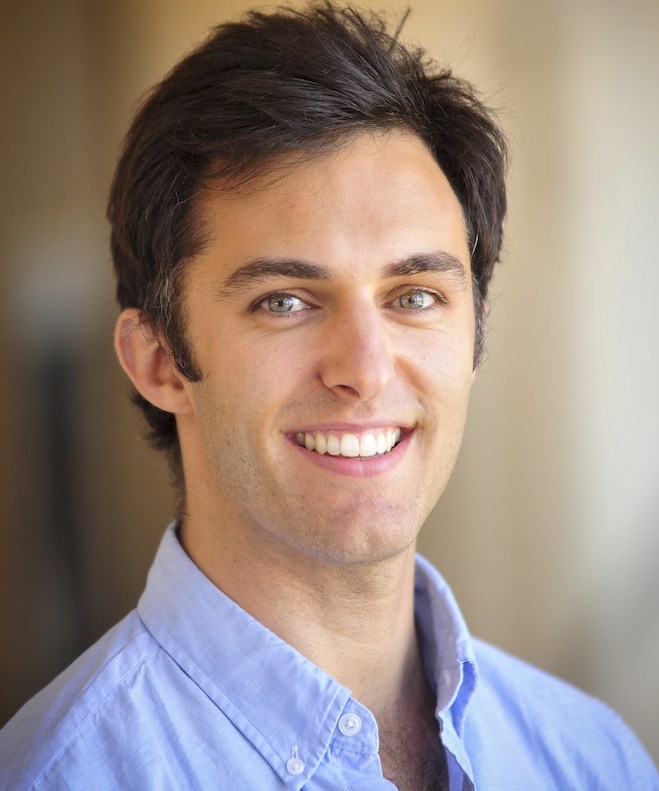
Daniel M. Roy is a Full Professor at the University of Toronto, with cross-appointments in the Department of Computer Science, Department of Statistical Sciences, and Department of Electrical and Computer Engineering. He serves as Research Director at the Vector Institute and holds the CIFAR Canada AI Chair. Research Focus: Foundational principles of prediction, inference, and decision-making under uncertainty across machine learning, statistics, mathematical logic, applied probability, and computer science. Scientific Contributions: Key work in learning theory, statistical network analysis, probabilistic programming, and information-theoretic frameworks for generalization. Awards: ICML 2024 Best Paper Award for "Information Complexity of Stochastic Convex Optimization" and promotion to Full Professor in 2024. Student Advising: Actively mentors Ph.D. candidates and postdoctoral researchers with strong quantitative backgrounds, particularly at the intersection of machine learning, statistics, and computer science. Email: daniel.roy@utoronto.ca
جستوجوی استاد و پژوهشگر
استاد راهنما، استاد دانشگاه یا پژوهشگر مناسب برای مسیر پژوهشیتان را پیدا کنید و با او ارتباط بگیرید.
نمایش ۳۱-۴۵ از ۱۱٬۷۸۹ استاد راهنما
اطلاعات این پروفایلها از صفحات عمومی دانشگاهها جمعآوری شده و ممکن است بهروز نباشد.
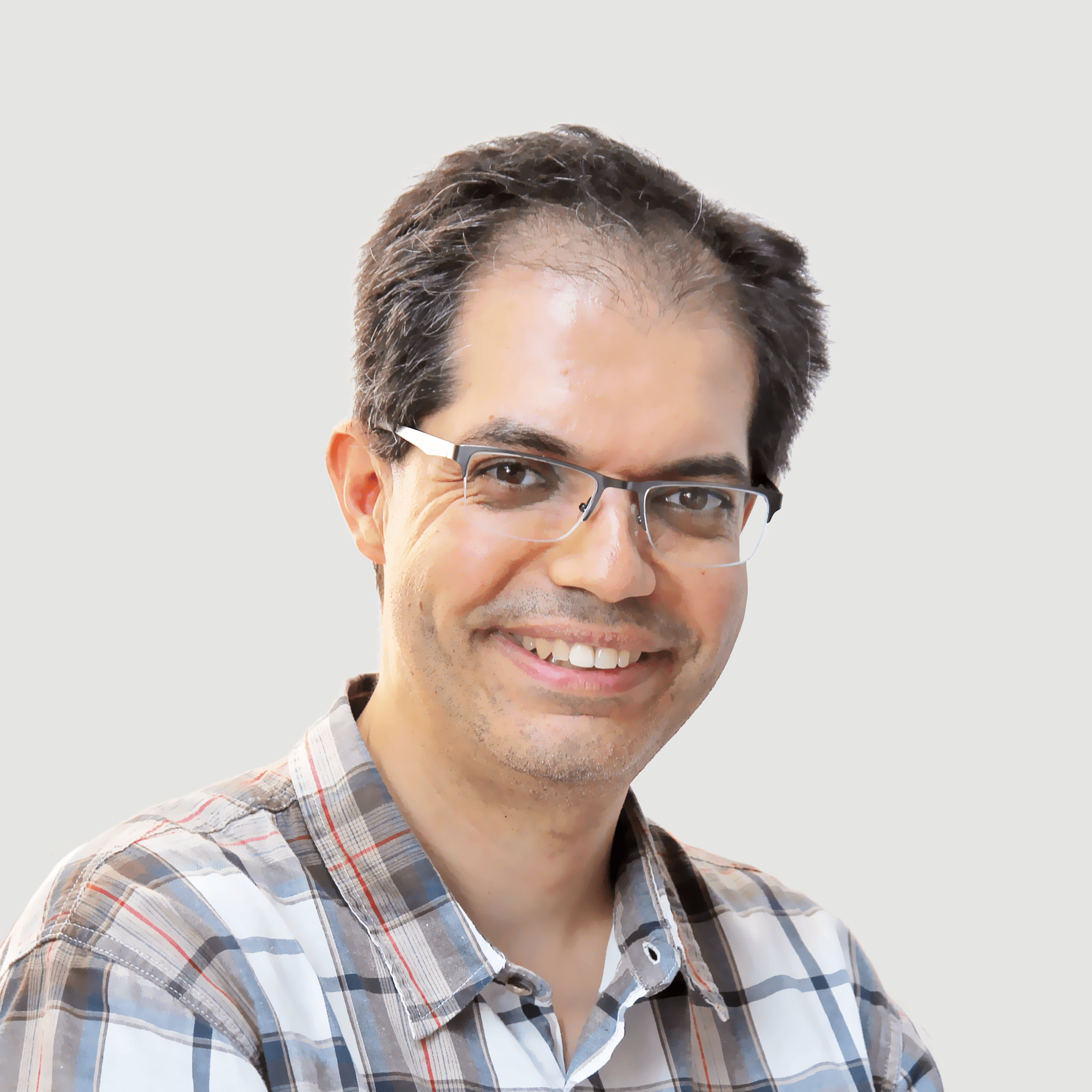
Pascal Poupart is a Professor and Canada CIFAR AI Chair at the Vector Institute, affiliated with the David R. Cheriton School of Computer Science at the University of Waterloo. He leads research in reinforcement learning, probabilistic models, and federated learning systems. Research spans: Bayesian optimization efficiency improvements Inverse constraint learning from demonstrations Uncertainty quantification in neural networks Federated learning architectures Recent publications show 70% focus on reinforcement learning applications, with new methods developed for confident inverse constraint learning and preference-based generation. Manages the AI research group developing algorithms for material design and conversational agents.
Andreas Vlachos is a Professor of Natural Language Processing and Machine Learning at the Department of Computer Science and Technology, University of Cambridge, and holds the Dinesh Dhamija Fellowship at Fitzwilliam College. His research spans dialogue modeling, automated fact-checking, imitation learning, semantic parsing, biomedical text mining, and trustworthiness in AI systems. PhD in Computer Science, University of Cambridge (supervised by Ted Briscoe and Zoubin Ghahramani) Lecturer at University of Sheffield Postdoctoral roles at UCL, University of Cambridge (NLIP group, Stephen Clark), and University of Wisconsin-Madison (Mark Craven) Current research focuses on evaluating and mitigating biases in language models, advancing fact-checking methodologies, and improving model robustness through interpolation, reinforcement learning, and causal reasoning. His work integrates natural logic, knowledge graphs, and multimodal evidence for verification tasks. Recent publications address uncertainty quantification, temporal planning benchmarks, and ethical framing of NLP artifacts. Grants from ERC, EPSRC, Facebook, Google, and the Alan Turing Institute fund his research team. Collaborations include Sebastian Riedel, Stephen Clark, and Mark Craven. Key projects explore disinformation detection, long-form generation, and confidence calibration in AI systems.

- Computational models of cognition
- Probabilistic programming languages
- Natural language semantics and pragmatics
- +۶ مورد دیگر
Noah D. Goodman is Associate Professor of Psychology and Computer Science, and Linguistics (by courtesy) at Stanford University. He directs the Computation & Cognition Lab (CoCoLab) at Stanford, where he leads research on computational models of cognition, integrating logic and probability. His work spans cognitive psychology, linguistics, and computer science. Primary Appointment: Psychology Department By Courtesy: Computer Science Department and Linguistics Department Director: Computation & Cognition Lab (CoCoLab) Goodman's research focuses on computational models of cognition, with particular interest in probabilistic approaches to understanding human thought. His work integrates logic and probability to model concepts, categorization, intuitive theories, causal learning and reasoning, social cognition (including reasoning about others' goals, beliefs, and actions), cognitive development (especially acquisition of abstract knowledge), and natural language semantics and pragmatics. He has made significant contributions to the development of probabilistic programming languages as tools for cognitive modeling. His recent publications demonstrate a strong trend toward integrating probabilistic modeling with linguistic theory and social cognition. The articles span computational cognitive science, natural language processing, and artificial intelligence, with a consistent theme of using probabilistic frameworks to understand complex cognitive phenomena. Many papers explore how humans make inferences under uncertainty across different domains. Goodman teaches several courses at Stanford including Language and Thought (Psych 132), Computation and Cognition: the Probabilistic Approach (Psych 204/CS 428), Foundations of Cognition (Psych 205), and Introduction to Cognitive Science. He has also led seminars on topics ranging from natural and artificial intelligence to the science of meditation.

Henrik Sandberg is a Professor at the Division of Decision and Control Systems , KTH Royal Institute of Technology , Stockholm, Sweden. He holds the title of Deputy Head of Division and is affiliated with the School of Electrical Engineering and Computer Science . Education: MSc in Engineering Physics (1999) PhD in Automatic Control (2004) from Lund University Postdoctoral position at Caltech (pre-2007) Research Interests: Focus on cyber-physical systems security , power systems , model reduction , and fundamental limitations of control systems . Key sub-areas include attack detection , networked control , privacy-preserving estimation , and resilient control architectures . Publications: Over 150 papers across IEEE Transactions and Automatica , covering topics like stealthy attacks , distributed control , LQG optimization , and thermodynamic costs in filtering . Recent work includes LWE-based encrypted control and Bayesian deception mechanisms . Scientific Awards: Best Student Paper Award Finalist at IEEE CASE 2014; Best Student-Paper Award at IEEE CDC 2004. Grants & Projects: Leads the DYNACON project (WASP Cybersec cluster) and collaborates on CERCES (critical infrastructure resilience). Serves as examiner for multiple advanced courses in cybersecurity and control systems. Contact: Email: hsan@kth.se Phone: +46 (0)8 790 7294 Room: A:607, Malvinas Väg 10, Stockholm
- Nonparametric statistics
- High-dimensional statistics
- Shape-constrained statistical estimation
- +۱ مورد دیگر
Aditya Guntuboyina is an Associate Professor in the Department of Statistics at the University of California, Berkeley. He has held this position since January 2012, following a postdoctoral stint at the Wharton Statistics Department and a PhD in Statistics from Yale University (2011) under Professor David Pollard. He earned his B.Stat and M.Stat degrees from the Indian Statistical Institute, Kolkata. PhD: Statistics, Yale University (2011) B.Stat/M.Stat: Indian Statistical Institute, Kolkata His research focuses on nonparametric and high-dimensional statistics , particularly shape-constrained estimation and Bayesian/Empirical Bayes methods . Key themes include convex regression, isotonic regression, mixture models, and total variation denoising. Recent publications analyze multivariate scale mixtures, convergence rates, and suboptimality of least squares in constrained settings. Aditya has supervised multiple PhD students in the Berkeley Statistics and EECS programs. He teaches courses such as Time Series Analysis (Stat 153/248), Data, Inference, and Decisions (Data 102), and advanced probability (Stat 201A). His work often intersects with machine learning, optimization, and information theory. Scientific contributions include theoretical advances in shape-restricted regression, adaptation in log-concave density estimation, and risk bounds for convex-constrained models. He has published in top journals like Annals of Statistics , Journal of the Royal Statistical Society: Series B , and IEEE Transactions on Information Theory .
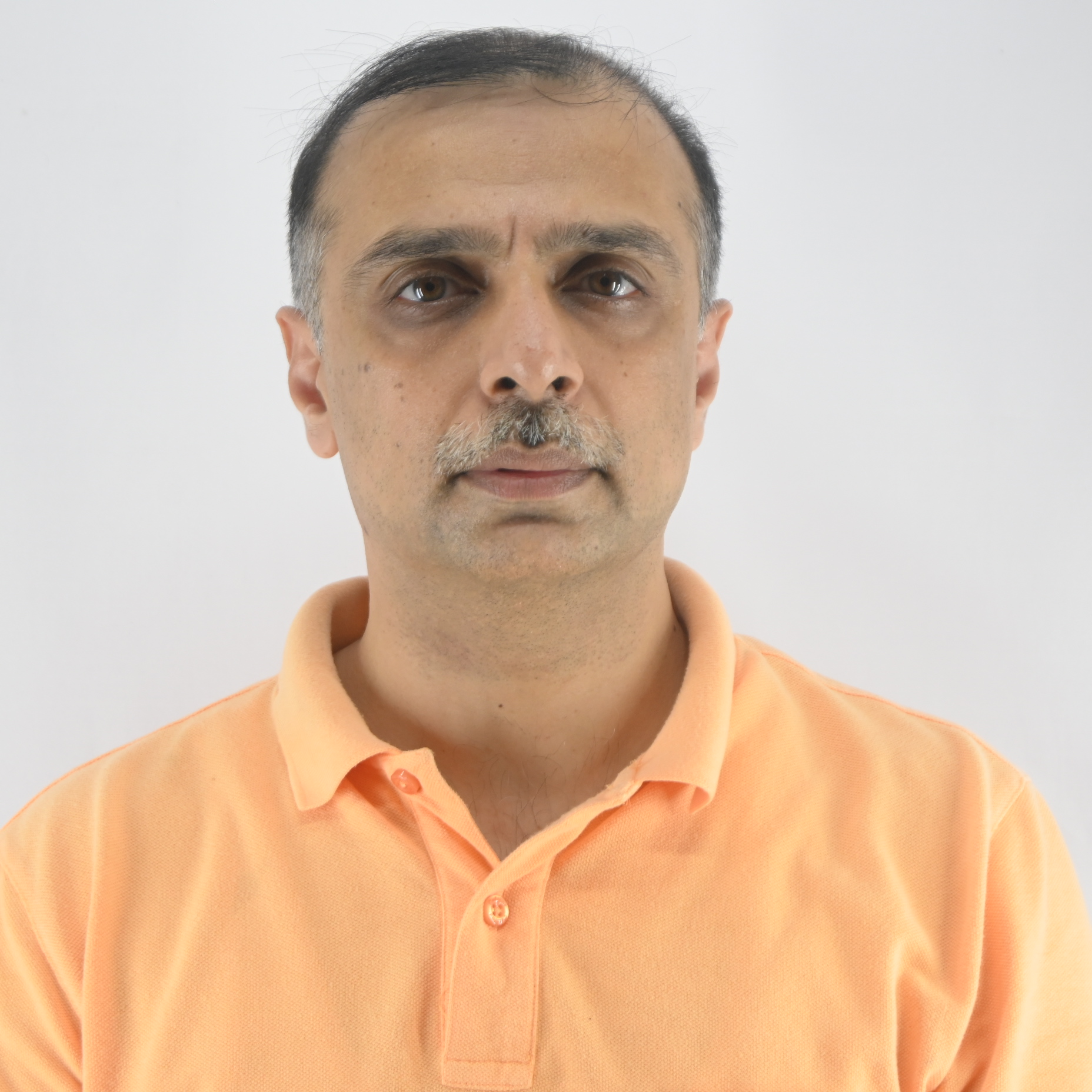
Ajit Rajwade is a Professor at the Department of Computer Science and Engineering , Indian Institute of Technology Bombay. His research spans Artificial Intelligence , Compressed Sensing , and Medical Imaging , with affiliations to the Centre for Machine Intelligence and Data Science and the Koita Centre for Digital Health . Education : PhD in Computer and Information Science and Engineering, University of Florida (2010) MSc in Computer Science, McGill University (2004) BTech in Computer Engineering, University of Pune (2002) His research interests focus on intelligent data acquisition, particularly in neural network analysis , graph signal processing , and medical imaging . He develops compressed sensing algorithms for inverse problems like tomography and MRI reconstruction , alongside applying group testing to pandemic response. Scientific awards include the Prof. S. P. Sukhatme Award (2024) and Departmental Teaching Excellence (2019). His publications demonstrate expertise in image restoration , noise modeling , and epidemiological algorithms . He has advised PhD students like Sabyasachi Ghosh and Jerin Geo James , with a focus on computationally efficient methods in medical imaging and machine learning .
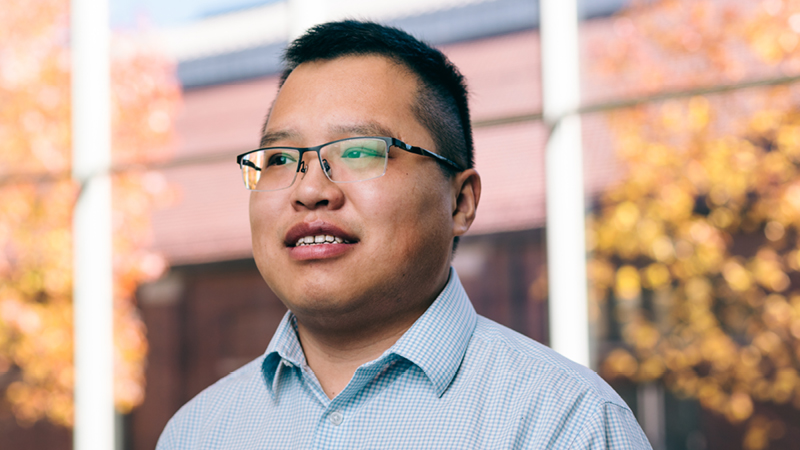
Jianguo Wangمشاهده پروفایل
استادیار
Jianguo Wang is an Assistant Professor in the Department of Computer Science at Purdue University, joining in Spring 2021. His research focuses on database systems for the cloud and large language models, including disaggregated databases and vector databases. He holds a PhD from the University of California, San Diego, and has worked at Zilliz (Milvus) and Amazon Web Services (AWS). Education: PhD in Computer Science (UC San Diego, 2019), MPhil (Hong Kong Polytechnic University), BSc (Zhengzhou University) Research interests include Disaggregated Databases, Vector Databases for Large Language Models, and cloud-native systems. Notable work includes OpenAurora (an open-source Amazon Aurora prototype) and contributions to Milvus. He has received grants like the NSF CAREER Award and honors such as the IEEE TCDE Rising Star Award. Advising a team of students in database systems and teaching courses like CS592 (Disaggregated Database Systems) and CS440 (Large-scale Data Analytics). Serves on program committees for SIGMOD, VLDB, and ICDE.
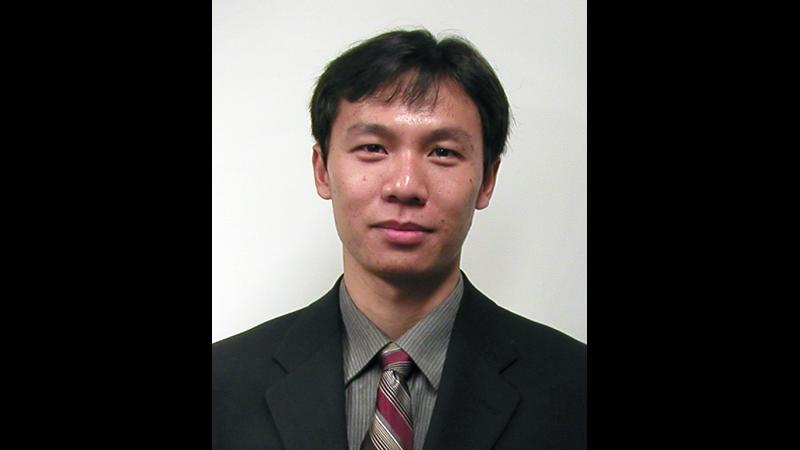
Xiangyu Zhang is the Samuel D. Conte Professor of Computer Science at Purdue University. He specializes in AI security, software analysis, and cyber forensics, with a focus on detecting vulnerabilities in traditional software and AI systems. His research includes dynamic slicing, program profiling, and securing AI models against backdoors. He has led projects funded by DARPA, IARPA, NSF, and industry, securing over $13 million in grants. He has mentored 30+ PhD students and postdocs, many of whom hold academic positions or industry roles. His work has been recognized with awards like the ACM SIGPLAN Distinguished Dissertation Award and NSF Career Award. Education: PhD, Computer Science, University of Arizona (2006) MS & BS, Computer Science, University of Science and Technology of China (2000 & 1998) Research Interests: AI Security: backdoor detection, adversarial attacks, model integrity Program Analysis: dynamic slicing, static/dynamic debugging Cyber Forensics: log analysis, attack investigation Software Reliability: fault localization, vulnerability detection Key Projects: DARPA V-SPELLS: domain-specific program analysis IARPA TrojAI: AI backdoor detection competitions NSF-funded research on model debugging and co-reasoning of software/NL artifacts Awards & Recognition: Top performer in IARPA TrojAI competitions (13/18 rounds) ACM SIGPLAN Distinguished Dissertation Award (2006) NSF Career Award (2009) Ranked 8th globally in systems research productivity (2024) Career Contributions: Secured over $13M in research funding Guided 25 PhDs and 8 postdocs Published 89+ top-tier papers (2014–2024)
Adam Irwinمشاهده پروفایل
دانشیار
Associate Professor Adam Irwin is an NHMRC Emerging Leadership Fellow and Associate Professor in Infectious Diseases at the University of Queensland (UQ) and Queensland Children’s Hospital. He holds positions within the UQ Centre for Clinical Research, Faculty of Health, Medicine and Behavioural Sciences. His work focuses on early sepsis recognition, antimicrobial stewardship, and pediatric infectious diseases. Dr. Irwin completed his medical degree at the University of Birmingham and his PhD in 2016 from the University of Liverpool’s Institute of Infection and Global Health. He has led initiatives like the Queensland Paediatric Sepsis Program, recognized with a Global Sepsis Alliance Award and Queensland Health Excellence Awards. His research spans sepsis pathway implementation, antimicrobial resistance trends, and rapid diagnostic tools. Notable grants include NHMRC funding for studies on multi-drug resistant infections and Children’s Hospital Foundation support for genomics and antimicrobial stewardship projects. He supervises PhD candidates in areas like bloodstream infections and molecular diagnostics. Dr. Irwin collaborates across institutions, contributing to projects such as the RAPIDS Study Group and the PAEDS surveillance network. Awards include the NHMRC Emerging Leadership Fellowship and recognition for sepsis program excellence. His work emphasizes translating research into clinical practice, improving outcomes for critically ill children through evidence-based protocols and innovative diagnostics.
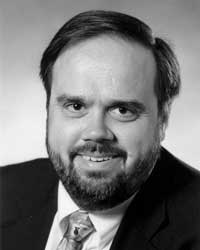
Martin T. Wells is the Charles A. Alexander Professor of Statistical Sciences at Cornell University, with joint appointments in the Department of Statistical Science, Department of Biological Statistics and Computational Biology, Department of Social Statistics, and as Professor of Clinical Epidemiology and Health Services Research at Weill Medical School. He serves as Editor-in-Chief of the ASA-SIAM Book Series and Co-Editor of the Journal of Empirical Legal Studies. Cornell University, Ithaca, NY Weill Cornell Medical College Research Interests span applied and theoretical statistics, Bayesian methods, biostatistics, clinical epidemiology, and computational biology. His work bridges disciplines like finance, legal studies, and health services research. Article Trends highlight advancements in Bayesian modeling, quantum cognition machine learning, tensor analysis, and misclassification correction, with applications in genomics, finance, and public health. Fellow of the American Statistical Association Fellow of the Royal Statistical Society Contributions include developing statistical software (e.g., rTensor), methodological innovations in clinical trials, and empirical legal studies on civil rights and the death penalty.
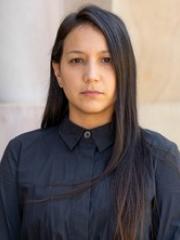
Gloria Milena Monsalve Bravoمشاهده پروفایل
پژوهشگر ارشد
Dr. Gloria Milena Monsalve Bravo is an Advanced Queensland Industry Research Fellow and lecturer at The University of Queensland's School of Chemical Engineering, where she develops novel multiscale simulation techniques combining molecular simulations with macroscopic physics-based modeling to solve complex energy and environmental problems. Her interdisciplinary work bridges applied mathematics and engineering to improve understanding of phenomena in complex systems across chemical, biomedical, and ecological applications. Her research focuses on: Multiscale simulation techniques for complex systems Molecular simulations coupled with macroscopic modeling Gas permeation and separation in mixed-matrix membranes Uncertainty and sensitivity analysis in mathematical models Applied mathematics for engineering problems Dr. Monsalve Bravo's publication record demonstrates a strong trajectory in membrane technology and computational modeling. Her recent work has advanced understanding of gas transport in novel membrane materials, particularly mixed-matrix membranes, with applications in carbon capture and hydrogen storage. She has made significant contributions to theoretical frameworks for modeling permeation in finite-sized composite systems and developed Bayesian approaches for analyzing parameter uncertainty in sorption predictions. Her research bridges fundamental science with practical applications in energy and environmental engineering. Her scientific contributions have been recognized through research funding including: ARC Research Hub for Value-Added Processing of Underutilised Carbon Wastes (2024-2029) Tailor-made composite membranes for greenhouse gas capture (2023-2026) through Advance Queensland Industry Research Fellowships Dr. Monsalve Bravo actively mentors PhD students on cutting-edge projects related to membrane technology, catalyst development, and waste conversion. She collaborates extensively across disciplines, as evidenced by her diverse publication record spanning chemical engineering, materials science, and environmental applications.
- Uncertainty Reasoning and Decision Making in Artificial Intelligence
- Electronic Business
- Systems Analysis and Design
- +۷ مورد دیگر
Liping Liu is a Professor in the Department of Management at The University of Akron's College of Business. He holds a Ph.D. in Business from the University of Kansas (1995), Master of Engineering in Systems Engineering (1991), and dual bachelor's degrees in Applied Mathematics (1986) and River Dynamics (1987). Ph.D., University of Kansas MS, Huazhong University of Science and Technology B.E., Wuhan University BS, Huazhong University of Science and Technology His research spans Artificial Intelligence , Electronic Business , Systems Analysis , Data Quality , and Belief Function Theory . He pioneered coarse utility theory and linear belief functions , now taught in top Ph.D. programs across multiple disciplines. Key trends in his publications include Belief Function Applications (2012-2024), Medical Data Systems (2003-2015), and Decision Theory (2004-2014). Recent works focus on Gamma Belief Functions (2024) and computational improvements in linear belief function operations (2019-2016). Scientific contributions recognized via: Microsoft Azure Educator Grant (2014-2016) Inclusion in Who's Who in America (2010-2013) and Who's Who in the World (2011-2013) As an editor and committee member for major conferences (INFORMS, AMCIS, Belief Functions conferences), he bridges academic research with practical systems implementation in e-business and healthcare domains.

Christophe Bisson is an Associate Professor at SKEMA Business School (Paris campus) specializing in Strategy, Innovation & Entrepreneurship. His research examines augmented anticipatory systems, competitive intelligence, AI governance, and strategic early warning frameworks. He directs the MSc International Strategy and Influence program and leads research at the SKEMA Center for Artificial Intelligence. Bisson holds a PhD in Competitive Intelligence from Aix-Marseille University and a Postgraduate Certificate in AI from the University of Helsinki. His professional experience includes international strategy consulting and academic positions at universities in Turkey and France. Awards & Honors: Inducted into Council of Competitive Intelligence Fellows (2023) SCIP International Academic Award (2017)
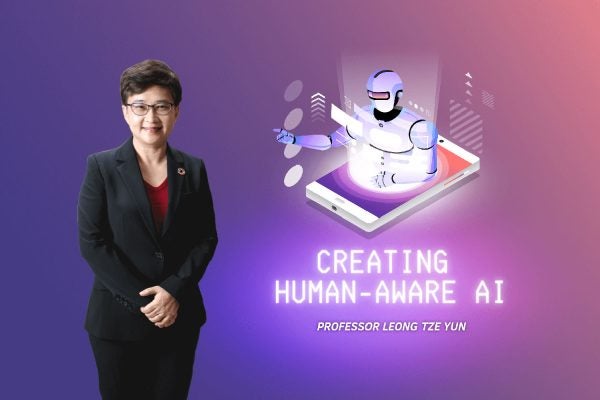
LEONG Tze Yun is a Professor in the Department of Computer Science at the School of Computing, National University of Singapore (NUS). She holds S.B., S.M., and Ph.D. degrees in Computer Science from the Massachusetts Institute of Technology (MIT). Her academic career spans both research and industry experience, with significant contributions to the fields of artificial intelligence and health informatics. Dr. Leong's educational background includes: Ph.D. in Electrical Engineering & Computer Science, Massachusetts Institute of Technology S.M. in Electrical Engineering & Computer Science, Massachusetts Institute of Technology S.B. in Computer Science & Engineering, Massachusetts Institute of Technology Her primary research interests focus on responsible AI, dynamic decision-making, neurocognitive modeling, reinforcement learning, artificial general intelligence, and biomedical and health informatics. Her work bridges the gap between theoretical AI development and practical healthcare applications, with an emphasis on ethical considerations and human-centered design. She directs the Medical Computing Laboratory at NUS, a multidisciplinary research program exploring human-aware decision modeling in complex environments. Analysis of her recent publications reveals a strong trend toward responsible AI development, with significant contributions to reinforcement learning techniques, causal inference methods, and applications of AI in healthcare. Her work increasingly integrates ethical considerations with technical AI development, particularly evident in her 2024 publications on medical AI and human values. Her scientific recognition includes: Fellow of the American College of Medical Informatics (ACMI) Founding Fellow of the International Academy of Health Sciences Informatics (IAHSI) Member of Eta Kappa Nu (Honor Society for Electrical Engineers) Dr. Leong has supervised numerous doctoral and master's students throughout her career, many of whom have gone on to prominent positions at institutions like Google, Netflix, Mayo Clinic, and academic institutions worldwide. Her advisory work extends to significant policy development, including contributions to WHO guidance on ethics and governance of AI for health. She currently serves on the World Health Organization (WHO) Expert Group on Ethics and Governance of AI for Health, the World Economic Forum (WEF) AI Governance Alliance, and the Advisory Council on AI in Uzbekistan. Her laboratory work focuses on developing adaptive systems that evolve with changing technical functionalities, system infrastructures, usage patterns, and operational contexts, with applications spanning prediction and decision analytics, human-aware robotics, game artificial intelligence, personalized education, and assistive care for elderly with neurocognitive disorders.