Muhammad Hamad Alizai is an Associate Professor in the Department of Computer Science at the School of Science and Engineering (SBASSE), Lahore University of Management Sciences (LUMS), Pakistan. His research spans the Internet of Things (IoT), Cyber-Physical Systems, Embedded AI, and intermittent computing, with a focus on sustainable and accessible technologies for developing regions. His research interests include energy harvesting, batteryless computing, GenAI for IoT, wireless sensor networks, and distributed systems . He explores how generative AI can democratize IoT access in low- and middle-income countries and addresses societal challenges through computational solutions. His work is supported by grants from HEC, LUMS, DAAD, and NCBC. Recent publications reveal a strong trend in intermittent computing, energy-efficient IoT, and AI-driven system optimization , with high-impact papers in ACM SenSys, IPSN, BuildSys, and CACM. His team develops innovative systems like CheckMate, Glitch in Time, and Guardian Angel, tackling reliability, security, and accessibility in transiently powered devices. Scientific recognitions include: Best Paper Candidate at ACM SenSys 2019 Audience Choice Award at ACM BuildSys 2017 Best Abstract Award at ACM SenSys 2010 He has advised numerous graduate students, including PhDs like Saad Ahmed and Samar Abbas, and leads pedagogical innovation as head of the LUMS Learning Institute , promoting teaching excellence and AI integration in education. He has served on technical committees for ACM CoNEXT, IPSN, MobiSys, and BuildSys, and organized key workshops in transient computing. His lab focuses on building privacy-preserving, energy-neutral, and AI-augmented embedded systems , particularly for applications in water, energy, and transportation in developing regions.
Dr. Arjen Jansen is a Lecturer in Industrial Design Engineering at Delft University of Technology, affiliated with the Emerging Materials and Sustainable Design Engineering programs. His research spans sports engineering, biomedical applications (e.g., 3D drug printing), and human-powered energy systems. Notable projects include developing vibro-tactile feedback systems for skating and protective wetsuits for Olympic sailors. He teaches courses like the Design Engineering Contest and leads the Erasmus+ project A4SEE to enhance sports engineering education across Europe. Jansen's work bridges innovation theory with practical applications, emphasizing sustainability and human-centric design. Education: Doctor of Industrial Design Engineering (Dr.ir.) Research Interests: Sports technology, biomedical engineering, sustainable materials, and educational methodologies in design. His work often integrates ergonomics, environmental science, and digital tools to create impactful solutions. Grants & Collaborations: Led international projects like A4SEE (2022) and contributed to EU-funded initiatives. His research has been published in journals like Journal of Pharmaceutical Innovation and presented at conferences such as the Engineering of Sport series. Labs/Teams: Emerging Materials Program, Sports Engineering Lab.
Thibaut Vandervelden is a Researcher at Vrije Universiteit Brussel's Faculty of Engineering, Department of Electronics and Informatics. His work focuses on hardware security, embedded systems, and cryptographic implementations for resource-constrained environments. With an h-index of 4, he has produced significant research output since 2019, primarily in Sensors, IEEE Access, and Future Generation Computer Systems. His research interests center on practical security implementations for IoT devices and embedded systems, with particular expertise in Rust programming for secure embedded development, cryptographic protocol optimization, and network security for low-power wireless networks. His work bridges theoretical security concepts with practical implementation challenges in constrained environments. Analysis of his recent publications reveals a strong trend toward secure embedded systems development, with increasing focus on Rust programming language applications, zero-knowledge proofs for privacy-preserving systems, and optimization of cryptographic operations for IoT devices. His research demonstrates consistent collaboration with colleagues including Ruben De Smet, An Braeken, and Kris Steenhaut. Scientific recognition includes: IACR RWC'21 Cryptohackathon on Functional Encryption: 2nd prize (2021) Vandervelden actively participates in research community building through organizing workshops like RustIEC and presenting at events focused on embedded systems security. His work has been referenced in Wikipedia pages and garnered attention across academic and professional platforms, with media contributions on cybersecurity research in Flanders. He leads and participates in research teams focused on wireless community development and the Internet of Batteryless Things, contributing to both theoretical frameworks and practical implementations in hardware security.
Shahriar Nirjon is an Associate Professor in the Department of Computer Science at the University of North Carolina at Chapel Hill. His research focuses on Embedded Intelligence, developing end-to-end systems that make resource-constrained real-time and embedded sensing systems capable of learning, adapting, and evolving. Dr. Nirjon received his Ph.D. from the University of Virginia in 2014. Before joining UNC Chapel Hill in 2015, he worked as a Research Scientist at HP Labs (2014-2015) and as a Research Intern at Microsoft Research (Summer 2013) and Deutsche Telekom Lab (Summer 2010). His primary research interest is Embedded Intelligence, with recent works broadly categorized into embedded deep learning and multi-modal sensing techniques. Applications of his research span wearables and implantables, long-term monitoring and control systems, smart home environments, and mobile health solutions. Dr. Nirjon's research bridges theoretical foundations with practical implementations, resulting in systems that have real-world impact in healthcare, safety, and everyday computing. His work has been highlighted in prominent media outlets including IEEE Spectrum, The Economist, New Scientist, and BBC. Dr. Nirjon's publication record demonstrates a strong focus on mobile computing systems, embedded sensor networks, and wireless technologies. His recent work shows increasing integration of machine learning and artificial intelligence with embedded systems, particularly in healthcare applications. There's a clear trajectory toward more sophisticated, energy-efficient systems capable of on-device intelligence, with growing emphasis on privacy-preserving techniques and real-world deployments in healthcare settings. Best Paper Award, Challenges in AI and Machine Learning for IoT (AIChallengeIoT '20) Best Presentation Award, Pervasive and Ubiquitous Computing (Ubicomp '20) Best Paper Award, Distributed Computing in Sensor Systems (DCOSS '19) Best Presentation Award, Vehicular Networking Conference App Contest (VNC '18) Best Demo Runner Up, Vehicular Networking Conference App Contest (VNC '18) Best Paper Nomination, Embedded Wireless Systems and Networks (EWSN '17) Best Demo Runner Up Award, Embedded Networked Sensor Systems (SenSys '16) Best Paper Award, Mobile Systems, Applications, and Services (MOBISYS '14) Best Paper Award, Real-Time and Embedded Technology and Applications Symposium (RTAS '12) Dr. Nirjon has advised numerous PhD students including Chong Shao (Google), Shiwei Fang (Assistant Professor at Augusta University), Tamzeed Islam (Research Staff at Amazon), Bashima Islam (Assistant Professor at Worcester Polytechnic Institute), Seulki Lee (Assistant Professor at UNIST, Korea), and Yubo Luo (Black Sesame Technologies Inc.). He currently advises Mahathir Monjur, Zhenyu Wang, and Louie Lu who are in various stages of their PhD programs. His research is supported by significant grants including an NSF CAREER award ($561K), an NSF SCH grant ($941K), and multiple other NSF-funded projects totaling over $2 million. His active projects include Audio Privacy, Pedestrian Safety, IoT Data Privacy, and HVAC Acoustic Fingerprinting. Dr. Nirjon leads research in the Embedded Intelligence Lab at UNC Chapel Hill, where his team develops cutting-edge technologies in mobile computing, embedded systems, and wireless networks. His work spans multiple domains including healthcare (mobile health systems), safety (pedestrian safety applications), and smart environments (smart homes). He collaborates with researchers across disciplines, particularly in healthcare through the Carolina Health Informatics Program (CHIP), and is actively involved in the Be-A-Maker (BeAM) network of makerspaces at UNC.
Aggelos Bletsas is a Full Professor in the Department of Electrical and Computer Engineering at Rutgers University. Previously, he held academic positions at the Technical University of Crete, where he served as Assistant Professor (2009–2014), Associate Professor (2014–2018), and Full Professor (2018–2024). His research focuses on scalable wireless communication, sensor networks, RFID systems, energy harvesting, and low-power IoT devices. He leads projects on batteryless backscatter sensors for precision agriculture and ambient-powered inference networks. Education: Ph.D. in Media Arts & Sciences (MIT, 2005) M.Sc. in Media Arts & Sciences (MIT, 2001) Diploma in Electrical & Computer Engineering (Aristotle University of Thessaloniki, 1998) Research interests include wireless sensor networks , RFID localization , signal processing for communication , and energy harvesting . His work emphasizes ultra-low-power, low-cost sensors deployable in agriculture and environmental monitoring. Key contributions include commodity-radio-based RFID localization and smartphone-readable backscatter sensors. Honors include IEEE Fellow (202?), IEEE Communications Society Distinguished Lecturer (2022–2024), and multiple best paper awards. His students have won IEEE VTS/AES Greek Chapter Best Thesis Awards (2012, 2013) and ComSoc Student Competition prizes. He serves as Area Editor for IEEE Transactions on Wireless Communications and is a top-2% global scientist per Stanford rankings. Advising and grants: Supervised over 15 students, with notable advisees listed in 'students'. His research has received ERC Starting Grant (A rating) and industry collaborations. Active in IEEE committees and conference organization. Labs and teams: Co-director of WINLAB (Wireless Information Network Laboratory) at Rutgers, focusing on wireless systems and IoT. Collaborates with industry partners on RF energy harvesting and backscatter communication prototypes.
Carlo Patrono is a distinguished Professor and Chair of Pharmacology at the Catholic University School of Medicine in Rome, a position he has held since 2007. Previously, he served as Professor of Pharmacology at University of Rome 'La Sapienza' 2nd School of Medicine (2001-2006) and University of Chieti 'G. d'Annunzio' School of Medicine (1991-2001). His academic journey began as Assistant Professor at Catholic University School of Medicine (1972-1982), progressing to Associate Professor (1983-1985). Dr. Patrono earned his M.D. Cum Laude from Catholic University School of Medicine, Rome in 1968, following a B.S. in Arts from Liceo Classico Nazareno in 1962. He completed postdoctoral training at Bronx Veterans Administration Hospital and Mount Sinai School of Medicine, New York (1969-1971). His research focuses on nonsteroidal antiinflammatory drugs , antiplatelet drugs , clinical pharmacology , and arachidonic acid metabolism , with significant contributions to understanding cardiovascular pharmacology and platelet function. His work has particular relevance to aspirin therapy and antithrombotic agents. Dr. Patrono has received numerous prestigious awards including the Grand Prize from Fondation Lefoulon-Delalande (2013), the John Vane Award from University of London (2007), and the International Aspirin® Senior Award from Bayer AG (1998). His scholarly impact is reflected in his editorial roles with major journals including Circulation and Arteriosclerosis, Thrombosis and Vascular Biology. As an active researcher, he serves as Principal Investigator for multiple funded projects including studies on antiplatelet effects of aspirin in diabetes patients, funded by Bayer HealthCare AG. He also contributes to European Commission initiatives like the EICOSANOX program investigating eicosanoids and nitric oxide in cardiovascular diseases. Within his institution, Dr. Patrono chairs the Drug Therapy Committee and serves on the Ethics Committee at Catholic University School of Medicine, Rome. He is also a member of the Board of Directors for the Center for Aging Sciences at G. d'Annunzio University Foundation.
Tufan Coşkun Karalar is an Associate Professor in the Department of Electronics and Communication Engineering at Istanbul Technical University (ITU), College of Engineering. His research spans integrated circuits, analog-to-digital converters, wireless sensor networks, and energy-efficient electronic systems. He is actively involved in advanced IC design projects for applications in biomedical implants, green energy, and automotive communications. Research Interests: Integrated and analog circuit design High-speed data converters (ADCs) In-memory computing architectures RF front-end and V2X communication circuits Low-power and energy-efficient sensor networks Hall effect and current sensing technologies His recent publications focus on SRAM-based in-memory computing energy models, high-speed pipelined ADCs, and RF front-end modules for vehicle-to-everything (V2X) systems. These works reflect a strong trend toward energy efficiency, high performance, and application-specific circuit design in modern electronics. Scientific Awards: ELECO 2019 Best Student Publication Award Dr. Karalar has served as Principal Investigator (PI) on multiple research projects funded by TUBITAK and TTO, including studies on ASIC design, micro-implant power control ICs, high-speed ADCs, and improved Hall effect sensors. He is currently supervising 24 theses, indicating an active role in mentoring graduate students. His work involves close collaboration with industry and academic partners in Turkey and internationally. Labs and Research Teams: While specific lab names are not mentioned, his project leadership and publication record suggest he leads a research group focused on analog and mixed-signal integrated circuit design within the Department of Electronics and Communication Engineering at ITU.
Milutin Stanacevic is a Professor in the Department of Electrical and Computer Engineering at Stony Brook University. He holds a Ph.D. from The Johns Hopkins University and an Engineer's Degree from the University of Belgrade. His research focuses on analog/mixed-signal VLSI circuits, RF backscattering sensors, energy harvesting, and biomedical applications like breath analysis systems. He leads the Integrated Microsystems Lab, which develops self-powered sensors for smart spaces, healthcare, and environmental monitoring. His work is supported by NSF grants, including projects on tag-to-tag networks and COVID-19 breath analysis. Education: Ph.D. (2005), M.S. (2001) in Electrical and Computer Engineering from Johns Hopkins; Engineer's Degree (1999) from University of Belgrade. Research Interests: RF sensors, micropower implantables, acoustic localization, and wireless energy harvesting. His lab includes current students like Dyumaan Arvind and Puyang Zheng, with notable alumni in industry roles at Qualcomm, Intel, and Apple. Publications span over 100 peer-reviewed papers in journals like IEEE Transactions and conferences such as ISSCC. His projects include NSF-funded work on backscatter networks and health monitoring systems.
Przemysław Pawełczak is an Associate Professor at Delft University of Technology within the Embedded and Networked Systems Group. He leads the Sustainable Systems Lab , focusing on battery-free and energy-efficient computing systems. PhD from TU Delft (2009) on Opportunistic Spectrum Access MSc from Wrocław University of Science and Technology (2004) His research centers on Internet of Things sustainability , with emphasis on eliminating batteries and reducing environmental impact. This includes hardware-software co-design for intermittent computing, wireless communication optimization, and quantum network protocols. 2022: DIPS framework for debugging battery-free systems 2022: Protean platform for heterogeneous battery-free computing 2021: BFree Python-based sensor prototyping 2019-2022: Quantum Internet Alliance contributions Key research trends include intermittent execution models , energy-harvesting hardware , and quantum communication protocols . His work spans from theoretical foundations to practical implementations in real-world systems. Scientific recognition includes: Dutch Research Council Veni 2012 grant He has supervised multiple PhD students and postdocs, including: Current: James Scott Broadhead, Jasper de Winkel Graduated: Amjad Yousef Majid (now TU Delft postdoc), Qingzhi Liu (Wageningen University lecturer) Leading projects include: Towards Energy Autonomous Systems for IoT (2016–Now) Quantum Internet Alliance (2019–2022) Low-Energy Visible Light IoT Systems (2019–2021) He coordinates the Sustainable Systems Lab and contributes to academic service through editorial roles and conference committees.
Arda Goknil serves as an Assistant Professor in the Department of Computer Science at the Faculty of Technology, Art and Design, Oslo Metropolitan University (OsloMet). His research focuses on critical challenges in Industrial Internet of Things (IIoT), sustainable computing, and data reliability within cyber-physical systems. Dr. Goknil's primary research areas include: Carbon-aware machine learning pipelines for environmental sustainability Intermittent computing solutions for batteryless IoT devices Industrial data quality assurance and repair mechanisms Edge-based AI for manufacturing applications Computer vision in retail technology His work addresses real-world industrial needs through publications in ACM conferences and journals, emphasizing practical implementations in manufacturing and resource-constrained environments. Recent publications (2023-2025) reveal a strong trend toward developing tools like 3D-DaVa for point cloud validation and REPTILE for continual learning in IIoT, demonstrating cross-cutting contributions to data reliability and energy efficiency. While specific advising relationships are unlisted, his research aligns with OsloMet's Innovation, Digital Transformation and Sustainability group. No scientific awards or grant details appear in the provided text, though his active publication record indicates ongoing research leadership in sustainable IoT systems.
Professor Nguyen is an Assistant Professor at the University of Massachusetts Amherst's College of Information and Computer Sciences (CICS), leading the Wireless and Sensor Systems Laboratory (WSSL). His research focuses on Sustainable Autonomous Things (SATs), including medical devices, living sensors, and unmanned aerial vehicles (UAVs), emphasizing energy efficiency and unobtrusive data collection. He holds a PhD in Computer Science from the University of Colorado Boulder (2018), an MS in Electrical and Computer Engineering from Sungkyunkwan University (2014), and a BS in Electronics and Telecommunications from Vietnam National University (2010). Education: PhD, Computer Science, University of Colorado Boulder (2018) MS, Electrical and Computer Engineering, Sungkyunkwan University (2014) BS, Electronics and Telecommunications, Vietnam National University (2010) Research interests span mobile computing, wireless communication, embedded systems, and IoT applications. His team develops innovative hardware-software systems for healthcare monitoring (e.g., ear-worn seizure detectors), environmental sensing (battery-free tree health systems), and drone technology (solar-powered UAVs). Key contributions include privacy-preserving wearable devices and quantum state discrimination frameworks. Awards include the SONY Faculty Innovation Award, multiple ACM SIGMOBILE Research Highlights, and NSF funding. He actively reviews for flagship conferences like ACM MobiCom and serves on NSF panels. Grants and collaborations involve National Science Foundation projects on sustainable wearable sensing systems and medical IoT. His lab emphasizes interdisciplinary work, combining signal processing, machine learning, and hardware design. Labs/Teams: Wireless and Sensor Systems Laboratory (WSSL), collaborating on cross-scale human sensing systems and autonomous device innovation.
Jacob Sorber is a Professor in the School of Computing at Clemson University where he teaches Computer Science courses and leads the PERSIST Research Lab. His research focuses on developing smaller, more efficient, and maintenance-free embedded systems and wearables that operate through energy harvesting and intermittent computing techniques. Dr. Sorber earned his Ph.D. in Computer Science from the University of Massachusetts Amherst under Mark Corner, continuing an academic genealogy tracing back to Sir Isaac Newton. His research interests prominently feature Batteryless Computing , Embedded Systems , and Wearable Security , with applications in health monitoring and sustainable infrastructure. He develops hardware and software technologies enabling devices to adapt to changing conditions, recover from power failures, and operate for decades without maintenance. Recent publications demonstrate a clear trajectory toward batteryless wireless networking and user-centered wearable design , with significant contributions to energy storage for intermittent sensors and eating behavior monitoring systems. His work bridges theoretical advances in intermittent computing with practical health applications like the Auracle ear-mounted eating detection system. Scientific Awards: Fulbright Scholar to Botswana (2019-20) Dean's Professor of Computer Science (2016) NSF CAREER Award (2015) SenSys Best Paper (2014) Multiple conference best paper/poster awards Dr. Sorber has secured substantial NSF funding including CAREER and project grants for Auracle and Amulet, and successfully mentored students like Josiah Hester who joined Northwestern University as an Assistant Professor. His Fulbright award enabled impactful work in Botswana advancing sustainable computing applications. He directs the PERSIST Research Lab which develops foundational technologies including Ekho (energy harvesting simulation), Mementos (checkpointing for batteryless devices), and Turducken (hierarchical power management), with active collaborations in health informatics and environmental engineering for real-world deployments.
Dr. Mohammad Mozumdar is a Professor in the Department of Electrical Engineering at California State University, Long Beach (CSULB), where he has been since 2012. He holds a Ph.D. from Politecnico di Torino (Italy), an M.Sc. from RWTH Aachen University (Germany), and a B.Sc. from Bangladesh University of Engineering Technology. His research focuses on embedded systems, sensor networks, cyber-physical systems, and energy-efficient control systems. Dr. Mozumdar's academic journey includes a postdoctoral fellowship at UC Berkeley, where he contributed to model-based design methodologies for sensor networks. His work bridges theoretical frameworks with practical applications, emphasizing real-time constraints and safety in distributed systems. His research has been published globally and translated into multiple languages. He actively contributes to the scientific community as a reviewer and conference organizer. His interdisciplinary projects span smart infrastructure, automotive cybersecurity, additive manufacturing quality control, and energy harvesting for battery-less systems. Despite no explicitly listed awards, his prolific publication record reflects recognition in his fields. His teaching and advising activities include office hours and courses in electrical engineering, though specific student names or grant details are not documented here. Lab and team collaborations are mentioned but details are unavailable due to a 404 error in linked resources.
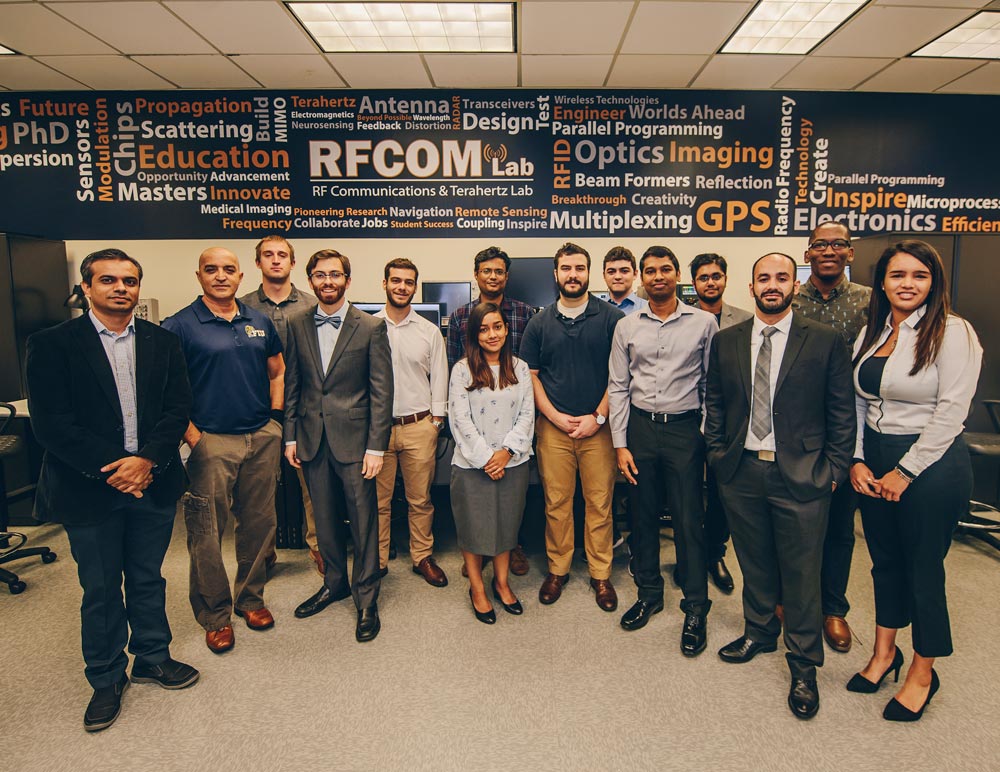
John L. Volakis is a Professor of Electrical & Computer Engineering at Florida International University (FIU) and former Dean of the College of Engineering and Computing (2017-2023). He is an IEEE, ACES, AAAS, NAI, and URSI Fellow. His career spans over four decades, including roles at Boeing, University of Michigan, Ohio State University, and FIU. He has pioneered advancements in antennas, electromagnetic compatibility, and biomedical sensing. His research group has produced over 400 journal papers, 800 conference papers, and 8 books. He has mentored 95 PhD/postdoc students, many of whom became faculty or industry leaders. Education: Ph.D. (1982), M.S. (1979), B.E. (1978) from The Ohio State University and Youngstown State University. Key Roles: Former Director of Ohio State's ElectroScience Laboratory, Co-Director of FIU's RFCOM Lab. Research Interests: Focuses on wearable antennas, ultra-wideband systems, metamaterials, neurosensing, and electromagnetic compatibility. His work includes innovations in millimeter-wave arrays, EMI shielding, and bioelectromagnetics. Recent projects involve battery-free neural recording systems and STAR radio interference cancellation. Publications: Over 1,200+ publications across antennas, computational electromagnetics, and biomedical engineering. His 2025 papers address EMI shielding, LPD waveforms, and TCDA arrays. Awards: IEEE Antennas & Propagation Society Distinguished Award (2014), Chen-To Tai Educator Award (2011), and leadership roles in URSI and IEEE. Advising & Grants: Guided 43 students to best paper awards and secured $125M in external funding during his deanship. His RFCOM Lab develops advanced fabrication and measurement capabilities for phased arrays and biomedical sensors.
Ylva Fernaeus is an Associate Professor in Interaction Design at KTH Royal Institute of Technology’s Division of Media Technology and Interaction Design, and a Digital Futures Faculty member. Her work focuses on tangible/embodied interaction, design philosophy, and sustainable technology. She leads the HumanScatter research project on batteryless human-powered communication. Active at KTH since 2010, she also collaborates with Umeå Institute of Design. Research interests include hybrid crafting, material-centric design, and energy-efficient systems. She teaches courses like Physical Interaction Design and Haptics/Tactile Interaction. Notable projects include studies of longevity in interactive systems, bricolage in design practice, and electricity as a design medium. Her work bridges art, craft, and technology with a focus on ethical, sustainable, and experiential dimensions.