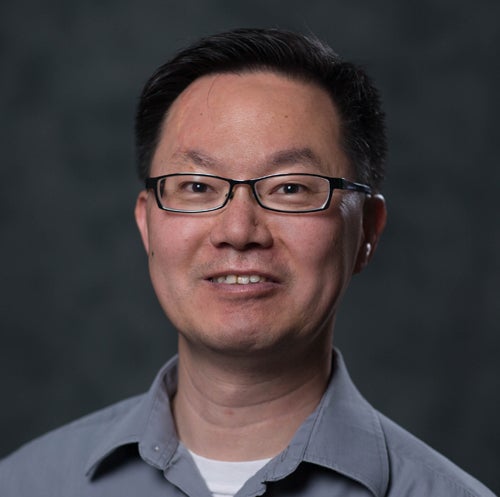
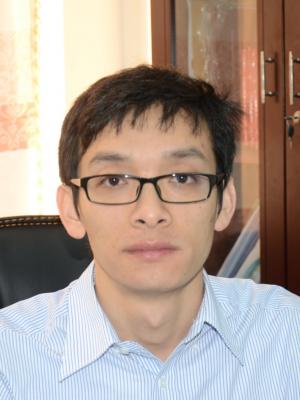
Chulsung Bae is a Ford Foundation Professor at the Department of Chemistry & Chemical Biology (with a joint appointment in Chemical & Biological Engineering) at Rensselaer Polytechnic Institute . He also serves as the Associate Director of the Center for Future Energy Systems (CFES). Education: BS in Polymer Science & Engineering, Inha University MS in Materials Science, POSTECH MS in Chemistry, University of Massachusetts Lowell PhD in Chemistry, University of Southern California (under Surya Prakash and George Olah) Postdoctoral Research, Yale University Dr. Bae's research focuses on the development of functional polymeric materials for clean energy and environmental technologies, particularly ion-conducting polymers for energy conversion and gas separation membranes . His group employs synthetic organic chemistry tools to create innovative materials like polymer electrolytes for fuel cells and redox flow batteries . Recent publications highlight advancements in bipolar membranes , water dissociation catalysts , and durable anion exchange membranes , reflecting his expertise in polymer functionalization and microstructured materials . Current projects include three-dimensionally micropatterned membranes and acid-degradable copolymers . Scientific Awards: Trustee Celebration of Faculty Achievement (2014–2024) Distinguished Member of Scientific Advisory Council, Advanced Energy Conference (2018) RPI School of Science Outstanding Research Award (2016) NSF CAREER Award (2008) New Investigator Award, UNLV (2005) Dr. Bae's research group includes current graduate students and former members who have transitioned to roles in academia, national labs, and industry. His work has received significant funding, including a $2.5 million ARPA-E contract in 2017 for solid ion-conducting materials.
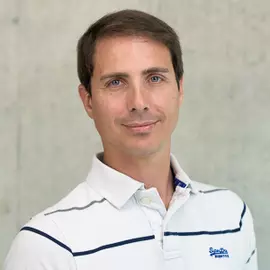
Evan Spotte-Smith is a computational scientist focusing on sustainable materials and energy systems. In Fall 2025, he will join Carnegie Mellon University as an Assistant Professor in Chemical Engineering. Previously, he completed his Ph.D. in Materials Science and Engineering at UC Berkeley under Kristin Aslaug Persson, specializing in computational simulations, machine learning, and reaction networks. His research addresses climate change through decarbonizing chemical manufacturing, improving battery technologies, and establishing ethical standards for AI in chemistry. He is a CBI Post-Doctoral Fellow, leveraging this role to advance machine learning in catalysis and electrochemistry. Education: Ph.D., Materials Science & Engineering, UC Berkeley (Advisor: Kristin A. Persson); Postdoctoral Research at CBI, CMU. Research Interests: Computational chemistry, data-driven materials discovery, sustainability in chemical processes, electrochemical systems, and ethical AI frameworks for chemical sciences. He explores how machine learning can accelerate the design of energy storage materials while addressing environmental impacts. Recent articles focus on machine learning ethics, electrochemical reaction cascades, battery degradation mechanisms, and sustainable electrolyte design. His work bridges fundamental chemistry with industrial applications, aiming to translate lab discoveries into scalable environmental solutions. Awards: CBI Post-Doctoral Fellowship, which provides mentorship and resources for early-career researchers in computational and data science. Grants/Advising: His upcoming faculty position will expand collaborations with CBI and CMU’s energy initiatives. Current focus includes decarbonizing feedstock chemicals and improving plastic recycling via electrochemistry. Labs/Teams: Active in CMU’s Center for Behavioral and Integrated Data Science (CBI), collaborating with Bosch and other industry partners on applied electrochemical challenges.
Professor Yulin Zhong is a faculty member at Griffith University's School of Environment and Science, specializing in Chemistry and Forensic Science. He holds a Professorship since 2025, previously serving as an ARC Future Fellow (2020–2024) and Senior Lecturer (2016–2019). His research focuses on electrochemical synthesis of nanomaterials, additive manufacturing for energy storage devices, and green materials engineering. Zhong has led numerous funded projects, including ARC grants totaling over $1.4M, and collaborates with institutions like the Queensland Micro and Nanotechnology Centre. He has supervised over 20 doctoral students and authored 111+ research outputs. Education: BAppSc Hons (2005) and PhD (2010) from National University of Singapore (NUS), followed by postdocs at Princeton University (2009) and MIT (2011–2012). Awards include the ARC Future Fellowship (2021), A*STAR Fellowship (2010), and Gold Medal for Outstanding PhD Thesis (2009). Research interests span nanomaterials, electrochemical energy storage, and wearable devices. Key contributions include scalable 2D material synthesis and 3D-printed energy components. His work aligns with Sustainable Development Goals 7 (Clean Energy) and 13 (Climate Action).
Dr. Trung Van Nguyen is a Professor in the Department of Chemical & Petroleum Engineering at the University of Kansas, part of the School of Engineering. His research focuses on electrochemical storage technologies, including fuel cells and redox flow batteries, with an emphasis on improving energy density and system efficiency. Key areas include molecular structures of supersaturated electrolytes, solid-liquid storage concepts, and PEM fuel cell optimization. He holds a B.S. from North Carolina State University (1981), M.S. (1985), and Ph.D. (1988) from Texas A&M University. Notable awards include the 2016 Bellows Scholar and 2015 Miller Scholar from the University of Kansas School of Engineering. Dr. Nguyen has secured grants such as an NSF award ($300,000) for PEM fuel cell research (2018–2021) and a Largo Clean Energy grant ($225,000) for electrolyte densification (2022–2023). His work spans collaborations with institutions like KAIST (South Korea), Pacific Northwest National Laboratory, and universities in Hong Kong and Taiwan. Highlighted Research: Solid/Liquid high-energy-density storage for redox flow batteries, hydrogen-vanadium fuel cells, and PEM fuel cell water management. Key Techniques: Electrochemical characterization, in-situ membrane analysis, and catalyst design. Recent publications (2020–2023) address vanadium electrolyte behavior, Nafion nanostructure modification, and hybrid storage systems. Presentations include the Electrochemical Society meetings and international forums on energy storage.
Prof. Dr. Alexandre de Spindler is a Professor of Information Systems at the Zurich University of Applied Sciences (ZHAW) within the School of Management and Law . He co-leads the Center for Information Systems and Technologies and focuses on application development frameworks for conversational interactions with information systems, leveraging multimodal foundation models while enhancing their controllability and reliability. His work extends to improving social skills in digital interactions and teaching agile requirements engineering. University: Zurich University of Applied Sciences School: School of Management and Law Department: Institute of Business Information Technology Academic Rank: Professor His research explores conversational systems , generative AI , and stateful prompt orchestration for complex interactions, particularly in healthcare and financial sectors. Recent work includes frameworks like PROMISE for model-driven prompt management and Science Fiction Prototyping for responsible AI innovation. Teaching contributions span data science programs (BSc, MSc, CAS) covering machine learning, generative AI, and full-stack application validation. He collaborates across disciplines including gerontology and forensic phonetics, with a focus on applying AI to societal challenges.
Anantha P. Chandrakasan is MIT's Provost and Vannevar Bush Professor of Electrical Engineering and Computer Science. He leads strategic initiatives such as the MIT Climate and Sustainability Consortium, MIT AI Hardware Program, and MIT-IBM Watson AI Lab. As Chief Innovation and Strategy Officer, he oversees MIT HEALS, MGAIC, and MITHIC. Previously, he served as MIT School of Engineering Dean (2011-2025) and director of MIT Microsystems Technology Laboratories (2006-2011). He earned all degrees (B.S., M.S., Ph.D.) in EECS from UC Berkeley (1989-1994). His research focuses on energy-efficient circuits, low-power wireless sensors, and emerging technologies. Key projects include implantable medical devices, secure AI hardware, and THz communication systems. He pioneered the Schwarzman College of Computing, reshaping MIT’s academic structure. Recipient of the 2022 IEEE Mildred Dresselhaus Medal, he holds leadership roles in multiple MIT-industry partnerships. Notable collaborations include Ericsson (5G networks), Takeda (healthcare), and Accenture (industry-technology convergence). His academic advising includes fostering interdisciplinary programs like the MIT Quest for Intelligence and postdoctoral fellowships. He champions diversity through initiatives like the Faculty Gender Equity Committee and Daniel J. Riccio Graduate Engineering Leadership Program. Labs/Teams: Leads MIT's Office of Innovation & Strategy, oversees Microsystems Technology Laboratories, and co-chairs the MIT-GE Vernova Energy & Climate Alliance. Key hardware projects include conformable ultrasound patches and battery-free IoT devices.
Delphine RIU serves as University Professor and Director of Grenoble INP - Ense3 (National School of Energy, Water and Environment Engineering) at Grenoble Alpes University, leading the Electrical Systems and Networks team (SYREL) within G2Elab. Her strategic oversight encompasses 1,300 students (25% international), 9 diploma programs, 80 faculty members, and 50 administrative/technical staff. Her academic credentials include: HDR (2010) - Grenoble INP, UGA: 'Modeling and control of electrical systems: from their optimal structure to their dynamic performance' Doctorate (2002) - Grenoble INP, UGA: 'Modeling of electrical machines using non-integer order systems' Engineer & DEA - Grenoble INP, UGA (ex ENSIEG) Her research integrates electrical engineering with energy systems innovation , specializing in sizing/control of electromechanical systems, modeling of unconventional energy production/storage, multi-criteria (technical/economic/environmental) optimization of multi-fluid systems, and uncertainty-aware control laws for on-board energy systems and microgrids. Applications target sustainable energy solutions through robust system design. Recent publications (2020-2021) demonstrate expertise in microgrid control under uncertainty, second-life battery applications, and techno-economic optimization. Her work bridges theoretical control systems with real-world validation in renewable integration and energy efficiency, emphasizing robustness analysis and multi-objective decision frameworks. She has co-supervised 16 theses (1 ongoing) and contributed to academic governance through 33 selection committees (30 external) and 54 thesis juries (32 as rapporteur). Key partnerships include GIPSA-lab, LEPMI, University of Gdansk, CEA LITEN/LIST, ALSTOM, Schneider Electric, ENEDIS, RTE, and SAFT. Her laboratory affiliation centers on the SYREL team at G2Elab (Grenoble Electrical Engineering Laboratory), a joint research unit of Grenoble INP, CNRS, and UGA driving innovation in electrical system modeling and control.
Lin Ma is a Professor in the Department of Mechanical Engineering at the University of Virginia. His research focuses on 4D diagnostics and thermal-fluid systems, including novel optical measurement techniques for combustion and propulsion studies. He holds a Ph.D. from Stanford University (2006), an M.S. from Stanford (2001), and a B.S. from Tsinghua University (2000). Key research areas include laser-based diagnostics, tomography, non-intrusive measurements in harsh environments, and thermal management of energy systems. His work emphasizes 3D flow visualization and combustion analysis using advanced imaging techniques like VLIF and tomographic chemiluminescence. Notable awards include the NSF Career Award (2009) and the Air Force Summer Faculty Fellowship (2014-2016). His research has been applied to gas turbine exhaust characterization, battery thermal management, and high-speed combustion diagnostics in supersonic environments. Collaborations involve developing algorithms for 3D reconstruction and error correction in turbulent flow measurements.
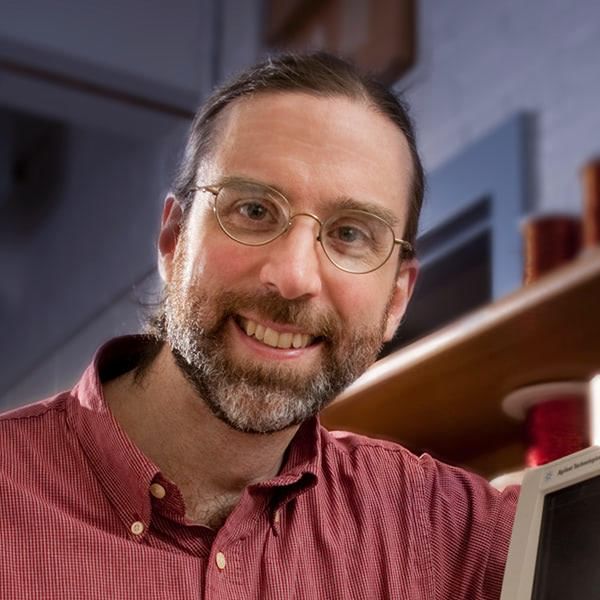
Charles R. Sullivan is the Sue and John Ballard '55 TT'56 Professor of Engineering and Director of the Power Management Integration Center (PMIC) at Dartmouth College's Thayer School of Engineering. His research focuses on power electronics, electromagnetic design, and energy efficiency innovations, with particular emphasis on micro-fabricated magnetic components and nanocomposite materials. Education: BS in Electrical Engineering from Princeton University (1987), PhD in Electrical Engineering and Computer Sciences from UC Berkeley (1996). Research interests include advancing high-frequency power components, wireless power transfer systems, and energy-efficient technologies. Sullivan co-founded Resonant Link , a startup developing wireless charging solutions for medical implants and consumer electronics. Award highlights include Fellow of the National Academy of Inventors (2022), IEEE Technical Achievement Award (2018), and National Science Foundation CAREER Award (1999). He has authored over 20 patents and pioneered innovations such as low-impedance test fixtures and coupled inductor designs for power converters. Administratively, Sullivan leads the PMIC, fostering collaborations between academia and industry to advance power electronics. He teaches courses like ENGS 173 (Energy Utilization) and ENGG 199.03 (High-Frequency Magnetics Design), integrating research with education. Current projects include developing self-resonant wireless power systems and evaluating emerging passive component technologies. Sullivan's work bridges theoretical research with practical applications, aiming to miniaturize and enhance efficiency in power electronics systems globally.
Lu Xihong is a Professor and Doctoral Supervisor at the School of Chemistry, Sun Yat-sen University. He holds a PhD from the same institution and has held academic positions since 2013, progressing from Lecturer to Associate Professor, and ultimately to his current rank of Professor since 2019. His research focuses on nano-energy materials, electrochemical energy storage devices (e.g., supercapacitors, aqueous metal-ion batteries, electrocatalysis), and microbial fuel cells. He has been awarded multiple national and provincial grants, including the National Excellent Young Scientists Fund Project and Guangdong Provincial Science and Technology Projects. Lu has authored over 100 peer-reviewed articles in top journals such as Advanced Materials , Angewandte Chemie International Edition , and ACS Energy Letters , with a focus on energy storage materials and electrochemical systems. Education: PhD in Chemistry, Sun Yat-sen University (2008–2013) Joint PhD in Chemistry, University of California, Santa Cruz (2011–2013) Bachelor of Science in Chemistry, Sun Yat-sen University (2004–2008) Research Highlights: Key projects include developing high-energy-density supercapacitors, stable bismuth-based batteries, and advanced electrocatalysts for water splitting. His work emphasizes surface engineering of nanomaterials and functional composites. Awards: Notable recognitions include the 2017 Guangdong Province Teaching Achievement Award (5th contributor), 2015 Guangdong Natural Science Award (3rd contributor), and 2013 China Youth Science and Technology Innovation Award. Grants & Projects: Over 10 funded projects, including National Natural Science Foundation of China grants, NSFC-Shanxi Joint Funds, and provincial innovation programs. He also leads collaborations with industry partners like Electric Power Research Institute of Guangdong Power Grid. Labs & Teams: Leads research groups focused on electrochemical energy storage at Sun Yat-sen University, with a dedicated lab website: http://ce.sysu.edu.cn/electrochemistry/ .
Dr. Uwe Pelz is a Researcher at the Chair of Microsystem Construction within the Department of Microsystems Engineering (IMTEK) at the University of Freiburg. He serves as a Responsible Investigator for projects in the livMatS (Living, Adaptive and Energy-autonomous Materials Systems) cluster, focusing on thermoelectric energy harvesting and microsystem technologies. His work includes developing advanced materials for energy systems and microfabrication processes using printed circuit board (PCB) technologies. Key research areas include thermoelectric materials, 3D printing of phase change materials, and micro-thermoelectric generator (μTEG) fabrication. Pelz has contributed to projects like ThermoMetaS (thermoelectric metamaterial surfaces) and ThermoBatS (thermoelectric battery systems), funded by the DFG (German Research Foundation). His publications span topics such as paraffin-based photoresins for additive manufacturing, PCB-integrated micro-TEGs, and nano-scale material dispersions for energy harvesting. Pelz is actively involved in academic activities through livMatS, including organizing colloquia and contributing to outreach programs like IDEASfactory@FIT. His interdisciplinary approach bridges materials science, microengineering, and sustainable energy solutions.
Chiara Colombaroni is a Researcher (Ricercatore a Tempo Determinato di Tipo A) at the Department of Civil, Building and Environmental Engineering at Sapienza University of Rome, within the Faculty of Civil and Industrial Engineering. She holds a PhD in Infrastructures and Transportation from Sapienza (2011) and Master’s and Bachelor’s degrees in Transportation Systems Engineering (2006 and 2003). Colombaroni specializes in transportation engineering, with a focus on traffic modeling, logistics optimization, and intelligent transportation systems (ITS). She has led and contributed to numerous national and international projects, including research on container operations, road safety, and smart mobility solutions through initiatives like ITS Italia 2020. Her work integrates advanced methodologies like machine learning, big data analysis, and simulation-optimization techniques to address urban mobility challenges. She teaches courses such as Programming for Transport Systems and Freight Transport and Logistics at Sapienza, and supervises doctoral research in transportation systems. Her research outputs span over 17 indexed publications, with an H-index of 8 and impactful contributions to journals like Transportation Research Part C and IET Intelligent Transport Systems. Education: PhD in Infrastructures and Transportation, Sapienza University (2011) MSc in Transportation Systems Engineering, Sapienza University (2006) BSc in Transportation Engineering, Sapienza University (2003) Research Focus: Urban traffic simulation and optimization Intelligent transportation systems (ITS) Logistics and supply chain optimization Big data applications in transportation Electric vehicle integration and sustainable mobility Recent Trends in Articles: Her recent work emphasizes leveraging machine learning for traffic pattern analysis, optimizing urban logistics with electric vehicles, and integrating IoT for waste management. Projects like the ‘Two-Echelon Electric Vehicle Routing Problem’ and ‘Industry 4.0 in Waste Management’ highlight her focus on sustainable and tech-driven solutions. She also explores post-COVID mobility trends and smart city infrastructure design. Grants & Projects: Coordinated the Qatar Strategic Transport Model Update project (2017–present) Contributed to the EU-funded MULTITUDE project on traffic simulation validation (2010–2013) Participated in the ‘PASSIAMO’ project for smart mobility in Lazio (POR FESR 2014–2020) Labs/Teams: Member of the Sapienza Transport and Logistics Research Center (CTL) Collaborated with institutions like CNIT, ENEA, and international partners (e.g., University of South California)
Professor Jerry Murphy serves as Director of MaREI, the Taighde Éireann – Research Ireland Centre for Energy, Climate and Marine, and holds the Chair in Civil Engineering at University College Cork (UCC), a position held by only 12 individuals in 175 years. As Principal Investigator for Advanced Fuels in the Circular Economy, he leads a major research initiative with significant international impact. MaREI, initiated in 2013 under his leadership, has generated over €130 million in competitive research funding and will graduate its 300th PhD in 2025. Professor Murphy's research focuses on Circular Economy, Energy and Environmental Systems, with particular expertise in Biofuels and Biomethane. His work spans from fundamental research on anaerobic digestion and biogas production to practical applications in industrial decarbonization and renewable energy systems. He has established the Circular Economy, Energy, and Environmental Systems research Group at UCC in 2007, creating a hub for interdisciplinary research that addresses critical challenges in energy transition and climate change mitigation. Analysis of Professor Murphy's publication record reveals a strong focus on innovative approaches to renewable energy production, particularly in the areas of biomethane production, circular bioenergy systems, and integration of biological and electrochemical processes. His recent work demonstrates increasing emphasis on practical implementation challenges, including seasonal variability in biomass availability, industrial decarbonization pathways, and policy frameworks for renewable energy adoption. There's a clear progression toward more integrated systems thinking, with recent publications emphasizing cascading circular bio-systems that maximize resource efficiency. Engineers Ireland Excellence Award (2015) Excellence in Marine Research (2017) Adjunct professor of University of Southern Queensland (2018) International Advisor to DBFZ (2019) Fellow of Irish Academy of Engineers (2019) Mary B Upton Visiting Professorship in Cornell University (2024) Visiting Professor at International Energy Agency (2024) Professor Murphy has supervised approximately 35 PhD researchers and currently leads a team of 20 researchers in circular economy, energy and environmental systems. His research portfolio includes over €1 million in industry research funding and extensive collaboration with government agencies. Notably, he has represented Ireland at the International Energy Agency Bioenergy since 2007 and led the Biogas Task from 2016-2018 and 2019-2021, growing it to 19 countries and authoring/ editing 18 IEA Bioenergy reports. His MaREI Centre represents a significant research infrastructure, functioning as a thirteen-University/Institute collaboration with 250 researchers. Professor Murphy has successfully guided MaREI through six international reviews and secured funding for MaREI phase II (2019-2024). His work bridges fundamental research with practical implementation, particularly evident in his collaborations with industry partners like Gas Networks Ireland and Bord Gais.
Prof. Dr.-Ing. Stefan Lechner has been full Professor of Energy Economics and Energy Systems at the Technical University of Central Hesse (THM) , Giessen, since March 2015. He is affiliated with the Department of Mechanical Engineering and Energy Technology and the Institute THESA – Institute of Thermodynamics, Energy Process Engineering and Systems Analysis . Additionally, he leads the Laboratory for Energy Economics and is a core member of the Competence Center for Energy Technology and Energy Management (etem.THM) . Education & Career Dr.-Ing., Brandenburg University of Technology (BTU) Cottbus, 2012 – Dissertation on steam-fluidized-bed drying of lignite. Dipl.-Ing. (FH) Mechanical Engineering, Georg Agricola University of Applied Sciences Bochum, 2002 – specialising in Future Energies. Supplementary doctoral studies & economics coursework at BTU Cottbus and FernUniversität Hagen. Professional experience at Vattenfall (plant management, power-plant planning & R&D) and Kreisel Umwelttechnik (Head of Development) before entering academia. Research Interests Prof. Lechner’s work centres on the techno-economic analysis and optimisation of energy systems in transition . Core themes include renewable energy integration , thermal energy storage (particularly Carnot batteries using ceramic high-temperature stores), sector coupling between electricity, heat and mobility, and 5th-generation cold district-heating networks (5GDHC). Methodologically, he combines experimental thermal engineering with open-source simulation frameworks , agent-based demand modelling , and electricity-market modelling . Recent activities expand into waste-heat recovery from data centres and transcritical CO₂ heat-pump systems for low-temperature district heating, always targeting cost-effective, grid-friendly and sustainable solutions . Publication Trends Between 2017 and 2024 his output highlights a clear evolution from fundamental studies on pressurized steam fluidized-bed drying and lignite heat-transfer toward system-level analyses of storage-based sector coupling . A dominant cluster addresses Carnot batteries , covering high-temperature storage materials, gas-turbine re-conversion concepts, and demonstration results. Parallel streams examine GIS-based rooftop PV potential , agent-based settlement energy-demand modelling , and regulatory frameworks for cross-sector energy markets. Scientific Awards & Honours No specific awards are mentioned in the provided material. Research Funding & Teams Prof. Lechner has secured and coordinates projects worth > €10 million (THM share ≈ €6.5 million) funded by BMBF, BMWK/BMWi, Hessian ministries (HMWK, HMWEVW), WI-Bank and ERDF : LOEWE 3 DUWä (2025-2027) – transcritical CO₂ dual-use heat pumps for cold district heating. EnEff:Stadt FlexQuartier2 (2023-2027) – hybrid storage optimisation in Giessen’s Philosophenhöhe district. KNW-Plus (2022-2023) – design & online tool for cold local heating networks. Innovative waste-heat use from data centres (2022-2023). FlexQuartier Gießen (2018-2023) – integrated hybrid storage & sector coupling in a new-build district. Kommun:E (2018-2022) – municipal energy-supply transformation under Germany’s Energiewende. High-T-Stor (2017-2019) – cross-sector high-temperature storage for renewable balancing. FES (2019-2021) – Research Center for Energy Storage and Sector Coupling. These projects involve interdisciplinary consortia including municipalities, grid operators, SMEs, and research partners across Germany. Teaching & Academic Leadership He lectures in Energy Economics and Sector Coupling, Energy Markets, Heat Transfer, Renewable Energy Technology and Energy System Analysis . He also serves as Programme Manager for the part-time continuing-education M.Sc. Energy Efficiency Management (StudiumPlus, Wetzlar) and contributes to advanced master’s courses on energy law and thermodynamics.
Geir Mathisen serves as a Professor within the Department of Technical Cybernetics, Faculty of Information Technology and Electrical Engineering at the Norwegian University of Science and Technology (NTNU). He is an active member of the Group for Industrial Computer and Instrumentation Systems, focusing on real-time systems integration and cyber-physical applications across industrial and energy domains. His educational background includes a Civil Engineering degree and a Doctorate (PhD), both earned from NTNU's Department of Technical Cybernetics, establishing foundational expertise in control systems and technical cybernetics. Professor Mathisen's research spans cyber-physical systems, deterministic networking, and distributed real-time systems with significant applications in smart grids and industrial automation. His work pioneers magnetic field energy harvesting for railway systems, edge-based fault detection for photovoltaic panels, and multi-robot coordination in sewing automation. Current investigations focus on power system state estimation, optimal power flow in smart grids, and deterministic communication channels for latency-sensitive applications. Analysis of his 2020-2024 publications reveals a strategic convergence of real-time computing with energy systems, particularly in railway energy harvesting and photovoltaic monitoring. His research consistently bridges theoretical advances in networking protocols with practical industrial implementations, emphasizing determinism and composability in distributed cyber-physical environments. Scientific Awards: No specific awards or fellowships were documented in the provided materials. Professor Mathisen actively supervises doctoral and master's students, including Johannes Schrimpf (2013 PhD thesis on industrial robot control), and offers project assignments as noted for fall 2021. His research is conducted through Norwegian collaborative projects on flexible distribution grids and smart grid services, though specific grant mechanisms remain unspecified in the source material. He contributes significantly to the Group for Industrial Computer and Instrumentation Systems at NTNU, which develops advanced solutions for industrial control, measurement systems, and cyber-physical integration, particularly in energy and manufacturing contexts.