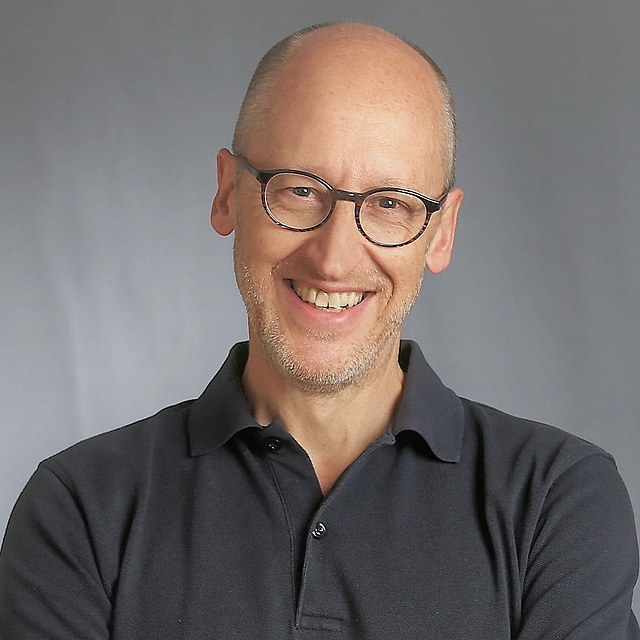
Dr. Vangelis Marinakis is an Assistant Professor at the School of Electrical and Computer Engineering (ECE) of the National Technical University of Athens (NTUA). His academic background includes an Electrical and Computer Engineering degree and a PhD in Decision Support Systems for Sustainable Energy Planning from NTUA. PhD in Decision Support Systems for Sustainable Energy Planning (NTUA) Electrical and Computer Engineer (NTUA) His research focuses on designing methodologies for intelligent energy management across Smart Homes, Buildings, Cities, and Districts, leveraging technologies like IoT, AI, and Big Data. He has contributed to over 25 European (Horizon Europe, H2020) and national projects, with more than 50 journal publications and book chapters. Key research areas include Decision Support Systems , Energy Efficiency , and Renewable Energy Integration . He has led research in AI-driven energy forecasting, federated learning for privacy-preserving data models, and blockchain applications in energy markets. His work explores the intersection of Smart Grids , Building Informatics , and Climate Resilience . Dr. Marinakis has developed frameworks for: Decarbonization-as-a-Service in building renovations Scalable Big Data architectures for smart buildings Multi-criteria optimization of EV charging stations Explainable AI in energy decision-making Climate resilience assessment for urban housing
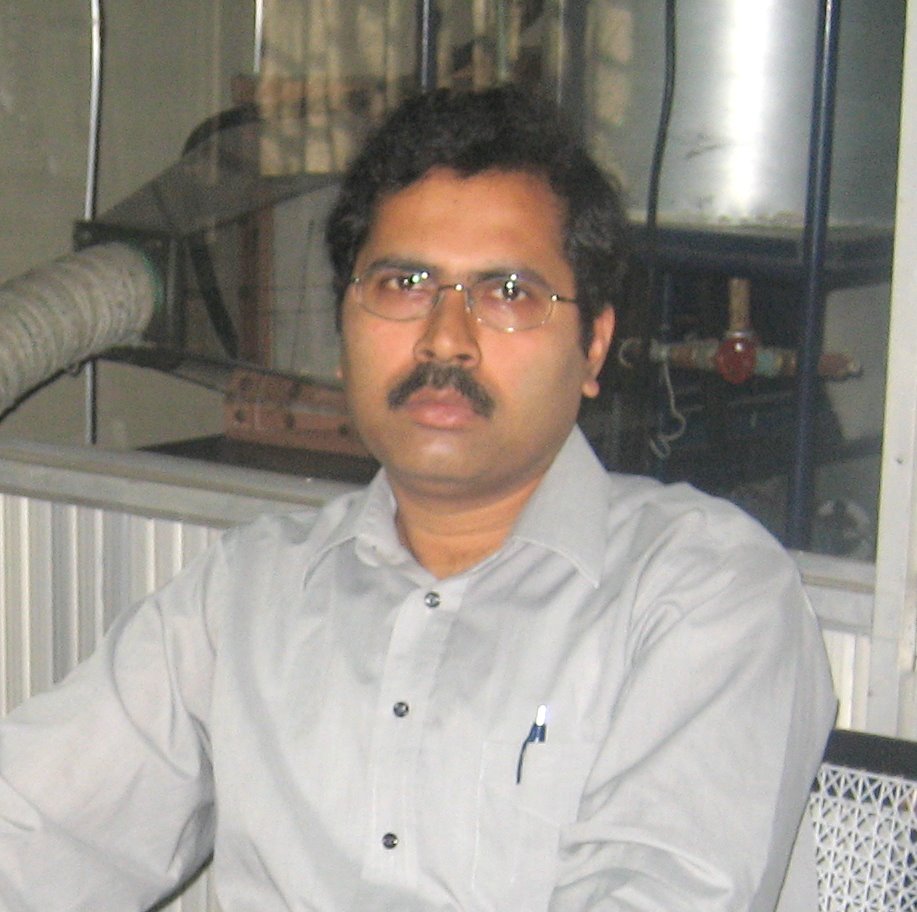
Malay K. Das is a Professor in the Department of Mechanical Engineering at the Indian Institute of Technology Kanpur . With a PhD from PennState, his career spans advanced research in thermofluid science, focusing on energy systems, carbon capture, and battery thermal management. B. E. (University of Calcutta), M. Tech. (IIT Kanpur), PhD (PennState) Teaches graduate-level courses like Machine Learning for Engineers and Mathematics for Engineers Leads two research laboratories: Energy Conservation and Storage Laboratory and Gas Hydrate Research Laboratory Research Interests: Computational Fluid Dynamics (CFD) applications in energy systems Physics-informed machine learning for thermofluid applications CO2 Sequestration and Methane Hydrate Reservoirs Thermal Management of Batteries and Fuel Cells Modeling Transport Phenomena in Porous Media Recent Publication Trends: His work focuses on energy conversion , gas hydrate dynamics , and advanced materials for electrochemical systems . Key areas include Lattice Boltzmann Methods , viscoelastic flow analysis , and nanofluid applications in carbon capture. Advising: Currently supervising PhD students Sourav Dhawan (CO2 Hydrates), Randeep Ravesh (Methane Recovery), Ayaj A. Ansari (Coalbed Methane), and Pawan K. Pandey (Cerebral Aneurysm Flow). Labs and Teams: Leads the Energy Conservation and Storage Laboratory (8 PhD graduates, 3 in progress) and Gas Hydrate Research Laboratory (2 PhD graduates, 1 in progress). Research teams work on fuel cells , CO2 sequestration , and graphene-based nanomaterials for energy applications.
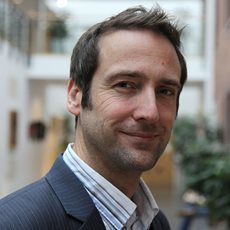
Daniel Johansson is an Associate Professor at Chalmers University of Technology, working in the Department of Physical Resource Theory. With approximately 20 years of experience in climate-energy-economic analysis and integrated assessment modelling, he has authored around 50 peer-reviewed articles and other research papers. His work bridges climate science, engineering, and economics to address critical environmental challenges. His research spans numerous topics including climate stabilisation scenarios, emission metrics, statistical estimation of climate sensitivity, fuel markets, negative CO 2 emissions, food vs fuel dynamics, climate impacts of aviation, and the role of autonomous vehicles in future transportation systems. Dr. Johansson actively engages with industry, policymakers, and the public through research projects, workshops, presentations, policy reports, and op-eds. His recent publications (2022-2025) reveal a strong focus on practical climate solutions across multiple domains. Key themes include methane policy and valuation, electric vehicle transitions and critical materials, autonomous transportation systems, climate justice and fair emission allocation, integrated assessment modeling, and carbon removal technologies. His work demonstrates a consistent integration of economic, engineering, and climate science perspectives to address complex environmental challenges. Among his notable scientific contributions are analyses of: The social cost of methane and appropriate climate metrics Fair allocation of national greenhouse gas emissions Sweden's electric car transition and critical material requirements Climate impacts of aviation and potential policy measures Investment decisions under carbon price uncertainty Autonomous vehicles and their implications for travel demand and emissions Dr. Johansson has led and coordinated various research activities both within Chalmers and in multinational contexts. He has developed courses on energy and environmental issues for students at Chalmers, the School of Economics at University of Gothenburg, and for employees at General Motors. Notably, during autumn 2015 to spring 2016, he took temporary leave from research to work as a regulatory expert at Volvo Cars. His current research projects (2022-2025) include: Co-created scenarios for the climate transition of passenger cars Climate impact from aviation emissions (CLIMAV) Social cost of aviation contrails Climate impacts of aviation: Policies and climate evaluation of different fuels Systems analysis of biomass and carbon capture across energy sectors MISTRA Carbon Exit Phase 2
Arpita Chari is a Research Fellow at Chalmers University of Technology, specializing in Virtual and Digital Production Systems. Her work bridges Industry 4.0, Resilience Engineering, and Sustainability in Production Systems, focusing on integrating digital technologies to enhance resource efficiency and enable lean circular manufacturing. Her research explores the implementation of resilient and sustainable practices in manufacturing, emphasizing dynamic capabilities, digital platforms, and supply chain optimization. Key projects include the Digitala Stambanan initiative and the Produktion2030 strategic innovation program, which address sustainability transitions and systemic resilience. 2024 Highlights: Analyzed dynamic capabilities for resilience-sustainability integration, characterized battery lifecycle challenges, and modeled risk prioritization in supply chains. 2023 Themes: Digital platform adoption, battery production systems, and value chain sustainability in the Digitala Stambanan project. 2022–2021 Foundations: Developed frameworks for green manufacturing, circular supply chains, and stakeholder-driven sustainability in textiles.
Kenichi Oyaizu is a Professor in the Department of Applied Chemistry at Waseda University's School of Advanced Science and Engineering. With over 30 years of academic career, he has established himself as a leading researcher in polymer chemistry, with particular expertise in functional polymers for energy applications. His research group has produced over 300 publications with more than 12,000 citations, demonstrating significant impact in the field. Professor Oyaizu received his education entirely at Waseda University, completing his undergraduate studies in the Department of Applied Chemistry (1986-1990), followed by graduate work in the same department where he earned his PhD in Engineering (1990-1995). His academic journey progressed from JSPS Research Associate to his current position as Professor, with appointments at Tokyo University of Science along the way. Oyaizu's research focuses on polymer synthesis and functional polymers, with particular emphasis on energy storage materials, hydrogen storage systems, high refractive index polymers, and organic battery technologies. His work bridges fundamental polymer chemistry with practical applications in sustainable energy, demonstrating strong interdisciplinary approach that combines materials science, electrochemistry, and informatics. Analysis of his recent publications reveals a strong trend toward developing advanced polymer materials for energy applications, with particular focus on high refractive index polymers for optoelectronics and robust organic materials for batteries. His research increasingly incorporates materials informatics approaches, as evidenced by several publications applying AI and machine learning to polymer design and property prediction. Yamazaki Sho Award (2022) - Polymers for Reversible Hydrogen Storage Society of Polymer Science Japan Award (2022) - Functional Polymers for Energy Storage Minister of Education Science and Technology Prize (2013) Oleo Science Award (2007) Chemical Society of Japan Young Chemists Award (2002) Professor Oyaizu maintains active leadership roles in the academic community, serving on editorial boards and as committee member for multiple professional societies including the Society of Polymer Science Japan and Chemical Society of Japan. His research is supported by significant grants that enable his team to pursue innovative projects at the intersection of polymer science and sustainable energy technologies. The Oyaizu laboratory operates as a dynamic research environment where fundamental polymer chemistry meets practical energy applications, with particular emphasis on developing materials that address global energy challenges.
Dr. Paul Cross is a Senior Lecturer in the Environment and Senior Tutor at the School of Environmental and Natural Sciences, Bangor University, UK. He is actively involved in research, teaching, and public engagement, with a strong focus on environmental science, pollinator conservation, and sustainable agriculture. His work bridges ecology, engineering, and socio-economic modeling, contributing significantly to understanding pollinator health and agricultural sustainability. His research interests include UAV-based tracking of insect pollinators, beekeeping as a tool for poverty alleviation, zoonotic diseases (particularly E. coli O157), bee morphometrics, and socio-economic methodologies for estimating disease and illegal behaviors. He employs advanced technologies such as radar, machine learning, and UAVs to study pollinator behavior and environmental impacts. His recent publications highlight a strong trend in integrating engineering and ecological sciences, particularly through the development of energy-harvesting bee tracking devices and radar-based monitoring systems. His work spans disciplines from entomology and soil science to public health and climate change, reflecting a highly interdisciplinary approach to environmental challenges. Senior Lecturer in the Environment, Bangor University Senior Tutor Course Director for MSc Conservation and Land Management Member of SENRGy Teaching and Ethics Committees Dr. Cross has supervised multiple PhD students on topics ranging from beekeeping in Tanzania to UAV-based bee tracking and neonicotinoid impacts. He has led or contributed to numerous research projects funded by the Welsh Government, RCUK, and the British Academy, focusing on pesticide hazards, greenhouse gas emissions, and food safety. He is actively involved in public outreach, with media appearances on BBC Countryfile and contributions to The Conversation. His work contributes to UN Sustainable Development Goals related to poverty reduction, climate action, and life on land.
Ali DURUSU is a researcher at Yıldız Technical University, College of Engineering , with a focus on Renewable Energy Systems and Photovoltaic Power Plants . His work spans techno-economic modeling, energy optimization, and smart grid integration. Research Interests : Solar power plant design, grid integration, energy economics, MPPT algorithms, hybrid systems, and smart grid technologies Advisory : Has advised 25 theses on renewable energy topics Projects : Involved in 15 research initiatives Recent publications emphasize peer-to-peer energy trading, distributed storage, and optimization techniques. He has contributed to 80 WoS-indexed publications with significant citations (H-Index: 8 in WoS, 11 in Scopus) and participated in 43 peer-reviewed conferences.
Martin Marie Hubert Choux is an Associate Professor at the Department of Engineering Sciences , University of Agder, Norway. He holds dual M.Sc. degrees in Mechatronic Engineering from École Nationale Supérieure d'Art et Métiers (France) and University of Queensland (Australia), and a Ph.D. in Automatic Control from Technical University of Denmark (2011). Education: M.Sc. in Mechatronic Engineering, École Nationale Supérieure d'Art et Métiers, Paris, 2006 M.Sc. in Mechatronic Engineering, University of Queensland, Brisbane, 2006 Ph.D. in Automatic Control, Technical University of Denmark, Copenhagen, 2011 His research focuses on mechatronics , robotics , and battery recycling , with over 15 recent publications (2024–2019) on: Automated Disassembly of lithium-ion batteries Fault Diagnosis in motor drives using structural analysis and neural networks Efficiency Optimization of electric drivetrains in offshore applications Comparative Studies of hydraulic vs. electric actuation systems AI and Robotics for EV battery recycling Control Algorithms for mechanical systems His work spans robotics , automatic control , and sustainable engineering , contributing to electric vehicle and offshore technology advancements.
Professor Robert Elliott is a Professor of Economics and Director of Research in the Department of Economics at the University of Birmingham's Birmingham Business School. His work spans international economics, development economics, environmental and energy economics, and international business, with particular expertise in the Chinese economy, firm behavior, natural disasters, and globalization's environmental impacts. Professor Elliott holds a BA in Economics from the University of Leicester, an MA in Economics from the University of Essex, and completed his PhD at the University of Nottingham under the supervision of Professor David Greenaway, Dr Peter Wright, and Robert Hine. His research focuses on empirical environmental, international trade, development, energy, and labor economics. Key areas include the economics of China and East Asia, empirical environmental economics, economic geography, globalization and environment, natural disasters (floods, typhoons, earthquakes), biodiversity and deforestation, trade and environment, FDI and industrial restructuring, and energy economics. His interdisciplinary approach often combines large dataset manipulation with advanced econometric techniques. Analysis of his recent publications reveals a strong focus on environmental economics, particularly examining the intersection of climate change, natural disasters, and economic outcomes. His work spans historical environmental events in China, contemporary energy and transportation economics, air quality policy evaluation, and the economic impacts of natural disasters across different regions and time periods. A significant portion of his research applies advanced statistical and machine learning methods to environmental policy questions. Professor Elliott serves as an editor for the Sustainable Future Policy Lab and Director of the Trade, Environment, Development and Energy (TEDE) research group. He is also a Co-Investigator on ReLIB as part of the Faraday Institute, a member of Water Challenges in a Changing World IGI, and an Affiliate of the Lloyds Bank Centre for Responsible Business. He actively supervises PhD students across international and development economics and environmental and energy economics. His current projects include the "Brexit Uncertainty Index" and Leverhulme Trust research projects in "Globalisation and the Environment" with Matthew Cole. He has received significant funding including an ESRC grant for "China-UK energy issues" worth approximately £1 million. Professor Elliott is a key member of the Birmingham Plastics Network, an interdisciplinary team of over 40 academics addressing the global plastics problem. This network brings together experts from diverse fields including chemistry, environmental science, engineering, philosophy, linguistics, economics, and law to develop holistic solutions for plastics sustainability.
Paul Prentice is a Senior Lecturer in the Department of Systems, Power and Energy within the School of Engineering at the University of Glasgow. His research focuses on acoustic cavitation phenomena driven by ultrasound, employing ultra-fast framing cameras and acoustic detection methods to study bubble dynamics in liquids and tissues. His primary research interests include developing fundamental understanding of cavitation for medical applications (such as drug delivery and blood-brain barrier modulation) and industrial processes (including materials processing, metal recycling, and sustainable manufacturing). Recent work demonstrates significant contributions to ultrasonic recycling of photovoltaic modules, critical metal recovery from e-waste, and nanoparticle-based therapeutic delivery systems. The publication trends reveal a strong emphasis on interdisciplinary applications: 40% of recent articles focus on medical ultrasound applications (blood-brain barrier, drug delivery), 35% on sustainable materials processing (metal recycling, battery electrode delamination), and 25% on fundamental cavitation dynamics (bubble synchronization, shock wave physics). Key collaborations exist with researchers in Chemistry (Abbott, Ryder), Biomedical Engineering (Cochran, Lucas), and Physics (Cammarano). As Deputy Director of the Centre for Medical and Industrial Ultrasonics (C-MIU), Prentice leads strategic research directions. His supervision portfolio includes 4 active PhD students and multiple PDRAs, with graduated students now holding positions at institutions like Queensland Brain Institute and Theraclion. Major grants include Horizon Europe APOLLO (€3.5M), EPSRC Sustainable Manufacturing (£1.2M), and ERC Starting Grant TheraCav (€1.45M). Teaching responsibilities include convening Advanced Imaging and Therapy 5 (ENG5285) and Advanced Ultrasonics (ENG5316), plus mentoring Integrated System Design projects. His work bridges fundamental physics with real-world industrial and medical challenges through the C-MIU center.
Professor Johan Stahre is affiliated with Chalmers University of Technology, where he leads the Division of Production Systems and serves as Assistant Head of Department. His expertise spans industrial digitalization, automation, and the human role in future manufacturing systems. Codirector of Produktion2030 (2013–present) Central figure in EIT Manufacturing development (2016–present) Chalmers representative in European Factories of the Future Research Organisation His research focuses on: Manufacturing resilience and uncertainty navigation Human-Robot Collaboration in restricted environments 5G-enabled smart maintenance systems Sustainability through digital servitization Skill gaps in Industry 4.0/5.0 Computer vision applications in assembly systems Recent publications highlight trends in immersive technologies for manufacturing and resilience frameworks. While no formal awards are listed, his leadership in national and European innovation programs underscores his impact.
Prof. Christoph Ellert is a Professor in Physics and holds the academic rank of Professeur HES Ordinaire at HES-SO Valais-Wallis. His primary affiliation is with the School of Engineering and IT (Technique et IT), Department of Energy and Environmental Technologies (Energie et techniques environnementales). Education & Early Career: PhD in Physics (1995, University of Freiburg, Germany) focusing on optical spectroscopy of metal clusters. Postdoctoral research at the National Research Council (Ottawa, Canada) and CEA Grenoble/Paris (France), specializing in laser-matter interactions and plasma physics. Research Interests: Plasma technology for energy and environmental applications (e.g., waste conversion, surface treatment) Renewable energy systems: Photovoltaic integration, DC microgrids, hydrogen storage Material science: Plasma deposition of thin films (e.g., hematite, functional coatings) Energy management: Grid stability, peak shaving, and electrolysis for green hydrogen Key Projects: Plastic-to-hydrocarbon conversion via hydrogen plasma (2022–2024) DC-microgrid development for industrial energy autonomy (2017–2019) Cold atmospheric plasma for food decontamination (2014–2015) Solar energy potential assessment in urban environments (Geneva solar cadaster) Grants & Funding: Over CHF 2.5M in grants from Innosuisse, HES-SO Rectorate, and industry partners. Projects emphasize applied R&D in energy systems, plasma engineering, and sustainable technologies. Labs & Teams: Leads the Energy Systems Group at HES-SO Valais-Wallis, collaborating with interdisciplinary teams across engineering, materials science, and environmental technology. Key partners include EPFL, Oerlikon Solar, and local industry.
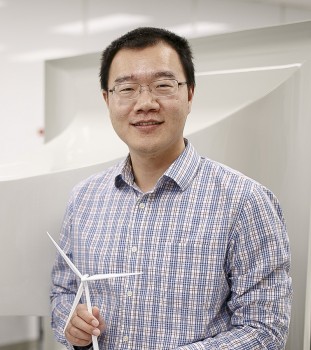
Dr. Jie Zhang is a Professor in the Department of Mechanical Engineering at the University of Texas at Dallas (UTD), affiliated with Electrical and Computer Engineering and the Center for Wind Energy. He holds a Ph.D. in Mechanical Engineering from Rensselaer Polytechnic Institute (2012), and M.S. and B.S. from Huazhong University of Science & Technology (2008, 2006). Before joining UTD in 2015, he was a Research Engineer and Postdoctoral Researcher at the National Renewable Energy Laboratory (2012–2015). His research focuses on sustainable energy systems, including renewable integration, grid resilience, and AI-driven optimization. Notable projects include using Navy ships for emergency power, hydrogen systems in Texas, and generative AI for EV cybersecurity. His lab, the Design and Optimization of Energy Systems (DOES), has secured grants from DOE, NSF, and industry partners. Dr. Zhang has authored over 100 peer-reviewed publications and received awards such as the ONR Young Investigator Award (2020), ASME Design Automation Young Investigator Award, and 16 best paper awards. He leads a team of ~15 graduate/undergraduate students and postdocs, with alumni in academia and industry. Recent achievements include a 2025 UTD Faculty Research Award, promotion to Full Professor (2025), and a $3.5M DOE grant for EV cybersecurity research. His work bridges engineering, AI, and policy to address energy challenges like decarbonization and grid resilience.
Dr. Michael H. Young is a Research Professor and Associate Dean for Research at the Jackson School of Geosciences, University of Texas at Austin. He holds dual roles at the Bureau of Economic Geology and the Jackson School, focusing on ecohydrology, groundwater recharge, and soil-water interactions. His career spans over 35 years in academia, federal agencies, and private industry, with expertise in vadose zone hydrology and environmental geosciences. Education: Ph.D. in Soil and Water Science (1995, University of Arizona), M.S. in Geological Sciences (1986, Ohio University), B.A. in Geology (1983, Hartwick College). Research interests include arid landscape hydrology, water/energy nexus, and soil physics. He has authored/co-authored nearly 100 peer-reviewed articles, served as Editor of Vadose Zone Journal , and chairs committees in professional societies. Awards include Fellowships from the Geological Society of America and Soil Science Society of America (2016), and the Walter Excellence Award (2017). Advising: Supervised over 10 graduate students and postdocs, focusing on interdisciplinary topics like life cycle assessments of energy systems and induced seismicity. Active in teaching, including courses on geological research methods. Labs/Teams: Leads projects in the Texas Soil Observation Network (TxSON) and collaborates with the Center for Injection and Seismicity Research (CISR). Engages in consortia like the Advanced Energy Consortium (AEC) and Mudrock Systems Research Laboratory (MSRL).
Bernhard Gollas is an Associate Professor at the Institute for Chemistry and Technology of Materials at Graz University of Technology since 2009. He studied chemistry at the University of Tübingen and the University of Oregon, earning his PhD in molecular electrochemistry in 1996. After postdoctoral work at the University of Southampton, he joined TU Graz in 2001 as Assistant Professor and later held leadership roles at the Centre for Electrochemical Surface Technology (2001-2014). His research spans electrochemistry, electrodeposition mechanisms, and functional coatings with applications in energy storage and industrial electroplating. Research Interests include: Electrochemistry of solid/liquid interfaces Electrodeposition from deep eutectic solvents Spectroelectrochemical reaction mechanisms Electrochemical quartz-crystal microbalance (EQCM) Functional coatings for corrosion resistance Post-lithium battery materials (Mg, Zn, Al) Publication Trends show focus on electrochemical energy storage (zinc-air, aluminum, magnesium batteries), green solvents, and advanced surface characterization techniques like PM-IRRAS and AFM-SECM. His work addresses dendritic growth suppression, hydrogen evolution mitigation, and industrial electroplating innovations. Research Group includes 20+ members and alumni working on electrochemical methods, coating technologies, and energy storage systems. Collaborative projects like ECOCAPS , IP-URFC , and Uniform highlight his interdisciplinary approach. Contact : Phone: +43 316 873-32338 Email: bernhard.gollas@tugraz.at Room: CE.02.030 Institute: Stremayrgasse 9, 8010 Graz