Simone Cosso is a PartTime Lecturer at the Department of Civil, Chemical and Environmental Engineering (DICCA) and a Research Fellow at the Department of Naval, Electrical, Electronic and Telecommunication Engineering (DITEN) of the University of Genoa . His academic work spans teaching and research in electrical engineering domains. Research Interests: Design and optimization of power electronic converters for hybrid energy systems Control strategies for high-power induction motor drives Static energy conversion in HVDC transmission networks Magnetizing inductance dynamics in medium-voltage motor drives Feed-forward control mechanisms for improved system stability Multi-input converter topologies for hybrid vehicles Scientific Contributions: Recent publications focus on dual-input DC–DC converters for hybrid vehicles, multi-input bidirectional converters for energy storage, and stability analysis in V/f controlled induction motor drives, reflecting expertise in electrical systems integration and control theory.
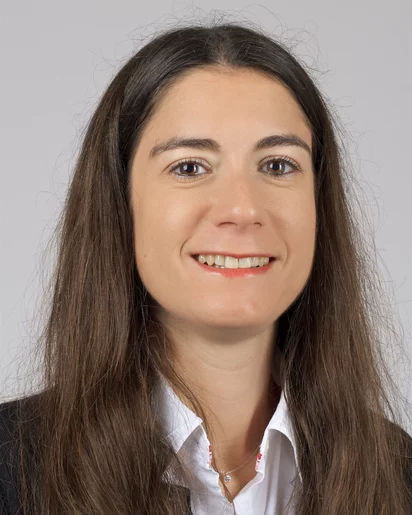
Dr. Anne Bonnin serves as a Beamline Scientist at the Paul Scherrer Institute (PSI) in Switzerland, where she has been instrumental in X-ray imaging research since joining the X-ray Tomography Group in 2014 and assuming her current role at the TOMCAT Beamline in 2016. Affiliated with PSI's Center for Photon Science and Laboratory for Macromolecules and Bioimaging, she operates at the forefront of synchrotron-based imaging techniques. Her academic foundation includes a PhD from INSA de Lyon focused on material properties for explosive detection, followed by postdoctoral work at the European Synchrotron Radiation Facility (ESRF) in X-ray diffraction and phase contrast tomography, and an NSF Research Fellowship for paleontology research at Harvard University and ESRF. Specializing in X-ray imaging (micro/nano-tomography, phase-retrieval) and powder diffraction, Dr. Bonnin leads the bioimaging program at TOMCAT with particular emphasis on the international Heart Imaging Project. Her research develops novel methodologies for materials characterization across diverse domains including cardiac microstructure analysis, paleontology, and neurodegenerative disease modeling, with significant contributions to understanding material behavior at microscopic scales. Her recent publications (2019-2021) demonstrate strong interdisciplinary impact, advancing X-ray imaging applications in energy storage (battery materials), biomedical research (cardiac/auditory systems), and materials engineering (aerogels). A defining trend is the integration of machine learning for image analysis, alongside methodological innovations like non-rigid image stitching and Fourier ptychography. These works reflect extensive international collaboration and address critical challenges in healthcare, energy, and fundamental material science. Dr. Bonnin leads the Heart Imaging Project to quantify cardiac microstructure using contrast-agent-free X-ray phase-contrast imaging, while actively contributing to the SLS2.0 upgrade project preparing TOMCAT for multiscale, multimodal, and dynamic tomographic capabilities. Her collaborative framework spans global researchers in materials science, paleontology, and biomedical engineering. As manager of the TOMCAT nanoscope—a full-field imaging setup achieving 150 nm 3D resolution—she enables cutting-edge research in absorption and phase-contrast imaging. Her team within the X-Ray Tomography Group drives the bioimaging program forward, particularly through the Heart Imaging Project's dynamic cardiac studies using modified Langendorff setups.
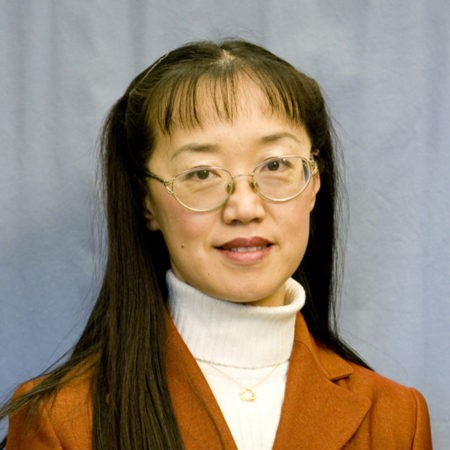
Weihong Zhong is a Professor at the School of Materials Science and Engineering , Washington State University , specializing in polymers, composites, and energy storage materials. With a Ph.D. in Materials Science and Engineering from Beihang University, she has made significant contributions to battery technology and biomaterials engineering. Education: Ph.D., M.S., B.S. in Materials Science and Engineering, Beihang University (1994, 1991, 1988) Research Interests focus on: Battery materials and renewable energy systems Nanocomposites and multifunctional materials Biomaterials for environmental and electronic applications Flexible energy storage devices Publication Trends show expertise in lithium metal/sulfur batteries, protein-based materials, and nanostructured composites for electrochemical applications. Her work bridges materials science, polymer engineering, and sustainable energy technologies. Scientific Recognition includes: Honored Fulbright Scholar (2019-2020) Westinghouse Distinguished Professor (2012-2020) Contact: katie_zhong@wsu.edu | Office: PACCAR (PETB) 252 | Phone: 509-335-7658
Dr. Janusz Buchoski is a researcher at the Division of Rational Use of Energy within the Faculty of Power and Aeronautical Engineering at Warsaw University of Technology. His work focuses on energy markets, renewable energy systems, and building automation technologies. He maintains an active research profile with publications spanning from 2003 to 2017. His primary research interests include renewable energy systems integration, energy market dynamics, building automation technologies, and energy storage solutions. His work particularly addresses the challenges of integrating renewable sources into existing energy infrastructure and analyzing market mechanisms for thermal and electrical energy. Buchoski has contributed to understanding energy market trends through numerous conference proceedings and journal articles in "Rynek Energii" (Energy Market), where he serves as an editor. His research shows a consistent focus on practical applications of renewable technologies within the Polish energy context, with particular attention to wind power integration, bioenergy development, and hybrid power systems. Among his scientific contributions are analyses of energy storage systems for renewable sources, hybrid wind-fuel cell configurations, and market dynamics in heating and gas sectors. His work bridges technical and economic aspects of energy systems. Dr. Buchoski actively engages with students by offering thesis topics in renewable energy utilization, prosumer energy systems, building automation, and energy efficiency. His suggested research directions reflect current industry challenges in energy transition and smart grid development.
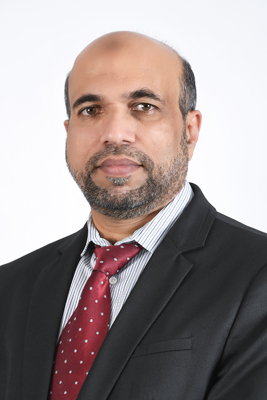
Dr. Balanthi Beig serves as Associate Professor in the Department of Electrical Engineering at Khalifa University, where he established the Power Electronics and Sustainable Energy (PEASE) Research Lab and leads the "Transportation Electrification" team under the Advanced Power and Energy Center (APEC). His academic credentials include: Ph.D. in Engineering from Indian Institute of Science (IISc), Bangalore, India Masters in Electrical Engineering from IISc, Bangalore, India B.Eng. in Electrical and Electronics from National Institute of Technology Karnataka (NITK), Suratkal, India Research centers on experimental power electronics development with emphasis on transportation electrification and renewable energy integration . Key focus areas include EV power train drives, battery management systems, fault-tolerant converters, and ANN-based control algorithms. The PEASE Lab prioritizes prototype fabrication, experimental validation, and industrial application of theoretical models. His editorial contributions include Associate Editor roles for IEEE Transactions on Industrial Electronics and IEEE Transactions on Transportation Electrification. Khalifa University Best in Teaching Award (2010) Khalifa University Research Award (2013) Dr. Beig has supervised numerous graduate students and completed industry-sponsored projects including oil rig power quality mitigation, active filter development, and advanced PWM techniques. Current research involves modular EV power trains, high-gain DC-DC converters, and multi-level converter systems with two patents under review. The PEASE Research Lab provides state-of-the-art facilities for power electronics experimentation, supporting development of control algorithms through hardware-in-loop validation and prototype testing. Ongoing projects target fault-tolerant EV drives, V2G energy transfer systems, and green parking solutions.
Jari Lietzen serves as a Postdoctoral Researcher within the Department of Information and Communications Engineering at Aalto University, Finland, actively contributing to the Communication Engineering research group. His work focuses on pioneering ultra-low-power communication solutions for next-generation wireless networks, particularly through backscatter technologies that enable battery-free device operation by harvesting ambient energy. His research spans critical domains including Backscatter Communications for Ambient IoT, Physical Layer Security mechanisms like secret key generation, Visible Light Communication integration, and Quantum-Enhanced Wireless Systems. He investigates thin-film device fabrication using additive manufacturing, polarization conversion techniques, and reconfigurable intelligent surfaces for harmonic beam steering, addressing fundamental challenges in energy efficiency and security for constrained IoT environments. Analysis of his 13 publications (2018-2024) reveals a cohesive research trajectory centered on backscatter communications evolution. Key trends include the shift from foundational quantum backscatter paradigms (2018) toward practical hardware implementations like light-controlled thin-film devices (2024) and multi-antenna integrated systems. His work consistently bridges theoretical advances in physical layer security with experimental validation, demonstrating expertise in Sub-1GHz radio systems, satellite communications security, and hybrid VLC-backscatter architectures for ambient IoT. Within Aalto University's Communication Engineering group, Lietzen collaborates extensively on experimental projects involving prototype development and link budget validation, with strong partnerships including Boxuan Xie, Kalle Ruttik, and Riku Jäntti. His research directly supports emerging 6G technologies through innovations in passive wireless infrastructure and quantum-inspired communication protocols.
Laura PIGANI is an Associate Professor at the Department of Chemical and Geological Sciences , University of Modena and Reggio Emilia. With expertise in analytical chemistry, she specializes in electrochemical sensor development for applications in clinical, environmental, and food analysis. Research Interests : Electrochemical sensors, biosensors, chemometrics, and optoelectronic materials. Teaching : Courses in Analytical Chemistry and Chemical Sensors at both undergraduate and postgraduate levels. Her work focuses on portable systems for Cannabis sativa analysis, metal bioaccumulation studies in plants, and multisensor data fusion for agricultural monitoring. Recent publications highlight innovations in THC/CBD discrimination , caffeic acid detection , and deep eutectic solvent applications . Collaborations with forensic and environmental institutions underscore her translational research impact. Techniques : Cyclic voltammetry, screen-printed electrodes, sonogel-carbon devices, and multivariate statistical analysis. Applications : Drug testing, grape ripening monitoring, battery recycling, and sustainable pigment extraction. Dr. PIGANI's laboratory employs advanced materials like carbon black , PEDOT , and metal nanoparticles to develop cost-effective, reusable sensors. Her interdisciplinary approach bridges material science, electrochemistry, and analytical methodology.
Jianwen MENG serves as an Assistant Professor at ESTACA, where he has been an Enseignant-chercheur (Teacher-Researcher) since 2020. He is affiliated with ESTACA'Lab, the institution's research laboratory focused on embedded energy systems and transportation technologies. His academic foundation includes a PhD in Electrical Engineering from Université Paris-Saclay (2020), a Master's degree in Electronic Systems and Electrical Engineering from the University of Nantes (2017), and a Bachelor's degree in Electrical Engineering and Automation from Jimei University, China (2015). Dr. MENG specializes in fault diagnosis, fault tolerant control, and energy management systems for electric vehicles and embedded applications. His research integrates advanced control theory with machine learning to address critical challenges in battery and fuel cell technologies, particularly focusing on state estimation, degradation prediction, and real-time monitoring under operational stress. Analysis of his recent publications (2024-2025) reveals a strong interdisciplinary trajectory blending electrical engineering with artificial intelligence. Key trends include AI-enhanced battery state estimation under fast-charging conditions, reinforcement learning for energy management in hybrid vehicles, and novel fault diagnosis frameworks for electrochemical systems. His work consistently targets practical implementation in automotive applications while advancing theoretical control methodologies. He received the Best Paper Award at the IEEE Prognostics and System Health Management Conference (PHM-Paris) in 2019 for his contributions to lithium-ion battery monitoring. At ESTACA, Dr. MENG teaches multivariable systems, real-time control, rapid prototyping, and advanced simulation tools across multiple engineering program levels. His pedagogical approach emphasizes hands-on implementation of theoretical concepts in embedded systems. As a core member of ESTACA'Lab, he contributes to cutting-edge research in automotive electrification, particularly through projects involving battery management systems, fuel cell degradation modeling, and fault-tolerant control architectures for next-generation electric vehicles.
Professor John A Rogers is a leading academic in materials science and biomedical engineering, currently holding the Louis Simpson and Kimberly Querrey Professor position at Northwestern University . He is also the founding Director of the Querrey-Simpson Institute of Bioelectronics , with joint appointments in Biomedical Engineering, Mechanical Engineering, Electrical Engineering, Chemistry, and Neurological Surgery. His research spans bio-integrated electronics, flexible devices, and nanofabrication technologies. Education : BA/BS in Chemistry and Physics (University of Texas, 1989); SM in Physics and Chemistry (MIT, 1992); PhD in Physical Chemistry (MIT, 1995). Rogers’ work focuses on Soft, skin-like electronics for vital signs monitoring, Bioresorbable devices for cardiac and neural applications, Injectable optoelectronics in neuroscience, and 3D microsystems for biomedical research. His team pioneers stretchable silicon , transient electronics , and bio-inspired fabrication methods. Recent research trends include millimeter-scale pacemakers , wireless skin-interfaced systems , and closed-loop bio-optoelectronics . These innovations leverage flexible substrates , nanoscale thermocapillary flows , and soft lithography for unprecedented biocompatibility and functionality. Scientific Awards : Sigma Xi William Procter Prize (2023), IEEE Biomedical Engineering Award (2023), James Prize (2022), Guggenheim Fellowship (2021), MacArthur Fellowship (2009), and multiple academy fellowships. Rogers leads a multidisciplinary team and has co-authored over 1000 peer-reviewed papers, with more than 100 patented technologies commercialized through startups. His lab’s 3D electronic pericardium and skin-integrated microfluidics exemplify his commitment to translating fundamental science into clinical solutions.
Guilherme A. S. Pereira is Professor in the Department of Mechanical, Materials and Aerospace Engineering and Adjunct Associate Professor in the Lane Department of Computer Science and Electrical Engineering at West Virginia University's Benjamin M. Statler College of Engineering and Mineral Resources. He directs the Field and Aerial Robotics (FARO) Laboratory and teaches courses including Mechatronics, Robotic Manipulators, and Robot Motion Planning. Education: Ph.D., Computer Science, Federal University of Minas Gerais, Brazil, 2003 M.S., Electrical Engineering, Federal University of Minas Gerais, Brazil, 2000 B.E. (Hons), Electrical Engineering, Federal University of Minas Gerais, Brazil, 1998 Research Focus: Dr. Pereira pioneers motion planning and state estimation for autonomous ground/aerial vehicles. His work spans field robotics for agriculture/forestry, aerial robotics for infrastructure inspection, cooperative robotics for multi-vehicle systems, and space exploration for Venus atmosphere aerobots. Recent innovations include tether-powered drones for 24/7 operations and vector field methods for precise landing in dynamic environments. Publication Trends: His 2023-2025 publications reveal a strategic shift toward energy-aware path planning, multi-resolution UAV mapping for dam/tailings inspection, and genetic algorithms for extreme-environment navigation. Key themes include tension-aware motion planning for tethered systems and behavior tree frameworks for battery-conscious drone operations. Awards: Gold Medal Award from UFMG Engineering School (1998) Advanced Robotics Best Paper Award (2013) Advising & Grants: Dr. Pereira mentors graduate students in robotics research, evidenced by extensive student co-authorship in publications. His work is funded by NASA (Space Robotics Challenge), NSF, and industry partners for applications in lunar resource utilization, mine safety, and agricultural automation. Current projects include Venus aerobot navigation and Oxpecker tethered UAV systems for stone-mine inspection. Research Infrastructure: He leads the FARO Laboratory, which integrates CUDA parallel computing, AWS cloud mapping, and custom drone platforms for real-world testing in mines, forests, and simulated planetary environments.
Michael Vynnycky is an Affiliated Professor at KTH Royal Institute of Technology , specializing in mathematical modeling and numerical analysis of industrial metallurgical processes. His research focuses on continuous casting , electromagnetic stirring , and fluid-structure interactions in manufacturing systems. Key Research Areas: Continuous casting of metals, fluid dynamics, heat transfer, computational methods (FEM, CFD), inverse Stefan problems, and oscillation mark formation. Collaborations: Frequent collaboration with researchers like H. Fredriksson, B. Glaser, and A. Safavi Nick. Applications: Steel production, die casting, redox flow batteries, and polymer electrolyte fuel cells. Recent publications highlight work on blast furnace dynamics , muon radiography for structural analysis, and asymptotic modeling of gas-solid flows. His methodologies emphasize mathematical rigor and industrial relevance , as seen in studies on macrosegregation and electromagnetic flow control. Techniques: Leverages asymptotic analysis multiphysics simulation finite element methods computational fluid dynamics boundary reconstruction algorithms experimental validation to solve complex industrial problems. Email Contact: michaelv@kth.se
Dane Christensen is a Laboratory Program Manager at the National Renewable Energy Laboratory (NREL), overseeing national security research. Previously, he served as a Group Manager for Cybersecurity Research and Senior Researcher for Smart Buildings. With over 50 peer-reviewed publications, four issued patents, and leadership in pioneering projects like foresee™ technology (2018 R&D 100 Award winner), he specializes in energy security, cybersecurity, and grid-edge technologies. Affiliation : National Renewable Energy Laboratory Education : Bachelor of Mechanical Engineering, Rice University PhD in Mechanical Engineering, University of California, Berkeley His research focuses on Internet of Things , data-driven energy controls , and virtual power plants , with notable work in cybersecurity frameworks for electric grids and smart home energy systems. Key contributions include: Development of foresee™ technology for home energy management Technoeconomic studies on geothermal energy in cold climates Transactive energy market frameworks for grid stability Behavioral analysis of consumer load preferences Co-simulation techniques for cyber-physical systems Residential battery modeling for economic optimization Scientific Awards : R&D 100 Award (2018) for foresee™ technology Christensen's work spans publications, patents, and technical reports analyzing grid-edge vulnerabilities, smart home systems, and renewable integration. His collaborations address energy efficiency, cybersecurity, and sustainable community design.
Kasper Støy is a Professor in Robotics and Embodied Artificial Intelligence at the IT University of Copenhagen, specializing in distributed control of multi-robot systems and modular robotics. He has published over 95 works and authored the MIT Press book Self-Reconfigurable Robots: An Introduction . As co-founder of Universal Robots, he bridges academic research with industrial applications. M.Sc. in Computer Science & Physics, University of Aarhus (1999) Ph.D. in Computer Systems Engineering, University of Southern Denmark (2003) His research focuses on: Modular Robotics Bio-Inspired Robotics Human-Robot Interaction Embodied Artificial Intelligence Self-Reconfigurable Systems Recent publications address anxiety-reducing pocket robots, tactile comfort systems, and origami-inspired mechanical designs. He has won awards including the 2017 GECCO Virtual Creatures Competition. 2017: GECCO Virtual Creatures Competition Active in academic service, he chaired recruitment committees for Statistics and Machine Learning positions. Collaborations span European Commission projects like MUHMI-MOZART and BIG-MAP.
Zhigang Zak Fang is a Professor in the Department of Metallurgical Engineering at the University of Utah, specializing in advanced metallurgical processing technologies. His work focuses on sustainable metal production, titanium powder metallurgy, additive manufacturing, and hydrogen storage materials. With over 360 publications and 60 US patents, Fang has commercialized novel titanium production methods that could significantly reduce costs and greenhouse gas emissions. PhD in Materials Science and Engineering (University of Alabama at Birmingham, 1991) MS and BS in Materials Science and Engineering (University of Science and Technology Beijing, 1984) Research Interests: Fang's research bridges materials engineering with environmental sustainability, particularly through hydrogen-assisted metallurgy and powder-based manufacturing. His work on TiFe alloys for hydrogen storage and WC-Co composites demonstrates innovation in both fundamental science and industrial applications. Notable Awards: R&D100 Awards (2009, 2023) Humboldt Research Award (2023) Fellow, National Academy of Inventors (2017) Editor-in-Chief of the International Journal of Refractory Metals and Hard Materials Grants: Fang has secured ~$30M in external funding, including DOE projects for clean steel production (2024-2027) and ARPA-E energy storage initiatives.
Lois R Gray is a Lecturer at the University of the Highlands and Islands (UHI) North West and Hebrides Energy Innovation Team since 2006, specializing in Electrical and Electronic Engineering. She holds a Master in Science (Sustainable Energy Solutions) and a Bachelor of Science (Electronics Engineering), with postgraduate certifications in education and leadership. Teaching Expertise: Curriculum Leader for Electrical and Electronic Engineering (2016-2019), Module Leader for BEngH Electronics, Control & Instrumentation, and Microcontrollers. Research Focus: Work and project-based education, hyflex/hybrid learning models, gender diversity in engineering education, and inclusive pedagogical frameworks. External Collaborations: Academic Lead Developer at UHI (2019-2022), former Senior Electronics Design Engineer at Thales Defence Systems (1985-2003), and consultant roles in battery technology. Her work intersects with UN Sustainable Development Goals, particularly in education and sustainable energy. Key projects include advancing gender equality through pro-social approaches and improving engineering pedagogy. She has received prestigious awards such as the National Teaching Fellowship (2021) and Senior Membership of IEEE (2020). Scientific Awards: Chartered Engineer (2003) National Teaching Fellowship (2021) Senior Membership of IEEE (2020)