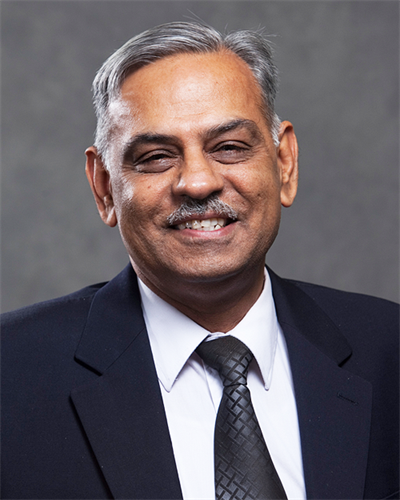
Tridib Saha is a Lecturer at Purdue University, affiliated with both the West Lafayette and Indianapolis campuses. He is part of the Elmore Family School of Electrical and Computer Engineering. His research focuses on interdisciplinary areas including educational technology, electric vehicle engineering, battery technology, control systems, medical technology, and renewable energy systems. He holds a professional position emphasizing teaching and applied research. His work explores topics such as collaborative learning dynamics, hybrid vehicle emissions reduction, Li-ion battery degradation modeling, and fuzzy-logic-based insulin dosage systems for diabetes management. His recent publications (2017–2024) reflect a strong emphasis on practical applications of engineering principles in education, transportation, and healthcare. Notable research trends include the integration of fuzzy logic systems in medical devices, optimization of hybrid powertrains for transit vehicles, and advanced battery modeling for sustainable energy storage. His contributions bridge theoretical frameworks with real-world problem-solving in engineering and healthcare domains. Dr. Saha can be reached at tsaha@purdue.edu. His professional page is linked through LinkedIn.
Dr. Behzad Shiroud Heidari is a Research Fellow at the University of Western Australia's School of Biomedical Sciences and an Honorary Research Fellow at the UWA Medical School. He holds a PhD in Engineering from UWA and the Harry Perkins Institute of Medical Research, focusing on polymeric biomaterials for tendon/ligament repair. His work has led to a PCT patent, commercialization funding, and multiple awards. Current research includes antibiotic-laden bone substitutes via the WA Innovation Seed Fund grant. Research interests span biomaterials engineering, tissue engineering, regenerative medicine, and biomedical applications. Key projects include developing bioactive bone substitutes, bioadhesive patches for nerve repair, and nanocomposites for tendon grafts. Collaborations with industries like Orthocell and Marine Biomedical highlight his industry-driven approach. Awards include the GRS Travel Award (2021), Barry Marshall Postgraduate Travel Award (2020), and Science Industry PhD Fellowship (2019). His grants include leadership in the 'Development of Antibiotic-laden Pearl-based Hydroxyapatite Bone Substitute' project (2023-2026). He is affiliated with the Centre for Orthopaedic Research and contributes to UN Sustainable Development Goals related to good health and sustainable cities. Publications emphasize biomaterials design, biofabrication strategies, and nanocomposite applications. His work bridges academic research and industrial impact, with a focus on translational biomedical solutions.
Zoleikha A. Biron is an Assistant Professor in the Electrical and Computer Engineering Department at the University of Florida. Her research focuses on cybersecurity, resilient control, and optimization of cyber-physical systems (CPS), with applications to intelligent transportation systems, smart power grids, and renewable energy integration. She holds a Ph.D. from Clemson University (2017), and prior to joining UF in 2019, she conducted postdoctoral research at Clemson University's International Center for Automotive Research (CU-ICAR). Education: Ph.D., Electrical Engineering, Clemson University, 2017 M.S., Electrical Engineering, K.N. Toosi University of Technology, Iran B.S., Electrical Engineering, University of Tehran, Iran Research Interests: Dr. Biron specializes in secure CPS design, fault diagnosis, and control theory. Her work integrates machine learning with control systems to enhance system resilience against cyber-physical threats. Key areas include: Resilient control strategies for power grids and transportation systems Game-theoretic methods for load management in microgrids Safety-critical autonomous systems and reinforcement learning Thermal fault diagnosis in lithium-ion batteries Funding & Projects: As Principal Investigator (PI), she leads NSF- and AFRL-funded projects focusing on cyber-survivability frameworks, real-time EV integration, and multi-pronged attack mitigation. Notable grants include: "A Multi-Level Cyber-Survivability Framework" (AFRL, 2024-2025) "Cyber Agility against Multi-Pronged Attacks" (AFRL, 2024-2025) "Real-time EV Integration Framework" (NSF CRII, 2022-2024) Labs & Teams: Her research group explores interdisciplinary challenges in CPS through hardware-in-the-loop (HIL) testing with OPAL-RT simulators. Active projects include motion planning for F1/10th autonomous vehicles and battery management systems for electric vehicles.
Yunxiao Wang is a Senior Fellow at the Institute for Superconducting and Electronic Materials (ISEM) within the Australian Institute for Innovative Materials (AIIM) at the University of Wollongong since 2022. His research focuses on advanced energy storage systems, particularly sodium-sulfur batteries and atomic materials for electrochemical applications. He leads a research group established in 2017, emphasizing material engineering for battery systems and nanoscale characterization. His work includes developing room-temperature sodium-sulfur batteries with safety-enhanced designs, leveraging nanostructural engineering and electrolyte optimization. He also explores single-atom catalysts and monoatomic clusters for enhanced catalytic efficiency in batteries and electrochemical reactions. Wang has secured funding through the ARC DECRA Fellowship to advance sodium-metal-free batteries and has contributed to over 388 research outputs. He currently supervises three PhD students investigating sodium-based battery systems and electrolyte development. His research has implications for sustainable energy storage and aligns with global clean energy goals. Key areas of expertise include electrochemical energy storage, functional materials, and nanoscale characterization. His lab at ISEM collaborates on projects addressing battery safety, scalability, and performance under extreme conditions.
Tieling Zhang is an Associate Professor at the University of Wollongong's School of Mechanical, Materials, Mechatronic and Biomedical Engineering. He holds a PhD from Tokyo University of Marine Science and Technology. His research focuses on system reliability engineering, machine learning applications, energy storage systems, and pipeline integrity management. He has published over 100 peer-reviewed articles and secured over AUD 7 million in research funding. Research Interests: Statistical Data Modelling, Big Data Analytics, Bayesian Inference, System Reliability Modelling, Degradation Modelling, Wind Turbine Maintenance, Battery Management, Smart Grids. Awards: Recipient of three Best Paper Awards from international conferences. He leads the Engineering Asset Management and Systems Engineering Research Group and serves on editorial boards of journals like Information and Machines . Teaching: Contributes to Master's programs in Engineering Asset Management and Engineering Management. Supervises PhD/Master’s students on topics like battery diagnostics, UAV wildfire management, and human-robot collaboration safety. Funding Highlights: Includes grants for battery health estimation, pipeline integrity, and railway asset management. Collaborates with industry partners like the Australasian Centre for Rail Innovation and Energy Pipeline Cooperative Research Centre.
Dr. Ali Hasnain is a Lecturer in Computational Biology and Data Analytics at the Royal College of Surgeons in Ireland (RCSI), School of Pharmacy and Biomolecular Sciences. He holds a PhD from the National University of Ireland Galway and has over 15 years of experience in academia and the software industry, including roles as a Senior Researcher at University College Dublin and Adjunct Lecturer at the Insight Centre for Data Analytics. His research focuses on Artificial Intelligence in Healthcare, Digital Health, Bioinformatics, and Semantic Web technologies, with expertise in data analytics for life sciences and healthcare management. Education: PhD in Bioinformatics & Data Analytics, National University of Ireland Galway MSc in Engineering and Management of Information Systems, Royal Institute of Technology (KTH), Sweden MSc in Project Management and Operational Development, KTH, Sweden BSc (Honors) in Computer Science, Pakistan Institute of Engineering and Applied Sciences Research Interests: Dr. Hasnain’s work bridges computational biology, data science, and healthcare. Key areas include developing algorithms for biomedical data integration, AI-driven query systems for healthcare knowledge graphs, and optimizing pesticide efficacy through genomic analysis. His recent projects address challenges in dementia care technology and environmental stress impact on organisms . Awards & Recognition: Best Paper Awards at ESWC 2017, ISWC2018, and ESWC 2018 Young Scientific Researchers Grant from SWSA/NSF (2012, 2015) Grants & Collaboration: Led the Dementia and Technology (DaTe) project (2021–2023), funded by the Irish Research Council. Collaborations include work on federated SPARQL query systems and semantic web solutions for large-scale biomedical data. Labs & Teams: Active in RCSI’s Pharmacy & Biomolecular Sciences labs, contributing to interdisciplinary projects. Previously led research initiatives at Insight Centre and UCD’s School of Computer Science.
Dr. Rodrigo Martinez-Duarte is an Associate Professor of Mechanical Engineering at Clemson University and a Faculty Scholar in the university’s School of Health Research. He also serves as elected President of the AES Electrophoresis Society and directs the Multiscale Manufacturing Laboratory (M²L), which he founded in 2013. Education: Ph.D. in Mechanical & Aerospace Engineering, University of California, Irvine, 2010 M.S. in Mechanical & Aerospace Engineering, University of California, Irvine, 2009 B.S. in Mechanical Engineering, Tecnológico de Monterrey (Mexico), 2004 Research Interests: Dr. Martinez-Duarte’s scholarship sits at the intersection of micro/nanofabrication, carbonaceous materials, electrokinetics and microfluidics. He is internationally regarded as a pioneer of carbon-electrode dielectrophoresis (carbon-DEP), a technique that enables label-free manipulation and sorting of bioparticles, pathogens and cells. His group currently pursues advanced manufacturing routes—including origami, 3-D printing and bionanomanufacturing—to convert renewable cellulose into lightweight carbon and carbide structures for healthcare diagnostics, structural batteries and smart scaffolds. Publication Trends: Across 120+ peer-reviewed works his recent papers emphasize (i) low-voltage, battery-operated DEP platforms for point-of-care diagnostics, (ii) light-induced DEP for sub-100 nm “nanoweaving” with living microbial factories, and (iii) sustainable carbide/carbon origami derived from paper or bacterial cellulose. These strands collectively target scalable, low-cost, green manufacturing of micro- and nano-systems for health, energy and environmental monitoring. Scientific Awards & Leadership: UC-Irvine Public Impact Fellowship, 2010 Elected President, AES Electrophoresis Society (2020–2022 term; continues in leadership) Chair/organizer for multiple international symposia on electrokinetics and microfluidics Grants & Advising: His interdisciplinary program is supported by NSF, DOE, DTRA, NIH and industry partners. Graduate students and postdocs in M²L routinely collaborate across Mechanical Engineering, Materials Science, Bioengineering and the School of Health Research; alumni have entered academia, national labs and the medical-device sector. Labs & Teams: The Multiscale Manufacturing Laboratory houses facilities for carbon-MEMS, robocasting, DEP chip fabrication, and rapid prototyping. The group participates in Clemson’s celebration of Día de los Muertos, engaging the local community in STEAM outreach.
Sally M. Benson is the Precourt Family Professor in the Department of Energy Resources Engineering at Stanford University's School of Earth, Energy & Environmental Sciences, with joint appointments as Senior Fellow at the Woods Institute for the Environment and Precourt Institute for Energy. Her research specializes in decarbonization pathways, including geological CO₂ storage and energy system transitions. From 2021–2023, she served as Energy Division Director at the White House Office of Science and Technology Policy. Previously, she led the Stanford Center for Carbon Storage (2013–2020) and Global Climate and Energy Project (2009–2019). She holds board positions at the Global Carbon Capture and Storage Institute and Breakthrough Energy Innovation Council. Education Ph.D., Material Science & Mineral Engineering, University of California, Berkeley (1988) M.Sc., Material Science & Mineral Engineering, University of California, Berkeley (1984) B.A., Geology, Barnard College, Columbia University (1977) Research Focus Benson's work integrates experimental, computational, and policy approaches to advance carbon management. Key areas include: 1) Geological CO₂ storage , with emphasis on trapping mechanisms, monitoring, and heterogeneity impacts; 2) Energy system decarbonization through technoeconomic analysis of batteries, hydrogen, and grid integration; and 3) Climate mitigation frameworks for industrial and infrastructure transitions. Publication Trends Her recent articles (2022–2025) demonstrate three dominant themes: 1) Carbon storage optimization through advanced ML models, real-time monitoring, and multiscale heterogeneity studies; 2) Energy storage systems including battery recycling, sodium-ion tech, and grid flexibility; and 3) Cross-sector decarbonization of buildings, pipelines, and industrial processes. Methodologies emphasize machine learning, high-resolution imaging, and field validations. Awards American Academy of Arts and Sciences (2023) Leadership & Infrastructure She directs the Benson Lab and co-founded Stanford's carbon initiatives including the Center for Carbon Storage and Carbon Removal Initiative . Her teams collaborate globally on subsurface characterization, energy policy, and technology deployment.
Rajan Ambat is a Professor in Corrosion and Surface Engineering at the Department of Civil and Mechanical Engineering, Technical University of Denmark (DTU). He also serves as Visiting Professor at the University of Bournemouth, UK, and leads multiple research centers including the Center for Electronic Corrosion (CreCon) and the PDJF Center for Climate Robust Electronic Design (CRED). His research focuses on corrosion mechanisms in engineering materials, environmental reliability of electronics, and AI-driven corrosion analysis. Key research areas include corrosion in lithium-ion batteries, CO₂ corrosion of steels for carbon capture applications, humidity robustness of printed circuit boards (PCBs), and intergranular corrosion in aluminum alloys. He actively supervises PhD students in topics like electrochemical migration in implants and corrosion prediction algorithms. His work contributes to UN Sustainable Development Goals related to climate action (SDG 13) and industry innovation (SDG 9). Notable collaborations involve industry consortia like CreCon and academic partnerships across Europe and Asia. Current projects address corrosion failure in high-voltage electronics, phase-field modeling of corrosion fatigue, and predictive analytics for CO₂ corrosion mitigation. He is affiliated with DTU’s Corrosion Research Group and the Centre for Electronic Corrosion.
Anil Saigal is a Professor in the Department of Mechanical Engineering at Tufts University's School of Engineering. He has been at Tufts since 1983, progressing from Assistant Professor to his current position as Professor. During his tenure, he served as Department Chair from 2002-2007 and as Director of International Programs for the School of Engineering from 2007-2009. His primary academic home is within the Mechanical Engineering department, where he teaches courses related to materials and manufacturing. Dr. Saigal received his educational foundation from prestigious institutions: B.Tech. with distinction from the Indian Institute of Technology (IIT), Mumbai, India (1979) M.S. from Georgia Institute of Technology, Atlanta, United States (1980) Ph.D. from Georgia Institute of Technology, United States (1983) Professor Saigal's research focuses on materials engineering and science, with particular emphasis on composite materials, polymer processing, and advanced manufacturing techniques. His work spans fundamental material characterization to applied manufacturing processes, with strong connections to both industrial applications and emerging technologies. Key areas include: Characterization of composite materials and polymers Additive manufacturing and directed energy deposition techniques Materials processing and quality control Mechanical behavior of advanced materials at various temperatures Structure-property relationships in engineered materials His recent publications reveal a strong focus on additive manufacturing technologies, particularly directed energy deposition methods for creating advanced metal and composite materials. There's a clear trajectory toward biomedical applications of materials science, as evidenced by studies on cryogenic processing of biodegradable polymers and mechanical characterization of materials for medical devices. The research consistently bridges fundamental material science with practical engineering applications. Professor Saigal has received significant recognition for his contributions to the field: Fellow of the American Society of Mechanical Engineers (ASME) 2011 Distinguished Service Alumni Award from IIT Mumbai Vajra Fellowship from the Government of India (2020-2023) Best Paper Award from Minerals Metals and Materials Society (2017) Honorable Mention from American Society of Mechanical Engineers (2017) Throughout his career, Professor Saigal has been actively involved in mentoring students and securing research funding. His grant portfolio includes projects funded by the National Science Foundation, industry partners like Conn-Selmer, Inc., and internal Tufts University programs. He has served as an advisor for numerous student research projects and has contributed to skill development initiatives aimed at high school students. In addition to his research grants, he has held significant administrative roles including serving as an ABET Program Evaluator and on various university committees focused on tenure and promotion, academic calendar planning, and diversity initiatives. Professor Saigal leads the Research and Characterization of Composites and Polymers (RECCAP) Lab at Tufts University, which serves as the primary research hub for his work on advanced materials. The lab focuses on experimental characterization and computational modeling of composite materials and polymers, with particular emphasis on manufacturing processes and structure-property relationships. The RECCAP Lab supports both fundamental research and industry collaborations, providing students with hands-on experience in state-of-the-art materials characterization techniques.
Dinis O. Abranches serves as an Assistant Researcher in the Department of Chemistry at the University of Aveiro, Portugal, conducting research within the G6 - Virtual Materials and Artificial Intelligence group at CICECO (Aveiro Institute of Materials). His work bridges computational chemistry, artificial intelligence, and sustainable materials engineering with institutional recognition evidenced by CICECO's 37 positions in Stanford's 2024 World's Top 2% Scientists list. His academic credentials include: PhD in Chemical Engineering, University of Notre Dame (2024, GPA 4.0/4.0) MSc in Chemical Engineering, University of Notre Dame (2023, GPA 4.0/4.0) MSc in Chemical Engineering, University of Aveiro (2020, GPA 19/20) BSc in Chemical Engineering, University of Aveiro (2018, GPA 19/20) Dr. Abranches' research program pioneers the integration of machine learning with thermodynamic modeling to design sustainable solvents, focusing on deep eutectic solvents, ionic liquids, and hydrotropes. His work targets critical applications in battery recycling, pharmaceutical formulation, and biomass valorization through non-covalent interaction engineering and physicochemical property prediction. This interdisciplinary approach positions him at the convergence of AI-driven materials discovery and green chemistry innovation. Analysis of his 2024-2025 publications reveals dominant themes in AI-enhanced solvent characterization, with 80% of recent work focusing on deep eutectic systems. Key methodological trends include sigma profile-based digital chemical spaces, vibrational spectroscopy validation, and active learning for high-throughput experimentation. Application areas span energy storage (redox behavior studies), pharmaceuticals (antimalarial DES design), and circular economy (lignin dissolution), demonstrating consistent translation from computational prediction to experimental validation. He actively supervises PhD candidate Rafael Alexandre Farinha Serrano and contributes to the European Commission's REVITALISE project, which develops novel recycling methodologies for lithium-ion and sodium-ion batteries through: High-purity pre-treatment of low-value battery components Direct recycling approaches for cathode materials Green hydrometallurgical extraction processes As a core member of CICECO's G6 research group, he participates in cutting-edge initiatives at the AI-materials science interface, including ERC-funded programs on AI for materials science and contributions to Nobel-recognized protein design methodologies. The group's work aligns with 2024 Nobel Prize themes in Chemistry and Physics through computational solvent design and machine learning applications.
Zhuanghe Ren is a Postdoctoral Scholar in the Department of Physics at the University of Central Florida (UCF), affiliated with the College of Sciences. His research focuses on advanced materials for energy storage and catalysis, particularly hydrogen storage systems and electrocatalytic processes. Key areas include developing novel nanomaterials for enhancing catalytic activity in hydride-based systems and exploring mechanisms for efficient hydrogen cycling at low temperatures. His work spans the synthesis and characterization of titanium-based nanomaterials, copper nanowire electrocatalysts, and synergistic catalyst designs for ammonia synthesis from nitrate. Recent studies emphasize optimizing surface properties and microenvironments to improve gas-phase and electrochemical reactions. He collaborates on projects involving magnesium, sodium, and lithium hydrides, aiming to achieve high-capacity, reversible hydrogen storage under mild conditions. No scientific awards or grants are explicitly mentioned in the provided text. His research contributions highlight innovative approaches to energy materials, with a focus on sustainability and practical applications in hydrogen economy and electrochemical systems.
Armin Feldhoff is an Extraordinary Professor (apl. Prof.) at the Faculty of Natural Sciences of the Leibniz University Hannover , leading the Thermo-Iono-Electronic Materials and Microstructure Analysis Group within the Institute of Physical Chemistry and Electrochemistry . He has held this position since 2012 and also serves as Department Student Advisor for the Chemistry M.Sc./M.Ed. program. Academic Career : Habilitation in Physical Chemistry (2009), Leibniz University Hannover Ph.D. in Physics (1997), Martin Luther University Halle-Wittenberg Diploma in Physics (1994), Westfälische Wilhelms-University Münster His research focuses on thermoelectric materials , mixed ionic-electronic conductors , and oxygen transport membranes , with expertise in high-resolution electron microscopy (HRTEM, EFTEM, STEM-HAADF) and X-ray diffraction . He has developed advanced ceramic composites for energy harvesting and CO2 conversion systems, emphasizing microstructure engineering and material sustainability . Recent publications highlight trends in: Textured and asymmetric ceramic membranes Electrospun nanoribbons for thermoelectrics Spark plasma sintering/texturing techniques Microemulsion-based synthesis Hydrogen-tolerant oxygen transport systems Mixed-phase stability analysis Scientific awards include the ACerS Global Ambassador (2022), DT Rankin Award (2022), and Luther Medal (1998). He serves on editorial boards for the Journal of the American Ceramic Society , Entropy , and Energy Harvesting and Systems .
Luigi Vanfretti is a Full Professor in the Department of Electrical, Computer, and Systems Engineering at Rensselaer Polytechnic Institute (RPI), leading the ALSETLab. His research focuses on energy systems, cyber-physical systems (CPS), aircraft electrification, and synchrophasor technologies. He holds an IEEE Senior Member designation and Modelica Association membership. Previously, he served as an associate professor at RPI and held roles at KTH Royal Institute of Technology in Sweden and Statnett SF in Norway. Education includes a Ph.D. and M.Sc. in Electric Power Engineering from RPI, and a Visiting Researcher stint at the University of Glasgow. His work spans power grid dynamics, renewable integration, and hardware-in-the-loop testing. Notable projects include NSF/DOE-funded initiatives on grid resilience, HVDC systems, and smart inverter protocols. He has held visiting positions at institutions like École Centrale de Lyon and Mitsubishi Electric Research Laboratories (MERL), contributing to collaborative research in building energy systems and grid-interactive technologies. Research interests emphasize CPS modeling, synchrophasor data analytics, and machine learning applications in power systems. His ALSETLab develops open-source tools like OpenIPSL and S3DK for power system simulation. Recent publications address generative networks for building scenarios, wideband impedance passivation, and oscillation analysis in power grids. Collaborations include industry partners like Dominion Energy and academic institutions worldwide.
Heidar A. Malki is a Professor of Engineering Technology and Senior Associate Dean of the Technology Division at the Cullen College of Engineering, University of Houston (UH). He holds a joint appointment in the Electrical and Computer Engineering Department and has over three decades of academic and research experience. He earned his Ph.D. in Electrical Engineering from the University of Wisconsin-Milwaukee (1990). His roles include Department Chair (2009–present) and Associate Dean for Research (2004–2009). He is a Senior Member of IEEE and serves as an Associate Editor for the IEEE Transactions on Fuzzy Systems. Education: Ph.D. in Electrical Engineering, University of Wisconsin-Milwaukee (1990) M.S. in Electrical Engineering, University of Wisconsin-Milwaukee (1985) B.S. in Electrical Engineering, University of Wisconsin-Milwaukee (1983) Research Interests: Dr. Malki specializes in control systems, neural networks, fuzzy logic, and smart grid optimization. His work bridges academic research with industrial applications, particularly in the energy and telecommunications sectors. Notable areas include neuro-fuzzy controllers, power system dynamics, and cyber-security for critical infrastructure. He has collaborated with organizations like Southwestern Bell and the oil/gas industry on neural network applications. Publications & Awards: With over 100 publications, Dr. Malki’s work spans journals like IEEE Transactions on Fuzzy Systems and International Journal of Bifurcation and Chaos . His awards include the Fluor Daniel Outstanding Faculty Award (2001, 2003) and recognition in Who's Who in America . He has authored textbooks on control systems and contributed to academic volumes on fuzzy logic applications. Grants & Leadership: He secured funding for initiatives like the Houston Information Technology Workforce Certification Center and led conferences such as the 1997 IEEE International Conference on Neural Networks. His educational contributions include pioneering web-based control systems laboratories and interdisciplinary graduate programs in technology. Labs & Teams: His research teams focus on advanced wireless sensor networks, mechatronics, and energy system optimization. Collaborations extend to NASA and the U.S. Department of Energy, emphasizing applied engineering solutions for real-world challenges.