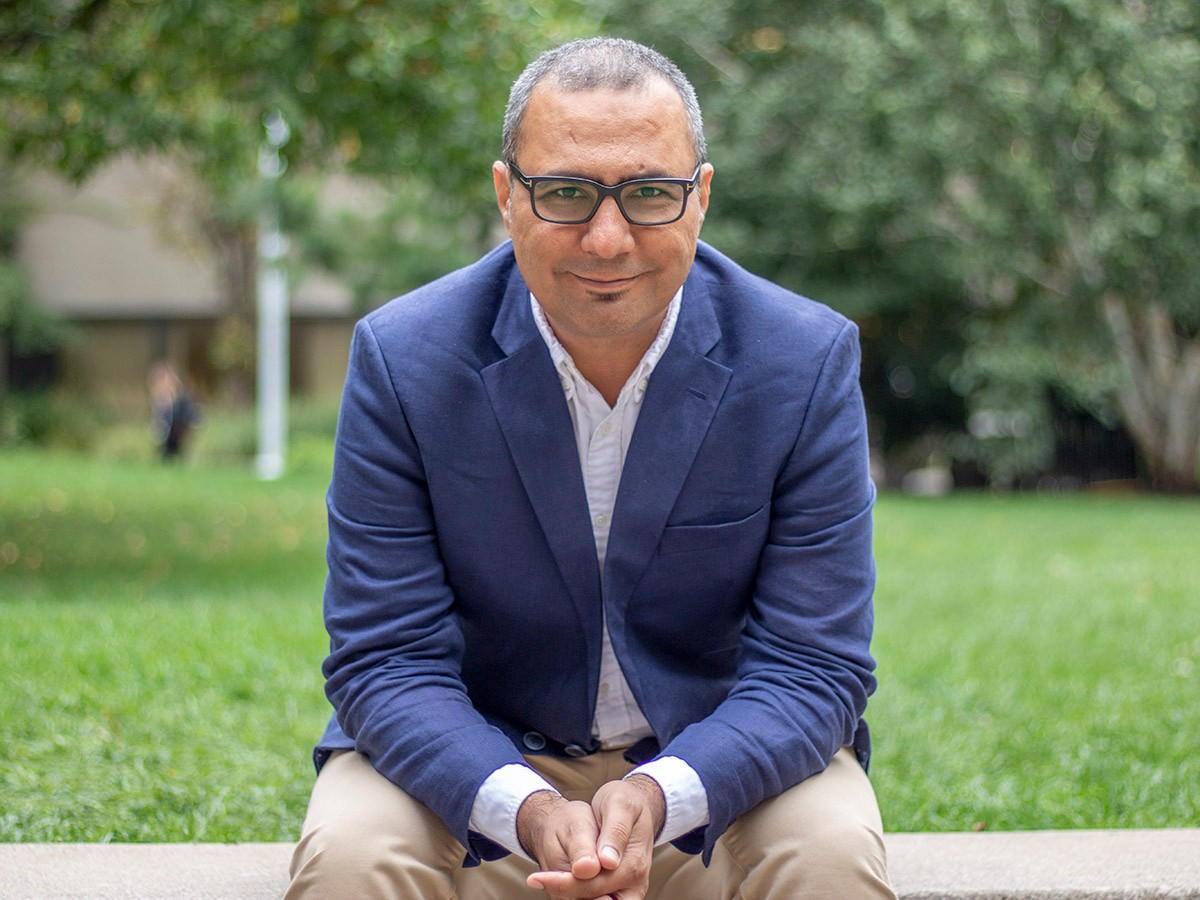
Adam Khalifa is an Assistant Professor in the Department of Electrical & Computer Engineering at the University of Florida. His research focuses on low-power analog/RF/Mixed-mode ASIC design, miniaturization of biomedical devices, wireless powering solutions, and neural stimulation/recording techniques in animal models. He holds a PhD from Johns Hopkins University and degrees from The Hong Kong University of Science and Technology. His work emphasizes implant packaging, electrode microfabrication, and coil design for medical applications. Key research areas include developing energy-efficient wireless systems for implanted devices, such as magnetoelectric antennas and galvanic body-coupled powering. He has pioneered advancements in miniaturized implantable devices, including the 'Microbead' stimulator. His NIH T32 Fellowship (2019) and Ferdinand H. Fellowship (2018) reflect his impactful contributions. Publications highlight innovations in wireless power transfer, metamaterials for biomedical implants, and injectable microdevice fabrication. His work spans from circuit-level modeling to in vivo validation, emphasizing both technical and biological integration challenges. Collaborative efforts address challenges like implant migration tracking via MRI and energy harvesting for battery-free systems.
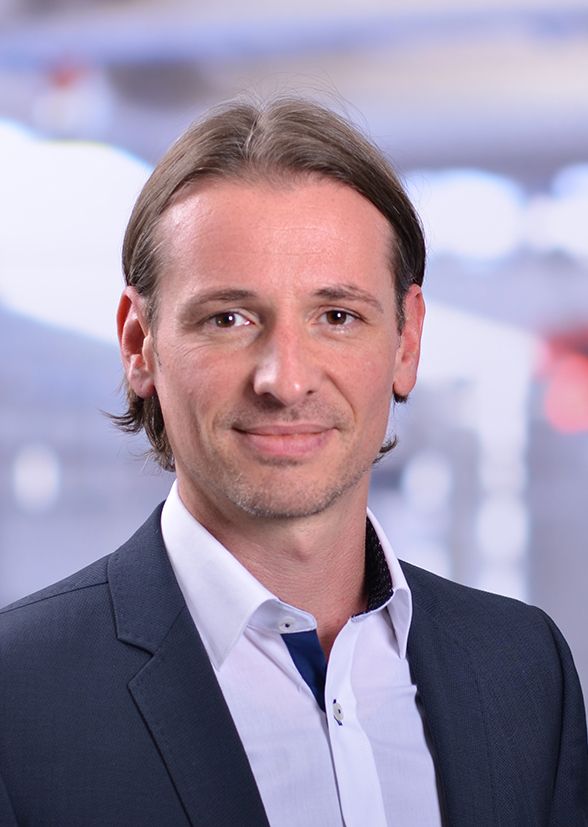
Mariana Resener is an Assistant Professor in the School of Sustainable Energy Engineering at Simon Fraser University (SFU). She holds a Ph.D. in Electrical Engineering (2016) from the Federal University of Rio Grande do Sul, Brazil, alongside M.Sc. (2011) and B.Sc. (2008) degrees in the same field. Her research focuses on optimizing power systems, particularly in distributed energy resources, energy storage, and volt/var control. She teaches courses like Power Electronics and Power Systems Analysis & Design. Her work emphasizes sustainable development in grid planning and energy infrastructure. As a Senior Member of IEEE and an Associate Editor for the Energy Systems Journal (Springer), she contributes to advancing smart grid technologies and renewable integration. Her research spans metaheuristic optimization, stochastic modeling, and grid resilience strategies for distributed systems. Recent projects include hybrid renewable energy systems for substations, EV charging station optimization, and fault analysis in unbalanced grids. She collaborates with industry on practical solutions for grid modernization and reliability enhancement.
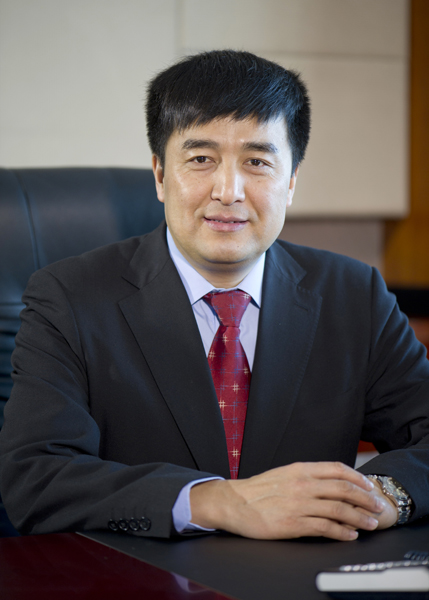
Bilal Farooq is an Associate Professor and Program Director for the Master of Engineering in Interdisciplinary Engineering (MEIE) at Toronto Metropolitan University, holding the Canada Research Chair in Disruptive Transportation Technologies and Services within the Department of Civil Engineering. His educational background includes a PhD from the University of Toronto (2011), MASc from Lahore University of Management Sciences (2004), and BSc from the University of Engineering and Technology (2001). Dr. Farooq's research pioneers disruptive transportation solutions through cyber-physical systems, AI/machine learning applications, behavioral modeling, and optimization techniques. His work specifically targets on-demand multimodal systems, sustainable urban transportation, urban air mobility, automated vehicles, and extended reality applications, addressing critical urban mobility challenges with human-centered approaches. Analysis of his recent publications reveals a strong trend toward quantum-enhanced computational methods, privacy-preserving federated learning frameworks, and sustainability-focused decarbonization strategies across transportation domains, with increasing emphasis on human factors and real-world implementation. Notable scientific awards include: Ontario Early Researcher Award (2018) Canada Research Chair (2017) MassMotion Academic Pedestrian Modelling Project of the Year (2016) Québec Early Researcher Award (2014) Dr. Farooq actively supervises graduate students and secures significant research funding through his Canada Research Chair position and Early Researcher Awards. He directs the Laboratory of Innovations in Transportation (LiTrans), which develops interdisciplinary solutions integrating mathematics, engineering, computer science, and economics to address emerging transportation challenges. LiTrans focuses on disruptive transportation technologies, complete streets design, cyber-physical systems, pedestrian dynamics, resilience, and climate change impacts, collaborating with industry and government partners to translate research into practical urban mobility innovations for smart cities worldwide.
Minjie Chen is an Associate Professor of Electrical and Computer Engineering and the Andlinger Center for Energy and the Environment at Princeton University, serving as Acting Associate Director for Research at the Andlinger Center. He leads the Princeton Power Electronics Lab (PowerLab), which focuses on developing fundamental and novel power electronics solutions for a wide range of applications from mW-scale energy harvesting to MW systems in renewable energy integration. Dr. Chen received his Ph.D. in Electrical Engineering and Computer Science from MIT in 2015 and his B.S. in Electrical Engineering from Tsinghua University in 2009. Before joining Princeton as an Assistant Professor in February 2017, he was a postdoctoral associate at MIT Research Laboratory of Electronics. His research spans power electronics, magnetics design, and machine learning applications in energy systems. The PowerLab develops advanced power conversion architectures that enable order-of-magnitude higher power density through high-frequency designs, addressing circuit timing, parasitics, magnetics, and thermal management challenges. Their work targets applications ranging from portable devices to data centers and renewable energy systems. The research group has produced a remarkable series of high-impact publications, with seven IEEE Transactions on Power Electronics Prize Papers in seven consecutive years (2016-2023). Their recent work increasingly integrates machine learning techniques with power electronics, exemplified by the MagNet project which redefines how power magnetics are studied and modeled. NSF CAREER Award, 2019 IEEE PELS Richard M. Bass Outstanding Young Power Electronics Engineer Award, 2023 Power of Associations Silver Award from ASAE for MagNet project, 2024 Multiple IEEE Transactions on Power Electronics Prize Papers (2016-2023) Princeton Engineering Commendation List for Outstanding Teaching (2019, 2020) Dr. Chen advises approximately 15 graduate students who have received numerous awards including the IEEE PELS John G. Kassakian Fellowship, Princeton SEAS Honorific Fellowship, and multiple IEEE conference best paper awards. His research is supported by significant grants from NSF, DOE ARPA-E, Princeton Innovation Fund, C3.ai DTI, and industry partners including Intel, Google, and pSemi. The lab's MagNet project has become a major international initiative with a $60,000 prize pool challenge. The PowerLab maintains strong industry connections and has launched several collaborative projects with Intel, Google, and pSemi. Their MagNet project has evolved into an international challenge with participation from over 40 teams worldwide, demonstrating the growing impact of their approach to machine learning for power magnetics modeling.
Dr. phil. Stefan Ladwig is a researcher at the Institute for Automotive Engineering (Institut für Kraftfahrzeuge) at RWTH Aachen University, specializing in traffic psychology, user acceptance, and human-machine interaction for automated driving systems. His work addresses psychological and ergonomic aspects of emerging mobility technologies, including seating ergonomics, trust-building mechanisms, and communication strategies for autonomous delivery robots. Research Focus: Automated driving, interior design psychology, driver/passenger behavior, and safety requirements. Projects: Lead roles in UrbANT (autonomous delivery robot) and SteeringBow (dynamic driving experience). Collaborations: Affiliated with Aldenhoven Testing Center, Future Mobility Partnership e.V., and innocam.NRW. Ladwig’s recent publications examine rotated seating positions, visual dominance in speed adaptation, and trust-relevant driving scenarios, reflecting his interdisciplinary approach to optimizing human-vehicle interactions. His work spans ergonomics, energy management, and behavioral interventions to enhance safety and usability in next-generation mobility solutions.
Jun Liu is an Assistant Professor in the Department of Mechanical and Aerospace Engineering at the School of Engineering and Applied Sciences, University at Buffalo. His research focuses on advanced energy materials, nano/micro-mechanics, and self-powered systems, with applications in triboelectric energy harvesting and scanning probe microscopy. Education: PhD, Materials Engineering, University of Alberta (2018) MS, Materials Science, Shanghai University (2015) BE, Materials Science and Engineering, Nanchang University (2012) Research Interests: Development of tribovoltaic and triboelectric systems for self-powered electronics Mechanical energy harvesting via dynamic heterojunctions and Schottky contacts 3D-printed hydrogel structures for energy absorption and flexible electronics Nanoscale characterization using atomic force microscopy Design of nanocomposite sensors and catalytic materials Publication Trends: His work emphasizes triboelectricity, nanoscale energy conversion, and sustainable materials. Recent articles explore bionic tactile sensing, tunable hydrogels, and quantum dynamics in sliding interfaces. Awards: SONY Faculty Innovation Award (2021) Nature Springer MINE Young Scientist Award (2020) International Contest of Applications in Nano/Micro Technology Prize (2013) Laboratory: Advanced Energy Materials and Nanomechanics Lab at University at Buffalo.
Mike Grimble is a Research Professor in the Department of Electronic and Electrical Engineering at the University of Strathclyde, Faculty of Engineering. His work is centered on advanced control systems with applications across automotive, aerospace, marine, and industrial domains. He is actively involved in theoretical and applied research, particularly in nonlinear and robust control methodologies. Research Interests: Theory and application of nonlinear and robust control for multivariable systems Adaptive control and estimation methods Benchmarking and performance assessment of control systems Condition monitoring and industrial applications Real-time control and embedded systems His recent publications highlight a strong trend in applying predictive and adaptive control techniques to electric vehicles, battery systems, underwater robotics, and industrial machinery. These works emphasize real-time implementation, energy optimization, and robustness—critical for modern sustainable and autonomous systems. Scientific Recognition and Activities: Invited speaker on the benefits and challenges of advanced control in industrial applications (2013) Contributor to UN Sustainable Development Goals, particularly in sustainable industry and innovation Active research output with over 158 publications, including journals, conferences, and book chapters Research Leadership and Funding: Principal Investigator on multiple EPSRC and RSE-funded projects Co-investigator in interdisciplinary initiatives such as the Medical Devices Doctoral Training Centre Organizer of international workshops on hybrid and predictive control Labs and Research Teams: He is associated with the Industrial Control Centre at the University of Strathclyde, a leading hub for control engineering research. His collaborations span departments and institutions, involving real-time LabVIEW implementations, hardware demonstrations, and partnerships with industry players like National Instruments and Quanser Inc.
Prof. Dr. Rudi Zagst is a Professor of Mathematical Finance at the Technical University of Munich (TUM), where he serves as Head of the Department of Mathematical Finance within the TUM School of Computation, Information and Technology. He has held this position since 2001 and is actively involved in teaching, research, and academic leadership. In 2003, he was appointed as a second member of the Faculty of Economics, and since 2004, he has served as Deputy Chairman of the joint elite degree program 'Finance & Information Management' of the University of Augsburg and TUM. Prof. Zagst earned his doctorate in business mathematics from the University of Ulm, where he later completed his habilitation in 2000. His academic journey began with a professional career at HypoVereinsbank AG, where he served as Head of Product Development in Institutional Investment Management before becoming Managing Director of RiskLab GmbH in 1997. His research focuses primarily on financial engineering, risk management, and asset management, with particular emphasis on portfolio optimization, mathematical finance, and quantitative risk management. His work bridges theoretical finance with practical applications, often incorporating advanced mathematical techniques to solve complex financial problems. Recent publications demonstrate his continued interest in GARCH models, portfolio optimization under various constraints, and the application of machine learning techniques to financial problems. Analysis of his recent publications (2024-2025) reveals a strong focus on portfolio optimization under complex market conditions, particularly using GARCH models to capture volatility dynamics. His work increasingly incorporates machine learning techniques (as seen in the credit spread analysis paper) while maintaining rigorous mathematical foundations. Many papers explore the intersection of theoretical finance with practical investment strategies, reflecting his commitment to bridging academic research with real-world financial applications. Professor of the Year 2007 (awarded by Unicum Profession magazine) Prof. Zagst has supervised numerous bachelor's, master's, and doctoral theses through TUM's Finance and Actuarial Science research group. His collaborative work with industry partners through the TUM CAIR Labs and RiskFactory demonstrates strong connections between academic research and practical financial applications. He has received research funding through various industry partnerships with major financial institutions including Allianz, Munich Re, and ERGO Group AG. Prof. Zagst leads the Research Group Finance and Actuarial Science at TUM, which includes Professors Matthias Scherer, Aleksey Min, and Christoph Knochenhauer. The group maintains strong industry connections through the TUM CAIR Labs initiative, collaborating with over 25 financial institutions including Allianz, Munich Re, Deloitte, PwC, and KPMG. Their RiskFactory laboratory serves as a bridge between academic research and practical financial risk management applications in the industry.
Mauro Conti is a Full Professor at the University of Padua, Italy, where he serves as Editor-in-chief of IEEE TIFS, UniPD Academic Advisor for Entrepreneurship Development, Study Program Coordinator of the MSc degree in Cybersecurity, Head of the SPRITZ Security and Privacy Research Group, and Director of the UniPD node of CINI Cybersecurity National Lab. He also maintains affiliations with TU Delft (NL) and the University of Washington (USA). Additionally, he is the CEO and co-founder of CHISITO and co-founder of DYALOGHI. His research focuses on security and privacy for wireless resource-constrained mobile devices (WSNs, RFIDs, and smartphones), computer system security, computer forensics, access control, and distributed and networked systems. Professor Conti has published extensively in top security venues including ACM CCS, IEEE S&P, NDSS, and USENIX Security, with recent work covering topics such as battery authentication, federated learning privacy, private set intersections, USB peripheral fingerprinting, and ATM PIN inference. He has received numerous prestigious awards including IEEE Fellow, Young Academy of Europe Fellow, EU Marie Curie Fellow, and DAAD Fellow. Professor Conti has advised over 100 students at various levels including PhD, MSc, and BSc, many of whom have gone on to successful careers in academia and industry. His research has been supported by multiple European Commission projects, university grants, and industry collaborations with companies like Cisco and Intel.
Gabriel Alfonso Rincon-Mora is the Motorola Solutions Foundation Professor at the Georgia Institute of Technology's School of Electrical and Computer Engineering. A Fellow of the National Academy of Inventors, IEEE, and IET, he specializes in analog/power integrated circuits, energy-harvesting systems, and microelectronics. With over 200 articles, 44 patents, and 12 books, his work has produced 26 commercial power-chip products. His research spans: Analog and power-management ICs for efficient energy conversion Self-sustaining microsystems powered by thermal, mechanical, and environmental sources Nano-scale circuit designs for biomedical and wireless sensor applications Recent publications focus on piezoelectric energy harvesting, battery charging optimization, and low-power CMOS designs, demonstrating consistent innovation in power efficiency and miniaturization. Awards include the IEEE Charles A. Desoer Technical Achievement Award, National Hispanic in Technology Award, and recognition as one of "The 100 Most Influential Hispanics." He directs research in power IC design and mentors students through the Georgia Tech Analog Consortium. His laboratory develops integrated solutions for energy-constrained applications, including collaborations with industry partners like Texas Instruments.
Liangzhong Yao is a Professor and Director of the Smart Grid Research Institute at Wuhan University, China. He holds dual roles as Fellow of IEEE and IET, and has served in leadership positions such as Vice President of China Electric Power Research Institute (CEPRI) and Chair of IEC TC122. His expertise spans renewable energy grid integration, HVDC systems, smart grid technologies, and energy storage. Yao has led over 25 years of R&D projects with combined funding exceeding GBP 20 million and RMB 90 million, resulting in applied technologies in wind farms and HVDC grids. He has been awarded over 10 national and international accolades, including the IEC 1906 Standard Award and China Science and Technology Innovation Awards. Research focuses include AC-DC hybrid systems, distributed energy resource integration, and high-renewable energy grid operation. He has authored/co-authored 350+ publications, 60+ patents, and 4 books. Yao currently supervises 8 PhD and 10 Master's students, and serves on editorial boards of journals like CSEE Journal of Power Energy & Systems. His leadership roles in global standards bodies like IEC and CIGRE further highlight his contributions to advancing electrical engineering standards and practices.
Sean Lubner is Core Faculty at the Boston University Institute for Global Sustainability (IGS) and Assistant Professor in Mechanical Engineering within the College of Engineering. He holds a PhD from UC Berkeley and BS degrees in Mechanical Engineering and Applied Physics from Carnegie Mellon University. His research focuses on energy transport and storage systems, including thermal energy storage, battery diagnostics, and CO₂ capture technologies. Education: PhD in Mechanical Engineering, UC Berkeley (NSF Fellow) BS in Mechanical Engineering & Applied Physics, Carnegie Mellon University Research Interests: Lubner specializes in grid-scale thermal energy storage, non-invasive sensors for harsh environments, and decarbonization strategies. His work integrates machine learning with materials science to develop advanced energy systems. He collaborates with industry on patents involving battery safety, photonic surfaces, and phase change materials. Article Trends: Recent publications emphasize high-temperature materials, battery failure prediction via thermal signatures, and femtosecond laser processing for photonic surfaces. His work bridges nanoscale phenomena with macro-scale energy systems, leveraging interdisciplinary methods. Awards: Lubner was an NSF Graduate Research Fellow during his PhD. Advising & Grants: While no advisees are listed, his research is supported by industry partnerships and grants focusing on energy storage innovation. He leads the Lubner Group, which develops novel sensing and storage technologies. Labs/Teams: The Lubner Group at BU focuses on sustainable energy solutions, combining experimental and computational approaches to address climate challenges.
Professor Gregor Verbic is a faculty member at the University of Sydney in the School of Electrical and Computer Engineering , where he serves as Director of the Centre for Future Energy Networks . Previously, he held an assistant professor position at the University of Ljubljana and was a NATO-NSERC Postdoctoral Fellow at the University of Waterloo. His career spans academic research, industry leadership as Head of Interenergo's Investment Department, and extensive collaboration with IEEE. PhD in Electrical Engineering (University of Ljubljana) Senior IEEE Member Research Interests focus on transforming power systems to zero-carbon grids through: Aggregation and control of distributed energy resources (DERs) Frequency control with wind generation and electric vehicles Stochastic optimization for multi-energy systems Smart home energy management with phase change materials Notable Contributions include: 2006 IEEE prize paper for voltage instability prediction 2010-2024: 15 recent publications on DER coordination, network tariffs, and low-inertia grid stability Teaching includes courses on: ELEC3203/ELEC9203: Electricity Networks ELEC5213: Engineering Optimisation ELEC5206: Sustainable Energy Systems Labs & Initiatives Centre for Future Energy Networks The Net Zero Institute
Nenad Miljkovic is the Founder Professor in the Department of Mechanical Science and Engineering at the University of Illinois Urbana-Champaign (UIUC), with concurrent appointments in Electrical and Computer Engineering and the Materials Research Laboratory. He directs the Air Conditioning and Refrigeration Center (ACRC) and is affiliated with the International Institute for Carbon Neutral Energy Research (Kyushu University). His research spans thermo-fluid sciences, interfacial phenomena, and renewable energy, focusing on enhancing efficiency in power generation, electronics cooling, and thermal management via micro/nanostructured surfaces. Miljkovic holds a BASc in Mechanical Engineering from the University of Waterloo (2009) and an M.S. (2011) and Ph.D. (2013) from MIT. Prior to UIUC, he was a Postdoctoral Associate at MIT and an Adjunct Assistant Professor at UIUC. His research integrates fundamental studies of phase change and electrokinetics with applied device development, including solar thermal conversion and atmospheric energy harvesting. Recent work explores frost dynamics, battery thermal management, and scalable anti-corrosion coatings. Miljkovic's publications emphasize heat transfer enhancement, droplet dynamics, and sustainable energy systems. His articles frequently address thermal management challenges in electronics and renewable energy applications, leveraging nanostructured surfaces and phase change materials. Honors include: ASME Fellow (2022) Founder Professorship, Grainger College of Engineering (2023) ASME Bergles-Rohsenow Young Investigator Award (2021) ONR Young Investigator Award (2017) NSF CAREER Award (2016) He leads the Energy Transport Research Laboratory, advising graduate students and collaborating with industry on thermal systems. Grants support work on electronics cooling, battery safety, and renewable energy integration.
Steven A. Corcelli is a Professor and Interim Dean of the College of Science at the University of Notre Dame, with a research focus on Theoretical Chemistry and Molecular Dynamics Simulations . His work bridges Physical Chemistry and Biochemistry , targeting Energy Applications and Biomolecular Binding Mechanisms . He leads the Computational Molecular Science & Engineering Laboratory (CoMSEL). Ph.D., Chemistry, Yale University (2001) Sc.B., Chemistry, Brown University (1997) Research interests span ionic liquids for Carbon Capture , aqueous electrolytes in battery technologies , and molecular binding processes in immunology and DNA interactions . His group employs GPU-accelerated simulations and weighted ensemble methods to uncover structural and dynamic motifs. Recent publications highlight trends in vibrational spectroscopy , TCR-MHC binding , and CO2 solvation mechanisms . Awards include the Thomas P. Madden Award (2020) , ACS Fellowship (2016) , and NSF CAREER Award (2009) . Staff: Erin Brossard (Ph.D.), Nell Karpinski, Shuang Wu, Noah Vasconez, Kaitlyn Handy, Isabel Thompson