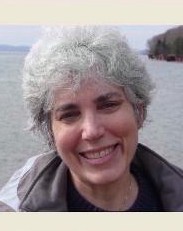
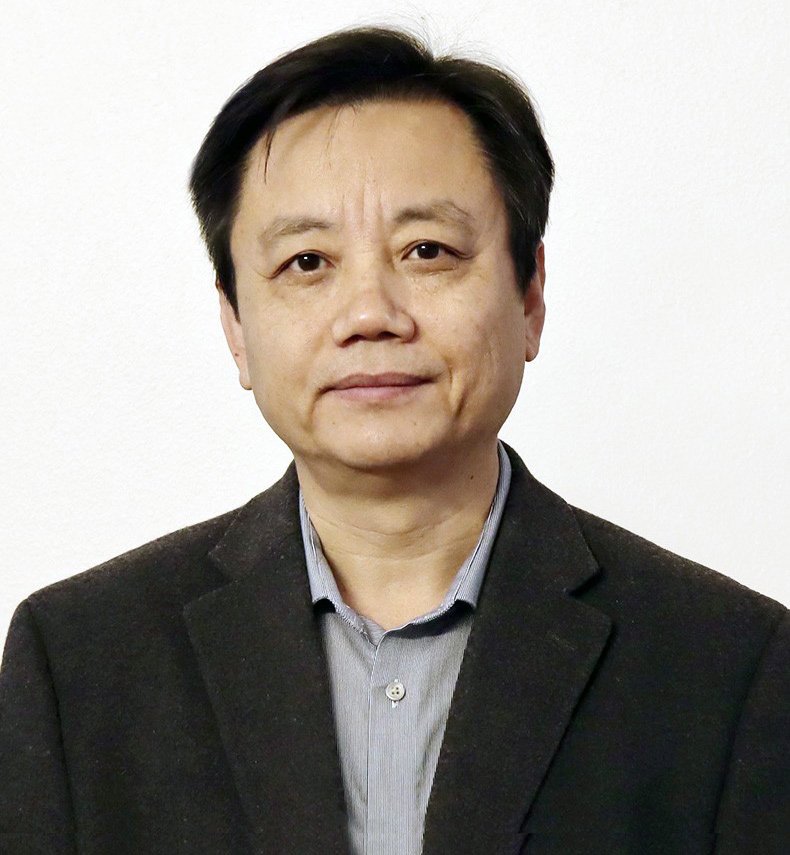
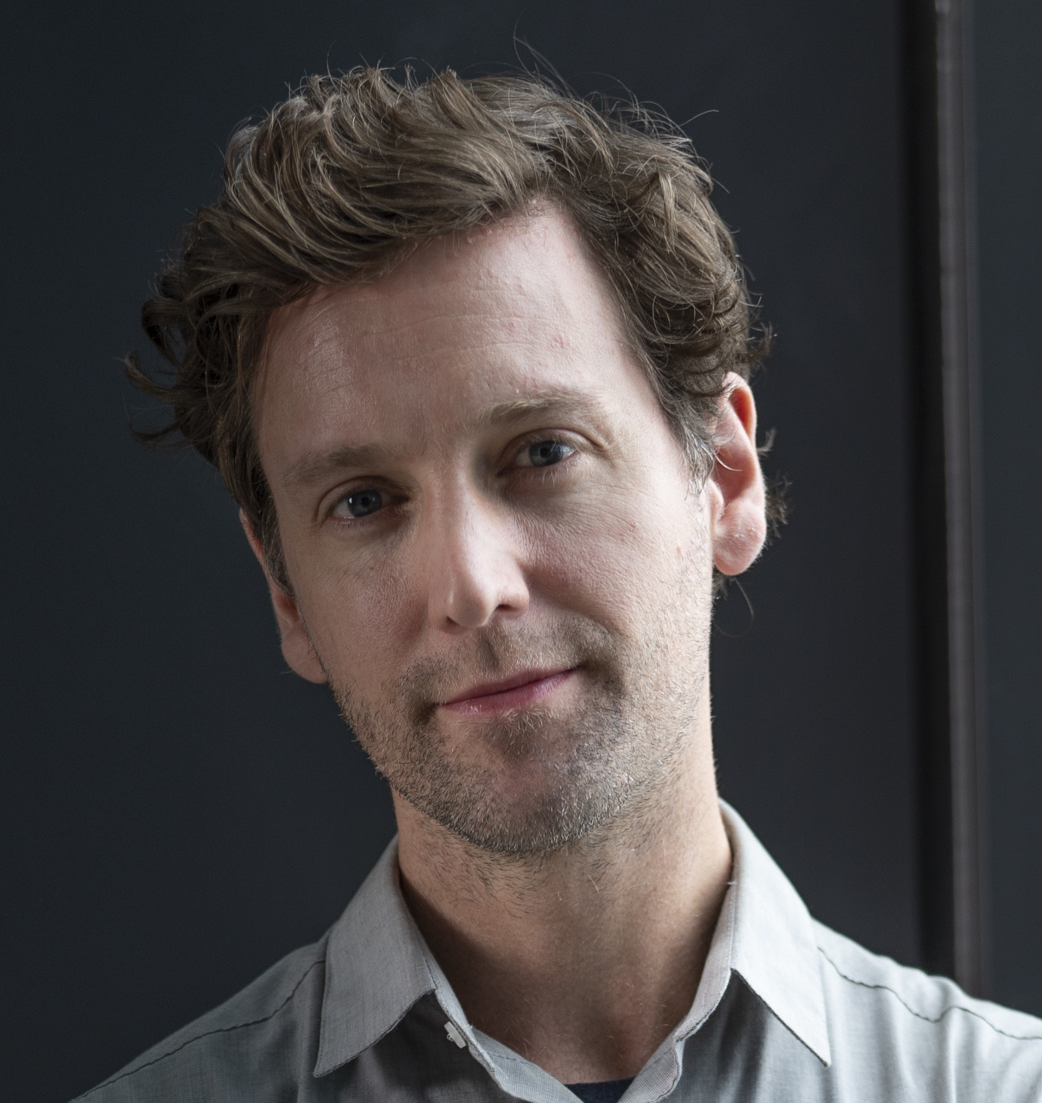
Peter Bauer-Gottwein is a Professor at the Water Systems Department of Space Research and Technology at the Technical University of Denmark. His research focuses on hydrology, water resources management, hydrogeophysics, and remote sensing techniques. Hydrology and Water Resources Hydrogeophysics and Remote Sensing Hydroeconomic Modeling and Satellite Data He actively uses UAV technologies and satellite altimetry in hydrological studies, with recent work on river monitoring and flood forecasting systems. His publications highlight interdisciplinary approaches combining geospatial technologies with environmental management. Current projects include: GNSS reflectometry for river monitoring UAV navigation systems Machine learning for flood prediction Arctic river modeling
Claire Dune is an Assistant Professor at the University of Toulon, affiliated with the COSMER Laboratory (Mechanical and Robotic Systems Design Laboratory). Her research focuses on robotics, computer vision, and underwater systems, with applications in environmental monitoring and human-robot interaction. She teaches computer science, numerical methods, image processing, and visual servoing. Institution: University of Toulon Laboratory: COSMER (Mechanical and Robotic Systems Design Laboratory) Academic Rank: Assistant Professor Email: claire.dune@univ-tln.fr Her research centers on perception for robot control, particularly in underwater robotics and computer vision. Key interests include visual servoing, SLAM, gesture recognition for diver-robot interaction, and autonomous capabilities in real-world marine environments. She applies deep learning and sensor fusion techniques to enhance underwater visual perception and navigation. The recent publications demonstrate a strong trend in underwater robotics, with focus areas including tether dynamics (catenary modeling), ROV localization using umbilicals and IMUs, long-term visual localization in deep-sea environments, and color restoration in underwater imagery. Her work bridges theory and real-world application, contributing datasets like 'Eiffel Tower' for benchmarking and advancing multi-agent SLAM systems. Claire Dune has contributed to leading journals such as IEEE Robotics and Automation Letters, Ocean Engineering, and The International Journal of Robotics Research. Her editorial and survey work highlights her leadership in the domain of deformable object manipulation. Retrieval of benthic habitat abundance and bathymetry from hyperspectral data (DESIS) in shallow waters ROV localization using ballasted umbilical equipped with IMUs MAM3SLAM: Towards underwater robust multi-agent visual SLAM Eiffel Tower: A Deep-Sea Underwater Dataset for Long-Term Visual Localization Challenges and Outlook in Robotic Manipulation of Deformable Objects Claire Dune actively collaborates with researchers such as Vincent Hugel, Juliette Drupt, and Andrew Comport. She has supervised or co-supervised numerous research projects and publications, particularly in underwater robotics and assistive technologies. Her work involves experimental robotics and system integration, often validated in real marine environments. She leads research in the COSMER laboratory focused on underwater robotics, including projects on tethered ROVs, diver-robot communication via gesture recognition, and environmental monitoring using visual and hyperspectral data. Her team develops practical solutions for marine science and offshore operations, emphasizing robustness and autonomy.
Wendy R. Eisner is an Associate Professor in the Department of Geography at the University of Cincinnati, with affiliate appointments in the Environmental Studies Program and Department of Women's, Gender, and Sexuality Studies. She has held academic positions at multiple institutions including The Ohio State University, University of Alaska Anchorage, and University of Utrecht. Dr. Eisner serves as Editor of Polar Geography and as Graduate Program Director for the Department of Geography at the University of Cincinnati. Dr. Eisner earned her Doctor of Science in Geography from the University of Utrecht (1999), Doctorandus in Pre and Protohistory from the University of Amsterdam (1984), Kandidaats (M.A.) in Cultural Anthropology from the University of Leiden (1984), and Bachelor of Arts in Anthropology from Barnard College, Columbia University (1975). Her research focuses on Arctic system science, specifically examining paleoecology and paleoclimatology through the lens of both scientific and Indigenous knowledge systems. Dr. Eisner's work integrates traditional Iñupiat knowledge with Western scientific approaches to understand landscape evolution, climate change impacts, and human-environment interactions in the Arctic. Her research spans multiple disciplines including environmental science, geography, anthropology, and gender studies, with particular attention to how indigenous communities perceive and respond to environmental change. Dr. Eisner's recent publication portfolio demonstrates a strong emphasis on integrating Indigenous Knowledge with climate and geomorphic studies in Arctic Alaska, particularly through GIS applications and community-based research approaches. Her work increasingly focuses on documenting environmental, cultural, and social changes as observed by Iñupiat elders over their lifetimes, creating valuable cross-generational knowledge records. Best of Show, Baraga County Fair, Baraga Michigan Adult Embroidery blue ribbon (2010) Dr. Eisner has secured numerous significant research grants, primarily from the National Science Foundation, totaling over $2.5 million as Principal Investigator or Co-PI. Her major projects include "Connecting Indigenous Knowledge to Landscape Process Research" (NSF-BCS-0548846, $249,000), "Advanced End-to-End Cyberinfrastructure Installation" for the Barrow Global Climate Change Research Facility (ARC-0641623, $822,340), and "Changes in Lake Dynamics on the Arctic Coastal Plain" (ARC-0713813, $378,618). She has also served on the U.S. Civilian Research and Development Foundation panel for Geosciences. Dr. Eisner leads research teams focused on the Arctic Coastal Plain of Alaska, working collaboratively with Alaskan Native elders and communities. Her projects often involve interdisciplinary teams of geographers, environmental scientists, anthropologists, and indigenous knowledge holders to document landscape changes and develop integrated knowledge systems for understanding Arctic environmental dynamics.
Chuanmin Hu is a Professor at the University of South Florida College of Marine Science , leading the Optical Oceanography Laboratory . His work integrates in situ optical measurements with satellite remote sensing to study coastal ocean dynamics, harmful algal blooms, and climate impacts on water quality. Education: Ph.D. in Physics (University of Miami, 1997) Research Focus: Ocean optics, remote sensing algorithms, algal blooms, carbon cycling, and coastal observing systems Leadership: Director of the Optical Oceanography Lab and developer of systems like Sargassum Watch System and Integrated Red tide Information System His lab utilizes autonomous underwater vehicles (AUVs) and high-resolution satellite data to map bio-optical properties in coastal zones, coral reefs, and estuaries. Recent innovations include the Virtual Buoy System for real-time water quality monitoring. Scientific Awards: 2024 Pecora Group Award (USGS-NASA) Dr. Hu's work bridges optical oceanography with practical coastal management solutions, addressing challenges like the Tampa Bay Piney Point effluent plume and Sargassum inundation forecasting . His group has produced over 100 peer-reviewed publications and developed multiple satellite-based monitoring platforms.
Shane Keating is an Associate Professor at the School of Mathematics & Statistics, University of New South Wales, with a research focus on mathematical oceanography and geophysical fluid dynamics. His work bridges theoretical modeling, numerical simulations, and observational data to study ocean turbulence, mixing, and climate-critical processes. Current role: Senior Lecturer (2017–Present) Previous roles: Lecturer at UNSW (2013–2017), Postdoctoral and Research Scientist positions at New York University's Courant Institute PhD in Physics from University of California San Diego His research interests include: Turbulent mixing and stirring in geophysical flows Ocean state estimation and data assimilation Satellite remote sensing of ocean dynamics Submesoscale ocean eddy interactions Fractal geometry of ocean fronts Geophysical wave energy transfer He leads projects on parameterizing submesoscale processes in climate models, with applications to the East Australian Current. His publications span topics from Southern Ocean eddy dynamics to breaking inception in surface gravity waves. His recent work emphasizes: Stochastic methods for unresolved submesoscale dynamics Quantifying cross-front transport patterns Advanced data assimilation techniques Energy pathways in western boundary currents Contact: s.keating@unsw.edu.au
Hennes Alexander Hajduk is a Research Fellow at the University of Oslo's Section for Meteorology and Oceanography, part of the Department of Geosciences. He holds a PhD in Applied Mathematics from TU Dortmund University (2022). His work focuses on physical oceanography, numerical methods for fluid dynamics, and the influence of bottom topography on ocean flows. He develops property-preserving numerical schemes for conservation laws and shallow-water equations, with applications in geophysics and computational fluid dynamics. Education: PhD in Applied Mathematics (TU Dortmund University, 2022). Research Interests: Physical Oceanography: Investigating jet formation in stratified fluids and topographic effects on oceanic flows. Numerical Methods: Specializing in algebraic flux correction schemes, discontinuous Galerkin methods, and entropy-stable algorithms. Geophysical Modeling: Developing tools like FESTUNG for DG-based simulations in MATLAB/Octave. His publications emphasize stability, accuracy, and computational efficiency in simulating complex fluid systems. He collaborates on projects such as The Rough Ocean Research Group, advancing understanding of fluid dynamics in geophysical contexts. Affiliations: Section for Meteorology and Oceanography, University of Oslo Rough Ocean Research Group
Naonori Ueda is a Research Professor and Deputy Director at RIKEN Center for Advanced Intelligence Project. He also serves as a Visiting Fellow at NTT Communication Science Laboratories, Research Supervisor for Mathematical Information Platform at Japan Science and Technology Agency (JST), and Visiting Professor at Kobe University's Graduate School of System Informatics. His distinguished career spans academia, government research institutions, and industry collaboration, with significant contributions to advancing artificial intelligence and machine learning applications across multiple scientific domains. Dr. Ueda's research interests focus on the intersection of machine learning, artificial intelligence, and physical sciences. He specializes in physics-informed deep learning approaches that integrate governing physical equations with neural network architectures. His work spans geophysical data analysis, remote sensing applications, computational seismology, and environmental monitoring systems. He has pioneered methods for crustal deformation modeling, earthquake prediction, tsunami inundation forecasting, and satellite imagery analysis using advanced machine learning techniques. His research demonstrates how AI can solve complex scientific problems by bridging the gap between data-driven approaches and physical domain knowledge. His publication record reveals a strong trend toward applying machine learning to solve real-world geophysical and environmental challenges. His recent work shows increasing sophistication in physics-informed neural networks that incorporate domain-specific knowledge into deep learning architectures. The publications span high-impact journals like Nature Communications, demonstrating the interdisciplinary significance of his work. His research consistently focuses on practical applications of AI for disaster prevention, environmental monitoring, and scientific discovery. Fellow of IEICE (Institute of Electronics Information and Communication Engineers) Member of Japan Prize field review committee Selection Committee Member for Brilliant Female Research Award (The Jun Ashida Award) Member of Kyoto Prize Selection Committee Dr. Ueda has secured substantial research funding through multiple government-sponsored projects including RIKEN Pioneering Project 'Prediction Science,' JST AIP Acceleration Research projects on weather prediction and drug discovery, and AMED-funded medical research initiatives. His leadership extends to serving as Sub-project Director for Japan's Moonshot R&D Project. He actively mentors researchers through his roles at RIKEN, NTT, and various academic institutions, fostering the next generation of AI scientists. As Deputy Director of RIKEN Center for Advanced Intelligence Project, Dr. Ueda leads one of Japan's premier AI research initiatives. He also serves on the Advisory Board of Kobe University's Mathematical and Data Science Center and Kyoto University's Graduate School of Informatics. His leadership extends to coordinating the AI Seminar at Osaka Industrial Association and supervising the Keihanna 'Edison Society' at the International Institute for Advanced Studies, demonstrating his commitment to bridging academic research with industrial applications.
Dr. Mark Davidson is an Associate Professor (Reader) in Coastal Processes at the University of Plymouth, leading the Coastal Processes Research Group since 2019. He holds roles as Associate Head of School (Admissions and Marketing), lecturer for undergraduate/postgraduate courses, and Ph.D. supervisor. His expertise spans in-situ measurements, video remote sensing, and numerical modeling of hydro- and morphodynamics, with a focus on shoreline change prediction and coastal resilience. Current research emphasizes multi-timescale (days-to-decades) modeling frameworks like ShoreTrans and storm impact analysis on UK coastlines. His work addresses critical challenges such as gravel barrier response to extreme storms, sediment budgeting, and infrastructure protection. He has led EPSRC-funded projects on UK coastal resilience and nuclear plant installations. Supervised 16 Ph.D. completions and currently advises Emily Hunt on decadal shoreline modeling. Teaching includes advanced courses in waves, estuaries, and physical oceanography. His lab utilizes cutting-edge tools like LiDAR and shore-based video systems for real-time monitoring. Research contributions span over 50 peer-reviewed articles, including seminal work on infragravity wave dynamics, ShoreTrans modeling, and post-storm recovery patterns. Collaborative projects include the EU-funded LEACOAST2 and CoastView initiatives. His work aligns with UN SDG 13 (Climate Action) and SDG 11 (Sustainable Cities).
Prof. Dr. Boris Jutzi is a leading academic in photogrammetry and remote sensing, currently serving as Professor at Karlsruhe Institute of Technology (KIT) and acting head of the Chair of Photogrammetry and Remote Sensing at Technical University of Munich (TUM). His research focuses on active optical sensors, computer vision, laser scanning, and 3D reconstruction techniques. He holds a diploma in electrical engineering from University of Kaiserslautern, a PhD from TUM, and venia legendi from KIT. Affiliations: KIT Institute of Photogrammetry and Remote Sensing, TUM Chair of Photogrammetry and Remote Sensing Education: Diploma in Electrical Engineering (University of Kaiserslautern) Doctorate (TUM) Venia Legendi (KIT) His research interests include: Neural Radiance Fields (NeRF) for 3D reconstruction LiDAR technology and applications UAV-based remote sensing Geospatial data fusion Computer vision in environmental monitoring Awards: Faculty Teaching Award (2020) Best Paper Awards (2019, 2016, 2014, 2006) His work emphasizes novel sensor integration and automated scene analysis , with contributions to urban and environmental 3D modeling. Current projects include underwater scene reconstruction via NeRFs and large-scale digital twin datasets (e.g., TUM2TWIN).
Jan De Rydt is an Associate Professor at the Geography and Environmental Sciences Department within the Faculty of Engineering and Environmental Science at Northumbria University. He is also a UKRI Future Leaders Fellow (2022-2026), focusing on polar glaciology and oceanography. His research explores ice sheet dynamics, climate interactions, and sea level rise projections using numerical models like Úa and coupled ice-ocean frameworks. Education: PhD in Theoretical Physics (KU Leuven, Belgium) MSc in Physics (KU Leuven) MPhil in Geography Studies (University of Cambridge) Research Interests: The team addresses ice flow uncertainties through three key challenges: initial state estimation, parameter structural problems, and boundary forcing impacts. Projects include OCEAN:ICE (EU Horizon Europe) to reduce Antarctic freshwater flux uncertainties. Recent work focuses on Antarctic ice shelf stability, ocean-ice coupling, and ensemble forecasting until 2300. Advising & Grants: Supervises researchers Brad Reed, Jo Zanker, Qing Qin, and Sam Hartharn-Evans. Leads UKRI and EU-funded projects addressing ice sheet modeling uncertainties and climate scenario projections. Labs/Teams: Involved in the Marine Ice Sheet–Ocean Model Intercomparison Project (MISOMIP2) and collaborative ice-ocean modeling initiatives using tools like Úa-MITgcm.
Christopher Amante serves as a Visiting Lecturer in the Environmental Studies Department at College of the Holy Cross and as a Geospatial Research Scientist at the National Oceanic and Atmospheric Administration (NOAA) National Centers for Environmental Information (NCEI) through the Cooperative Institute for Research in Environmental Sciences (CIRES) at the University of Colorado Boulder. His research expertise centers on Geographic Information Science (GIS) with a focus on coastal applications. Key areas include: Coastal Elevation Modeling using integrated bathymetric-topographic DEMs Quantification of uncertainty in spatial data for flood risk assessment Incorporation of sea-level rise projections and storm surge models into flood risk frameworks Economic impact analysis of coastal inundation Dr. Amante teaches Introduction to Geographic Information Systems at Holy Cross. His publication record reveals a progression from foundational DEM accuracy studies (2016) through uncertainty quantification (2018-2019) to applied economic and risk assessment research (2022-2023), consistently emphasizing robust methodologies for coastal resilience planning. No scientific awards were mentioned in the source text. Information regarding student advising, research grants, and laboratory facilities was not provided in the source material.
Ignacio Torroba Balmori is a postdoctoral researcher at KTH Royal Institute of Technology, affiliated with the Department of Aerospace, Mobility and Naval Architecture and the Robotics, Perception and Learning (RPL) division. He holds a PhD from RPL under the supervision of John Folkesson, focusing on Simultaneous Localization and Mapping (SLAM) for autonomous underwater vehicles (AUVs). His current research emphasizes underwater SLAM with sonar and camera systems, path planning, control strategies, and system identification for AUVs operating in open waters and confined spaces. His work centers on applications such as autonomous seabed surveying, algae farm monitoring, and seaweed mapping. He is actively involved in developing the AUV SAM, Kongsberg Hugin, BlueROV2, USV FloatSAM, and the AUV Lolo. As a mentor, he has supervised master’s theses on topics including underwater SLAM algorithms and bathymetric informative path planning. He teaches courses like 'Introduction to Robotics' (assistant) and 'Underwater Technology' (teacher). Key technical contributions include system identification for hydrobatic AUVs using physics-informed machine learning and tools for bathymetric SLAM, such as the SubmapsRegistration repository. His research is hands-on, prioritizing field robotics and problem-driven solutions.
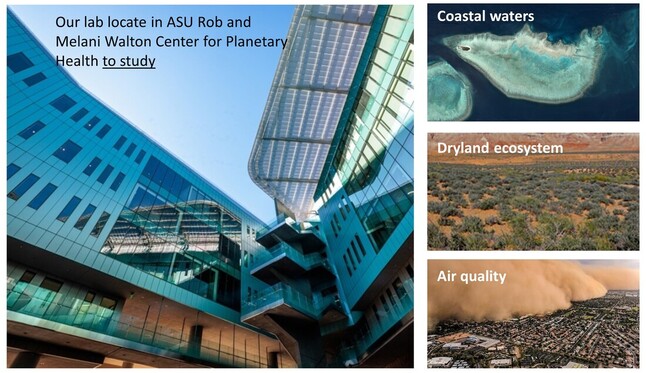
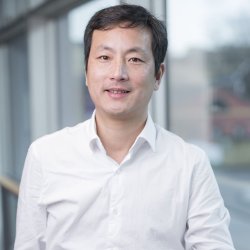
Jiwei Li is an Assistant Professor affiliated with multiple departments at Arizona State University, including the School of Ocean Futures, School of Earth and Space Exploration, Center for Global Discovery and Conservation Science, and the Global Futures initiative. His research focuses on integrating remote sensing, big data analytics, and machine learning to study human-natural system interactions at land-ocean interfaces. Key areas include coral reef conservation, aquatic ecosystem monitoring, and sustainable resource management. He leads the Remote Sensing for Global Futures (RSGF) Lab, which develops globally scalable analytical algorithms using cloud computing platforms like Google Earth Engine. His work emphasizes applications in marine spatial planning, climate change adaptation, and biodiversity preservation. Li's expertise spans satellite sensor optimization, water quality monitoring, and geophysical prospecting techniques for environmental assessment. Notable contributions include global coral reef mapping initiatives, seagrass extent algorithms, and machine learning approaches for coastal zone management. His interdisciplinary research bridges computer science, oceanography, and environmental policy, aiming to translate technical innovations into actionable conservation strategies.
Prof. Yi Ma is a Chair Professor at the Institute for Communication Systems (ICS) and the Home of the 6G Innovation Centre (6GIC) at the University of Surrey. He holds a Professorial rank in the School of Computer Science and Electronic Engineering. His research focuses on semantic/effective communication, machine learning for RF and physical layer design, MIMO technology, and opportunistic networking. Current PhD students include Yupeng Zheng, Ashkan Jafari, Zohre M. Bakhsh, and Mehdi Tafazolli. Research interests span scalable quantum-based wireless communications, distributed hybrid beamforming, and satellite communication systems. Recent publications highlight advancements in SA-MIMO, non-uniform quantization, and distributed MIMO-LEO networks. Prof. Ma teaches courses such as EEEM017 and EEE3006, and serves as an EEE examination officer. His work integrates theoretical contributions with practical applications, emphasizing future wireless systems and sensing technologies. Collaborations with industry and academia, including projects on 6G innovation, underscore his commitment to cutting-edge research.
Sokol Kosta is an Associate Professor in the Department of Electronic Systems at the Technical Faculty of IT and Design, Aalborg University, Copenhagen, Denmark. His research focuses on edge computing, mobile cloud computing, cybersecurity, privacy, and the societal impact of digital technologies, particularly in public service media and data protection regulation. He is affiliated with the Cyber Security Group and contributes to initiatives such as 'AI for the People'. His research interests include edge and fog computing, computation offloading, Internet of Things (IoT), Internet of Floating Things, GPGPU acceleration, blockchain-based systems, privacy-preserving technologies, GDPR compliance, and public service media digital transformation. His work bridges technical innovation with policy and societal implications. His publications span from 2010 to 2025, with a strong presence in high-impact venues such as IEEE INFOCOM, IEEE Transactions on Mobile Computing, and The Web Conference. The articles reflect a consistent focus on mobile and edge computing systems, performance modeling, security, and privacy, increasingly incorporating societal and policy dimensions, especially post-GDPR. Trends include computation offloading optimization, decentralized systems, and empirical studies on web tracking and data governance. He has received 14 prizes and recognitions for his research contributions, though specific awards are not detailed in the provided text. He has supervised PhD students, including Jannick Kirk Sørensen, and has been involved in significant research projects such as the 'European Open Web Privacy Measurement' project (2017–2020), which examined GDPR's impact on third-party web services. He has presented his work internationally, including at The Web Conference 2019 in San Francisco, and has been featured in media coverage discussing data privacy compliance of Danish public websites. His lab and team activities are centered around the Cyber Security Group and collaborative projects involving distributed computing, edge AI, and privacy measurement.