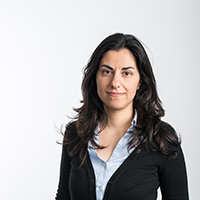
Sebastian U. Stich is a tenured Professor at CISPA Helmholtz Center for Information Security and a member of the European Lab for Learning and Intelligent Systems (ELLIS). His research focuses on optimization for machine learning, collaborative learning (distributed, federated, and decentralized methods), efficient optimization techniques, adaptive stochastic methods, and privacy/security in machine learning. Recent appointments include ERC Consolidator Grant 2024 for the CollectiveMinds project. Key contributions in federated/decentralized learning, uncertainty estimation, and communication-efficient optimization. Active in workshop organization, including the Optimization for Machine Learning workshop at NeurIPS 2024. Teaching modern optimization methods at Saarland University (2023-2025). His work has been recognized with awards such as the Google Research Scholar Award (2023) and Meta Privacy-Enhancing Technologies Award (2022) . His research group includes postdocs Dr. Anton Rodomanov and Dr. Rotem Mulayoff, and PhD students Xiaowen Jiang and Yuan Gao.
Pan Xu is a tenure-track assistant professor with joint appointments in the Department of Biostatistics & Bioinformatics, Department of Computer Science, and Department of Electrical & Computer Engineering at Duke University's Pratt School of Engineering. Prior to joining Duke, he was a Postdoctoral Scholar Research Associate at the California Institute of Technology, and he earned his Ph.D. in Computer Science from UCLA. His research bridges theoretical foundations with practical applications in machine learning and artificial intelligence. Dr. Xu's research focuses on developing computationally- and data-efficient machine learning algorithms with strong theoretical guarantees, particularly in reinforcement learning, optimization, and high-dimensional statistics. His work addresses two fundamental challenges in sequential decision-making: efficient exploration with minimal interactions and robustness against distributional shifts. His research spans theoretical algorithm design, practical implementation, and real-world applications in bioinformatics and healthcare. His publication record demonstrates consistent high-impact contributions to top-tier conferences including ICML, NeurIPS, ICLR, AAAI, and AISTATS. The research trends show a progression from foundational work in non-convex optimization and multi-armed bandits toward increasingly sophisticated frameworks for robust reinforcement learning, with particular emphasis on distributional robustness, efficient exploration strategies, and practical applications. His work often bridges theoretical guarantees with empirical validation. NSF award on approximate sampling based exploration for sequential decision making Whitehead Scholar award from Duke University School of Medicine PIMCO Postdoctoral Fellowship in Data Science UCLA Outstanding Graduate Student Research Award Rising Stars in Data Science by University of Chicago Best Paper Award for Queer In AI: A Case Study in Community-Led Participatory AI at FAccT 2023 Featured Certification for Wasserstein Distributionally Robust Policy Evaluation and Learning for Contextual Bandits at TMLR Oral Presentation award at AAAI 2024 Dr. Xu actively mentors students and researchers, seeking highly motivated individuals with strong mathematical backgrounds for Ph.D. programs in Biostatistics & Bioinformatics, Computer Science, and Electrical & Computer Engineering at Duke. He has received multiple research grants including an NSF award on approximate sampling based exploration for sequential decision making. His service to the academic community includes roles as area chair for NeurIPS, ICML, ICLR, and AISTATS, as well as action editor for Transactions on Machine Learning Research. His research group develops algorithms that address fundamental challenges in sequential decision-making, with applications spanning healthcare, bioinformatics, and multi-agent systems. Current research directions include distributionally robust reinforcement learning, efficient exploration strategies, and applications of graph neural networks to biological problems.
Dr. George C Tseng serves as Professor and Vice Chair for Research in the Department of Biostatistics at the University of Pittsburgh School of Public Health, with secondary appointments in Human Genetics and Computational and Systems Biology. His educational background includes a BS (1997) and MS (1999) in Mathematics from National Taiwan University and an ScD (2003) in Biostatistics from Harvard School of Public Health. Dr. Tseng's research focuses on developing statistical methodologies for genomic and bioinformatic applications to advance precision medicine. His work spans multiple high-impact areas including multi-omics data integration, machine learning for high-dimensional data, cluster analysis for disease subtyping, and statistical methods for experimental design in omics studies. His approach emphasizes close collaboration with biological and clinical researchers to ensure methodological relevance to real-world problems. His publication record demonstrates consistent contributions to top statistical and bioinformatics journals, with recent work focusing on congruence analysis between animal models and humans, outcome-guided clustering methods, and high-dimensional causal mediation analysis. Elected Fellow, American Statistical Association (2017) Statistician of the Year, ASA Pittsburgh Chapter (2017) Provost's Award for Excellence in PhD Mentoring, University of Pittsburgh (2019) Clinical Research Scholar (K12) Award, NIH (2007-2009) Elected Member, International Statistical Institute (2012) Dr. Tseng has successfully mentored over 25 PhD students who have secured positions in academia, industry, and government agencies. His laboratory has maintained continuous NIH funding as principal investigator since 2012, including current grants R01CA285337 (2025-2030) and R01LM014142 (2023-2026). The Tseng Lab operates as a collaborative research environment focused on translating statistical innovations into practical solutions for biological and medical challenges, with strong connections to multiple research centers and clinical departments at the University of Pittsburgh.
Olli Seppänen serves as Associate Professor in Civil Engineering at Aalto University's School of Engineering, specializing in operations management for construction productivity improvement. He coordinates the Vision 2030 consortium—comprising 13 Finnish construction and design firms—to develop industrialized building methods for 2030, while leading multiple Business Finland-funded research initiatives focused on digital construction workflows and real-time monitoring. His research centers on lean construction principles, location-based management systems, and digital transformation through IoT, AI, and robotic vision. Key focus areas include prefabrication optimization, construction logistics, and shifting work off-site to industrialize processes. He aims to solve industry-wide productivity challenges by creating real-time situational awareness and implementing takt production systems for workflow stability. Recent publications (2024-2025) reveal strong emphasis on digital twin frameworks, semantic modeling for quality assurance, and AI applications in risk management. His work bridges theoretical lean construction concepts with practical implementations, particularly in real-time resource tracking, waste reduction in MEP work, and cross-sector learning from high-performing teams. Seppänen has received significant recognition including: School of Engineering doctoral dissertation award (2024) Best paper at IEEE Wireless Sensors Conference (2019) Nordic Conference best paper award for PhD research (2019) DSc dissertation award (2010) As principal investigator, he manages: Vision 2030 consortium projects (2-3 annually; PI for two current projects) iCONS: Real-time resource flow monitoring via indoor positioning RECAP: Deep learning analysis of progress/quality from images/point clouds DiCtion: Integrated data systems for real-time stakeholder situation pictures He actively contributes to the "Performance in Building Design and Construction" research group and leverages the Vision 2030 consortium as a collaborative platform for industry transformation, driving adoption of digitalized, industrialized construction methods through academic-industry partnerships.
Luo Mai is an Assistant Professor at the University of Edinburgh's School of Informatics , with an upcoming promotion to Associate Professor (UK Reader) in August 2025. He leads the Large-Scale Machine Learning Systems Group and co-leads the UK EPSRC Centre for Doctoral Training in Machine Learning Systems and an ARIA Project on Scaling AI Compute by 1000X . PhD in Computer Science (Imperial College London, 2018) MRes in Advanced Computing (Imperial College London, 2012) His research focuses on the intersection of computer systems , machine learning , and data management . Key contributions include award-winning systems like WaferLLM (wafer-scale LLM inference), Tenplex (elastic ML), and ServerlessLLM (serverless LLM serving), published at top venues (OSDI, SOSP, ICML, NeurIPS, JMLR). Recent publications demonstrate trends in GPU-based distributed systems , LLM optimization , and adaptive machine learning . His team has developed groundbreaking open-source projects including TensorLayer , TorchOpt , and ServerlessLLM . Awarded Microsoft Research StarTrack Scholar (2024) , secured ARIA grant (2024) with Imperial College & Cambridge University, and received Google Fellowship during PhD (2012-2016). As an educator, he designed Edinburgh's popular Machine Learning Systems course (150+ students). His group supervises multiple PhD students including Yao Fu (recognized as 2024 Rising Star in ML & Systems) and Leyang Xue .
Cathy Ennis is an Assistant Professor in the Department of Computer Science at Maynooth University, Ireland, specializing in perceptually guided graphics and virtual reality. She is actively involved in research and teaching, with affiliations to the ADAPT Centre and D-REAL SFI Centre for Research Training. Education: BEng in Electronic Engineering, Maynooth University MSc in Cognitive Science, University College Dublin PhD in Computer Graphics, Trinity College Dublin PG Dip in Higher Education Teaching and Learning, DIT Research Interests: Dr. Ennis's research centers on creating realistic virtual humans and crowds, exploring multisensory perception in VR, and applying these technologies in serious games and interactive systems. Her work integrates AI, HCI, and immersive technologies to enhance user engagement and learning. Her recent publications reflect a strong focus on virtual character realism, VR-based education, and machine learning applications in animation and interaction. Notable themes include speech-animation realism, cultural VR experiences, and reinforcement learning for character control. Scientific Awards: Best Paper Award, IEEE VR 2022 Teaching and Supervision: Dr. Ennis currently teaches CS401 (Machine Learning and Neural Networks) and CS261 (Multimedia Technology). She is actively seeking PhD students and collaborators interested in VR, games, and virtual characters, particularly using machine learning for gesture generation and engagement. Labs and Teams: She is a Funded Investigator with the ADAPT Centre and D-REAL SFI Centre for Research Training, contributing to interdisciplinary research in AI, HCI, and immersive technologies.
Dr. Cheryl Barnes is an Assistant Professor in Marine Fisheries at Oregon State University, affiliated with the Coastal Oregon Marine Experiment Station and the Department of Fisheries, Wildlife, and Conservation Sciences. She leads the Integrated Marine Fisheries Lab focusing on management-relevant research of groundfish populations. Education includes: PhD in Fisheries from University of Alaska Fairbanks MS in Marine Science from Moss Landing Marine Laboratories BS in Biology from San Diego State University Her research investigates population and community dynamics of North Pacific groundfish, emphasizing biogeographic effects on life history traits, food web interactions, and climate change impacts. She develops scientific products to inform stock assessments and ecosystem-based fisheries management through field sampling, laboratory research, and statistical modeling. Research employs collaborative approaches with agency scientists, resource managers, and fishery stakeholders. Current projects examine spatial ecology, climate vulnerability, and statistical tool development for fisheries management. Dr. Barnes mentors graduate students including Madison Bargas (MS) studying black rockfish life history and Peri Gerson (MS) modeling prey availability. She serves as Oregon's representative on the Pacific Fishery Management Council's Scientific and Statistical Committee.
Dootika Vats is an Associate Professor in the Department of Mathematics & Statistics at Indian Institute of Technology Kanpur (IIT Kanpur). She earned her PhD in Statistics from the University of Minnesota, Twin-Cities, and her research focuses on advancing Monte Carlo and Bayesian computational methods, especially Markov chain Monte Carlo diagnostics. Education: PhD, Statistics, University of Minnesota, Twin-Cities, Feb 2017 MS, Statistics, University of Minnesota, Twin-Cities, Nov 2016 MS, Statistics, Rutgers University, New Brunswick, May 2012 BA (honors), Mathematics, University of Delhi, Lady Shri Ram College, May 2010 Research Interests: Her work lies at the intersection of computational statistics and Bayesian inference, with core emphases on: Markov chain Monte Carlo (MCMC) methodology Monte Carlo variance estimation and output analysis Bayesian computation and diagnostics Geometric ergodicity and convergence rates of MCMC algorithms Recent Publications Trend: Across her recent articles and preprints, Dr. Vats has consistently tackled open problems in MCMC output analysis, introducing new diagnostics, optimal batch-size selection, and visualization tools that directly impact practical Bayesian computation. Her contributions bridge theoretical rigor—such as proving strong consistency of spectral variance estimators—with immediately applicable software and graphical methods. Awards & Honors: Director’s Award, University of Minnesota School of Statistics, 2016 Graduate Research Partnership Program Fellowship, Summer 2016 Louise T. Dosdall Fellowship for Women in STEM, 2016–2017 School of Statistics Alumni Fellowship, 2015–2016 Martin–Buehler Fellowship in Statistics, Fall 2015 Bernard W. Lindgren Graduate Student Teaching Award, Spring 2014 Lynn Lin Fellowship in Statistics, Summer 2014 Teaching & Mentoring: At IIT Kanpur she continues to teach and mentor within the statistics curriculum. Earlier, at the University of Minnesota, she served as Instructor for STAT 3011 and as a teaching assistant across multiple undergraduate and graduate courses; at Rutgers University she was a part-time lecturer in calculus and pre-calculus. Labs & Collaboration: While no specific lab is named, her research is computational and collaborative; she has worked with James M. Flegal, Galin L. Jones, and other leading MCMC methodologists, and her Google Summer of Code participation demonstrates engagement with the open-source statistics community.
Evangelia (Eva) Kalyvianaki is a Senior Lecturer (equivalent to Associate Professor) in the Department of Computer Science and Technology at the University of Cambridge , where she is also a member of the Systems Research Group / netos group . Previously she held faculty positions as Lecturer at City University London and as post-doctoral researcher at Imperial College London. Education Ph.D. in Computer Science, Computer Laboratory (SRG/netos group), University of Cambridge M.Sc. in Computer Science, University of Crete, Greece B.Sc. in Computer Science, University of Crete, Greece Research Interests Her research spans the broad areas of Cloud Computing , Big Data Processing , Autonomic Computing , and Distributed Systems . A central theme is the design and management of next-generation, large-scale cloud applications, with an emphasis on applying mathematical reasoning—particularly control-theoretic techniques such as Kalman and H-infinity filtering—to address the complexity and uncertainty inherent in modern distributed infrastructures. Topics of active investigation include adaptive CPU and resource provisioning for virtualized servers, fairness and overload management in federated stream-processing systems, explicit state management for big-data frameworks, and distributed optimization algorithms for large-scale networked systems. Publications & Research Impact Across more than thirty peer-reviewed papers, her work demonstrates a consistent trajectory toward bridging rigorous control theory with practical systems challenges in the cloud. Signature contributions include the THEMIS framework for fair federated stream processing, dynamic block-sizing algorithms for data-stream engines, and robust resource-provisioning schemes based on advanced filtering techniques. Recent publications extend these ideas to fully distributed, finite-time coordination protocols that operate under quantized communications and time-varying delays, reflecting an expanding scope toward large-scale networked control systems. Scientific Awards No specific awards or fellowships are listed in the provided material. Advising & Funding While individual student names are not disclosed, her extensive publication record with numerous co-authors indicates active supervision of doctoral and master’s researchers. Funding acknowledgements in papers suggest support from UK research councils, EU projects, and industrial partnerships, although explicit grant details are not provided. Labs & Teams She is affiliated with the Systems Research Group (netos) within the Cambridge Computer Laboratory, a leading collective focused on networked and operating systems research, providing a collaborative environment for experimental cloud and distributed-systems work.
Dr. Chunming Qiao is a SUNY Distinguished Professor and Chair of the Department of Computer Science and Engineering at the University at Buffalo (SUNY) , leading the Lab for Advanced Network Design, Evaluation and Research (LANDR) since 1993. His work spans cyber-physical systems , optical networks , and Internet of Things (IoT) , with a focus on safety, reliability, and protocol design. Education: PhD in Computer Science from the University of Pittsburgh (1993) BS in Computer Science and Engineering from the University of Science and Technology of China (1985) Dr. Qiao’s research interests combine theoretical and applied network design, including autonomous vehicles , quantum computing , and cloud services . He pioneered optical burst switching (OBS) and iCAR systems for wireless convergence, cited in BusinessWeek and Wireless Europe . His recent publications emphasize quantum networking , federated learning , and autonomous driving security , with projects on entanglement routing , edge inference optimization , and LiDAR adversarial attacks . Articles span IEEE and ACM venues , and include best paper awards . Scientific Awards: TC-CSR Distinguished Technical Achievement Award (2015) SUNY Chancellor's Award for Excellence (2013) IEEE Fellow (2009) UB Exceptional Scholar-Sustained Achievement Award (2005) Dr. Qiao has secured over two dozen NSF grants and collaborations with Google , Cisco , and NEC Labs . His 7 US patents and consulting experience highlight his industry impact, while his editorial roles and conference leadership underscore academic influence. He actively contributes to multi-disciplinary research through the New York State Center of Excellence in Bioinformatics and Life Sciences and CEDAR , advancing high-performance computing and document analysis .
Kiwon Lee is a Faculty Lecturer in the Department of Mathematics and Statistics at McGill University. His research focuses on stochastic optimization and machine learning education, contributing to the development of high-dimensional stochastic algorithms and their theoretical foundations. He holds a position within McGill's Probability Group and actively engages in advancing methodologies for optimization in complex systems. His work emphasizes the analysis of algorithm dynamics, parameter selection, and convergence properties in high-dimensional spaces. Lee's contributions bridge theoretical probability with practical machine learning applications, particularly in understanding batch size effects and step-size criticality in stochastic gradient methods. While no specific grants or lab affiliations are explicitly mentioned, his research interests align with computational and applied mathematics within the university's academic framework. He maintains an active presence on LinkedIn, reflecting professional engagements in his academic community.
Harald Augustin is a Professor at Reutlingen University's ESB Business School, specializing in Industrial Engineering and Logistics. He leads the Virtual Engineering and Training Center (VETC) and the Steinbeis Transfer Center for Process Management in Product Development, Production, and Logistics. Current roles: Professor for "Fabriksysteme und Logistik", Director of VETC Research focus: Digital Manufacturing, Lean Logistics, Virtual Reality in Factory Planning Education Diplom-Ingenieur (Maschinenbau, Production Engineering), Karlsruhe Institute of Technology (KIT) Dr.-Ing. (Promotion) in Mechanical Engineering, TU Kaiserslautern Research stays in France, Canada, and Australia Research Interests center on optimizing logistics and production systems through digitalization, lean methodologies, and virtual collaboration. His work includes developing immersive planning systems, risk management frameworks, and agile engineering processes. Lab Affiliations : VETC (Virtual Engineering and Training Center) at ESB Business School Steinbeis Transfer Center for Process Management in Product Development, Production, and Logistics
Professor Phil McMinn is the School PGR Lead and head of the Testing Research Group at the University of Sheffield 's School of Computer Science . His research focuses on automated software testing , particularly addressing test flakiness, mutation analysis, and pseudo-tested code identification. Research Interests : Software testing, search-based software engineering, test oracles, test flakiness, mutation analysis Grants : EPSRC, Meta, RCUK Recent work includes empirical studies on test flakiness and mutation analysis for relational database schemas , with applications in autograding systems and Rust programming . He has published extensively in journals like IEEE Transactions on Software Engineering and ACM Transactions on Software Engineering and Methodology . Scientific awards include the Best Paper Award at SSBSE 2010 . Current PhD students include Owain Parry , Islam Elgendy , Zalán Lévai , Megan Maton , and Olek Osikowicz . His team collaborates on projects funded by EPSRC and industry partners.
Irina Gribkovskaia is a Professor at the Faculty of Logistics, Molde University College (Norway). Her research focuses on offshore energy logistics, vehicle routing and scheduling, mathematical optimization for logistics planning, and decision support systems under uncertainty. She leads the Energy Logistics Research Group (EneLog) and has collaborated on projects such as the Norwegian-Russian Arctic Logistics initiative. Her work addresses challenges in offshore oil/gas and renewable energy sectors, including supply vessel planning, helicopter transportation safety, and emissions reduction. Notable contributions include robust scheduling methods, fleet sizing strategies, and simulation-based optimization tools. Key projects include analyzing transit shipping via the Northeast Passage and tactical helicopter planning for offshore personnel. She has authored over 50 peer-reviewed articles in journals like Transportation Research and Omega , focusing on logistics optimization under uncertainty. Irina is a core member of multidisciplinary programs, including a Norwegian-Belarusian MSc in Logistics Analytics. Her research integrates operations research with real-world maritime and energy logistics systems.
Jessica Kasza is a Professor of Biostatistics at Monash University's School of Public Health and Preventive Medicine. She leads methodological advancements in longitudinal cluster randomized trials, particularly in stepped wedge and cluster crossover designs. Her research interests include causal inference, healthcare provider comparison, and optimizing trial designs for efficiency. She has held leadership roles, including President of the Statistical Society of Australia (2020–2022), advocating for an inclusive statistical community. She completed her PhD at the University of Adelaide and has been at Monash since 2013. Education: PhD in Statistics, University of Adelaide (2010) Bachelor of Mathematical and Computer Sciences (Honours), University of Adelaide (2005) Bachelor of Science in Pure Mathematics and Statistics, University of Adelaide (2004) Research Interests: Her work focuses on statistical methods for longitudinal cluster trials, causal inference frameworks, and improving healthcare provider comparisons. She has contributed to SDGs related to health and well-being through methodological innovations. Recent Projects: Includes initiatives like the Flexible Stepped Wedge Design Research (2025–2028) and the Residential Aged Care Enhanced Dementia Diagnosis Study (2022–2028). She collaborates on projects addressing rural healthcare access and clinical trial design optimization. Key Awards: Includes the 2016 AMREP Best Paper Award, multiple John McNeil Early Career Researcher Prizes (2016, 2018, 2019), and the 2019 Alfred Research Alliance Best Paper Award. Grants & Teams: Active in securing ARC and NHMRC grants. Collaborates with multidisciplinary teams on trials like the Mega-ROX HIE and SCANPatient studies. Her work emphasizes practical applications in healthcare and statistical rigor.