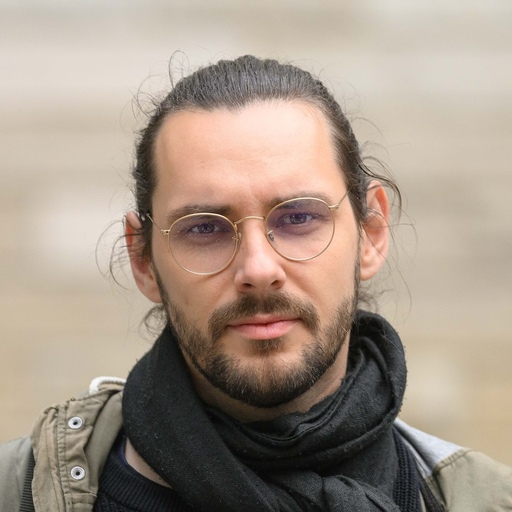
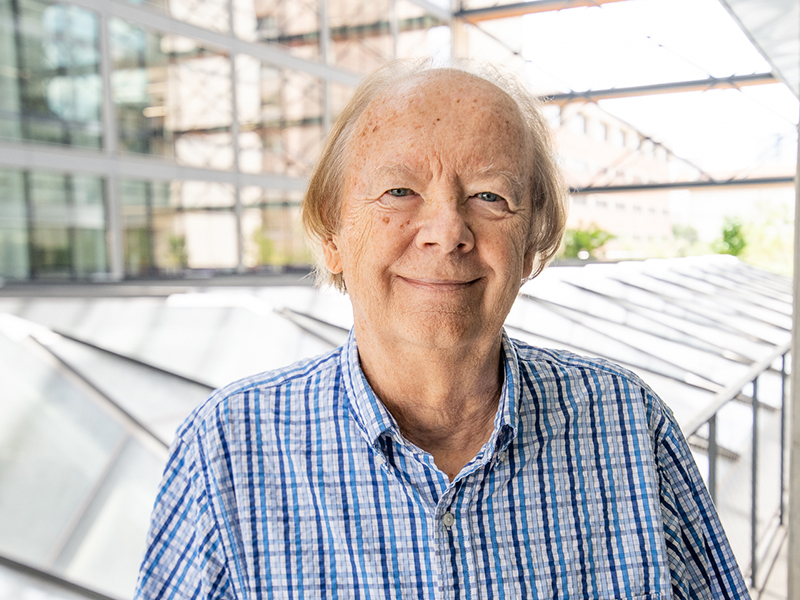
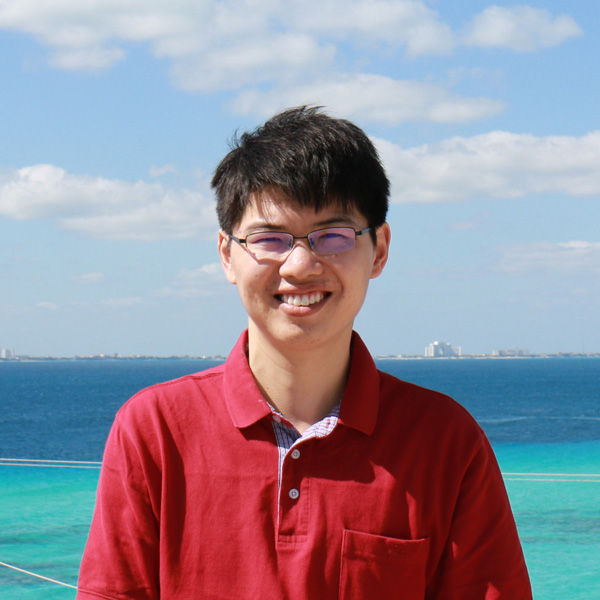
Dr. Jie Li is a Senior Lecturer at the Department of Chemical Engineering, University of Manchester, affiliated with the EPSRC Peer Review College. His expertise spans mathematical modeling, machine learning, and data-driven optimization applied to process systems engineering, including energy efficiency, CO2 capture, renewable energy storage, and Industry 4.0 integration. Research interests focus on Process Systems Engineering (PSE), addressing sustainability challenges through optimization of complex systems. Key areas include data-driven optimization, machine learning for process synthesis, multi-scale modeling of energy systems, and carbon capture technologies. Awards: EPSRC New Investigator Award, Best Poster Awards (ChemEngDayUK22, CSCST-SCI), and 'One-hundred Talents' from Chinese Academy of Sciences. Editorial Roles: Guest editor for Processes and Frontiers in Chemical Engineering . Labs/Teams: Leads the Process Development and Integration group, contributing to UN SDGs related to energy and sustainability. Recent publications emphasize AI-assisted process design, rescheduling strategies for batch processes, and CO2/CH4 separation via MOF membranes. His work bridges chemical engineering, applied mathematics, and computer science to advance sustainable industrial practices.
Csaba Szepesvári is a Professor in the Department of Computing Science at the University of Alberta and a Senior Staff Research Scientist at DeepMind, leading the Foundations team. He holds the Canada CIFAR AI Chair and is a Fellow at Amii. His research focuses on reinforcement learning (RL), online learning, and theoretical foundations of sequential decision-making. Key areas include exploration-exploitation strategies, Markov Decision Processes, and stochastic control. He has co-authored over 225 publications, including seminal works like Bandit Algorithms (2020) and Algorithms for Reinforcement Learning (2010). His academic affiliations include the Reinforcement Learning & Artificial Intelligence Lab (RLAI) at the University of Alberta and editorial roles at journals like Mathematics of Operations Research and the Journal of Machine Learning Research. Awards include the ECML/PKDD Test of Time Award (2016) and recognition for contributions to ICML, UAI, and other conferences. His work bridges theoretical insights with practical applications in AI, robotics, and automated decision systems. Research interests span efficient RL algorithms, statistical guarantees for offline learning, and the intersection of optimization and uncertainty quantification. Collaborations with institutions like DeepMind emphasize foundational advances in AI, while his teaching spans graduate and undergraduate courses in machine learning and algorithms. Key achievements include pioneering contributions to exploration strategies in bandits and RL, developing PAC-Bayes bounds for neural networks, and advancing understanding of double descent phenomena in overparameterized models. His lab (RLAI) is a hub for cutting-edge research in RL theory and applications.
Paweł Ksieniewicz is a Professor at Wrocław University of Science and Technology, affiliated with the Faculty of Electronics and the Department of Computer Systems and Networks. He is a member of the Computer Networks Team and the Machine Learning Team, and serves as a project manager for SWAROG (2021–2025) and contributor to IDSTREAM and GEOM projects. His research interests include: Pattern Recognition Data Streams Hyperspectral Image Processing Imbalanced Data Classification Fake News Detection Classifier Ensembles Ksieniewicz's recent publications focus on challenges in data stream mining, particularly in dynamically imbalanced environments, prior probability estimation, and ensemble methods. His work spans applications in cybersecurity (fake news, IoT attack detection) and healthcare (glaucoma diagnosis). He has contributed to open-source tools like the Stream-learn Python library, emphasizing practical and reproducible machine learning research. His scientific awards include: Minister of Education and Science Scholarship for Outstanding Young Scientists Award of the Polish Society for Artificial Intelligence for Best Doctoral Thesis Multiple Rector's Awards for scientific achievements (2019–2022) Best Paper Award at ICAISC 2021 Winner of the Secundus and Primus research incentive programs Appointment to Academia Iuvenum (2024–2026) Ksieniewicz actively supervises students and has collaborated with researchers such as Michał Woźniak, Paweł Zyblewski, and Robert Burduk. He has secured research grants through national projects and serves on the Discipline Council for Technical Computer Science and Teleinformatics. He has also participated in public outreach, including lectures during Science Week and World Information Society Day. He leads and contributes to multiple research teams, including: Machine Learning Team Computer Networks Team Advanced Data Analysis Methods Team Metaheuristics Team
Xiaorui Liu is an Assistant Professor in the Department of Computer Science at North Carolina State University's College of Engineering, where he joined the faculty in August 2022. He also holds a courtesy appointment in the Department of Electrical and Computer Engineering. His research focuses on large-scale machine learning, trustworthy artificial intelligence, and deep learning on graphs, with applications across various domains including networking, cybersecurity, manufacturing, biology, and healthcare. He has established himself as a leading researcher in graph neural networks and scalable machine learning systems. Dr. Liu's educational background includes: Ph.D. in Computer Science from Michigan State University (2022) M.S. in Computer Science from South China University of Technology (2017) B.S. in Computer Science from South China University of Technology (2015) Dr. Liu's research interests span several cutting-edge areas in artificial intelligence and machine learning. His primary focus is on developing scalable and trustworthy machine learning systems , with particular emphasis on graph neural networks, large language models, and robust AI. His work addresses fundamental challenges in large-scale optimization , distributed machine learning , and adversarial robustness . He explores how to make AI systems more reliable, efficient, and applicable to real-world problems across diverse domains including social networks, biological systems, and industrial applications. His research group is actively investigating how to integrate graph learning with generative AI, enhance model robustness against attacks, and develop efficient training methods for massive datasets. His recent publications demonstrate a clear trend toward integrating traditional graph machine learning with emerging AI paradigms, particularly large language models. His work spans both theoretical foundations and practical applications, with increasing focus on real-world deployment challenges. The research covers diverse subfields including robustness certification, efficient model training, and application-specific adaptations for domains like manufacturing, healthcare, and cybersecurity. Dr. Liu has received numerous prestigious awards recognizing his research excellence: NSF CAREER Award (2025) AAAI-2025 New Faculty Highlights National AI Research Resource Pilot Award (2024) ACM SIGKDD Outstanding Dissertation Award (Runner-up, 2023) Amazon Research Award (2023) NCSU Data Science Academy Award (2023) NCSU Faculty Research and Professional Development Award (2023) Chinese Government Award for Outstanding Students Abroad (2022) Best Paper Honorable Mention Award at ICHI (2019) MSU Cloud Computing Fellowship (2021) MSU Engineering Distinguished Fellowship (2017) Dr. Liu actively mentors students at all levels, currently advising multiple PhD and Master's students including Zhichao Hou, Weizhi Gao, Xingyue Shi, and Daniel Buchanan. His research is supported by significant funding from organizations including NSF, Amazon Research, Snap Research, and internal university grants such as the NCSU Data Science Academy seed grant and the Faculty Research and Professional Development Program. He is expanding his lab to address emerging challenges in AI safety, large-scale graph learning, and trustworthy foundation models, with plans to recruit additional PhD and Master's students for Fall 2025 and 2026. Dr. Liu leads the Network and Data Science research group at NC State, focusing on large-scale graph neural networks and trustworthy AI. The group collaborates with institutions including Oak Ridge National Laboratory and industry partners like Amazon. They have developed innovative approaches such as LazyGNN for efficient large-scale graph learning and ProTransformer for enhancing transformer robustness. The lab maintains strong connections with the broader research community through tutorials at major conferences and active participation in standard-setting research venues.
Roger Marti is a Professor of Organic Chemistry & Process Chemistry at the HES-SO University of Applied Sciences and Arts Western Switzerland , affiliated with the Faculty of Chemistry and Life Sciences and the ChemTech Institute . He has led multiple HES-SO-funded projects, including Public Mask (protective filter development), Smart Hydrogels (tissue engineering), and BIOSMART (bio-based packaging). Education : PhD in Chemistry from ETH Zurich, postdoctoral training at Sandoz Pharma USA. Expertise : Synthetic organic chemistry, flow chemistry, sustainable polymer development, and heterogeneous catalysis. His research focuses on green chemistry and process intensification , particularly in: Single-atom catalysis for cross-coupling reactions Biodegradable polymers for medical and packaging applications Flow reactor design for scalable, safe chemical processes Techno-economic analysis of sustainable material production Recent publications highlight trends in bio-based polymers , flow chemistry safety , and catalyst reuse with environmental impact assessments. He collaborates with institutes like HEPPIA , ZHAW , and iRAP on sustainability projects. Current projects include CO2-neutral biofuels and electrospun biodegradable filters , funded by HES-SO and Swiss National Science Foundation. His work emphasizes closed-loop recycling and industrial feasibility of sustainable chemical processes.
Associate Professor Shih-wei Liao is a faculty member in the Department of Information Engineering at National Taiwan University, leading the ABC Lab / NTU Consensus Lab. His research bridges blockchain technology, Fintech, and Big Data systems with real-world applications. His research expertise spans: Blockchain systems (consensus protocols, environmental monitoring, Gcoin implementation) Fintech applications (digital currency, RegTech, automated clearinghouse) AI/ML optimization (CNN memory traffic, medical imaging, pollution forecasting) Compiler and virtual machine design (Android legacy systems) Recent publications (2018-2021) show strong focus on environmental blockchain applications, IoT security, and medical AI - with work published in IEEE conferences, Blockchain Robotics AI conferences, and journals like IEEE Network. His research demonstrates consistent evolution from foundational Android systems to cutting-edge blockchain applications. Awards include: Google Founders' Award for Android contributions CGO'04 Best Paper Award Nominee The ABC Lab maintains active industry partnerships with major technology companies and financial institutions, evidenced by seminars with Bitfinex/Tether executives and collaborations on Taiwan's Asia Silicon Valley Project. Professor Liao pioneered NTU's Blockchain course in 2015 and leads the NTU RegTech initiative. The lab operates from office R514 with Friday office hours (15:00-17:00), focusing on 'impact, learning-by-doing, interdisciplinary' approaches as stated in their mission.
Professor Brett Turner from the School of Civil and Environmental Engineering at University of Technology Sydney is a leading expert in geo-environmental remediation , PFAS contamination , and geochemical kinetics with over 20 years of experience. He heads a state-of-the-art emerging contaminant analysis laboratory equipped with LC/MSMS, FTIR, and Simultaneous Thermal Analysis (STA) instruments. PhD Environmental Engineering (University of Newcastle, 1999-2003) B.Sc (Hons 1) (University of Newcastle, 1994-1999) His research focuses on PFAS remediation using natural materials like hemp protein, fluoride removal via calcite permeable barriers, and soil stabilization in coastal environments. Recent publications examine pollen bioaccumulation of PFAS, salinity effects on clay plasticity, and metal ion impacts on defluoridation. Current funding includes an ARC Discovery Indigenous grant (2024-2027) for protein-enhanced landfill clay liners to manage PFAS transport. Awards include the 2015 Discovery Indigenous Research Fellowship and the 2017 Newcastle University Chancellor’s Award for Innovation Excellence. He teaches 49116 Contaminated Site Remediation and Waste Management , emphasizing practical skills in GIS, contaminant transport modeling, and remediation strategies under ASTM standards. His laboratory investigates emerging contaminants through advanced analytical techniques and field testing (CPTu, zeta-potential).
Mark A. Stadtherr is a Research Professor in the Department of Chemical Engineering at the University of Texas at Austin. He is affiliated with the National Science Foundation Center for Innovative and Strategic Transformation of Alkane Resources (CISTAR). His research focuses on sustainable processing technologies, including the use of ionic liquids for CO₂ capture and aromatic/aliphatic separations, assessment of light alkane resources, and reliable engineering computing using interval mathematics. He holds a Ph.D. from the University of Wisconsin-Madison (1976) and a B.Ch.E. from the University of Minnesota (1972). Research Interests: Sustainable chemistry, ionic liquids, CO₂ capture, computational methods, and energy-efficient processes. Awards: James A. Burns Award (2008), Computing in Chemical Engineering Award (1998), and teaching/fellowship recognitions. His recent work emphasizes integrating renewable energy into chemical processes and optimizing carbon capture systems. Collaborations span academia and industry, focusing on decarbonization and resource utilization. Key contributions include multi-scale modeling of ionic liquids and systems analysis of petrochemical networks.
Ganesan Narsimhan is a Professor in the Department of Agricultural & Biological Engineering at Purdue University. He holds a B.S. from the Indian Institute of Technology, Kharagpur, and M.S./Ph.D. from Indian Institute of Technology, Kanpur, both in Chemical Engineering. His research focuses on colloidal and interfacial phenomena, including antimicrobial peptide mechanisms, starch behavior, and food emulsion stability. He has served as a visiting Associate Professor in Purdue's School of Chemical Engineering (1979-1982) and joined Purdue full-time in 1986 as an Assistant Professor of Food Engineering. His education includes: Bachelor of Science in Chemical Engineering, Indian Institute of Technology, Kharagpur, India Master of Science in Chemical Engineering, Indian Institute of Technology, Kanpur, India Doctor of Philosophy in Chemical Engineering, Indian Institute of Technology, Kanpur, India Research interests encompass: Pore formation by antimicrobial peptides in lipid bilayers Molecular dynamics simulation of protein conformation Oxidative stability in food emulsions Pasting behavior of starch Colloidal phenomena in food systems Recent publications highlight advancements in starch swelling kinetics, ultrasound-mediated pathogen inactivation, and computational modeling of biopolymer interactions. His work bridges food engineering with molecular-level analysis, contributing to safer food processing and sustainable manufacturing. Teaching spans undergraduate and graduate Food Process Engineering curricula, emphasizing practical applications of theoretical principles. He advises graduate students in the ABE department and collaborates on grants related to food safety and bioprocessing technologies.
Rajiv Khanna is an Assistant Professor in the Department of Computer Science at Purdue University. His research focuses on machine learning, particularly in optimization, theoretical foundations, and interpretability. Prior to this role, he served as a Visiting Faculty Researcher at Google, a postdoctoral scholar at the Foundations of Data Analytics Institute at UC Berkeley, and a Research Fellow in the Foundations of Data Science program at the Simons Institute, UC Berkeley. He holds a PhD in Electrical and Computer Engineering from the University of Texas at Austin. His research interests span machine learning subfields including optimization techniques, theoretical analysis, and model interpretability. He has contributed to areas such as loss surface geometry, generalization bounds, and algorithmic fairness. His work emphasizes bridging the gap between theory and practice in machine learning systems. Dr. Khanna’s academic journey includes postdoctoral research at UC Berkeley and collaborations with industry through his role at Google. His research often explores the computational and statistical trade-offs in modern machine learning models, with a focus on scalable and interpretable solutions.
John Quackenbush is the Henry Pickering Walcott Professor of Computational Biology and Bioinformatics and Chair of the Biostatistics Department at the Harvard T.H. Chan School of Public Health. His research focuses on integrating computational, statistical, and biological approaches to understand complex diseases through gene regulatory networks, multi-omics data analysis, and systems biology. Key areas of expertise include cancer biology, respiratory diseases (e.g., COPD), and the application of machine learning to biomedical problems. His work emphasizes the development of innovative algorithms for network inference (e.g., SpaCeNet, BONOBO, DRAGON) and their application to uncover disease mechanisms. Notable contributions include studies on sex differences in lung cancer, epigenetic signatures in chronic diseases, and the role of regulatory networks in aging-related pathologies. He also leads initiatives to improve reproducibility and scalability in genomic data analysis. Current research trends include leveraging spatial omics, Bayesian methods for sample-specific networks, and computational tools to dissect tumor-immune interactions. His team actively collaborates across disciplines to translate network-based insights into clinical applications such as prognostic biomarkers and therapeutic strategies.
Professor Jochen Deuse holds dual appointments at the University of Technology Sydney (UTS) and TU Dortmund University, Germany. He serves as Professor and Director of the Centre for Advanced Manufacturing at UTS. With a PhD from RWTH Aachen University and prior industry experience in senior management roles at Bosch Group, he specializes in Automation Technology, Robotics, Industrial Engineering, and Data Science. His research focuses on manufacturing challenges, including exoskeletons, digital sovereignty, and data-driven problem-solving. Education: Dipl.-Ing. in Mechanical Engineering, University of Dortmund Dr.-Ing. (Engineering Doctorate), RWTH Aachen University Research Interests: Professor Deuse’s work spans mechatronics, robotics, data science applications in manufacturing, and ergonomics. His recent studies explore exoskeleton effects on worker movements, modular data analytics for quality management, and digital sovereignty in production systems. He also investigates machine learning for production scheduling and automation systems. Grants & Collaborations: Lead on ARC Training Centre for Collaborative Robotics in Advanced Manufacturing (2021–2026) Secured grants for projects like Digital Twin development, hydroponic vertical farming automation, and CO₂ reduction via microalgae Labs & Teams: Directs UTS’s Centre for Advanced Manufacturing and TU Dortmund’s Institute of Production Systems (IPS). Collaborates with industry leaders like Siemens on education initiatives like the NETM training program.
Cong Ma is an Assistant Professor in the Department of Statistics at the University of Chicago. He holds a PhD from Princeton University (2020), advised by Yuxin Chen and Jianqing Fan, and a BEng from Tsinghua University (2015). Previously, he was a postdoctoral researcher at UC Berkeley under Martin Wainwright. His research focuses on the mathematics of data science, emphasizing reinforcement learning, transfer learning, multi-modal learning, high-dimensional statistics, and nonconvex optimization. Key areas include developing computationally and statistically efficient methods for large-scale data problems, with recent work on contrastive learning, contextual bandits, and robust matrix completion. Education: PhD in Operations Research & Financial Engineering, Princeton University (2020) BEng in Electrical Engineering, Tsinghua University (2015) Awards: SIAM Activity Group on Imaging Science Best Paper Prize (2024) Teaching: STAT 253/317: Introduction to Probability Models (Winter 2025) STAT 28000: Optimization (Winter 2025) Machine Learning (Autumn 2022) His work bridges theoretical insights with practical applications, often addressing challenges in statistical guarantees for optimization algorithms and distributionally robust learning. Recent highlights include contributions to multi-modal contrastive learning and batched contextual bandits.
Haizhao Yang is an Associate Professor of Mathematics and Computer Science at the University of Maryland College Park (UMCP). He holds affiliate appointments in the University of Maryland Institute for Advanced Computer Studies (UMIACS) and the Applied Mathematics and Scientific Computation (AMSC) program. Previously, he served as an Assistant Professor at Purdue University and the National University of Singapore, and as a Visiting Assistant Professor at Duke University (2015–2017). His education includes a B.Sc. from Shanghai Jiao Tong University (2010), M.Sc. from The University of Texas at Austin (2012), and Ph.D. from Stanford University (2015). Yang's research focuses on machine learning theory, scientific computing, and applied mathematics. Key areas include AI for scientific discovery, high-performance computing, and algorithm development for differential equations. His work bridges mathematical rigor with practical applications, such as developing neural network-based solvers for high-dimensional PDEs and quantum computing integration for uncertainty quantification. He leads a dynamic research group with over 30 students and postdocs across PhD, master's, and undergraduate levels. Notable achievements include the NSF CAREER Award (2020), ONR Young Investigator Award (2022), and DARPA Young Faculty Award (2024). His laboratory collaborates with institutions like Lawrence Berkeley National Lab and Duke University, emphasizing interdisciplinary projects in data science and computational physics. Recent publications highlight innovations in operator learning for PDEs, quantum algorithm integration, and adversarial reinforcement learning. His group actively explores AI-driven approaches to overcome computational bottlenecks in scientific simulations, with techniques like the Finite Expression Method and OptimAI framework for automated problem-solving.
Dr. Amir Hossein Ansaripoor is a Senior Lecturer at Curtin University's School of Management and Marketing (Faculty of Business and Law), specializing in Supply Chain & Operations Management. He holds a Ph.D. in Business Administration from ESSEC Business School (France/Singapore) and a Master’s in Industrial Engineering from Sharif University of Technology (Iran). His research focuses on applying Operations Research, Data Science, and Industry 4.0 technologies to address challenges in supply chain optimization, agribusiness, sustainable energy, and healthcare operations. He has developed courses like MGMT2017 and MGMT3018, integrating tools like AnyLogistix for immersive student training. His research has been published in top-tier journals such as the European Journal of Operational Research and Transportation Research Part C. Notable contributions include work on blockchain in supply chains, closed-loop supply chains, and evolutionary algorithms for agricultural routing. He has received awards including Curtin's Early Career Researcher Excellence Award (2017) and ESSEC's Ph.D. Fellowship (2009–2013). Amir actively supervises PhD and MPhil students and maintains collaborations with institutions in France, Italy, and Australia. Professional Memberships: INFORMS, ASOR, SCLAA Grants: British Telecom Ph.D. Research Grant (2011–2013) Amir leads research into resilient supply chain design, Industry 4.0 applications, and net-zero food systems. His lab focuses on merging advanced analytics with real-world operational challenges, emphasizing sustainability and technological adoption.