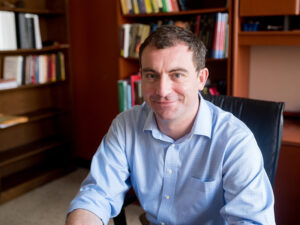
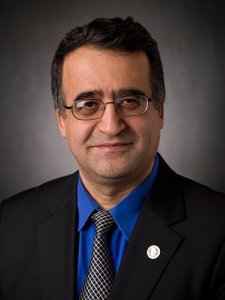
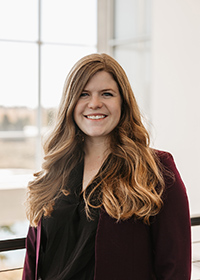
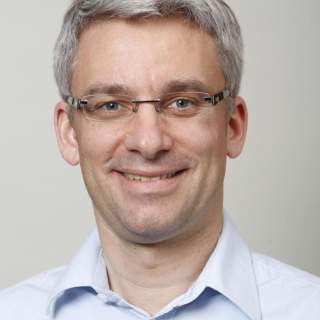
Shimon Whiteson is Professor of Computer Science at the University of Oxford, leading the Whiteson Research Lab focused on reinforcement learning, multi-agent systems, and deep learning. His research develops algorithms for efficient learning in complex environments. Current work explores meta-reinforcement learning frameworks that enable agents to rapidly adapt to new tasks, with applications in autonomous driving simulation and robotics. Recent innovations include novel methods for offline reinforcement learning, multi-agent coordination, and morphology-aware control. Publications demonstrate advances in: Meta-RL algorithm design for few-shot adaptation Multi-agent reinforcement learning environments and benchmarks Imitation learning in autonomous driving Bayesian methods for sample-efficient learning Research outputs include widely used benchmarks and tools including JaxMARL for accelerated multi-agent RL research. Current doctoral supervision focuses on temporal abstraction in RL, multi-agent coordination, and reinforcement learning theory.
Michael Baldea is an Associate Professor in the Department of Chemical Engineering at the University of Texas at Austin . He holds a Ph.D. in Chemical Engineering from the University of Minnesota (2006), with prior degrees from 'Babeş-Bolyai' University in Romania (M.Sc. 2001, Diploma 2000). His research group develops theoretical and computational methods for Process and Energy Systems Engineering , focusing on integrated decision-making, performance optimization, and process intensification with industrial validation. Education: Ph.D., Chemical Engineering, University of Minnesota (2006) M.Sc., Interface Process Engineering, 'Babeş-Bolyai' University (2001) Diploma, Chemical Engineering, 'Babeş-Bolyai' University (2000) Research Thrusts: Integrated decision-making in chemical/energy supply chains Process performance monitoring and optimization Process integration and intensification Key applications include grid-responsive chemical plants, intensified distillation/column designs, and renewable energy integration for building systems. Scientific Awards: Frank A. Liddell, Jr. Fellowship NSF CAREER Award (2015-2020) Moncrief Grand Challenges Faculty Award (2014) AIChE Outstanding Young Researcher Award (2017) Implementation : His group has translated research into commercial tools through partnerships with industrial test beds and is working to integrate methods into commercial simulators. They explore predictive approaches for building energy management and strategic capital investment analysis in next-generation energy systems.
Sebastian U. Stich is a tenured faculty member at the CISPA Helmholtz Center for Information Security , where he has been since December 2021. He is also a member of the European Lab for Learning and Intelligent Systems (ELLIS) since June 2020. His research focuses on optimization methods for machine learning, collaborative learning algorithms, privacy and security in distributed systems, and theoretical foundations of deep learning. Stich received his PhD in Theoretical Computer Science from ETH Zurich (2014), following a Master's in Mathematics at the same institution (2010-2014). Prior to CISPA, he worked as a research scientist at EPFL (2016-2021) and held positions at ETH Zurich and ICTEAM/CORE. He has been awarded the ERC Consolidator Grant 2024 , Google Research Scholar Award (2023), and Meta Privacy-Enhancing Technologies Research Award (2022). His team includes Dr. Anton Rodomanov (since 2023), Dr. Rotem Mulayoff (since 2024), Xiaowen Jiang (2023), Yuan Gao (2023), and notable alumni like Anastasia Koloskova (defended 2023). Stich actively organizes workshops (e.g., NeurIPS OPT 2024) and serves on editorial boards ( Journal of Optimization Theory and Applications , Transactions on Machine Learning Research ). He teaches advanced courses in optimization at Saarland University and has held visiting positions at MIT. Key scientific contributions include: Developing ProgFed for progressive federated learning (2021) Creating ProxSkip to accelerate communication in federated settings (2022) Formalizing SCAFFOLD with control variates for FL (2020) Introducing RelaySum mechanism for decentralized learning (2021) Proposing Lookahead-Minmax for GAN training (2021) His work addresses fundamental challenges in: Decentralized optimization theory Communication-efficient algorithms Privacy-preserving model training Handling heterogeneous data distributions Stochastic gradient dynamics Second-order optimization methods
Chen Liu is an Assistant Professor in the Department of Computer Science at City University of Hong Kong and the Principal Investigator (PI) of the Machine Learning and Optimization (MLO) group. His research focuses on building reliable machine learning models, particularly studying robustness and privacy properties of deep neural networks from an optimization perspective. University: City University of Hong Kong Academic Rank: Assistant Professor Students: Supervises multiple PhD, MPhil, and postdoctoral researchers. Education: Holds a Ph.D. (2022) and MSc (2017) in Computer Science from École Polytechnique Fédérale de Lausanne (EPFL), and a BSc (2015) in Computer Science from Tsinghua University. Research Interests: Adversarial robustness, privacy-preserving machine learning, optimization algorithms, dataset distillation, generative models, and theoretical analysis of loss landscapes. His work addresses challenges like catastrophic overfitting, architecture overfitting in distilled data, and stable adversarial training methods. Article Trends: Recent publications explore adversarial robustness under l0/l1 norms, gradient inversion for data reconstruction, evolutionary factor searching in finance, and meta-tuning for out-of-domain few-shot learning. These works emphasize optimization techniques to enhance model reliability and generalization. Scientific Awards: Microsoft Research Ph.D. Scholarship Programme (2017–2019) Advising and Grants: Supervises a diverse team of current and former students, with collaborations across institutions like George Mason University and Zhejiang University. Research supported by academic and industry grants. Labs and Teams: Leads the MLO group, which investigates fundamental ML theory and algorithms to improve system reliability. The group's work spans adversarial training, dataset distillation, and generative model optimization.
David Warsinger is an Assistant Professor of Mechanical Engineering at Purdue University's College of Engineering, located in West Lafayette, IN. He holds a Ph.D. from MIT and degrees from Cornell University. His research focuses on thermofluids, nanotechnology, and membrane science applied to water treatment, energy systems, and sustainable technologies. Key areas include desalination innovation, the water-food-energy nexus, and HVAC efficiency. He leads the Warsinger Lab, which develops advanced membrane materials, dehumidification systems, and renewable energy integration for desalination. Education: Ph.D., Mechanical Engineering (MIT), M.Eng. and B.S. (Cornell University). Awards include the MIT Outstanding UROP Mentor (2015), UCOWR Dissertation Award (2016), and Purdue's Early Career Teaching Award (2025). His lab collaborates on grants from DOE, NSF, and industry, with recent focus on batch reverse osmosis, solar desalination, and membrane-based HVAC systems. Research emphasizes high-impact applications like atmospheric water harvesting, photocatalytic air purification, and CO₂ removal for space exploration. The lab's capabilities include membrane testing, multiphysics modeling, and partnerships with ARUP for sustainable building design. Current projects include NSF-funded ReNEW initiatives and innovations in wave-powered desalination. Awards include over $4M in grants, including a 2025 $75k Showalter Grant and a 2022 DOE $2.4M award. His lab publishes in top journals and presents at ASME, NAMS, and international conferences. Undergraduate and graduate training emphasizes diversity and entrepreneurship, with alumni securing roles at top universities and companies like SpaceX.
Sebastian U. Stich is a tenured Professor at CISPA Helmholtz Center for Information Security and a member of the European Lab for Learning and Intelligent Systems (ELLIS). His research focuses on optimization for machine learning, collaborative learning (distributed, federated, and decentralized methods), efficient optimization techniques, adaptive stochastic methods, and privacy/security in machine learning. Recent appointments include ERC Consolidator Grant 2024 for the CollectiveMinds project. Key contributions in federated/decentralized learning, uncertainty estimation, and communication-efficient optimization. Active in workshop organization, including the Optimization for Machine Learning workshop at NeurIPS 2024. Teaching modern optimization methods at Saarland University (2023-2025). His work has been recognized with awards such as the Google Research Scholar Award (2023) and Meta Privacy-Enhancing Technologies Award (2022) . His research group includes postdocs Dr. Anton Rodomanov and Dr. Rotem Mulayoff, and PhD students Xiaowen Jiang and Yuan Gao.
Prof. Valentina Boeva is an Assistant Professor at the Department of Computer Science, ETH Zürich, specializing in biomedical informatics. Her research focuses on integrating machine learning and computational methods to address challenges in genomics, oncology, and precision medicine. She holds a position in the Professur für Biomedizininformatik (Biomedical Informatics) and is based at CAB G32.2, Universitätstrasse 6, Zürich, Switzerland. Her work emphasizes applications such as cancer biomarker discovery, tumor heterogeneity analysis, and epigenetic profiling. She teaches courses including Machine Learning Seminar, Data Science Lab, and Machine Learning for Genomics. Her research group develops computational tools like CDState and UniversalEPI to decode complex biological systems. She actively publishes in top-tier journals, with recent work on exosome-driven diagnostics and chromatin interaction modeling. Her scientific contributions span methodologies for single-cell data analysis, survival modeling, and drug response prediction. She collaborates across disciplines to bridge computational science with clinical applications in cancer research.
Ali Demirci is a Professor in the Department of Agricultural and Biological Engineering at the College of Agricultural Sciences, Pennsylvania State University, where he leads research in food safety engineering and sustainable bioprocessing. His work bridges agricultural engineering with microbiology to develop innovative solutions for food safety and bioresource utilization. His research program focuses on three interconnected domains: Non-thermal Food Safety : Development and characterization of pulsed UV light, electrolyzed oxidizing water, and ozone for microbial inactivation on food surfaces and equipment Advanced Bioreactor Systems : Design of biofilm bioreactors for enhanced production of high-value compounds like menaquinone-7 and nisin using immobilized microbial cultures Waste Valorization : Conversion of agricultural byproducts (particularly distillers' dried grains) into biofuels, enzymes, and functional food ingredients through optimized fermentation processes Analysis of his 2022-2025 publications reveals a strategic research trajectory toward sustainable bioprocess intensification. His work increasingly integrates circular economy principles, focusing on non-sterile processing, waste stream utilization, and techno-economic feasibility. Key technological threads include biofilm reactor scalability, lignocellulosic enzyme optimization, and pulsed light decontamination systems for industrial implementation. Professional recognition includes being honored as part of the Penn State College of Agricultural Sciences faculty by a national society in October 2024, highlighting his contributions to agricultural engineering. Dr. Demirci's research program demonstrates strong industry relevance through development of practical technologies for food safety enhancement and agricultural waste conversion. His collaborations span microbiology, food science, and chemical engineering disciplines, with publications appearing in leading journals including Bioprocess and Biosystems Engineering, Journal of Food Engineering, and Food and Bioprocess Technology. Current projects focus on scaling biofilm reactor technologies and integrating first- and second-generation bioethanol production systems.
Antonio Nieto-Marquez Ballesteros is a Full Professor ( Titular Universidad ) at the Universidad Politécnica de Madrid (UPM) since 2017, working in the Department of Mechanical, Chemical and Industrial Design Engineering within the School of Industrial Engineering. His research spans multiple areas of chemical engineering and materials science with significant industrial applications. His primary research interests include carbon nanostructures, activated carbons from waste materials, biomass valorization, photocatalysis, fly ash treatment, and chemical process intensification. These research lines have resulted in 39 JCR publications (32 in Q1 journals), a national patent, and over 50 conference contributions, with an h-index of 20 and more than 1,400 citations (SCOPUS). His recent publications demonstrate strong trends in environmental applications of materials science, particularly in waste valorization, photocatalytic technologies for pollution treatment, and sustainable chemical processes. The research shows interdisciplinary connections between materials engineering, environmental science, and industrial applications, with increasing focus on circular economy principles and green technologies. Positive evaluation in 2 research six-year periods Santander YUZZ Award (2017) for green technology business plan Green Weekend Valladolid Award (2017) for best green technology business plan Topic Editor at Frontiers in Chemistry Dr. Nieto-Marquez has supervised 3 research grants for young researchers (Spanish Government, 2014 and 2018; Spanish Society of Catalysis, 2018) and has evaluated numerous research proposals for institutions including UEM, UC3M, University of Oviedo, and Poland National Science Centre. His extensive industrial collaborations include contracts with Saica, Thales Alenia, INTA, SENER, Hydroclinker, Grupo Entre Compas, PPG Ibérica, Sorigué, and PROQUICESA, totaling over €100,000 in funding across various environmental and materials projects. He is also an active member of the Optical Analysis and Characterization of Materials research group at UPM.
Prashant Mhaskar is a Professor in the Department of Chemical Engineering at McMaster University. His research focuses on model predictive control (MPC), fault detection and isolation (FDI), and data-driven modeling of chemical and bioprocess systems. He has established a four-year partnership with Sartorius to advance biomanufacturing technologies for antibody and virus-based treatments. Key research areas include: Batch and continuous process control Hybrid modeling integrating first-principles and data Stochastic and nonlinear control systems Bioreactor optimization for monoclonal antibody production Safe-parking frameworks for fault-tolerant control Economic model predictive control for industrial processes Recent work emphasizes practical implementations using recurrent neural networks, autoencoders, and physics-informed neural networks to address plant-model mismatch and sparse data challenges.
Dr. Tzahi Y. Cath is a Professor in the Department of Civil and Environmental Engineering at the Colorado School of Mines , where he leads innovative research in water and wastewater treatment technologies. He serves as Director of the Advanced Water Technology Center (AQWATEC), Co-Director of the Colorado Center for a Sustainable WE2ST, and holds a Joint Appointment at the National Renewable Energy Laboratory (NREL) Water and the Environment division. His work focuses on enabling water reuse through membrane processes, energy-water systems, and data-driven solutions. Education PhD in Environmental Engineering, University of Nevada, Reno (2003) MS in Environmental Engineering, University of Nevada, Reno (2001) BSc in Mechanical Engineering, Tel Aviv University (1992) Research Interests Dr. Cath's research spans membrane filtration (forward osmosis, pressure-retarded osmosis), desalination (membrane distillation, nanofiltration), and direct potable reuse technologies. He explores integrated water-energy systems , data science applications in water treatment, and mineral harvesting from brines. His projects address oil and gas produced water treatment, scalability of membrane systems, and sustainability in industrial water use. Article Trends His recent publications emphasize reverse osmosis, membrane distillation, and data science tools for process optimization. Key subfields include PFAS removal, lithium recovery, ammonia resource recovery, and computational fluid dynamics modeling. Emerging themes are buoyancy-driven heat transfer, economic assessments of thermal desalination, and governance frameworks for net-zero urban water systems in arid regions.
Haley Larson, Ph.D., serves as a Teaching Assistant Professor in Animal Health at Kansas State University's Olathe campus. Her career bridges academia and industry, with prior roles as a Senior Scientist at Cargill Animal Nutrition and Health where she developed the first fully automated dual-flow continuous culture system for cattle rumen simulation. Education: Ph.D. in Ruminant Nutrition from University of Minnesota (2019) B.S. in Animal Science from University of Minnesota (2014) Research Interests focus on ruminal fermentation patterns, in vitro culture systems, biological modeling, and on-farm rapid assays. She specializes in nutritional strategies to optimize cattle performance and reduce environmental impacts through feed additive evaluation and microbial analytics. Academic Contributions include designing graduate programs like the M.S. in Applied Biosciences and Regulatory Affairs in Animal Health Graduate Certificate. Her teaching spans topics such as product development research strategies, EPA regulatory affairs, and zoonotic pathogens in the food chain. Professional Affiliations include American Registry of Professional Animal Scientists, Plains Nutrition Council, American Society of Animal Science, and American Dairy Science Association.
Prof. M.B. Franke is a Professor of Process Design and Optimization at the Sustainable Process Technology (SPT) Group, part of the Faculty of Science and Technology (TNW) at the University of Twente. His academic career follows over 15 years of industry experience at Bayer and LANXESS in Germany and China, where he held roles such as process engineer, project manager, and global technology manager. He previously led Bayer's Process Modeling and Design group, contributing to digital transformation initiatives including Digital Twins for production plants. Education: Bachelor's/Master's in Chemical Engineering, Technical University (TU) Dortmund, Germany (1996–2001) PhD in Fluid Separations, TU Dortmund, Germany Research Interests: Advanced process design optimization, scheduling of chemical batch plants, mixed-integer optimization, and process modeling under uncertainties. His expertise spans distillation systems, discrete event simulation, and applications in biodiesel and agricultural biotechnology, including algae-based design. Awards: None explicitly mentioned in the provided text. Advising & Grants: No student advisees or grant details listed. His industry roles focused on process innovation and project management, with academic work centered on digital transformation in chemical engineering. Labs/Teams: Leading the Sustainable Process Technology (SPT) Group at the University of Twente, focusing on interdisciplinary approaches to process optimization and sustainable industrial practices.
Mustafa Taha Koçyiğit serves as an Assistant Professor at Boğaziçi University, specializing in artificial intelligence and computer vision research. His academic role focuses on advancing deep learning methodologies within the university's engineering or computer science framework. His research interests encompass deep learning, self-supervised learning, efficient training of deep learning and large language models, computer vision, and language-grounded vision systems. He develops computationally and data-efficient techniques to enhance AI model training and deployment across diverse applications. Analysis of his 2020-2025 publications reveals consistent emphasis on training efficiency: accelerating self-supervised learning, optimizing computer vision methods, and applying deep learning to industrial defect detection. His work bridges theoretical advancements with practical aerospace and manufacturing solutions. No scientific awards are documented in the source material. Information regarding student advising, grant funding, laboratory facilities, or research teams remains unavailable.
Parminder Bhatia is a prominent research scientist at Amazon with over 49 publications and 1,400+ citations spanning natural language processing, vision-language models, and medical AI. As a key contributor to Amazon's AI research initiatives, Bhatia has developed influential frameworks including A³Tune for medical vision-language alignment, SIMA for visual-language modality improvement, and ReCode for evaluating code generation robustness. Their work bridges theoretical advances with practical applications across healthcare, software engineering, and multimodal systems. Bhatia's research primarily focuses on enhancing large language models through innovative alignment techniques, efficient fine-tuning strategies, and robustness evaluation frameworks. Key contributions include solving attention distribution challenges in medical VLMs, improving cross-file context understanding for code completion, and developing self-improvement mechanisms for visual-language alignment without external dependencies. Their work demonstrates consistent innovation in addressing fundamental limitations of current AI systems while maintaining practical applicability across diverse domains. Analysis of Bhatia's 15 most recent publications reveals a strong emphasis on medical AI applications (40%), code generation/analysis (30%), and foundational LLM improvements (30%). The research shows an evolving trajectory from basic NLP tasks toward complex multimodal integration, with increasing focus on practical constraints like computational efficiency, robustness to perturbations, and adaptation to specialized domains. Notably, over 60% of recent work involves medical applications, establishing Bhatia as a leader in healthcare AI.