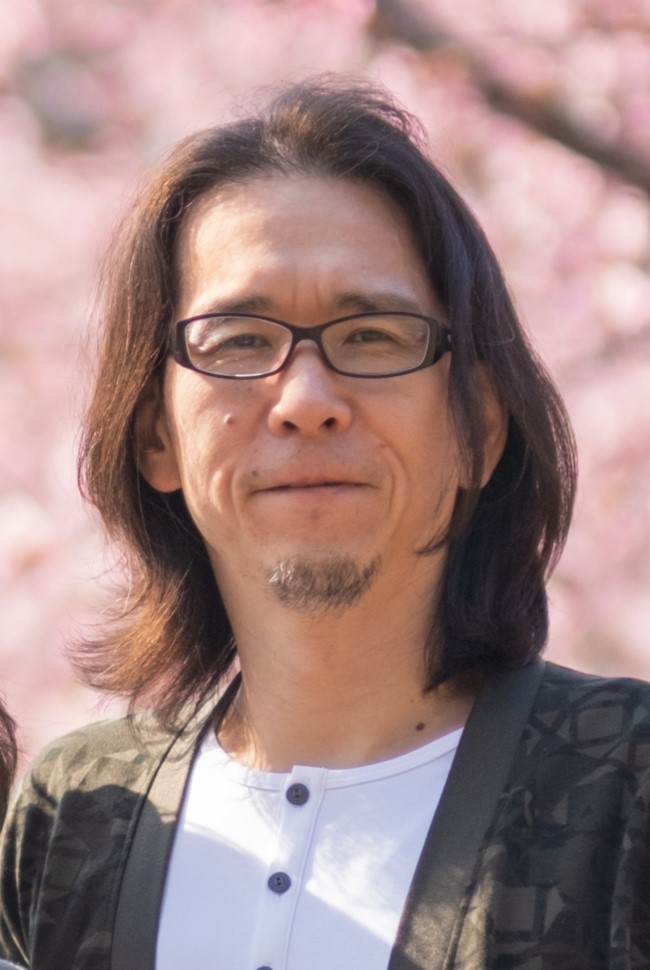
Ralph WILLOX is a Professor in the Department of Basic Analysis at the University of Tokyo's Graduate School of Mathematical Sciences. His research focuses on integrable systems, particularly discrete and ultradiscrete nonlinear dynamical systems, with applications to cellular automata and natural phenomena modeling. Research Areas : Integrable systems, Hirota's bilinearization method, Sato theory, discretization/ultradiscretization techniques. Affiliations : Mathematical Society of Japan, Japan Society of Industrial and Applied Mathematics (JSIAM), Councilor at the Solvay Institutes' International Physics and Chemistry Institutes. Teaching : Instructs Mathematics IA (Master's Program, Science 1) and Applied Mathematics XB (Graduate School of Mathematical Sciences). His work bridges algebraic methods with computational simulations, exploring how discrete systems retain essential dynamics of continuous models. Recent publications analyze generalized QRT mappings, ultradiscrete KdV solutions, and predator-prey system discretizations. Advisory Roles : Advisory Board member for the Journal of Physics A: Mathematical and Theoretical. Activities : Active in academic dissemination through seminars, conferences, and collaborative research projects.
Makiko Sasada is a Professor at the Graduate School of Mathematical Sciences, The University of Tokyo. Her research focuses on probability theory, interacting particle systems, and classical integrable systems, with an emphasis on hydrodynamic limits, spectral gaps, and non-gradient models. She has made significant contributions to understanding energy diffusion in stochastic systems and integrable cellular automata like the box-ball system. 2010: MSJ Takebe Katahiro Prize for Encouragement of Young Researchers 2011: Second JSPS Ikushi Prize 2011: University of Tokyo President's Prize Her recent work explores scaling limits in the box-ball system, thermal conductivity in stochastic models, and topological structures in large-scale systems. She actively participates in international conferences, serves as an associate editor for leading journals, and organizes educational initiatives like the FoPM program, which trains students to apply basic science to societal challenges through mathematical and physical innovation. Selected publications include: The incompressible Navier–Stokes limit from the discrete-velocity BGK Boltzmann equation (2025) Characterization of Gradient Condition for Asymmetric Partial Exclusion Processes (2025) Topological structures of large-scale interacting systems (2024)
Hirata Akimasa is a Professor at Osaka University's College of Engineering, Department of Communications Engineering, and affiliated with the Advanced Medical Physics and IT Research Center. His work bridges biomedical engineering , electromagnetic safety , and neuroscience . Degree: Doctor of Engineering (Osaka University, 2000) External Career: Researcher at University of Victoria (1999) Research Focus : Electromagnetic wave effects on human physiology Thermal stress and heatstroke risk assessment Machine learning for personalized brain stimulation Computational anatomy and dosimetry Article Trends : Recent work spans neural stimulation , millimeter-wave safety , thermal modeling , and machine learning applications , emphasizing electromagnetic compatibility , neurophysiology , and environmental health . Scientific Recognition : 2024: Minister of Education, Culture, Sports, Science and Technology Award 2023: IEEE Fellow 2022: Japan Open Innovation Award 2018: Japan Academy Medal Grants & Collaborations : Multiple JSPS grants (2001-2025), including basic science research (2011) and bioelectromagnetics (2014). Collaborated with IEEE, WHO, and ICNIRP committees.
Katsuhiko Matsuzaki is a Professor at the Faculty of Education and Integrated Arts and Sciences , Waseda University, Tokyo. He holds a Ph.D. in Science from Kyoto University and has held academic positions at Okayama University, Ochanomizu University, and Tokyo Institute of Technology. His research spans geometric function theory, Teichmüller spaces, and quasiconformal mappings, with particular emphasis on symmetric structures and their applications to hyperbolic geometry. Education: Ph.D. (Science), Kyoto University (1992) Graduate School, Division of Natural Science, Kyoto University (1989) Faculty of Science, Kyoto University (1987) Professional Memberships: Mathematical Society of Japan Matsuzaki’s research explores the intersection of complex analysis and hyperbolic geometry , focusing on Teichmüller spaces of symmetric homeomorphisms, quasiconformal extensions, and the analytic structure of infinite-dimensional Teichmüller spaces. His work on p-Weil–Petersson curves , BMO embeddings , and vanishing Carleson measures has advanced the understanding of conformal invariants and their geometric implications. Recent publications analyze the complex Banach manifold structure of Teichmüller spaces and the rigidity of diffeomorphism groups under conjugation. Scientific Awards: Analysis Prize, Mathematical Society of Japan (2022) Takebe Katahiro Award, Mathematical Society of Japan (1996) His extensive research activity includes grants from the Japan Society for the Promotion of Science, such as projects on the Weil-Petersson metric , quasiconformal groups , and thermodynamic formalism for conformal semigroups. Matsuzaki’s contributions to the theory of infinite-dimensional Teichmüller spaces and modular groups reflect a deep interplay between geometric analysis, group theory, and dynamical systems.
Yasushi Homma is a Professor in the Department of Mathematics at Waseda University's School of Fundamental Science and Engineering. He has held this position since 2012, following his promotion from Associate Professor (2007-2012). His academic career includes research positions at Tokyo University of Science and the Japan Society for the Promotion of Science. Homma earned his Doctor of Science degree from Waseda University, where he completed his doctoral, master's, and undergraduate studies in Mathematical Science. Homma's research focuses on advanced geometric structures, particularly spin geometry and differential geometry. His work explores spinor fields, Dirac operators, Clifford analysis, and Rarita-Schwinger fields on various manifolds. He investigates Weitzenböck formulas, spectral properties of geometric operators, and their applications to mathematical physics. His research bridges pure mathematics with theoretical physics, examining how geometric structures relate to physical phenomena. Analysis of his publication record reveals a consistent focus on spin geometry and related fields over two decades. His most recent work examines spinor and tensor fields with higher spin on spaces of constant curvature, spectra of the Rarita-Schwinger operator on symmetric spaces, and harmonic analysis on Grassmannians. The research demonstrates deep connections between representation theory, differential geometry, and mathematical physics, with applications to understanding fundamental geometric structures. Waseda University Teaching Awards 2017 Fall Semester Homma has secured multiple research grants from the Japan Society for the Promotion of Science, including projects on Spin Geometry and Clifford Analysis (2024-2029), New developments in spin geometry (2019-2023), and Study on identities for generalized gradients (2015-2018). His international collaborations include work with researchers from University of Stuttgart, University of Antwerp, and others. He teaches various mathematics courses including Linear Algebra, Geometry B1 (surface theory), Geometry B2 (theory of manifolds), and Advanced Geometry. As a member of the Mathematical Society of Japan Education Committee and various review committees for the Japan Society for the Promotion of Science, Homma contributes significantly to the mathematical community. His research laboratory at Waseda University focuses on advancing spin geometry with Rarita-Schwinger operators, exploring connections between geometric structures and physical theories.
Daisuke Nakazato is a Professor at the Graduate School of Business and Finance, with sub-affiliation at the Faculty of Commerce. His academic work bridges applied mathematics, statistics, and financial engineering, focusing on quantitative finance and stochastic modeling. Research Interests: His primary research areas include applied mathematics and statistics, with applications in financial modeling, risk management, and queueing theory. His work explores mathematical frameworks for interest rate models, credit risk, and transient behavior in queuing systems. Publication Trends: His research spans computational finance (1990–2000s), with emphasis on derivatives modeling, term structure analysis, and stochastic processes. Collaborative work includes co-authorship with D. Bertsimas and others in operations research. Teaching: Currently teaches advanced courses in computational finance and mathematical finance at the graduate level, including seminars and research guidance for MSc in Finance students.
Satoshi Murai is a Professor at the Faculty of Education and Integrated Arts and Sciences, Waseda University, since 2019. His research spans Commutative Algebra , Algebraic Combinatorics , and Combinatorial Topology , with a focus on the interplay between algebraic structures and combinatorial objects like simplicial complexes, polytopes, and graph theory. He has held previous positions at Osaka University (2014–2019) and Yamaguchi University (2009–2014). His work often involves Hilbert functions , Betti numbers , and Lefschetz properties , particularly in the context of Stanley-Reisner rings and Hessenberg varieties. Notably, his research connects algebraic invariants to geometric and topological properties of manifolds and pseudomanifolds. He has published extensively in top-tier journals, including Acta Mathematica , Journal of Algebraic Combinatorics , and Advances in Mathematics . Recent trends in his publications include studies on equivariant Hochster formulas , balanced neighborly polynomials , and log-concavity in matroid polynomials . He received the Mathematical Society of Japan Takebe Masahiro Encouragement Award in 2008. As an editor-in-chief for Algebraic Combinatorics since 2018, he contributes to the peer-review process. His research is funded by Japan Society for the Promotion of Science (JSPS) grants for projects on algebraic and combinatorial structures (2016–2020, 2021–2025). Murai is a member of the Mathematical Society of Japan and has presented at major conferences like Formal Power Series and Algebraic Combinatorics (FPSAC) and Algebra Symposium .
Hayato Chiba is a Professor of Mathematics at the Advanced Institute for Materials Research (AIMR) at Tohoku University in Japan. His research focuses on dynamical systems theory, particularly bifurcation theory, synchronization phenomena, and the Kuramoto model of coupled oscillators. He has made significant contributions to understanding synchronization in infinite-dimensional systems and their applications to diverse fields including machine learning, brain science, and diabetes research. Chiba received his PhD from Kyoto University's Graduate School of Information Science in 2009. After serving as a Japan Society for the Promotion of Science Special Researcher and holding positions at Kyushu University, he became a Professor at Tohoku University's Institute for Advanced Materials Science in 2019. His academic journey demonstrates a strong progression from theoretical mathematics to interdisciplinary applications. Chiba's research interests span dynamical systems theory , differential equations , and nonlinear functional equations , with particular focus on bifurcation theory, chaos, and the Painlevé equations. His work bridges abstract mathematical theory with practical applications in physics, engineering, biology, and medicine. Recent research has explored synchronization phenomena in coupled oscillator systems, which have implications for understanding brain function, cardiac rhythms, and other biological processes. His approach combines rigorous mathematical analysis with computational methods to tackle problems in systems with large degrees of freedom. Chiba's publication record shows a consistent focus on advancing the mathematical theory of synchronization, particularly through spectral methods and bifurcation analysis. His work demonstrates progression from foundational theoretical work to increasingly applied research, with recent papers addressing medical applications. The Kuramoto model and its variants form a central theme throughout his work, showing evolution from basic theoretical analysis to applications in neuroscience and other fields. 2013 2nd Hiroshi Fujiwara Mathematical and Physical Science Awards for 'The solution that combines the oscillator system's ideas' 2016 Minister of Education, Culture, Sports, Science and Technology Commendation Award for Wakatek Scholars 2018 Kyushu University Lecture Award Chiba has secured substantial external funding throughout his career, including JSPS grants, JST SAKIGAKE projects, CREST funding, and Medical Research and Development Projects. His research group explores the mathematics of synchronization phenomena through both theoretical development and experimental validation, as evidenced by his metronome synchronization demonstrations. Chiba actively collaborates across disciplines, working with physicists, biologists, and medical researchers to apply mathematical insights to real-world problems.
Professor Takeyoshi Ishimatsu at Nagoya Institute of Technology's College of Engineering, Social Engineering Department (Architecture & Design Field), holds a Doctorate in Engineering (2015). His work bridges environmental design, art education, and regional revitalization through community-university collaborations. Doctor (Engineering), Nagoya Institute of Technology (2015) Professional Memberships: Institute of Environment Art and Design, Japan Society of Basic Design and Art Research focuses on environmental design with emphasis on regional revitalization through art , educational design workshops , and human-environment interaction . His recent studies explore balance toy-inspired kinetic design, cross-modal sensory experiences in origami and electric guitar aesthetics, and STEAM education applications in personal fabrication workshops. Scientific awards include: Japan Society of Basic Design and Art 2014 Young Researcher Award Nagoya Institute of Technology Staff Award (2017) Japan Society of Basic Design and Art 2014 Research Encouragement Award Contributions span: Principal investigator for art festival projects funded by NPO法人越後妻有里山協働機構 (2024, 2022) Collaborative research with companies like 株式会社伊藤商店 Media coverage in 毎日新聞, 十日町新聞社, and TV programs
Katsumasa Nishide is a Professor at Waseda University's Graduate School of Business and Finance (Waseda Business School), where he has been employed since April 2024. Previously, he was a Professor at Hitotsubashi University's Graduate School of Economics (2016-2024), and before that at Yokohama National University in various capacities including Professor at the Faculty of International Social Sciences and Associate Professor at the International Graduate School of Social Sciences. He received his Ph.D. in Economics from Kyoto University in 2006. His educational background includes: Doctoral course at Kyoto University Graduate School of Economics (2003-2006) Master's course at Kyoto University Graduate School of Economics (2001-2003) Faculty of Economics at Kyoto University (1999-2001) Faculty of Law at Hitotsubashi University (1988-1992) Professor Nishide's primary research interests focus on financial economics and financial engineering, with particular expertise in market microstructure, high-frequency trading, regime-switching models, real options analysis, and systemic risk. His work often combines mathematical finance with economic theory to address complex financial market phenomena. He has made significant contributions to understanding how uncertainty, particularly regime uncertainty, affects investment decisions, asset pricing, and market structure. His recent publications show a strong trend toward analyzing high-frequency trading markets, strategic positioning in competitive environments, and the application of real options theory to corporate finance decisions. His work frequently employs sophisticated mathematical models including Markov-switching frameworks, continuous-time models, and game-theoretic approaches to examine market dynamics under uncertainty. Professor Nishide serves on several important committees: Member of the Science and Technology Promotion Council at the Ministry of Education, Culture, Sports, Science and Technology (since 2025) Workshop on the Functioning of the Secondary Market for Securities at Japan Securities Research Institute (since 2023) Funds Investment Basic Issues Research Committee at Police Mutual Aid Association Headquarters (since 2023) Asset Management Advisor at Pension Fund Association (since 2019) Member of Journal Committee at Securities Analysts Association of Japan (since 2014) He is also an active researcher with numerous grants, including ongoing projects funded by the Japan Society for the Promotion of Science on financial market stability and the impact of high-frequency trading. His teaching portfolio includes courses on Financial Engineering, Fixed Income Investments, and Market Microstructure at Waseda University.
Shohei Nakajima serves as an Assistant Professor (without tenure) at Waseda University with dual appointments in the School of International Liberal Studies under the Faculty of International Research and Education, and the School of Fundamental Science and Engineering under the Faculty of Science and Engineering. He teaches undergraduate courses including Introductory Calculus, First Year Seminar, and Stochastic Processes across these institutions. Education: Ph.D. in Fundamental Science and Engineering, Waseda University (2017.04 - 2023.03) Master's degree in Fundamental Science and Engineering, Waseda University (2015.04 - 2017.03) Dr. Nakajima's research program centers on mathematical statistics, analysis, and probability theory with specialized focus on statistical inference for stochastic processes driven by fractional Brownian motion. His theoretical work addresses parameter estimation challenges under various noise conditions, developing asymptotic properties of estimators for both continuous and discrete observation settings. He has made significant contributions to understanding maximum likelihood estimation techniques and least squares methods for complex stochastic systems with non-standard noise structures. His publication pattern reveals a concentrated research trajectory examining statistical properties of estimators for stochastic differential equations with fractional components. The work consistently bridges theoretical mathematical analysis with practical statistical methodology, particularly addressing cases involving small noise asymptotics, multiplicative fractional noise, and non-Lipschitz coefficients that present unique analytical challenges. Dr. Nakajima currently leads a Japan Society for the Promotion of Science (JSPS) funded research project (2024.04-2026.03) titled "Statistical inference theory for stochastic differential equations driven by fractional Brownian motion," which extends his internal special research projects conducted from 2021-2023 on related theoretical frameworks.
KAWAMURA, Junichiro is an Assistant Professor (non-tenure-track) at the School of Advanced Science and Engineering, Faculty of Science and Engineering, Graduate School of Advanced Science and Engineering. His teaching activities include courses such as Science and Engineering Laboratory 1A, Basic Experiments in Science and Engineering 2B, and various recitations/exercises in Applied Mathematics and Applied Physics for 2025 academic year. With 43 research papers and 530 citations registered in Scopus (h-index: 13), his academic contributions appear focused on applied mathematical and physical sciences. However, specific research areas and detailed publication history remain partially undefined in the available syllabus data.