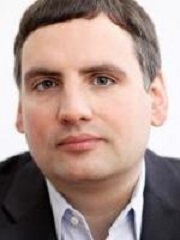
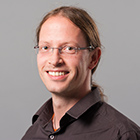
Prof. Dr. Gary S. Schaal is a faculty member at Helmut Schmidt University – University of the Federal Armed Forces Hamburg, specializing in Political Science. His work focuses on the intersection of digital technologies and democratic systems, analyzing challenges to public spaces, fundamental rights, and legal frameworks in the digital age. Participated in the LPR Forum Medienzukunft event discussing "The fragile digital we" Contributed to the Hamburger Horizonte 2017 conference panel on digital dystopias Provided expert commentary on basic income in ZDF's kulturzeit magazine Spoke at the 2017 Dürnstein symposium on postdemocracy and populism His research interests include digital transformation, political theory, and the sociopolitical implications of emerging technologies. Schaal has engaged in public discourse through events co-organized with institutions like the Heinrich Böll Foundation and Chaos Computer Club.
Dr. Jesco Kreft is a Lecturer in Didactics of Social Science Subjects at the University of Hamburg's Faculty of Education, specializing in Educational Economics, Education Policy, and Democratic Education. His career includes leadership roles such as Managing Director of the Hamburg Foundation for Business Ethics and prior experience as a business journalist and management consultant at McKinsey & Company. Kreft's research investigates the intersection of economics, education policy, and civil society, with specific focus on corporate responsibility and democratic participation frameworks. His publications demonstrate consistent focus on socio-economic systems and policy analysis, particularly examining organizational dynamics in educational governance. Recent works explore basic income systems, political economy frameworks, and cross-border regional development strategies. While no specific student advisement or laboratory activities are documented, Kreft maintains professional contact through his university email (jesco.kreft@uni-hamburg.de).
Sabine Klocke-Daffa is an Adjunct Professor of Ethnology at the Department of Ethnology, Asia-Orient Institute, Faculty of Humanities, University of Tübingen, Germany. She has been an academic associate at the university since 2010 and holds a habilitation in ethnology from the same institution, awarded in 2016. Her academic work spans teaching, research, and interdisciplinary collaboration, with a strong focus on applied ethnology and cultural anthropology. PhD in Ethnology, University of Münster (1998) Habilitation, University of Tübingen (2016) State Examination in Teacher Training, University of Münster (1987) Master's Degree in Ethnology, Sociology, and Romance Philology, University of Münster (1981) Sabine Klocke-Daffa’s research centers on social and cultural anthropology, particularly in southern Africa (Namibia), Madagascar, and Iran. Her key interests include social security systems, exchange relations, cultural dynamics of resources, religion, applied ethnology, and the integration of ethnology into education. She explores how traditional systems of care and solidarity adapt in modern contexts, especially through funeral insurances and basic income grants. Her work critically examines the interplay between local practices and globalized systems, emphasizing cultural appropriation and identity. Her recent publications (2016–2024) reveal a consistent thematic focus on security, trust, time, and resource valuation. Articles analyze life and funeral insurances in Namibia, mineral resource valuation in Iran, and the Sambatra ritual in Madagascar. These works highlight her anthropological approach to understanding how communities navigate risk, modernity, and social change. The keywords across her research include social insurance, cultural heritage, resource complexes, and transformative education. Challenging Authorities. Ethnographies of Legitimacy and Power in Eastern and Southern Africa (2021) Applied Ethnology. Perspectives of an application-oriented science (2019) The curse and blessing of resources (2016) Career orientation for cultural scientists (2009) Klocke-Daffa has supervised multiple PhD students whose work spans gender, cultural heritage, integration, and governance in diverse regions including Botswana, Namibia, Turkey, and Guatemala. She has been involved in significant research projects such as SFB 1070 'Resource Cultures' (co-leading 'Stones from the South' on Iranian gemstones) and the WILLE project on teaching ethnology. She is a founding member of the Interdisciplinary Centre for Global South Studies and the Center for Religion, Culture and Society at the University of Tübingen, and an associate member of the ELISA ethics project on IT exports to Sub-Saharan Africa. She is actively engaged in academic communities, including the International Union of Anthropological and Ethnological Sciences (IUAES) and the German Society for Cultural and Social Anthropology (DGSKA). She serves on the scientific advisory board and board of trustees of the Frobenius Institute Frankfurt. Her professional activities include organizing workshops, presenting at international conferences (EASA, IUAES, EAA), and promoting public anthropology through accessible writing and teaching.
Marcel Fratzscher is President of the German Institute for Economic Research (DIW Berlin) and Professor of Macroeconomics at Humboldt University Berlin. He serves on the Advisory Board of the German Federal Ministry for Economic Affairs and Energy and is a member of the Euro50 Group. As a prominent scholar and public intellectual, he regularly contributes to German and international media including DIE ZEIT, Financial Times, and Project Syndicate. His research focuses on macroeconomics and financial markets, inequality, globalization, and European integration. Fratzscher has authored several influential books including "After Us, the Future" (2025), "Money or Life - How Our Irrational Relationship to Money Divides Our Society" (2022), and "The Germany Illusion." His work consistently addresses the transformation of economy and society, with particular emphasis on Germany's role in Europe and the world. Analysis of his recent publications reveals a strong focus on intergenerational equity, with numerous articles addressing youth concerns, social mobility, and the sustainability of social contracts. His research increasingly examines the intersection of economic policy with climate challenges, demographic change, and technological transformation, reflecting contemporary economic debates in Germany and Europe. Fratzscher maintains an active public presence through media contributions, lectures, and participation in policy discussions. His recent engagements include addressing the 100th anniversary of DIW Berlin, speaking at events on economic sovereignty, and participating in debates about Germany's future economic direction.
Dr. Anne-Marie Parth is a researcher at the Department of Political Science, Faculty of Social Sciences, Ludwig-Maximilians-University Munich. She works within the Chair for Global Governance and Public Policy, focusing on intersections between social, environmental, and health policies across European contexts. Her research connects theoretical frameworks like the Narrative Policy Framework with empirical analyses of crisis governance, democratic satisfaction, and socio-ecological interactions. Her work spans several key areas: Policy dynamics during crises (pandemic, financial, migration) Environmental governance and behavioral responses Democracy satisfaction and political socialization Welfare state-environmental action linkages Recent publications reveal consistent application of policy theory frameworks to contemporary challenges, with a focus on European comparative analysis. Her research combines empirical studies with theoretical innovation through narrative analysis and behavioral experiments. Scientific contributions include Developing crisis policy spillover models Mapping eco-social risk governance Quantifying backlash against gender policies Assessing digital protest mobilization impacts Testing basic income policy communication
Jerome Schäfer is an Assistant Professor at the Department of Empirical Political Research and Policy Analysis within the Faculty of Social Sciences at Ludwig Maximilian University of Munich. His academic work focuses on political economy, political behavior, public policy, and quantitative research methods, with a particular emphasis on understanding voter turnout dynamics through experimental and comparative approaches. PhD from Yale University Research areas: Political Economy, Political Behavior, Public Policy, Quantitative Methods Key topics: Voter turnout mechanisms, policy feedback effects, time constraints in elections, sleep deprivation impacts on civic engagement His recent publications analyze the effects of basic income experiments, gendered impacts of family structures on voting, and income inequality's influence on political participation in Northern Italy. He teaches courses in Research Design , Quantitative Comparative Politics , and Advanced Quantitative Methods at LMU. Contact: Email: jerome.schaefer@gsi.uni-muenchen.de Address: Oettingenstr. 67, 80538 München
Nicole Carell, Ph.D., serves as an external Lecturer at Alice Salomon Hochschule Berlin (ASH Berlin), a specialized university of applied sciences in Berlin focused on social work, public health, and related disciplines. She is actively teaching courses in the Winter Semester 2025/26 as part of the Legal Foundations of Social Work curriculum. Dr. Carell's research interests center on the legal aspects of social welfare systems, with particular expertise in social administrative law and legislation related to livelihood security. Her work bridges the practical application of legal frameworks within social work practice. Currently teaching two core courses for the Social Work program, she contributes to foundational legal education for future social workers. Her courses address critical legislation that governs social support systems in Germany. As an external faculty member, Dr. Carell brings practical legal expertise to the academic environment, connecting theoretical social work education with real-world legal frameworks that social workers must navigate.
Florian Gommel serves as a Visiting Professor at Alice Salomon Hochschule Berlin (ASH Berlin) within the School of Social Work , specifically in the Department of Social Work. His academic appointment is complemented by his active professional practice as an Attorney at Law specializing in social law matters. Professor Gommel's research and teaching focus centers on legal frameworks governing social security systems . His expertise spans Social Security Law, Administrative Law, Social Assistance Legislation, and the Legal Foundations of Social Work. He brings practical legal experience to his academic role, bridging theory and practice in social law education. Currently teaching two courses for the Winter Semester 2025/26: Law on securing livelihoods, basic income support and social assistance and Social Administrative Law (both under U1/U2 to M13 Legal Foundations of Social Work II). His professional website ( sozialesundrecht.de ) serves as his primary online presence where students can contact him at gommel@sozialesundrecht.de .
Professor Markus Zenger is a Professor of Differential and Personality Psychology at Hochschule Magdeburg-Stendal, where he has held a full professorship since 2016. His academic journey includes a habilitation at Friedrich-Schiller-University Jena (2020), a PhD from the University of Leipzig (2010, summa cum laude), and psychology studies at the same institution (2000-2007). He also completed training as a systemic therapist (2010-2013). His institutional affiliations span Hochschule Magdeburg-Stendal (current), University Medicine Leipzig (2007-2015), and Friedrich-Schiller-University Jena (habilitation). Professor Zenger's research centers on health psychology, psychometrics, and longitudinal studies, with a special focus on psychological resources and health. His work involves conducting representative population surveys across Germany, psychometric validation of assessment tools, and applying structural equation models to complex datasets. Key research areas include unemployment and mental health, political attitudes (particularly regarding German reunification), psycho-oncology, quality of life, psychosocial stress, care needs, and response shift phenomena. He has been deeply involved with the Saxon Longitudinal Study since 2007, which tracks psychological and social changes following German reunification. His extensive publication record demonstrates expertise in psychometric validation, with numerous articles developing and testing short-form psychological assessment instruments. His work often bridges clinical psychology and population health, creating practical yet scientifically rigorous tools for measuring psychological constructs in large samples. Professor Zenger has received the Sabine-Grüsser-Sinopoli Prize for young scientific researchers from the German Society for Medical Psychology (2010), recognizing his early contributions to the field. Sabine-Grüsser-Sinopoli Prize for young scientific researchers (2010) Extensive publication record in top psychology and medical journals Significant contributions to psychometric validation of assessment tools Long-term involvement with the Saxon Longitudinal Study Professor Zenger serves as a reviewer for numerous prestigious journals including Psychological Assessment, Journal of Individual Differences, and Quality of Life Research. His memberships include the German Society for Medical Psychology (DGMP), International Test Commission (ITC), and German Society for Systemic Therapy, Counseling and Family Therapy (DGSF). His work combines rigorous methodological expertise with practical applications for understanding psychological health in population contexts.
Dr. Sten H. Vermund is an Adjunct Professor of Epidemiology (Microbial Diseases) at Yale School of Public Health with extensive cross-appointments including Cancer Prevention and Control, Yale Cancer Center, Yale Institute for Global Health, and the Yale-UPR Integrated HIV Basic and Clinical Sciences Initiative. A news item from August 2024 indicates he was named Dean of USF Health College of Public Health, suggesting a potential dual appointment or recent career transition. Dr. Vermund's educational background includes: PhD in Epidemiology from Columbia University (1990) MPhil in Epidemiology from Columbia University (1987) MSc in Community Health in Developing Countries from London School of Hygiene and Tropical Medicine (1981) DPH from Royal Institute of Public Health and Hygiene (1981) MD from Yeshiva University, Albert Einstein College of Medicine (1977) BA in Human Biology from Stanford University (1974) His research focuses on global health challenges in low-resource settings, with particular expertise in HIV/AIDS prevention and treatment, adolescent sexual and reproductive health, maternal and child health, and pandemic response. His seminal work on HIV-HPV interactions influenced global public health policy by motivating changes to CDC AIDS case surveillance definitions and inspiring worldwide integration of cervical cancer screening within HIV/AIDS programs. Dr. Vermund's recent publications demonstrate engagement with contemporary public health challenges including gender-sensitive HIV care in Uganda, HIV trends in US cities, trauma-informed prevention for displaced youth, and pandemic response for avian influenza and COVID-19. His work spans implementation science, epidemiological research, and health systems strengthening across multiple continents. Dr. Vermund has received recognition for his contributions to public health, including an honorary Master of Arts degree from Yale University in 2018. His work has directly influenced global health policy and practice, particularly in the integration of cervical cancer screening within HIV/AIDS programs worldwide. As a collaborator, Dr. Vermund works with diverse researchers across disciplines. His recent grants include capacity-building for public health in Chad, molecular epidemiology for HIV in Kazakhstan, and COVID-19 vaccine studies in Dominican Republic and Connecticut. He has also worked with schools and arts organizations for COVID-19 risk mitigation and institutional safety, demonstrating practical application of his research to real-world settings.