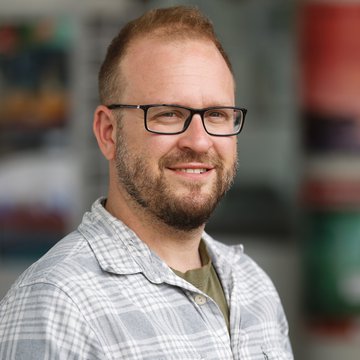
Dragan Huterer is a Professor of Physics and Associate Chair for the Graduate Program at the University of Michigan. His research focuses on cosmology, particularly dark energy and large-scale structure, utilizing data from the Dark Energy Survey (DES) and the Dark Energy Spectroscopic Instrument (DESI) collaborations. He earned his Ph.D. from the University of Chicago (2001) and B.S. from MIT (1996). His work explores the nature of dark energy through cosmological probes like Type Ia supernovae, galaxy clustering, and cosmic microwave background anisotropies. Key contributions include co-leading DESI's first-year cosmological analysis, revealing unprecedented constraints on dark energy and neutrino masses. He also investigates the statistical isotropy of the universe and authored the textbook A Course in Cosmology: From Theory to Practice . Awards include the Friedrich Wilhelm Bessel Research Award (2019) and the Chambliss Astronomical Writing Award (2025). He has advised numerous graduate and undergraduate students, and his funding includes DOE, NSF, and NASA grants. Current projects include the Michigan Cosmology Summer School and leadership in the DESI Collaboration.
Matias Zaldarriaga is the Richard Black Professor in the School of Natural Sciences at the Institute for Advanced Study (IAS), Princeton. His research focuses on theoretical cosmology, gravitational waves, and the Cosmic Microwave Background (CMB). He has held previous faculty positions at Harvard University (2003-2009) and New York University (2001-2002). Education: Ph.D. in Physics, Massachusetts Institute of Technology, 1998 Licenciado en Ciencias Físicas, Universidad de Buenos Aires, 1994 Zaldarriaga's work centers on decoding the early universe through CMB analysis and gravitational-wave astrophysics. He investigates inflation, large-scale structure formation, and black hole dynamics, leveraging advanced statistical methods to probe fundamental physics from cosmological data. His recent publications (2023-2025) demonstrate a strong focus on gravitational-wave data analysis, including novel algorithms for detecting binary black hole mergers, constraints on inflationary physics from large-scale surveys, and modeling supermassive black hole evolution. Key themes include higher-order waveform harmonics, pulsar timing arrays, and computational innovations for gravitational-wave astronomy. Awards and Honors: Gruber Cosmology Prize (2021) MacArthur Fellowship (2006) European Physical Society Gribov Medal (2005) Sloan Fellowship (2004) Helen B. Warner Prize, American Astronomical Society (2003) Packard Fellowship (2001) He collaborates extensively with international teams (e.g., LIGO-Virgo-KAGRA, DESI) and mentors researchers in cosmology and astrophysics. His group develops open-source tools for gravitational-wave inference and cosmological parameter estimation.
Daisuke Nagai is a Professor of Physics and Astronomy at Yale University and the Director of Graduate Studies in the Yale Physics Department. His research focuses on theoretical and computational cosmology, including dark matter, dark energy, galaxy clusters, and data science. He holds a Ph.D. from the University of Chicago (2005) and a B.S. from the University of Michigan (1999). Before joining Yale in 2008, he was a Sherman Fairchild Postdoctoral Scholar at Caltech. Positions: Professor (2022–present), Director of Graduate Studies (2022–2025), Co-Director Yale Center for Research Computing (2015–2019). Awards: Stephen Murray Lectureship (2018), Cottrell Scholar (2012), IUPAP Young Scientist Prize (2011). His work uses high-resolution cosmological simulations to study galaxy cluster formation, X-ray observations, and the interplay between dark matter and baryonic processes. He also leads efforts in computational astrophysics and data-driven methods for cosmological analysis.
Masatoshi Takano is a Professor at the Faculty of Science and Engineering, Waseda University, specializing in theoretical studies of nuclear physics, particle physics, and astrophysics. His work focuses on nuclear equations of state (EOS) for neutron stars and core-collapse supernovae, incorporating realistic nuclear forces like the Argonne v18 and Urbana IX potentials. He has developed variational methods with explicit energy functionals to model hyperonic nuclear matter, spin-orbit forces, and finite-temperature effects. Education : PhD in Science, Waseda University Professional Memberships : American Physical Society, Japan Physical Society Research spans neutron star structure, supernova simulations, and nuclear matter phase transitions. His recent presentations address neutrino emission rates, braking radiation in nuclear matter, and cluster variational methods. Key collaborations include H. Togashi, K. Nakazato, and K. Sumiyoshi. Scientific contributions involve refining variational energy expressions for asymmetric nuclear matter, incorporating three-body forces, and studying pion condensation effects on neutron star cooling. He has applied his EOS models to multidimensional supernova simulations and cosmic ray detector design.
Kyle Dawson is a Professor of Physics and Astronomy at the University of Utah, where he has been employed since 2009. He currently serves as both a full Professor and Director of Graduate Studies in the Department of Physics and Astronomy, having progressed from Assistant Professor (2008-2015) to Associate Professor (2015-2019) before achieving his current position in 2019. His institutional affiliation places him within the College of Science at the University of Utah, a major research university in the western United States. Dawson earned his BA in Physics from Cornell University in 1998, followed by a PhD in Physics from the University of California, Berkeley in 2004. After completing his doctoral studies, he served as a postdoctoral researcher at the Lawrence Berkeley National Laboratory before joining the University of Utah faculty. His educational background in physics provided the foundation for his transition into observational cosmology, where he has made significant contributions through large-scale spectroscopic surveys. Professor Dawson's research focuses on observational cosmology through large spectroscopic surveys designed to measure the fundamental properties of the universe. He is currently the co-Spokesperson for the Dark Energy Spectroscopic Instrument (DESI), a major cosmological survey that has produced numerous high-impact publications in 2024-2025. Previously, he served as Principal Investigator for the Extended Baryon Oscillation Spectroscopic Survey (eBOSS), which concluded in 2020 with final cosmological measurements. His work centers on measuring baryon acoustic oscillations to constrain cosmic expansion history, dark energy properties, neutrino masses, and to test General Relativity. His research group employs techniques including galaxy clustering analysis, quasar astrophysics, and large-scale structure mapping to address fundamental questions in cosmology. The analysis of Dawson's recent publications reveals a strong focus on extracting cosmological constraints from the DESI survey data. His work spans multiple aspects of cosmological analysis, including baryon acoustic oscillation measurements, full-shape power spectrum analysis, imaging systematics mitigation, and cross-correlation studies with cosmic microwave background data. The publications demonstrate collaborative work with large international teams and contribute to increasingly precise measurements of cosmological parameters, with particular attention to dark energy equation of state, neutrino masses, and potential deviations from General Relativity. Professor Dawson has secured significant research funding throughout his career, including multiple grants from the Department of Energy (DOE), NASA, and the National Science Foundation. His grant portfolio includes leadership roles in major cosmological surveys like DESI and eBOSS, as well as support for postdoctoral researchers and graduate students. His research group has mentored numerous students who have gone on to successful careers in academia, industry, and data science fields. Dawson leads a vibrant research group at the University of Utah focused on cosmological data analysis from large spectroscopic surveys. His current team includes two postdoctoral researchers (Angela Berti and Sarah Eftekharzadeh) and a graduate student (Allyson Brodzeller). The group specializes in galaxy clustering analysis, quasar astrophysics, and machine learning applications to spectroscopic data. The research environment fosters collaboration with international teams working on DESI and related cosmological surveys, providing students with opportunities to engage with cutting-edge cosmological research and large-scale data analysis techniques.
Priyamvada Natarajan is the Joseph S. and Sophia S. Fruton Professor of Astronomy and Professor of Physics at Yale University, serving as Chair of the Astronomy Department and Chair of the Women Faculty Forum. Her research focuses on cosmology, gravitational lensing, and black hole physics. She explores topics like dark matter distribution, supermassive black hole formation, and the interplay between galaxy evolution and AGN feedback. Natarajan has pioneered methods for mapping dark matter in galaxy clusters using gravitational lensing and has contributed to understanding cosmic structure formation through large-scale simulations. Education: Ph.D. in Astrophysics from Cambridge University (1998). Research interests include the nature of dark energy, galaxy formation, and the history and philosophy of science. She leads projects like DAVOS (Dwarf AGN variability studies) and QUOTAS, a platform for discovering supermassive black holes. Her recent work includes detecting overmassive black holes at high redshifts, analyzing gravitational-wave signals with NANOGrav, and utilizing JWST data to probe the cosmic dawn. Notable honors include the 2022 Liberty Science Center ‘Genius Award’. Natarajan’s collaborations span multi-messenger astronomy, leveraging gravitational lenses as cosmic telescopes. She advocates for gender equity in academia and has advised numerous observational and theoretical studies, though specific student names are not listed. Key projects involve the BUFFALO survey for cluster lens modeling and the ngEHT (next-generation Event Horizon Telescope) to study black hole environments. Her lab integrates cosmological simulations, observational data, and theoretical frameworks to address fundamental questions in astrophysics.
Daniel M. Scolnic is an Associate Professor of Physics at Duke University's Trinity College of Arts & Sciences and holds a joint appointment in the Department of Electrical and Computer Engineering at the Pratt School of Engineering. His research focuses on cosmology, particularly using Type Ia supernovae and near-infrared observations to probe dark energy and resolve the Hubble tension. Ph.D. (2013), Johns Hopkins University B.S. (2007), Massachusetts Institute of Technology As a leading figure in supernova cosmology, Scolnic works on refining the cosmic distance ladder, studying time-evolving dark energy, and analyzing systematic uncertainties in cosmological measurements. His work leverages data from the Dark Energy Survey (DES), Pantheon+ collaboration, and James Webb Space Telescope (JWST) to address discrepancies in the Hubble constant (H₀) derived from early- and late-universe observations. His recent publications highlight advancements in inverse distance ladder techniques, host galaxy dust modeling, and the role of photometric redshifts in cosmological analyses. Notably, his team's JAGB 2.0 study improves Hubble constant constraints using JWST. Defense Science Study Group (DSSG) Clarivate Most Highly Cited Scientists Fred Kavli Plenary Lectureship Sloan Research Fellowship in Physics Department of Energy Early Career Award Packard Fellowship Scolnic leads major grants from NASA, the Packard Foundation, and the Department of Energy, including a NASA Roman Project Infrastructure Team grant (2023-2028) and a Packard Fellowship (2019-2027) to investigate cosmological tensions. He actively collaborates with the Duke Cosmology Group and contributes to the Nancy Grace Roman Space Telescope's High-Latitude Time-Domain Survey.
Jonathan Blazek is an Assistant Professor of Physics at Northeastern University's College of Science, specializing in observational and theoretical cosmology. His research focuses on large-scale astronomical surveys to understand cosmic structure and dark energy, particularly through galaxy clustering and weak gravitational lensing. He is a key member of the Dark Energy Survey and Vera C. Rubin Observatory collaborations, leading efforts to combine multi-wavelength datasets for cosmological insights. Blazek earned his Ph.D. from UC Berkeley and completed postdoctoral fellowships at EPFL (Switzerland) and Ohio State University. Education: Ph.D. in Physics, University of California, Berkeley Postdoctoral Fellowships: EPFL (Switzerland), Ohio State University Research Interests: His work centers on cosmological modeling using galaxy surveys, particularly refining analytic and numerical methods to connect observations with theoretical frameworks. Key areas include: Weak gravitational lensing and galaxy clustering Combined-probe cosmology (integrating datasets across wavelengths) Dark matter and dark energy dynamics Large-scale structure formation Publications & Grants: Blazek has authored over 50 peer-reviewed articles, including foundational work on intrinsic alignment modeling and cosmic shear analysis. He leads the NSF CAREER grant project exploring dark sector physics with galaxy surveys. His recent publications address baryonic feedback effects, CMB lensing cross-correlations, and next-generation survey methodologies. Labs & Collaborations: He contributes to the Northeastern Cosmology Group and the Dark Energy Science Collaboration, advancing projects like the Legacy Survey of Space and Time (LSST) at Vera Rubin Observatory.
Arya Farahi is an Assistant Professor of Statistics and Data Sciences at the University of Texas at Austin since 2021. His research bridges astroinformatics, urban informatics, and AI ethics, focusing on mitigating algorithmic bias and uncertainty quantification in real-world applications. He holds PhDs in Physics and Scientific Computing from the University of Michigan, where he was a Data Science Fellow at the Michigan Institute for Data Science. Farahi's work includes collaborations with international projects such as the Dark Energy Survey (DES), COsmostatistics Initiative (COIN), and XMM-XXL Consortium. He leads the D3 Lab, which develops AI tools for scientific discovery and societal challenges, emphasizing interdisciplinary collaboration. His open-source contributions include TATTER, KLLR, and PoPE for statistical analysis and visualization. Key awards include the Best Student Paper Award at KDD’18 and a $400k+ grant. He is a volunteer with Statistics Without Borders and actively involved in projects like the Fire and Smoke Digital Twin for urban resilience. His research spans cosmology, healthcare AI, and urban economics, with a focus on trustworthy models and equitable AI systems.
Dr. Noam Libeskind is a faculty member and group head of the Cosmography and Large-Scale Structure group at the Leibniz-Institut für Astrophysik Potsdam (AIP). He specializes in mapping the Universe's large-scale structure and using these maps to simulate the local environment. His work bridges observational and theoretical astrophysics, focusing on galaxy formation, the Local Group dynamics, and cosmographic reconstructions. He has held professorial positions, including at the Institute of Two Infinities (Université de Lyon-1) until 2021. Current projects include leading trans-national initiatives on cosmic web impacts (with Purple Mountain Observatory) and gravity tests via Local Group simulations (with Polish Academy of Sciences). Libeskind’s research interests include satellite galaxies, matter distribution reconstructions, and alignments of galaxies relative to their environments. His work has been featured in Scientific American and Sky & Telescope , highlighting contributions such as cosmography of the Local Universe and dark matter studies. Key collaborations span institutions like Hebrew University, Shanghai Astronomical Observatory, and Durham University. He leads projects like CLUES (Constrained Local UniversE Simulation) and HESTIA (High-resolution Environmental Simulations) to model the Local Universe. His team’s efforts have been recognized, including a 2024 municipal award for organizing impactful scientific meetings. Publications span cosmological simulations, galactic dynamics, and observational cosmology, with a focus on advancing understanding of the Milky Way, Andromeda, and their surrounding structures.
Dr. Sownak Bose is an Associate Professor (Research) at Durham University's Department of Physics and holds a UKRI Future Leaders Fellowship. His work focuses on computational cosmology, galaxy formation, and dark matter studies through large-scale simulations. Research Interests Cosmological simulations (MillenniumTNG, IllustrisTNG, AbacusSummit) Dark matter properties and modified gravity models Galaxy clustering and large-scale structure AGN feedback and baryonic effects His recent publications explore topics including: Accreted stellar halos in low-mass galaxies Impact of massive neutrinos on cosmic structure Multiwavelength mass accretion rate estimation Machine learning-based galaxy-halo connection Scientific Awards: UKRI Future Leaders Fellowship He supervises postgraduate research students and collaborates on major projects like DESI, eROSITA, and H3 survey. His work bridges theoretical models with observational data to constrain cosmological parameters.
Vikram Ravi is an Assistant Professor of Astronomy at the California Institute of Technology (Caltech), affiliated with the Division of Physics, Mathematics and Astronomy. He leads the astronomy department's research on relativistic astrophysical phenomena and instrumental development. His academic journey includes a B.S. from the Australian National University (2009) and a Ph.D. from the University of Melbourne (2014), followed by postdoctoral roles at Caltech and Harvard-Smithsonian Center for Astrophysics. His research focuses on neutron stars, black holes, fast radio bursts (FRBs), and tidal disruption events (TDEs). He pioneered the DSA-2000 radio telescope project, aiming to revolutionize transient astronomy. Key contributions include gravitational wave predictions from supermassive black hole binaries and FRB-based studies of galaxy halos and dark matter. Ravi's honors include the Charlene Heisler Prize and Stefano Braccini Prize for his Ph.D. work on pulsar-timing constraints on gravitational waves. He actively mentors students and postdocs in instrumentation, computational astrophysics, and observational campaigns. His groups at Caltech and Owens Valley Radio Observatory develop cutting-edge tools like the Deep Synoptic Array (DSA) telescopes, enabling breakthroughs in FRB localization, TDE surveys, and cosmic baryon mapping. Future projects include the DSA-2000's fast-time-domain surveys and dark matter searches.
Jens Hjorth is a Professor of Astrophysics at the University of Copenhagen's Niels Bohr Institute, where he leads research in the DARK center. With over 400 refereed publications, more than 35,000 citations, and an h-index of 96, he is a prominent figure in modern astrophysics. His work spans cosmology, dark matter research, and high-redshift galaxy studies, with approximately 33 papers published in Nature or Science journals. Professor Hjorth's primary research focuses on astrophysical transients, very high-redshift galaxies, cosmology, and the origin of universality in dark-matter halos. His work bridges theoretical modeling with observational data, particularly through his involvement with the Euclid space mission. His research often explores the intersection of astrophysics with art and science, demonstrating a commitment to interdisciplinary approaches. His recent publications reveal a strong emphasis on dark matter halo structure, galaxy evolution across cosmic time, and the development of sophisticated simulations for cosmological studies. His publication record shows consistent high-impact contributions, with recent work heavily focused on the Euclid mission's instrumentation and data analysis. These publications span theoretical cosmology, observational techniques, and the development of advanced simulation methods for understanding large-scale structure formation. The research demonstrates both depth in specialized areas like dark matter physics and breadth across related astrophysical disciplines. Villum Investigator: Time in Astrophysics Member of the boards of the Carlsberg Foundation Member of the boards of the Tuborg Foundation Approximately 33 scientific papers in Nature or Science journals Most cited lead-author paper: J. Hjorth et al. Nature 423, 847–850 (2003) with ~1300 citations As a Villum Investigator, Professor Hjorth leads significant research initiatives focused on time-domain astrophysics. He also serves as Co-lead of the UCPH Forward career development program, demonstrating his commitment to academic leadership and mentorship. His extensive publication record and high citation count reflect substantial research impact across multiple funding cycles and collaborative projects. Professor Hjorth is deeply involved with the DARK research center at the Niels Bohr Institute, which focuses on cosmology, dark matter, and dark energy research. His work with the Euclid mission places him at the forefront of international space-based cosmological surveys. The research teams he participates in combine observational astronomers, theoretical physicists, and computational scientists to tackle fundamental questions about the universe's structure and evolution.
Ivan Baldry is a Professor at the Astrophysics Research Institute of Liverpool John Moores University , with a career focused on galaxy formation and cosmology. His work spans large-scale surveys like GAMA, XXL, and Euclid, emphasizing photometric redshifts, stellar mass functions, and galaxy environment interactions. PhD in Astrophysics from University of Sydney (1995-1999) Research interests center on galaxy evolution , cosmic star formation , and observational cosmology , with significant contributions to understanding galaxy bimodality and low-surface-brightness systems. His work integrates multi-wavelength data (UV to radio) and advanced clustering techniques. Key publications include studies on galaxy mass-size relations, star formation rate indicators, and the cosmic spectral energy distribution. He co-authored over a dozen GAMA project papers and contributed to Euclid mission frameworks. Scientific Awards & Professional Roles Royal Astronomical Society Group Achievement Award (2008) Fellow of the Higher Education Academy (2014) Fellow of the Royal Astronomical Society (2009) Member of Euclid Science Team (2011-present) International Member, Australian Time Assignment Committee (2015) His collaborations span institutions like the Isaac Newton Group, VISTA surveys, and the 2dF Galaxy Redshift Survey Team, with leadership in data release protocols and survey diagnostics.
Francis-Yan Cyr-Racine is an Assistant Professor in the Department of Physics and Astronomy at the University of New Mexico, holding the Robert E. Young Origins of the Universe Chair. His research focuses on particle astrophysics, cosmology, and dark matter interactions, particularly exploring how non-standard dark matter impacts structure formation and astrophysical observations. He leads projects like DREAMS (DaRk mattEr and Astrophysics with Machine Learning and Simulations), which employs advanced computational techniques to study subhalo populations and dark matter dynamics. His work also addresses cosmological tensions, such as the Hubble constant discrepancy, through novel parametrizations and observational systematics analyses. Education: PhD in Physics from the University of British Columbia (2012). His research interests include dark matter self-interactions, neutrino physics, and the interplay between fundamental physics and cosmological observations. He contributes to major initiatives like the CMB-S4 experiment and the Vera C. Rubin Observatory to probe dark matter and cosmological parameters. Research interests span particle astrophysics, cosmological data analysis, and machine learning applications. Recent work includes studies of self-interacting dark matter subhalo evolution, constraints on neutrino models, and leveraging gravitational lensing anisotropies to test dark matter hypotheses. His projects often bridge theoretical frameworks with observational data from telescopes like the James Webb Space Telescope and CMB surveys. Publications emphasize interdisciplinary approaches, combining astrophysical observations with particle physics models to uncover the nature of dark matter and resolve cosmological anomalies. His work frequently addresses high-redshift phenomena and the early universe, including cosmic dawn studies and dark acoustic oscillations.