
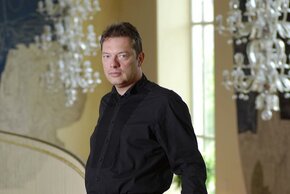
Andreas Stoehr is a renowned Austrian conductor and professor at the Music and Arts Private University of the City of Vienna, leading the conducting department and symphony orchestra since 2013. His career spans prestigious engagements including the Paris Opéra Comique, Deutsche Oper am Rhein, and St. Gallen Theatre, focusing on operatic repertoire from Monteverdi to modernism. He is celebrated for reviving neglected works like Meyerbeer’s Emma di Resburgo and Gluck’s Ezio , emphasizing historical performance practices. His research explores stylistic transitions in music history, blending baroque precision with modern innovation. Education: Trained at Vienna's former Conservatory (now University of Music and Performing Arts), studying piano under Alfred Kremela, conducting with Gennadij Rozhdestvenskij, and musicology at the University of Vienna. Key mentors included David Lutz (accompaniment) and Reinhard Schwarz (conducting). Research Interests: Explores interdisciplinary connections between diverse musical eras, such as Bach’s influence on Schoenberg, and advocates for vocal-orchestral balance in historical repertoires. Projects include CD recordings of Amanda Maier-Röntgen and Andrea Tarrodi’s works, nominated for Swedish Grammis. Awards: Grammy nomination (2016) for Amanda Maier-Röntgen’s Violin Concerto recording. Recognized for innovative stagings of operas like Berg’s Wozzeck and Debussy’s Pelléas et Mélisande . Teaching & Leadership: As professor and symphony orchestra director, Stoehr mentors young conductors. Notable collaborations include the Langenlois Castle Festival (2012–2019) and interdisciplinary projects like Heart and Mouth, and Deed and Life blending Bach with sociological texts. His teaching emphasizes 21st-century conductorship as collaborative architecture, prioritizing emotional engagement over technical authoritarianism. Labs/Ensembles: Leads the MUK Symphony Orchestra, collaborating with ensembles like the Aarhus Symphony Orchestra and Orchestre Philharmonique de Liège. His work bridges academic research with performance practice through projects like the Styriarte Festival’s Schubert revival.
جستوجوی استاد و پژوهشگر
استاد راهنما، استاد دانشگاه یا پژوهشگر مناسب برای مسیر پژوهشیتان را پیدا کنید و با او ارتباط بگیرید.
نمایش ۱-۱۵ از ۷۷۲ استاد راهنما
اطلاعات این پروفایلها از صفحات عمومی دانشگاهها جمعآوری شده و ممکن است بهروز نباشد.

Helen Rees is Professor of Ethnomusicology at UCLA and Director of the World Music Center, specializing in Chinese musical traditions with emphasis on southwest China's ethnic minorities, ritual practices, and intellectual property frameworks within intangible cultural heritage policies. Her academic foundation includes: B.A. in Chinese, Oxford University, 1987 M.A. in Chinese, Oxford University, 1991 Ph.D. in Music, University of Pittsburgh, 1994 Diploma in flute teaching, Royal College of Music, London Diploma in baroque flute performance, Trinity College, London Diploma in recorder teaching and performance, Trinity College, London Rees's research integrates fieldwork from southwest China and Shanghai to examine tourism's impact on musical traditions, organology (instrument studies), and transnational transmission of Asian musics. Recent scholarship critically engages East Asia's intangible cultural heritage policies and material culture frameworks, reflecting deep interdisciplinary connections between musicology, anthropology, and legal studies. Her publication trajectory reveals consistent focus on Naxi musical traditions and evolving methodological approaches—from historical analysis in Echoes of History (2000) to contemporary multimedia projects like the award-winning documentary Playing the Flute in Shanghai (2021) and the cross-cultural edited volume Instrumental Lives (2024), demonstrating expanding scope from regional studies to pan-Asian material culture networks. Through the World Music Center, Rees bridges academic research and public engagement by facilitating international cultural exchanges at venues including the Smithsonian Folklife Festival, while maintaining active performance practice in Chinese flutes and recorder as integral to her scholarly methodology.
Siobhán Dowlingمشاهده پروفایل
مدرس ارشد
Dr. Siobhán Dowling is a Senior Lecturer in Education at the School of Education, University College Cork (UCC), with expertise in Religious Education, Music Education, and the intersection of The Arts in Education. She earned her PhD from the University of Wales, Trinity St David, Lampeter, UK, in 2011 and has served in both teaching and administrative roles at UCC since 1998, including Director of the Structured PhD in Education. Education: PhD (2011) in Biblical and Musical Reception History, University of Wales, Trinity St David. Current Roles: Senior Lecturer, Tutor, Placement Supervisor, Director of Structured PhD in Education. Her research focuses on the reception history of biblical narratives in music , particularly themes like the Sacrifice of Isaac, Eve, and the Book of Samuel. She explores collaborative learning in teacher education and integrates creative pedagogy in Religious Education. Her work spans interdisciplinary analysis of the Bible’s influence on music, art, and cultural identity. The 15 most recent publications highlight her pioneering work on biblical stories in musical compositions (2025), visual and musical reception of Dives (2024), and peer-reviewed studies on collaborative learning (2023). Her contributions to the Encyclopedia of the Bible and its Reception (2025–2016) cover topics like patriarchs, psalms, and gendered biblical figures. Scientific Awards: Recipient of two book awards in the USA for co-authored work 'The Bible in Music: A Dictionary of Songs, Works and More' (2015). Research Grants and Supervision: Awarded multiple Erasmus+ Staff Mobility Grants (2023, 2014) for international training and a Kurt Weill Foundation Travel Award (2014). Supervised PhD, MEd, and PME students while serving as Internal/External Examiner. Leadership: Coordinated UCC’s Cohort PhD in Education (2001–2014) and led the MAAP in Guidance and Counseling program. Delivered invited seminars at KU Leuven, University of Tuebingen, and Trinity College Dublin.

Jonathan Nangle is a Lecturer in Music Technology and Electro-Acoustic Composition at the Royal Irish Academy of Music. His work spans acoustic/electro-acoustic composition, live electronics, installations, and improvisation. Educated at Trinity College Dublin under Donnacha Dennehy, Rob Canning, and later privately with Kevin Volans, his music has been performed by ensembles like RTÉ National Symphony Orchestra and Crash Ensemble. Research interests include spatial music, interactive installations, and hybrid acoustic/digital forms. Notable works include Pause (Ergodos, 2017), Iridescent Cobalt Glow (2015), and our headlights blew softly... which earned a 2009 Rostrum commendation. Awards include dual Irish Rostrum representations (2009/2011) and the 2007 AIC/Music 21 Prize. Recordings span solo piano works to ensemble commissions, often integrating innovative electronic elements. His work has been broadcast internationally and choreographed for stage/film. Current roles include academic teaching and ongoing creative exploration at the intersection of technology and traditional composition.

Denise Neary is a Professor and Doctoral Studies Coordinator at the Royal Irish Academy of Music (RIAM), overseeing doctoral supervision and research methods in musicology. Previously, she was Senior Lecturer at Canterbury Christ Church University, UK. She organizes international guest lectures at RIAM and actively participates in academic societies such as the Society for Musicology in Ireland (SMI) and Performance Research Ireland. Her research focuses on 17th- to 19th-century music in Ireland and Britain, particularly church music and artistic research. She has supervised numerous doctoral dissertations, including studies on Beethoven, Schubert, and Irish choral traditions. Affiliations: RIAM (current), SMI (Council Member since 2009), RILM National Committee of Ireland. Educations: Extensive academic background in musicology, with research concentrated on historical performance practices and institutional music history. Her research interests span Irish musical heritage, cathedral music in England, and the evolution of artistic research methodologies. Recent work includes exploring performance as academic practice and the role of music in 17th-century Irish parish churches. She has contributed to major publications like the Encyclopedia of Music in Ireland (2013) and presented at international conferences on topics such as ‘Artistic Research in Music’ (2018). Denise has supervised over 20 doctoral students since 2010, specializing in performance analysis of classical and contemporary works. She also serves on advisory boards for Irish Musical Studies and collaborates internationally on projects like the ‘Doctors in Performance’ conference series. Labs/Teams: Leads the Doctoral Studies Program at RIAM, fostering interdisciplinary research in musicology and performance.
Christopher Castroمشاهده پروفایل
استادیار
- Music Composition
- Music Theory
- Western Art Music
- +۳ مورد دیگر
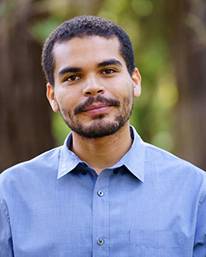
Christopher Castro serves as an Assistant Professor of Composition at Chapman University's College of Performing Arts. A composer and double bassist from Brooklyn, New York, he combines academic rigor with avant-garde experimentation. Ph.D. in Composition and Theory from University of California, Davis Bachelor of Music from Juilliard School (Double Bass & Composition) His research bridges Western Art Music traditions with contemporary innovations , creating works that merge: Johannes Ockeghem's polyphonic complexity John Coltrane's spiritual intensity Modernist structural experimentation Historical reconstruction techniques Jazz-classical hybrid forms Interdisciplinary performance formats Recent compositions demonstrate trends in flexible instrumentation , text-music relationships , and genre synthesis . His output spans chamber works, orchestral pieces, and vocal compositions with equal mastery. Scientific recognition includes: 2023 Fromm Music Foundation Commission (Harvard University) Chamber Music America's 2021 Classical Commissioning Award As a new music advocate , Castro collaborates with ensembles like: Left Coast Chamber Ensemble (artistic advisory board) New Mexico Contemporary Ensemble Los Angeles Philharmonic's Upbeat Live series Lyris Quartet and Sharon Harms
- Early Music
- Baroque Music
- Classical Music
- +۴ مورد دیگر
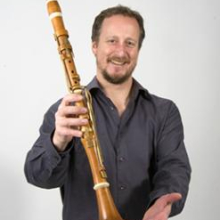
Mark Simons is an Early Clarinet Instructor at the Schulich School of Music, McGill University, and teaches at Marianopolis College. He specializes in early music performance on period instruments such as the chalumeau and classical clarinet. His expertise spans baroque, classical, jazz, and klezmer styles, with a focus on historical performance practices. Education: Studied at Marianopolis College, McGill University, and Temple University. Research interests include exploring sonorities of period instruments and chamber music collaborations. He has performed with renowned ensembles like Les Boréades, Arion Baroque Orchestra, and the Daponte String Quartet. Notable recordings include CDs on the Analekta label: Viole D’Amour and Telemann et les Gitans . No scientific awards listed. His advising and grants details are unspecified. Active in ensembles such as the Arthur Leblanc and Bozzini quartets, and regularly performs with l'Orchestre Symphonique de Québec and I Musici de Montréal.
- Musicology
- Philosophy
- Ancient Philosophy
- +۵ مورد دیگر
Konstantinos Alevizos is an academic affiliated with the University of Rouen Normandy (ERIAC research unit) and currently holds a faculty position as Enseignant-Chercheur (Lecturer-Researcher) in Music History at the University of Ioannina, Greece. His academic roles include teaching Music Composition at the Conservatoire de musique, de danse et d’art dramatique de la ville d’Orange (France) and Philosophy at Lycée Victor Hugo (France). He has held research and editorial roles, including a Fellowship at the American Philosophical Society (2020–2022) and membership in national evaluation committees for research projects in Greece (2019–2020). Education: Doctorate in Musicology (University of Paris-Sorbonne, 2016), Master’s degrees in Philosophy (Aix-Marseille, 2020) and Musicology (Saint-Étienne, 2009), and advanced diplomas in musical studies (DEM) from French conservatories. His research focuses on the intersection of Ancient Philosophy (Epicureanism) and Musicology, particularly Baroque fugue analysis (J.S. Bach, d’Anglebert) and historical music editions. Research interests span Epicurean linguistic theory, the philosophy of memory and selfhood, and analytical studies of Baroque compositional techniques. He has published extensively on musicology and philosophy, including critical editions of musical works and peer-reviewed articles in journals like Orgues Nouvelles and RMO . His work also includes editorial leadership in musicological projects, such as Le rôle du nombre en musique . Teaching and professional activities include roles at French conservatories and universities, emphasizing music theory, organ, and harpsichord pedagogy. He is fluent in Greek, Italian, French, and English, with proficiency in Ancient Greek and German.
- Polish Music
- Violin Performance
- 20th-Century Music
- +۴ مورد دیگر
Dr hab. Andrzej Wojciechowski is an Associate Professor at the Stanisław Moniuszko Academy of Music in Gdańsk , affiliated with the Department II – Instrumental . As a certified violinist and postdoctoral scholar, he specializes in Polish violin music, chamber ensembles, and 20th-century compositions. Graduated with distinction from the Academy of Music in Gdańsk (1998), studying under Prof. Krystyna Jurecka Collaborates with orchestras like the Polish Baltic Philharmonic and Sopot Chamber Philharmonic Co-created concert projects with artists such as Jan Stanienda and Krzysztof Penderecki His research interests span Polish musicology, violin pedagogy, and interdisciplinary artistic education. He has edited publications with "Eufonium" and promoted Polish music through recordings like Violin Works by Roman Maciejewski (2011) and The Work of Gdańsk Composers (2015). His scientific awards include: Medal of the National Education Commission (2009) Individual Award for contributions to artistic education (2012) Honorary Medal 'For Merit to Polish Culture' (2014, 2015) Rector's Award, 3rd degree (2014, 2016) Wojciechowski has taught over 50 graduates, many of whom have won music competitions, and leads the Academic Chamber Orchestra as concertmaster and conductor. His work bridges performance, education, and preservation of Polish musical heritage.
- Russian and comparative literature
- the interaction of religion and culture
- the construction and dynamics of literary tradition
- +۳ مورد دیگر
Professor Pamela Davidson is a distinguished scholar of Russian Literature at University College London's School of Slavonic and East European Studies (SSEES). With over four decades of academic experience, she has held various leadership positions including Head of the Russian Department (2003-2006), Head of Teaching and Graduate Tutor (2012-2014), and currently serves as Admissions Tutor for Languages & Cultures programmes. Her scholarly work has significantly shaped the field of Russian literary studies, particularly in areas of Russian Symbolism, literary prophecy, and the interaction between religion and culture. Doctor of Philosophy, University of Oxford, 1984 Undergraduate studies in Russian, French and Italian, Newnham College, Cambridge Professor Davidson's research spans several interconnected areas within Russian and comparative literature. Her work on the "construction and dynamics of literary tradition" examines how Russian writers positioned themselves within broader cultural and historical contexts. She has made significant contributions to understanding "the interaction of religion and culture," particularly through her edited volume "Russian Literature and Its Demons," which opened up new interdisciplinary research avenues. Her long-standing interest in "Silver Age poetry" has focused extensively on Viacheslav Ivanov, whose work she has studied through multiple lenses including his engagement with Dante and classical antiquity. Most notably, she has developed an extensive body of work on "the representation of the writer as prophet in Russia," tracing this tradition from its biblical and classical roots through to the Soviet period. Professor Davidson's recent publications reveal a consistent focus on the prophetic dimension of Russian literature, with particular attention to Viacheslav Ivanov and Fedor Glinka. Her scholarship demonstrates a sophisticated interweaving of literary analysis, religious studies, and cultural history. Over the past decade, her work has increasingly examined how Russian writers engaged with biblical and classical traditions, often reinterpreting them within specifically Russian contexts. The recurring themes across her publications include the tension between Athens and Jerusalem in Russian thought, the role of the writer as moral authority, and the complex relationship between religious tradition and literary innovation. Her comparative approach frequently bridges Russian literature with Western European intellectual traditions, revealing unexpected connections and influences. Travelling Junior Research Fellowship at Queen's College Leverhulme Research Fellowship (2019-2021) Director of the CEELBAS Centre for Doctoral Training (2020-2021) Member of the AHRC Peer Review College of Assessors (2003-2007) As an academic mentor, Professor Davidson has supervised numerous doctoral students in Russian literature and thought, with particular expertise in 19th and early 20th century literature, Silver Age poetry, and comparative literature. Her leadership roles have included serving as Graduate Tutor and Chair of BA and MA Examination Boards at SSEES. In terms of research funding, she has successfully secured competitive grants including the Leverhulme Research Fellowship that supported her recent work on literary prophecy. Her collaborative projects have often involved international partnerships, particularly with Russian academic institutions including the Institute of Russian Literature (IRLI) in St Petersburg. Professor Davidson has also contributed to major scholarly initiatives such as the 12-volume academic edition of Ivanov's collected works. While Professor Davidson's work is primarily in humanities rather than laboratory-based research, she has been instrumental in building academic networks and collaborative projects. She served as Director of the CEELBAS Centre for Doctoral Training, liaising with the Arts and Humanities Research Council (AHRC) and consortium members at Cambridge, Manchester and Oxford. Her long-standing collaboration with the St Petersburg Institute of Russian Literature has been particularly significant, resulting in the completion of the first comprehensive bibliography of Viacheslav Ivanov's works. Professor Davidson has also been active in the international scholarly community through her membership on the Board of Directors of the Foundation "Centro Studi e Ricerche Vjacheslav Ivanov" in Rome.
Jiayan Sunمشاهده پروفایل
استادیار
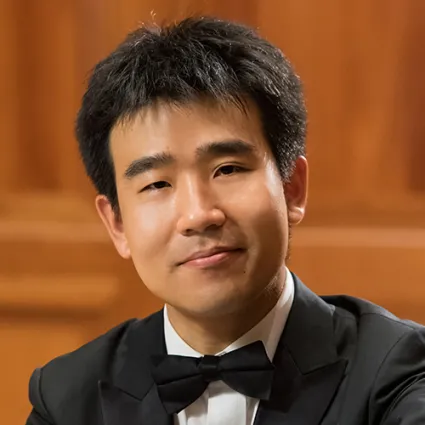
Jiayan Sun serves as Assistant Professor of Music and Associate Chair for Performance Activities at Smith College. A highly acclaimed pianist, he has performed with prestigious orchestras including the Cleveland Orchestra, the Hallé Orchestra, and the Chinese National Symphony Orchestra. His research interests focus on classical music performance, particularly piano repertoire from the Classical and Romantic periods. Sun specializes in the works of Beethoven, Chopin, and Schubert, as evidenced by his extensive performance series including 'A Beethoven Cycle,' 'Schubertiade,' and 'The Timeless Genius of Chopin.' His approach integrates historical performance practice with modern interpretive techniques, particularly in his exploration of early keyboard instruments. Sun's performance catalog reveals a strong focus on complete cycles of major composers' works, demonstrating both technical mastery and deep musical understanding. His repertoire spans from Baroque to contemporary works, with particular emphasis on German and Austrian classical traditions as well as Romantic-era compositions. Third prize at Leeds International Piano Competition Second prize at Dublin International Piano Competition Fourth prize and audience prize at Cleveland International Piano Competition First prize at CCC Toronto International Piano Competition Sun maintains an active performance schedule both as a soloist and chamber musician, frequently collaborating with other faculty members. His work extends beyond performance to include educational initiatives, such as his presentation of Beethoven's complete piano sonatas in chronological order at Smith College. He has also demonstrated commitment to community engagement through benefit concerts, including one supporting people fighting the coronavirus in Hubei Province, China.

- Musicology
- Baroque Music
- Bach Family
- +۶ مورد دیگر
Steven D. Zohn is the Laura H. Carnell Professor at Temple University’s Boyer College of Music and Dance. He holds a PhD and MA in musicology from Cornell University and an AB in music from Vassar College. As a leading Telemann scholar, his research spans intersections of style and genre, print culture, reception history, domestic music-making, historical performance practices, and music as intellectual property. PhD, Musicology, Cornell University MA, Musicology, Cornell University AB, Music, Vassar College Zohn’s research emphasizes Telemann’s instrumental works, sacred vocal music, and cultural contexts, as well as Bach family studies and Enlightenment-era salon culture. His publications include influential books like Music for a Mixed Taste and Telemann Studies , alongside critical editions and articles in Journal of the American Musicological Society and Oxford Handbooks Online . In 2022, he received the Georg Philipp Telemann Award from Magdeburg for his contributions to Telemann research. Other accolades include the Noah Greenberg Award and the William H. Scheide Prize. He co-edits the Bach Perspectives series and serves on editorial boards, including Telemann’s Musikalische Werke . Zohn also performs on historical flutes with ensembles like Night Music and Philadelphia Bach Collegium, with recordings on Acis, Avie, and Chandos labels. His courses explore domestic musicking, Bach’s cantatas, and unaccompanied instrumental works.

- Music History
- Early Modern Music
- Reception History
- +۷ مورد دیگر
Lars Berglund is Professor of Musicology at Uppsala University's Department of Musicology, where he serves as Director of Studies for the doctoral program. He earned his PhD from Uppsala in 2002 with a thesis on German musician Christian Geist and has held progressive academic positions since 2003, becoming Professor in 2015. Berglund chaired the department from 2012-2018 and currently leads the Swedish Research Council's Humanities and Social Sciences Subject Council (2025-2027). He is a board member of HERA (Humanities in the European Research Area) and holds memberships in the Royal Swedish Academy of Letters and Royal Swedish Academy of Music. His research specializes in 17th-century music history, combining philology, music analysis, and reception studies with focus on: Italian-Scandinavian cultural exchange Court and church music patronage systems Performance theory and vocal traditions Scandinavian modernist music Recent publications (2019-2025) demonstrate strong emphasis on transnational music transfer, archival reconstruction of Baroque repertoires (particularly the Düben Collection), and ceremonial music analysis. Key themes include royal patronage networks, contrafactum techniques, and music's role in early modern diplomacy. Awards & Honors: Member, Royal Swedish Academy of Letters Member, Royal Swedish Academy of Music Major Funded Projects: "Translatio musicae: French and Italian Music in Northern Europe" (Riksbankens Jubileumsfond 2019-2023) Swedish Church Music History monograph (2020-2024) Digitization of court/university music (Riksbankens Jubileumsfond 2020-2025) STINT network on Early Modern musical exchange (2012-2016) He supervises doctoral candidates and teaches advanced courses in historical musicology and analysis.

Lisandro Abadie is a Lecturer in historical performance practice for singing at the Schola Cantorum Basiliensis, where he has been employed since fall 2022. He also teaches in the Master of Advanced Studies (AVES) program and leads vocal coaching sessions. A bass-baritone performer, he collaborates with renowned ensembles like Les Arts Florissants and has worked with conductors such as William Christie and Václav Luks. His research focuses on linguistic foundations of singing, vocal pedagogy, and historical performance practices, including translations of key texts like Giulio Caccini’s writings. He is a recipient of the 2006 Edwin Fischer Memorial Prize. Education: Graduated from the Schola Cantorum Basiliensis and the Lucerne University of Music. Research & Awards: Ongoing book project on historical vibrato practices Translations and editions of early music treatises Recipient of the Edwin Fischer Memorial Prize (2006) Teaching & Masterclasses: Vocal coaching at Schola Cantorum Basiliensis Masterclasses in Thiré, Paris, Fontainebleau, Venice, and Urbino
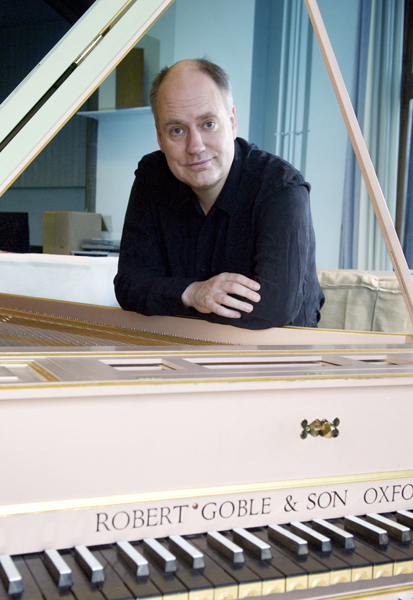
John Butt is a distinguished academic and performer, currently holding the Gardiner Chair of Music at the University of Glasgow and serving as Head of Department (2001-05). His career spans prestigious institutions including UC Berkeley, King’s College Cambridge, and Magdalene College Cambridge. He is renowned for integrating performance practice with scholarly research. Education : PhD in Bach studies, University of Cambridge Research Interests : Bach interpretation, Baroque music, historical performance practices, modernity in musicology, and the intersection of plainchant with Roman Catholic culture in Elgar's work. His research explores the ontology of 17th-century music and the cultural implications of historically informed performance. Articles and projects highlight his interdisciplinary approach, linking musicology with philosophy and cultural studies. He has received major awards including Gramophone, MIDEM, and Fellowships from the British Academy and Royal Society of Edinburgh. Scientific Awards : Royal Academy of Music/Kohn Foundation Bach Prize (2010) Gramophone Award (2007) MIDEM Award (2008) Fellow of the British Academy (2006) Dent Medal (2003) As a conductor and keyboardist, he leads the Dunedin Consort and has produced acclaimed recordings of Bach and Handel. His work bridges academic and performative realms, emphasizing the dialogue between historical and contemporary musical understanding.
فقط ۷۵۰ نتیجه اول نمایش داده میشود. برای رسیدن به نتایج دقیقتر، جستوجو را با فیلترها محدودتر کنید.