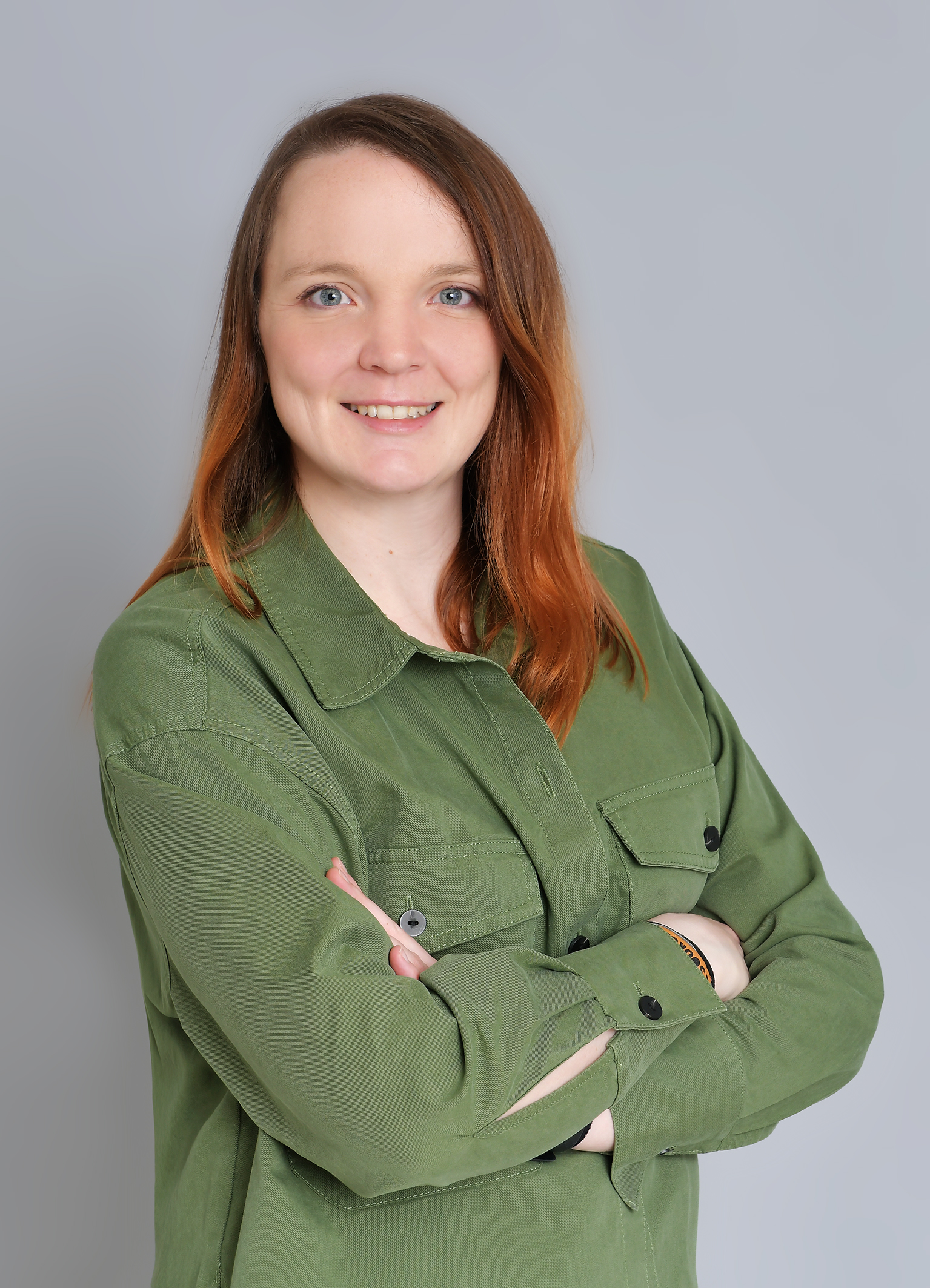
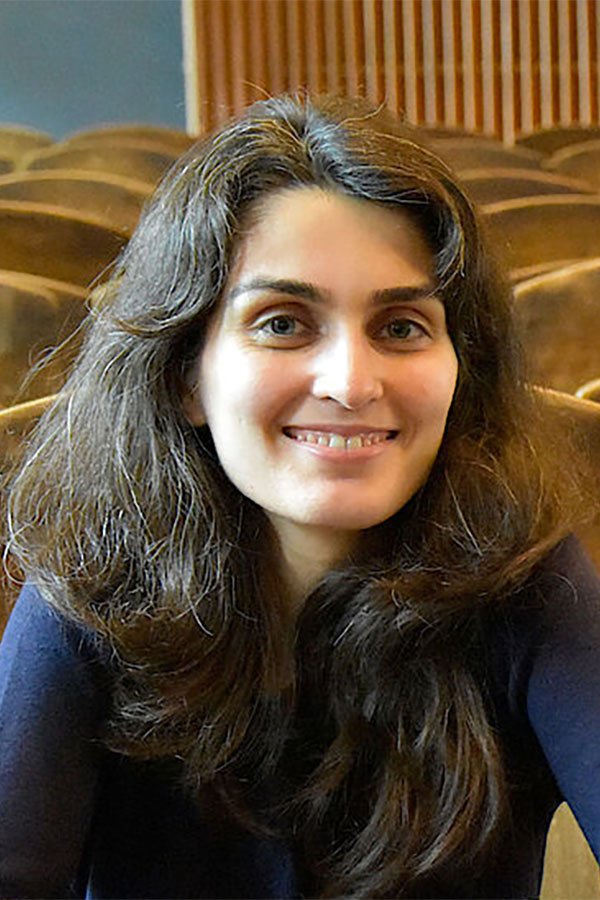
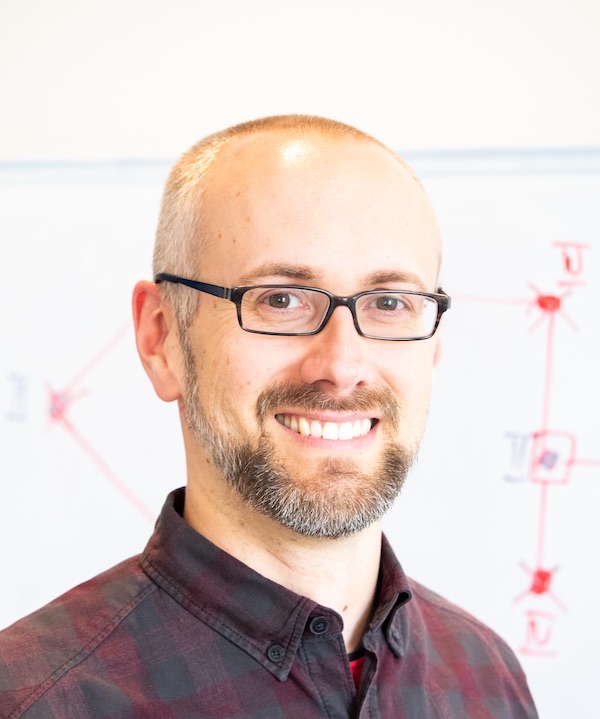
Dr. Kevin G. Jamieson is a faculty member at the University of Washington , School of Computer Science , with prior affiliations at the University of California, Berkeley (Department of Electrical Engineering and Computer Sciences) and the University of Wisconsin-Madison (Department of Electrical and Computer Engineering). His work spans machine learning, reinforcement learning, bandit algorithms, and robotics. Current university: University of Washington Academic rank: Professor His research focuses on: Bandit algorithms and sequential decision-making Optimization in non-stationary environments Reinforcement learning with real-world applications Multi-agent systems and game theory Efficient data selection for multimodal learning Human-in-the-loop AI systems Recent publications highlight his expertise in pure exploration strategies, robotic manipulation, and bridging simulation-to-reality gaps in RL. He has mentored numerous collaborators, though formal student advising details are not explicitly listed here. No scientific awards are mentioned in the provided data.
Claire Vernade is a Group Leader at the University of Tübingen within the Cluster of Excellence Machine Learning for Science. She holds an Emmy Noether award (2022) and an ERC Starting Grant (2024) for her projects FoLiReL and ConSequentIAL , focusing on theoretical reinforcement learning and non-stationary environments. Education: PhD from Telecom ParisTech (2017) Post-doctoral researcher at University of Magdeburg (2018) Her research bridges sequential decision making, bandit problems, and reinforcement learning theory. Recent work explores lifelong learning, distributional RL, and game-theoretic approaches to PCA, emphasizing mathematical rigor and algorithmic innovation. Recent publications highlight trends in non-stationary RL , continual learning , and bandit algorithms with complex feedback structures. Key subfields include meta-learning, adaptive control, and theoretical guarantees in dynamic programming. Scientific Awards: Emmy Noether Award (2022) ERC Starting Grant (2024) Outstanding Paper Award & Oral Presentation, ICLR (2021) She mentors PhD and master's students in theoretical machine learning, with current advisees including Nicolas Nguyen, Onno Eberhard, and Ziyad Sheebaelhamd. Her lab actively recruits candidates in bandit algorithms and RL theory through the IMPRS-IS and ELLIS doctoral programs. Claire co-leads diversity initiatives like Tübingen Women in Machine Learning and Women in Learning Theory, advocating for inclusivity in AI research. She has organized workshops at ICML and EWRL, and contributed to union activism in the tech industry.
Katharina Eggensperger is an Early Career Research Group Leader at the University of Tübingen , leading the AutoML for Science group within the Cluster of Excellence Machine Learning for Science . She previously completed her Ph.D. at the University of Freiburg under Frank Hutter and Marius Lindauer (2022), and actively contributes to the AutoML community through open-source tool development and competition leadership. Co-developer of AutoML.org tools Faculty member of IMPRS-IS Chair for multiple AutoML workshops/conferences (2019-2025) Her research focuses on automated machine learning (AutoML) with specific attention to: AutoML Systems Hyperparameter Optimization Tabular Machine Learning Scientific Applications of ML She has organized multiple AutoML schools and conferences, including serving as Program Chair for AutoML 2024 and Non-archival Track Chair for AutoML 2025. Her work emphasizes making machine learning accessible through automation while maintaining scientific rigor and interpretability, particularly for tabular data applications. Katharina actively recruits PhD students through IMPRS-IS and collaborates with institutions like the University of Freiburg and Cyber Valley .
Claire Vernade is a Group Leader at the University of Tübingen in the Cluster of Excellence Machine Learning for Science. She leads an active research group focused on theoretical aspects of sequential decision making, with particular expertise in bandit problems and reinforcement learning theory. Her work bridges theoretical foundations with practical applications in scientific discovery. Her research interests span sequential decision making, bandit problems, theoretical Reinforcement Learning, Learning Theory, and principled learning algorithms. She has made significant contributions to understanding non-stationary environments, lifelong learning frameworks, and the theoretical foundations of bandit algorithms. Her work on "Eigengame: PCA as a Nash Equilibrium" received an Outstanding Paper Award at ICLR 2021. Dr. Vernade has been awarded prestigious grants including an Emmy Noether award (2022) for her FoLiReL project and an ERC Starting Grant (2024) for her ConSequentIAL project. Her current ERC project explores the role of Reinforcement Learning in developing Continual Learning agents, with applications to scientific domains like drug discovery and micro-chemistry. Emmy Noether award under the AI Initiative call (2022) ERC Starting Grant (2024) Outstanding Paper Award at ICLR 2021 She currently supervises three PhD students and actively recruits postdocs and PhD candidates through the IMPRS-IS and ELLIS doctoral programs. Her group collaborates extensively with the broader machine learning community, organizing workshops like FoRLaC at ICML 2024 and serving as co-chairs for tutorials at major conferences. Dr. Vernade is also deeply committed to diversity and inclusion in machine learning, co-leading initiatives like Women in Learning Theory and Tübingen Women in Machine Learning.
Prof. Sven Rady is a leading academic at the Department of Economics at the Hausdorff Center for Mathematics , University of Bonn. He serves as a Hausdorff Chair for Mathematical Economics and Deputy Spokesperson for Collaborative Research Centre TR224. Research Interests include dynamic decision problems, equilibrium models, optimal learning, and strategic experimentation, with significant contributions to information economics and stochastic game theory. His work bridges mathematical modeling with economic theory, focusing on markets, learning dynamics, and policy implications. Scientific Awards include Fellow of the Econometric Society (2023) Teaching Awards at the University of Bonn (2021, 2022) CESifo Outstanding Referee Award (2013) Teaching Award of the State of Bavaria (2005) Key Collaborations involve interdisciplinary research at the intersection of economics and mathematics. He leads projects in the CRC TR224 and contributes to HCM initiatives on probabilistic modeling and information economics.
Dr. Setareh Maghsudi is a Professor in the Learning Technical Systems group at the Faculty of Electrical Engineering and Information Technology at Ruhr-University Bochum. She joined Ruhr-University Bochum in August 2023 after serving as an Assistant Professor at the University of Tübingen (2020-2023) and at the Technical University of Berlin (2017-2020). Her academic journey began with an M.Sc. from Kiel University (2008-2010), followed by her Ph.D. and postdoctoral work at Technical University of Berlin (2011-2015), Yale University (2016-2017), University of Manitoba (2015-2016), and Kyushu University (2019). Dr. Maghsudi's research focuses on the application of machine learning to communication networks and distributed systems, with particular emphasis on bandit algorithms, federated learning, and resource allocation in dynamic environments. Her work bridges theoretical machine learning with practical networking challenges, developing algorithms that can adapt to non-stationary environments with partial information. She has made significant contributions to multi-armed bandit frameworks for wireless communications, edge computing, and network optimization. Her recent publications (2023-2025) demonstrate a strong trend toward addressing challenges in integrated sensing and communication (ISAC), federated learning for edge networks, and non-stationary decision-making problems. The publications show expertise spanning theoretical machine learning foundations, wireless communications engineering, and practical implementation for real-world networked systems. Her work increasingly incorporates causal reasoning and robustness considerations into learning frameworks for communication systems. Dr. Maghsudi leads the Learning Technical Systems research group at Ruhr-University Bochum, where she supervises PhD students and postdoctoral researchers working at the intersection of machine learning and communication systems. Her research is supported by various grants focusing on AI for future communication networks. Current projects include developing AI-driven solutions for next-generation communication systems with emphasis on robustness, efficiency, and adaptability in dynamic environments.
Joachim Baumeister is a Professor at the Chair of Computer Science VI - Artificial Intelligence and Knowledge Systems within the Institute of Computer Science at the University of Würzburg's Faculty of Mathematics and Computer Science. While his primary employment since September 2010 has been at denkbares GmbH, a company specializing in knowledge-based systems, he continues to regularly give lectures at the university. His research focuses on Semantic Information Systems, Knowledge Graphs, Deep Learning applications, Natural Language Processing, and Knowledge-based Configuration for Industry 4.0. Professor Baumeister's work bridges theoretical AI research with practical industry applications, particularly in knowledge-based configuration systems and semantic technologies. His recent publications (2020-2024) reveal a strong emphasis on product configuration systems, semantic knowledge representation, regulatory document processing, and knowledge-based systems. His research has evolved from foundational work on semantic wikis and knowledge engineering to more recent applications involving deep learning and large language models, demonstrating adaptability to emerging technologies while maintaining focus on practical knowledge representation problems. Professor Baumeister's work demonstrates significant contributions to case-based reasoning, knowledge configuration, and semantic technologies, with applications spanning regulatory compliance, industrial configuration systems, and document processing. His current research areas include: Semantic Information Systems and Knowledge Graphs Deep Learning for Image Recognition and Language Understanding Knowledge-based Configuration for Industry 4.0 Natural Language Processing Intelligent Personal Assistants and Chat Bots Though specific students aren't listed in the provided information, Professor Baumeister actively invites students to contact him regarding projects, bachelor theses, and master theses in his areas of expertise. His work at denkbares GmbH focuses on the design, implementation, and evolution of knowledge-based systems and semantic information systems.
Dunja Šešelja is a Professor for Social Epistemology and Reasoning in Science at the Institute for Philosophy II, Ruhr University Bochum. She serves as an Editor-in-Chief of the European Journal for Philosophy of Science and co-coordinates the Research Group on Reasoning, Rationality and Science with Christian Straßer. She is also an Associate Editor of the European Journal for Philosophy of Science and a member of the Steering Committee of the European Philosophy of Science Association (EPSA). Šešelja's research focuses on integrating historically informed philosophy of science with formal models of scientific inquiry. Her work spans agent-based modeling (ABM), social epistemology, epistemic norms, and the interplay between zetetic and epistemic considerations in scientific disagreement. She examines topics like transient diversity, myside bias, evidence diagnosticity, and collective epistemic responsibility, often using computational simulations to explore socio-epistemic dynamics in scientific communities. Her publications analyze how ABMs can provide insights into theoretical aspects of scientific rationality, while highlighting the limitations of highly idealized models. She has contributed to debates on the role of conciliation versus steadfastness in peer disagreement, the impact of information flow on scientific efficiency, and the normative implications of zetetic reasoning. Her recent work includes modeling the effects of argumentative dynamics and higher-order evidence in fast-science contexts like pandemic policy-making. The articles Šešelja has authored or co-authored span 2025 to 2019, with themes centered on formal epistemology, network science, and the methodological foundations of agent-based modeling. A recurring focus is the epistemic function of models that simulate scientific interaction, bias, and consensus formation. She has also explored the relevance of historical cases (e.g., peptic ulcer disease) to contemporary philosophical discussions. Šešelja's educational background includes a PhD from Ghent University, where she studied epistemic evaluation in the context of scientific pursuit and argumentative methodology. Her professional journey includes visiting professorships at the University of Vienna, Ghent University, and postdoctoral positions at Ruhr-University Bochum and LMU Munich. She is actively engaged in editorial and organizational roles, advocating for inclusive academic knowledge-making practices.
Wouter M. Koolen is a Professor of Mathematical Machine Learning at the University of Twente and a Senior Researcher in the Machine Learning group at Centrum Wiskunde & Informatica (CWI) in Amsterdam. Appointed to his professorship on June 1, 2022, he delivers his expertise across both institutions with offices in Enschede and Amsterdam. He is actively engaged in academic leadership through his organization of the Machine Learning Theory Research Semester Programme at CWI in Spring 2023 and serves as an ELLIS Scholar since December 2020. Dr. Koolen's research spans machine learning theory with particular focus on pure exploration in multi-armed bandit models , game tree search algorithms , and provably accelerated learning in both statistical and individual-sequence settings, which he characterizes as 'learning faster from easy data.' His work bridges theoretical foundations with practical applications, especially in safe statistical testing using e-values. He maintains active collaborations through INRIA-CWI associate teams 6PAC with Inria Lille and 4TUNE with Inria Paris and Grenoble. His recent publications reveal a strong emphasis on developing theoretically sound methods for statistical inference that maintain validity under optional stopping and continuation, representing a significant shift from traditional p-value based approaches. This work has important implications for fields requiring rigorous statistical guarantees in adaptive experimental settings. NWO VENI grant recipient QUT Vice-Chancellor's postdoctoral research fellowship awardee ELLIS Scholar (elected December 2, 2020) Member of ACM Future of Computing Academy Professor Koolen has supervised numerous PhD students to completion, including Hongwei Wen, Clément Lezane, and Tyron Lardy in 2025, and formerly Rianne de Heide who won the VVSOR Willem R. van Zwet award. He has served on program committees for major conferences including COLT, ICML, and ALT, and actively organizes workshops on cutting-edge topics in machine learning theory. His research group at CWI hosts regular reading groups and seminar series, fostering a vibrant theoretical machine learning community in the Netherlands.
Professor Sven Rady holds the Hausdorff Chair for Mathematical Economics at the University of Bonn, where his research examines decision dynamics and equilibrium processes under uncertainty through economic agent experimentation. His scholarly focus spans Game Theory, Microeconomic Theory, and Strategic Experimentation, investigating learning mechanisms in bandit models, information externalities, and equilibrium dynamics. This work critically analyzes how agents navigate uncertainty in environments ranging from team-based free-riding scenarios to two-sided market platforms, yielding insights for industrial organization and market design. Analysis of his 2009-2019 publications reveals a cohesive research trajectory centered on strategic experimentation in bandit frameworks. Key contributions address free-riding mitigation, undiscounted payoff structures, private information effects, and Poisson bandit applications, consistently employing continuous-time modeling to dissect learning dynamics and equilibrium formation under uncertainty. No scientific awards were documented in the source material. Details regarding student advising, research grants, or laboratory affiliations were not provided in the available text.
Martin Hoefer is a full Professor (Universitätsprofessor) at RWTH Aachen University, Germany, where he holds the Chair of Algorithms and Complexity (Computer Science 1) since 2024. Previously, he was a Professor at Goethe University Frankfurt (2017–2024), Research Group Leader at Saarland University (2012–2016), and Senior Researcher at MPI Informatik. He earned his Dr. rer. nat. in Computer Science from the University of Konstanz in 2007 and a Dipl.-Inf. from TU Clausthal in 2004. Current Position: Professor, RWTH Aachen University (2024–present) Previous Positions: Professor, Goethe University Frankfurt (2017–2024); Research Group Leader, Saarland University (2012–2016); Senior Researcher, MPI Informatik (2013–2016); Assistant Professor, RWTH Aachen (2011–2012) Education: Doctorate (2007), University of Konstanz; Diplom (2004), TU Clausthal His research lies at the intersection of algorithms, game theory, and distributed systems, with a focus on algorithmic game theory, computational social dynamics, optimization under uncertainty, and market design. He investigates coordination problems in decentralized environments, including opinion formation, financial networks, fair division, and mechanism design. His work combines theoretical rigor with applications in economics and multi-agent systems. The recent publications reflect a strong trend in algorithmic economics, particularly in persuasion, information design, contract theory, and financial network stability. His work spans top venues in theoretical computer science (STACS, SODA, ICALP), artificial intelligence (AAMAS, IJCAI), and economics (EC, GEB). He frequently publishes in journals such as Mathematics of Operations Research , ACM Transactions on Economics and Computation , and Journal of Artificial Intelligence Research . Best Paper Award, Track C, ICALP 2011 Best Paper Award, Track C, ICALP 2014 Martin Hoefer is the Spokesperson of the DFG Research Unit ADYN since 2020 and has served on numerous program committees including EC, STOC, FOCS, SODA, AAAI, IJCAI, AAMAS, and WINE. He has co-chaired major conferences such as WINE 2020 and SAGT 2015 and edited special issues in ACM TEAC , ACM TALG , and Theory of Computing Systems . He leads a research group at RWTH Aachen and has advised several students. His work is supported by German research foundations and collaborative projects.
Dr. Tim van Erven is an Associate Professor at the University of Amsterdam , affiliated with the Korteweg-de Vries Institute for Mathematics . His research focuses on the mathematical foundations of machine learning , particularly adaptive methods in online convex optimization, PAC-Bayesian concentration inequalities, and robust learning strategies. Research Interests : Mathematical machine learning, explainable AI, online learning, statistical learning theory, and adaptive optimization. Grants & Awards : VICI (2025), VIDI (2019), TOP grant (2016), NIPS Outstanding Reviewer (2014), Rubicon (2011). Teaching : Involved in graduate-level machine learning and statistical learning theory courses. His recent work explores explainable machine learning and robust optimization , with a focus on algorithmic recourse, gradient filtering, and theoretical guarantees. His publications span top venues like NeurIPS, COLT, and JMLR, often addressing the intersection of statistics and machine learning. He co-organized workshops such as the AI & Mathematics (AIM) initiative and contributed to the COLT program committee. His group develops MetaGrad and other adaptive algorithms for online learning.
Tuan Dam is an Assistant Professor at the School of Information and Communication Technology (SoICT), Hanoi University of Science and Technology (HUST), focusing on the theory of Reinforcement Learning. Previously, he held a postdoctoral position at INRIA Lille, France, and completed his Ph.D. in Robotics at TU Darmstadt, Germany. His research emphasizes developing principled methods for robots in unstructured environments, with notable contributions to Monte Carlo Tree Search (MCTS) and POMDP applications. Education: Ph.D. in Robotics, TU Darmstadt (Germany), 2024 Master's in Electronics and Computer Engineering, Hanyang University (South Korea) Bachelor's in Computer Science, Vietnam Research Interests: Reinforcement Learning under uncertainty, Monte Carlo Tree Search (MCTS), POMDPs, robotics applications, and theoretical foundations of sequential decision-making. His recent work includes integrating POMDP frameworks into MCTS for robot planning tasks like Disentangling and Mikado Problems. Advising & Supervision: Co-supervised MS theses on topics like memory representations in partially observable RL and Laplacian representations for continuous MCTS Guided multiple integrated projects on MCTS benchmarking and policy search techniques Labs & Collaborations: Former affiliations include ESOS Lab (Korea), HMI Lab (Vietnam), DFKI Berlin (Germany), and Auburn University (USA). Current work focuses on advancing RL theory and its industrial applications.
Ruosong Wang is an Assistant Professor in the Machine Learning Department within the School of Computer Science at Carnegie Mellon University. His research focuses on theoretical aspects of machine learning, particularly reinforcement learning, bandit problems, and algorithmic foundations. Wang's research interests span several key areas in theoretical machine learning. He has made significant contributions to reinforcement learning theory, particularly in understanding sample complexity, horizon dependence, and function approximation. His work on bandit algorithms explores variance-aware and sparse linear settings, while his research on subspace embeddings contributes to fundamental algorithmic techniques. Wang's approach combines rigorous theoretical analysis with practical implications for learning algorithms. His publication record shows a strong focus on theoretical guarantees and tight bounds for various learning problems. Wang's research demonstrates a progression from foundational algorithmic work to increasingly sophisticated analyses of reinforcement learning systems. His papers often address fundamental questions about the limits and possibilities of learning algorithms in complex environments. Wang has published extensively at top-tier machine learning and theoretical computer science venues including ICML, NeurIPS, ICLR, and STOC. His collaborative work with leading researchers in the field demonstrates his integration into the theoretical machine learning community. As an advisor and researcher, Wang contributes to advancing the theoretical foundations of machine learning, with particular emphasis on understanding the fundamental limits and possibilities of learning algorithms in sequential decision-making contexts.
Claire Vernade is a Group Leader at the University of Tübingen within the Cluster of Excellence Machine Learning for Science. Her research focuses on sequential decision making and theoretical reinforcement learning (RL), particularly in non-stationary environments, bandit problems, and principled learning algorithms. She has received prestigious awards including the Emmy Noether Award (2022) and an ERC Starting Grant (2024) for her projects FoLiReL and ConSequentIAL , respectively. Claire has previously worked as a Research Scientist at DeepMind (London) and as a part-time Applied Scientist at Amazon (Berlin). Education : PhD in Machine Learning from Telecom ParisTech (2017), under Prof. Olivier Cappé. Research Interests include: Sequential Decision Making Bandit Problems (Combinatorial, Delayed Feedback, Sparse Actions) Reinforcement Learning Theory Meta-Learning and Lifelong Learning Optimization Algorithms Game-Theoretic Approaches to PCA Publications highlight trends in non-stationary environments, contextual bandits, and theoretical foundations of RL and bandit algorithms. Her work spans applications in scientific discovery, statistical testing, and optimization. Scientific Awards : Emmy Noether Award (2022) ERC Starting Grant (2024) Outstanding Paper Award at ICLR 2021 Advising and Grants : Claire leads a research group with ongoing PhD and postdoc opportunities through IMPRS-IS and ELLIS doctoral programs. Her projects receive funding from the European Research Council and DFG, with focus on continual learning and adaptive AI systems. Labs/Teams : She coordinates the Tübingen Women in Machine Learning (TWiML) initiative and co-leads the Women in Learning Theory (WiML-T) website. Her group emphasizes diversity, inclusivity, and collaborative research in theoretical machine learning.