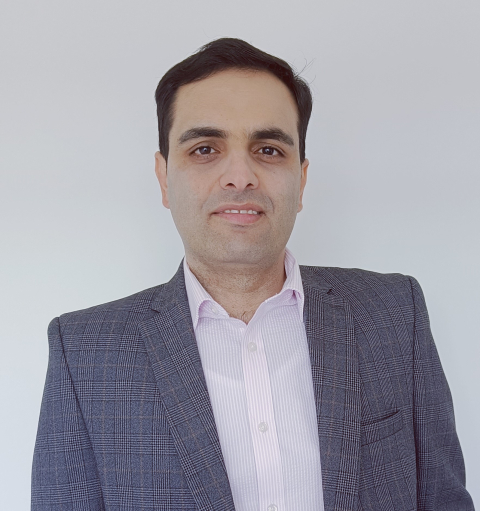
Suri Gatiganti serves as an Assistant Research Professor at the National Center for Asphalt Technology (NCAT) at Auburn University . Her work focuses on asphalt mixtures, pavement mechanics, and sustainable infrastructure solutions. Ph.D., Auburn University M.Tech., Indian Institute of Technology B.E., Andhra University Her research spans multiple subfields: Development of balanced mix design methodologies Environmental impact analysis of asphalt production Thermal properties and heat transfer in aggregate materials Recycling technology for cold-mix and reclaimed asphalt Life cycle assessment of pavements and construction equipment Pavement durability and failure analysis Recent publications emphasize asphalt sustainability , emissions quantification , and innovative testing methodologies for pavement performance. She is affiliated with NCAT, a leading research center for asphalt technology.
Kevin Tomsovic is the Chancellor's Professor in the Min H. Kao Department of Electrical Engineering and Computer Science at the University of Tennessee, Knoxville, and Director of the CURENT Engineering Research Center. His expertise spans smart grids, power systems optimization, and cyber-physical resilience. He holds a PhD from the University of Washington (1987) and prior roles at Washington State University. Research focuses on renewable integration, microgrid scheduling, and grid security, with notable contributions to IEEE standards. Awards include IEEE Fellow status. Education: PhD/M.S. Electrical Engineering, University of Washington (1987/1984); B.S. Electrical Engineering, Michigan Tech (1982). Research interests include: - Intelligent systems for power distribution design - Electricity market analysis and stability control - Cybersecurity for grid infrastructure - Resilience quantification in energy systems Publications highlight advancements in grid emulation platforms, adversarial ML defenses, and microgrid optimization. His work is supported by NSF/DOE grants (e.g., NSF EEC-1041877). CURENT testbed facilities enable real-time grid control validation. Awards: IEEE Fellow (20XX). Grants & Collaborations: Lead CURENT NSF ERC; industry partnerships include power utilities and tech firms. Active in developing standards for grid resilience metrics. Labs/Teams: CURENT Engineering Research Center, UT Power Systems Lab.
Christodoulou Chris is a Professor at the Department of Computer Science, University of Cyprus. He joined in 2005 and holds a Visiting Research Fellowship at Birkbeck College, University of London. His educational background includes a BEng in Electronic Engineering from Queen Mary and Westfield College (1991), a PhD in Neural Networks from King's College London (1997), and a BA in German from Birkbeck College (2008). His research focuses on Computational Neuroscience, Neural Networks, and Machine Learning, with specific interests in neural coding, self-control modeling, computational neuronal modeling, multi-agent reinforcement learning, and practical machine learning applications. Recent publications (2013-2025) demonstrate interdisciplinary approaches combining neuroscience, computer science, and optimization techniques, with emerging emphasis on protein structure prediction and biomedical applications. Scientific awards include: Best Paper Award, ICSR 2015 Best Paper Award, MODELS 2008 Doctoral Symposium He leads the Computational Intelligence and Neuroscience (CIN) research group and has secured funding from European projects (SocioCoast, CYberSafety, TAMIT). He mentors students through Google Summer of Code and collaborates internationally.
Antonio Alves Meira Neto is an Assistant Professor in the Department of Civil and Environmental Engineering at Colorado State University. His research focuses on hydrologic processes across spatial and temporal scales, integrating field observations, modeling, and remote sensing. He leads the Hydrologic Processes Lab , established in 2024, which examines water movement in ecosystems, climate interactions, and human-water systems. Ph.D. (2019) - University of Arizona, Hydrology M.Sc. (2013) - University of São Paulo, Hydraulic and Sanitary Engineering B.Sc. (2011) - Federal University of Bahia, Civil Engineering His work employs hydrogeophysics, tracer experiments, and empirical analysis to study catchment-scale hydrology, ecohydrology, and socio-hydrology in arid regions. Recent publications highlight water security in Brazil, groundwater dynamics, and climate impacts on streamflow. Contact: ameira@colostate.edu
Sebastian Diehl is a Professor at Umeå University's Department of Ecology, Environment and Geoscience. His research focuses on mathematical modeling of aquatic ecosystem dynamics, with particular emphasis on consumer-resource interactions and climate change impacts on northern lake ecosystems. Current affiliations: Umeå University (Department of Ecology, Environment and Geoscience) Previous affiliations: Ludwig-Maximilians-Universität München (Professor of Aquatic Ecology) Academic background: Biology undergrad from University of Göttingen, PhD in Animal Ecology from Umeå University (1994) Research interests center around aquatic ecosystem dynamics in response to environmental change, including: Climate change effects on lake ecosystems (temperature and terrestrial nutrient inputs) Mathematical modeling of consumer-resource interactions Benthic-pelagic coupling in nutrient and energy flows Phytoplankton-zooplankton dynamics under environmental stressors Trophic interactions in stream and lake systems Stoichiometric constraints on ecosystem function His recent publications (2025-2020) demonstrate an integrated approach combining mathematical modeling with experimental validation through field studies and lab experiments, focusing particularly on: Climate-induced regime shifts in lake ecosystems Stoichiometric mismatch in warming systems Functional response modeling Vertical niche partitioning in plankton Resource acquisition trade-offs Browning impacts on primary producers Administrative roles include: Final examiner for PhD education Chair of Umeå Marine Science Centre advisory council Steering group member of Integrated Science Lab (IceLab)
Gary W. Reinbold is an Associate Professor in the School of Public Management and Policy at the University of Illinois System. He specializes in U.S. social policy research, program evaluation, and international poverty/development studies. His work frequently appears in peer-reviewed journals and media outlets. As Director of the Center for Moderate Social Policy, he provides balanced policy analysis on social issues. Prior to academia, he practiced law at the U.S. Department of Health and Human Services and international law firm Mayer Brown. Reinbold holds a Ph.D. in Public Policy from Harvard University, a J.D. from the University of Michigan, a M.A. in Early Childhood Education from Concordia University Chicago, and a B.S. in Mathematics from Michigan Technological University. His research focuses on Medicaid/CHIP policy impacts, child health outcomes, poverty measurement, and pandemic policy effects. He combines quantitative methods with policy analysis to address socioeconomic disparities. Over 13 publications since 2010 demonstrate sustained engagement with public health, education policy, and international development challenges. Reinbold teaches statistics, program evaluation, and U.S. social policy courses. His advisory role at the Center emphasizes nonpartisan analysis of social policies, bridging academic research and practical governance strategies.
Dr. Shinye Kim is an Assistant Professor in the Department of Counseling Psychology at the University of Wisconsin-Madison and a licensed psychologist. Her research focuses on contextualizing chronic pain and opioid use, emphasizing cultural, linguistic, and psychological factors affecting ethnic and linguistic minorities. She holds an NSF grant to study pain communication barriers and develops digital tools for equitable pain care. Dr. Kim has clinical experience in severe mental health, pain management, and consultation-liaison psychiatry, with four years of psychoanalytic training. She serves on editorial boards for Health Psychology , Journal of Vocational Behavior , and others. Education: PhD in Counseling Psychology (UW-Milwaukee, 2016), M.Ed. in Prevention Science (Harvard, 2010), BA in Education (Busan National University of Education, 2009) Grants: Includes NSF funding for culturally informed pain diagnosis and a Wisconsin Partnership Program grant for opioid misuse prevention (OPTIMA). Research Interests: Chronic pain mechanisms, healthcare disparities, cultural competence, pain communication, work-family dynamics, and translational digital health tools. Current projects include developing a pain expression database for Asian Americans and leveraging NLP for pain sentiment analysis. Advising: Mentors graduate students in counseling and rehabilitation programs, focusing on culturally responsive mental health and pain management. Current advisees include Hannah Swick, Ryan Davis, and Patrina Wong. Former students led projects on discrimination in chronic pain and opioid misuse risk. Lab & Teams: Directs the Pain, Context, and Innovation Lab, which includes multidisciplinary teams addressing pain communication barriers, cultural competence in healthcare, and digital health interventions. Collaborations extend to computer science departments for language translation tools.
Christopher Vogel is a Research Fellow at New College and a Senior Research Associate in the Department of Engineering Science at the University of Oxford. He holds a first-class BE(Hons) in Engineering Science from the University of Auckland and completed his DPhil at Oxford under the Oxford Martin School’s Programme on Globalising Tidal Power Generation. His work focuses on advancing renewable energy technologies, particularly in tidal and wind energy systems. His research interests include fluid dynamics of tidal turbines, aerodynamic performance optimization, blade design under erosion, and large-scale renewable energy array modeling. He has contributed to projects like the Tidal Energy Research Group and the FastBlade facility for full-scale tidal blade testing. Vogel’s work integrates computational fluid dynamics (CFD), experimental testing, and multi-scale analytical models to address challenges in energy extraction efficiency, structural durability, and system reliability. Recent publications highlight advancements in actuator line methods for turbine wake prediction, uncertainty quantification in blade-element momentum theory, and dynamic loading analysis of tidal arrays. His studies often bridge theory and application, emphasizing practical solutions for marine and wind energy deployments. Collaborations include the Tidal Benchmarking Project and investigations into hybrid systems combining wave energy converters with breakwaters. Vogel’s interdisciplinary approach addresses both technical and environmental dimensions of sustainable energy systems.
Roger Jones is an Adjunct Professor at the Institute of Agriculture, University of Western Australia. He holds a PhD from St Andrews University (1972) and has held senior roles at institutions including the International Potato Center, UK MAFF laboratories, and the Cooperative Research Centre for Legumes in Mediterranean Agriculture. His expertise spans plant virology, virus ecology, epidemiology, and integrated disease management. Research Interests: Dr Jones focuses on plant virus ecology, epidemiology, and control, particularly under Mediterranean climates. His work emphasizes seed transmission, vector dynamics, and the impact of climate change on plant viruses. He has pioneered studies on viruses affecting cereals, legumes, root crops, and native flora, with a focus on integrated management strategies. Grants & Awards: He has secured >$3M in research funding from ARC, GRDC, and industry partners. Awards include Fellowships from the American Phytopathological Society (2014), Australasian Plant Pathology Society (2003), and Australian Institute of Agricultural Science and Technology (2002). Advising & Mentorship: Supervised 14 PhD, 8 MSc, and numerous Honours students globally. Current projects include virus-climate change interactions, native plant virology, and deep sequencing of viral genomes. Labs & Collaborations: Collaborates with CSIRO, Murdoch University, and international partners on projects like windborne virus spread and cucurbit disease management. His work bridges agricultural and ecological systems to address global crop challenges.
Robert Scheer is a Clinical Professor of Communication at the University of Southern California's Annenberg School for Communication and Journalism. He holds over 30 years of experience as a journalist and author, specializing in political and social issues. Scheer has authored ten books analyzing U.S. foreign policy, corporate power, and political figures, including works like The Pornography of Power and They Know Everything About You . He co-founded Truthdig , an online magazine focusing on in-depth current affairs reporting. Education: Scheer graduated from City College of New York. He held fellowships at Syracuse University (Maxwell Fellow), University of California Berkeley (Center for Chinese Studies), Yale University (Poynter Fellow), and Stanford University's arms control program. He is a contributing editor for The Nation . Research interests focus on media's role in politics, corporate influence on democracy, and historical analysis of U.S. foreign policy decisions. His work critiques systemic power structures through journalistic narratives and academic analysis. Key publications include critical examinations of post-9/11 policies, Wall Street's economic impact, and the Iraq War's justifications. His radio program Left, Right and Center on KCRW explores political debates through balanced discourse. Awards and recognition: No specific prizes listed, but his career has been marked by significant contributions to investigative journalism and political commentary. Teaching: Courses include COMM 498: Ethical Issues in Entertainment and Communication and ASCJ 210: Contours of Change in Media and Communication .
Dr. Andrew Lin is a Senior Lecturer and School Director of One University at the University of Sheffield's School of Biosciences. He holds a PhD from the University of Cambridge and a BA in Biology from Harvard University. His career includes roles as a Lecturer (2019-2022), Vice-Chancellor’s Fellow (2015-2019), and Postdoctoral Fellow at the University of Oxford (2009-2015). Research focuses on how the brain encodes sensory information for memory formation, using Drosophila's olfactory system as a model. Key areas include sparse coding in Kenyon cells, synaptic inhibition/excitation balance, and neural circuit dysfunction links to epilepsy. Teaching includes modules like BMS11004 Introduction to Neuroscience and BMS248 Neural Circuits, Behaviour and Memory. He has secured grants from the European Research Council, BBSRC, and Wellcome Trust. Professional memberships include the FENS-Kavli Network and BBSRC Pool of Experts. Lab research employs techniques like in vivo two-photon imaging, electrophysiology, and genetic manipulation. PhD opportunities are available in neural circuitry and sensory processing.
Micael Derelöv is an Associate Professor at Linköping University's Department of Management and Engineering (IEI), specializing in Product Realisation (PROD). His work focuses on optimizing safety, reliability, and efficiency in industrial and aerospace systems. He contributes to sustainable product development through advanced methodologies in design optimization and failure analysis. His research integrates robotics, manufacturing systems, and systems engineering to address challenges in collaborative assembly, aircraft design, and risk management. Dr. Derelöv’s research interests include multi-objective optimization for balancing safety and weight in aircraft systems, industrial safety demonstrators, and reliability-centric design processes. He has developed frameworks for evaluating design concepts and identifying potential failures in early-stage engineering projects. His work also explores the application of genetic algorithms in concept synthesis and the use of qualitative modeling for risk assessment. His publications highlight trends in industrial safety, systems reliability, and aerospace engineering. Recent work includes advancements in safe collaborative robotics on assembly lines and methodologies for industrial safety demonstrators. Earlier contributions address cost optimization in reliability-focused design and bio-mechatronic product development. While no specific scientific awards are listed, his active research and academic role reflect a commitment to advancing engineering practices. He collaborates on student projects, such as a recent initiative designing a pressure-resistant device for space exploration, demonstrating engagement in applied and interdisciplinary research. Micael Derelöv’s affiliation with the Department of Management and Engineering positions him at the intersection of academic research and industrial innovation, particularly within the Product Realisation group. His work emphasizes sustainable, integrated approaches to product development, blending theoretical insights with practical applications in manufacturing and aerospace sectors.
Dr. Javad Fattahi is an Assistant Professor at the School of Electrical Engineering and Computer Science, University of Ottawa. He holds roles as an IEEE Senior Member, Professional Engineer (P.Eng.), and member of the Standards Council of Canada. He leads the IEEE 2030.5 smart-grid interoperability verification initiative as its VP and chief editor. Dr. Fattahi earned his BSc in Electrical Engineering from Iran University of Science and Technology (IUT), followed by graduate studies at Sharif University of Technology (SUT). He completed his PhD and postdoctoral research at the University of Ottawa, specializing in energy systems and optimization. His research focuses on energy equity, distributed energy resources (DERs), software-defined nanogrids, game theory, smart mobility, and nonlinear systems. His recent work emphasizes data-driven digital twins for grid stability, V2G integration in residential complexes, and federated Byzantine agreement models for EV infrastructure. Key contributions include transactive energy systems under IEEE standards and energy disaggregation in institutional buildings. Dr. Fattahi has received accolades including IEEE Senior Membership and P.Eng. certification. His lab develops solutions for grid-edge technologies, smart mobility, and resilient energy systems. Graduate opportunities are available via his UniWeb page.
Natasha Fernandes is a Senior Lecturer in the School of Computing at Macquarie University. She holds a PhD in Computing from Macquarie University and École Polytechnique (France), and an undergraduate degree in Pure Mathematics and Computer Science from the University of Sydney. Her roles include involvement in the Data Horizons Research Centre and Future Communications Research Centre, alongside professional casual appointments in academic computing. Her research focuses on the mathematical foundations of data privacy, particularly differential privacy and its applications in natural language processing and machine learning. She develops privacy-preserving systems and tools using quantitative information flow techniques rooted in information theory. Key areas include privacy analyses for financial systems (e.g., Open Banking), API privacy, and optimizing utility in privacy pipelines. Fernandes has led or contributed to five research projects, including work on privacy analyses for financial transaction protocols and UAV-based machine learning systems. She received the 2021 John Makpeace Bennett Award for her doctoral research on differential privacy in metric spaces. Her academic journey combines industry experience as a backend software engineer with rigorous academic contributions, spanning over 21 peer-reviewed publications and collaborations across cybersecurity and privacy engineering domains.
Sander Bakkes is an Assistant Professor and Game Researcher at the Faculty of Science, Utrecht University. He specializes in developing personalized games and interventions for healthcare and education, leveraging adaptive AI and game design principles. His work focuses on improving user engagement and intervention effectiveness through tailored game mechanics. Research Themes: Dynamics of Youth, Human-Centered AI, Serious Games Key Projects: HUB 'Playing = Growing Up Healthy', games for children with chronic illnesses, crisis management training tools Research Interests: Game-based learning, AI-driven game adaptation, and the psychological impact of games on health and behavior. His studies explore how play can enhance coping mechanisms for youth with chronic conditions and improve social integration. Publications span gamification, player experience modeling, and serious games, with contributions to conferences like FDG and GALA. He teaches courses on Game Design and Gamification, and actively collaborates with interdisciplinary teams in healthcare and AI.