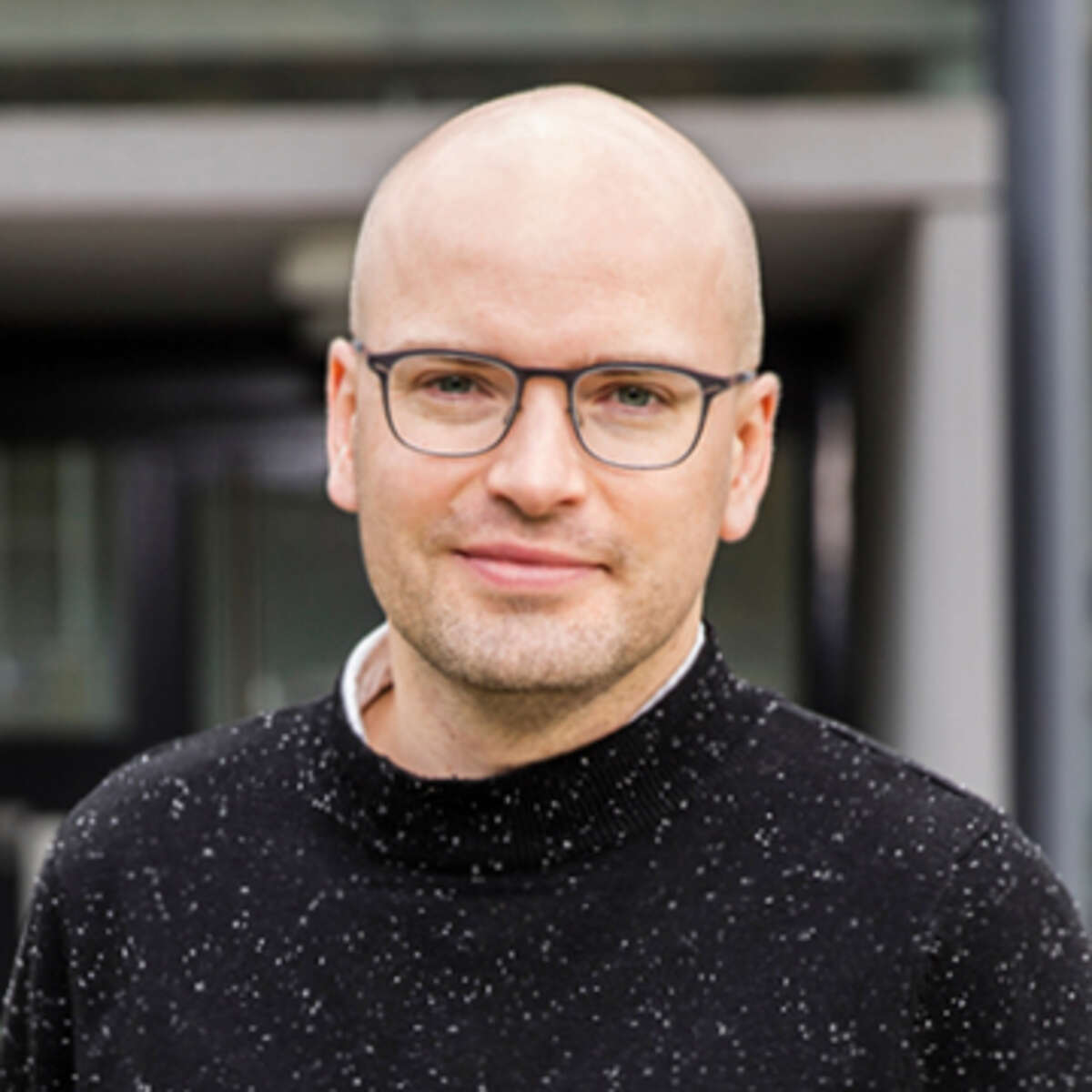
Prof. Knut Drescher is an Associate Professor at the Biozentrum, University of Basel , leading a research group focused on bacterial biofilms , swarming , and microbial multicellularity . Previously, he served as a Professor of Biophysics and Max Planck Research Group Leader at Philipps-Universität Marburg (2015-2021) and conducted postdoctoral research at Princeton University. Research Interests: Physical and biological mechanisms of biofilm formation Cell-cell interactions in microbial communities Antibiotic resistance in biofilms Hydrodynamics of bacterial swarms Evolution of cooperation in multispecies biofilms Development of bioimaging software (BiofilmQ, BacStalk) Scientific Awards: 2023: SNSF Consolidator Grant 2019: Heinz Maier-Leibnitz Prize (DFG), VAAM Research Prize, IUPAP Young Scientist Prize 2016: ERC Starting Grant Advising & Grants: Advises PhD and Master's students in microbiology, biophysics, and bioinformatics Secured major grants from ERC , HFSP , and DFG
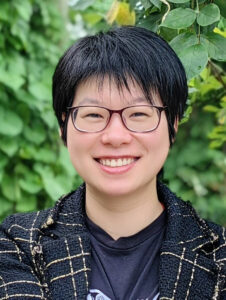
Dr. Yayun Du is an Assistant Professor in the Department of Electrical and Computer Engineering at Vanderbilt University School of Engineering. She holds a Ph.D. in Robotics and System Control (Minor: Solid Mechanics) from UCLA (2022) and was a postdoctoral scholar at Northwestern University's Rogers Group through 2024. Current faculty at Vanderbilt University Ph.D. from University of California, Los Angeles Postdoctoral experience at Northwestern University Her research integrates bioelectronics and robotics through three core directions: 1) Developing multimodal wearable/implantable sensors for health monitoring, 2) Creating human-in-the-loop interaction systems using brain-computer interfaces, and 3) Applying machine learning to medical environment robotics. She has deployed four sensor types across seven hospitals globally, serving users from neonates to elderly patients. Dr. Du's recent publications focus on wireless bioelectronic devices ( PNAS ), sustainable sensor materials ( ACS Sustainable Chemistry & Engineering ), and agricultural robotics ( ICRA , IROS ). She serves as Associate Editor for ICRA 2025 and has received two Best Paper Award final nominations at IROS 2021. Finalist - Best Paper Award in Agri-Robotics (IROS 2021) Finalist - Best Paper Award in Robot Mechanisms and Design (IROS 2021) As head of the Du Group, she leads interdisciplinary research with applications in both healthcare and agricultural contexts, collaborating with Vanderbilt Institute for Surgery and Engineering (VISE) and clinical partners. Her work emphasizes deployable systems that transition from academic research to real-world implementation in medical and industrial environments.
Mary K. Firestone is Professor of the Graduate School in the Department of Environmental Science, Policy and Management at UC Berkeley. Her research revolutionized understanding of soil microbial processes, particularly oak regeneration techniques and microbial mediation of carbon/nitrogen cycling in terrestrial ecosystems. Firestone's work examines microbial responses to environmental change, including drought, rewetting, and warming scenarios. Her lab develops innovative methods like quantitative stable isotope probing (qSIP) to trace microbial activity in complex soil environments. Research spans grassland, rangeland, and agricultural ecosystems. Honors include election to the National Academy of Sciences (2017), Soil Ecology Society Career Achievement Award (2017), and American Geophysical Union Fellowship (2016). She holds the Betty and Isaac Barshad Chair in Soil Sciences. Current PhD candidates and postdoctoral researchers in the Firestone Lab investigate viral-bacterial interactions in soil, mycorrhizal carbon transfer, and drought impacts on soil carbon persistence. Field studies at California's Hopland Research Center examine grassland responses to climate variability.
Professor David Grainger is a faculty member at the University of Birmingham's School of Biosciences, specializing in Molecular Microbiology. He leads the Grainger Lab, focusing on bacterial chromosome biology, pathogenicity, and antibiotic resistance. His research integrates high-throughput techniques and single-molecule analysis to study gene regulation and bacterial pathogenesis. Education: PhD (2004), PGCE (2000), BSc (1999) in Biochemistry from the University of Birmingham. Affiliations: Part of the Institute of Microbiology and Infection (IMI), collaborating with experts in genomics, proteomics, and structural biology. Research Interests: Deciphering chromosome biology of pathogenic bacteria, including transcriptional regulation, toxin production control, and antibiotic resistance pathways. Utilizes cutting-edge methods like Hi-C for 3D chromatin analysis and single-molecule microscopy. Recent Articles: Focused on transposon capture mechanisms, bacterial promoter diversity, and quorum sensing signaling. Highlights include studies on Salmonella regulons and Vibrio cholerae biofilm suppression. Awards: Wellcome Trust Career Development Fellowship (2008), Runner-up in 'Science Snaps' competition for scientific communication. Grants: Career Development Fellowship-funded establishment of his research group at the University of Warwick (2008). Labs/Teams: Grainger Lab at the University of Birmingham, part of the IMI network. Engages in public science outreach via Twitter and lab website.
Christoph F. Schmidt is the Hertha Sponer Distinguished Professor of Physics at Duke University with cross-appointments in the Thomas Lord Department of Mechanical Engineering and Materials Science, Biology, and Biomedical Engineering. He serves as Co-Director of the Duke Materials Initiative and leads an active research program at the intersection of physics and biology. His educational background includes a D.R. from the Technical University of Munich (Germany) in 1988. Schmidt has established himself as a leading researcher in biophysics through decades of innovative work. Professor Schmidt's research spans multiple scales of biological organization, from single molecules to whole organisms. His lab investigates cellular mechanics using advanced techniques including optical trapping, atomic force microscopy, and microrheology. A significant innovation from his group involves single-walled carbon nanotubes for high-bandwidth intracellular tracking. Current research focuses on cardiomyocyte mechanics, Drosophila tissue dynamics, and computational analysis of complex biological systems. His work on motor proteins like Eg5 and ncd has provided fundamental insights into cellular division mechanics. His recent publications (2021-2025) demonstrate increasing integration of computational approaches with experimental biophysics, particularly in analyzing cardiac tissue mechanics and Drosophila sensory systems. The work shows progression from fundamental biophysical measurements toward applications in understanding disease mechanisms and biological function. Professor Schmidt teaches several courses including PHYSICS 995 (Graduate Training Internship), PHYSICS 493 (Research Independent Study), PHYSICS 415 (Biophysics II), PHYSICS 174 (Introduction to Frontiers of Biophysics), and BIOLOGY 425 (Biophysics II). He has successfully mentored numerous graduate students to completion, including recent PhD graduates Dr. Mingru Li and Dr. Xiaoxuan Jian. The Schmidt Lab, part of Duke's Physics Department and the Duke Soft Matter Center, maintains state-of-the-art equipment for optical trapping, atomic force microscopy, and advanced light microscopy. The lab participates in the Triangle Soft Matter Workshop, fostering collaborations with researchers from Duke, UNC Chapel Hill, and NC State University. Current research directions include mechanical responses of suspended cells, tracking non-equilibrium cellular fluctuations, nuclear mechanics, and bacterial membrane mechanics under turgor pressure.
Jaehong Kim is the Henry P. Becton Sr. Professor of Engineering at Yale University, where he serves as Professor and Chair of Chemical and Environmental Engineering in the School of Engineering and Applied Science. Prior to joining Yale in 2013, he held the Georgia Power Distinguished Professor position at the Georgia Institute of Technology. His research bridges environmental science, chemical engineering, and nanotechnology, focusing on photocatalytic materials, water quality engineering, and sustainable solutions for global health contexts. Ph.D., Environmental Engineering, University of Illinois at Urbana-Champaign (2002) M.S., Chemical and Biological Engineering, Seoul National University (1997) B.S., Chemical and Biological Engineering, Seoul National University (1995) Kim’s work addresses water treatment through advanced oxidation processes , electrochemical systems , and single-atom catalysts , with applications in nitrate removal, fluoride transport, and solar disinfection. His research emphasizes nanotechnology for environmental remediation and public health engineering in developing regions. Recent publications highlight electrified membranes for nitrate conversion, photothermal water disinfection , and single-atom catalysts for pollutant degradation. His team explores atomic-scale engineering and green chemistry approaches to enhance reaction efficiency and material durability. Georgia Power Distinguished Professor Yale Superfund Research Center investigator Kim leads interdisciplinary efforts in environmental health through collaborations with Yale School of Public Health and the School of the Environment. His lab develops monolithic catalytic membranes and nanobiochars for sustainable water treatment, balancing technical innovation with global accessibility.
Professor Urs Jenal is a Full Professor at the Biozentrum of the University of Basel, Switzerland, where he has led research on bacterial signal transduction since 2008. His laboratory investigates the molecular mechanisms of bacterial persistence and antibiotic resistance, with particular focus on pathogens causing chronic infections in humans. Previously, he served as Associate Professor (2002-2008) and Assistant Professor (1996-2002) at the same institution, and completed postdoctoral training at Stanford University and ETH Zurich. Education 2000: Habilitation and VENIA DOCENDI in Microbiology, University of Basel 1987-1991: PhD in Molecular Microbiology, ETH Zurich (supervisor: Prof. T. Leisinger) 1982-1986: Studies of Experimental Biology, ETH Zurich 1977-1981: Gymnasium with Matura Type C, Chur Research Focus Prof. Jenal's research centers on understanding how bacterial pathogens persist in the human body despite antibiotic treatments. His laboratory investigates cyclic nucleotides, particularly c-di-GMP, as signaling molecules that control bacterial biofilm formation, virulence, and antibiotic tolerance. His team studies pathogenic Escherichia coli causing recurrent urinary tract infections and Pseudomonas aeruginosa causing long-term lung infections in cystic fibrosis patients. Recent work has revealed how "sleeping" bacteria survive antibiotic treatments and how pathogens breach respiratory epithelia through goblet cell invasion. Scientific Recognition 2014: Elected member of the European Academy of Microbiology (EAM) 2013: ERC Advanced Investigator Award 2012: Elected member of the European Molecular Biology Organization (EMBO) 2011: Elected member of the American Academy of Microbiology (AAM) Mentorship and Collaborations Prof. Jenal has mentored numerous PhD students and postdocs, many receiving awards for their research. His laboratory is part of the NCCR AntiResist initiative focused on developing novel approaches against antibiotic resistance. He collaborates extensively with clinical researchers and has developed innovative models, including human mini-lungs, to investigate pathogen-host interactions. His recent publications demonstrate how understanding bacterial persistence mechanisms can lead to new therapeutic strategies against chronic infections.
Karoline Faust is an Associate Professor at KU Leuven, affiliated with the Laboratory of Molecular Bacteriology (Rega Institute) and the Faculty of Medicine . She contributes to the iSi Health and Leuven One Health institutes, and serves on senior academic councils. Her research spans microbial systems biology, focusing on community dynamics and network analysis. Education: PhD in bioinformatics (2010, KU Leuven) Affiliations: KU Leuven, ISME Journal editorial board, Belgian Society for Microbiology Her research investigates microbial community dynamics , systems biology approaches to microbiomes, and bioinformatics tool development . She specializes in modeling human gut microbiota , synthetic microbial communities , and environmental microbiomes (e.g., microplastic impacts on Daphnia microbiomes). Her work integrates metabolic modeling , network analysis , and experimental systems to understand microbial interactions. Recent publications highlight her contributions to microbial network inference , 16S rRNA sequencing protocols , microfluidics , and ecological modeling of microbiomes. She develops tools like manta , miaSim , and CoNet to analyze community structures. Teaching: Karoline co-teaches courses in microbiology, bioinformatics, and network analysis at KU Leuven, and has contributed to international workshops on microbial network inference. Scientific Engagement: She serves as Senior Editor at ISME Journal and Secretary of the Belgian Society for Microbiology .
Michael Groll serves as Professor and Chair of Biochemistry at the Technical University of Munich (TUM), where he leads structural biology and enzymology research with a focus on proteasome mechanisms and inhibitor development. His laboratory, located at the Ernst-Otto-Fischer-Str. 8 campus in Garching, maintains active collaborations in drug discovery for cancer and infectious diseases. His primary research domains include proteasome inhibition, enzyme catalysis, and natural product biosynthesis, employing X-ray crystallography, biochemical assays, and bioengineering to dissect molecular mechanisms. Recent work emphasizes AI-guided enzyme optimization, bacterial stress response targeting, and structural characterization of halogenation enzymes, reflecting interdisciplinary approaches bridging chemistry and biology. Analysis of his 2023-2025 publications reveals consistent innovation in proteasome-targeted therapeutics, with 15 high-impact papers featuring structural insights into enzyme-inhibitor complexes and biosynthetic pathways. Key trends include engineering megasynthetases for immunoproteasome inhibitors, optical control of protein degradation, and elucidating metal-dependent mechanisms in antibiotic biosynthesis. No scientific awards were documented in the provided source material. While specific grant details and student mentorship records were not disclosed, his extensive publication record indicates leadership in collaborative research projects involving structural biology and chemical biology methodologies. The Chair of Biochemistry under Prof. Groll operates as a hub for structural enzymology, housing facilities for protein crystallography, enzyme kinetics, and natural product characterization. His team actively contributes to TUM's research ecosystem through partnerships with pharmaceutical groups and international structural biology consortia.
Dr. V.M. (Bala) Balasubramaniam is a Professor in the Department of Food Science and Technology at The Ohio State University. He holds editorial roles in food engineering journals and is a Fellow of IFT and IUFoST. His research focuses on clean food manufacturing technologies, particularly high-pressure and nonthermal methods, emphasizing microbial inactivation and nutrient preservation. He teaches unit operations in food engineering and contributes to industry via short courses and pilot plant demonstrations. Education: B.S. (Tamil Nadu Agricultural University), M.S. (Asian Institute of Technology), Ph.D. (Ohio State University). Research Interests: Thermal/nonthermal processing, food safety/quality modeling, and innovative applications of high-pressure technologies. Recent work includes ultra-shear technology development and superheated steam sanitation. Over 100 scientific papers, 20 book chapters, and co-edited books on high-pressure processing. Awards include the 2021 IFT Research & Development Award and 2017 Calvert L. Willey Award. Advising: Supervises graduate students like Liz Astorga Oquendo and Shruthy Seshadrinathan. Industrial outreach includes a USDA consortium for ultra-shear commercialization. Labs/teams focus on pilot-scale equipment testing and microbial efficacy studies.
Lauren Andrews serves as Associate Professor and Marvin and Eva Schlanger Faculty Fellow in the Department of Chemical Engineering at the University of Massachusetts Amherst. Her research integrates synthetic biology and genetic engineering to develop programmable cellular systems for biotechnological applications. Education: Postdoctoral Training: Massachusetts Institute of Technology (Biological Engineering and Broad Institute of MIT and Harvard) PhD: University of Colorado Boulder, Chemical Engineering (2012) MS: University of Colorado Boulder, Chemical Engineering (2009) BS: Cornell University, Chemical Engineering (2006) Dr. Andrews' research focuses on establishing genetic design rules for reprogramming cellular regulation and metabolism. Her lab pioneers synthetic gene networks, genetically-encoded biosensors, and high-throughput methodologies for optimizing genetic designs in both model and non-model bacteria. This work enables precise control of cellular sensing, memory, and environmental responses through multiplexed DNA assembly and next-generation sequencing. Analysis of her 15 most recent publications reveals dominant themes in bacterial biosensor development (particularly for bioremediation), quorum sensing engineering, and programmable genetic circuits for probiotic applications. Her research consistently bridges fundamental genetic circuit design with practical implementations in bacterial consortia and non-model organisms. Scientific Awards: Marvin and Eva Schlanger Faculty Fellowship NSF CAREER Award (2020) for "Programmable synthetic microbial consortia for complex multicellular functions" Her grant portfolio demonstrates significant funding for collaborative research in bacterial communication systems and model-guided design of synthetic ecosystems. The Andrews Lab maintains active partnerships with the MIT-Broad Foundry and Cold Spring Harbor Laboratory, where she co-founded the Synthetic Biology Summer Course. Current projects focus on CRISPR-based regulation in non-model bacteria and algorithmic programming of sequential logic in probiotic strains. The Andrews Lab operates within the Life Science Laboratories at UMass Amherst, utilizing advanced facilities for genetic prototyping and high-throughput screening. Her team develops multiplexed tools for exploring genetic design spaces, with particular emphasis on soil bacteria and Gram-positive pathogens for environmental and therapeutic applications.
Long Cai is a Professor at the California Institute of Technology, affiliated with the Biology and Biological Engineering department. He pioneered the field of spatial genomics and co-developed transformative technologies such as seqFISH and MEMOIR. Research Interests: His work focuses on decoding biological systems through spatial genomics, integrating molecular imaging with computational analysis to uncover cellular organization in tissues. Key areas include developmental biology, neuroscience, kidney regeneration, and cancer biology. Publications: Recent studies highlight applications of spatial transcriptomics in kidney disease, brain nuclear architecture, and multi-omics tissue mapping. His research emphasizes creating high-resolution atlases of cellular dynamics. Scientific Awards: NIH Director’s Pioneer Award (2022) Labs & Collaborations: He leads the Cai Lab, which develops cutting-edge imaging tools in collaboration with the Elowitz Lab and other interdisciplinary teams.
Jennifer L. Clarke is a Professor in the Department of Statistics at the University of Nebraska–Lincoln and Director of the Quantitative Life Science Initiative. She holds leadership roles in enabling big data integration across the University of Nebraska system through collaborative research programs. Her affiliations include the Institute of Agriculture and Natural Resources (IANR) and the College of Agriculture and Natural Resources. Dr. Clarke's research focuses on statistical methodology for high-dimensional data, computational biology, bioinformatics, and bacterial genomics. Her work bridges statistical innovation with applications in oncology, microbiome analysis, and agricultural phenomics. Key areas include predictive modeling, machine learning, and genomic/metagenomic data integration. Her recent publications span cancer biomarker discovery, plant phenotyping methodologies, and microbial community analysis, reflecting her interdisciplinary approach. Articles emphasize translational applications like therapeutic target identification and precision agriculture. Dr. Clarke leads initiatives fostering collaboration between statisticians and domain scientists, including the Quantitative Life Science Initiative and contributions to the Agricultural Genome-to-Phenome Initiative (AG2PI). Her work advances data-driven solutions for healthcare and food security challenges. Notable projects include developing statistical tools for microbiome studies, analyzing root architecture via 3D imaging, and investigating cranberry-derived compounds' cancer-inhibitory mechanisms. Her methodological contributions include hybrid clustering techniques and predictive model validation frameworks.
Dr. Nhiem Tran is a Senior Lecturer in the Department of Applied Chemistry and Environmental Science at RMIT University's School of Science, part of the STEM College. He joined RMIT in 2015 as a Vice Chancellor's Research Fellow after completing his PhD in Physics at Brown University (USA, 2012) and postdoctoral research at Rhode Island Hospital (USA), CSIRO, and the Australian Synchrotron. His research focuses on developing biomaterials for drug delivery, gene therapy, and medical implants, particularly lipid nanoparticles and 3D-printed metallic implants. He leads the Biomaterial Interfaces group, investigating self-assembled lipid nanoparticles for cancer and autoimmune disease treatments. His work has resulted in over 65 high-impact publications and numerous awards, including the RMIT Vice Chancellor's Research Fellowship and the Stein/Bellet Foundation Fellowship. Tran's funding comes from grants such as the ARC Discovery Project, mRNA Victoria, and the CASS Foundation. His research interests span nanomedicine, biomedical engineering, and materials science, with a focus on applications in drug delivery, bacterial infection control, and orthopaedic implants. Education: PhD in Physics (Brown University, 2012) Key Projects: 3D-printed diamond-titanium implants, lipid nanoparticle drug carriers, and antimicrobial coatings. He actively supervises postgraduate research in areas like nanomaterials for drug delivery and biomedical applications.
Dr. Richard Fair is the Lord-Chandran Distinguished Professor of Engineering at Duke University, with a career spanning semiconductor physics, digital microfluidics, and lab-on-a-chip systems. His research group collaborates with faculty across Duke, Harvard, and Stanford in bioengineering, genomics, and environmental science to develop applications-driven microfluidic platforms. Ph.D. in Electrical and Computer Engineering, Duke University (1969) B.S.E.E., Duke University (1964) M.S.E.E., Pennsylvania State University (1966) Research interests focus on electrowetting-based microfluidics for biosensing, diagnostics, and synthetic biology applications. Key innovations include adaptive droplet routing , magnetic bead manipulation , and integrated optical sensors for real-time analyte detection in environmental and medical contexts. Recent publications emphasize deep reinforcement learning for biochip automation, fluorescent nucleosome detection , and inorganic ion analysis in aerosols. Collaborations with institutions like Advanced Liquid Logic and NSF-funded projects highlight his interdisciplinary approach. IEEE Third Millennium Medal (2000) Solid State Science and Technology Award (Electrochemical Society, 2003) Gordon E. Moore Medal (2009) Fellow, IEEE and Electrochemical Society Grants include NSF awards with Nan Jokerst and Krish Chakrabarty for adaptive lab-on-a-chip optical control, DARPA funding for genomic engineering platforms, and collaborations with the Desert Research Institute on airborne particle sensing. His lab develops scalable solutions for environmental monitoring, clinical diagnostics, and synthetic biology applications.