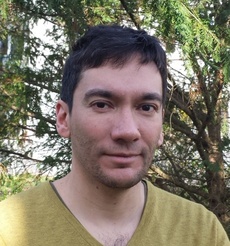
Dr. Nooshin Mohammadi Estakhri is an Assistant Professor at Chapman University in the Fowler School of Engineering (Electrical Engineering and Computer Science) and Schmid College of Science & Technology (Physics). She holds a Ph.D. from the University of Michigan and prior degrees from the University of Tehran. Her research focuses on quantum computing, photonics, and metamaterials. Education B.S. and M.S. in Electrical Engineering, University of Tehran Ph.D. in Applied Physics, University of Michigan Research Interests Quantum dot spin qubit systems Resonator-mediated quantum interactions Metasurface engineering for radiative cooling Machine learning applications in optical trapping Coherent wave scattering in disordered media Spin-orbit coupling and quantum interference Key Article Trends Quantum information processing in modular architectures Machine learning for nanoparticle design Phase-change materials in photonic control Decoherence mechanisms in spin qubit systems Wave dynamics in metamaterials Entanglement protocols with virtual photons Grants National Science Foundation Grant No. 2137776 U.S. Army Research Office Grant No. W911NF-23-1-0115
Ivan Fernandez-Corbaton is a Project Leader and Staff Scientist at the Institute of Nanotechnology, Karlsruhe Institute of Technology (KIT), where he leads research in the Theoretical Nanooptics unit. His position focuses on fundamental electromagnetic theory with applications in nanophotonics and metamaterials. His research centers on the systematic use of electromagnetic duality symmetry and its conserved quantity, electromagnetic helicity, to treat electromagnetic polarization degrees of freedom. This approach provides insights and design guidelines across diverse areas including zero backscattering, optical activity, metamaterials for transformation optics, and nanophotonic phenomena involving electromagnetic angular momentum. His work bridges theoretical physics with practical applications in chiral sensing, thermal radiation control, and light structuring technologies. Analysis of his recent publications reveals a strong focus on computational methods for electromagnetic problems, particularly the T-matrix formalism extended to polychromatic fields and complex geometries. His research increasingly integrates multi-scale approaches connecting quantum chemical simulations with classical electromagnetic modeling, especially for molecular nanomaterials and chiral structures. The work shows consistent theoretical depth with practical applications in sensing, light manipulation, and thermal radiation control. As a Staff Scientist, Fernandez-Corbaton collaborates extensively within KIT's Carsten Rockstuhl's Lab and with international partners. His research has significant implications for chiral molecule detection, photonic device design, and fundamental electromagnetic theory. He maintains active publication output with numerous preprints available on arXiv and ResearchGate, reflecting his commitment to open scientific communication.
Michael Haider is an Associate Professor at the Technical University of Munich within the TUM School of Computation, Information and Technology , specifically affiliated with the Chair of Computational Photonics (Prof. Christian Jirauschek). His work bridges quantum device modeling, stochastic electromagnetic field analysis, and advanced optoelectronic simulations. Research interests include: Quantum Cascade Lasers and Detectors Josephson Traveling-Wave Parametric Amplifiers Stochastic and Cyclostationary Electromagnetic Field Propagation Terahertz Technology and Frequency Comb Generation Computational Photonics and Microwave Modeling Principal Component Analysis for Electromagnetic Systems His recent publications focus on quantum amplification mechanisms, THz laser dynamics, and stochastic field modeling using Maxwell-Bloch frameworks. Collaborations with Prof. Jirauschek, Prof. Russer, and researchers at ETH Zürich and SPIE conferences highlight his interdisciplinary approach.
Professor Wen Hu is a distinguished academic at the School of Computer Science and Engineering at the University of New South Wales (UNSW), where he holds a professorship focusing on cutting-edge research in cyber-physical systems and the Internet of Things (IoT). With extensive experience in both academia and industry, Professor Hu has established himself as a leading researcher in sensor network systems, low-power communications, security, and compressive sensing. His work bridges theoretical research with practical applications, as evidenced by his active commercialization efforts through roles as Chief Technology Officer at Parking Spotz and former Chief Scientist at WBS Tech. Professor Hu's research interests span multiple domains within cyber-physical systems and IoT. His work particularly focuses on low-power wireless communications , sensor network security , compressive sensing techniques , and novel applications of IoT technologies . His research group explores how these technologies can be applied to solve real-world problems in areas such as smart buildings, environmental monitoring, and human-computer interaction. The research integrates hardware design, communication protocols, security mechanisms, and data analytics to create efficient and robust IoT systems. Professor Hu's publication record demonstrates a consistent focus on advancing the state-of-the-art in wireless sensor networks and IoT. His recent work shows increasing integration of machine learning techniques with traditional sensor systems, exploring applications in areas ranging from healthcare monitoring to agricultural technology. There's a clear trend toward more sophisticated signal processing approaches, particularly using mmWave technology and visible light communications, while maintaining the core focus on energy efficiency and security that has characterized his earlier work. CSIRO Office of Chief Executive (OCE) Julius Career Award (2012-2015) Professor Hu has successfully secured multiple research grants from the Australian Research Council, CSIRO, and industry partners, enabling his team to pursue ambitious research projects with both theoretical significance and practical applications. His editorial leadership as Editor-in-Chief of ACM TOSN and organizational roles in major conferences like CPS-IoT Week 2020 and ACM/IEEE IPSN 2023 demonstrate his significant contributions to the research community. As a senior member of both ACM and IEEE, he actively mentors students and early-career researchers while fostering collaborations across academia and industry. Professor Hu leads a vibrant research group at UNSW that combines theoretical research with practical implementation. His team works closely with industry partners to ensure research relevance and facilitate technology transfer. The group maintains strong connections with international research communities and participates in collaborative projects that address global challenges in IoT and cyber-physical systems.