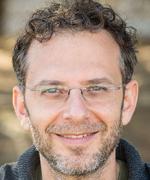
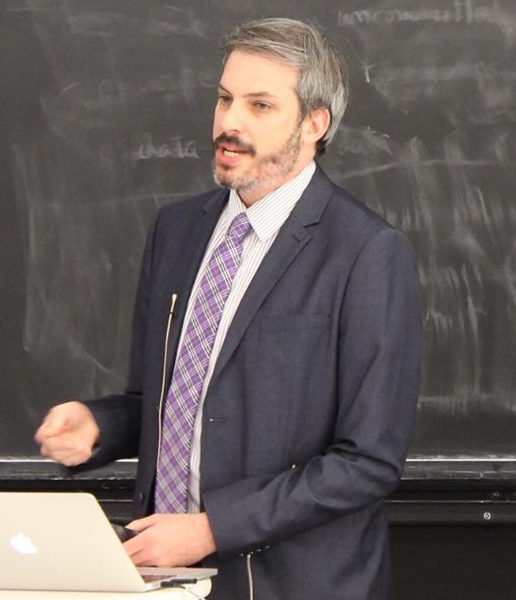
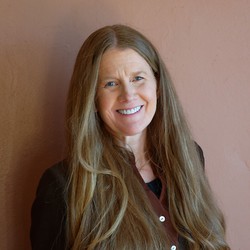
Aiko Pras is a Professor at the University of Twente in Enschede, Netherlands. His research spans network and service management, cybersecurity, and distributed systems, with a focus on DNS security, DDoS mitigation, IPv6, and software-defined networking. Research Interests: Network and Service Management Cybersecurity and DDoS Mitigation DNS Security and IPv6 Software-Defined Networking (SDN) Internet Measurement and Performance Critical Infrastructure Protection (ICS/SCADA) Article Trends: Pras's recent work emphasizes collaborative DDoS defense, DNS security, and IPv6 vulnerabilities. His studies often involve large-scale measurements and propose practical solutions for internet resilience and security. Collaborations: He frequently collaborates with Anna Sperotto, Roland van Rijswijk-Deij, and other experts in network security and measurement.
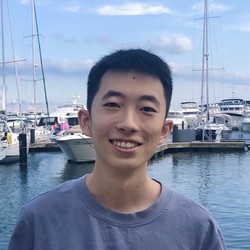
Yunming Xiao is an Assistant Professor at the School of Data Science, The Chinese University of Hong Kong (CUHK), Shenzhen. Previously, he served as a Research Fellow at the University of Michigan and earned his Ph.D. in Computer Science from Northwestern University in 2024. His research focuses on computer systems, networks, and security, with emphasis on security and privacy of Internet services and performance optimization of cloud infrastructure. His work has been recognized with the Best Paper Award at APNet and Best Student Paper Award at ACM EuroSys. Education: Ph.D. in Computer Science, Northwestern University (2024) B.Eng. in Computer Science, Beijing University of Posts and Telecommunications (2019) His research bridges cloud infrastructure and security, where projects like SwiftRDMA, Conspirator, and MegaTE demonstrate innovative approaches to resource scheduling, SmartNIC integration, and traffic engineering at scale. These works highlight his focus on solving real-world performance and security bottlenecks in distributed systems. Scientific Awards: Best Paper Award, APNet'25 Best Student Paper Award, ACM EuroSys'24 Yunming actively collaborates with industry, having interned at Google, Hewlett Packard Labs, Nokia Bell Labs, and Bytedance. He serves on TPCs for major conferences including CCS'26, IMC'26, and IEEE S&P'26.
Alberto Dainotti is an Associate Professor at the School of Computer Science, College of Computing, Georgia Institute of Technology (Georgia Tech), and Director of the Internet Intelligence Lab. His research focuses on Internet measurement, data science, and cybersecurity, with a particular emphasis on infrastructure reliability and socio-political implications of cyber events. Before joining Georgia Tech in 2014, he served as an Associate Research Scientist and Principal Investigator at CAIDA (Center for Applied Internet Data Analysis) at UC San Diego. He holds a Ph.D. in Computer Engineering and Systems from the University of Napoli 'Federico II', Italy (2008). He teaches courses such as Internet Data Science (CS 8803), Computer Networking I (CS 3251), and Computer Networks/Networking II (CS 6250/4251). Current students include Feng Zhu, Iliana Xygkou, Olivier Bemba, Weili Wu, Zahra Yazdani, and Zhiyi Chen. Former advisees have transitioned to roles at Amazon AWS Research, Northeastern University, UC Davis, Microsoft Azure, and VMware, among others. Research Interests: Internet Connectivity Outages & Mitigation BGP Routing Security & Monitoring Cybersecurity in Political Contexts Address Space Utilization DDoS/Botnet Analysis Network Measurement Tools Scientific Contributions: Developed systems like IODA, BGPStream, and GRIP for real-time Internet monitoring Recipient of the IRTF Applied Networking Research Prize (2012, 2017) Awarded Best Dataset (PAM 2022) and Best Community Artifact (PAM 2023) Authored over 50 publications in top venues including SIGCOMM, IMC, and NSDI Grants & Funding: National Science Foundation (NSF) grants CNS-1705024 / 2202288 and CNS-1703592 US Department of Homeland Security Cisco Systems, Comcast, ISOC, Google, and Open Technology Fund Labs & Collaborations: Internet Intelligence Lab (Georgia Tech) CAIDA collaboration (UC San Diego) MAPKIT project with University of Wisconsin-Madison Contributor to OECD and BITAG reports on routing security
Marco Polverini is an active computer networking researcher with a prolific publication record spanning over a decade, with 59 publications documented from 2012 to 2025. His work primarily focuses on advanced networking technologies including Segment Routing, Software Defined Networking, and Network Function Virtualization. His research interests center around network routing optimization, traffic engineering, and network monitoring. He has made significant contributions to Segment Routing technology, developing novel behaviors for low-latency communication, black hole detection mechanisms, and traffic matrix assessment techniques. His recent work integrates artificial intelligence approaches, particularly reinforcement learning, with traditional networking protocols to create more adaptive and efficient network systems. He has also been exploring the application of Digital Twin technology for network management and optimization. Analysis of his publication trends shows a clear evolution from foundational work on energy-efficient networking and traffic engineering to more recent innovations in Segment Routing, in-band network telemetry, and AI-driven network optimization. His publications consistently appear in top networking venues including IEEE JSAC, IEEE Transactions on Network and Service Management, INFOCOM, and NOMS, demonstrating his standing within the networking research community. Throughout his career, Polverini has maintained strong collaborative relationships, particularly with Antonio Cianfrani (54 joint publications), Marco Listanti (33 publications), and Francesco Giacinto Lavacca (16 publications), suggesting he works within a well-established research group focused on next-generation networking technologies.
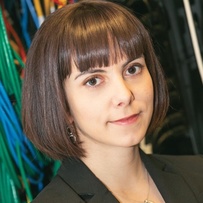
Stephanie Forrest is a Professor of Computer Science at Arizona State University and serves as Director of the Biodesign Center for Biocomputation, Security and Society . She holds affiliations with the School of Computing and Augmented Intelligence , Global Futures Laboratory , and Santa Fe Institute External Faculty . Education: B.A. from St. John's College M.S. and Ph.D. in Computer Science from the University of Michigan Research Interests: Forrest specializes in the intersection of biology and computation , with key contributions to cybersecurity (anomaly detection, instruction-set randomization), automated software repair (evolutionary methods), and biological modeling (immune systems, SARS-CoV-2 spread). Her work bridges complex adaptive systems , AI/ML , and defense applications . Scientific Contributions: 2020 IEEE S&P Test of Time Award 2019 ICSE Most Influential Paper Award 2011 ACM/AAAI Allen Newell Award NSF Presidential Young Investigator (1991) IEEE Fellow Evolutionary Computation Pioneer award Publications & Grants: Her research appears in top venues (ICSE, IEEE S&P, PNAS) and is funded by the National Science Foundation , DARPA , Air Force Research Lab , and Santa Fe Institute . Key projects include Crispy (CRISPR-inspired DoS defense), GenProg (automated bug correction), and SIMCoV-GPU (agent-based pandemic modeling).
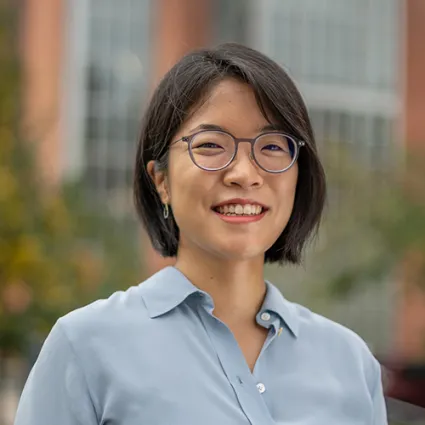
Shinyoung Cho is an Assistant Professor of Computer Science at Smith College. Her contact information includes email scho@smith.edu and phone number 413-585-3847, with an office located in Ford Hall 356. Dr. Cho's research focuses on network security, privacy, and network measurements. She utilizes various algorithms and global continuous in-depth measurements to detect and mitigate malicious actions performed by network-level entities such as autonomous systems. Her work specifically targets attacks on accessibility, security, and anonymity. The 'detecting' aspect of her research investigates when network protocols are repurposed for Internet censorship and when network traffic hijacking occurs. The 'mitigating' portion focuses on threats that prey on the vulnerability of the Tor network. Dr. Cho's publication record demonstrates expertise in Internet censorship measurement, BGP hijacking classification, network proxy geolocation, and censorship localization techniques. Her research combines network measurement techniques with security analysis to address critical internet infrastructure vulnerabilities, with publications spanning from 2017 to 2020 in top security and networking venues. Her educational background includes: Ph.D. from Stony Brook University M.Sc. from Sungkyunkwan University B.Eng. from Baekseok University During her doctoral studies, she gained valuable research experience as a visiting researcher at the University of Massachusetts, Amherst; IIJ research lab in Japan; and CAIDA at the University of California San Diego.
Phillipa Gill is an Adjunct Associate Professor at the University of Massachusetts Amherst and a Research Scientist at Google, focusing on the Measurement Lab Project. She holds a Ph.D. in Computer Science from the University of Toronto (2012) and completed a postdoctoral fellowship at the Citizen Lab, Munk School of Global Affairs. Her research emphasizes computer networking and security, particularly network measurement techniques to study online information controls, routing security, and traffic differentiation. Education: Ph.D. in Computer Science, University of Toronto (2012) Postdoctoral Fellowship, Citizen Lab, University of Toronto (2012–2013) M.Sc. in Computer Science, University of Calgary (2007–2008) Bachelor’s Degree (not explicitly stated) Research Interests: Gill’s work addresses network interference, reliability, and security. She develops tools like the ICLab platform for measuring online censorship and collaborates across disciplines, including law and political science. Recent projects include analyzing China’s DNS censorship and evaluating domain name encryption privacy. Key Activities: General co-Chair, ACM Internet Measurement Conference (2016) Program co-Chair, USENIX FOCI (2015) and ACM CoNEXT Student Workshop (2013) Area Editor, ACM SIGCOMM Computer Communications Review (2013–2015) Awards: NSF CAREER Award, Google Research Award Best Paper Awards at IMC (2013) and PAM (2008) IBM Best Presentation Award (Cloud Computing) Anita Borg Fellowship finalist (2009–2010) Labs & Outreach: Leads the ICLab and Calipr Research Group. Co-founded the LED-Programming-Workshop to engage pre-college students in programming and STEM. Active in promoting diversity, such as hosting Women in Computer Science events.
Afsah Anwar is a tenure-track Assistant Professor in the Department of Computer Science at the University of New Mexico (UNM), Albuquerque, leading the Beyond Defense Lab focused on Internet security, malicious activity analysis, and incident response frameworks. Her work bridges technical cybersecurity research with societal impact assessment. Her research spans Malware Analysis, Threat Intelligence, and Vulnerability Management, with specialized expertise in Machine Learning-based defenses for IoT/mobile platforms, Internet censorship measurement, space security, and web fraud detection. The lab emphasizes real-world applicability through tools that address concept drift in malware detection and robustness against adversarial attacks. Analysis of her 2020-2025 publications reveals dominant themes: IoT malware robustness under adversarial conditions (40% of output), Internet measurement studies including censorship and routing security (30%), and vulnerability database refinement (15%). Key methodologies integrate graph-based analysis, time-series measurement, and multimodal LLMs for interpretable security reasoning. Scientific Awards: Best Paper Award at WISE 2024 Research Grants: NSF SaTC Medium grant (August 2025) on VPN security with Roya Ensafi (UMich) and Jed Crandall (ASU) Advising: PhD Students: Enrique Sobrados (Mobile Security), Ramsha Anwar (Mobile Security/Privacy), Dheeman Saha (Censorship/Internet Measurement; co-advised) Master's: Jack Vanlyssel (NSF SFS Scholar, Space Security), Muhammad Danish (Web Security; CRA Outstanding Undergraduate) Undergraduate: Muneeb Ahmad (AI/Cybersecurity) Mentorship: Weekly CTF events, Sandia National Labs collaborations (Ross, Doakes, Hassan), and dedicated support for students from Bihar, India The Beyond Defense Lab operates from Farris Engineering Center #2150, hosting industry experts (e.g., Meta's Dr. Abusnaina, X's Dr. Saad) and developing healthcare security frameworks with Dr. Sazzadur Rahman. Current projects include Russian censorship analysis using time-series methods and multimodal LLMs for vulnerability reasoning (LLaVul).
Ethan Katz-Bassett is an Associate Professor in the Electrical Engineering Department at Columbia University, with an affiliation in the Computer Science Department. He is also a member of the Computer Engineering Program and the Data Science Institute's Sense, Collect and Move Data Center. Previously, he held the Andrew and Erna Viterbi Early Career Chair at the University of Southern California, where he led a networking and systems research group. His research focuses on improving the reliability and performance of Internet services through measurement-driven system design, with a focus on networks, distributed systems, and cloud infrastructure. Affiliations: Columbia University (Current), University of Southern California (Former) Key Projects: Edge Fabric (Facebook), Sibyl (Route Oracle), PoiRoot (Route Change Analysis), Odin (Microsoft CDN) His research interests include Internet measurement, routing optimization, content delivery networks (CDNs), TCP performance, and mobile web performance. He has pioneered tools like PEERING, a BGP testbed for scalable experiments, and developed systems such as LIFEGUARD for network failure detection. His work often bridges academia and industry, with collaborations at Google, Microsoft, and Facebook. Ethan has received numerous awards, including the SIGCOMM Rising Star Award (2019), IETF Applied Networking Research Prize (2019), and NSF CAREER Award (2014). His funding includes grants from Google, Facebook, Comcast, and the NSF. He holds a Ph.D. from the University of Washington, advised by Tom Anderson and Arvind Krishnamurthy. Grants and Labs: Works with the M-Lab, RIPE Atlas, and SpeedChecker platforms. Current funding includes Google Faculty Awards, an M-Lab grant, and NSF support.
Marco Chiesa is an Associate Professor at the KTH Royal Institute of Technology in the Intelligent Network System Lab (INSight) group under the Division of Software and Computer Systems . His research focuses on computer networking, particularly Internet protocols and architectures, with emphasis on security, privacy, network design optimization, and Software Defined Networking (SDN) approaches. Current research areas: SDN, IXPs, stateful packet processing, network monitoring Teaching roles: Advanced Internetworking (IK2215), Computer Hardware Engineering (IS1200), Network Systems with Edge or Cloud Datacenters (IK2227) Email: mchiesa@kth.se Recent publications highlight advancements in high-speed packet processing, network security, and SDN applications. Key trends include leveraging programmable switches for stateful operations, improving BGP hijacking detection, and optimizing network monitoring on multi-pipeline architectures.
Masato Uchida is a Professor at the School of Fundamental Science and Engineering, Waseda University, with a focus on information security and network systems. His career spans roles at Chiba Institute of Technology and Kyushu Institute of Technology, and he holds degrees in Engineering from Hokkaido University. Education: Master of Engineering (Hokkaido University, 2001), Doctor of Philosophy (Hokkaido University, 2005) His research interests include network security, peer-to-peer systems, machine learning for cybersecurity, and traffic analysis. His work addresses anomaly detection, malware classification, and resource allocation fairness in networks. Recent publications analyze adversarial machine learning, cloud service abuse, and domain parking security. Uchida's articles demonstrate expertise in cybersecurity, network modeling, and data science. He has received multiple awards for research excellence, including IEEE Outstanding Paper Awards and IEICE Communications Society honors. His leadership in committees like the Ministry of Internal Affairs and Communications' technical task forces highlights his policy influence. Scientific Awards: Outstanding Paper Award, IEEE International Conference on Teaching, Assessment, and Learning for Engineering (2020) MWS Outstanding Paper Award, Computer Security Symposium (CSS 2020) IEICE Activity Contribution Award (2016) Best Poster Award, SCIS & ISIS (2014) IEICE Network Systems Research Award (2012) He advises students in cybersecurity and collaborates on projects involving traffic load balancing, Android malware analysis, and cloud security. His professional memberships include IEEE, ACM, and the Information Processing Society of Japan.
Dr. Anna Sperotto is an Associate Professor in Proactive Network Security at the University of Twente's Design and Analysis of Communication Systems (DACS) group. She holds a PhD in Computer Science (2010) and MSc/BSc degrees from Ca' Foscari University. Research Focus: Internet security, network measurements, DDoS attacks, DNS infrastructure vulnerabilities Projects: MASCOT (2019), MADDVIPR (NWO-DHS), TIDE (SIDNfonds), H2020 CONCORDIA Her recent publications examine DNS reflection attacks, DDoS mitigation, and network security through active measurement systems. Key trends include DNSSEC security analysis, domain hijacking prevention, and cryptographic efficiency in network protocols. Scientific Awards: Best Paper at IMC 2020 and EUNICE 2009 IRTF Applied Networking Research Prizes (2015, 2013) Academic Service: General Co-Chair, IMC 2019 TPC Co-Chair, PAM 2020 Steering Committee: TMA, AIMS Editorial roles in ACM SIGCOMM CCR, IJNM, JNSM Current PhD Students: Matteo Liberato Sousan Tarahomi Etienne Khan Ramin Yazdani Raffaele Sommese
Dr. Kimberly C. Claffy (aka kc claffy) is a Principal Investigator at the Center for Applied Internet Data Analysis (CAIDA), Senior Research Scientist at the UC San Diego Supercomputer Center (SDSC), and Adjunct Professor in UC San Diego's Computer Science and Engineering Department. Her work focuses on Internet infrastructure analysis, security, and data sharing. Ph.D. in Computer Science and Engineering, UCSD (1994) M.S. in Computer Science and Engineering, UCSD (1991) B.S. in Symbolic Systems, Stanford University (1989) Research interests span Internet infrastructure security, routing and addressing systems, network measurement methodologies, differential privacy applications, DNS vulnerability analysis, and trust frameworks for secure networking. She leads CAIDA's efforts in global Internet health assessments. Recent publications analyze IPv4 leasing markets, BGP data collection platforms, DNS security mechanisms, and darknet traffic analytics. Articles emphasize empirical methods for improving routing security, network hygiene, and policy implications of measurement data. Scientific recognition includes: Internet Hall of Fame 2019 π Person of the Year, SDSC 2018 Jonathan B. Postel Service Award, Internet Society 2017 Dr. Claffy contributes to CAIDA's infrastructure development, collaborates with institutions like AT&T, Federal Reserve Board, and University of Oregon's RouteViews project, and serves as an expert witness for the Federal Communications Commission.
Philip Brighten Godfrey is a Professor in the Department of Computer Science at the University of Illinois at Urbana-Champaign (UIUC) and Technical Director at VMware (formerly Broadcom). He co-founded network verification startup Veriflow, which was acquired in 2019. His research focuses on networked systems, blending theoretical and practical approaches to low-latency networking, software-defined architectures, microservices communication, and machine learning for network optimization. Education: Ph.D. in Computer Science (UC Berkeley, 2009), B.S. in Computer Science (Carnegie Mellon, 2002) His work spans data center design, network verification (e.g., VeriFlow), congestion control (PCC Vivace), and innovative projects like cISP (Speed-of-Light Internet). Recent publications address microservice tracing (TraceWeaver), fault localization (Flock), and XR device offloading (XRgo). Notable awards include the ACM SIGCOMM Rising Star Award, NSF CAREER Award, Sloan Research Fellowship, and multiple best paper recognitions. He has chaired SIGCOMM and HotNets, and his teaching excellence in courses like CS 538 Advanced Computer Networks has been repeatedly recognized. Scientific Honors ACM SIGCOMM Rising Star Award NSF CAREER Award (2012) Sloan Research Fellowship (2014) Best Paper Awards (SIGCOMM, HotSDN, CoNEXT) IEEE ComSoc Data Storage Best Paper Engineering Council Outstanding Advisor Award (2015) Godfrey leads research in the Coordinated Science Laboratory (CSL) and contributes to the LDOS NSF Expeditions project. His group advises Ph.D. students on topics ranging from network verification to XR systems optimization, with alumni now at Meta, Google, and academic institutions like ETH Zurich.
Cecilia Testart is an Assistant Professor at Georgia Institute of Technology, holding joint appointments in the School of Cybersecurity and Privacy and the School of Computer Science. Her research focuses on internet protocols, network security, and policy, emphasizing data-driven approaches to improve security and societal alignment. She earned a Ph.D. in Computer Science from MIT, alongside a master’s in Technology and Policy, and holds engineering degrees from Universidad de Chile and École Centrale Paris. Her research explores how internet protocols evolve and interact with societal expectations. Notable contributions include work on RPKI adoption and routing security, recognized with a Distinguished Paper Award at ACM IMC 2019. She co-organized workshops on routing security and policy-relevant internet measurement, and serves on program committees for SIGCOMM and IMC. She leads the Internet and Society Lab and is part of the Internet Intelligence Lab. Her awards include the PAM 2023 Best Community Artifact Award for work on sibling ASes. She advises students, including Deepak Gouda, and has affiliations with Inria, .CL, Akamai, MSR, and the OECD. Her work bridges technical and policy challenges to enhance internet reliability and security.