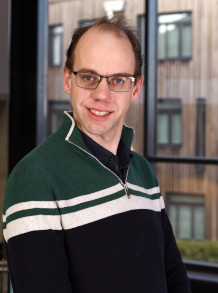
Professor Nir Oren is a faculty member at the School of Natural and Computing Sciences , University of Aberdeen. His research focuses on multi-agent systems , formal argumentation , computational trust theory , and norm-based reasoning . He currently supervises PhD students in Computing Science and serves as Dean for Research Performance. Research Specialisms: Artificial Intelligence, Operational Research Contact: n.oren@abdn.ac.uk Research Trends (2022–2025): Nir Oren's publications span argumentation theory , BDI agent modeling , resilience in autonomous systems , and human-machine collaboration . His recent work addresses responsibility-aware AI , medical explainability , and environmental sensor networks . Key methods include probabilistic reasoning , game theory , and logical formalisms .
Felipe Meneguzzi is a Professor of Computing Science at the University of Aberdeen, where he leads research in automated planning, goal and plan recognition, multiagent systems, BDI agents, and machine learning. He also holds a Bridges Professorship at the Pontifical Catholic University of Rio Grande do Sul (PUCRS) in Brazil and leads the Group on Artificial Intelligence at PUCRS. He is a Senior Member of the ACM and AAAI. PhD in Artificial Intelligence (2009) from King's College London Postdoctoral Fellowship at Carnegie Mellon University His research spans theoretical and applied artificial intelligence, with a focus on automated planning, decision-making in autonomous agents, and AI applications in neuroscience. He has contributed to landmark-based methods in plan recognition, generalized decision-making in BDI agents, and clinical AI for autism spectrum disorder detection. Key publications include: Landmark-based approaches for goal recognition as planning (IJCAI 2024) Empowering BDI Agents with Generalised Decision-Making (AAMAS 2024) Identification of autism spectrum disorder using deep learning (Neuroimage: Clinical, 2017) Visually-impaired accessibility application via CNNs (IJCNN 2017) Norm conflict identification with deep learning (AAMAS 2017 workshop) Scientific honors include: Best SPC member at AAMAS 2021 Blue-Sky Paper award at AAMAS 2024 Google Research Awards for Latin America (2016, 2019) Runner-up for Microsoft Research Faculty Fellowship (2013) CNPq Highly Productive Researcher Fellowship (Brazil) As an advisor, he supervised Ramon Pereira's MSc dissertation and PhD thesis, both recognized as top works in Brazilian AI. He actively mentors students in automated planning, machine learning, and multiagent systems through projects like the final year project repository and the graduate student repository .
Andreas Holzinger is a Professor at Graz University of Technology, with additional affiliations at Medical University Graz and University of Natural Resources and Life Sciences Vienna in Austria. He is recognized as an IFIP Fellow (2021) for his significant contributions to information processing and computer science. His work spans multiple institutions across Europe, with notable collaborations extending to the University of Alberta in Canada. Professor Holzinger's research focuses on Human-Centered AI, Explainable AI (XAI), and their practical applications across diverse domains. His work bridges theoretical AI advancements with real-world implementations in healthcare, forestry, and human-robot interaction. He has pioneered approaches in counterfactual explanations, graph neural networks, and human-in-the-loop systems that emphasize transparency and trustworthiness in AI decision-making processes. His recent publications demonstrate a strong trend toward integrating large language models with traditional AI systems while maintaining explainability. Holzinger's work consistently emphasizes the human element in AI systems, ensuring that technological advancements serve human needs rather than obscuring decision processes. His research in medical AI, smart forestry, and agricultural applications shows a commitment to solving practical problems with human-centered technological solutions. Scientific Awards: IFIP Fellow (2021) Professor Holzinger has been instrumental in establishing design guidelines for explainable AI systems, particularly through his work on post-hoc versus ante-hoc explanations. His research on Kandinsky Patterns has provided valuable experimental frameworks for pattern analysis and machine intelligence. He has secured significant research funding for projects bridging AI with practical applications in healthcare and environmental monitoring. His leadership extends to the organization of major conferences and workshops, including the CD-MAKE conference series, where he has fostered interdisciplinary collaboration between AI researchers and domain experts. His work on the CLARUS platform demonstrates practical implementations of interactive explainable AI for medical applications.
Michael Fisher is the Royal Academy of Engineering Chair in Emerging Technologies and Professor of Computer Science at the University of Manchester. He also holds an Honorary Professorship at the University of Liverpool (2020–2023). His research focuses on autonomous systems, formal verification, robotics ethics, and AI safety. Fisher leads projects such as the Centre for Robotic Autonomy in Demanding Environments (CRADLE) and contributes to IEEE standards for fail-safe autonomous systems. He is a Senior Associate Editor of the Annals of Mathematics and Artificial Intelligence and co-chair of the IEEE Verification of Autonomous Systems committee. His work integrates formal methods with robotics, emphasizing ethical reasoning and assurance in autonomous systems. Key research interests include temporal logic, model checking, and the verification of robotic decision-making. Fisher has received Best Paper Awards in 2018 and 2014, recognizing contributions to human-robot team validation and ethical reasoning frameworks. Fisher’s projects span space robotics, industrial automation, and safety-critical systems. He collaborates with industry partners like Amentum and advises the UK government on AI and robotics policy. His recent work explores neuro-symbolic AI integration and compositional verification for modular robotic systems.
Ricardo Azambuja Silveira is a Professor at the Federal University of Santa Catarina, Brazil, with a distinguished research career spanning over two decades in the fields of multi-agent systems, intelligent tutoring systems, and semantic web technologies for education. His work bridges artificial intelligence with educational technology, creating innovative frameworks for adaptive learning environments and intelligent educational agents. Dr. Silveira's research interests focus on developing agent-based approaches to enhance educational experiences through technologies like BDI (Belief-Desire-Intention) architectures, ontology-based systems, and multi-context reasoning. His work particularly emphasizes the integration of intelligent agents with learning management systems to create personalized educational experiences. His recent publications demonstrate a continued evolution from foundational multi-agent frameworks to sophisticated neural-symbolic integrations and context-aware educational technologies. Throughout his career, he has published over 60 scholarly works, with consistent output from 2001 through 2024, demonstrating sustained research productivity. His publication trends show a clear trajectory from early work on JADE (Java Agent Development Framework) for distance education to current research on neural-symbolic integration in agent systems. The majority of his publications appear in prominent conferences like PAAMS, MICAI, and ICAART, reflecting his standing in the multi-agent systems community. Dr. Silveira has mentored numerous researchers who have become his frequent collaborators, including Arnoldo Uber Junior, Rodrigo Rodrigues Pires de Mello, and Thiago Ângelo Gelaim. His research has been supported through various academic grants that enabled the development of frameworks like Sigon (a multi-context system framework) and iEnsemble (for committee machine learning). He has been actively involved in the organization of academic events, particularly the Methodologies and Intelligent Systems for Technology Enhanced Learning (MIS4TEL) conference series, where he has served as both participant and organizer. His work contributes significantly to the theoretical foundations and practical implementations of intelligent educational technologies.
Professor Michael Winikoff is a prominent academic at Victoria University of Wellington's School of Information Management, where he joined in June 2019 and served as Head of School from early 2021 to early 2025. Previously, he was Head of Department at University of Otago's Department of Information Science (February 2011 to December 2016) and Associate Professor at RMIT University's School of Computer Science and IT. His career spans over two decades of research in autonomous systems and agent-oriented software engineering. His educational background includes a PhD from the University of Melbourne (1994-1997). His research focuses on improving software creation methodologies, particularly for intelligent agents that exhibit robust and flexible behavior. He is best known for developing the Prometheus methodology for agent-based systems design. More recently, his work has expanded to address societal consequences of autonomous systems and trust issues, with significant contributions to explainable AI (XAI). His publication record demonstrates consistent contributions to autonomous systems research, with recent work focusing on explainability frameworks, trust calibration, and certification of reliable autonomous systems. His 15 most recent publications (2018-2025) show a clear evolution from technical agent design toward broader societal implications, particularly the intersection of technical design and human trust in autonomous systems. The publications span journals like Artificial Intelligence and IEEE Internet Computing, as well as major conferences including AAMAS. Past President of International Foundation for Autonomous Agents and Multiagent Systems (IFAAMAS) Co-Editor-in-Chief of Journal of Autonomous Agents and Multi-Agent Systems (JAAMAS) Chair of ICORE rankings management committee Editor-in-Chief for International Journal of Agent-Oriented Software Engineering (IJAOSE) Vice President of Computing Research and Education Association of Australasia (CORE) Professor Winikoff has led significant research projects funded by the Australian Research Council, including work on adaptive personae for interactive toys, service-oriented negotiation in multi-agent systems, and advanced software engineering for intelligent agent systems. His current research continues this trajectory, focusing on making autonomous systems more explainable and trustworthy through engineering approaches that consider both technical and human factors. He maintains active collaborations across institutions, with recent work involving researchers from RMIT University and other international partners.
Dr. Ram Bhusal is an NHMRC Investigator Fellow in the Biomedicine Discovery Institute (BDI) at Monash University. His research focuses on tick salivary proteins (evasins) and their role in inhibiting human chemokines for anti-inflammatory therapeutic development. He also explores evolutionary mechanisms of evasins to understand protein sequence-structure-function relationships. Dr. Bhusal holds a PhD in Chemical Biology from the University of Auckland (2014–2018), a master’s in Medicinal Chemistry from Wonkwang University (South Korea), and a bachelor’s in Pharmaceutical Sciences from Pokhara University (Nepal). Research interests include structural biology of chemokine interactions, protein engineering for therapeutics, and tuberculosis metabolism. He leads projects like 'Harnessing ticks' tricks to develop therapies for inflammatory diseases' and collaborates internationally. Awards include NHMRC Fellowships and travel grants for conferences. Dr. Bhusal accepts PhD students and has contributed to over 24 publications since 2010, spanning structural biology, drug discovery, and food science. Education: PhD (Chemical Biology): University of Auckland (2014–2018) MSc (Medicinal Chemistry): Wonkwang University (South Korea) BSc (Pharmaceutical Sciences): Pokhara University (Nepal) Awards: NHMRC Investigator Fellow (Monash University) Australian Peptide Conference Travel Award (2022) BDI ECR Support Fund (2022) Biomedicine Discovery Institute Travel Grant (2021) Projects: Suppression of Treg Recruitment in Cancer Immunotherapy (2025–2028) Harnessing ticks’ tricks for anti-inflammatory therapies (2024–2028) Research outputs highlight structural studies of evasins, probiotic effects on food systems, and tuberculosis enzyme mechanisms. His work bridges basic science and translational medicine, addressing global health challenges like inflammatory diseases and antimicrobial resistance.
Moharram Challenger is a tenure-track Assistant Professor in the Department of Computer Science at the University of Antwerp's Faculty of Sciences. Previously, he served as an assistant professor at Ege University (2017-2018) and as a post-doctoral researcher at the University of Antwerp (2019-2020) working on Flanders Make projects PACo and DTDesign. His academic journey includes R&D leadership roles at UNIT IT Ltd. (2012-2016), post-doctoral research at Wageningen University (2016-2017), and tenure-track faculty positions at IAU-Shabestar University (2005-2009). His research spans Cyber-physical Systems , Multi-agent Systems , and Domain-specific Modeling Languages , with recent publications focusing on quantum machine learning, digital twinning, and IoT optimization. Key projects include ITEA ModelWriter, ITEA Assume, and Flanders Make initiatives. His work demonstrates strong integration of model-driven engineering with emerging technologies like quantum computing and reinforcement learning. Challenger actively contributes to the academic community as a member of IEEE and ACM . His publication record shows consistent output across top venues, with 2025 featuring significant work in quantum-enhanced learning and CPS security. Current research emphasizes practical applications in drone energy modeling, medical diagnostics, and industrial IoT systems. His advising activities focus on cyber-physical systems and agent-based modeling, supported by grants from TUBITAK and Flanders Innovation & Entrepreneurship. Key collaborations include European ITEA projects and partnerships with industrial entities through UNIT IT Ltd. Challenger maintains active development through GitHub repositories related to code refactoring, model-driven engineering, and legacy system modernization, reflecting his commitment to practical software engineering solutions.
Simon Foster is a Senior Lecturer in the Department of Computer Science at the University of York. His research focuses on formal methods, theorem proving (using tools like Isabelle/HOL and Agda), and the verification of cyber-physical systems. He holds a PhD and MComp from the University of Sheffield. Research Interests: Foster specializes in formal semantics, unifying theories of programming, and functional programming. His work addresses challenges in verifying complex systems, including robotic control software and safety-critical applications. He has contributed to projects like CyPhyAssure and RoboCalc, emphasizing assurance case generation and probabilistic modeling. Recent Work Trends: His recent publications (2022–2025) emphasize scalable verification techniques for cyber-physical systems, probabilistic modeling, and formal verification of robotic systems using Isabelle/HOL. Key themes include hybrid systems theorem proving, assurance case automation, and the integration of formal methods with robotic state machines. Grants & Projects: He led the CyPhyAssure project (2018–2021) and contributed to the H2020 INTO-CPS initiative. His roles include Research Fellowships in safety-critical systems and model-driven architectures. Labs & Teams: Active in the High Integrity Systems group at York, focusing on formal methods for safety-critical systems and collaborative tool development for systems engineering.
Jun Yan is a Professor at the University of Wollongong's School of Computing and Information Technology within the Faculty of Engineering and Information Sciences. His roles include academic leadership and research supervision, with active involvement in committees like the Student Academic Experience Sub-Committee and Quality Assurance Review Group. Current research focuses on service-oriented computing, workflow technology, adaptive process management, and AI-driven systems. His work intersects with IoT, UAV systems, federated learning, and multi-agent reinforcement learning. Research interests span service-oriented software engineering, decentralized workflow management, and cybersecurity challenges in autonomous systems. Notable projects include an ARC-funded initiative on robust defenses against adversarial ML for UAV systems (2025–2027). He supervises Masters/PhD projects on topics like diffusion model-based MRI, graph prompt learning, and industrial defect detection. His publications from 2023–2025 emphasize scalable multi-agent systems, federated learning with non-IID data, and UAV applications in intelligent transportation. Key areas of contribution include trust models for e-commerce, privacy-preserving cloud computing, and fault-tolerant service architectures.
Professor Emma Norling is a Professor of Engineering Education and Director of Education in the School of Computer Science at the University of Sheffield. She holds a BEng (Hons) from the University of Melbourne and a PhD in Computer Science from the University of Sheffield. Her career includes postdoctoral work at Manchester Metropolitan University's Centre for Policy Modelling and a lecturing role at its School of Mathematics, Computing and Digital Technology. Her research focuses on agent-based systems, particularly cognitive and social simulations, with an emphasis on integrating social intelligence into computational models. She leads the Teaching Specialists group and oversees accreditation and professional institution relations. Key roles include directing educational strategy and promoting pedagogical innovation in engineering and computing education. Her publications highlight contributions to agent-based modelling methodologies, emergency response systems, and social simulation frameworks. Notable works include studies on food web evolution, morphogenetic network growth for emergency teams, and the application of BDI agents in human behavior modelling. She actively engages with interdisciplinary approaches, bridging computer science with education and social sciences. Professional service includes leading educational accreditation efforts and fostering collaboration between academia and industry. She is a sought-after expert in computational models of human behavior and their implications for educational technology and societal systems.
Professor Sebastian Sardina is a Professor in Artificial Intelligence at RMIT University's School of Computing Technologies. He holds a Bachelor's from South National University (Argentina) and a PhD from the University of Toronto (Canada). His research focuses on AI for dynamic systems, including automated planning, knowledge representation, and agent-oriented programming. He has contributed to enhancing agent programming languages with learning capabilities and advanced AI planning techniques. His work frequently appears in top AI venues like IJCAI and AAAI, with notable best paper nominations. Teaching interests include foundational CS courses such as Theory of Computation and Intro to AI. He actively promotes computational thinking through workshops for youth and educators, including roles in Victorian curriculum development (VCE Algorithmics). Supervision projects span hand gesture recognition, autonomous vehicle safety, and goal recognition in path-planning. His research has been presented globally and applied across domains like aviation safety, manufacturing systems, and healthcare. Recent trends in his publications emphasize goal recognition techniques (e.g., process mining applications), agent behavior modeling, and interdisciplinary AI applications in healthcare and automotive engineering. He has collaborated with industry and academic partners internationally, contributing to both theoretical advancements and practical AI solutions. Scientific Recognition: Multiple best paper nominations in AI conferences. Community Engagement: MAV conference presenter, VCAA Algorithmics curriculum panel member (2023). Supervision: Active mentor for 4+ research projects in AI planning and recognition.
Thomas C Henderson is a tenured Professor at the School of Computing within the College of Engineering at the University of Utah. His research focuses on autonomous systems , computational models , and intelligent machine systems , with specific interests in biosystem simulation, distributed systems, and adaptive algorithms. He has contributed to Bayesian sensor networks , UAS traffic management , and probabilistic logic frameworks for intelligent agents. Current academic appointments since 1989 Adjunct roles in Biomedical Engineering Active in IEEE committees (2024-2025) Research trends in recent publications emphasize autonomous aircraft coordination , probabilistic reasoning , and multi-sensor integration . Key subfields include lane-based airspace modeling, reinforcement learning for UAS, and pseudogradient navigation techniques. His work has received recognition through a Best Paper Award (IEEE 2008) and the US Air Force Summer Faculty Fellowship . Strategic deconfliction protocols Dynamic data-driven applications Structural health monitoring systems He actively mentors undergraduate research through courses like Deep Learning Capstone and Senior Capstone Design . Current grants include "Deep Learning in AI and Robotics" (2024-2029) and "Robust Reasoning using Geometric SAT/PSAT" (2022-2023).
Andrei Ciortea is an Assistant Professor in Interaction and Communication based Systems at the University of St. Gallen, affiliated with the ICS-HSG (Interaction and Communication Systems) department. His research focuses on Internet-scale multi-agent systems, hypermedia systems, the Web of Things, and socio-technical systems. He explores topics such as autonomous agents, hypermedia environments, and the integration of digital twins in industrial automation. Key research interests include the design of adaptive coordination mechanisms, affordance-driven interaction models, and semantic hypermedia search. His work emphasizes practical applications in manufacturing, energy systems, and sustainable design. Notable contributions include the HyperBrain project leveraging large language models for human-inspired guidance and the Solid-based Pody framework for agent embodiment in web systems. He received the Best Paper Award at the 6th International Conference on the Internet of Things (IoT 2016). His publications span topics like digital twin ecosystems, circular design strategies, and governance frameworks for autonomous agents on the web. Current research trends highlight the interplay between agent autonomy, hypermedia architectures, and socio-technical interactions in smart environments. Dr. Ciortea collaborates on interdisciplinary projects involving AI ethics, transparent machine intelligence, and real-time collaboration in linked data systems. His work bridges theoretical agent models with real-world industrial applications, emphasizing scalable, interoperable solutions for distributed systems.
Dr. Cain Evans is a Teaching Professor at Aston University, serving as co-Programme Director for the MSc DTSS Degree Apprenticeship within the College of Engineering and Physical Sciences. He holds a prominent role in leading degree apprenticeship programs and has over 24 years of teaching experience across the UK and Far East, specializing in Computer Science, Software Engineering, and pedagogical research. His research focuses on intelligent systems, context-aware technologies, digital health (smart-care spaces), and AI-driven applications. He has served as an external examiner at multiple UK universities and has held senior academic roles at institutions like Birmingham City University and Northumbria University. His professional affiliations include Fellow of the Higher Education Academy (FHEA), STEM Ambassador, and memberships in BCS and IEEE. Research Interests: Dr. Evans' work spans interdisciplinary areas including software engineering, cyber security, AI (data science/mining), and pedagogy. Recent trends in his publications highlight advancements in smart care systems (e.g., pervasive sensing for at-home care), algorithmic trading models using neural networks, and mobile advertising frameworks like iMAS. His contributions also address challenges in e-education and future iCampus developments. Awards : Birmingham and Solihull STEM Ambassadors Award (2010) 15th Anniversary Outstanding Reviewer Awards (2016) Nominated for Engaging & Inspiring Teacher of the Year (2017) Advising & Grants : Supervisor for MSc Data Science and DTSS Professional projects Past roles include Programme Director for BSc DTS Professional and external examiner at Bradford, Brighton, and University of Wales Labs/Teams : Active in interdisciplinary collaborations, particularly in smart-care and AI applications, though no specific lab names are mentioned.