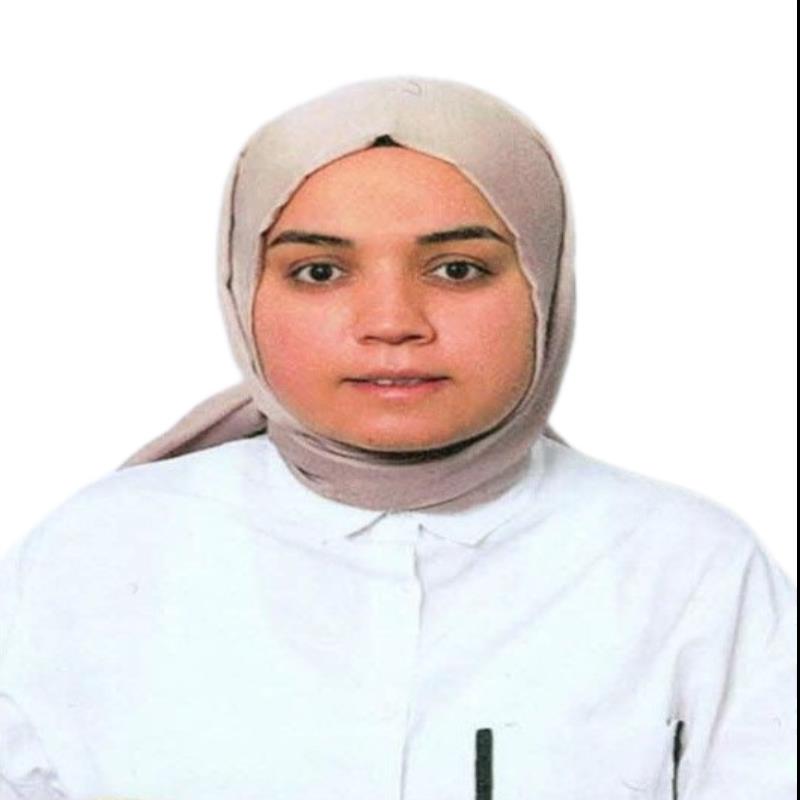
Işın Erer is a Professor at the Department of Electronics and Communication Engineering, Faculty of Electrical and Electronic Engineering, Istanbul Technical University (ITU). She is actively involved in research on radar signal processing, artificial intelligence, and image analysis, with a focus on ground-penetrating radar (GPR) and remote sensing applications. University: Istanbul Technical University School: Faculty of Electrical and Electronic Engineering Department: Department of Electronics and Communication Engineering Academic Rank: Professor Email: ierer@itu.edu.tr Her research interests span signal processing, radar systems, clutter removal, target detection, deep learning, vision transformers, U-Nets, and vital signs detection using stepped-frequency radar . She applies advanced machine learning techniques to enhance radar imaging and improve performance in challenging environments such as debris fields and outdoor conditions. The recent publication trends indicate a strong focus on integrating deep learning models (e.g., Vision Transformers, YOLOv5, U-Net) with radar signal processing for clutter removal, image restoration, and segmentation . Her work combines low-rank approximations, autoencoders, B-spline activation functions, and attention mechanisms to improve accuracy and robustness in GPR and remote sensing imagery. Applications include parcel boundary delineation, road segmentation, and life detection in search-and-rescue scenarios. She has received notable recognition for her academic mentorship: Best PhD Thesis Advisor in Telecommunications Engineering Program, 2018 She leads multiple active research projects funded by TÜBİTAK and ITU-BAP, focusing on real-time AI-based radar systems, through-wall vital sign detection, and clutter removal in GPR. She has supervised numerous graduate students, with 47 theses in progress or completed. Her research group works on both theoretical algorithm development and practical system implementation, bridging the gap between academia and real-world deployment. Current projects include developing integrated AI models for real-time GPR systems and ultra-wideband radar methods for behind-obstacle detection.