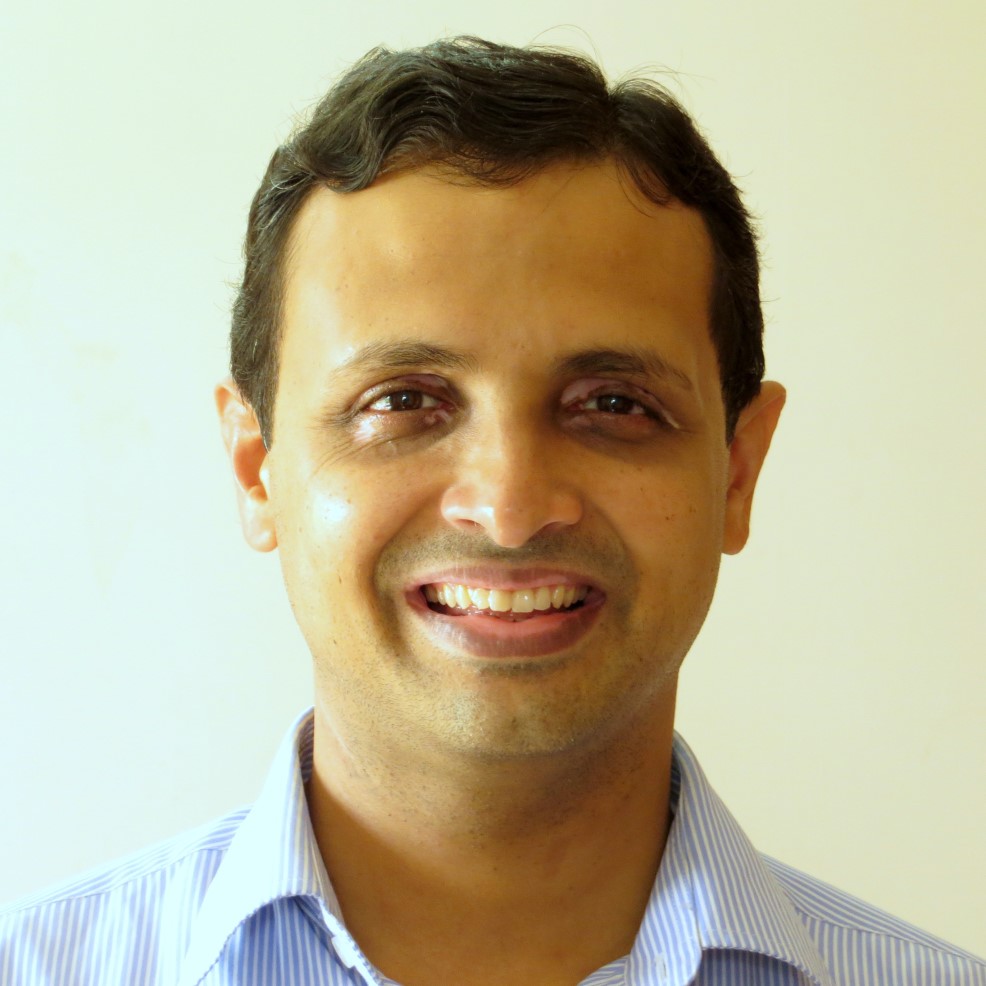
Vineeth N Balasubramanian is a Professor in the Department of Computer Science & Engineering at the Indian Institute of Technology Hyderabad, with affiliate faculty status in the Department of Artificial Intelligence. His research focuses on the intersection of deep learning, machine learning, and computer vision, emphasizing explainability, robustness, and real-world applications. He leads Lab 1055, which investigates problems such as Explainable and robust AI/ML systems Lifelong learning in evolving environments Multimodal vision-language models Applications in agriculture, autonomous navigation, and human behavior analysis His recent work includes causal reasoning in transformers, vision-language model capabilities, and drone-based object detection. Funded by organizations like Google, Microsoft, Intel, and DST, he has received multiple awards including the World's Top 2% Scientists (2022-23), INSA/INAE Fellowships, and Best Paper recognitions. Lab 1055 collaborates with institutions like CMU, UBC, and Monash University, contributing to cutting-edge advancements in AI.
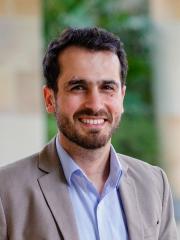
Dr. Metin Uyanik is a Senior Lecturer at the School of Economics, The University of Queensland. He holds a PhD from Johns Hopkins University (2016) and previously worked as a Postdoctoral Research Fellow at the University of Rochester's Wallis Institute of Political Economy. His research focuses on Economic Theory, Game Theory, Political Economy, Computational Economics, and Mathematical Economics. His work has been published in top-tier journals such as Economic Theory , Games and Economic Behavior , and Journal of Mathematical Economics . Education: Bachelor of Economics, Bogazici University Masters (Research) of Economics, Koc University Doctor of Philosophy, The Johns Hopkins University Research Interests: Dr. Uyanik's research bridges theoretical and applied economics, emphasizing foundational mathematical approaches. His work explores general equilibrium theory, discontinuous games, topological methods in economics, and welfare economics. Key themes include the analysis of non-convex economies, fixed-point theorems, and the integration of axiomatic frameworks with behavioral assumptions. Teaching: He teaches Advanced Microeconomics, Economics for Commerce, and Introduction to Strategic Thinking at UQ. His pedagogical focus includes mathematical rigor and practical applications of economic theory. Collaborations & Future Work: Collaborations with scholars like M. Ali Khan and Richard P. McLean highlight his engagement with complex theoretical frameworks. Ongoing projects include studies on large production economies, myersonian common knowledge, and computational methods in equilibrium analysis.
Paul Larson is a Professor of Mathematics at Miami University. His research focuses on set theory, topology, and model theory, with particular expertise in forcing axioms, descriptive set theory, and infinitary logic. He holds a Ph.D. in Mathematics from the University of California, Berkeley. His work bridges foundational mathematical logic with applications in topology and combinatorics. Key contributions include studies on canonical models under fragments of the Axiom of Choice, polar forcings, and cardinal characteristics. Larson has collaborated extensively with leading researchers such as Saharon Shelah and Jindřich Zapletal. His publications span prestigious journals like the Annals of Pure and Applied Logic and Transactions of the American Mathematical Society. Beyond research, he contributes to the academic community through editorial work and expository writings on historical developments in determinacy theory. Education: Ph.D., Mathematics, University of California, Berkeley Research interests emphasize foundational questions in set theory with applications to topology and model theory. His recent work explores advanced forcing techniques, square principles in Pmax extensions, and combinatorial properties of cardinal invariants. Publications reflect interdisciplinary engagement, including crystal structure prediction in high-pressure chemistry and operator theory in functional analysis. Despite an extensive publication record, no specific scientific awards are documented here. His advising and grant activities remain unspecified in the provided texts. Collaborations span international institutions, reflecting his role as a central figure in contemporary set theory research.
Dr. Chunyan Mu serves as a Senior Lecturer in the School of Natural and Computing Sciences at the University of Aberdeen, actively contributing to both academic instruction and cutting-edge research in computing science while currently accepting new PhD students. Her research program centers on Trustworthy AI and Safe Autonomy, with specialized expertise in formal verification of responsibility, accountability, and privacy mechanisms within multi-agent systems. She investigates resilience frameworks for autonomous intelligent systems and develops advanced methodologies for information flow security analysis, bridging theoretical computer science with practical security implementations. Analysis of her publication trajectory (2014-2025) reveals consistent innovation in applying formal methods to security-critical systems. Key thematic developments include probabilistic strategy logic for observability analysis, quantitative verification of opacity properties, and game-theoretic approaches to security verification, demonstrating increasing sophistication in handling multi-agent accountability and system resilience challenges. Dr. Mu currently supervises PhD candidates and offers a fully funded doctoral position focused on formal verification of safety properties in autonomous systems, providing comprehensive financial support including tuition coverage, £20,780 annual stipend, and dedicated research funding for candidates with strong backgrounds in formal methods and artificial intelligence.
Juan Camilo Gómez is an Associate Professor with tenure at the University of Washington Bothell's School of Business, specializing in game theory, bargaining, and microeconomic theory. He earned his Ph.D. in Economics from the University of Minnesota and his B.Sc. in Mathematics from Universidad de los Andes in Colombia. Education: Ph.D. Economics (1998–2003), University of Minnesota, Minneapolis, MN B.Sc. Mathematics (1990–1996), Universidad de los Andes, Bogotá, Colombia Research Interests: His research focuses on foundational and applied aspects of game theory, including bargaining models, coalition formation, cooperative solution concepts, and general equilibrium. He explores how efficiency can be achieved in strategic interactions, especially when agents may behave manipulatively or when traditional balance conditions do not hold. His work contributes to understanding how coalitions form and how outcomes can be predicted or designed to ensure equitable and efficient allocations. He also investigates the implications of reference points in bargaining and the role of aspirations in shaping cooperative behavior. Publications Overview: Across his publications, a clear trajectory emerges from foundational theoretical work—such as axiomatizing core extensions in cooperative games—to applied models that predict coalition formation and bargaining outcomes. His research consistently bridges rigorous mathematical frameworks with practical economic questions, including market interpretations of cooperative solutions and strategic pricing models like 'Pay What You Want'. Awards and Honors: 2010 MBA Professor of the Year, University of Washington Bothell Teaching and Advising: Gómez has taught a wide range of courses from undergraduate calculus and mathematical economics to graduate-level game theory and quantitative methods for business. He has held teaching roles at institutions including Macalester College, University of Copenhagen, Universidad de los Andes, and University of Minnesota. He has also co-directed undergraduate theses, such as that of Santiago Saavedra, and served on numerous academic committees including MBA Admissions and faculty hiring. Labs and Teams: While no specific lab is mentioned, his collaborative working papers with researchers like Camelia Bejan and P.V. Balakrishnan suggest active participation in research networks focused on game theory and economic modeling.
Björn Brandenburg is a researcher at the Max Planck Institute for Software Systems (MPI-SWS) in Kaiserslautern, Germany. His work focuses on real-time systems, scheduling algorithms, and operating system design, with a particular emphasis on predictable resource allocation and performance guarantees in multiprocessor and cyber-physical environments. His research interests include real-time response-time analysis (e.g., PROSA ), locking protocols for multiprocessor systems, side-channel mitigation in cloud environments, and the verification of real-time scheduling policies. He has contributed to foundational studies on deadline failure probabilities, self-suspending tasks, and predictable real-time Linux implementations. Scientific awards include recognition for outstanding papers on TimerShield (2017) Offline Equivalence (2017) . His work intersects with practical systems like LITMUSRT and ROS 2, aiming to bridge theoretical guarantees with real-world applications in safety-critical and distributed real-time systems.
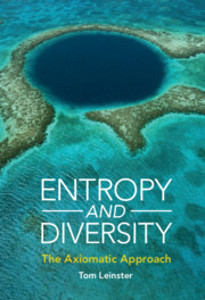
Tom Leinster is a mathematician at the University of Edinburgh, specializing in category theory, metric geometry, and their applications to areas such as algebra, topology, and mathematical biology. His research focuses on the concept of magnitude, a measure for metric spaces and enriched categories, as well as entropy and diversity. He has authored influential books including *Basic Category Theory* and *Entropy and Diversity: The Axiomatic Approach*. Leinster's work bridges foundational mathematics with interdisciplinary applications, emphasizing the interplay between abstract structures and concrete problems. His research interests span category theory, metric geometry, algebraic topology, and mathematical biology. Key contributions include foundational work on magnitude and its connections to geometric measure theory, entropy characterization, and categorical frameworks for diversity measurement. Leinster also engages in mathematical education and ethics, advocating for responsible research practices. Notable publications include recent advancements in magnitude homology of Euclidean sets, extremal magnitude in metric spaces, and entropy modulo primes. His work often highlights interdisciplinary applications, such as biodiversity quantification and information-theoretic foundations.
Alexander Summers is an Associate Professor at the Department of Computer Science , University of British Columbia . He joined UBC in March 2020 after serving as a Senior Researcher (Oberassistent) at ETH Zurich from 2014-2020. His research bridges Programming Languages , Formal Methods , and Software Engineering , with a focus on automated verification tools for heap-based and concurrent programs. MSc Joint Mathematics and Computer Science, Imperial College London (2004) PhD Computer Science, Imperial College London (2009) Postdoc, ETH Zurich (2009-2014) Summers leads the Prusti Project , developing deductive verification tools for Rust, and contributes to the Viper Project for intermediate verification languages. His work addresses challenges in: Memory safety and concurrency verification Ownership models and aliasing control Automated reasoning with SMT solvers Resource-oriented programming specifications Debugging verification condition quantifiers Formal validation of verification infrastructure His research has been recognized with a Amazon Research Award and ACM SIGPLAN Distinguished Paper Awards . He teaches courses like Advanced Software Engineering and Program Verifiers and Program Verification , and supervises graduate students in formal verification and Rust-related research.
Dr. Borivoje Dakic is an Associate Professor at the University of Vienna , affiliated with the Faculty of Physics and the Quantum Optics, Quantum Nanophysics and Quantum Information department. His research spans foundational and applied aspects of quantum theory. Operational reconstruction of quantum formalism Quantum interference as a resource for communication Tomography of large-scale quantum systems Macroscopic quantum phenomena His work includes scalable verification techniques for quantum devices and collaborations with experimental teams like Philip Walther’s and Markus Aspelmeyer’s groups. He received the Marko Jarić Prize (2025) for his contributions. Recent projects focus on diagnostics of quantum devices (FWF BeyondC SFB), information-theoretic foundations of quantum interference (FWF P36994), and local operations in quantum field theory (Cluster of Excellence QuantA). His research on quantum coherence in networks and macroscopic entanglement challenges traditional assumptions about quantum-classical boundaries. Publications emphasize resource-efficient tomography, device-independent verification, and foundational frameworks for quantum statistics and field theory. Teaching: Quantum Information (2025W), Theory in Quantum Optics (2025S), VCQ Summerschool Labs: Dakić Group at University of Vienna
Amrita Dhillon is a Professor of Economics at King's College London, affiliated with the Department of Political Economy within the School of Politics & Economics. She leads the Quantitative Political Economy research group and contributes to the Global South Research Group and the Centre for British Democracy. Her PhD from SUNY Stony Brook (1994) laid the foundation for her expertise in theoretical modeling, particularly in political economy, public economics, and game theory. Her research focuses on political economy applications including voter behavior, sovereign debt dynamics, corruption, and development. Recent work explores social networks' impact on labor productivity and the gendered effects of the pandemic in India. She has organized workshops on topics like governance and sovereign debt, emphasizing interdisciplinary approaches. Key themes in her articles include electoral competition, corruption's moral costs, and institutional monitoring strategies in developing countries. Her contributions span journals like the Journal of Economic Behavior and Organization and the Review of Financial Studies. She actively engages in policy-relevant research, such as ranking Indian states' performance and analyzing fiscal federalism. Dr. Dhillon is a Digital Futures Institute Fellow (2025-26) and collaborates on projects involving blockchain applications for shareholder rights. Her teaching includes advanced economic analysis and development economics. Office hours are held at Bush House and the Franklin Wilkins Building.
Kirby Nielsen is a Professor of Economics and William H. Hurt Scholar at the California Institute of Technology (Caltech), affiliated with the Division of the Humanities and Social Sciences. His research focuses on Experimental Economics, Decision Theory, and Microeconomic Theory. Contact him via kirby@caltech.edu (note: Gmail may be more reliable currently). Research interests emphasize experimental methods to study decision-making under uncertainty, preference structures, and behavioral anomalies. Recent work explores common ratio effects, gender confidence gaps, and team dynamics in economic contexts. Publications (2017–2024) address topics ranging from risk preferences to comparative analysis of human and primate decision-making. Notable themes include systematic testing of axiomatic models and the timing of information in strategic interactions. No awards or grants are explicitly listed in the provided materials. Education history is not detailed here, though his affiliation with Caltech suggests a strong academic pedigree in economics.
Judith Roitman is a full Professor of Mathematics at the University of Kansas, where she has been since 1976, rising to full professorship after earlier roles at Wellesley College and the Institute for Advanced Study. Her academic journey began with an English Literature degree from Sarah Lawrence College (1966) before transitioning to mathematics at UC Berkeley, earning a Ph.D. in 1974 under Robert Solovay, with research in set-theoretic topology and Boolean algebra. She has held leadership roles in the Association for Women in Mathematics (AWM), serving as its President (1979–1981) and shaping its early structure. Her research spans over 40 papers and a textbook, Introduction to Modern Set Theory (1990), while her work in mathematics education includes co-authoring the NCTM Principles and Standards 2000 . She received the 1990 Louise Hay Award for Mathematics Education and was inducted into the AWM Fellows Program in 2018. Roitman’s career combines research with advocacy: she mentored students, advised on national education policy, and ran teacher workshops for elementary and high school educators. Her non-academic pursuits include poetry (e.g., Slippage , 1999) and Zen Buddhism, co-founding the Kansas Zen Center in 1978.
John van de Wetering is an Assistant Professor at the Theoretical Computer Science group of the Informatics Institute, University of Amsterdam, working with the QuSoft research center. He co-authored the open-access book Picturing Quantum Software and developed the PyZX quantum compiler. His research spans quantum computation and quantum foundations, focusing on diagrammatic methods like the ZX-calculus and ZH-calculus. Quantum circuit optimization and verification Quantum foundations via algebraic/compositional methods Co-creator of PyZX His recent publications explore multi-qutrit systems, completeness of graphical calculi, and quantum state representations. Supervises students in quantum computing, including Lia Yeh and Sarah Li. Directs the new Master's program in Quantum Computer Science at UvA. Actively contributes to open-source projects and international conferences. Notable collaborations include Aleks Kissinger, Neil J. Ross, and QuSoft researchers. Uses GitHub for DiZX development (qudit extension of PyZX). No explicit scientific awards mentioned.
Matteo Brunelli is Associate Professor of “Mathematical Methods of Economics and Actuarial and Financial Sciences” at the University of Trento , Department of Industrial Engineering, and Adjunct Professor (docent) at Lappeenranta University of Technology , Finland. He is nationally habilitated as Full Professor in Italy and has held long-term visiting positions at Berkeley, Turku, Auckland, JAIST and Binghamton. Education: Ph.D. (Doctor of Science) in Information Technologies, Åbo Akademi University, Finland, 2011 – graded Eximia cum laude approbatur M.Sc. in Economics, University of Trento, 2007 – grade 110/110 cum laude B.Sc. in Economics, University of Trento, 2005 Research focus: Brunelli’s work sits at the intersection of multi-criteria decision analysis , operations research and computational optimisation . He develops axiomatic foundations and algorithms for pairwise comparison matrices , consistency indices , the best-worst method and fuzzy preference relations , and applies them to energy planning, sustainable inventory, maintenance scheduling, 3-D printer selection, and blockchain governance. His 2023-2025 articles reveal intensified interest in uncertainty modelling (Dempster-Shafer theory), bi-objective optimisation of inventory and maintenance, and group decision protocols that integrate probabilistic or active-learning components, demonstrating both methodological depth and practical relevance. Scientific awards & grants: Academy of Finland Postdoctoral Researcher grant (€254 670, 2014-2017) Claudio Dematté Research Grant (€19 000, 2008) Teacher of the Year Award, Aalto University (2013 – both Spring & Autumn semesters) Bernard Roy Award 2021 for outstanding contribution to Multiple Criteria Decision Aiding (under-40 category) Supervision & funding: While specific doctoral students are not listed, Brunelli currently supervises graduate theses at Trento and has continuously held competitive national grants. His Academy of Finland project “Consistency of valued preference relations for decision analytics methods” financed three years of full-time research and international collaboration. Editorial & community roles: He serves on the editorial boards of International Journal of General Systems and Mathematical and Computational Applications , and acts as area editor for Journal of Multi-Criteria Decision Analysis , positioning him among the key gatekeepers of the MCDA community.
Florian Brandl is an Argelander Professor (associate professor with tenure) at the University of Bonn, holding positions in both the Department of Economics and the Hausdorff Center for Mathematics. Previously, he was a postdoctoral research scholar at Princeton University and Stanford University. His academic career demonstrates a strong foundation in mathematical economics and game theory, with affiliations spanning multiple prestigious institutions. Brandl earned his Doctoral degree in Mathematics (summa cum laude) from the Technical University of Munich in 2018, following a Master's degree (2013) and Bachelor's degree (2011) from the same institution. His doctoral work focused on "Zero-Sum Games in Social Choice and Game Theory" under the supervision of Felix Brandt, establishing the foundation for his research trajectory. Prof. Brandl's research spans microeconomic theory with a focus on social choice theory, decision theory, and game theory. He is particularly interested in decision-making under uncertainty, connections between social choice and game theory, and dynamic processes converging to equilibrium. His work employs mathematical tools to analyze interactions of multiple entities in economic contexts, often incorporating algorithmic approaches and methods from theoretical computer science. He has made significant contributions to fair division, mechanism design, and probabilistic social choice. His publication record shows consistent contributions across multiple subfields, with recent work focusing on patience effects in fair division, social learning barriers, and axiomatic characterizations of equilibrium concepts. Brandl's research demonstrates strong interdisciplinary connections between economics, mathematics, and computer science, with publications in top journals across all three disciplines. Best Student Paper Award at WINE 2021 for "Funding Public Projects: A Case for the Nash Product Rule" Associate Editor for Theoretical Economics Co-organizer of the COMSOC Video Seminar Prof. Brandl actively contributes to academic service and community building. He co-organizes the COMSOC Video Seminar and will host a Trimester Program on "Advances in Mechanism Design" in Bonn in summer 2026. He serves on program committees for major conferences including COMSOC 2023 and EC 2023. His research has been supported through his position as a Bonn Junior Fellow at the Hausdorff Center for Mathematics since 2021. Based at the Institute for Microeconomics and affiliated with the Hausdorff Center for Mathematics, Brandl collaborates with a broad network of researchers across economics and computer science. His work often involves interdisciplinary collaboration, as evidenced by his numerous co-authored publications with researchers from various institutions worldwide. He maintains strong connections with the University of Oxford's Global Priorities Institute as a Research Affiliate.