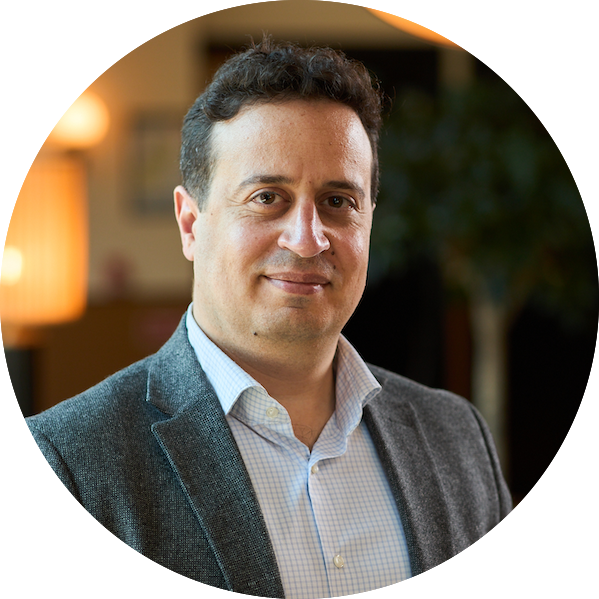
Sonia Caféri is a Professor at the French Civil Aviation University (ENAC), where she is affiliated with the OPTIM research team within the MORO (Models and Optimization) research axis. Her research expertise spans Operations Research and Optimization, with specialized focus on Continuous and Mixed Integer Nonlinear Optimization and Global Optimization techniques. She applies these methodologies to solve complex problems in Traffic Management and Air Transport systems, particularly addressing air traffic management challenges through advanced mathematical modeling. Professor Caféri's work within ENAC's MORO axis contributes to the institution's mission in civil aviation innovation, developing optimization frameworks that enhance efficiency and safety in transportation networks through rigorous operational research approaches.
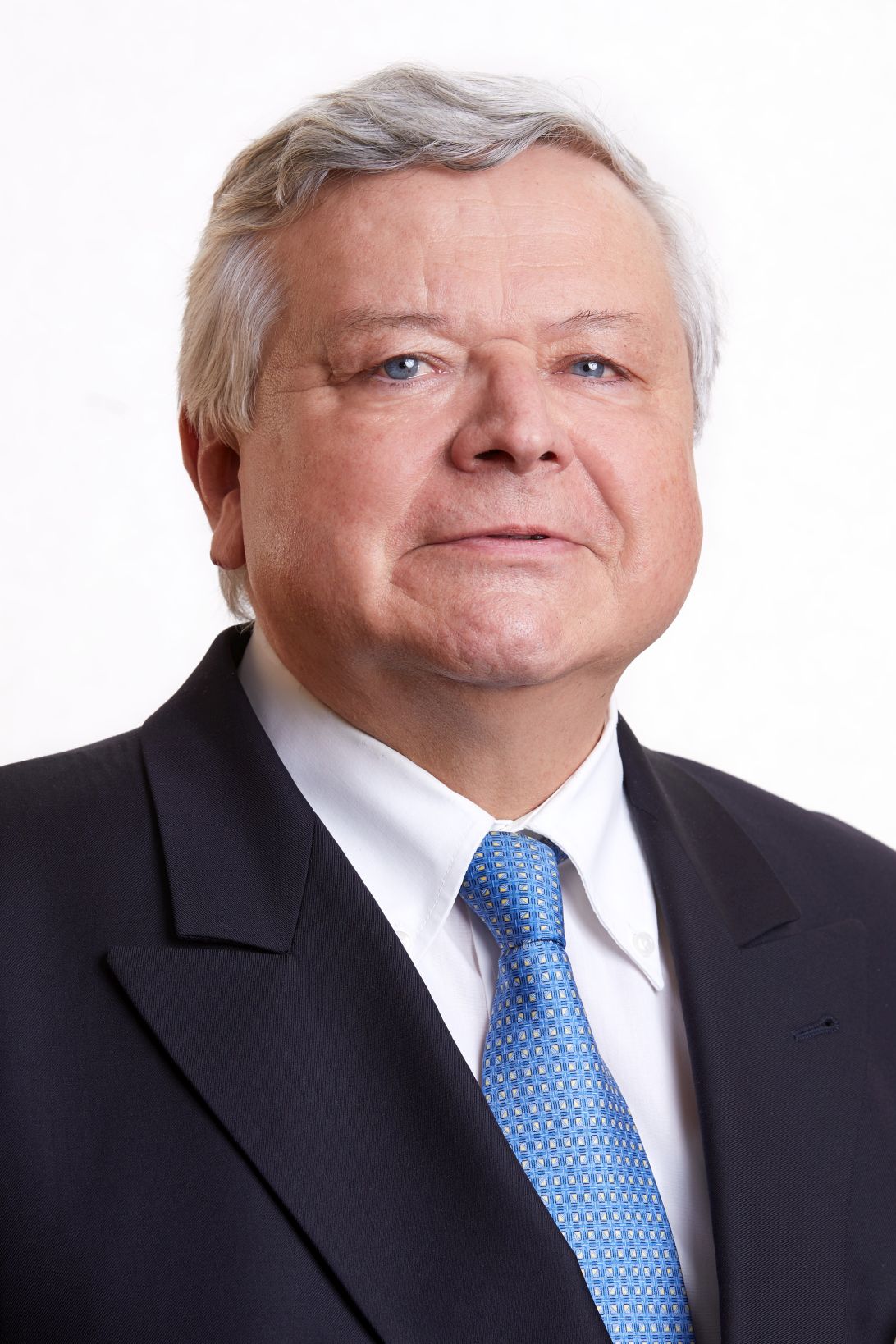
Marcel Mongeau is a Professor in Operations Research at the École Nationale de l'Aviation Civile (ENAC) in Toulouse, France, affiliated with the OPTIM team under the MORO axis . His research focuses on operational research, global optimization, numerical optimization, and mixed-integer programming, with applications in aeronautics, chemical engineering, life sciences, and other industries. Education PhD in Combinatorics & Optimization (1991), University of Waterloo, Canada MSc in Mathematics (1987), University of Montreal, Canada BSc in Mathematics (1985), University of Montreal, Canada Habilitation to Direct Research (2003), Paul Sabatier University, France Research Interests : Mongeau's work addresses complex optimization problems through mathematical modeling and algorithm development. Key areas include aircraft trajectory planning, contrail avoidance, stochastic programming, and multi-modal transportation optimization. His methodologies integrate exact optimization, heuristic approaches, and computational modeling. Publications Trends : Recent publications emphasize air traffic flow management , contrail-safe trajectories , stochastic aircraft scheduling , and multi-modal transportation synchronization . Applications span environmental impact minimization, machining efficiency, and climate-aware aviation planning. Scientific Recognition : He is a Member of the Academy of Technologies , reflecting his contributions to applied mathematical sciences. Advising & Grants : Mongeau has supervised PhD students and postdoctoral fellows, particularly in optimization and operational research. His research has been supported through collaborations with institutions like IBM, INRIA, and CNRS. Labs & Teams : He is associated with the OPTIM team at ENAC and previously worked with the MOGISA group at LAAS-CNRS and the Optimisation & Interactions group at Paul Sabatier University.
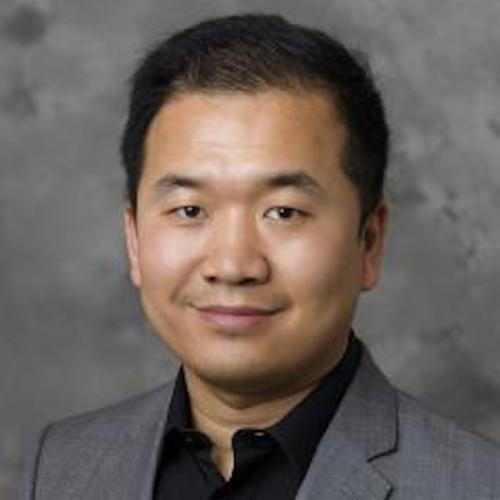
Dr. Yi Gao is an Associate Professor in the School of Aviation and Transportation Technology at Purdue University. He teaches Aviation Management courses at both undergraduate and graduate levels. Prior to joining Purdue, Dr. Gao served as the Aviation Course Director at Swinburne University of Technology in Australia. He has been actively involved in academic leadership, serving as the Editor for Collegiate Aviation Review International (2021-2023) and currently as the Educator Trustee for the University Aviation Association. Dr. Gao earned his PhD in Technology from Purdue University, specializing in Aviation Management. His educational background has prepared him to bridge theoretical knowledge with practical applications in the aviation industry. Dr. Gao's research focuses on critical aspects of air transportation systems. His work spans several interconnected domains that address both operational and economic challenges in modern aviation: Air Transportation Economics & Operations: Examining airport revenue streams, pricing strategies, and economic impacts of aviation activities Customer Loyalty Programs & Frequent Flyer Programs: Analyzing consumer behavior, program effectiveness, and revenue implications of airline loyalty initiatives Transport Geography: Investigating airport catchment areas, passenger flow patterns, and spatial relationships in aviation networks Aviation Safety: Exploring safety reporting systems, incident detection, and safety culture in aviation organizations Aviation Education: Developing competency-based curriculum and evaluating skill alignment between academic programs and industry needs Dr. Gao's recent publications demonstrate a strong trajectory in applying advanced analytical methods to aviation challenges. His work increasingly incorporates data science techniques including machine learning, spatial analysis, and text mining to extract insights from complex aviation datasets. A notable trend in his research is the examination of non-aeronautical revenue streams for airports, particularly focusing on parking revenues, loyalty programs, and e-commerce impacts. His airport catchment area research has evolved from theoretical modeling to practical applications using mobile location data, resulting in tools that help airports better understand their service areas. Another significant theme is the analysis of consumer behavior in airline loyalty programs, with recent work examining the effectiveness of innovative offerings like flight passes. Dr. Gao has received several prestigious awards recognizing his contributions to aviation education and research: President's Award from the University Aviation Association (2022) Teaching Leadership Award from Purdue University (2022) Bilsland Dissertation Fellowship from Purdue University (2009-2010) Frederick N. Andrews Fellowship from Purdue University (2006-2009) ACRP Graduate Research Award (2022-2023) Dr. Gao has successfully mentored multiple PhD students to completion, including Dr. Sen Wang who now serves as an Assistant Professor at The Ohio State University. His current doctoral students include Zhi Dou, Jiayu Liu, and Tolulope Oluwumi, all working on cutting-edge aviation research topics. His students have received competitive awards including the Steven F. Udvar-Hazy Scholarship Award. Dr. Gao has secured significant research funding through projects with the Transportation Research Board's Airport Cooperative Research Program (ACRP), including projects ACRP 01-55, ACRP 03-72, and ACRP 03-74. He has also contributed to major research reports published by The National Academies of Sciences, Engineering, and Medicine, including "Toolkit for Establishing Airport Catchment Areas" and "State of Airport Loyalty Programs." Dr. Gao leads a dynamic research group focused on empirical aviation studies. His team has developed practical tools including the Travel Utility Analysis tool for visualizing airport catchment areas and sentiment analysis tools for airline customer feedback. The group maintains strong industry connections through partnerships with organizations like ISTAT (International Society of Transport Aircraft Trading) and regular participation in industry conferences. Dr. Gao serves on multiple professional committees including the Transportation Research Board's Standing Committee on Airport Terminals and Ground Access (AV050), and is an active member of the Air Transport Research Society and the Airline Group of the International Federation of Operational Research Societies.
Mustafa YÜCEL is a full-time academician at Kastamonu University's Faculty of Economics and Administrative Sciences, Department of Business Administration, since 2023. Previously, he served as a Research Assistant at the same institution from 2015 to 2023. He holds a PhD in Business Administration and a Master's degree from Kastamonu University, along with a BA from Near East University. PhD in Business Administration (2022), Kastamonu University Master's in Business Administration (2017), Kastamonu University BA in Business Administration (2012), Near East University His research focuses on Industrial Organization , Strategic Management , and Human Resources Management , with a particular emphasis on energy sector dynamics, ESG (Environmental, Social, Governance) integration, and corporate governance. His work spans both theoretical and applied analyses, including social network applications in energy trade and financial evaluations of sustainable investments like wind energy in Kastamonu. Mustafa YÜCEL has received the Best Paper Award (2022) from the International Strategic Management And Managers Association. His research collaborations with scholars such as Faruk Dayı and Ali Çilesiz have led to studies on ESG criteria, clean energy investments, and healthcare management. Advisor to three Master's students Authored 16 articles and 5 book chapters Participated in 2 projects funded by BAP and other national institutions
Göran Falkman is an Associate Professor of Computer Science at the University of Skövde, working within the Department of Information Technology at the School of Informatics. His research spans artificial intelligence, machine learning, big data analytics, and human-computer interaction, with applications in transportation, healthcare, and defense domains. His educational background includes a PhD in Computing Science and he holds the Swedish academic title of Docent in Computer Science. He has supervised numerous PhD students including Niclas Ståhl, Rakesh Rana, Ulrika Ohlander, and Maria Riveiro. Falkman's research interests focus on developing AI systems that effectively support human decision-making. His work includes driver intention recognition, uncertainty quantification in deep learning, maritime anomaly detection, and cockpit interface design for fighter pilots. He has developed approaches for interactive clustering, visual data analysis, and information fusion that bridge the gap between complex algorithms and human understanding. His recent publications demonstrate a strong trajectory in applying deep learning to transportation safety, particularly driver intention recognition, while maintaining his longstanding interest in human-centered AI systems. His work shows increasing sophistication in uncertainty modeling and probabilistic approaches to machine learning. Falkman has led major research projects including BISON (Big Data Fusion), BIDAF (Big Data Analytics Framework), and collaborations with Saab Aeronautics on human-machine interfaces for distributed decision-making in aviation contexts. He has supervised numerous PhD students across diverse applications of AI, from drug design to fighter pilot teamwork, demonstrating his ability to guide research at the intersection of theory and practical application. His work consistently addresses the challenge of making complex AI systems transparent and trustworthy for human users.
Martin Lundgren is a Senior Lecturer in Informatics at the School of Informatics, University of Skövde. His work focuses on Information Security and Cybersecurity, particularly in air traffic management, automotive systems, and smart home environments. Specializes in human-centric cybersecurity approaches Active in certificateless cryptography for transportation systems Investigates stress factors in security risk management His recent publications analyze cybersecurity readiness in modern cars (2023-2024), threat intelligence integration (2023), and risk management tools for aviation (2025). Research trends show cross-domain applications of security frameworks and human factors in cybersecurity.
Dr. Yücel Aydın is a Lecturer at the Department of Control and Automation Engineering , Faculty of Electrical and Electronics Engineering, Istanbul Technical University . His research spans interdisciplinary domains in automation, renewable energy, and cybersecurity for emerging technologies. PhD in Control and Automation Engineering from Istanbul Technical University (2007) MSc in Control and Computer Engineering (1987) BSc in Electronics and Communication Engineering (1982) Current research focuses on Cloud Computing Security , Internet of Things tracking frameworks, and Drone Swarm Authentication . His work addresses critical security challenges in next-generation wireless systems and autonomous aviation technologies. Recent publications demonstrate expertise in Anomaly Detection systems, Adaptive Control for MAGLEV applications, and Group Handover Protocols for drone networks. All work emphasizes practical implementations and mathematical modeling.
Jozef Orgonáš is an Associate Professor at the Department of Marketing , Bratislava University of Economics and Business , with over 30 years of experience in commerce organizations and academia. He also serves as the Vice-Dean for Development & Quality Assurance . Research Focus: Franchising, consumer policy, sustainable business practices, and international trade. Professional Roles: Leadership in EU advisory committees, project coordination for capacity-building in commerce sectors, and consulting for De Bondt, Sirocco Aviation, and other enterprises. Key Publications include foundational works on franchising frameworks and regional market analyses in V4 countries. His projects emphasize innovation in supply chains and EU consumer policy implementation.
Hazem Torfah is a tenure-track Assistant Professor at the Computer Science and Engineering Department at Chalmers University of Technology, where he leads the Safe and Trustworthy Autonomous Reasoning lab (STARlab). Previously, he was a postdoctoral researcher in the EECS Department at UC Berkeley, USA, and obtained his Ph.D. in 2019 from Saarland University, Germany. His research focuses on developing theoretical foundations and techniques for constructing safe and reliable autonomous cyber-physical systems. Hazem earned his Ph.D. from Saarland University in 2019, followed by postdoctoral research at UC Berkeley. His educational background has positioned him at the forefront of formal methods research for autonomous systems. His research interests center on the formal specification, verification, and synthesis of cyber-physical systems, with a particular focus on quantitative approaches for verifying and explaining system behavior. He investigates methods to ensure safety and reliability in autonomous systems through runtime monitoring, specification mining, and assurance frameworks. His work bridges theoretical computer science with practical applications in autonomous driving and robotics. An analysis of his recent publications reveals a strong focus on runtime monitoring techniques for operational design domains, specification mining for predictive safety, and frameworks for runtime assurance of cyber-physical systems. His work frequently combines formal methods with machine learning to address safety challenges in autonomous systems, with applications primarily in autonomous driving. Hazem's research is funded by the Wallenberg AI, Autonomous Systems, and Software Program, reflecting the significance and potential impact of his work in the field of assured autonomy. He has supervised several Master's students, including Samuel Collier Ryder and Johannes Holmgren (2025), and Lucas Karlsson and George Kayembe (2024). His teaching includes courses on Formal Methods for Security, Oracle-Guided Inductive Synthesis, and Data Structures and Algorithms. As the leader of STARlab, Hazem directs research on safe and trustworthy autonomous reasoning, focusing on developing methods to ensure the reliability and explainability of autonomous cyber-physical systems through formal verification techniques.
Aurora B. Le is an Associate Professor at the Texas A&M University School of Public Health , Department of Health Behavior. Her work focuses on occupational safety and health, health disparities, and infectious disease mitigation from an industrial hygiene perspective. She has served as Faculty Director for the Texas A&M Center for Worker Health since 2023 and contributed to national programs like the CDC/NIOSH IPA agreement (2021-2023) and NIEHS Worker Training Program since 2015. PhD in Health Behavior (Indiana University, 2020) MPH in Community-Oriented Primary Care (University of Nebraska Medical Center, 2016) BA in Cognitive Science (University of California, San Diego, 2012) Dr. Le’s research spans occupational health disparities , psychosocial work factors , and workplace infectious disease management . She developed adult training curricula for high-consequence pathogens and advocates for worker rights. Her recent work examines biohazard exposure in solid waste workers and behavioral responses to emergencies like fire alarms. Her publications since 2025 emphasize occupational safety in academic research, informal waste sectors, and construction. Key themes include mental health among emergency responders, PPE physiological strain , and policy impacts on worker wellbeing . She integrates community-based participatory research with industrial hygiene frameworks. Scientific Awards : Bullard-Sherwood Award (2023), K. Patricia Cross Award (2019), Edgar J. Baier Award (2018) Early Career Achievement (2019) Dr. Le leads national worker training programs and serves on committees for American Industrial Hygiene Association and Brazos Interfaith Immigration Network. Her practice bridges academic research with real-world interventions for vulnerable industries like nail salons and waste management.
Dr. Marie Huber is a researcher at Humboldt University of Berlin's Department of Social and Economic History. She specializes in global economic history with a focus on postcolonial Africa, examining transnational knowledge circulation, economic expectations, and development paradigms. Her current projects include a DFG-funded study on aviation history (Air Afrique) and research on German trade relations with Africa/Asia under the Collaborative Research Center 'Dynamics of Security'. Her research explores: Transnational knowledge networks in economic development Postcolonial state enterprises and aviation infrastructure UNESCO heritage politics and cultural tourism Decolonization impacts on business practices Racial discourses in economic modernization Publications since 2022 predominantly analyze aviation in decolonizing Africa, state-owned enterprises, heritage tourism development, and geopolitical imaginaries. Her work integrates business history with postcolonial theory across African contexts. She founded the #metoohistory initiative addressing power abuse in academia and established Perspektiven.Blog documenting career transitions for humanities scholars. She also co-leads the DFG-funded research network '(Post-)Colonial Business History'.
Eric Bartley Christmas is a Professor in Programming Technology at the University of Oslo, with contact details including email ericbj@ifi.uio.no and telephone +47 22840853. He is affiliated with the Programming Technology research group and maintains an office at Gaustadalléen 23B, 0373 Oslo. His core research spans: Programming and Programming languages Object-orientation and Design Patterns Distributed systems and Cloud computing Security His work increasingly intersects with medical applications, leveraging computer vision for diagnostics and analysis. Recent publications (2022-2024) reveal a strong trend toward interdisciplinary medical technology, with multiple studies applying deep learning to sperm detection, microcirculation analysis, and capillary measurement. Concurrently, his work extends into transportation systems through edge computing applications for flight and transport mode detection. He actively collaborates within the Programming Technology research group, particularly with Paulo Ferreira, Maged Helmy, and Trung Tuyen Truong on projects bridging computer science with biomedical engineering and mobile systems.
Anders la Cour-Harbo serves as an Associate Professor in the Department of Electronic Systems at Aalborg University's Technical Faculty of IT and Design. His academic career spans over two decades with consistent publication output since 2000, demonstrating sustained research activity in unmanned aircraft systems and related technologies. His institutional affiliation places him within Denmark's prominent engineering research environment focused on practical technological applications. Professor la Cour-Harbo's research interests center on unmanned aircraft systems engineering, with particular expertise in drone applications for industrial settings. His work spans drone load systems, emergency landing technologies, predictive maintenance, and offshore operations. The research fingerprint shows strong emphasis on Unmanned Aircraft Engineering (100%), Load System Engineering (87%), and Unmanned Aircraft System Engineering (46%), reflecting his specialized focus areas. His projects consistently address real-world applications of drone technology, particularly in challenging environments like offshore wind farms. Analysis of his publication trends reveals a strategic focus on practical drone applications with increasing emphasis on safety systems, regulatory compliance, and industrial implementation. Recent publications (2023-2024) show strong industry relevance with applications in offshore wind turbine maintenance, predictive maintenance systems, and vision-based control technologies. His research bridges theoretical control systems with practical implementation challenges in drone operations. Teacher of the Year 2015 Teacher of the Year 2006 Professor la Cour-Harbo leads multiple significant research projects including SafeEye (Automated emergency landing for small unmanned aircraft), UAS-ability (research infrastructure for drone development), and OPAL (Offshore Delivery of Packages). He serves as chair for JARUS (Joint Authority for Rulemaking of Unmanned Systems), significantly influencing European drone legislation. His spin-off company Vixos demonstrates successful technology transfer from academic research to commercial application. The Harm threshold for unmanned aircraft in European legislation impact shows his direct contribution to shaping regulatory frameworks. His laboratory and research team focus on practical drone applications with infrastructure supporting airborne data collection and drone development. The UAS-ability project specifically created research infrastructure for drone development and airborne data collection. His collaboration network spans multiple countries, with significant European partnerships focused on advancing drone technology standards and applications. His work with JARUS places him at the forefront of international drone regulation development.
Ming Li, Ph.D., P.E. serves as an Assistant Professor of Practice in the Department of Computer Science within the College of Engineering & Natural Sciences at The University of Tulsa. With a strong academic foundation from the same institution where he earned his Ph.D. in Computer Science (2021) and MSE in Electrical Engineering (2017), he bridges theoretical knowledge with practical industry experience. Professional Engineer (PE) licensed in Oklahoma 13 years of industry experience in electronics Teaches undergraduate and graduate courses focusing on programming, architecture, and systems Dr. Li's research interests center around computer architecture, FPGA development, embedded systems design, PCB layout, and cybersecurity applications. His work demonstrates a clear progression from hardware-focused research toward cybersecurity applications, particularly in attack graph generation and analysis. His publications reveal a consistent focus on applying parallel computing techniques to security problems, with increasing specialization in attack graph methodologies. His recent publications (2022-2024) show a concentrated effort in developing practical frameworks for attack graph generation on high-performance computing platforms, indicating his research has matured toward addressing real-world cybersecurity challenges through computational approaches. This represents a natural evolution from his earlier work on parallel computing frameworks. Specializes in translating industry hardware experience into academic research Focuses on practical applications of theoretical security concepts Develops tools for security analysis using high-performance computing As an educator with substantial industry background, Dr. Li brings practical insights to his teaching of computer architecture, systems programming, and cybersecurity topics. His dual expertise in hardware design and security analysis provides students with a comprehensive perspective on the full stack of computing systems.
Dr. Fabian Steinmann serves as a Lecturer in Organisational Resilience and Change at Cranfield School of Management, Cranfield University, and holds the position of Deputy Course Director for the Management MSc program. His work bridges academic research with practical applications in high-reliability industries, particularly aviation and maritime sectors. Education: Aerospace Engineering degree from University of Stuttgart, Germany PhD in Air Transportation Resilience from Cranfield University Research Interests: Dr. Steinmann specializes in organizational and network resilience, with deep expertise in air transport safety investigation, aviation operations management, and systems engineering. His doctoral research established empirical evidence of resilience mechanisms within the UK air transportation industry, leading to a novel framework integrating proactive risk assessment and reactive recovery systems. Current work examines cross-sector applicability of resilience principles through active collaboration with industry stakeholders. Professional Activities: He co-developed an executive resilience course with Boeing Global Learning Institute, presented at major conferences including Pilot Expo (2020) and ATRS World Conferences (2021-2022), and maintains active participation in the UK Industry Resilience Group (IRG) and Operations Director Liaison Group (ODLG). His ongoing "Flight Diversion Modelling for the UK Aviation System" project develops computational simulations for airport disruption scenarios. Scientific Awards: No scientific awards were mentioned in the source material. Advising and Grants: While no student supervision is documented, Dr. Steinmann secures research funding through industry partnerships including aviation and maritime sector projects. His five-month 2022 research exchange at Boston's Global Resilience Institute exemplifies his grant-supported international collaboration. Labs and Teams: He actively contributes to the UK Industry Resilience Group (IRG) and Operations Director Liaison Group (ODLG), multi-organizational forums connecting airlines, airports, air traffic control, and regulators to advance systemic resilience practices.