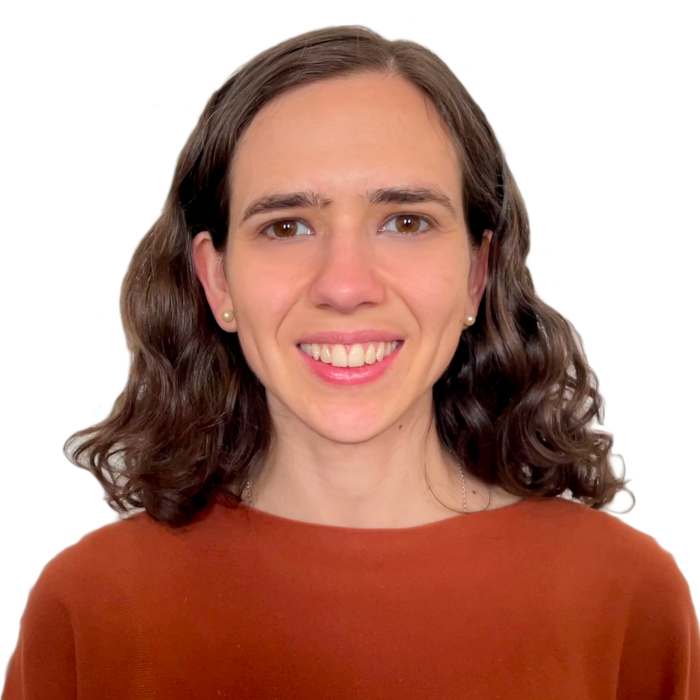
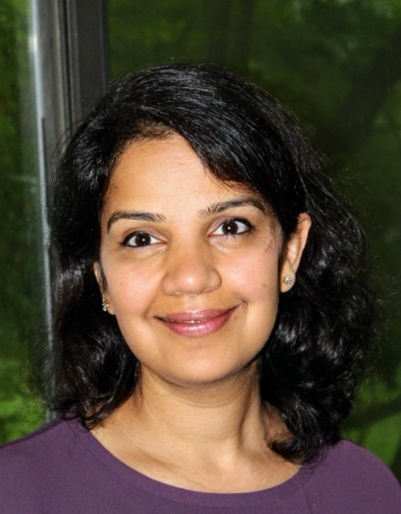
Susanna de Rezende is an Assistant Professor in the Department of Computer Science at Lund University (LTH). She is affiliated with the ELLIIT initiative on IT and mobile communication, the LTH Profile Area: AI and Digitalization, and the MIAO group collaborating with the University of Copenhagen. Her research focuses on computational complexity, proof complexity, circuit complexity, and communication complexity. She holds a PhD from KTH Royal Institute of Technology (2019) and a Master's from the University of São Paulo (2014). Her research explores connections between proof systems, circuit lower bounds, and communication complexity, with recent contributions to lifting theorems, automatability, and average-case hardness. She has received awards including the Stockholm Mathematics Centre Prize and Wallenberg Academy Fellow status. Current projects include funded PhD positions in theoretical computer science and editorial work for ZML: Zeitschrift für Mathematische Logik und Grundlagen der Mathematik. Key articles address proof complexity trade-offs, clique hardness in Sherali-Adams, and graph coloring challenges. Collaborations span institutions like the Czech Academy of Sciences and the Simons Institute. She advises multiple PhD students and collaborates on foundational research in complexity theory, supported by WASP, ELLIIT, and VR grants.
Joni Teräväinen is an Assistant Professor at the University of Cambridge , affiliated with the Department of Pure Mathematics and Mathematical Statistics. His research is funded by an ERC Starting Grant and has been supported by prestigious fellowships including the Academy Research Fellow, Marie Curie Fellow, and von Neumann Fellow. Current Role: Assistant Professor, University of Cambridge Previous Roles: Academy Research Fellow (University of Turku), von Neumann Fellow (IAS), Titchmarsh Research Fellow (University of Oxford) His research interests lie at the intersection of analytic number theory , additive combinatorics , and ergodic theory , with a focus on multiplicative functions, prime distribution, and higher-order Fourier analysis. Recent work explores correlations of multiplicative functions, Fourier uniformity in short intervals, and applications to the Chowla and Elliott conjectures. Joni has published extensively in top journals including the Journal of the European Mathematical Society , Annals of Mathematics , and Proceedings of the London Mathematical Society . His publications reveal a trend toward quantitative bounds for Gowers uniformity, shifted exponential composites, and function field analogues of classical problems. Scientific Awards: ERC Starting Grant Academy Research Fellow Marie Curie Fellow von Neumann Fellow Academy of Finland Postdoctoral Researcher Titchmarsh Research Fellow Contact: jt945@cam.ac.uk . More details are available on his personal homepage .
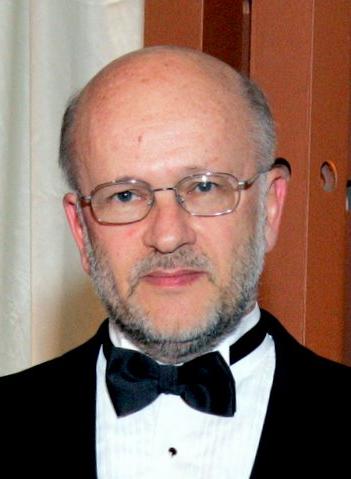
Andrej Bogdanov is a Professor at the University of Ottawa in the School of Electrical Engineering and Computer Science . He earned his B.S. and M.Eng. from MIT and Ph.D. from UC Berkeley . Before joining Ottawa, he held positions at the Chinese University of Hong Kong , ITCS (Tsinghua) , DIMACS (Rutgers) , and the Institute for Advanced Study . He has served as a Visiting Professor at the Tokyo Institute of Technology (2013) and the Simons Institute (2017, 2021). Research Interests : Computational complexity, cryptography foundations, pseudorandomness, one-way functions, property testing, quantum algorithms, and sublinear-time algorithms. Teaching : Courses on Discrete Mathematics, Great Algorithms, Computational Complexity, and Cryptography at University of Ottawa, Chinese University of Hong Kong, and Rutgers University. Publications : 15+ recent works in TCC , CRYPTO , ICALP , RANDOM , and journals like Journal of Cryptology and Theory of Computing . Service : Program co-chair for SAC 2026 , and committee member for major conferences including CRYPTO , TCC , Eurocrypt , and FOCS . Advising : 12 current and former Ph.D./M.Phil. students, with postdoctoral advisees at institutions like IIT Palakkad and Academia Sinica . His work bridges theoretical computer science with applications in cryptography, quantum computing, and network security.
Timm Oertel is a Professor in the Department of Data Science at Friedrich Alexander University Erlangen-Nuremberg (FAU), holding the Chair of Analytics & Mixed-Integer Optimization. His office is located in Room 03.344 at Cauerstraße 11, Erlangen, and he can be contacted via email at timm.oertel@fau.de or phone at +49 9131 85-67313. His research focuses on mixed-integer optimization, combinatorial optimization, and discrete mathematics, with significant contributions to sparse solutions in lattices and semigroups, integer Carathéodory rank, knapsack polyhedra, and parametric integer optimization. His work bridges theoretical computer science, operations research, and discrete geometry, emphasizing structural properties of integer solutions and algorithmic efficiency. Professor Oertel's publication record (2013-2025) reveals consistent trends in theoretical integer programming, with recent work (2020-2025) concentrating on sparsity patterns, approximation in algebraic structures, and complexity bounds. He frequently collaborates with leading researchers including Iskander Aliev, Robert Weismantel, and Joseph Paat, publishing in top venues like Mathematical Programming and SIAM Journal on Optimization. His research demonstrates deep connections between combinatorial geometry and optimization theory.
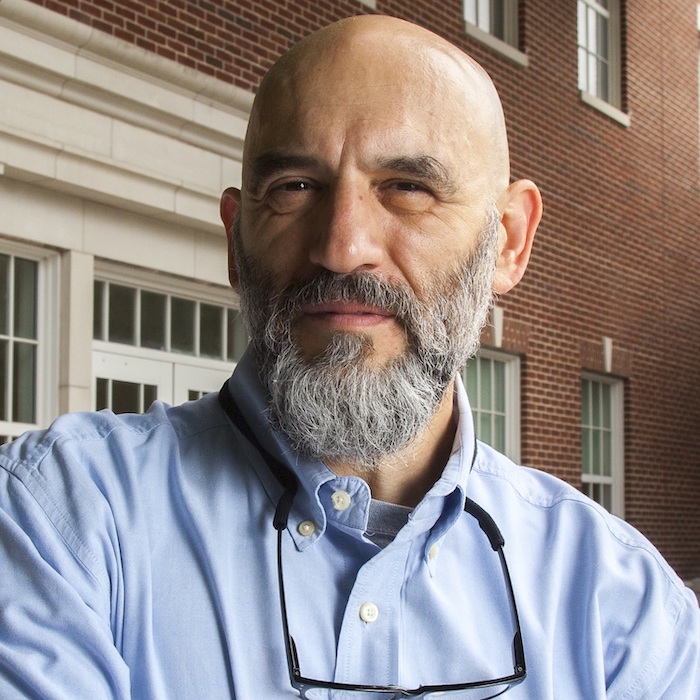
Dr. Christopher Roy is a Professor and Assistant Department Head for Graduate Studies in the Aerospace and Ocean Engineering Department at Virginia Tech (since 2013). He holds a Ph.D. from North Carolina State University (1998) and has held roles at Sandia National Laboratories and Auburn University. His research focuses on Computational Fluid Dynamics (CFD) , Verification and Validation , Turbulence Modeling , and Uncertainty Quantification , with notable contributions to CFD validation frameworks and error estimation techniques. He leads the CFD Research Group and co-teaches courses like Computational Fluid Dynamics and Verification and Validation in Scientific Computing . Education : Ph.D., 1998, Aerospace Engineering, North Carolina State University M.S., 1994, Aerospace Engineering, Texas A&M University B.S.E., 1992, Mechanical Engineering and Materials Science, Duke University Research Interests : Dr. Roy’s work emphasizes advancing CFD methodologies for complex flows, including turbulence modeling for hypersonic and high Reynolds number flows, and validation strategies for non-equilibrium boundary layers. He explores computational acceleration techniques (e.g., GPU-CPU hybrid systems) and error transport equations to improve simulation accuracy and efficiency. His team collaborates with NASA and industry on challenges like the VT-NASA CFD Validation Challenge and BlueRidge CFD solver development. Awards : Presidential Early Career Award for Scientists and Engineers (2006) Associate Fellow, AIAA (2006) Faculty Fellow Award, Virginia Tech (2009) Advising and Grants : Dr. Roy oversees graduate studies and has secured grants for research in CFD validation and turbulence modeling. His work bridges academic, industrial, and federal collaborations, including projects with Sandia National Labs and NASA. He actively contributes to AIAA technical committees and organizes CFD validation workshops. Labs and Teams : He leads the CFD Research Group at Virginia Tech, focusing on code development, validation experiments, and computational methodologies. His team develops tools like the SENSEI and BlueRidge solvers and participates in NATO-AVT349 projects for naval applications.
Glen McGee is an Assistant Professor in the Department of Statistics and Actuarial Science at the University of Waterloo. He holds a PhD in Biostatistics from Harvard University and a BScH in Mathematics from Queen's University. His research focuses on developing statistical tools for epidemiology, environmental health, and health policy, with a particular emphasis on environmental mixture analysis, cluster-correlated data modeling, and outcome-dependent sampling methodologies. Education : PhD in Biostatistics, Harvard University BScH in Mathematics, Queen's University Research Interests : McGee advances methodologies for analyzing complex environmental mixtures and their health impacts, including incorporation of biological knowledge into statistical frameworks. His work addresses challenges in multigenerational studies, informative cluster sizes, and measurement error correction in case-crossover designs. Key application areas include hospital profiling, exposure misclassification, and longitudinal health data analysis. Research Trends : His publications emphasize Bayesian methods for mixture modeling, innovative sampling strategies for clustered data, and causal inference techniques. Notable contributions include frameworks for integrating biological pathways into environmental health analyses and developing efficient sampling approaches for healthcare performance evaluation. Grants & Labs : McGee collaborates on projects involving CMS data applications and maintains GitHub repositories like hospODS for hospital profiling methodology implementation. His work bridges statistical theory with practical public health applications, particularly in environmental epidemiology and healthcare analytics.
Phong Nguyen is a Research Professor at Inria (Directeur de recherche) and a part-time professor at the Computer Science Department (DI ENS) of École Normale Supérieure (ENS), PSL University in Paris. He leads the ENS Crypto Team (Inria Equipe Projet Cascade) and serves as the principal investigator for the ERC Advanced Grant PARQ (2020) focused on lattices in parallel and quantum computing. He holds a PhD (1999) and Habilitation (2007) from ENS-Lyon, with an agrégation de mathématiques (1997). His research integrates cryptography, algorithmic number theory, and lattice-based computations, emphasizing: Cryptanalysis : Deconstructing cryptographic protocols, especially lattice-based systems Post-quantum cryptography : Developing quantum-resistant solutions Lattice algorithms : Optimization of reduction, enumeration, and sieving techniques Real-world applications : Bridging theoretical constructs with practical security implementations His publications (spanning Eurocrypt, Asiacrypt, and Journal of Cryptology) demonstrate deep expertise in lattice cryptography, with recurring themes in algorithm efficiency, cryptanalysis of NTRU/GGH systems, and theoretical advancements in lattice reduction. Recent work (2024) continues this trajectory with improved BKZ analysis and hypercubic lattice optimizations. Awards include : ERC Advanced Grant (2020) for PARQ project Best Paper Award at EUROCRYPT 2006 Cor Baayen Award (2001) He advises PhD students (e.g., Henry Bambury, Leo Ducas) and interns from institutions like École Polytechnique and ENS. He directs the ENS Crypto Team and previously held leadership roles as: French Director of the Japanese-French Laboratory for Informatics (2015-2019) European Director of LIAMA (Sino-European Computer Science Lab, 2013-2015) Coordinator of ECRYPT II virtual labs (2008-2012)
Samuel Fiorini is Associate Professor in the Department of Mathematics at the Université libre de Bruxelles (ULB) , member of the Algebra and Combinatorics group (CP 216). His research centres on polyhedral combinatorics, extended formulations, combinatorial optimisation and approximation algorithms , with frequent overlap into structural graph theory. Research in depth: Fiorini’s work explores how high-dimensional polytopes can sometimes be expressed compactly through extended formulations, proving exponential lower bounds when they cannot. He has contributed new approximation algorithms for classical problems such as vertex cover, clique transversal and odd-cycle packing, and has advanced the understanding of sorting and entropy in partially ordered sets. His papers often combine tools from graph minors, communication complexity and polyhedral theory. Scientific recognition: Best Paper Award, 44th ACM Symposium on Theory of Computing (STOC 2012) Programme committees: FOCS, IPCO, APPROX, STACS, WAOA Organiser, Sixth Cargese Workshop on Combinatorial Optimization Advising & grants: He currently supervises PhD students Carole Muller and Matthew Drescher and has mentored six completed PhDs as well as more than a dozen post-doctoral researchers. His group has been supported by an ERC starting grant and other national and international projects focusing on polyhedral approaches to hard optimisation problems. Lab & team: Fiorini leads a vibrant team within the Algebra and Combinatorics cluster at ULB, maintaining active collaborations with researchers worldwide and hosting frequent visitors working on discrete optimisation and polyhedral combinatorics.
Salvador Roura Ferret is a faculty member at the Universitat Politècnica de Catalunya (UPC), affiliated with the Faculty of Informatics of Barcelona (FIB) and the Department of Computer Sciences. He is an active researcher in the ALBCOM group, focusing on algorithmics, bioinformatics, complexity, and formal methods. His research interests span algorithms , randomized data structures , divide-and-conquer methods , and computational complexity . His work often bridges theoretical computer science with practical applications in voting systems, game theory, and educational technologies. The recent publications (2013–2025) reflect a strong trend in theoretical computer science, particularly in algorithm design, data structures (e.g., K-d trees, binary search trees), and game-theoretic models. There is a notable emphasis on mathematical rigor, complexity analysis, and formal modeling of computational problems. Best student paper award Distinció Jaume Vicenç Vives a la qualitat docent universitària (modalitat individual) 18è Premi UPC a la Qualitat en la Docència Universitària Roura has contributed to teaching innovation through projects like Eines per a la Transformació de la Docència en Programació and the development of Jutge.org , an online programming judge platform. He has participated in numerous competitive R+D+i projects, often in collaboration with researchers such as Conrado Martinez, Xavier Molinero, and Maria Serna. His work has been supported by national and regional funding programs. While no direct mention of grants or student advising is made, his extensive publication and project history suggest significant research leadership.
Alexander Shapiro is the A. Russell Chandler III Chair and Professor at the H. Milton Stewart School of Industrial and Systems Engineering , Georgia Institute of Technology. His work bridges optimization and statistics, focusing on stochastic programming, risk analysis, and simulation-based optimization. He has received numerous accolades, including the Khachiyan Prize (2013) , Dantzig Prize (2018) , and John von Neumann Theory Prize (2021) . Education: Ph.D. in Applied Mathematics-Statistics (Ben-Gurion University, 1981), M.Sc. in Mathematics (Moscow University, 1971) His research explores stochastic programming , risk-averse optimization , and multivariate statistical analysis , with recent work on distributionally robust control, Bayesian stochastic methods, and convex multistage optimization. Publications highlight theoretical advancements and computational frameworks for uncertainty modeling. Recent articles focus on asymptotics (2025), duality in MDPs (2023-2024), and statistical inference (2014-2024). These span stochastic control , robustness , and time consistency , reflecting his expertise in bridging probability theory with large-scale optimization. Scientific awards : Khachiyan Prize of INFORMS (2013) Dantzig Prize (2018) John von Neumann Theory Prize (2021) Election to National Academy of Engineering (2020) Dr. Shapiro has served as Area Editor (Optimization) for the Operations Research Journal and Editor-in-Chief of Mathematical Programming, Series A , demonstrating sustained leadership in his field.
Halit Uster is Professor of Operations Research & Engineering Management at SMU’s Lyle School of Engineering and Professor of Civil & Environmental Engineering (by courtesy). A 2025 IISE Fellow, he also serves as Fellow of SMU’s Hunt Institute for Engineering and Humanity, where he leads large-scale optimization research with strong societal impact. Education Ph.D. in Management Science/Systems – McMaster University, Canada M.A. in Business Administration (Production/Operations Management) – Hacettepe University, Turkey B.S. in Mechanical Engineering – Middle East Technical University, Turkey Research Interests Uster develops optimization models and efficient algorithms for the design and analysis of networked systems. His work spans: Electric-vehicle charging and wireless power-transfer networks Emergency logistics and disaster-preparedness planning Bio-energy and biomass supply-chain networks Closed-loop supply chains with recycling and remanufacturing Relay and multi-commodity transportation networks to mitigate driver shortages Wireless sensor networks for environmental monitoring Publication Trends Over the past decade Uster has published extensively in Transportation Science , IISE Transactions , Transportation Research Part E , and Annals of Operations Research . His recent articles collectively advance decomposition-based exact algorithms (notably Lagrangean and Benders schemes), bilevel and robust optimization, and stochastic modeling of supply and demand uncertainty, all applied to socially critical infrastructure systems. Scientific Awards & Honors IISE Fellow (2025) Caterpillar Teaching Excellence Award, Texas A&M University (2011) Eshbach Society Distinguished Visiting Scholar, Northwestern University (2009) Faculty Appreciation Awards, INFORMS Student Chapters (2004, 2009) Multiple research features in IE Magazine (2008, 2010, 2017) Daniel H. Wagner Prize Finalist (2008) Moving Spirit Award, INFORMS (2007) Outstanding Faculty Member – University of Alabama (1999-2000) NSERC Postgraduate Scholarship (1997-1999) Grants & Doctoral Advising Uster has secured over $2 million in funding from NSF, USDA and industry, including four NSF grants since 2015 focused on disaster-preparedness logistics, EV-charging infrastructure, and biomass supply chains. He has graduated 17 PhD students who now hold positions in academia (IIM Udaipur, ITESM Mexico, St. Mary’s University) and industry (ExxonMobil, Norfolk Southern, FedEx, Sabre, NetJets, JD.com, BNSF Railway, etc.). Professional Service & Editorial Roles He is Department Editor of IISE Transactions on Supply Chains and Logistics (2024–present) and Associate Editor of Transportation Science (2018–present), previously serving on the editorial boards of IISE Transactions on Scheduling and Logistics and Sustainability Analytics and Modelling . He has chaired or co-chaired numerous INFORMS committees and conferences, including the upcoming TSL 2026 meeting at MIT.
Scott Shepard, MD is a Professor of Clinical Neurosurgery at the Lewis Katz School of Medicine at Temple University and serves as Director of Neurosurgical Oncology at Temple University Hospital. He specializes in neurosurgery and neuro-oncology with multiple clinical locations across Philadelphia including Fox Chase Cancer Center, Temple Neurosurgery, and Temple Neurosciences Center at Jeanes Campus. MD from Weill Cornell Medical College (1991) Neurosurgery Residency at University of California at San Francisco (1997) Surgical Neuro-Oncology Fellowship at Memorial Sloan Kettering Cancer Center (1998) Dr. Shepard's research and clinical practice focus on brain tumor treatment, with particular expertise in stereotactic radiosurgery and gamma knife procedures. His work spans neurosurgical oncology, spinal cord tumor management, and pituitary tumor treatment. His patient satisfaction ratings average 4.7 out of 5 based on 237 reviews, with patients frequently praising his bedside manner and thorough explanations. His publications reveal a strong focus on neurosurgical oncology techniques, particularly in brain tumor biophysics and spinal tumor management. The research shows consistent contributions to clinical neurosurgery with emphasis on technical innovations in tumor treatment. Faculty Teaching Award, University of Texas-Houston Department of Neurosurgery (2016) Multiple honors from Cornell University Medical College (1991) Distinction in Biochemistry, University of Pennsylvania (1986) Summa Cum Laude, University of Pennsylvania (1986) As Director of Neurosurgical Oncology, Dr. Shepard leads clinical teams specializing in complex brain and spinal tumor cases. His practice integrates surgical expertise with advanced radiation techniques. Patient reviews consistently highlight his ability to explain complex medical situations clearly while showing compassion and respect.
Junkai HE serves as an Assistant Professor in the Operations, Supply Chain and Information Management department at KEDGE Business School and is affiliated with the CESIT research center since September 2024. He earned his PhD in mathematics and computer science from Paris-Saclay University (France) in 2020, following which he conducted postdoctoral research at IRT SystemX and Télécom SudParis. His research specializes in decision making under uncertainty through advanced modeling and algorithm design , with primary applications in supply chain management , remanufacturing , and maintenance optimization . Key methodologies include stochastic programming, multi-objective optimization, and predictive maintenance modeling for complex industrial systems. Analysis of his 2019-2024 publications reveals a consistent trajectory in applying operations research to sustainable industrial practices. His work increasingly focuses on uncertainty integration in disassembly line balancing and remanufacturing systems, while maintaining strong foundations in classical scheduling problems for manufacturing and logistics. Publications predominantly appear in top-tier journals like the International Journal of Production Economics and Computers & Operations Research. He teaches core operations management courses including operations research, production planning, and logistics, demonstrating active educational engagement. His research at CESIT likely involves industry collaborations addressing real-world supply chain challenges, though specific grant details are unmentioned. As a CESIT researcher, he contributes to KEDGE's industrial technology research initiatives, bridging theoretical optimization methods with practical applications in manufacturing and logistics systems. Current work appears oriented toward sustainable supply chain innovations and digital transformation of maintenance practices.
Shubhangi Saraf is an Associate Professor in the Department of Computer Science and Mathematics at the University of Toronto. Previously, she held faculty positions at Rutgers University and was a postdoctoral researcher at the Institute for Advanced Study in Princeton. She earned her Ph.D. in EECS from MIT under the supervision of Madhu Sudan. Her research focuses on theoretical computer science and discrete mathematics, with an emphasis on complexity theory, algebraic computation, error-correcting codes, and discrete geometry. Her work has been supported by prestigious grants including the Sloan Research Fellowship, NSF CAREER Award, and Simons Collaboration on Algorithms and Geometry. Teaching highlights include courses such as Computational Complexity and Computability , Algebraic Complexity Theory , and Introduction to Combinatorics . She has advised current students like Deepanshu Kush and Devansh Shringi, and past students including Mrinal Kumar and Ben Lund. Awards and honors include recognition for her contributions to coding theory and complexity analysis. Her research frequently bridges algebraic techniques with computational challenges, yielding impactful results in areas like polynomial identity testing and arithmetic circuit lower bounds. She has led multiple academic initiatives, including special topics courses exploring algebraic gems in theoretical computer science and discrete mathematics. Her interdisciplinary work intersects with cryptography, combinatorics, and algorithm design, reflecting her broad scholarly contributions.
Anish Sevekari is a Postdoctoral Associate at the University of Pittsburgh. His research focuses on machine learning, algorithms, optimization, and theoretical computer science. He investigates topics such as neural network training dynamics, generative models, algorithmic analysis beyond worst-case scenarios, and efficient inference techniques. His work bridges theoretical foundations with practical applications in areas like probabilistic modeling and combinatorial optimization. Key research interests include normalizing flows, ensemble methods, score-based learning, stochastic optimization, and combinatorial algorithms. His recent publications explore acceleration of NCE convergence, progressive ensemble distillation, and provable benefits of score matching. He has published extensively in top-tier venues, with a focus on theoretical guarantees and practical efficiency. His research trends emphasize bridging gaps between machine learning and traditional algorithmic analysis, particularly in probabilistic frameworks and high-dimensional data problems. No scientific awards or grants are explicitly mentioned in the provided information.