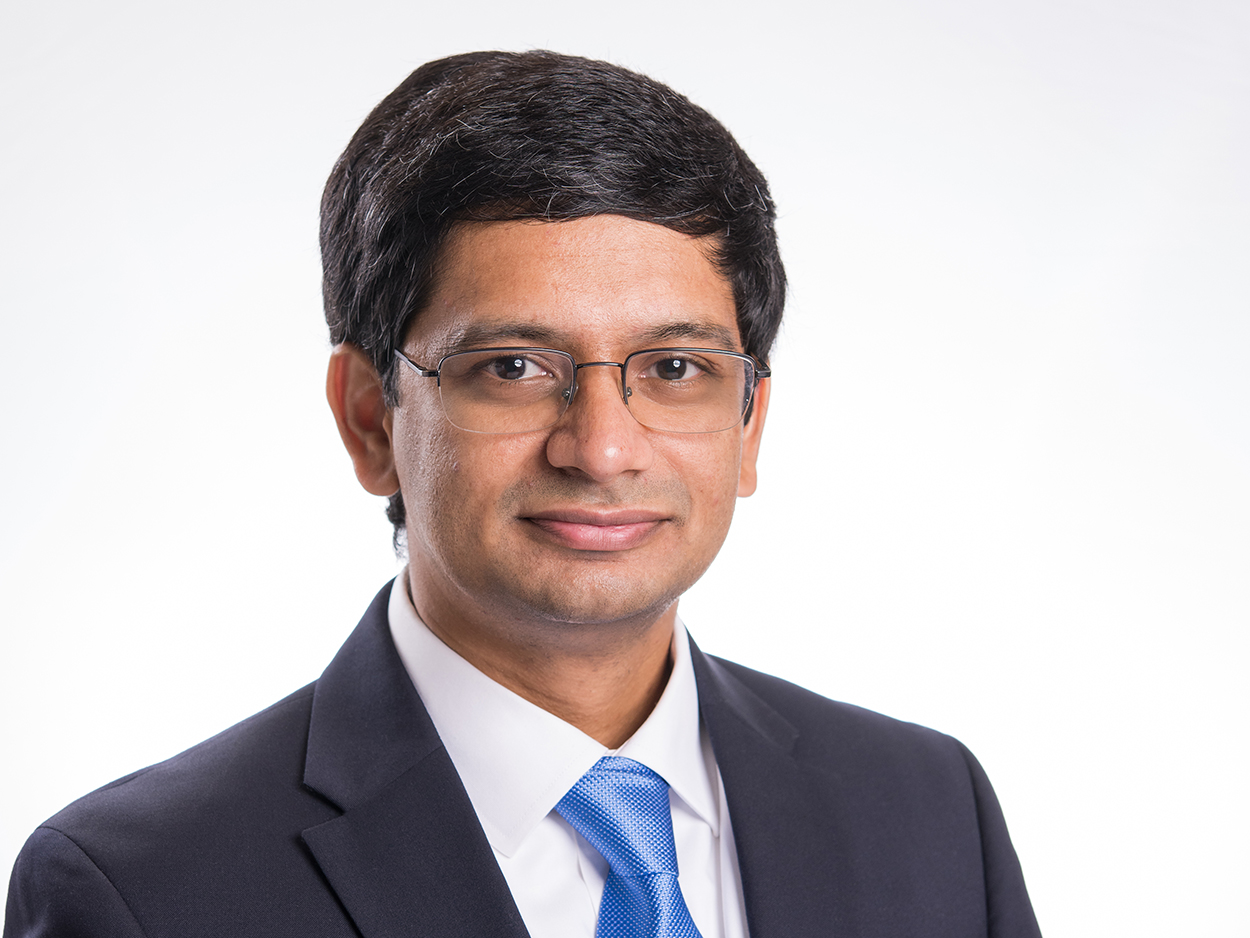
Arvind Karunakaran is an Assistant Professor at Stanford University in the Department of Management Science and Engineering. He holds affiliations with the Center for Work, Technology, and Organization (WTO) , Stanford Technology Ventures Program (STVP) , Stanford Institute for Human-centered Artificial Intelligence (HAI) , and the Digital Economy Lab (DEL) . His research focuses on authority and accountability in the workplace , particularly under technological change and human-AI augmentation. Education: Ph.D. from MIT Sloan School of Management (2018) His work employs ethnographic and field-based methods to study empirical puzzles in workplace dynamics, complemented by comparative-historical analysis and quantitative/textual data analysis . Key research areas include social/algorithmic evaluation of workers , human-AI reskilling , and conflicts in symmetrical relations . Recent publications analyze AI's impact on workplace inequality , platform governance , and crowd-based accountability . His findings are published in top journals like Administrative Science Quarterly and Organization Science . Scientific Awards & Recognitions: Best Published Paper Award (ASA, 2025) Gerard J. Tellis Best Junior Faculty Paper Award (AIM Conference, 2025) W. Richard Scott Article Award (ASA, 2024) Responsible Research in Management Award (RRBM, 2024) Future of Organizations Fellowship (2024) Professor Karunakaran advises doctoral and master's students in areas related to technology and organizations , and teaches courses on organizational behavior , organizational theory , and innovation management .
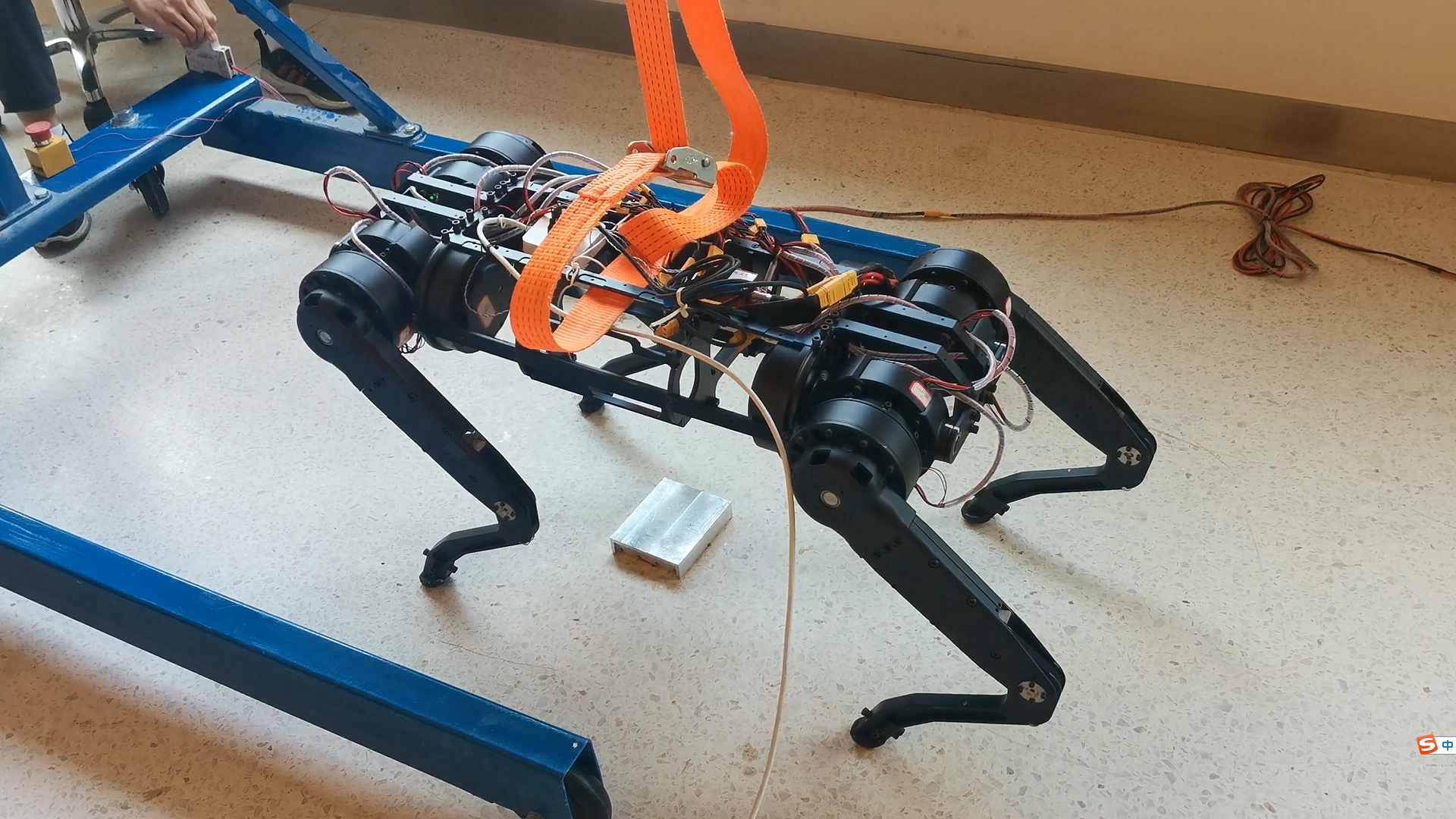
Wei Zhang is a tenured Professor at the Southern University of Science and Technology (SUSTech) , Shenzhen, China, and a Senior Member of IEEE. He serves as Associate Editor for IEEE Transactions on Control System Technology and leads the CLEAR Lab (Control & Learning for Robotics and Autonomy) within the School of Automation and Intelligent Manufacturing (AiM). His career spans institutions including the University of California, Berkeley (postdoc), and The Ohio State University (Assistant/Associate Professor). Education: PhD in Electrical Engineering from Purdue University (2009), MS in Electrical and Computer Engineering from University of Kentucky (2005), BS in Automation from University of Science and Technology of China (2003) Research Interests focus on integrating control theory, optimization, and machine learning to develop intelligent systems. Key areas include: Legged Robots: Dynamic locomotion control, bio-inspired gait design, and push recovery mechanisms Autonomous Systems: Real-time motion planning, obstacle avoidance, and safe navigation in adversarial environments Smart Grids: Distributed control for energy systems and transactive energy optimization Machine Learning: Reinforcement learning for robotics, Q-learning convergence analysis, and hybrid control-learning frameworks Publication Trends highlight interdisciplinary work at the intersection of robotics and control systems. His recent 2024 papers address: Whole-body control for wheeled-quadrupedal robots Geometric object pose refinement in computer vision Task-space Riccati feedback for underactuated systems Teacher-student reinforcement learning architectures Scientific Awards include: 2016 : NSF CAREER Award 2015 : Lumley Research Award (Ohio State University) 2013 : AFOSR Summer Faculty Fellowship 2018 : National Distinguished Expert (Young, China) 2019 : International Underwater Robot Competition 2nd Prize (team advisor) Academic Leadership involves editorial roles at IEEE Transactions on Control System Technology and IEEE Transactions on Power Systems. His lab provides state-of-the-art robotics platforms including quadruped robots, Kuka manipulators, and UAVs for algorithm validation. Research collaborators span The Ohio State University , UC Berkeley , CMU , and The University of Hong Kong .
Andrea Bajcsy serves as an Assistant Professor in the Robotics Institute and School of Computer Science at Carnegie Mellon University, leading the Interactive and Trustworthy Robotics Lab (Intent Lab). Her work focuses on enabling robots to safely interact with open-world environments through novel algorithms in control theory and machine learning. Her educational background includes a Ph.D. in Electrical Engineering & Computer Science from UC Berkeley under Anca Dragan and Claire Tomlin, followed by a postdoctoral position with Jitendra Malik and industry experience at NVIDIA's Autonomous Vehicle Research Group. Research centers on quantifying robot confidence, computing safe interaction policies for nuanced hazards (tearing, spilling, breaking), and aligning AI with human values. Key methodologies integrate optimal control, reinforcement learning, dynamic game theory, and deep learning, applied to robotic arms, quadrotors, quadrupeds, and autonomous vehicles. Core areas include safety for physical human-robot interaction, robot learning for manipulation, and world modeling. Recent publications (2024-2025) reveal a concentrated effort on uncertainty-aware safety mechanisms, out-of-distribution adaptation, and language-based safety specification. Her work increasingly bridges conformal prediction with interactive learning while leveraging vision-language models for real-time policy steering, as evidenced by multiple CoRL, RSS, ICRA, and ICLR acceptances. Scientific Awards: NSF CAREER Award (2025) Advises four active PhD students (Kensuke Nakamura, Ravi Pandya, Junwon Seo, Yilin Wu) and leads research funded by the NSF CAREER grant. Organizes community initiatives including the Northeast Systems and Control Workshop and ICRA workshops on Safely Leveraging VLMs in Robotics and Public Trust in Autonomy. Directs the Intent Robotics Lab, which develops theoretical frameworks and practical implementations for open-world robot safety. The lab maintains strong industry ties through NVIDIA collaborations and emphasizes real-world deployment across multiple robotic platforms.
Patricia M. Thornton is an Associate Professor in the Department of Politics and International Relations (DPIR) at the University of Oxford and a Fellow and Tutor in Politics at Merton College. She specializes in Chinese politics, focusing on state-society interactions, authoritarian governance, and the legacies of the Cultural Revolution. Her research explores institutions, practices, and networks shaping governance in China, including works like *Disciplining the State* (2007) and *Red Shadows* (2017). She has held leadership roles at Oxford, including Chair of the Sub-Faculty of Politics and International Relations, and served on editorial boards such as *The China Quarterly*. Her work addresses contemporary challenges like authoritarian resilience, social control mechanisms, and political dissent. Research Interests: - State formation and governance in China - Authoritarian political systems - Memory and legacies of the Cultural Revolution - Party-state dynamics and social movements - Comparative political institutions Publications highlight themes like economic governance, social movements, and policy implementation. She has supervised numerous PhD students, many now leading academics in Asia-Pacific studies. Her contributions to understanding China’s political evolution are complemented by media commentary on current events, including analysis of Xi Jinping’s governance strategies and societal trends. Awards: Merton College Fellowship Key Projects: Edited *To Govern China* (2017) and *Red Shadows* (2017)
Navid Azizan is the Alfred H. (1929) and Jean M. Hayes Career Development Assistant Professor at Massachusetts Institute of Technology (MIT), holding dual appointments in the Department of Mechanical Engineering (in Control, Instrumentation & Robotics) and the Schwarzman College of Computing's Institute for Data, Systems & Society (IDSS). He is also a Principal Investigator in the Laboratory for Information & Decision Systems (LIDS), and a faculty member of the MIT Statistics and Data Science Center, the Center for Computational Science and Engineering, and the Operations Research Center. Dr. Azizan received his PhD in Computing and Mathematical Sciences from the California Institute of Technology (Caltech) in 2020, his MSc in Electrical Engineering from the University of Southern California in 2015, and his BSc in Electrical Engineering with a minor in Physics from Sharif University of Technology in 2013. Prior to joining MIT, he completed a postdoc at Stanford University's Autonomous Systems Laboratory and was a research scientist intern at Google DeepMind. His research spans the intersection of machine learning, systems and control, mathematical optimization, and network science. Dr. Azizan's work focuses on developing principled learning and optimization algorithms for reliable intelligent systems, with applications to autonomy and sociotechnical systems. His research has significant implications for creating trustworthy AI systems that can operate effectively in complex, uncertain environments. Dr. Azizan's recent publications demonstrate a strong focus on uncertainty quantification, reliable AI systems, constrained optimization, and control-oriented learning. His work bridges theoretical foundations with practical applications, particularly in autonomous systems where safety and reliability are paramount. His research group has made notable contributions to areas including neural network verification, multi-agent reinforcement learning, and adaptive inference techniques for large language models, with several papers featured on MIT News and selected for oral presentations at top conferences. Alfred H. (1929) and Jean M. Hayes Career Development Professorship (2025-present) Frank E. Perkins Award for Excellence in Graduate Advising (2025) List of Outstanding Academic Leaders in Data from the CDO Magazine (2024, 2023) Amazon Science Hub Research Award (2023) Outstanding UROP Faculty Mentor (2023) Esther and Harold E. Edgerton (1927) Career Development Chair (2022-2025) Information Theory and Applications (ITA) Gold Graduation Award (2020) Dr. Azizan has been recognized for his excellence in graduate advising, receiving the Frank E. Perkins Award for Excellence in Graduate Advising in 2025. During the pandemic, he founded and co-organized the 'Control meets Learning' virtual seminar series, connecting researchers across disciplines. His work has attracted significant research funding from industry partners including Google, Amazon, and MathWorks, supporting both fundamental research and practical applications in reliable intelligent systems. The Azizan Lab at MIT brings together researchers from mechanical engineering, computer science, and applied mathematics to tackle challenges at the intersection of learning and control. The lab emphasizes both theoretical foundations and practical implementations, with a particular focus on developing algorithms that provide guarantees of performance and safety. Current research directions include uncertainty quantification in AI systems, constrained optimization for neural networks, and control-oriented learning for autonomous systems, with applications spanning robotics, transportation, and complex sociotechnical systems.
Daniel Sierra Ramos is an Adjunct Professor at IE University, Spain, and Co-Founder of Fitizens, a startup developing AI-driven wearables for physical activity quantification. He has over 6 years of experience as a Lead Data Scientist at Telefónica and Synergic Partners, specializing in AI applications for industries like banking, retail, and telecommunications. His expertise includes machine learning models for customer segmentation, predictive maintenance, and demand forecasting, alongside Big Data and cloud technologies (AWS/Azure). Education: Master in Telecommunication Engineering (Carlos III University, 2015) Master in Multimedia and Communications (Carlos III University, 2015) Bachelor in Telematic Engineering (Carlos III University, 2013) His research focuses on integrating AI into wearable devices and industry-driven data solutions. He trains professionals in AI from technical and business perspectives, emphasizing autonomy in data-centric environments. Active in corporate roles since 2015, he bridges technological innovation with practical business applications.
Professor Tatsuhisa Tamura is affiliated with the Faculty of Law at Waseda University , specializing in Public Law . His academic career spans over two decades, with a focus on local government law, administrative law, and economic regulation. Research Interests include: Public Law : Constitutional frameworks and local governance structures. Disaster Relief Law : Legal systems for JSDF deployment in crises. Economic Regulation : Impacts of deregulation on administrative law. Civic Accountability : Judicial control mechanisms like resident litigation. Policy Reform : Decentralization and carbon-neutral governance. Recent Publications (2015–2020) address municipal financial systems, citizen litigation frameworks, and disaster response protocols. His work emphasizes balancing efficiency with democratic control in shrinking societies. Grants & Projects include: 2025–2029: Sustainable Public Official Law (JSPS Grant). 2019–2022: Civil Defense Systems in Large-Scale Disasters . 2017–2021: Legal Regulation of Local Government Enterprises . 2021–2025: Comparative Studies on Personnel Administration . Teaching involves courses like Local Government Law and Administrative Law at Waseda’s Graduate School of Law. He also contributes to public policy debates on carbon neutrality and judicial transparency.
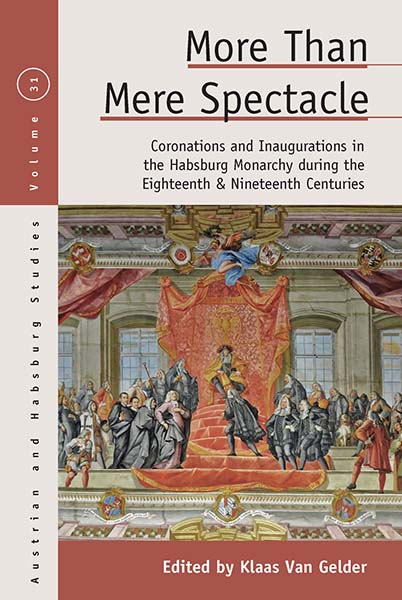
Klaas Van Gelder is an Assistant Professor of History at Vrije Universiteit Brussel (VUB) , specializing in early modern history. He is affiliated with the SHOC research group and serves as Archivist at the General State Archives in Brussels. His academic journey includes an MA (2005) and PhD (2012) from Ghent University, followed by postdoctoral fellowships at Ghent and the University of Vienna. He has held visiting roles, including at Saint Mary's University in Halifax (2024). Van Gelder’s research focuses on social, political, and cultural history of early modern Europe, particularly access to justice, litigants’ profiles, and legal rituals. Key projects include the FED-tWIN project ACCESS , examining Brabant’s legal systems, and studies on seigneurial police regulations. He has authored books like Regime Change at a Distance (2016) and edited volumes such as More Than Mere Spectacle (2021). He has received awards including the André Schaepdrijverprijs (2005) and Frans Stephan Preis (2014). His grants and collaborations include leadership roles in projects like Onderzoeksgroep Alliantie VUB-UGent . He co-edits journals and participates in international conferences, addressing topics like AI in historical archives and rural revolts.
Dr. Mathew Todres is a Senior Lecturer in Management at the School of Business, Faculty of Business and Law, University of Wollongong. His research focuses on Management, Change Management, International Business Management, and Strategic Management, with a particular emphasis on Social Entrepreneurship and Workplace Value Congruence. He has conducted action research in Social Enterprise Development and published in journals such as the Social Enterprise Journal and Journal of Business Ethics . Dr. Todres currently supervises PhD candidates Douglas Opoku Agyeman (Micro Entrepreneurship in West Africa) and Grant Hughes (Sports Management). He has received a University of Wollongong Faculty of Business Start-Up Grant (2018). His peer-reviewed work spans organizational behavior, narrative analysis, and social enterprise innovation. His research interests include autoethnographic analysis, narratological analysis, and the application of social theory to entrepreneurial practices. Dr. Todres has contributed to journals such as Medical Education and serves as a reviewer for Journal of Spirituality, Leadership, and Management , among others. His work bridges theoretical frameworks with practical applications in organizational dynamics and social impact initiatives.
Yvonne Rogers is a Professor of Interaction Design and Director of the UCL Interaction Centre (UCLIC), with a joint appointment as Deputy Head of the Department of Computer Science at University College London. She joined UCL in 2011 after holding professorships at the Open University (2006-2011) and Indiana University (2003-2006). Her pioneering work spans ubiquitous computing, interaction design, and human-computer interaction, with a current focus on human-centered AI. She co-authored the definitive 'Interaction Design' textbook (6 editions, 300,000+ copies) and serves as CTO of LetThink.com. Research interests center on designing technologies that enhance human cognition and daily activities: Ubiquitous Computing: Augmenting learning/work activities through pervasive technologies Human-AI Interaction: Developing AI systems that enhance human decision-making Health Technologies: Creating VR therapies and ADHD support systems Community Resilience: Designing tools for environmental monitoring and sustainable practices Publication analysis reveals three dominant trends: (1) VR applications for mental health (emotion regulation, ADHD support), (2) AI systems for cognitive augmentation, and (3) community-centered tools for healthcare/environmental challenges. Recent work demonstrates strong emphasis on vulnerable populations including children with ADHD, older adults, and postoperative patients. Major scientific recognition includes: International Member, National Academy of Engineering (2024) ACM SIGCHI Lifetime Research Award (2022) Royal Society Robin Milner Medal (2022) Royal Society Fellowship (2022) Microsoft Outstanding Collaborator Award MRC Suffrage and Science Award (2020) Triple Fellow status (ACM, BCS, CHI Academy) Advises PhD students including Leon Reicherts, Sheena Visram, and Tu Duong. Secured major grants including EPSRC Dream Fellowship on ageing/computing and led the Intel Collaborative Research Institute on Sustainable Connected Cities (2012-2018). Directs UCLIC research center and previously established the Pervasive Interaction Lab at Open University.
Marcela Echeverri Muñoz is an Associate Professor in the Department of History at Yale University, affiliated with the Faculty of Arts and Sciences. Her scholarship bridges history, anthropology, and political theory, with a focus on Latin America, the Atlantic World, and the Spanish Empire. She is recognized for her interdisciplinary approach to understanding political subjectivities, state formation, and social transformation during the Age of Revolutions. PhD in Latin American and Caribbean History, New York University, 2008 MA in History of the Hispanic World, Fundación MAPFRE-Tavera and CSIC, Madrid, 2006 MA in Social and Political Theory, The New School for Social Research, 2001 BA in Anthropology, Universidad de los Andes, Bogotá, 1997 Her research centers on the interplay of race, gender, law, and political theory in colonial and 19th-century Latin America. She investigates how enslaved and Indigenous peoples navigated imperial and republican transitions, particularly through royalist affiliations. Her work challenges peripheral narratives of Spanish America in Atlantic slavery studies, positioning the region as a central site of abolitionist and constitutional experimentation. The trends in her recent publications reveal a sustained focus on slavery, abolition, and political transformation in the Spanish American mainland. She analyzes how anti-slavery movements were intertwined with republicanism, citizenship, and state formation, especially in Gran Colombia. Her scholarship spans legal history, Atlantic processes, and transimperial dynamics, often highlighting marginalized voices in revolutionary contexts. She frequently contributes to major reference works and edited volumes on Atlantic revolutions and Latin American independence. Her scientific awards and fellowships reflect her standing in the field: James Alexander Robertson Prize Michael Jiménez Prize Bolton-Johnson Prize Honorable Mention Yale Heyman Prize for Outstanding Scholarly Publication Alexander von Humboldt Research Fellowship MacMillan Research Fellow, Yale Mellon Residential Fellow, CUNY NEH Summer Institute Participant, Johns Hopkins Fellowships from John Carter Brown Library, CSIC, Fundación Mapfre, and Instituto Colombiano de Antropología e Historia Echeverri has secured significant research grants from Harvard’s Atlantic History Seminar, CUNY Research Foundation, and Yale. She has co-edited special issues on Gran Colombian history and Spanish American abolition, and led key academic initiatives including the Race and Slavery in the Atlantic World Working Group and the Early Modern Empires Workshop at Yale. Though student advising is not explicitly detailed, her role as a senior scholar implies mentorship of graduate students. She is affiliated with several research networks and has been a visiting scholar at institutions such as Freie Universität Berlin. Her ongoing book project on Gran Colombian slavery underscores her commitment to redefining the hemispheric significance of Latin American abolition. She remains an active contributor to both scholarly and pedagogical conversations in Atlantic and Latin American history.
Elizabeth Bernstein is a Professor of Women's, Gender & Sexuality Studies and Professor of Sociology at Barnard College, Columbia University, where she has been a faculty member since September 2002. Her work bridges sociological theory with feminist analysis, focusing on the intersections of gender, sexuality, and political economy. Bernstein directs significant research initiatives including the Gender Justice and Neoliberal Transformations Working Group, a transnational collaboration among thirteen scholars examining gender justice in contemporary global contexts. She is currently developing a new book project titled "Imagining Immunity: Precarious Bodies and the Governance of Gendered Dis-ease," which explores immunological metaphors in understanding bodily risk and suffering. B.A., University of California, Berkeley M.A., University of California, Berkeley Ph.D., University of California, Berkeley Professor Bernstein's research focuses on the political economy of the body, gender, and sexuality, with particular attention to sexual commerce, sex trafficking, and neoliberal governance. Her work employs ethnographic methods to examine how intimate relations become sites of economic exchange and political regulation. She investigates how concepts of authenticity, freedom, and rights are mobilized in debates about sexual commerce and trafficking. Bernstein's scholarship critically engages with feminist theory, carceral politics, and transnational governance frameworks, challenging conventional approaches to sex work and trafficking that often reinforce punitive systems rather than advancing gender justice. Analysis of Bernstein's scholarly output reveals a consistent trajectory examining the intersections of gender, sexuality, and political economy within neoliberal frameworks. Her work demonstrates increasing attention to transnational governance mechanisms and their impact on intimate relations and bodily autonomy. A notable trend is her critical examination of how anti-trafficking campaigns often employ carceral logic that undermines feminist goals of gender justice. Her scholarship consistently challenges binary frameworks that position sex work solely as exploitation or liberation, instead analyzing the complex economic, political, and social dynamics that shape sexual commerce globally. Bernstein's research has received significant recognition through prestigious awards including: Distinguished Book Award, American Sociological Association, Sociology of Sexualities Section (2020) for "Brokered Subjects" Honorable Mention, Society for the Study of Social Problems Global Division Book Award (2019) Norbert Elias Prize, Norbert Elias Foundation (2009) Distinguished Book Award, American Sociological Association, Sex and Gender Section (2009) Her work has also been supported by major funding organizations including the Institute for Advanced Study, National Science Foundation, Social Science Research Council, AAUW, and Mellon Foundation. As a principal investigator along with Janet Jakobsen for the Gender Justice and Neoliberal Transformations Working Group, Bernstein leads a significant collaborative research initiative sponsored by the Barnard Center for Research on Women. Her grant portfolio demonstrates sustained support from major research institutions, reflecting the significance of her work in gender studies and sociology. While specific student advisees aren't listed in the available materials, her role as a full professor at Barnard College indicates extensive mentorship of undergraduate and likely graduate students in Women's, Gender & Sexuality Studies and Sociology. Bernstein co-leads the Gender Justice and Neoliberal Transformations Working Group, a collaboration among thirteen scholars working transnationally on questions of gender justice. This initiative represents a significant research collective examining how neoliberal policies reshape gender relations globally. Her work with the Barnard Center for Research on Women provides institutional support for this transnational feminist research network, facilitating scholarly exchange and collaborative publication projects that advance critical perspectives on gender, sexuality, and political economy.
Professor Marina Jirotka is a leading academic in Human-Centred Computing at the Department of Computer Science, University of Oxford, and a Governing Body Fellow at St Cross College. She directs the Responsible Technology Institute and leads interdisciplinary research on responsible innovation in AI, robotics, and digital systems. University: University of Oxford School: Department of Computer Science Position: Professor of Human-Centred Computing Leadership: Director, Responsible Technology Institute Fellowships: EPSRC Established Career Fellowship (RoboTIPS) Her research focuses on integrating ethical, societal, and human values into technology design. Key areas include responsible innovation, human-computer interaction, algorithmic accountability, and socio-technical systems. She explores trust, transparency, and governance in autonomous systems, digital mental health, and quantum computing ethics. Her recent publications reflect a strong trend in responsible robotics, explainable AI, digital wellbeing, and ethical governance. Articles emphasize interdisciplinary methods, stakeholder engagement, and practical tool development such as the Ethical Black Box and TrustScapes. Themes span autonomous vehicles, social robots, algorithmic bias, and sustainability in digital innovation. Excellence in Teaching Award, University of Oxford (2006) ESRC/SSRC Fellowship (2007) UCLA Scholar Award (2011) EPSRC Established Career Fellowship (2018, 2019) Vice Chancellor’s Innovation Award Highly Commended (2020) She supervises numerous PhD and Master’s students and leads major grants including RoboTIPS, RAILS, PARIS-DE, and Adolescent Mental Health in the Digital World. She co-directs ORBIT, a leading RRI training provider, and contributes to policy through advisory roles with the House of Lords, All-Party Parliamentary Groups, and industry consortia. She is a member of the IEEE P7000 working group and the UK Committee for IIASA. Her lab work involves interdisciplinary teams focused on responsible technology design, public engagement, and ethical tool development.
Joydeep Biswas is an Associate Professor in the Computer Science Department at the University of Texas at Austin, where he serves as the Director of the Autonomous Mobile Robotics Laboratory (AMRL). He is also affiliated with Texas Robotics, the UT Machine Learning Laboratory, and UT Good Systems. Previously, he was an Assistant Professor in the College of Information and Computer Sciences at the University of Massachusetts Amherst. Dr. Biswas earned his PhD in Robotics from Carnegie Mellon University in 2014 and his B.Tech in Engineering Physics from the Indian Institute of Technology Bombay in 2008. His educational background has provided him with a strong foundation in both theoretical and applied aspects of robotics and artificial intelligence. Dr. Biswas's research focuses on enabling long-term autonomy for mobile robots operating in human environments. His work spans robot perception, motion planning, control systems, and AI, with the ultimate goal of creating self-sufficient autonomous mobile robots that can perform tasks accurately and robustly in real-world settings. He is particularly interested in perception, planning, and failure recovery for autonomous mobile robots, which supports his vision of having autonomous service mobile robots deployed at campus-to-city scale, both indoors and outdoors, performing assistive tasks over deployments spanning years. His IJCAI 2019 Early Career Spotlight talk summarizes much of his research to date and ongoing interests. His recent research has shown a strong trend toward social navigation, human-robot interaction, and the application of machine learning techniques to robotics problems. There's a clear progression from fundamental robotics research toward more complex, real-world applications that require robots to understand and navigate human social spaces effectively. His work increasingly integrates large language models and other advanced AI techniques with traditional robotics approaches, as evidenced by his recent publications on topics like preference-conditioned navigation, social navigation benchmarks, and instruction-following navigation systems. Dr. Biswas has received numerous prestigious awards including the NSF CAREER Award (2021), J.P. Morgan Faculty Research Award (2019), Amazon Research Award (2019), and a grant from Northrop Grumman Mission Systems (2018). These awards recognize his innovative contributions to the field of robotics and autonomous systems. As a dedicated educator and mentor, Dr. Biswas actively supervises PhD and master's students, with his PhD student Sadegh Rabiee winning the student poster award at the Northrop Grumman University Symposium 2019. He has secured significant grant funding from the National Science Foundation for projects including 'Introspective Perception and Planning for Long-Term Autonomy' and 'Interactive Synthesis and Repair For Robot Programs,' demonstrating his ability to secure competitive research funding and his commitment to advancing the field. Dr. Biswas leads the Autonomous Mobile Robotics Laboratory (AMRL), which serves as a hub for interdisciplinary research in mobile robotics. The lab has developed notable resources such as the UT Campus Object Dataset (CODA) for 3D perception research and SOCIALGYM, a framework for benchmarking social robot navigation. His team regularly deploys robots on the UT Austin campus and in urban environments to test and refine their approaches in realistic settings, bridging the gap between simulation and real-world application.
Timothy Bewes is the Owen F. Walker Professor of Humanities and Professor of English at Brown University , where he has taught since 2004. His research bridges contemporary fiction , poststructuralist theory , Marxist literary analysis , and postcolonial studies , with a focus on the politics and ethics of literary form . He has held fellowships at the Pembroke Center and Cogut Institute for the Humanities , and co-edits the Film-Thinking series. Education : DPhil and MA from University of Sussex , BA from University of North London . Bewes' scholarship interrogates the ontological status of fiction and the materiality of literary works , as seen in his National Book Critics Circle Award-winning book Free Indirect: The Novel in a Postfictional Age (2022). His recent articles explore intersections between novel theory , Black studies , and Deleuzean philosophy , emphasizing repetition , dialogicality , and anti-representational frameworks . Notable awards include the L. S. Dembo Prize (2015) and Chesler-Mallow Senior Faculty Research Fellowship (2012-13). He teaches courses such as The Terrible Century , Capitalism & its Metamorphoses , and Bakhtin and the Political Present .