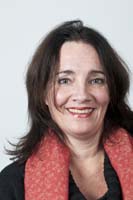
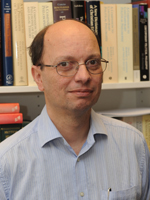
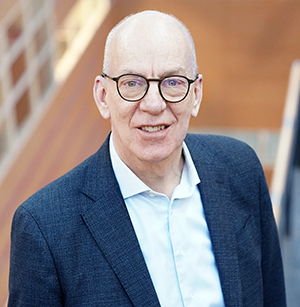
Ingjerd Hoëm is a Professor at the Department of Social Anthropology, University of Oslo, and serves as Vice-Dean for Education at the Faculty of Social Sciences. She holds a Magister (1990) and PhD (1996) from the University of Oslo. Her research focuses on communication, political change, labor dynamics, and performance in Pacific Island societies, particularly Tokelau and New Zealand. Education: Magister (1990), PhD (1996), University of Oslo Her work examines governance conflicts, identity formation through performance, and the interplay between state structures and kinship-based labor systems. Recent publications analyze democratic negotiations in Tokelau and the role of theatre in political processes. She directed NFR-funded projects 'Anthropos and the Material' and 'Identity Matters: Movement and Place'. Her research combines ethnographic fieldwork with theoretical frameworks in political anthropology and Pacific studies.
Nicoline Frølich is Professor and Director of the Centre for Learning and Education (LINK) at the University of Oslo, Norway. She also holds part-time Professor II appointments at the Department of Government, University of Bergen and at NIFU – Nordic Institute for Studies in Innovation, Research and Education. Education 2002 – PhD in Comparative Politics, University of Bergen 1994 – Master in Comparative Politics, University of Bergen 1992 – Pedagogy, Norwegian School of Economics (NHH) 1989 – Master in Economics and Business Administration, Norwegian School of Economics (NHH) Research Interests Frølich’s research focuses on governance, management and organisation of higher education systems, institutional reforms, knowledge policies, and public administration. She employs institutional theory to examine how universities and colleges respond to policy pressures, merger processes, quality assurance mechanisms, and leadership communication during change. Recent Publication Trends Between 2018 and 2025 her work has concentrated on three interconnected themes: leadership and communication within university mergers, gendered career trajectories in academia, and the tension between quality assurance systems and institutional autonomy. Empirically, her studies draw on Nordic and European cases, combining survey data with qualitative analyses of policy enactment. Scientific & Professional Appointments 2023–present – Academic Chair, Circle U alliance 2023–present – Member, SIKT advisory board (Norway) 2021–present – Editorial board member, TEAM – Tertiary Education and Management 2021–2022 – Chair, EAIR – The European Higher Education Society 2019–present – Advisory Board member, UKÄ (Swedish Higher Education Authority) 2019–2021 – Co-Editor-in-Chief, TEAM – Tertiary Education and Management Research Groups & Projects Frølich leads the research group Knowledge, Learning and Governance: Studies in higher education and work (HEDWORK) and participates in the Policy, Bureaucracy, and Organization (PBO) group. She is currently directing the project Re-Structure , which investigates the effects of structural reforms on Norwegian higher education institutions.
Professor Kjetil Grimastad Lundberg serves at the Institute for Welfare and Participation, Western Norway University of Applied Sciences (HVL), appointed Professor of Welfare Sociology in 2020 after joining HVL in 2018. A University of Bergen PhD graduate (2012), he previously worked as Researcher II at Uni Research Rokkansenteret (2011-2018). His academic credentials include: PhD in Sociology, University of Bergen, 2012 Master's in Sociology, University of Bergen, 2007 Lundberg's research critically examines intersections of welfare systems, poverty, and marginalization through institutional ethnography. He investigates street-level bureaucracy in NAV (Norwegian Labour and Welfare Administration), digitalization impacts, and child/family perspectives in low-income contexts, emphasizing stigma, power dynamics, and activation policies. His work bridges theoretical sociology with practical welfare challenges. His 15 most recent publications (2017-2024) reveal consistent focus on welfare-state dynamics, with recurring themes of work inclusion mechanisms, user experiences in complex interventions, and poverty's structural dimensions. Methodologically, he employs qualitative institutional ethnography across European Societies, European Journal of Social Work, and Social Policy and Society, demonstrating longitudinal analysis of policy evolution. Lundberg supervises multiple PhD candidates on work inclusion and poverty interventions while leading the NAV-funded project 'Barneperspektiv i Nav' (2023-2027) and participating in three additional studies addressing long-term poverty effects and cross-sectoral coordination. His grant portfolio spans NAV-FOU, Sparebankstiftelsen, and NFR funding. He contributes to HVL's 'Rights, Democracy and Welfare' research group, advancing critical welfare sociology through teaching in social science, sociology, and social work programs while examining urban poverty, bureaucratic practices, and marginalized family experiences.
Søren Holm is a Professor at the Center for Medical Ethics , University of Oslo. His work spans medical ethics, bioethics, and research ethics , with a focus on artificial intelligence in healthcare, pandemic ethics, and organ transplantation . Primary Affiliation: University of Oslo, Faculty of Medicine Research Themes: AI diagnostics, informed consent, research integrity, end-of-life ethics Key Collaborations: Thomas Ploug, Bjørn Hofmann, Daniel Warrington Recent Publications (2023-2025) analyze ethical challenges in AI-driven healthcare regulation, pandemic research ethics, and data governance . Notable topics include contestable AI diagnostics , equipoise in clinical trials , and conflict of interest disclosure . Contact: Email via soren.holm@medisin.uio.no . No scientific awards or student advisement details explicitly mentioned in the scraped text.
Børge Rokseth is an Associate Professor at the Department of Engineering Cybernetics, Norwegian University of Science and Technology (NTNU). His work focuses on maritime systems, autonomous vessel control, and safety verification. He actively supervises Master's students and contributes to research on risk-informed control systems, hybrid power systems, and systems-theoretic process analysis (STPA). Research Interests: Rokseth's research spans autonomous ship systems, dynamic risk assessment, and safety verification. He explores risk-based decision-making for maritime autonomy, hazard identification in hybrid propulsion systems, and control function allocation in dynamic positioning. His work integrates systems theory, machine learning, and regulatory compliance (e.g., COLREGS) to enhance safety and environmental performance in marine operations. Publications: His recent work includes probabilistic trajectory prediction frameworks for autonomous ships, STPA-based safety analyses, and studies on decarbonization barriers in the maritime industry. These publications emphasize risk modeling, systems-theoretic approaches, and simulation-based verification. Teaching: Rokseth teaches courses such as TTK4130 - Modelling and Simulation, contributing to the education of future engineers and researchers in cybernetics and maritime systems.
Professor Ingrid Bouwer Utne is a faculty member at the Department of Marine Engineering, Norwegian University of Science and Technology (NTNU). Her primary research focuses on risk analyses of ships, marine systems, and autonomy, with emphasis on operational safety, maintenance management, and risk control in autonomous maritime technologies. Key Projects: Leader of the Risk Group at NTNU, involved in the SFI Autoship initiative and ERC AdG BREACH project addressing risk-based rationality in autonomous systems. Research Interests: Autonomous systems design, probabilistic risk assessment, safety engineering, and risk-informed decision-making for marine operations. Grants & Funding: Secured funding from the Research Council of Norway, MAROFF, and industry partners for projects like ORCAS (Online Risk Management for Autonomous Ships) and UNLOCK (Supervisory Risk Control). She supervises numerous PhD students and postdocs, focusing on topics such as autonomous vessel navigation, risk modeling for underwater robotics, and decarbonization of maritime systems. Her work bridges theoretical risk analysis with practical applications in marine autonomy and safety systems.
Michael Rauhut is a Professor at the University of Agder where he leads the PhD specialization in popular music performance and represents subject teachers within scientific disciplines at the Department of Rhythmic Music . His academic work focuses on popular music studies and musicology, with supervisory responsibilities for master's and doctoral candidates. Rauhut's research explores the intersection of music, politics, and society, with particular emphasis on: Popular music history in socialist contexts (especially the GDR) Cultural transfer during the Cold War Blues, rock, and jazz as forms of cultural expression Youth cultures and music under authoritarian systems Church-state dynamics in musical expression His work demonstrates how music functioned as both state propaganda and vehicle for dissent. Analysis of Rauhut's publications reveals consistent focus on: Cultural mechanisms in socialist states (75% of recent works) Transnational music exchanges across the Iron Curtain Archival methodologies for reconstructing musical histories Identity formation through popular music State censorship and artistic resistance strategies His documentary filmography expands these themes into visual media. As PhD supervisor, Rauhut guides research in popular music performance and musicology. His extensive conference participation includes keynote addresses in Germany, USA, Georgia, and Ukraine, covering topics from blues reception to music's role in political revolutions.
Finn Arnesen (born 1962) is a Professor and Head of Department at the Scandinavian Institute of Maritime Law within the Faculty of Law at the University of Oslo. He has been affiliated with the Faculty of Law since 1989, progressing from research fellow to associate professor and becoming a full professor in 1998. Arnesen also serves as Chairman of the Board of Finanstilsynet (Financial Supervisory Authority of Norway) since March 2018 and is a member of the Market Council. Graduated in law in 1989 Defended doctoral thesis "State governance and EEA legal barriers" in 1996 Research assistant at Nordic Institute of Maritime Law (1987) Research assistant at Department of Criminal Law and Criminology (1988-89) Professor Arnesen specializes in EU law, EEA law, administrative law, international law, law of obligations, legal sources, and public procurement. His research focuses on general EU and EEA law, procurement law, and legal issues arising at the intersection between EEA law and Norwegian law. His work spans petroleum law, maritime law, and energy law, with particular attention to how European legal frameworks interact with Norwegian domestic legislation. Analysis of Arnesen's recent scholarly output reveals consistent engagement with the EEA Agreement's implementation and interpretation. His publications demonstrate expertise in treaty law, legal integration challenges, and the practical implications of European law for Norwegian sectors including fisheries, energy, and public procurement. The research shows particular focus on territorial application, legal homogeneity, and the relationship between European legal frameworks and national implementation. Arnesen has held significant professional positions including: acting Judge at the Supreme Court (2011-2012), member of the Public Procurement Complaints Board (2015-2023), and lawyer at Thommessen law firm (2002-2003). He has chaired important committees including those producing NOU 2005:13 on nominee registration of shares and NOU 2020:9 on incorrect application of National Insurance Act requirements in the EEA area. Professor Arnesen leads research projects including "The European Dimension of Norwegian Law (EURNOR)" and "Public Procurement of Critical Societal Functions and Effects on Societal Security and Emergency Preparedness (ProCritS)." He is affiliated with multiple research groups including the Labor Law Group, Research Group for International Law, and Market, Innovation and Competition (MIK) group.
Iris Nguyen Duy is a Professor at the Department of Law, School of Business and Law, University of Agder. She holds a PhD in Public Law from Université Paris 1 Panthéon-Sorbonne, France, and has extensive experience as a researcher and postdoctoral fellow at the University of Oslo. Her research focuses on constitutional law, comparative public law, parliaments, democracy, judicial review, administrative law, and digital governance. She leads the Comparative and Public Law research group at UiA and is Deputy Secretary General of the International Association of Constitutional Law (IACL-AIDC). Education: Joint Master in Advanced Studies in Comparative Law (DEA de droit comparé) from Université Paris 1 & Paris 2; PhD in Public Law (Université Paris 1). Research interests include constitutional democracy, open government, and digital disinformation. She is a member of multiple international research networks, including DEFIDEM (citizen participation in governance) and OLA-Europe (local autonomy). Teaching includes courses on constitutional law, human rights, legal history, and comparative law. Key publications span constitutional frameworks, parliamentary sovereignty, and digital governance challenges. She has advised on legal reforms related to local democracy and digital surveillance in Norway and Europe. Labs/Teams: Active in DEFIDEM, a transdisciplinary project on citizen engagement in policymaking, and contributes to constitutional studies at UiO and UiB. Her work bridges legal theory with practical governance challenges in democratic societies.
Tae Eun Kim is an Associate Professor in Maritime Safety Management at UiT The Arctic University of Norway, working within the Department of Technology and Security. Her research, teaching, and industrial collaboration focus on maritime safety and human factors, with particular expertise in maritime safety management, accident analysis, Maritime Autonomous Surface Ships (MASS), and human factors in maritime operations. Dr. Kim's research spans four interconnected domains: maritime safety management and leadership, maritime accident and casualty analysis, Maritime Autonomous Surface Ships (MASS), and human factors in maritime operations. She has developed assessment instruments like the Safety Leadership Self-Efficacy Scale (SLSES) and conducted STAMP-based causal analyses of maritime accidents. Her work on MASS addresses safety challenges in mixed navigational environments and examines leadership competencies for autonomous shipping operations. Her human factors research explores how technological advancements impact navigators' performance, crew dynamics, and safety outcomes, including gender parity issues in the maritime industry. Dr. Kim's publication record reveals a strong focus on the intersection of maritime safety, technology, and human performance. Her recent work increasingly addresses autonomous shipping technologies, with numerous publications on AI decision transparency, learning analytics in maritime simulator training, and multi-modal data analysis for nautical skill development. She has conducted systematic reviews on simulator training approaches and scenario design, contributing significantly to methodology development in maritime education and training. Her research demonstrates a clear trajectory toward integrating emerging technologies with traditional maritime safety practices as the industry transitions toward greater automation. Dr. Kim is actively involved in several significant research projects, including the i-MASTER EU Horizon Europe Research and Innovation Project, the REFRAME project, and the SPRICE project (Multidisciplinary approach for spray icing modelling). She is a member of both the Advanced Maritime Ship Operations research group and the Maritime Safety Science (MARSCI) Research Group, demonstrating her commitment to collaborative research in maritime safety science. Dr. Kim teaches several specialized courses at UiT, including SVF-3206 Safety Management and Accident Investigation, TEK-3014 Navigation Technology, MFA-2100 Maritime Digitalization, MFA-8010 Maritime HTO (Human-Technology-Organisation) and Innovation, and MFA-2018 Maritime Administration and Leadership. Her teaching portfolio reflects the interdisciplinary nature of her expertise, bridging engineering, safety science, and organizational behavior in maritime contexts.
Peter Maassen is a Professor in the Department of Education at the University of Oslo . His work focuses on higher education governance, institutional autonomy, and the intersection of policy and organizational practices. He has contributed extensively to understanding university reforms, quality assurance mechanisms, and the evolving role of universities in global and European contexts. His research interests span Higher Education , University Governance , Institutional Autonomy , and European Higher Education . He investigates how universities adapt to external pressures while maintaining internal coherence, with a particular emphasis on policy-driven changes and their implications for academic freedom and organizational structures. Maassen's recent publications analyze academic freedom in the European Union, knowledge transfer strategies, and the democratic responsibilities of higher education institutions. His work often explores the tension between excellence and diversity in university systems, particularly in China and the Western Balkans . He has received the Faculty of Education's prize for excellence in teaching and serves as Head of the Higher Education Development Association (HEDDA) . His collaborations with researchers like Bjørn Stensaker and Mari Elken have produced significant insights into university alliances and quality management practices. Maassen is affiliated with the research group Knowledge, Learning and Governance (HEDWORK) , which examines higher education's role in societal and organizational contexts. His career includes visiting positions at institutions like the Centre of Advanced Studies in Oslo and Stellenbosch University in South Africa.
Ole Martin Moen is a Professor at the Institute of Nursing and Health Promotion , Oslo Metropolitan University, Norway. His research spans bioethics, philosophy, and social justice, focusing on topics such as end-of-life ethics, palliative care, emergency ethics, and the moral implications of healthcare policies. He is actively involved in the VoldAm project, investigating violence and threats against ambulance personnel in Norway. Research Focus: Bioethics, Palliative Care, Emergency Ethics, Social Justice, Human Enhancement Key Collaborations: Aksel Braanen Sterri, Brian Earp, Julian Savulescu, and others. Moen’s recent publications explore ethical dilemmas in drug policy, assisted dying, and intrinsic value theory. His outreach includes public debates on cross-disciplinary challenges and societal fears, reflecting his engagement with contemporary ethical issues.
Damon Clark is an Associate Professor (with tenure) in the Department of Economics at the University of California, Irvine, within the School of Social Sciences. He is also affiliated with several prestigious research institutions, including the National Bureau of Economic Research (NBER), IZA Institute of Labor Economics, and the Institute for Fiscal Studies (IFS) in London. Research Interests: His primary research focuses on the economics of education, with additional expertise in labor economics and public economics. His work explores school choice, educational policy, the signaling value of credentials, and the long-term impacts of education on health and economic outcomes. He employs rigorous empirical methods, including field experiments and quasi-experimental designs, to evaluate educational reforms and policies. The most recent publications reflect a consistent focus on education policy evaluation, school effectiveness, peer effects, and human capital formation. His research often uses large-scale administrative datasets and natural experiments to identify causal effects, contributing significantly to debates on equity, accountability, and efficiency in education systems. Scientific Awards and Honors: UC Irvine Faculty Mentoring Award (2015–2016) Excellence in Refereeing Award, Journal of the European Economic Association (2003) Excellence in Refereeing Award, American Economic Review (2012) Excellence in Refereeing Award, Quarterly Journal of Economics (2011) National Academy of Education/Spencer Post-Doctoral Research Fellow (2007–2008) European Economic Association Young Economist Award (2005) Advising and Grants: While specific student names are not listed, his role as a tenured associate professor and principal investigator on multiple grants indicates active mentoring of graduate students. He has secured significant external funding from agencies such as the National Institutes of Health (NIH), the Institute of Education Sciences (IES), the WT Grant Foundation, and the Nuffield Foundation, supporting research on test-based retention, school access, and intergenerational education transmission. Labs and Research Teams: Clark collaborates extensively with researchers at institutions like NBER, IZA, IFS, and universities across the U.S. and Europe. His work is often conducted through collaborative research networks rather than a single lab, reflecting the interdisciplinary and policy-oriented nature of his scholarship.
Nanette Nielsen is a Professor at the Department of Musicology, University of Oslo (UiO), and a core member of the RITMO Center for Interdisciplinary Research on Rhythm, Time, and Movement. She has been affiliated with UiO since 2015, following academic roles at the University of Nottingham (2009–2015) and the University of East Anglia (2005–2009). Education: BA in Musicology and Philosophy, University of Copenhagen MMUS and PhD, Royal Holloway, University of London Her research bridges music and philosophy, focusing on ethics, aesthetics, and phenomenology in 20th- and 21st-century contexts. She explores film music, rhythm and temporality in musical experience, popular music, Scandinavian music, and opera/music criticism during the Weimar Republic. Recent publications reflect an interdisciplinary lens combining 4E/4A cognition (Embodied, Embedded, Enacted, Extended + Affect, Agency, Affordance, Autonomy) with music phenomenology. Key themes include audience engagement, dynamic listening, and music as a cognitive scaffold. Scientific Awards: 2014 Jerome Roche Prize for her article on Ernst Krenek's Jonny spielt auf She leads research projects such as Bodies in Concert and contributes to groups like Engagement and Absorption and Nordic Sounds: Critical Music Research Group .
Torgeir Dingsøyr is an Adjunct Chief Research Scientist and Research Professor in the Department of IT Management at Simula Metropolitan, a leading Norwegian research institute specializing in software engineering and digital technologies. His role encompasses both strategic research leadership and active empirical investigation into large-scale agile software development and software process improvement. Research Interests Large-scale agile software development methods and governance. Coordination and communication challenges in very large development programmes. Software process improvement (SPI) with emphasis on practical, evidence-based approaches. Teamwork effectiveness and autonomous teams in continuous deployment environments. Digital transformation project organization, particularly within Scandinavian contexts. Across more than two decades, Dingsøyr has produced influential handbooks and empirical studies that bridge the gap between SPI theory and industrial practice. His work increasingly addresses second-generation agile methods, emphasizing safety nets for high-risk development and autonomy at scale. Scientific Awards No specific awards listed in the provided text. Advising & Grants Dingsøyr collaborates extensively with industry and academic partners to secure funding for longitudinal case studies and improvement initiatives. While individual student names are not provided, his publications demonstrate active supervision and mentoring within multi-partner projects. Laboratory & Teams He operates within Simula Metropolitan’s research environment, contributing to interdisciplinary teams that unite software engineering researchers, data scientists, and industrial practitioners to advance empirical software engineering and agile transformation.